




Manisha Jolie Amin – Dancing To The Flute
Posted 13th March 2013
Category: Reviews Genres: 2010s, Domestic, Philosophy, Social, Spiritual
8 Comments

If laughter is the best medicine, music is very close behind.
Publisher: Alma Books
Pages: 290
Type: Fiction
Age: Adult
ISBN: 978-1-84688-238-8
First Published: 2012
Date Reviewed: 21st January 2013
Rating: 3.5/5
Kalu doesn’t remember his early childhood. Living on the streets he takes any job he can get and has made several friends of the people who live in the town he found himself in. But Kalu has a gift for music and when he meets a healer who helps him with the wounds on his foot he’s not quite prepared for the offer the healer makes. A famous now-reclusive musician for a brother, the healer knows that he can help Kalu achieve his potential and give him a home. But it’s up to Kalu to decide if it’s for him, and wrapped up in his indecision are all the friends in the town who he would have to leave behind.
Dancing To The Flute is an intriguing novel that focuses on music and the way it changes people, both as a passion/career and a way of helping others in whatever ails them. Looking at Kalu but also involving the stories and lives of others, Amin seeks to provide an introduction to India, its music and culture, and proposes an artistic way of dealing with problems.
Amin writes in an interesting manner that begs inspection. The style is simple, reflecting Kalu’s age and nature, however the writing is not childish in any way. There is magic in it, a flow that makes it easy to read, the very sort that is appealing as a bedtime story – even if the content is not for children. Indeed, in regards to Kalu, there are times when the writing style more aptly describes Kalu and his friends than do the words themselves.
Most of this can be attributed to Amin’s decisions and artistry, but furthering that the writing has a certain atmosphere that ties neatly into the Indian culture presented. The slow pace, the peaceful nature of the writing – music aside – and the way the words drift along match the idea of “Indian time”1 where the pace of life is slower and things may take longer but everything is done well all the same.
There are gaps in time – the book is more a series of scenes than a flowing narrative – and whilst it is not a bad element, it does suggest that the author wanted to speed things up, to get through Kalu’s days quicker and to the end of the book sooner. This makes sense given that Kalu’s days as a student are somewhat monotonous, but it means that it may be hard for the reader to keep up with the changes that come with growing up, and it is hard to keep a hold on what is happening with the other characters, too.
This links in to a problematic aspect of the book, and that is the way the character of Kalu is presented and written. Amin seems to not be sure exactly of who her character is. When Kalu talks it is easy to gain an insight into him, as a child especially, however when Amin goes back to narration what she says confuses the picture and changes Kalu’s personality and feelings. It is difficult to truly immerse yourself when the main character is not developed in this key way, and sometimes there is even cause to wonder whether Kalu is truly passionate about music.
Whilst this issue does happen on occasion to other characters, for the most part they are well drawn and consistent. Malti in particular is a brilliant character, and the way Amin portrays the confident happy girl followed by the quiet sad woman is rather wonderful. Indeed at first it may appear as if Amin has simply changed Malti’s personality to fit the tale, but this is far from the truth. Where the older Malti is concerned, Amin at first denies the reader important information. The author provides clues but doesn’t spell it out until later on, giving the reader a chance to look at things from an outsider perspective before being informed as to the truth. It’s a very interesting method of storytelling and demonstrates just how much care and attention such situations require. Malti’s story is perhaps the best part of the book and whilst it may seem convenient to use Kalu’s gift in solving it, it fits the theme of the book and brings an atmosphere to it that may be puzzling at first but makes sense the more you read.
The book’s strength lies in the message, of music being an aid and of helping others in the way that best suits their needs rather than one’s own. Apart from the general narrative, Amin includes tales from Hindu mythology and people not included in Kalu’s life to further illustrate the power of music and in particularly the power and importance of music in India’s cultures and religions. She uses the famous musician of her story to relay facts about Indian raags at the beginning of each part of the book, and the book itself is thus structured to mirror this musical style. This means that the book does not conform to the usual build up and climax that many books contain, but moves along a different format, so to speak. To be sure there are climaxes but they are included in a way that allows the music to take precedent.
Dancing To The Flute may have its problems, but the music and the way it affects the people in the book make up for a lot. Incorporating Indian words followed by their English counterparts, the novel is a good choice for those who want to learn about language and culture without feeling lost (assuming the reader does not speak any Hindi, of course). The story could have been more developed but the sentiment is there all the same. Dancing To The Flute will appeal to those interested in culture, music, India, and the trials of life.
1 A concept introduced to this reviewer by an Indian, which the reviewer realises may not be used across the board.
I received this book for review from Alma Books.
Related Books
None yet.
Gayle Forman – Where She Went
Posted 8th March 2013
Category: Reviews Genres: 2010s, Angst, Romance, Spiritual
5 Comments
If, to save their life, you tell someone that you’ll leave, what happens if you didn’t quite mean it?
Publisher: Definitions (Random House)
Pages: 264
Type: Fiction
Age: Young Adult
ISBN: 978-1-849-41428-9
First Published: 2011
Date Reviewed: 13th December 2012
Rating: 5/5
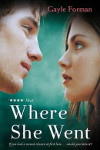
It’s three years since Mia walked out of Adam’s life, after she’d woken following the car crash that killed her family and left her in a coma. She never told him why she left him, and since then Adam has been a mess. It’s of no consequence that he’s now an A-lister with groupies and actress girlfriends aplenty, all he ever wanted was Mia, and when he walks past a theatre and sees that she’s playing a concert that evening, he can’t help himself.
Where She Went is the powerful sequel to Forman’s bestseller, If I Stay. This time narrated by Adam and set within an 18 hour period, it looks at what happens when people struggle to regain themselves and the harm that a lack or, rather, change, in communication can do to a relationship.
Although the “action” does take place in a short time, there are many flashbacks. However unlike in other cases, it doesn’t feel as though Forman should have set the book over a longer period – the flashbacks are natural and there is nothing superfluous. Each one demonstrates an important aspect of Adam and Mia’s relationship, or gives the reader information about a particular moment.
There are secondary characters, but apart from the flashback chapters, these people all remain minor. The spotlight is entirely on Adam, even when Mia is there. In fact, being told from Adam’s perspective, Mia even sometimes seems a secondary character herself as you only know what she tells Adam. With Adam you get every ounce of raw emotion.
“You were so busy trying to be my saviour that you left me all alone.”
And whilst what’s going on in Adam’s head is crucial except during times when Mia’s pain trumps it, it’s the dialogue that takes the book into award-winning territory. Forman has a talent for dialogue and characters that is remarkable. The dialogue is realistic, powerful, angsty, and the author knows exactly what the reader wants to hear about and hands it over. You may have to wait to know everything, but your waiting feels the same as Adam’s, you feel the same irritation he does whilst Mia babbles on about things that don’t matter, impatient to cut to the chase and learn her side of the story. And there are many times when the reader might wonder if Forman really will let you know, or whether she’ll allow Mia to walk off into the night and leave you to comfort Adam by the wayside, all the while crying yourself.
In an industry where, as of late, italics tend to be overused, Forman is an exception. She uses italics to excess, but due to her writing style it works where if anyone else would have written this book it wouldn’t have. Instead of becoming an annoyance, Adam’s constant usage of emphasis in his thoughts and conversation only serve to make his pain more obvious, and therefore to draw the reader in. The emphasised words always sound natural and they are spot on – there is never an emphasis on the wrong word. And the emotion and impact is ever more likely to hit the reader so that the lines between story and reality become blurred.
Incidentally it should be noted that Forman has written lyrics for Adam’s band, which are used throughout the story and complied at the end. The detailing and relevance of them shows just how much extra effort went into the book.
The development of the characters is of the utmost importance, and Forman continues what she started previously, making the characters so alike, in both situation and interests, but different enough that they could be strangers. In a way, they are. But they still think similarly and their thought processes mean that they’ll see things the same, then differently, and then the same, in a way that suggests that they ought to be together always – and not in that stereotypical romantic fashion. They are one, but they are also individuals.
Spirituality and hope forms part of the story, the way that Mia has come to accept the physical loss of her family, but has kept their memories alive in her heart. It aids the story a little but mostly stands for a person trying to live once alone, and moving forward whilst keeping that link to the past.
For all you do hear from Mia, there could have perhaps been more information about why she left Adam and what happened afterwards. Adam discusses his successive relationships, for example, but Mia’s past is more ambiguous. A good guess could be made, but if the guess were correct some further reasoning would have added even more to the story.
It is difficult to describe how much this book has the potential to affect the reader, how it may be one of those stories that brings you to tears. Even if it isn’t as powerful for some, the style is such that most if not all should at the very least be able to appreciate it. Forman’s talent for storytelling and creating characters transcends the need for perfect prose – though her prose is far from average.
Where She Went is a fantastic sequel and although it would be difficult to enjoy without having read If I Stay beforehand, the power that exists on those pages would have a certain impact no matter whether you are already familiar with Adam and Mia or not.
Related Books

Becky Aikman – Saturday Night Widows
Posted 8th February 2013
Category: Reviews Genres: 2010s, Domestic, Memoir, Science, Social, Spiritual
4 Comments

Life after death. A great life.
Publisher: Crown (Random House)
Pages: 334
Type: Non-Fiction
Age: Adult
ISBN: 978-0-307-59043-5
First Published: 22nd January 2013
Date Reviewed: 31st January 2013
Rating: 5/5
Aikman tells the story of life as a widow; first being dumped from the stereotypical support group, and then her quest to create a new sort of group – one focused on remaking lives and finding oneself in new experiences. She gathers five women of similar ages together and each month for a year they try something new – a spa, a cooking lesson, and lastly a grand holiday. Along the way they learn to live with their new lives and to love again. Interspersed with this main story are those of the days each woman lost her husband, Aikman’s discovery of new love, and information about research into grief.
Saturday Night Widows is a fantastic book with fantastic characters. It’s safe to say that if this were fiction, these women would be on book-lover’s lists everywhere and this is testament to how wonderful they are and how well Aikman writes. Rather than focusing on loss and grief, Aikman looks at the positives, the second chance at life and the chance to remake oneself – whilst grief is included, this is a book about happiness and triumph.
From what Aikman says, it appears that apart from wanting to simply conduct an experiment, Aikman may have envisaged a book from the very start; that is perhaps the reason why the memoir is insightful, helpful for those going through grief, and just simply a good book in general.
One of the most important themes of the book is the way both outsiders and the women themselves relate to widowhood and death, for example when Aikman wished to hire staff at an art museum to conduct a tour about remaking lives, the manager phoned her with ideas for art focusing on death. Aikman details how people can be overly helpful or say the wrong things, whether in innocence or because they feel the time for mourning should be over, and she explains (often in the context of her friends) why these things are bad.
Important too are the issues with blending families – two newly-single parents coming together when children are in the mix – which includes Aikman’s own issues with being a stepmother to a girl who didn’t want a stepmother. Whilst the women in the group are of similar ages their children are not, and this allows for a broad assessment of complications, and, of course, achievements.
And considering the ages of the women – the youngest 39, the oldest 57 – there was no easy acceptance of death as there might have been in old-age. With a variety of reasons for the deaths, including sudden death and suicide, the women present a detailed look at grieving and coping.
Dawn didn’t know anything about lotus blossoms when he gave her the photograph six months before he died. She asked him why, of all the glorious sights in the wild, he had chosen this image of a lotus, rooted in an inky swamp, for her. “It is because a lotus blossom will grow and perfume and flower,” he said, “even in the muck”.
Everyone made that same contented sound that Dawn had uttered before. We got it, all right. All of us – Denise, Dawn, Marcia, Lesley, Tara, me – we were blooming in the muck.
Wonderful is the way Aikman presents the women, how they leap off the pages, as colourful and positive in print as they’ve become in real-life. The presentation to the reader is a remaking in its own way as you grow to love them and know them rather well.
The one thing that might divide readers is the focus on experiments. There is quite a lot of exploration into scientific research and trials that can at times seem rather careless (the trials themselves that is, rather than Aikman’s retelling). Aikman details the women as though they are an experiment and this can make them read as children sometimes rather than friends. True, the group was an experiment of sorts, and Aikman, a reporter by trade, speaks of how she took her tape recorder to meetings and lead them in a way, but it can subtract from the friendliness and healing aspects of it all. One could say that to Aikman these women were subjects, but as you read on it is clear she is one of them just as much as any other. Yet all this is understandable because of Aikman’s job as a reporter, and, it must be said, it’s also quite a boon to the book because of the unique angle it takes and the information it offers to anyone wishing to look into it as a subject.
A great deal of credit must go to Aikman’s writing style, the way she mixes accounts of the monthly meetings with memories of the past and what is happening in the present. The book would likely not suffer if it were just focused on the meetings, because it is a strong thread as it is, but these three aspects and time periods mean that the book is so varied and detailed (even without straying from the main theme) that it is difficult not to want to keep reading. There is never a dull moment where nothing happens. If this is a prime example of Aikman’s work then the newspaper she worked at has surely lost a fabulous employee.
Saturday Night Widows has a vast appeal. Undoubtedly a book for women who have also lost their husbands, the work has a general interest aspect to it as well as being a likely candidate for a book about women that would interest a male audience, too. Filled with memorable people who you will find yourself continuing to root for beyond the last page, the book is an example of looking adversity in the eye without suggesting that grief is anything but awful to get away from. Sad, happy, contemplative, funny, and sentimental without dwelling too long (indeed this is the group’s aim), and written by a true talent with plenty of experience in the craft, Saturday Night Widows is one to look out for on any night of the week.
I received this book for review from Crown Publishers.
Related Books
None yet.
Richard Weihe – Sea Of Ink
Posted 8th October 2012
Category: Reviews Genres: 2000s, Art, Biography, Historical, Philosophy, Spiritual, Translation
2 Comments
Describing the self without words.
Publisher: Peirene Press
Pages: 100
Type: Fiction
Age: Adult
ISBN: 978-0-9562840-8-2
First Published: 2003
Date Reviewed: 1st October 2012
Rating: 4/5
Original language: German
Original title: Meer der Tusche (Sea of Ink)
Translated by: Jamie Bulloch
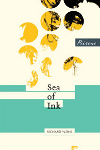
Bada Shanren was born in luxury but chose to abandon said luxury for the robes of a monk. Inspired by his father and taught by the abbot he begins to paint, learning about himself and the world in a unique way as he does so.
A mixture of fact and fiction, Weihe’s chaptered novella spans almost an entire life in a very short time. Whilst the background is given to the reader as a non-fiction account, and non-fiction it is – the story of the Manchu conquest of China – the rest is a mostly imaginary tale of Shanren’s life. For what Weihe includes in his narrative is the sort of content you do not find in biographies: detailed thoughts and a tale that is as artistic in its written style as it is in its subject.
And there is a large amount of detail in this book; indeed just like art, it is varied, some details existing as part of the narrative, others being more about structure of subtext. A great deal consists of a subtle philosophy – sentences, ideas – often not discussed and simply just put out there, so to speak. And on the other hand there is, for example, a difference in the written style of the military non-fictional section compared to the fiction – the non-fiction reading rather like a set of bullet points without the bullet points themselves, and the fiction flowing more like the water that plays such a big part in Shanren’s life. If the non-fiction feels stilted, the fiction is liquid prose and beautiful.
The philosophy concerns art, first and foremost, but is inevitably linked to life in general. Often poetic, it draws from a pool that seems a blend of regular worldly philosophy and classical Chinese sayings, the result being highly interesting.
For me as a painter the value of the mountain is not in its size, but in the possibility of mastering it with the paintbrush. When you look at a mountain you are seeing a piece of nature. But when you paint a mountain it becomes a mountain. You do not paint its size, you imply it.
What is particularly intriguing about Shanren, at least in the way Weihe presents him, is the link between the self and the way the painter continually changes his name. Weihe himself, in the afterword, speaks of the artwork being a representation of the painter. Whilst it may not always be the case, there often seems a match of one style or atmosphere to the paintings and the name Shanren goes by at the time. He changes his name to suit the place he is at in his journey to master technique, his art, and the answers to his abbot’s questions.
As an additional point the reader may find the parallel between Shanren’s life and the life of Siddhartha Gautama, The Buddha, rather poignant. Like The Buddha, Shanren has an epiphany of sorts and decides to leave his wife and son in order to live simply with a spiritual aim. And like The Buddha – although Shanren does in fact seek a new wife after he realises his diversion from the path set by his ancestors – he comes to a spiritual awakening. The two figures shared a basic understanding of the world through Shanren’s following of the way of life created by The Buddha.
To read Sea Of Ink is to have a history lesson, art lesson, and language lesson at once. Jamie Bulloch’s translation seems at one with the original text, a good substitute where the original cannot be read. Weihe has included a lot of information and yet when reading it does not feel at all so. And the additions of the paintings themselves is a boon that allows Weihe to describe the method of painting in a way that means the reader can literally follow the brush. This written technique may at times feel overused, but it is an intriguing concept nonetheless.
If you are guided by human feelings you will easily lose your way, a wise saying went, but if you are guided by nature you will rarely go wrong.
Sea Of Ink, about art in its many forms, transcends the usual notions of appeal; it is far from restricted to those who have an interest in its most obvious aspects.
Sea Of Ink was originally written in Swiss German, and was translated into English by Jamie Bulloch.
I received this book for review from Peirene Press.
Related Books
None yet
K Hollan Van Zandt – Written In The Ashes
Posted 17th September 2012
Category: Reviews Genres: 2010s, Fantasy, Historical, Romance, Social, Spiritual
6 Comments
Burning libraries in the name of Christ.
Publisher: (self-published)
Pages: 393
Type: Fiction
Age: Adult
ISBN: 978-1-4525-3513-5
First Published: 2011
Date Reviewed: 13th September 2012
Rating: 3/5
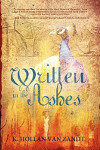
Written In The Ashes is the story of one girl’s journey from slave to potential saviour of the right to religious freedom, and the way the events of society culminated in the burning of the Great Library of Alexandria. At once combining the regular workings of ancient Egyptian life and a somewhat epic adventure, the book is the first in a series.
Unfortunately the beginning section of the book does not express the above. The first part of Written In The Ashes is badly written; there is unnecessary melodrama and plot points are left hanging when they require resolution. The melodrama comes in the form of the main character, Hannah, being unreasonably gallant – she throws caution to the wind many times without thinking about the consequences. An example of a plot point left hanging is when Tarek gets bitten right to the bone and then proceeds to help Hannah, who has sprained an ankle during a show of gallantry, get home, carrying her weight by himself. When they get home Hannah is looked after and stays in bed recovering for weeks, whilst Tarek… well nothing happens, you never hear of his mortal wound again. By all accounts, in an unsanitary society Tarek should be dead.
There is a significant amount of info-dumping about locations and ideas that are not needed. The author describes things that don’t matter, such as telling us that while Hannah was speaking her hair escaped her hair-tie; one can presume from the context that Van Zandt wanted to insert a romantic atmosphere into the scene but without continuation it is superfluous. There is constant repetition of the word “so” that has no meaning, as well the device of “an angel” you’ve never been introduced to, who is doing something, be it smiling, being irritated, and so forth. In the second section Van Zandt finally introduces the reader to the concept, at which time you realise the idea itself is a good one, it’s just a pity it was poorly handled.
So we come to this second section of the book and we do this specifically because suddenly that change in section does everything for the story. The writing style is wonderfully different, plot holes are no longer employed, and the characters come into their own. The story takes on a brilliant mythical religious atmosphere and invites the fantasy genre to stake a claim in its contents. The adventure suggested in the summaries begins and everything here after is much better than the initial first section of the book. It is incredibly easy to get lost in the tale and forget all that came before.
For the most part, the third section continues the goodness of the second, but there are a couple of bad aspects to it, in particular the jump in time. The second section ends with the characters in a rather vulnerable position, and then the narrative suddenly jumps ahead by three years. If this was due to factual events happening that Van Zandt had to subscribe to, it is understandable, but due to the narrative of her fictional characters it does not work – and whilst Van Zandt shows that a threat is still there and must be dealt with hastily, it appears in the backs of the characters’ minds. It would have been better had Van Zandt taken artistic liberty with the historical facts and moved events forward, especially as to all intents and purposes it seems the characters forgot all about their friend for three years for no reason.
Yet whilst it needs editing and duplicate actions removed, on the whole Written In The Ashes isn’t a bad book. Indeed although the violence is strong it fits the period, and there is the element of early Christianity included that is so rarely spoken of elsewhere. Van Zandt really looks into the Parabolani, the so-called Christians (in other words people who believed themselves Christians but behaved as anything but) who took to persecuting anyone who would not convert. The situation was the complete reverse of the Biblical stories of Rome against Christianity and whilst Van Zandt may have created some of the episodes that happen, it is merely the extra details that are fictional. Thus the book is important because in a western world where every other sort of persecution has been publicised, little is taught of this situation. And it gives the library’s female academic, Hypathia, an expanded, if fictional, story, bringing to light both the success and plight of women.
It is unfortunate that the book lacks an air of completion (away from the slight cliff-hanger ending as this is the first book in a series) but there is a deal of goodness here and it would appear that Van Zandt has the potential to be a great storyteller.
Written In The Ashes is a fair look at society and religion in era of the ancients. It will invite research and thoughts to be overturned, though it may be difficult at times to get there.
I received this book for review from the author.
Related Books
None yet.


