

Charles Dickens – A Christmas Carol
Posted 20th December 2013
Category: Reviews Genres: 1840s, Philosophy, Social, Spiritual
4 Comments

Before it’s too late… (Incidentally, before it’s too late to post this review!)
Publisher: Various
Pages: N/A
Type: Fiction
Age: Adult
ISBN: N/A (Vintage’s is 978-0-099-52973-6
First Published: 1843
Date Reviewed: 15th December 2013
Rating: 5/5
Please note that this novella is often published with the inclusion of other stories by Dickens. The edition I read was Vintage Classics, which includes The Chimes and The Haunted Man, but this review only deals with A Christmas Carol.
It’s Christmas Eve and, the same as every year, Mr Scrooge isn’t interested. Hating Christmas and preferring money to people, he declines his nephew’s invitation to Christmas dinner, tells his clerk he can have the day off but to be in earlier on Boxing Day, and leaves work to spend the evening on his own in his dingy suite. But his evening is far from quiet. He is visited by the ghost of his deceased business partner who tells him he will be visited by three spirits and that he has to change his ways before it is too late.
A Christmas Carol is a riveting story that far surpasses, as you might suppose, any of the film adaptations and abridged versions that have been created since.
As most people know the story it is probably best to comment on the book with this in mind and say that the writing itself is a real treat, the book is very funny, and there is the inclusion of the author himself in the story that is simply worth knowing about. This inclusion is mostly to show how Scrooge could change, though there is a particular statement which, in our present day, comes across as from the grave and thus rather spooky.
Unlike, for example, Great Expectations, A Christmas Carol is not jammed-packed full of words. The text flows beautifully and the pages pass quickly and easily. The story is not at all spoiled by prior knowledge of the work – if you like the story but do not read the book it must be said that you are missing out.
Although society in general isn’t a theme of the book, the modern reader can learn a lot about Dickens’ time. Whilst Scrooge’s tale may be somewhat escapist, you can read through the lines, read through Dickens’s descriptions, to find out a lot about life and, of course, Christmas.
A short story with a firm message, A Christmas Carol is an excellent novella. And the fact that it is from this story that the greeting ‘Merry Christmas’ entered general use makes it more than perfect to read this book during the holiday in which it is set.
Related Books


Andrew Blackman – On The Holloway Road
Posted 11th October 2013
Category: Reviews Genres: 2000s, Commentary, Law, Philosophy, Political, Social, Spiritual
5 Comments

A trip for freedom.
Publisher: Legend Press
Pages: 202
Type: Fiction
Age: Adult
ISBN: 978-1-90655-808-2
First Published: 2009
Date Reviewed: 7th October 2013
Rating: 5/5
Jack lives a monotonous life. He wakes up in his mother’s house, tries to continue writing his novel, fails, goes out every now and then, rinse and repeat. One evening he decides to eat a dreary kebab in a dreary shop but his meal is interrupted by Neil Blake, a man of a similar age who has led a more colourful, slightly illegal life. Whisked away by Neil’s friendly nature, Jack finds himself at pubs and parties. Then Neil suggests a trip to Scotland.
On The Holloway Road is a clever and well written book, inspired by Kerouac’s On The Road, that deals with the themes of life and freedom. Written in hindsight from Jack’s perspective, the story is slow, aptly lazy in its pace at times, and a little satirical.
The characters are complete opposites, and not supposed to be liked particularly. Neil is impulsive, he dislikes any limitations placed upon him by outsiders, and he is full of charm, but he can be thoughtless and selfish. Indeed he would laugh at being told to think about repercussions – the reader is likely to think ahead and question Neil’s decisions, and it is exactly that action that Neil would denounce. Neil lives in the moment, lives for freedom, has experienced the other side of the coin and sees its flaws. In comparison, Jack has little will, in fact what will he does have is a side effect of his spending time with Neil. Jack is content in his monotony, his typical life that fits neatly into the slot, and though he isn’t happy he won’t do anything to change that.
Jack’s overall dullness is a major reason the book is slow. Rather than an error on the part of the author, the pace is a decided upon element that shows you just how different Jack and Neil are. Neil’s dialogues are fast paced and full of words, as Jack says, but it is the difference in nature that allows the reader to see where Jack’s safe life might be too safe, whilst of course showing that Neil falls a bit too much towards the other extreme. The book is very much a character study as well as a different take on Kerouac.
It is character-driven, and it is plot-driven, yet at the same time it would be difficult to say that there is a plot as such. The plot is vastly in the realm of the book’s themes. Blackman has crafted a commentary, a very sharp commentary that strikes at the heart of current political, social, and law elements that protect/hinder (depending on the way you see it) the people of the United Kingdom. Through Neil and Jack, Blackman shows the limits of the people’s freedom, the limits imposed by the government and councils. There are many scenes where Jack finally lets go a little, Jack the good lawful if boring citizen, and is rewarded by a penalty of the exact type the duo are trying to escape. As an example, a trip to a country park costs them £100 in car parking fines when they get back to the car and notice the fine details of the parking space.
Freedom here is woven into the larger political context. The story shows the differences between someone who is institutionalised, or just used to, the way of the land, and another who isn’t. And of course what is interesting as well as understandable is the way it’s the person who has been to jail that wants to be free, especially as it is a freedom in lifestyle that Neil wishes for (in other words Neil isn’t wanting the ability to go and kill someone). It’s the case that everywhere they go, Neil says they are or should be free. The government soon tells them they aren’t.
Leaving my Figaro marooned in the grass, I walked forward to get a better look. Warnings were being shouted through a megaphone. Acts of Parliament were being invoked. Arrests were being promised. The appearance of fairness, of reason. Disperse now. A chance to avoid arrest.
And if reason failed, as it surely would, then violence would be justified. Protocol would have been followed. The blows of the batons would have legal sanction, while any retaliatory violence would be grounds for prosecution.
Jack is no one without Neil, and indeed it comes as no surprise to understand, through Jack’s words, that he relies on Neil to ‘live’. It’s one of those things you know instinctively, and it just takes Jack’s words to cement it. And as for Neil, it seems that freedom he wants is nowhere – no matter restrictions or not, you get the sense he will always be against something. In this way the ending is very appropriate, the particular ending for him says a lot about the character and what Blackman is trying to say.
To refer to the inspiration, Kerouac’s On The Road is used both behind the scenes, so to speak, and in the story as an element in itself. Jack and Neil listen to the audio book whilst travelling; it is almost a double usage of the work, between the tape cassette and Blackman’s references to it as the author. It forms a lot of the philosophy and quotations are borrowed and reworked so that they fit in with Neil and Jack.
As the book reaches its ending, another clever aspect becomes apparent. The way it is written, the way the story is referenced, makes it seem possible that it could be about Blackman, that it could be about anyone. Twisted into the last chapters is the final resolution – the answer to what happens after the book concludes, there is even a hint as to what happens a lot further down the line. If only Jack takes the chance.
It seems he did, or perhaps he hired Blackman to do it for him as the author clearly knows more than Jack, just as Neil does. Blackman is almost the unbiased third party, the person in the middle of the two.
On The Holloway Road is superb. It is likely to appeal most to British readers, as they will be able to relate to the political details well, but the references to Kerouac and the commentary will interest readers of other nations too. And the theme of freedom is universal as are likely some of the civil elements.
I know the author as a fellow book blogger.
Related Books


Speaking to Andrew Blackman about On The Holloway Road, and A Virtual Love (spoilers included)
Charlie Place and Andrew Blackman discuss life on the road, following in Jack Kerouac’s footsteps, offline and online identity, writing an entire book about a character but never giving them a voice, current climate change activism, and withholding – for very good reason – the endings your readers expect.
If you’re unable to use the media player above, this page has various other options for listening.
Kristina Carlson – Mr Darwin’s Gardener
Posted 16th August 2013
Category: Reviews Genres: 2010s, Historical, Psychological, Social, Spiritual, Translation
3 Comments

Everyone but themselves.
Publisher: Peirene Press
Pages: 112
Type: Fiction
Age: Adult
ISBN: 978-1-908670-09-0
First Published: 2011 in Finnish; 2013 in English
Date Reviewed: 1st August 2013
Rating: 3.5/5
Original language: Finnish
Original title: Herra Darwinin Puutarhari (Mr Darwin’s Gardener)
Translated by: Emily and Fleur Jeremiah
In a village in the 1800s, people are concerned about Charles Darwin’s research, and are preoccupied by his garderner.
Mr Darwin’s Gardener is a book in which people worry about change, about the lack of change, and things they don’t know about.
The style of the book is poetic. For the most part the book fits the concept of a prose poem and to a person unused to poetry it may thus prove confusing. The writing itself, translation or not (this edition has been translated from the Finnish by Emily and Fleur Jeremiah), emphasises the erratic changes in the thought patterns of the villagers and keeps a steady pace.
The thoughts are told in the first person with an introduction of sorts in the third. It is somewhat ironic that at times it’s difficult to tell who is speaking, as Carlson’s writing emphasises the similarities between her characters and she writes in the same voice for each of them – presumably, in part, to ensure the poetic nature of the book. Due to the irony, the way the book is poetic, it is impossible to say that in this case not being about to tell the characters apart is a bad thing. Indeed the creation of an almost completely solo voice says much about what Carlso is looking to achieve. It is a crowd of like-minded people that is anxious about the gardener, rather than the individual.
There are a lot of details about all manner of subjects owing to the erratic thought processes. By and large thoughts begin with Darwin or his gardener and can end up anywhere. This darting about can create some confusion that echoes the characters’ minds.
The themes of the book are identity, the world (in a way), and a subtheme, of sorts, of everyone concerning themselves in the lives of everyone but themselves. Indeed although it begins with everyone worrying about the soul of the gardener, it soon becomes a worry about everyone and their dog. At times it would seem that no one has anything to do, barring think, and whilst in some cases that may be true, in general it’s not.
So, as you can tell just from this review, the book is thin on plot. It is a character-driven story, a series of monologues, yet the only person who develops in any way is Mr Davies, the gardener. But then the plot isn’t what is important, and instead of the otherwise-expected character development there is the reinforcement of views. It is difficult to explain, but the book is extremely character-driven without being character-driven.
The book shows ‘busybodyness’ in the extreme, and illustrates how individuals’ lives might be better if they just concentrated on themselves. Mr Darwin himself doesn’t feature, which is just as well really, because it wouldn’t be nice to feel an outcast in your own village.
Mr Darwin’s Gardener won’t please everyone. And it will render some readers very confused. But as a study it works well enough. Definitely requiring the utmost of your attention, this is a book to really delve into and read slowly.
I received this book for review from Peirene Press.
Related Books
None yet
Richard C Morais – Buddhaland Brooklyn
Posted 10th June 2013
Category: Reviews Genres: 2010s, Philosophy, Social, Spiritual, Theological
2 Comments
When worlds collide.
Publisher: Alma Books
Pages: 275
Type: Fiction
Age: Adult
ISBN: 978-1-846-88241-8
First Published: 2012
Date Reviewed: 7th June 2013
Rating: 4/5
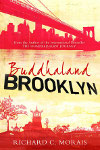
Japanese Reverend Oda was sent to the monastery as a child by his parents. The action saves his life and he comes to enjoy living in the temple. But the temple is moving on, modernising, and where there are now western Buddhists there is the requirement for a competent priest to move to America. The temple believes Oda is that person, but Oda feels very differently. And working with and teaching westerners who have not grasped the teachings may prove difficult.
Buddhaland Brookyn is a peaceful book, in its words, about cultural clashes and how they influence the working together of a group of people who must be a team. It demonstrates how, with more thought, people can overcome their differences and work together. Morais offers a poignant character in the person of Oda.
Yet it must be pointed out immediately that Morais’s Buddhism here is not at all the sort you are likely expecting, and this is true no matter how much or how little you know of the religion. Reverend Oda smokes and has sex, eats meat and drinks alcohol, and his fellow priests go shopping on the high street for golfing clothes. It is indeed best that the potential reader knows this beforehand so that they can decide whether or not it would work for them. This is in part because it means that so many of the cultural differences that would ‘usually’ occur in such a situation, are not here. (It should be noted that Morais says, in the acknowledgements, “My novel should in no way be considered a serious religious work…”.)
Yet the absence of the expected Buddhist tenets does allow for Morais to concentrate on the less general areas of conflict that might have occurred. Instead of dealing with, for example, the decadence of his American congregation, Oda must teach them that their faith is a little misplaced (for example believing that prayer helped a company survive). This is where the heart of the book lies, in the transitions that need to be made by the congregation, as well as the understanding Oda must develop of his adopted land.
Oda is at the heart of the book – his change as a person is the most important. This may seem odd considering that it should be the western believers changing in order to be true Buddhists, but Morais made the right choice. As mentioned, Morais’s Oda is a wonderful character, and it’s evident that the writer has spent a lot of time getting him ‘right’. And the flow of the story, the way it has the capacity to draw you in for countless minutes before you realise just how many pages you’ve read, is a very good thing. It ought to be said, however, that this does mean the secondary characters are not as developed and a lot of their inclusion is down to the easily-identifiable stereotypes they provide (Morais is not being prejudice, he uses stereotypes to make the conflicts simple to understand).
The book ends quietly, there is no great statement or revelation. It should be noted that depending on the reader’s feelings about Buddhism, or, more so, religion in general, they might find the compromises made – in light of what happens in reality – disappointing. Yet the book’s story and voice, and the feeling that it could have been a memoir, keep it relevant and engrossing.
This Brooklyn presents a very different Buddhism, but for what it is the book is a success.
I received this book for review from Alma Books.
Edited on 11th June to reflect the information later provided of Morais’s long-time interest in Buddhism.
Related Books
None yet
Beth Hoffman – Saving CeeCee Honeycutt
Posted 24th April 2013
Category: Reviews Genres: 2010s, Angst, Domestic, Historical, Political, Social, Spiritual
9 Comments
A little goes a long way.
Publisher: Abacus (Little, Brown)
Pages: 311
Type: Fiction
Age: Adult
ISBN: 978-1-408-70371-7
First Published: 12th January 2010
Date Reviewed: 1st April 2013
Rating: 5/5
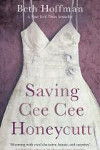
CeeCee Honeycutt is the only person who cares about her mentally ill mother; her father is always away, and CeeCee has no friends except the kind elderly lady next-door. When Mrs. Honeycutt is killed in an accident, CeeCee’s neglectful father hands her over to her great aunt. Will it be worse in Savannah, the home her mother longed to return to, or will CeeCee find the regular life she’s always wanted?
Saving CeeCee Honeycutt is the gripping début by Hoffman that combines a young person’s thoughts with an adult readership to interesting and, let it be said, successful, effect. Drawing on history with all the discrimination it involved, Hoffman introduces the reader to the world of a girl on the cusp of her teenage years, who has struggled to find her place in a town where she is guilty by proxy.
Important to discuss first is the text and structure. Hoffman has produced a very special work. As previously stated, Saving CeeCee Honeycutt is gripping, yet on the surface that is something that shouldn’t be so. Hoffman’s book is slow, and there is not much action. The climaxes are minor and from the start it is obvious that there will be no great reveal. And yet yes, it is absolutely gripping. What Hoffman has achieved is that feat so beloved of many readers of literary fiction – whilst little happens in reality, this slowness allows for a great amount of detail. Hoffman’s 12 year old CeeCee is believable and partly for that reason, that the author allocated so much time to character development. The pages turn themselves and even in times of conflict, a certain calm pervades the text that suits the pace of life portrayed here. You can enjoy the proceedings without that nagging sense of wanting to get to the end of the book to discover the conclusion.
Talking of CeeCee, the prospective reader might wonder whether the thoughts and life of a 12 year old in 1960s America would be interesting enough to the mature target audience. Inevitably opinions will be divided, but Hoffman has ensured that her character is well-read, thoughtful, and mature beyond her years in many ways. CeeCee makes bad decisions of the kind any 12 year old might when they do not understand repercussions, but these choices and the way Hoffman otherwise presents the character mean that instead of being off-putting, the reader can empathise with her, will her to see the poor decision for what it is.
As said, CeeCee is far from perfect. Indeed there is a section where the previously grounded child, having grown up witnessing hatred and loneliness, takes it upon herself to inflict pain on another. It could be said that this was a bad move on Hoffman’s part and out of character for CeeCee, and yet it’s not at all easy to just accept that thought and move on. Besides the obvious element of understandable immaturity, Hoffman demonstrates how even the kindest person can turn down the wrong path sometimes, and, most importantly, she shows how CeeCee’s overwhelming love and gratitude for someone can translate as an urge to get back at the one who hurt her friend.
The history in this book is mostly subtle, though there are times when it is explored in detail. Hoffman doesn’t shy away from using the damning words and descriptions employed in the 1960s, using her characters to remind her readers of the prejudice towards Africans and, of course, the mockery of the mentally ill. Hoffman shows how despite emancipation, Africans were viewed with scorn, used as scapegoats in a world that believed an account based on whether or not you were of the right colour.
This history and the usage of it pervades the dialogues – in a way Oletta, the cook, is stereotypical. However there is this undercurrent of fact, Hoffman clearly wants to use all the appropriate and available aspects to really teach her readers what life was like, to make them feel as though the story is real and they are a part of it – because whilst it’s fiction there are many truths woven into it. What is of course wonderful, if predictable, is how the major white characters themselves treat African Americans, and how they are a part of the drive towards modernity. Their natures are explanations, and allow the author to portray the many different attitudes.
To be sure, in order to enjoy this book one needs to be happy with the idea of a young narrator, no matter how mature that narrator is. CeeCee can be a little too precious, and is headstrong in times of trouble – but then how many children are truly angels? Saving CeeCee Honeycutt is low on plot but bursting with character development and detail. And given that the plot is secondary, that is a fine thing indeed. If the idea of lazy but satisfying sunny days in a historical Savannah, mixed with some hard-hitting facts, is at all intriguing to you, then you are sure to love this book.
Related Books