





Elizabeth von Arnim – The Enchanted April
Posted 12th May 2014
Category: Reviews Genres: 1920s, Domestic, Spiritual
11 Comments

Just one day out of life. It would be, it would be so nice1.
Publisher: Penguin Modern Classics
Pages: 219
Type: Fiction
Age: Adult
ISBN: 978-0-141-19182-9
First Published: 1922
Date Reviewed: 9th May 2014
Rating: 4/5
Mrs Wilkins likes the sound of a castle in Italy, a month’s holiday, and after much badgering enlists a relative stranger, Mrs Arbuthnot, to join her. Deciding they should make it cheaper, they interview and then invite two others. Away from society, away from routine, away from their husbands, the castle is great idea. But from the start things don’t go quite to plan. Caroline got there before the initial two holidaymakers, and has planned the meal times. Mrs Fisher has taken over the nicest sitting room. Mrs Arbuthnot’s a little disheartened by the change in roles, but Mrs Wilkins is adamant it doesn’t matter. They should all enjoy the holiday and use it to make their lives happier. She’s the only one who thinks that way.
The Enchanted April is a novella that focuses on the changes in four women that occur over the course of their holiday. Some changes are sudden and big, others take a long time and are smaller, but by the end everyone has changed in some way. There might even be others who change, too.
The book is very much character-driven. The plot remains simple – a holiday in Italy – and the characters never leave the castle grounds, excepting one who goes only a little further afield and whom the reader is not invited to join. The emphasis is on transformation, the castle simply a pretty backdrop – it’s as though it’s there so that you as a reader can also go on holiday and in your relaxed state can be more aware of the women you read about.
The characters are as follows: Mrs Wilkins is determined, perhaps a little flighty, and sees the good in everyone. Mrs Arbuthnot is more down to earth, but it’s interesting to see the change in her – she sounds very set in her ways, traditional, perhaps old before her time. Caroline is a Lady, and very pretty, so pretty that she has trouble getting away from leering men. She also has an issue with her voice making everything she says sound wonderful. And Mrs Fisher is a grumpy older woman who you know has the potential to enjoy the holiday if she’d just let herself go.
Whilst the book is a simple then-contemporary story, quite a lot rests on Mrs Wilkin’s ‘seeing’ things happening in the future. It’s not magical realism and nowhere near being paranormal, but it does leave you to consider the power of suggestion, even if it’s just that Mrs Wilkins is incredibly optimistic. Whichever it is, Mrs Wilkins puts everything in motion, and the fact that she may not, at first, seem as grounded as the others, means little.
There is a twist in the tale, about half-way through, where the dynamics change. Depending on how well ensconced you were with the book by that time and depending on how you viewed the women (their holiday and the resulting freedom) this twist may come as an unwelcome shock. It does make you rethink the initial suggestion that these women need and deserve a break, and that they are only now able to remember who they are as individuals, but at the same time von Arnim shows how that this twist could be just as important in the long run. It may be good to focus on the women, but how much of their lives back home would be altered for the good if it’s only them who are different?
Yet it could be argued that the real reason the twist exists is to show that at the end of the day the women are no longer truly their own people. One situation in particular may leave a bad taste in your mouth for its secrets, and the twist is the very thing one of the characters had come to the castle to avoid. The ending is also somewhat convenient and not quite believable – it’s as though von Arnim suddenly read what she’d written and decided that it wouldn’t do at all as it was.
For the most part the characters are developed, even Mrs Fisher and her very sudden change that seems tacked on the end of the story, but in regards to Caroline there could have been more time spent on description. ‘They hadn’t reckoned on Scrap [Caroline]’ is a constant statement made by von Arnim, but whilst on some occasions, and luckily on the most important occasion, this is explained, on the whole ‘Scrap’ could’ve been afforded more time.
The Enchanted April offers a short reprieve from life, for all involved, and much promise for their future. And it offers a holiday for you, too, for there is surely an unmarked fifth invitation from Mrs Wilkins waiting for you in the pages.
1 Lyric from Holiday by Madonna.
Related Books
None yet
Greg McKeown – Essentialism
Posted 18th April 2014
Category: Reviews Genres: 2010s, Business, Spiritual
3 Comments

Less is more.
Publisher: Crown Business (Random House)
Pages: 246
Type: Non-Fiction
Age: Adult
ISBN: 978-0-804-13738-6
First Published: 15th April 2014
Date Reviewed: 16th April 2014
Rating: 4/5
McKeown discusses the essentialist way of being (choosing only those options in life and work that will get you closer to your goal and forgetting those that distract you and use up time).
Essentialism is a relatively short and informative book, which whilst a little repetitive and high in case studies, succeeds in suggesting why McKeown’s thoughts are of use.
The author urges us to do the opposite of common working practises. He says to take on only a few tasks and excel in them, rather than to try and do everything. He notes a good night’s sleep as essential, in happy contradiction to the idea that a sleepless worker is a hero. And he recommends actively saying ‘no’ when we want, instead of saying ‘yes’ to what we actually don’t want – those things that will ultimately waste our time. He includes tales from his own life in a way that simply teaches, never preaches.
(It is an interesting concept when you think about how bloggers initially feel they should say ‘yes’ to every request, and how they can become better bloggers by being more in control of what they want to read and discuss, when they are more selective.)
McKeown recounts a conversation he had with a person who remarked that we are no longer bored. We have phones that text and can access the Internet whilst we’re in a queue, for example. No longer being bored is of course good, but McKeown notes the fact that it means we have less, even no, time for thinking.
It is interesting to consider McKeown’s values, what he hopes we’ll adopt. To view it as a list it reads as a holiday plan – time to think; less to do; more sleep; not being so busy; time for play and leisure; done is better than perfect. McKeown’s focus on quality is key to his argument. Discuss with your boss if a task given to you won’t get done, make time for your family. It’s intriguing to note that the author’s method of working means spending more time thinking about options than you would, but he discusses how planning saves time in the long run.
Overall the book is a good read and full of value, but there does come a point where you feel he could have applied ‘less is more’ to his content. He starts to repeat information, which may fit his thoughts on routines helping memory but isn’t necessary in a short book. There are a few too many stories where it would’ve been better to simply carry on discussing strategies. The book isn’t particularly well-written but that’s not important in regards to its purpose. This said, fewer instances of non-classic media being called classic, fewer uses of the word ‘classic’ in general, would have rid the book of its slight ‘name-drop’ atmosphere.
Essentialism provides a thorough grounding in a better way to live and work. It will best suit those who already have thoughts in mind to change, though almost everyone will find it of use in some way.
I received this book for review from the publisher.
Related Books
None yet
Peggy Riley – Amity & Sorrow
Posted 14th April 2014
Category: Reviews Genres: 2010s, Angst, Domestic, Social, Spiritual, Theological
5 Comments
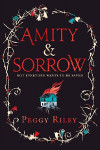
When one marriage leads to another.
Publisher: Tinder Press (Hachette)
Pages: 324
Type: Fiction
Age: Adult
ISBN: 978-0-755-39436-4
First Published: 1st March 2013
Date Reviewed: 7th April 2014
Rating: 3/5
When the fire started burning down her polygamist community, Amaranth took her two daughters and escaped. Happy to marry and comfortable with her growing family, if uneasy about the ceremonies, Amaranth was glad to defend her people as women left and those living nearby took an interest in what was going on. But after her good friends leave and her husband draws their daughter too close, the first wife knows she and her daughters must leave, too.
Amity & Sorrow is the story of the plight of a mother who has become too used to her life. Interestingly, it is not so much about the plight of her daughters, which is the reason for some of the issues.
There is just something ‘off’ about the book. The cult is presented fairly well, but the writing style doesn’t fit the subject. Even though the reader knows the cult is bad, and has the details to imagine the situation, the literary style of writing distances you from it. The story may include the information, but it doesn’t truly try convince you of it, even if you are convinced.
It’s interesting to look at the choice the author made as to where the mother and daughters would end up. On the one hand you have them crashing the car into what many would see as a backwards place – a farm worked by only a couple of people; an ancient television set; a rarely-used petrol station; a lack of modern technology despite its day. What this choice means is that the family have little opportunity to see what life is like for the vast majority, to get used to the ‘new’, and to rehabilitate. This in turn means that the book lacks any big moments in the plot besides those in the flashbacks and at the end, and that whilst they escaped you might not feel as though the women will truly live life to the full, especially as Amaranth seems happy to remain in the first place they find.
But on the other hand, this lack of modernity, this lack of computers (other than one instance in a town) and so forth, mean that the family are eased into the world. It means that the changes in Amaranth especially (the girls will be discussed in due course) are slow and she has time to get back to life as it was when she was a member of society. You see more of her adjustment than you would if she’d found herself in Silicon Valley, or the like, where the change would have been immediate but only on the surface for its suddenness. Beginning in the middle of nowhere in a place more familiar in lifestyle, there is perhaps less of a chance she’ll return to the husband who brainwashed their daughter.
The sisters, Amaranth’s daughters, Amity and Sorrow, were born on their father’s land and therefore their reaction to their mother’s escape is, if not in words, that she has kidnapped them. Sorrow especially wants to return; she is the sister most brainwashed by her father, the cult’s leader. It is in Amity, the less extreme of the two, that the reader gets to see the most progression. Amity is more open to change, and whilst it may seem a little too fast a progression at times, Amity’s growth makes up for the little growth otherwise.
It is in Sorrow’s experience, specifically, that the story lies, and it’s also in her life that the potential dissatisfaction with the ending is to be found. She is not as developed a character as the others, in fact it could be said that she is a plot device; yet without her Riley wouldn’t have been able to explain her points. Sorrow was impregnated by her father, who had sex with her, having brainwashed her so much that she believed it was important and right that she and her father ‘make Jesus’. Whilst not commented on in the text itself, there is the obvious theme of consent running throughout the book. Incest itself is discussed.
And because it is this event that wakes Amaranth to the reality, finally, (if even then late in the day), the story continues on with Sorrow’s extremist beliefs taking what amounts to the biggest element of the book. Sorrow is always looking for a way back, because she doesn’t know any different and she is at an age where she won’t listen to her mother, especially not a mother who has left her, Sorrow’s, glorious father. The issue here is that whilst Sorrow’s extremism is believable, the extent to which she is, to all intents and purposes, encouraged, is not. Amaranth spends very little time with her daughters, even though, as the one person in the three who knows about the real world, she should have been helping them. Instead she starts to make a life for herself by herself.
A warning here to anyone who doesn’t want to read too many details: the ending of the book needs to be discussed because of what it effectively does, and will be in this paragraph. Amaranth, though obviously scared and still suffering from the manipulation and abuse under her husband, shows, in leaving the cult, that she still has her wits about her. She knows what is right and wrong both in regards to her own beliefs and the world at large, and she takes her daughters away from their father. Due to this escape, it is hard to believe that in the real world, such a woman would ultimately leave her daughter back at the cult’s land together with the father, after having tried and failed to convince the daughter to return with her to their new home. Maybe she would leave her temporarily while she went to the police for help, but leave her there for good? You can’t say that due to the possibility for danger, as the daughter is very unstable, it is best she stay away from Amaranth and Amity – the girl has had no chance to change and the handful of days during which there was space to influence her were not enough. At worst there are places she could be sent away for care. Perhaps Riley is showing us just how brainwashed and scared someone can become, but given everything that Amaranth does and thinks beforehand, the conclusion is not at all sufficient.
Where Amity & Sorrow gets it right is in the small things – the wondering about the changes to the world since Amaranth left it; the comparisons of dress and its relation to sexuality; the overall consideration of religious cults; to some extent, Amity. But with its poor choice of voice, underdeveloped characters, and the knowledge the reader will be left with when it’s over – the knowledge that what you’ve read is very wrong on a completely different level to the basic wrongness of the cult – one would be hard-pressed to recommend it for its story. You could try to come up with an explanation for the ending, but this is one book for which the ending is impossible to make right.
Related Books

Nancy Bilyeau – The Crown
Posted 26th March 2014
Category: Reviews Genres: 2010s, Domestic, Historical, Mystery, Political, Social, Spiritual
7 Comments

Curses at the convent.
Publisher: Orion Books
Pages: 470
Type: Fiction
Age: Adult
ISBN: 978-1-409-13579-1
First Published: 1st January 2012
Date Reviewed: 25th March 2014
Rating: 4/5
Joanna, a novice at Dartford Priory, leaves secretly to be at the execution of her cousin. She expects to bear witness and return to Dartford, but when the fateful time comes, her father rushes to assist the condemned and she, Joanna, finds herself in the Tower of London. Few leave the Tower alive but Bishop Gardener has a proposition for Joanna. He’ll spare her father if she’ll seek the crown of the old king, Athelstan, a legendary item said to bring greatness – and ruin.
The Crown is a particularly well-researched and well-written Tudor suspense that may not have the shock factor of some books but continues on steadily and with a good few surprises in store.
The strongest element, the stand out element, is the writing and construction. Whilst of course not written completely correctly (because a book written in true Tudor text would be difficult to decipher) the language is good, there are no sudden uses of modern slang, and the times when modern phrasing is used are slight, few and far between, and in such small supply that it doesn’t matter.
This leads on to construction – Bilyeau has done her research. As in the later The Chalice – mentioned here because this reviewer read it beforehand – the history is accurate, the biases are taken from the historical views of the people rather than placed upon the characters by the author, and the times when Bilyeau swerves towards fiction fit together with the factual history like gloves. Joanna is a fictional character, but her family and those she meets are often not, and there are never any occasions where it is unbelievable that these events could have happened. Those looking to learn about the Henrican era will find plenty of true history here, and Bilyeau does not shy away from discussing where her imagination plays its role.
Except in the case of the cursed crown, of course. But this is supposed to be. In the creation of the Athelstan crown, Bilyeau has drawn from the questions for which we have no, or at the very least scant, answers. The crown’s curse affects those royals who did not live long or who died of mysterious causes. The make-up of the crown is not unbelievable when given all the relics in the world and in many ways it echoes such legends as the holy grail and the shroud of Turin.
Bilyeau has populated her book with a vast number of primary and secondary characters. The most developed are fictional, which makes sense; it must be said that in terms of history itself a basic grounding, perhaps even a fair grounding, in the Tudor dynasty and court politics will add to the understanding and enjoyment – the factual characters are well-known. There are a few meetings that can seem too easy but the suggestion of romance means that it is not necessarily a drawback, and of course in a book where the dissolution of the religious houses is a key point, Joanna’s future is a constant question.
Also included as themes are sexual abuse and prejudice against women. Both of these are explored as potential reasons for a woman to choose the life of a nun. A religious life was a way for women to escape the average existence of a woman of the times, to gain an education and make their own choices rather than be subject to the whims and demands of their families, and Bilyeau brings in these and a variety of other reasons to her book.
The book ends quite swiftly, being perhaps a little less striking than you may think, but in choosing the path she has, Bilyeau looks at yet another issue in Tudor England, one which is likely to strike a chord with the reader as the world has changed so much since.
The Crown focuses on not just a person but a community rarely studied in fiction. It examines what is often simplified to a brief schedule the day-to-day life of a nun and the true happiness that could be found therein. And it does this whilst being accurate to the time, unbiased, and packed full of information.
Related Books


Speaking to Nancy Bilyeau about the Joanna Stafford trilogy, The Blue, and Dreamland (spoilers included)
Charlie Place and Nancy Bilyeau discuss the lifestyle of Dissolution-era nuns, using a website’s ‘contact me’ form to great success, there being more relics than there were items, using your family’s name in your work, and the grand amusement parks and luxury hotels of New York’s past.
If you’re unable to use the media player above, this page has various other options for listening.
N K Jemisin – The Hundred Thousand Kingdoms
Posted 7th February 2014
Category: Reviews Genres: 2010s, Domestic, Fantasy, Political, Romance, Social, Spiritual, Theological
8 Comments
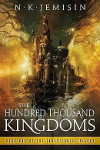
Where Gods walk amongst us.
Publisher: Orbit Books
Pages: 234
Type: Fiction
Age: Adult
ISBN: 978-1-909039-45-2
First Published: 1st January 2010
Date Reviewed: 4th February 2014
Rating: 3/5
Yeine, happily living in Darr, was commanded to ‘return’ to her maternal family’s palace in Sky to become one of three heirs to the kingdom and the world. As she learns what her role is to be, she’s given a proposition by the earth-bound gods that may not save her but will save her homeland.
The Hundred Thousand Kingdoms is a book that sports a different sort of fantasy but is unfortunately rather confusing, static, and badly written.
The world itself, or, rather, the possibilities for it, are wonderful and promising but Jemisin only goes so far in the building of it, and albeit that detailing the palace is understandable (the story is almost exclusively located there) it does make it hard for the reader to really see Yeine’s plight and her reasons for her actions.
The writing is often confusing. There is a constant switch between Yeine’s usual narration and her inner thoughts and torment, and there are times when she looks back at the day just passed in order to tell you something she forgot to tell you earlier. Whilst the style lends the book an individuality and Yeine a distinct voice, it also hints at a lack of planning, or, at least, the look of such. And at the end of the day the look of poor planning has the same result as an actual lack of planning.
The constant ‘switch’ in narration is a pity because it becomes apparent later on in the book that there was a real reason for it. The problem is, of course, that it is too little too late. What could have been an interesting exploration of Yeine’s sense of self is simply left to hindsight. It means that the switch may indeed work for the remainder of the book but that this doesn’t atone for the confusion of what came before.
The book lacks a true focus – is Yeine concerned about the gods, her homeland, or does she simply want to find out the truth of her mother? Yeine’s mother’s life may be intriguing but it is no match, story-wise, for what is happening at that present moment, to what is happening to the world and the gods, and Jemisin’s increasing focus on it moves away from the fantastical possibilities brought forth by the premise. Nor would Yeine’s mother’s life have a true bearing on Yeine in the future as Jemisin’s focus changes once again towards the very end.
Where the book does shine is in the variation of fantasy it employs. This is no high-fantasy travelling-the-world tale of dragons and witches, and whilst those are not bad elements and whilst the book could have spent more time away from the palace, it is good to have this difference. The city of Sky is at once realistic and utterly imagined. In Yeine’s land women rule (even if Yeine is not written convincingly in that way). There is a lot of unnecessary violence and bizarre thoughts but this does fit the genre. The problem is that Jemisin does not provide any reasons for the reader to care about anyone.
The Hundred Thousand Kingdoms had potential but much of that is lost. It’s possible Jemisin may detail more of the world in later books but without having much of an idea about anything beyond the palace already, not least the knowledge of what the hundred thousand kingdoms are, you may decide it’s not worth finding out.
Related Books
None yet


