





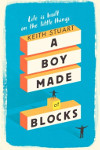
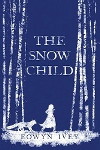
Eowyn Ivey – The Snow Child
Posted 27th February 2012
Category: Reviews Genres: 2010s, Domestic, Fantasy, Historical, Magical Realism, Spiritual
1 Comment
Days will be merry and bright if each Christmas is white.
Publisher: Headline Review
Pages: 404
Type: Fiction
Age: Adult
ISBN: 978-0-7753-8052-7
First Published: 1st February 2012
Date Reviewed: 27th February 2011
Rating: 5/5
Mabel and Jack moved to Alaska when Mabel suggested they could do with a new life. Having lost their child at birth, Mabel has never quite recovered and the solitary life of 1918 Alaska appealed to her greatly. A gulf is between the couple and Jack cannot understand how Mabel is still so affected. During their struggle to make it in Alaska they create a snow girl; the next day they see a child in the woods. Their world is suddenly filled with a happiness they never dreamed of but there is always the question of how long it will last.
The Snow Child is a sweeping story, encompassing many questions about how we connect with and treat each other. The setting allows the magic to be explored in a way that most anyone can identify with, while allowing Alaska to keep its reality, the author herself being from the state. Although the location never changes, the ride through the character’s lives can often make it feel as though you have been on a long journey. Though of course that is in many ways the point.
Albeit that The Snow Child rests firmly in what is termed “magical realism”, Ivey plays with her reader, coming back and forth with the idea that in fact everything is perfectly true, before throwing at them a snowball filled with thoughts to the contrary. Before the girl, Faina, entered their lives, Mabel and Jack’s relationship was uneasy at best. Faina’s entrance is the catalyst by which everything starts to change, because suddenly there is a child for them to look after, the gulf between them bridged.
And it is through Faina that Ivey shows us change over time. Jack was always more content with life than Mabel was, but the introduction of the girl causes him to move towards a feeling of fatherhood, one that is rather possessive. Mabel, on the other hand, sort of takes a reverse route, beginning by feeling desolate and depressed and ending as Jack begun, more accepting and open. In addition to this, the reader can see a parallel in the personalities and life of the couple’s neighbours, who come to feature strongly in the book.
Possession is a big theme of the book, with Jack and Mabel taking turns at being worried for Faina and wanting her to fit the mould of a child they have created in their minds. Ivey puts forward the idea that Faina might disappear if Mabel enforces her views of education and a stable home life, suggesting that one cannot direct the life of another, as Mabel cannot force a child of nature to be a child of the modern western world. As for Jack, his possessiveness comes to the fore when Faina makes strong choices of her own, choices that bring her properly into their world. Ivey demonstrates that while such possessiveness, especially on Mabel’s part, is due both to the sudden realisation that they have a child, and to the love they have for Faina, it can do untold damage where it is not held in check.
But the bigger theme is relationships. It takes Faina’s arrival for Mabel and Jack to remember who they were, both as individuals and as a couple, and there is a poignant moment when all three are skating on ice and Faina suggests they keep skating past the limits they had set themselves for safety. In this there is the idea that while they are happy, Jack and Mabel will not let themselves fly free, always remaining on solid ground, and Ivey demonstrates that while that is often seen as a good thing, there are times when one should let themselves go. And the reader is left to wonder what might have happened had Mabel and Jack agreed with Faina, and had literally skated past their boundaries.
What is interesting about The Snow Child is that for so long it is simply a nice story – a look at domestic relations – with only the smallest of magical pieces, and the reader may wonder what is happening in the sense that it can seem that nothing much is. The change in mood, pace, and magic comes swiftly – Ivey sets the major points in a section all on their own, and it’s rather like a latch being opened. From content and comfortable little story the book moves to extreme emotions and a much grander tale, from which there is no way back. Perhaps the most intriguing thing is that from this point it is likely the reader will be able to discern what will happen, and far from being a negative aspect, as it would be in other books, this is what propels you on. Like Mabel and Jack, you may have been happy enough with Faina coming and going before, but now you want to truly put her in the spotlight and find out who she is. Again, Ivey shows us that wanting all the knowledge may be part of the problem.
The choices Faina makes, and how she relates to the changes are pause for thought, as they illustrate both how human and, at the same time, how unreal, she is. And surely the final catalyst in her life is a nail in the coffin of the current flow of events and way of life. It is here that another theme, love, is shown most obviously. However it is up to the reader to decide whom exactly Faina loves, or indeed, if she does love or whether it is something else entirely that effects her actions.
But in doing what she does, Faina provides Mabel and Jack with what they always wanted and in that sense the story comes full circle. Who Faina is, was, and will be, why she came, if she had a purpose or if that is something we have come to believe, are all questions that Ivey leaves to the imagination. Ivey will control your thoughts throughout the novel – pushing you towards the realistic, the magical, the deluded, whenever she wants – but the questions themselves go unanswered. The lack of quotation marks during dialogue that includes Faina is cause itself to take a step back. Each reader will come to their own conclusion based on experience, beliefs, desires, and this brings a spiritual aspect to the book.
And that is what makes the book so compelling, and Ivey’s tale so wonderful, that while it is based on a fairytale that was given an explanation, Ivey has twisted it and drawn her own ending, inserting important musings along the way.
Ivey shows that while we may like to think that we can solve problems by rational thinking and talking things through, there is an element in all of us that benefits from the unknown and the magical, or spiritual, or whatever you want to call it. And she shows that maybe what we think we need isn’t it exactly.
The Snow Child is a brilliantly crafted story of learning to live and love. And the best news is that no matter whether winter or summer, real or not, it will always be around to delight and enthral.
I received this book for review from Waterstones.
Related Books
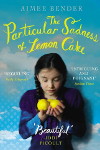


Lynne McTaggart – The Bond
Posted 25th August 2011
Category: Reviews Genres: 2010s, Philosophy, Science, Social, Spiritual
Comments Off on Lynne McTaggart – The Bond

We’re all individuals, but is this the right way to think all the time?
Publisher: Free Press (Simon & Schuster)
Pages: 228
Type: Non-Fiction
Age: Adult
ISBN: 978-1-4391-5794-7
First Published: May 2011
Date Reviewed: 25th August 2011
Rating: 4.5/5
McTaggart suggests everyone should work together in mind, body, and spirit, rather than subscribing to the Western idea of individuality. She uses evidence from experiments, research, and current ways of life, to back up her point.
The Bond is quite simply fascinating. A few days after I’d accepted it for review I wondered what I’d got myself into, seeing the similarities with self-help books, but The Bond is like no self-help book I’ve come across. It throws subject after subject at you and yet it never feels like you’re being forced to accept its purpose – which of course is actually what McTaggart is looking to do, to change your thoughts – and which is why it works well. Ironically, a few hours after finishing it, an advert on the television was telling me that there were several different shampoos to choose from a specific brand because “you’re an individual”. The timing was, to use a word being widely supported by all and their grandmother, epic.
Although we classify everything in the universe as separate and individual, individuality, at the most rudimentary level, does not exist.
McTaggart uses the following array of subjects to back up her suggestion, and here I will use a list to make it easier to read:
- Quantum Physics – all particles influence each other.
- Biology – how we react and live with everything is of more importance than our genes in determining our health.
- Astro Physics – the movement of the moon and sun affects our activity (morale, spending habits, mental stability, and so on).
- Neuroscience – how our brain uses the same part to observe as to act and how that creates a relationship between people, as we understand what we see by thinking of ourselves in that same position.
- Philosophy
- Psychology and anthropology – generosity contrasted with selfishness, the way different cultures view things differently, unfairness in life.
- Mathematics – probabilities and the results of experiments.
- Present-day work – charities, volunteers.
And she looks at Sociology, which is a blend of a few of the above – how, for example, an interdependent community will have less health issues resulting in death than a society where people are lonely and isolated. Thus Japan has a lower heart disease rate than America despite so much smoke intake, and America has a high rate because of the idea of self and the individual.
Often what McTaggart suggests are things that have always been obvious to the public at large but dismissed by the medical profession – that our environment and what we do determines our fate. Thus the fact that women who go on the pill for years are more likely to get breast cancer than if they hadn’t – information easily found on Internet forums, where the number of women questioning whether their long usage of the drug has been the cause is high. And as McTaggart says, the links found between HRT and breast cancer have caused scientists to recommend it’s end. McTaggart’s research in this and various other areas of health adds up to the fact that our genes can be altered throughout our lives by outside influence.
Sadly, there are other experiments that are the stuff of common sense (for example if you’re surrounded by happy people you’re more likely to be happy than if your happy friends live away) and it reminds you of how many such experiments are pointless, unnecessary because any member of the public could tell you it, and costly – when there are so many really worthy things in the world the money could be spent on. This is a comment on the world at large rather than McTaggart.
Something that is quite funny, when you remember all the arguments in the world between religious people and scientists, is what McTaggart says about scientists finding that life may be controlled by something that is difficult to identify and locate, an ephemeral thing. There is a great possibility that they have scientifically found God.
If we are essentially at the mercy of the slightest move of the sun and its activity, their [the scientists Chizhevsky and Halberg] work stands as a giant refutation of our misplaced belief in ourselves as masters of the universe – or even of ourselves.
But there is something that truly grates about McTaggart’s book and that is the number of experiments on animals described. It’s not that she quotes them, because everyone knows it goes on, it’s that she does it as though it’s just another part of science. It is rather difficult to read pages of an otherwise brilliant and humane book that is filled with experiments on animals – involving but not limited to giving electrical shocks to create cases of epilepsy, and holes being driven into scalps in order that electrodes be fitted to brains – without feeling some revulsion for the author’s plan. It seems rather hypocritical to be all for working together with nature while getting excited over information gleamed from torturing rats, especially as she mentions the laws against testing on humans for ethical reasons.
Yet McTaggart’s book is a treasure trove for anyone interested in the academic subjects she discusses, and, with even just a minor awareness of them and minimal interest it is easy to fly through the pages. And she provides some good life lessons and food for thought.
The Bond is recommended, wholeheartedly, because of the many benefits a person can get from it. Be ready for a hefty, but very good, read.
I received this book for review from the author thanks to Pump Up Your Book.
Related Books



J B – Zor
Posted 13th June 2011
Category: Reviews Genres: 2010s, Philosophy, Science, Spiritual
Comments Off on J B – Zor
The story of how advice and philosophy can be skewed when people view them in the way that suits them; and that when the teaching and the person come together it can produce results.
Publisher: (self-published)
Pages: 268
Type: Fiction
Age: Adult
ISBN: 978-1-4528-9540-6
First Published: 2010
Date Reviewed: 13th June 2011
Rating: 5/5
A “contented” John first meets Zor when the latter fends off a couple of verbally abusive strangers, simply by not reacting. John is stunned, and even more so when Zor tells him what happened from a different point of view. Now John finds Zor at the bar he frequents, the man arriving on seemingly random occasions. John has problems, but beyond that believes things are as good as they will get – which isn’t very good but something he accepts. Zor has advice, but John must first work out whether it’s better not to trust him.
Although the book is fiction, it is steeped in non-fiction. Zor is similar to Plato in that there is a discussion, but the discussion is about true themes. Thus it blends both categories. Another element that moves it away from fiction is the referencing. You are able to enjoy this book as a story, but if you are intrigued by the topics covered and wish to read about them in more detail, Zor himself provides the titles of books you may want to seek.
Depending on what ideas you have thought about, or been exposed to, before, you may find the basics of the book rather straightforward, or mind-blowing. And because of the subject, even if you’ve encountered the subjects before you can still appreciate them for the power they hold. What’s interesting is that Zor is at once a good introduction to gaining happiness, and a deeply advanced look into things. The themes move from philosophy to spirituality to science (Quantum Physics) while at the same time switching back and forth. The science in particular is in depth, but even if, like this reviewer, you are a little stumped by all the science, J.B. brilliantly describes where the philosophy meets science and the two are related. And he claims something that most people believe can never happen – that spirituality and God can sit comfortably with science – giving ample evidence and food for thought.
And food for thought is here in abundance. The thing about philosophy is that it gives advice, which you could say is like a self-help book, but unlike your typical self-help book, it’s comparatively difficult to mock it’s worth. There is too much in Zor to discuss it all in a review, so here I will choose a few topics to include and/or talk about.
“Instead of being pro-peace, they become anti-war. Instead of trying to increase a positive they choose to decrease a negative. It is that very concentration that attracts more negative energy.”
“The times were not better, you were.”
“A child is beaten by a parent, who was criticized by a spouse, who was disrespected by a co-worker, who was yelled at by a manager, who was subjected to road rage by a stranger, who was given the wrong order at a coffee shop.
Who would ever believe the wrong amount of sugar in a cup of coffee fifty miles away, could cause a child to be beaten?”
That last quotation could be viewed as a bold stance to take, but one aspect you have to remember is that it takes this kind of thinking to truly sort issues out. The quote can easily be backed up by the fact that many people say they won’t treat their children as their parents treated them [the new parents]. This is often in an attempt to break a cycle where an issue has continued down through the generations because of one person’s negativity, if not simply to make someone’s life happier – for example a person receives no love from a parent because the parent doesn’t know how to love them because they never received parental love themselves. The cycle has continued and somewhere it should be stopped.
Negativity being passed on is just one of the themes discussed in Zor that are part of the overall topic of conquering negativity. The smallest things to one person can change the entire life of someone else.
Something that worries many people is their partner cheating on them, but in worrying about it aren’t we pushing it to happen? Because if it happens then we will feel content that we were right, correct? And in pushing it to happen we are focusing on the negative. If we focus on it happening then the way we act towards the person is only going to push them towards doing it – we will be too needy or too criticising. If we focused on how to keep ourselves happy, and thus them happy, perhaps it wouldn’t happen so much. We recognise the potential for someone to cheat, but if we recognise also, and just as much, the potential of them being faithful, we will be happier. How can we expect someone to be faithful if we do not treat them with happiness and create ourselves as points of happiness that they want to be with? Of course this isn’t a foolproof method, but if everyone did it we would see less problems. And by speaking collectively, using the word “we”, the idea becomes stronger, it becomes personal, and therefore we have more of a reason to want to conquer it.
Zor’s method for being happy is rather simple, really, although keeping it up is very difficult. Due to the subject and reasons for the book it would not be a spoiler to say that Zor advocates thinking positively at all times and in place of negative thoughts to think of something positive. John goes home to his wife and moans about work. That gives her something negative to think about, and this negativity unconsciously repels them from each other – who wants to be with someone who makes them feel negative, reminds them of bad things? They go to bed at different times and don’t talk. When John does what Zor advises he goes home, speaks of only the positive parts of his day and asks his wife about hers. This makes them have a good conversation, which ultimately means they spend time together. Their love life reaps the benefits.
And that is something very important to know about this book, when I say, “when John does what Zor advises”. J.B. discusses philosophy; a lot of people would not accept the kinds of things he talks about. And if he’d made John into a vacuum, a person who sucked up everything Zor said without thought, the goodness of the book would have been lost. Instead J.B. has created a very cautious character, one who borders on self-righteous, and lets him remain this way for most of the book. Even when John finds that the advice he does take on board works, he still remains a sceptic.
The last topic that I would like to mention is the one surrounding John’s reason to do what changes him so much. Zor says that one needs to have the right motivation for the action, not just the right idea, for it to work.
It is obvious that J.B. had much in mind to say, and his information and advice has been written very well – there is never too much (unlike this review), there is never too little, and he goes into more detail the further you get into the book so that you’re able to get used to ideas beforehand. Like most books that speak of similar themes you must be willing to open your mind to different viewpoints, but, and this is also like many similar subject books, you will not find your own opinions a victim unless you decide they are going to be.
Zor successfully gives the reader advice on how to take control of their lives on a happiness level, making ripples that extend to others as a result. You may already know what it takes, but often hearing it confirmed makes all the difference between wanting to carry it out and actually carrying it out. The book combines important teachings with a well-thought-out narrative and an easy-to-read style. It’s not too long, it’s not too short, and would provide both for people wanting an introduction to the themes and people with years of reading behind them.
Where self-help books spend ages telling you how to be happy, J.B. tells you straight away and all you need is willing.
I received this book for review from the author.
Related Books
Jan van Mersbergen – Tomorrow Pamplona
Posted 6th June 2011
Category: Reviews Genres: 2000s, Angst, Domestic, Spiritual, Translation
4 Comments

An intensive look at ourselves, humans, that can’t really be summed up.
Publisher: Peirene Press
Pages: 183
Type: Fiction
Age: Adult
ISBN: 978-0-9562840-4-4
First Published: 2007 in Dutch; 6th June 2011 in English
Date Reviewed: 1st June 2011
Rating: 4.5/5
Original language: Dutch
Original title: Morgen zijn we in Pamplona (Tomorrow we are in Pamplona)
Translated by: Laura Watkinson
Danny is a boxer, and right now he’s running away from his life. Something seems to have happened in the boxing ring (the reader doesn’t know) that’s made him rethink things. He’s also had trouble with the woman he loves. Robert lets him hitchhike in his car to Pamplona, where Robert is going to run from the bulls in order to get away from his routine life, something he does once a year. It may seem a simple decision, but nothing is simple to Danny anymore.
Every now and then a book comes into my life where I know that there is a deeper meaning in the words but I have trouble finding it. Tomorrow Pamplona is one of them. This isn’t to say it is too highbrow to be fully enjoyed, rather that the way Van Mersbergen has told his tale requires the reader’s undivided attention. Of course you’ll be wondering if I worked it out by the end, and the answer is yes, at least sort of.
But although this not knowing is frustrating it gives the book a real staying power. I find myself wanting to pass my copy around for others to read, not just because it would make an interesting discussion but because I think part of the way to gain a truer understanding is to talk about it with at least a few people. One thing that this reviewer will definitely be musing over for some time is just who Robert is or what he is supposed to signify. I got the feeling that although he’s incredibly regular there is something else about him.
If Paulo Coelho provides food for thought then Van Mersbergen provides the ingredients – but you’ll have to roast the chicken yourself. And you get less of a finished story than a lot of books that leave you with multiple options for what happens next – yet at the same time you instinctively know what will happen.
This book is spiritual, borders on angst, and may even be psychological. One of the themes is inevitably coping with loss, Danny’s development focuses on it, and we see this right at the beginning where he copes by leaving home, and later when a minor character copes by staying where the loss occurred.
And characters are everything in this book. Robert may seem to take a metaphorical backseat (and again I wonder about who he is, is his position as car driver relevant in a spiritual sense to Danny) but he is as important as Danny, albeit that the book revolves around the latter. The stage is Pamplona but it’s more about how the place reflects the mind at the time and what is needed by that person.
They drive past fields that are crisscrossed by straight drainage ditches. […] He rolls the car across his palm.
There is a beautiful simplicity in the way the novel is written. Told in both present tense and flashbacks, it seems abstract, disjointed even, but in fact it is meticulously detailed – Van Mersbergen has thought deeply about human actions and the world around us, and used words that read like a soothing lullaby.
The style isn’t particularly poetic and yet the way it makes you feel is as though you’re reading a poem. The writing is comparable to Markus Zusak’s, and if you’ve read my review of The Book Thief you should be able to get a sense of the way I feel about Van Mersbergen’s text, albeit that Tomorrow Pamplona is a translation (by Laura Watkinson). I should probably add that there are a few sex scenes in the book. They are there to help illustrate what is going on in the character’s mind.
Never before have I felt I’ve given a book such an unsatisfactory write up, but I know that I could do no more without revealing it’s entire contents. Truly the only way you are going to find out if this book is worth your time is to read it, because it’s really not the sort of thing you can decide upon without having the words in your own hands.
Tomorrow Pamplona was originally written in Dutch, and was translated into English by Laura Watkinson.
I received this book for review from Peirene Press.
Related Books
J R R Tolkien – The Fellowship Of The Ring
Posted 4th March 2011
Category: Reviews Genres: 1950s, Fantasy, Spiritual
Comments Off on J R R Tolkien – The Fellowship Of The Ring

An unlikely group of people make the initial journey to destroy a ring that holds an evil power.
Publisher: Harper Collins
Pages: 398
Type: Fiction
Age: Adult
ISBN: 0-00-712970-X
First Published: 1954
Date Reviewed: 27th October 2010
Rating: 2/5
Bilbo Baggins wants to leave his home and he entrusts the ring he stole from Gollum (chronicled in The Hobbit) to his nephew Frodo. The wizard Gandalf tells Frodo that he must take it away, so that it won’t reach the hands of the dark lord who is back to claim it. And so Frodo goes, picking up travellers along the way, on the first stage of a perilous journey.
You can probably tell by the way I wrote the summary that I really did not enjoy this book. I would like to say it was because my copy was 398 pages of tiny print, but it wasn’t only that. I found it incredibly hard to concentrate on the text most of the time, and actually, because I was trying so hard to give it a good go, I didn’t realise what the real problem was until I reached the end.
Tolkien doesn’t adhere to one of the biggest rules – he tells rather than shows. So much of the book is filled with superfluous descriptions of often minor details that no one needs to know; and then, once he’s written reams of description, he repeats himself to tell you about the place the characters just left or to tell you about a place that is nearly identical to that which they were in moments ago. Once, as a child, I wrote a meticulous account of every single pothole and electricity unit I passed when on a train journey. I would never consider it worthy of publishing, but perhaps if I’d given it to Tolkien he could have made some money on it for me.
Because to be honest I do wonder about his reasons for such needless description. If my copy hadn’t been so densely printed then the page number would have been double. Did he give himself a word count he really couldn’t reach and thus filled it with waffle?
This leads me to the writing style. Again, I’m afraid, I was disappointed. The writing is rather simple in some ways but it’s tedious, and reads as though no editor was involved. Tolkien applies to his writing the repetitive usage of he/she said. He adds onto it constant depiction that, although in this referenced paragraph is probably meant to apply humour to the scene and illustrate that Frodo was getting annoyed, just makes reading the book annoying:
…said Frodo evasively.
…said Frodo, not liking the reminder.
…said Frodo with his mouth full.
… said Frodo sharply.
The story itself isn’t bad and reminded me of David Edding’s The Belgariad (which was released years later and thus was no doubt inspired by Tolkien), and I think back to how Eddings made a similar story, of a journey fraught with danger, comic and readable.
Certainly The Fellowship Of The Ring improves when the rest of the characters come into the story, because there is more dialogue and less space for description. Tolkien even manages to evoke emotion when he talks of the homeliness of Lothlorien. He includes many different locales and weather, which when looked back on are quite amazing.
But I feel as though I’ve read all three books in the way that it took so long to get through just one. I can’t say I will attempt the other two because quite frankly I think I’d prefer to read Lauren Kate’s Torment, and we know how I felt about Fallen. I read this book because I wanted to have experienced it (the same motive for Pride And Prejudice and Jane Eyre, both I fell in love with).
If Tolkien had pondered a bit more, thought higher of his audience and their intellect, and believed in their imagination, maybe this book would’ve been better.
Related Books


