




Selene Castrovilla – The Girl Next Door
Posted 22nd January 2011
Category: Reviews Genres: 2010s, Angst, Spiritual
1 Comment
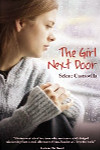
Creating a lifetime in little time.
Publisher: Westside Books
Pages: 231
Type: Fiction
Age: Young Adult
ISBN: 978-1-934813-15-7
First Published: 2010
Date Reviewed: 3rd January 2011
Rating: 2.5/5
Sam’s best friend Jesse only has a few months to live and Sam is only just starting to realise that she’s always been in love with him. Jesse doesn’t want to die a virgin and Sam wants to be with him in the remaining time as much as possible.
The story is full of angst, revolving around Sam’s mental state and how she is unable to cope. It takes a while for the other characters to comprehend just how far she’s falling, while the reader gets the full force of it from the start. At first it’s quite confusing how Sam conducts herself and indeed throughout she can come across as selfish until you remind yourself why she has turned to this kind of behaviour. She often asks rhetorical questions or answers others’ questions silently, in her head, providing the reader with a good account of how such a situation can affect a person.
The story is mostly based in one room, and while it’s realistic the setting combined with the inner dialogue make it a slow read. But perhaps that’s the point. When you hear about the lives of those with cancer, say on the television, you rarely get an adequate account of it as the producers are hindered by wanting to make a big impact and not having that impact fade through too much exposure. In our society today too much repetitive information is seen as boring and so the mundane existence of someone dying, the mundane being caused by the fading of the body, and the requirement to be near medical centres all the time, is only truly known to those who experience it first hand. With this in mind I have to say that the book is only slow and dull because of conditioning and that actually for this reason you could say that Castrovilla’s story is of great importance.
The problem comes, then, with Castrovilla’s choice of secondary subject. Sex. It’s not that sex is included – it’s the way in which it comes to pass. It’s understandable that dying a virgin would seem a repellent idea and it’s also understandable that a person would like to have a lot of sex before they die. What’s difficult is how quickly the initial decision is made. It leads the reader to question how the relationship would have continued had the illness not entered the characters’ lives and I’m afraid that it does make you question whether Castrovilla is promoting the right values. And yes, I’m aware that one could question what exactly the right values to have are.
On one hand you have a book that looks into a very difficult situation and does it extremely well, but on the other you have an example of what the book would’ve been without the illness – and it’s not a good stance.
While I think that the inclusion of sex was a good one I believe that the overall handling was poor and it is this that brings the possible success down. The Girl Next Door is far from terrible and there is a lot to be had from it, but I’m really not sure whether I would recommend it.
Related Books

Cat Clarke – Entangled
Posted 19th January 2011
Category: Reviews Genres: 2010s, Angst, Psychological, Spiritual
2 Comments

When things don’t add up they may not be what they seem.
Publisher: Quercus
Pages: 372
Type: Fiction
Age: Young Adult
ISBN: 978-1-84916-394-1
First Published: 6th January 2011
Date Reviewed: 11th January 2011
Rating: 4/5
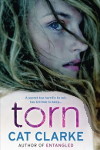
For some reason, Grace is being held in a white room. In fact even the sparse furnishings are white. Grace doesn’t know how she got there or why she is there, but she knows who her captor is. She knows literally: his name is Ethan and he’s gorgeous, and it looks like he wants her to write, but there’s something else about him that is intriguing. Why Ethan wants her to write and what about, Grace doesn’t know. But the paper is there and right now the only thing Grace can think to chronicle is her lousy existence.
Gritty – that’s the best way I can think of to sum up this novel. To be honest I was expecting it to be more psychological but actually it contains just the right amount of everything. Clarke gives you the basics of the difficult issues but doesn’t go into too much detail, therefore making it a little easier for people who might’ve shied away otherwise. There are a few issues covered in the book, not so many as to make it confusing, and each subplot and character has been given a lot of thought.
Clarke has crafted a very different story, but it’s not different so much for it’s contents as for it’s style and overall presentation. There is a uniqueness that enables the typically mundane to be worthy of reading, for example I’ve been on lots of buses in the rain and Grace’s journeys tend to sound just like them, yet I’m compelled to read about it. Maybe it helps that I’m a Brit like Grace and not that far out of school, but there is something about the day-to-day that drew me. Other times it took me a while to realise that I was reading about a regular event because of the way it was written.
You’d be forgiven for thinking at first that the writing style is clumsy. It becomes apparent very quickly just how tormented Grace is. As she begins to get used to what has become her life, if “used to” is an appropriate phrase, she becomes less anxious over her present situation, saving her upset for the story of her life.
Grace is a strong character but like everyone she has her faults. It’s in these faults that she shines because even if you can’t relate to everything you will undoubtedly be able to relate to something. The other characters aren’t as important and are thus not as detailed, but they are given ample time for you to understand how they have affected Grace.
Part of the plot is easy to figure out but that in itself appears to be a device. We know things before Grace does so that we can appreciate just how long it takes her to start understanding them herself.
I did entertain the thought that maybe he is a vampire. Until I remembered that my life isn’t actually Twilight.
If you are wondering how much like the current crop of young adult novels Entangled is, there is part of your answer. The other part I’m afraid to say would spoil the story to mention here.
I had various ideas in mind as to what the answer would be, as to why Grace was confined, and I admit to being a bit underwhelmed by the answer because of my previous reads. This doesn’t mean that it makes Clarke’s book any less readable however; I attribute the sudden onslaught of books of this nature to coincidence. Each author who has written a book in this vein has put their own spin on it.
In Entangled, Clarke takes a number of well-known situations and problems and discusses them through the use of a story. Quite likely to have a better impact than any reference material, she hits the reader with it hard while being delicate enough so that it’s not overwhelming. And she shows that there is a way out, even when you’re at the very bitter end.
Related Books




Frances Hodgson Burnett – The Secret Garden
Posted 20th December 2010
Category: Reviews Genres: 1910s, Domestic, Spiritual
1 Comment
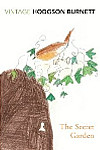
On the moor there is a manor house and at the manor house there is a garden. And in the garden there is a force beyond reckoning.
Publisher: (Numerous, but I’d wager Vintage would be a good one)
Pages: N/A
Type: Fiction
Age: Children’s
ISBN: N/A
First Published: 1911
Date Reviewed: 9th December 2010
Rating: 5/5
I didn’t enjoy Julie Buxbaum’s After You but it ignited in me the want to read The Secret Garden. I went out and looked for a copy by Vintage, my favourite publisher of classics, which as it so happened, had published the book only days before. Upon starting the book the irony wasn’t lost on me; here, having just finished Wuthering Heights, I was reading another book set in a big house on the Yorkshire moors, and to add to the accidental theme of my winter reading there were mentions of a “wuthering” wind.
Mary Lennox was born in India, to parents who had no time for her. As a result she was spoilt and selfish and when cholera swept the land the servants appointed to look after her fled without a thought for their charge. Mary was found and brought to England to live in her uncle’s manor, but her uncle seeks the company of no one and is frequently away. In the manor many doors are closed, secrets are kept, and there is no lady to look after children. But there used to be a lady, and she had a beautiful garden. If Mary can find the garden surely all will be well?
This book is magic. It may be heralded as a story for children but you’d have to have standards reaching to heaven to not enjoy the story at any age.
I call the book “magic” well aware that magic is a subject greatly involved in the latter part of the book. Although for a long time the story is unquestionably straightforward, there comes a point at which it changes track and becomes heavily focused on spirituality and well-being. The magic described is not that which is seen in tales of fantasy, but the qualities we, as humans, possess along with nature.
To let a sad thought or a bad one get into your mind is as dangerous as letting a scarlet fever gem get into your body. If you let it stay there after it has got in you may never get over it as long as you live.
The book deals with changes – obvious physical changes, obvious mental changes, subtle personal changes – which are spotlighted by the shifting of seasons. Hodgson Burnett makes good use of these to match the feelings of her characters. This is where one could agree with the initial publication of the story being targeted at adults, the wording being such that although the idea is comprehensible for children the composition of it can, perhaps, only be fully appreciated by adults. Yet the personalities in the novel are those that a child would find most compelling and it is children who are most likely to reassess themselves on confronting their fictional peers.
There are few main characters in the book but a whole host of supporting ones, each with a unique purpose. What’s interesting is the way Hodgson Burnett presents a person as bad but then gives you all the reasons why you should like them.
Something I absolutely loved was the way the servants were treated. Apart from the first few chapters, where we see first-hand how Mary has been brought up to treat servants as far below her, everyone is more or less on an equal footing. The very poor are respected by the wealthy, their words heeded.
The premise may seem unrealistic, that a garden can change people so much and in such a way, but these are children and this is a special garden. I began this book knowing the story and hoping, but not being certain, that I would be as blown away as I was by the film adaptation. I was blown, as deftly as the moor’s wind could propel me, and I know that the story will remain in my mind now as it always had before.
This is fiction at it’s best.
Related Books


Gayle Forman – If I Stay
Posted 3rd September 2010
Category: Reviews Genres: 2000s, Paranormal, Romance, Spiritual
1 Comment
When there are people in different corners of existence, and both sets are people you love, who do you choose to go to?
Publisher: Doubleday (Random House)
Pages: 210
ISBN: 978-0-385-61621-8
First Published: 2009
Date Reviewed: 12th August 2010
Rating: 3.5/5
If I Stay has been given a very warm reception by bookstores and online media. It has been hailed as the forerunner to other tales and indeed Lauren Oliver’s (later) release, Before I Fall, was compared to it.
Mia’s family car crashes while they are all in it. She (Mia) locates her parents but where she thinks she’s found her brother she’s actually found herself. Her spirit has left her body – but she’s not dead yet. Throughout her time in the Intensive Care Unit, Mia continues her out of body experience, looking back on her life, at the extended family, friends, and boyfriend who visit her, and wonders what’s next. What can she do? What should she do? Both are questions she must answer for herself.
Maybe it was all the hype, or maybe the fact that I’d already read Before I Fall, but I didn’t find If I Stay to be as compelling as I’d hoped. Forman tells a good story, Mia’s unpredictable state over the course of the day, but although there were flashbacks I never felt enough for the characters. And this is important for a book dealing with such a subject. If it had been longer there would’ve been more to grasp hold of as Mia didn’t have enough time within the 210 pages to develop herself. I wasn’t convinced of Mia’s relationship with Adam. This wasn’t the fault of the relationship itself but rather in the way Mia saw it. We get a good glimpse of the strength of Adam’s feelings but they needed to be written stronger rather than eluded to. It was Mia’s love that was the problematic part.
Adam is a hero, but often Mia doesn’t understand his motives. The reader does, however, and this is frustrating because everything points to the obvious choice of life. Personally I was confused as to how she could choose anything else because the reasons were staring her in the face. In that way she sometimes seemed selfish, even if she actually wasn’t. Perhaps some space for Adam’s point of view here would have remedied that and I am very happy to have heard that a sequel is being written as If I Stay may not be perfect but it’s good enough for you to want to stick around.
Music is everything in this story. It’s the reason for Mia’s parent’s relationship, the reason they have their good family friends, and it’s the reason Mia became close to Adam. Most of the time Mia’s thinking reverts to her cellist training and she is constantly, though unknowingly, reminding herself that music is the reason to stay. Because of her family’s dependence on music one believes that Mia’s parents would, in the situation she is in now, tell her to put it before all else. I’m not sure if I am correct in this because I am a musician myself, but I would guess that people not familiar with the art would be able to understand most of the terms.
Mia and Adam’s shared devotion provides the meaning for a rather original intimate scene. In a way it’s quite strange and certainly a lot more graphic than most accounts of intercourse in fiction; and yet the sex is not introduced at that point. Forman favours this over any detailed tale of Mia’s loss of virginity, which she simply mentions instead of describing. The whole concept of the scene and Forman’s later reluctance are cause for a lot more thought than had she just had the characters ripping each others’ clothes off. Forman is subtly reminding us that sex doesn’t just have to be sex, doesn’t just have to be what everyone thinks. We can interpret it in our own way and make it specifically relevant to ourselves. And surely that makes for a more satisfactory and spiritual experience.
Forman’s writing is simple but it makes the book an easy read. Forman can be humorous and, considering the upsetting topic at hand, chooses her timing wisely. There is a fabulous scene involving birth that is worthy of many laughs out loud.
I often like to mention in a review what the reader can take away from the book, to cherish long after they’ve finished. Regarding If I Stay this is surely the central point of who you would choose. Forman isn’t suggesting you think of death per se, the idea can be applied to everyday situations; and to apply it to everyday situations doesn’t mean you have to take it literally and consider whether your parents are as important as your romantic interest, rather that you consider your feelings for everyone more than you usually would. Mia’s experience is the suggestion that you should.
If I Stay may be short but it does what it sets out to do within the limits of it’s page count. There are many books that will teach you the same things but if you’re looking for something that will still reach out to you in a small amount of time then this may be it.
Related Books
Catherine Ryan Hyde – Second Hand Heart
Posted 19th August 2010
Category: Reviews Genres: 2010s, Spiritual
1 Comment
The general idea may be to let the past go, but sometimes memories can be the making of us.
Publisher: Black Swan (Random House)
Pages: 446
Type: Fiction
Age: Adult
ISBN: 978-0-552-77662-2
First Published: 16th September 2010
Date Reviewed: 18th August 2010
Rating: 5/5
Vida would have died without a heart transplant, in fact she’s been waiting to die all her life. Now, at 19 years old, she gets her chance when a woman is killed in a car accident. But what about that woman, or more so what about the husband the woman left behind? Maybe he shouldn’t have contacted Vida, but it’s done now – and is it possible Vida remembers things she’s never experienced?
Please note that the first part of the book, up until Vida has her operation, contains a lot of graphic descriptions of surgery. Should you wish to, skipping over it shouldn’t cause any problems in your understanding later.
My initial thoughts, as I waded through the first lot of pages, was that this was going to be a boring book. Admittedly I was reading this novel straight after having finished If I Stay and it was only recently that I also read Before I Fall, so the theme of being at death’s door wasn’t as compelling as it could have been; but the difference between those books and Second Hand Heart is that Ryan Hyde takes her story beyond the place where the others end. If we are to assume that those two books ended on a positive note then Second Hand Heart is like the continuation of what happens afterward.
I have quite a lot to say about the main character, Vida, as my feelings about her changed over the course of the book, and it was in a different way to how my feelings for characters have been known to change before. The first thing had just as much to do with Ryan Hyde. Vida is a brilliant storyteller, she speaks as you would imagine a teenager to speak, and it’s so much a case of her telling you rather than the collective “reader”. There is no trace of an author writing Vida’s diary, the way it’s written it really is as though the girl is real and wrote the pages herself. Now this isn’t to say that Vida will be as articulate as you would think a nineteen year old would be, and at first this is confusing. But when you learn how sheltered Vida was, and how she would have been put on a kind of pedestal by her worried mother, it makes sense. Vida’s never lived, and this she freely admits, offering her lack of education along with it.
Later on I started to get annoyed with Vida. Her mother told Richard how her daughter could be intense at times – but it didn’t help. Vida is intense and that’s understandable – she wants friends, she wants to know the world – but she crossed the line when it came to Richard. And not by loving him, because that was out of her control, but by contacting him too much when he needed space. A person in love can often feel the need to be with their beloved but Vida was well aware that the love she felt stemmed from the love Lorrie had felt and so should have backed off a little. Indeed she had something important to tell Richard, but it could have waited.
Lastly I came to terms with the fact that Vida was annoying and let her be. I was open to a change when she started becoming the person she will surely have been post-book, and began to feel better about spending so much time in her theoretical presence. There is no doubt about it, heck the amount I’ve just written is proof enough – Ryan Hyde has written a fantastic character who comes to life in a way that few other authors manage.
Richard, lovely as he is, is more a regular character, and he develops in a way similar to many another. But this is a good thing because it allows Vida to be the focus. This isn’t to say that Richard is unworthy, far from it, in fact it becomes the case that his transitions are just as important, but there is that difference there that is difficult to explain but very much needed.
The book deals with love, unsurprisingly, but not so much romantic as familial love and love for oneself. Actually, I’m including the love aspect in this review just so that I can introduce you to the following spot-on quotation:
I’m beginning to see that point about love you made when I first met you. Maybe it’s less like a valentine heart and more like a real one. Like maybe if you give somebody your heart it’s this bit gnarly muscle of a thing that’s not always too pretty to look at.
I’m going to make an incorrect assumption and then add the other side of the opinion to balance it out and cover all angles for debate. First, this book isn’t really about Vida, or Richard. It’s about the woman who died, Lorrie. In this sense Richards thinking behind his decision to give her heart up for transplant was right – Lorrie keeps on living through others, more so than she ever would have had she been buried complete.
Second, this book has everything to do with Vida and Richard, and it is about them finding themselves and their lives through the woman who died. Lorrie’s death didn’t just mean one person lived, it meant lots of people lived and found themselves in a position of change. Vida, her mother, Victor, Esther (who possibly wouldn’t have done what she’d wanted to do) and in a way, Richard. Richard learned to live without Lorrie, even if the best situation would’ve been that he didn’t have to.
There’s a part of me that embraces the first and another part the second. The second may be the correct one, but the first is equally compelling a thought, if not more so than the second. What will be your thoughts?
The school of thought is that everyone in life makes an impact of some sort, but more and more nowadays we worry about the size of the impact we will make; Ryan Hyde mentions this by having Richard donate organs to combat that reason. But ultimately she reminds us that we take what we can in memory and use it to make our own lives better. It may be a nice thought to try and keep someone alive and make them known to everyone, but few will be remembered for as long as the human race exists.
Second Hand Heart is a fantastic life discussion that has been superbly woven into a relatively slow-moving story. The desert setting is stunning but it wouldn’t have held up the book on it’s own, it’s the theme and characters that are most prominent. Because of the theme the book is drenched in the heat it gives off and it’s easy to become lost in it, and that’s just as well because not only is this a very good book, it’s an important one too.
I received this book for review from Transworld Publishing, Random House.
Related Books


