





Lauren Oliver – Before I Fall
Posted 9th June 2010
Category: Reviews Genres: 2010s, Angst, Paranormal, Romance, Social, Spiritual
1 Comment

What happens when you’re dead, but you’re alive, and the world keeps spinning over and over in the same circle?
Publisher: Hodder & Stroughton
Pages: 341
Type: Fiction
Age: Young Adult
ISBN: 978-0-340-98089-7
First Published: 2nd March 2010
Date Reviewed: 4th June 2010
Rating: 4.5/5
Lauren Oliver’s debut made the rounds of US book blogs at its release. But it was somewhat more difficult to find in the UK where perhaps we categorise books differently. Never the less there are numerous copies to be found – as long as you know where they are.
Sam Kingston died in a car crash on a cold night in February. She’d spent the day at school: joking with friends, skipping classes, and at a party where she’d joined with everyone in soaking the social outcast with alcohol. She was in the passenger seat when the car crashed, but somehow she never experienced the reported flashbacks on her life, instead waking again in bed the next morning only to find it’s actually the morning of yesterday, the day she died.
The first thing that’s striking is how average the day that Sam lives over and over is. Nothing big happens except for, of course, the accident. But you come to realise that this was good thinking because it allows Oliver to explore different avenues of “what ifs…” and “maybes” in more detail than she could have had she packed out the day with activity. What Oliver does is reveal that initial day – the day of death – in bits and pieces throughout the course of the book so that you learn new things about it as each repetition rumbles on. This means that, in addition to the changes Sam makes, there is plenty to read on for besides the obvious desire to know what will happen at the end.
At the start Sam isn’t the most attractive character, in fact she and her friends are somewhat loathe-worthy. A transformation does happen, but not quite as much as you might have been expecting – Oliver never proposes the idea that Sam should be forgiven for everything nor become a saint. This is a breath of fresh air. So many stories have the character turn 180 degrees and while that may be interesting it’s far too clichéd and overused. Oliver is, actually, quite hard on the character, but it’s subtle, she doesn’t condemn outright but skirts around it issuing ways in which Sam could improve.
As anticipated, with every “new” day Sam aims to conclude differently. She goes through days of happiness, days of giving up, and, interestingly, she knows on the last day that this is the last time she’ll have to relive it, describing how she wants to see and savour things for the last time. Now this is cause for thought – Sam simply knows. But how does she know? Certainly she has come to understand what it is she has to do to get out of the cycle but everything she says confirms the idea that it is definitely her last day, and not just in hindsight but in the way she acts at the time. This would be a good place to stop and consider the spiritual aspect of the book. It may be just that a week is seven days, seven days is a standard, and seven is also the number of days it took God to make the world in the creation stories. And, to ponder on something separate from this, there is the concept of “knowing” when things are going to happen which many people experience. Of “knowing” that if you do something in a certain way something will happen.
The proceedings of the day are important (including all the events that would have gone unnoticed by Sam had she not been given her chance) but it’s the interaction that is paramount. They are pretty regular proceedings for a school but Oliver illustrates how sometimes these seemingly average occurrences can make huge differences to a person’s mental well-being. Bullying is a topic covered in the novel, but again as in the case of Sam’s change of heart, Oliver hasn’t gone overboard. Yes, she shows that the behaviour of one person towards another can cause damage but she also shows that it doesn’t have to be the end of the world and that a lot of it should be taken with a pinch of salt. Sam doesn’t reject her friends even when she realises the huge flaws in their personal qualities – in doing this Oliver reminds us that it’s ok to view things in different ways without changing who you are as drastically as you’d think you’d have to. In addition she looks at the other side of the story to point out that sometimes what is said isn’t meant in the way it’s taken, that people don’t think before they say what they do – but that of course they should.
The relationships are brilliantly handled. Oliver offers all the intimate details of friendship, the secrets, and the lies; and crafts a beautiful story around Sam and the man she loves. Romantic affairs are given a good amount of coverage. This fulfils the basic young adult novel idea of young love but more importantly provides Oliver a place to explore relationships with her audience, the majority of whom will be nearing the time when sex is about to enter their minds constantly.
Oliver delves into the concept of waiting until you are in love before having sex. Had Sam chosen a slightly different path of that first run of her last day she could have lost her virginity. One thinks she might have escaped death but would she have been happy with her sexual outcome? It’s upsetting perhaps, but if Sam hadn’t died and had the experience she did she would never have learned what she did about herself, about others.
The most important theme is personal hardship, living in spite of problems, living with the problems, overcoming them. It ties in with the bullying issue and is on a big scale. It may surprise you to hear that the main character isn’t the subject here.
Something that’s worth mentioning is the language, because unless you’re American, and even if you’re American, odds are you’re going to be stumped by some of the abbreviations and references. In the main brands are easy enough to “get” but culture-specific ones may cause the need for Internet research or, if you can get by without it, a brush past.
A choice quotation:
The sun has just risen, weak and watery-looking, like it has just spilled itself over the horizon and is too lazy to clean itself up.
There are many stand-out scenes and in fact the book as a whole is incredibly memorable, but I would like to highlight one between Sam and a younger student. Set in the old school toilets where no one goes, the location efficiently provides the correct atmosphere of loneliness laced with quirkiness and the metaphorical dirt that comes with slurs on a person’s character.
This reader welcomed the choice made for the ending – you find yourself prepared for all possibilities – but the way it was executed has left her uneasy, she’s still thinking it over a week later. There’s nothing bad about it but it takes some getting used to; at the heart of it is a good message.
Before I Fall is a book that offers a unique challenge: we often shun books that repeat themselves, naturally, but this book is based on repetition. It uses this repetition to aid not only it’s main character but it’s readers in looking at life differently. It offers guidance without guilt, wrapped in a coat of beautiful romance, developing maturity, and bog standard US school life tinted with a slick of coloured lip gloss. You are allowed to feel moved by it, you are allowed to become engrossed in it but you are also allowed to be opposed to it, and you are allowed to take a break from it from time to time. I don’t know about you but to this reader that’s the perfect package.
Related Books



C S Lewis – The Horse And His Boy (The Chronicles Of Narnia)
Posted 25th May 2010
Category: Reviews Genres: 1950s, Fantasy, Spiritual
Comments Off on C S Lewis – The Horse And His Boy (The Chronicles Of Narnia)

The story takes on a middle-Eastern flavour and we travel to the lands beyond Narnia.
Publisher: (Numerous, the one pictured is the Harper Collins 1998 edition)
Pages: N/A
Type: Fiction
Age: Children’s
ISBN: N/A
First Published: 1954
Date Reviewed: 14th May 2010
Rating: 3/5
The second of the lesser-known books, The Horse And His Boy has been as equally forgotten as The Magician’s Nephew, though it’s easy to see why as the story bares hardly any relation to the others.
Shashta doesn’t want to become the slave of the man who turns up at his father’s house in Calormen so he steals away with the man’s talking horse (a Narnian who was captured as a foal) with the aim of reaching Narnia. In trying to escape a lion their paths cross with Aravis, a Calormen princess on the run, and her own talking horse, Hwin. All four decide to carry on their journey together. But when they reach the capital things don’t go according to plan, the Narnian royal family are visiting and mistake Shashta for someone else. And Queen Susan’s suitor has created a problem for everyone.
The Horse And His Boy is the simplest of the chronicles, being very much a spin-off. It’s not necessary to read it and this is a pity, one gets a sense that Lewis felt he had to write some more rather than he wanted to. The land of Calormen destroys the setting of Narnia – Narnia is so different to our world with it’s talking animals, but Calormen is more the regular exotic dream, in keeping with reality from our history books. It’s also hard to accept, perhaps, that Narnia isn’t in it’s own world, that there are other lands surrounding it, because the way Lewis wrote it in The Lion, The Witch And The Wardrobe, although it was hinted at, the feeling was that it was by itself.
The story is ok, but as the majority of it takes place outside of Narnia there is little for the reader to relate to. It does a good job in showing us the everyday life of the kings and queens of Narnia during the period of their reign at Cair Paravel – perhaps this book ought to have focused on them more.
There isn’t so much a Biblical theme to The Horse And His Boy as there are the others, Aslan is still Jesus, but the only Biblical story I can relate to it is the road to Damascus after Jesus resurrects. There is, however, an overall theme of Jesus helping his followers, one could compare part of the book to the Christian poem Footprints.
The Horse And His Boy is a nice short read but not as compelling as the rest of the series. Fans will devour it but otherwise it’s possible to skip it in favour of Prince Caspian.
Related Books


Paulo Coelho – Eleven Minutes
Posted 22nd April 2010
Category: Reviews Genres: 2000s, Spiritual, Translation
1 Comment
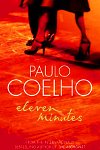
Paulo Coelho’s books, as the book covers declare, have changed lives. He writes about spirituality in a very fresh and modern way without being biased religiously or morally – though he has tales of morality to tell. It’s perhaps ironic then that his stories are so short.
Publisher: Thorsons
Pages: 288
Type: Fiction
Age: Adult
ISBN: 978-0-007-16604-6
First Published: 2003 in Portuguese; 2004 in English
Date Reviewed: 3rd September 2009
Rating: 3.5/5
Original language: Portuguese
Original title: Onze Minutos (Eleven Minutes)
Translated by: Margaret Jull Costa
I don’t know much about the success of Eleven Minutes but I’d hazard a guess that it hasn’t been as well-received.
Maria lives in a small Brazilian town but knows that there is more to the world and wants to experience life to the full. For her this means travelling and living abroad. She journeys to Rio de Janiro where she signs up as a dancer and is whisked to Switzerland, dreams of happiness, money, and a husband leading her by the hand. But the dancing is boring and after an agency unintentionally set her up with a man willing to part with a thousand francs for a night with her she makes a decision that will set her on a path entirely different to the one she was on. Down the Rue De Berne, where the nights are scented with sex and the days are reserved for slumber she begins to discover the truth of intercourse and how the world has come to rely so heavily on it.
Let’s get down to business. Is there a lot of sex in this book – yes. But although quite graphic in places Coelho has managed to keep the story tasteful and one feels that whenever he does write graphically it’s with a specific purpose, he has a message to get across each time. Nor does Coelho stick with one type of sex, covering a good number and subtly weighing them up. Interesting here is how he will come to one conclusion and then later on change it in the way one does when they make a further discovery about something for which they’d previously had a strong opinion. He does this without apologising for as discussed above he remains for the most part neutral and non-judgemental.
Apart from Maria, or maybe even including Maria, the characters aren’t very important in themselves. They are there as props to get the message across. None of them are hateful though neither are they particularly fabulous. Maria is a personification of Coelho’s thought process and moves back and forth through opinions with him. You can’t sink your teeth into these characters and you won’t miss them after finishing the book but in this man’s publications that is neither here nor there.
It’s hard to talk about the language used in the book because unless you are reading the Brazilian version the words will have been translated from the original Portuguese. I can’t remember finding any errors in the print.
Eleven Minutes promotes the view that sex can be sacred; the world has just forgotten this. It explains convincingly how we’ve come to use sex as a method of healing when really what we need lies within us, and that using sex as an excuse only serves to keep the cycle going. This is done by weighing up elements such as asexuality and pain for pleasure and detailing the cause and effects. It won’t have the impact on you that The Alchemist had but there’s enough here to make you reconsider what you’ve learned and been taught and perhaps even apply parts of it to your own life.
Eleven Minutes was originally written in Portuguese, and was translated into English by Margaret Jull Costa.
Related Books

Lorna Byrne – Angels In My Hair
Posted 18th April 2010
Category: Reviews Genres: 2000s, Autobiography, Spiritual
Comments Off on Lorna Byrne – Angels In My Hair
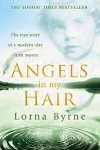
Lorna Byrne is what many people would call a modern day mystic. She claims that she can see and talk to angels, spirits, and on a few occasions, God. She waited years before writing her book, not wishing for any publicity or fame and only decided to write when instructed to by her angels. The price of promoting angelic presence has come at a cost, she’s no longer able to meet those who want her help.
Publisher: Arrow Books (Random House)
Pages: 325
Type: Non-Fiction
Age: Adult
ISBN: 978-0-099-50574-7
First Published: 2008
Date Reviewed: 31st August 2009
Rating: 3.5/5
Angels In My Hair has received most of it’s coverage in print and through television interviews (the usual ones where the presenters subtly interrogate their guest), little has been done to promote the book in the shops themselves. Its little publicity matches Byrne’s wishes for her not to be fawned over as she has said herself that she’s simply a person, a normal human who just happens to see angels.
The book is autobiographical with the focus being on Byrne’s first-hand experiences of angels. Everything she mentions is related back to them or what they have taught her and is evaluated against what religion teaches us. Beginning with a few experiences as a baby and ending just after the death of her husband, Byrne concludes with the statement that we are all angels. Byrne has been seeing angels since she was a baby and says that everyone can see angels at that age, it’s just that as we get older we are told that what we see isn’t real, much like the idea that babies don’t drown so easily as after they’ve been taught to be afraid of deep water.
Something evident within the first few pages is that Byrne isn’t a gifted storyteller, her sentence structure isn’t the best and she isn’t at all eloquent – but whether or not you’ll find this distracting depends on your outlook. If you’re reading the book with the aim of criticising and dismissing the possibility of angels then you’ll most likely be taking the book back to the shop. If you’re open-minded or share Byrne’s belief in angels then you’re more likely to see Byrne’s inability as something that gives further evidence of their existence. If you think about other books of the same genre and the multitude of self-help publications one thing that binds them all is the idea that they’ve all been edited to perfection. The fact that Byrne’s book isn’t promotes the thought that, as she says, she doesn’t want money, she simply wants the message out there. Her book is written in her own words and her lack of education is prominent throughout.
Difficult to comprehend is Byrne’s seeming lack of religious information. It’s not until the end of the book that she learns that the angel Michael is Archangel Michael and nor does she seem to understand many of the aspects she talks about that the average reader, assuming they know at least a little about religion, will acknowledge instantly. That Byrne also states she has no interest in politics is very off-putting as one would hope that someone such as herself would keep up to date with the news. Therein must lie proof of her statement that she is just an ordinary person and that it’s only because of other’s lack of faith that she needs to bring the message of God to the world.
What does become a real problem is the overall structure of the book. It reads how no book should, in a way that is easiest described as “and then… and then… and then…” Practically every paragraph holds the story of another angelic event so that no matter how miraculous the stories the reader can feel bogged down and the events become not only muddled but sadly boring. Byrne makes use of the same introductions and although her repetition of certain moral concepts is admirable (you can see that she means to introduce and then back up her claims) it generally means that her conclusions are underwhelming. The ending of the book is lovely but the last sentence sites the start of a conclusion that needed to be further explained whether through reiteration or a new concept.
Naturally Angels In My Hair will appeal to the believers who’ll find in it more reason to keep hold of their faith. It is unlikely to appeal to others however will be suitable for someone after the information for general interest purposes. The most negative point is sadly the real-life spin off: Byrne will now be at the hands of her agents and unable to carry on her task away from the spotlight.
Related Books
None yet
C S Lewis – The Magician’s Nephew (The Chronicles Of Narnia)
Posted 11th April 2010
Category: Reviews Genres: 1950s, Fantasy, Spiritual
Comments Off on C S Lewis – The Magician’s Nephew (The Chronicles Of Narnia)
The story of the beginning of a triumphant creation.
Publisher: (Numerous, the one pictured is the Harper Collins 1998 edition)
Pages: N/A
Type: Fiction
Age: Children’s
ISBN: N/A
First Published: 1955
Date Reviewed: 10th April 2010
Rating: 5/5
This may be an old book and from a very popular series but it has been overlooked and forgotten by many. Thus I am making a point of writing about it.
Polly and Digory didn’t expect to find themselves in Uncle Andrew’s study when they went exploring in the attic. When Uncle Andrew catches them he gives them rings that send them to worlds far away from our own universe. The children visit an ancient world and finally Narnia, a place on the brink of life. But accompanying them is someone they fought to leave behind.
The Magician’s Nephew explains how Narnia came to be – the beautiful land, the talking animals, and, most importantly, explains the wardrobe into which Lucy later travels. It is a great short book, just long enough for children, and a quick read for adults.
Lewis conjures the perfect fantasy full of discovery. Although the children only visit two worlds there were plenty for them to choose from. An adult will register the humour in the book that a child will look over. That’s not to say it’s unsuitable for a child of course – Lewis has used the same tactic Disney do whereupon he fills a children’s story with comedy that the parent reading the story will appreciate. The writing style was clearly developed for children but that’s neither here nor there when there’s such a fantastic story on offer.
Something that has been discussed greatly in recent years is the correlation between the Narnia books and Christianity. You may have heard that Aslan is Jesus and that his humiliation at the hands of the witch in The Lion, The Witch And The Wardrobe is a clever retelling of the crucifixion; The Magician’s Nephew is Genesis, the story of creation and the serpent in the garden. It’s actually rather fun realising which parts of the book relate to what Biblical events.
This book is a timeless classic and you can do no wrong in picking it up and acquainting yourself with the introduction of a famous tale. Put on the yellow ring and see where it takes you.
Related Books


