Ayelet Gundar-Goshen – One Night, Markovitch
Posted 18th July 2016
Category: Reviews Genres: 2010s, Comedy, Commentary, Historical, Political, Translation
2 Comments
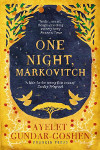
History, war… and humour?
Publisher: Pushkin Press
Pages: 365
Type: Fiction
Age: Adult
ISBN: 978-1-782-27163-5
First Published: 2012; 15th June 2015 in English
Date Reviewed: 27th May 2016
Rating: 5/5
Original language: Hebrew
Original title: לילה אחד, מרקוביץ (Markovitch, Layla Echad) (Markovitch, One Night)
Translated by: Sondra Silverston
Yaacov Markovitch has an unremarkable face. No one really notices him. His friend, Zeev Feinberg has an amazing moustache that everyone knows about. The friends enlist in a programme designed to rescue Jewish women from Germany, to bring them back to the homeland and whilst Zeev has no issues with the idea of divorcing a wife – he has a girlfriend who smells of oranges – Yaacov finds himself married to the most beautiful woman he’s ever seen, a woman who wants nothing to do with him and will ignore him in the years that follow.
One Night, Markovitch is a funny yet poignant book (‘poignant’ is on the cover; it’s perfect) about all sorts of things related to the self as well as war and the effects of it on people’s lives. It’s one of those books that is solid throughout and very special.
The humour is mostly laugh out loud and very well timed – never too much, never something you forget. The book is peppered yet it would be difficult to label it a complete comedy because it’s anything but stereotypical. I’m going to have to share a quote:
“Are you excited about the journey to Palestine?”
That she would be excited about their marriage was something he dared not expect, but he hoped that the excitement she felt at the proximity of the Holy Land would project a bit onto the means of her reaching it, that is, onto him.
“Definitely. I’ve read a great deal about the oranges.”
Here Bella Zeigerman stopped speaking, and Yaacov Markovitch decided happily that his wife, like him, was a fan of agricultural literature. On the narrow, crowded bookshelf in his house in the village, next to the writings of Jabotinsky, stood all sorts of guides – the mother of wheat and how to improve species, how to plough and plant grain, how to graft a tree without causing pain. Bella Zeigerman knew how to recite Gothe, but it is doubtful that she would be able to memorize, with the same degree of success, the list of insects that threaten to destroy grapevines. When she mentioned oranges, it was because she recalled a line from the Hebrew poet’s poem [she is in love with his work] that had been published in the newspaper.
Humour is found in Sonya’s eyes, which are a couple of millimetres too far apart to be pleasing. It’s found in the way she stands on the shore yelling curses at the long-gone Zeev Feinberg who will return in time. It’s found in Zeev Feinberg’s moustache. And it’s found in some of the ‘lad-ish’ humour – this is in no way a women’s fiction book.
For a while it’s simply history and humour and then there comes a point where the mood is more sombre, the humour sensitive, almost, and whilst it’s not quite that because the story turns ‘sensitive’ on its head, whilst the war trickles in from the beginning, there is a turning point wherein it becomes the focus.
Gundar-Goshen mixes in some politics. The book deals with the beginnings of WWII, its situation for German Jews, whilst also dealing with the Arab-Israeli conflict, in which the Jews, their people persecuted in Germany, are in turn persecuting Arabs. Yes, it’s quite a bold statement. German Jews are fleeing Berlin before the major onslaught and in Israel, their ancestral land, they are in a good place. Gundar-Goshen does not say anything directly about the issues, the conflict betweens these conflicts, but there’s a flicker of an opinion.
This isn’t to say the wars are particularly detailed, however. For the most part they are in the background – Zeev Feinberg held an Arab by the throat today but now we’re seeing him at home with his children. The subtext is key. It spills out of the text – this conflict is everyday, a regular happening, and it’s in the ‘minor’ details like Zeev’s day that we see the horror of it.
Amongst this is the shock. It hits a few characters, informs their lives, but one in particular is commented on – Rachel Mandelblum. When in Germany – which she left for Israel, promptly ceasing to speak German, adopting Hebrew instead – Rachel experienced the horror of a murder, a skull being cracked. She can not escape the sound, it haunts her every day. Gundar-Goshen blends this specific horror into the humour of Rachel’s present situation, her pretending not to understand German, being not unhappy but no more than content living with the random butcher who proposed marriage when he saw her in the street. (She had no reason not to agree so she followed him home and had his child.)
The naming, whether cultural or not I’m not sure, is in a first-name-surname form every time. Rather than simply filling pages, it adds to the humour, though I can’t say why exactly.
The translation bares a strong sense of being true to the original. It’s an American translation, definite western words that are most certainly the choices of the translator rather than a choice based on how the text reads, but it’s by no means a bad text. It flows, it translates jokes into a western context for English speakers to understand… you know you’ve got a good translation when it doesn’t stand out.
The ending’s an interesting one for the way Gundar-Goshen refers to the audience, breaking the fourth wall (though there is, throughout, a feeling of that anyway) saying that, hey, she’s about to jump in time, but this is what happened in the interim she’s skipping, and it isn’t much, and this is why she’s had to do it, and so on. There are many books that jump in time for no reason – Gundar-Goshen’s explanation is a blessing.
One Night, Markovitch is superb. It’s fun, it’s serious with good reason and to good effect – it’s just a solid book all round.
Related Books
None yet
Ben Fergusson – The Spring Of Kasper Meier
Posted 17th June 2016
Category: Reviews Genres: 2010s, Historical, LGBT, Political, Social, Thriller
1 Comment
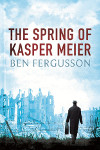
Blow a kiss, fire a gun.
Publisher: Abacus (Little, Brown)
Pages: 386
Type: Fiction
Age: Adult
ISBN: 978-0-349-13976-0
First Published: 15th April 2014 in translation; 17th June 2015
Date Reviewed: 15th March 2016
Rating: 3/5
In the year following the end of WWII, the rubble of ruined buildings sprawls across the streets of Berlin. Kasper, a black market trader, is not acquainted with any rubble women until one day he is stopped by one who wants him to find a pilot. She won’t say why but to Kasper it’s clear there’s some sort of underground factor to it.
The Spring Of Kasper Meier is a thriller that looks at a certain aspect of the aftermath of war. It’s categorised under the thriller genre, but doesn’t quite match it.
This is a novel wherein the vast majority of the book doesn’t do anything to recommend itself but the last 50 pages are excellent. It’s a case of the reader having no real idea as to what’s happening, and that’s not good here. There’s no suspense until those last pages start and it just feels like a lost chance. Nine out of ten times you don’t have a clue what’s happening or why you’re reading about a person and even if you manage to figure some of it out the raison d’etre will likely still evade you. It’s the lack of any clues that is the problem.
The writing doesn’t help. There’s a decided lack of commas which means clauses run together so you have to work out what the sentence is saying. Of facial expressions there are too many in each piece of dialogue – speaking then smiling then speaking then surprised then speaking and laughing, that sort of thing. All tell, no show.
The history’s good. That’s the one plus side of the telling – you get a good picture of the period. One of the themes is sexuality, in this case being gay in 40s Europe. It’s dealt with well – there’s commentary when needed but otherwise Fergusson just gets on with it. As the majority of the characters and certainly the main characters are German, there is more time spent on Kasper’s romantic history than, for example, the plight of the Jews. Women also get a look in, though mostly it’s in the form of Kasper’s friendship with Eva.
Like other recent writers of the occupation of Germany by the allied forces, Fergusson doesn’t shy from showing the realities of German life and the way that not all those in the allied forces were good. He shows the horror of it, reminding us that regular people faired the same way everywhere.
The Spring Of Kasper Meier, then, is a book of good history, but otherwise isn’t so great. If you’re able to figure out – or guess correctly – what’s happening early on, you may enjoy it more, but most will want to keep it on the to-be-read pile for a while longer.
I received this book at the Young Writer of the Year award blogger event.
Related Books
None yet
Abubakar Adam Ibrahim – Season Of Crimson Blossoms
Posted 3rd June 2016
Category: Reviews Genres: 2010s, Angst, Domestic, Political, Psychological, Social, Spiritual, Theological
Comments Off on Abubakar Adam Ibrahim – Season Of Crimson Blossoms

Yes, it’s likely to fall apart.
Publisher: Cassava Republic
Pages: 339
Type: Fiction
Age: Adult
ISBN: 978-1-911-11500-7
First Published: 20th May 2016
Date Reviewed: 2nd June 2016
Rating: 4.5/5
Grandmother Hajiya Binta and drug dealer Reza meet when Reza breaks into Binta’s house. He steals her jewellery and threatens to kill her but there is a moment between them; he returns in peace. The two begin an affair that must be hidden – not only is the age gap wide, in Binta’s culture it is shameful. As Binta hides the affair from her family and Reza tries to work out the conflict between his care for her and the murders he commits for others, we also see the trauma of Binta’s niece, Fa’iza, starting to slip through the cracks in the armour she created for herself when her father and brother were killed.
Season Of Crimson Blossoms is a book that looks at a fair few things, namely the emotions and sexuality of an older woman and the life of Reza; it also delves into corruption and religious conflict.
Ibrahim is one of those writers who writes the opposite gender really well and succeeds in giving life to the various ages of his characters. In many ways his book is about the effects of culture on women in conservative Northern Nigeria and it’s a well-rounded study. He looks at the effects of violence through memories. And it’s through Fa’iza’s story that Ibrahim’s talent sparkles for the first time.
When we hear about Fa’iza, beyond her liking for romantic novellas and film stars and television, it’s in the form of a flashback. In the space of a mere few pages, Ibrahim manages to provide the sort of shock most authors spend time leading up to – he shows us the reason Fa’iza can be quiet, the horror of what she experienced as a child. As men beat down the door to the family home, Fa’iza’s father has the family run to the bathroom where they stay cramped for some minutes before they are found. It is an incredible piece of writing, as stunning as if he’d been working on it for several chapters.
This is an unrelated moment to the one above, but it’s another, even more succinct, that shows Ibrahim’s skill:
He was there when the other boys spotted a girl in tight black trousers heading up the street. Her hair – permed in Michael Jackson Thriller style – streamed behind her as she swung her hips ostentatiously.
Then the chants started.
“Biri da wando!” the boys sang, running after her. Some ran ahead and pulled down their trousers and wiggled their little backsides before the embarrassed girl. The racket drew more boys from their houses and playfields and Yaro, too, was sucked in. Women in purdah came out and stood by the front door, trying to call back their sons, but their voices were drowned in the maelstrom.
Then the pelting started.
Missiles of damp mud struck the girl on her offending trousers, the imprint of dirt standing out starkly against the black of the nylon. She started crying, cowering and shielding her head from the missiles. The racket went up several decibels. Some women ran out and tried to dissuade the boys, but they were too many. In the excitement, they did not see Zubairu, who was not much taller than the biggest boys, until he reached out and grabbed his son. Like flustered bees, the boys scattered, dodging into neighbouring houses and running down slime-covered alleys. […] She poured in some damp guinea corn from the basin beside her and when she heard the flogging start, she began pounding. The harder the boy cried out, the harder Binta pounded, her pestle thumping heavily.
There is not too much of this type of scene; there doesn’t need to be – once you’ve read a few, with the narrative alluding to other situations, you’re all set, as it were, for the rest of the book.
Binta likes Reza because he reminds her of the son she lost. Reza likes Binta because her face reminds him of the mother who was never there for him, who left him, tore his hands from her hijab as she went to leave. Their relationship, as much as it’s sexual, is their way of grieving. Binta’s loss of her son, Yaro, is compounded by the fact culture forbid her from showing him, the oldest child, any affection. She always wished she could show him she cared because as an oldest child herself she’d experienced the same thing, knew what it was like to be neglected. And so her time with Reza, though sexual, could be seen as a penance, or a making up for what she didn’t do, spending time with someone who looks like Yaro who wouldn’t be far off his age. Whilst inappropriate socially, the relationship serves an innocent, important purpose.
At first appearing to be a case of a drug ring, Reza’s narrative expands to working for corrupt leaders. You see Reza’s conflict – on one side he’s assigned people to kill to help others get further on the board. Chess is alluded to. On the other side he has Binta spending time with him and nudging him to go back to school and gain an education. He’s always working on things Binta has no idea of; his oft-repeated ‘you understand?’ at the end of dialogues packs in different concepts: it’s the way he speaks, it’s a phrase with a lot of subtext behind it that differs every time, it’s the way Reza tries to signal warnings.
Ibrahim is very open about society, culture. This is what makes the character of Binta stand out – she’s taking a chance with Reza and is being led by her sexuality, talking of being free. Her relationship with her deceased husband was not a bad one per se, but she laments not having been able to enjoy their time together as a couple. She takes a chance in the name of sex, knowing she might be found out and worrying about it, but she’s led by her desire to be happy before she becomes too old. It would be shameful if she were found out.
The relationship between men and women and the differences between how they can live their lives are given time, too. Binta has a suitor but he’s never present in their conversations, always listening to his radio, preferring to talk about politics. The reality behind Binta’s daughter’s separation from her husband is revealed slowly – is she a bit over-the-top or is there something else? But at the end of the day, as much as it may be down to either or them, Hureira’s husband can take another wife.
I believe it was E Lockhart who said that a book should deliver a series of small shocks. Ibrahim’s novel is the best example of this idea I have ever read. Whilst it may not be a constant series of shocks – if it were you’d be at risk of becoming numb to it all – the 1-3 page horrors I spoke about earlier fit this perfectly. They’re short, small. They are a big shock due to Ibrahim’s ability to create such powerful scenes in such a short space of time.
Season Of Crimson Blossoms is a book to read slowly. Not because it’s boring or because you’re going through a patchy part but because you want to appreciate it, you want to think about what you are reading and you want to savour the writing; it’s a sort of close reading, only off the page. It’s really very good.
I received this book for review from FMCM Associates.
Related Books

Speaking to Abubakar Adam Ibrahim about The Whispering Trees, and Season Of Crimson Blossoms (spoilers included)
Please note: this episode includes discussion of sexual content, and the second reading includes a sex scene.
Charlie and Abubakar Adam Ibrahim discuss Nigeria at this time, publishing a novel on a very controversial subject and reactions to it, effects of grief, and looking at cultural expectations of women as the generations change.
If you’re unable to use the media player above, this page has various other options for listening.
Nicholas Royle and David Gledhill – In Camera
Posted 6th May 2016
Category: Reviews Genres: 2010s, Art, Commentary, Historical, Political
Comments Off on Nicholas Royle and David Gledhill – In Camera
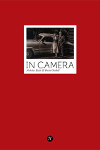
Watched, photographed, painted.
Publisher: Negative Press
Pages: 40
Type: Fiction
Age: Adult
ISBN: 978-0-957-38283-1
First Published: 10th May 2016
Date Reviewed: 23rd April 2016
Rating: 4.5/5
Taken by her father’s instruction that she may hold his camera but never click the shutter, an East German girl living at the time of the Cold War cannot quite ignore her inclination to disobey.
In Camera is a short-story-length historical art book that pairs fiction with oil paintings. Gledhill found a photo album from the time of the Cold War, decided to create oil paintings from it, and asked Royle to compose fiction around his work. It is very much a concept book and a lovely one.
The story is told in a series of vignettes, different episodes in the girl’s life, moving in a linear fashion except for a few times when we move to a more modern time, perhaps this present day, for added context and to tie up the various tales. There is only one name given in this book – the father’s – everyone else is afforded but an initial. This helps to keep each vignette short and nicely presented – most scenes happen in the space of one page and there is a painting to accompany each. It also suits the time period, the initials conforming to the idea of filing, tracking, shorthand, secret synonyms.
It’s all about surveillance in the Cold War, but it’s subtle. This is a book wherein there is a lot packed into a mere handful of pages, much to learn and discover lying under the surface. Again, it suits. The camera at the centre of the story means that the girl is effectively taking records of things that we can assume could be used as evidence; it’s an innocent pastime with an uncanny significance. Spying is the name of the day – presuming the father knows about the photography, which we can expect as she appears young and doesn’t understand that there’s a film inside to show that someone’s been using the camera, he doesn’t so much as mention it – one could say the borrowing is condoned.
Everything layered is rounded off by the simple day-to-day of the girl’s life, her games with her brother and her life as an adult wherein the camera is in full use. We hear about the modern efforts to find out what was noted about people, gaining knowledge – the reader gaining knowledge – from another perspective.
The only thing not in the book’s favour is the size of the prints of the paintings; they are often very small and because of Gledhill’s photographic-like talent, end up looking more like actual photographs than paintings, which makes sense in a way but does negatively impact the point of them. This said, on the size of the paintings the publisher says something worth baring in mind: when it came to designing the book I wanted to make it subversive and circular, for the paintings to appear almost as photographs again, to add to the idea that things are not often as they seem.
In Camera is a wonderfully imagined piece of writing, and size aside, the paintings are lovely. If you like the idea of combining art and literature, you’ll like this book. If you like books with many layers, subtle stories that appear simple but have much more behind them, you’ll like this book. A lot.
I received this book for review from the publisher.
Edited later in the day to add the note about the publisher’s design.
Related Books

Elizabeth Chadwick – Shields Of Pride
Posted 23rd March 2016
Category: Reviews Genres: 1990s, Angst, Domestic, Historical, Political, Romance, Social
2 Comments

And prejudice.
Publisher: Sphere (Little, Brown)
Pages: 361
Type: Fiction
Age: Adult
ISBN: 978-0-751-54027-7
First Published: 1994; re-printed and edited 2007
Date Reviewed: 7th March 2016
Rating: 3/5
Joscelin’s been a mercenary for years but when he gets in a fight with a man who accuses him of trying to carry off his wife, things start to change. The man, now dead, leaves a widow and child and they will need taking care of. And in the background is the conflict between Joscelin and his half-brothers – Joscelin is the child of his father’s other woman – and the fight between the king and his son.
Shields Of Pride is one of Chadwick’s earlier novels, recently reprinted, that deals with completely fictional characters. It’s a fair book but far outmatched by some of her others.
The history is as strong as always; Chadwick’s knack for throwing the reader back in time is just as good here as elsewhere. The details ensure an almost film-like, immersed quality, and the two main characters are stunning. Particularly Joscelin. Chadwick’s hero is fully medieval. Unlike some of her books wherein the hero is a historical dream, inevitably very similar to her other historical dream heroes, and sometimes a little too modern in sensibility, Joscelin is simply a medieval man. He’ll fight to the death, no holds barred and in anger, then kiss his wife who, similarly unaffected by any misplaced modernity, doesn’t comment on the fight and happily follows him to bed. If it feels like the book lacks any nicety, it’s for good reason.
Not so good is the plot. One could say there isn’t a plot, just a scene, a man who takes to wife the woman whose husband he killed, and their resulting average life together; indeed if that were it it would be fine – and it is for a good chunk of pages. What happens, then, is that the story begins to drag and continues to drag until the end. Unnecessary minor conflicts are conveniently added to, it can only be assumed, lengthen it. (The book would have made a lovely novella.) Fights happen then life happens then fight happens and rinse, repeat; you can see the conflicts coming a mile off. Each battle is meticulously detailed but as you know who is going to win you could skip them if you wanted to. It’s hard to say there’s a climax because the end of the book is a lot weaker than the middle.
Amongst this is the family set-up: Joscelin is the lauded, loved, out-of-wedlock oldest son whose father treats his wife and younger sons badly. The initial introduction works – you’re introduced to the hurt wife who had to live in the footsteps of the other woman (who lived with them) and the official heirs who are constantly criticised because their mother was married out of duty and isn’t loved. The thing here is that these people are rightly angry and it’s well established that they have reason, but as the book carries on they are written more and more as crazy bad guys who are too hateful and as much as one might agree that they shouldn’t blame the messenger for the faults of the sender it all becomes a bit too hubble bubble toil and trouble, and a bit too good versus evil. Add to this the young-skinny-woman and older-large-woman divide and the release date shows.
Where Shields Of Pride works, then, is in the afore-mentioned factual hero and the history. It works as a generally upbeat, escapist read, that doesn’t demand anything of you, but shouldn’t be picked instead of others.
Related Books