




Chigozie Obioma – The Fishermen
Posted 9th March 2016
Category: Reviews Genres: 2010s, Commentary, Domestic, Political, Psychological, Social
2 Comments

Taking ‘do as I say’ to the extreme.
Publisher: One (Pushkin Press)
Pages: 293
Type: Fiction
Age: Adult
ISBN: 978-0-957-54885-5
First Published: 11th February 2015 (in translation); 26th February 2015
Date Reviewed: 3rd March 2016
Rating: 3.5/5
Together with his four elder brothers, Ben starts going to the river to fish, secretly, because the town views the previously-worshipped waters with suspicion. The boys are caught by a neighbour, whipped by their father, but the real trouble with creeping out alone is yet to come. One day the madman Abulu, considered religious by some, happens upon the brothers and tells them that one will kill another.
The Fishermen is a book that incorporates folklore, old customs, and 1990s Nigerian social and religious culture into its tale of tragedy. A literary venture, it takes its time on one particular element, bolstered by a background of politics, fundamental Christianity, and the kind of child discipline we now call too much.
Dealing with the writing style first because it’s the first thing to make its mark, Obioma favours a detailed, sometimes overly-wordy, almost studious style that nevertheless has the power to wow on occasion. He likes ‘big’ words, beautiful sentences, and his young narrator, Ben, is just the right side of well-spoken rather than appearing too old for his years. Obioma narrates in a way similar to the spoken narration you often find in Victorian adaptations, films – that slow, wistful narration most common to women. There’s an oral tradition feel to it, poetic, storyteller. It could certainly be called too much – it’s one of those styles you’ll likely either love or hate. Obioma is entirely unapologetic; he wants a well-written book, old fashioned – understandably more 90s than nowadays – and he will have one. (You do have to remember the setting when considering the style, the time and the place.)
It’s not completely well-written but whether that’s down to Obioma or the editing process is hard to say. Certainly the myriad uses of ‘in’ instead of ‘on’, of ‘on’ instead of ‘at’ and so on, are at odds with the rest of the text, suggesting an oversight or perhaps a slight discord between our literature professor and the publisher’s editors. Whatever the reason, the constant misuse is distracting and means keeping your mind on the story is difficult.
There is a disconnect of sorts between Ben and the reader; where Obioma is so focused on the way he writes his tale – the words, the genres, the background – Ben, his brothers and other family are not so detailed. They are detailed – they’re not one-dimensional at all – but there’s no pressing reason, no feeling of the need to care, which is a problem when the story involves a lot of tragedy. And it’s hard to get to grips with the family – the way the father metes out punishment, the mother quick to manipulate and throw her children under the proverbial bus, are perhaps more difficult to read than the author hoped.
Not much goes on in the book – this sounds too ironic to be true so I’ll explain: the book is a series of tragic events with some politics in the background, but not much beyond that. This isn’t a failing in itself, many books are similar, it just means that The Fishermen is more about the sum than the parts. The book is not as interesting to read as it is to contemplate after the fact, when you’re able to put everything together and see that Obioma’s goal has been to provide an overall meaning, a message, even.
Superstition or prophecy? Obioma presents the possibility of both and asks you to form your own conclusion. What was it that made things happen as they did and can and should religious ideas take precedent? Obioma looks at the psychological factors ruling his characters’ choices, the way one thing said by a person considered mad has a knock-on effect. And as much as the characters are Christian, the author shows that mythology and old ways can still creep into life, that we can move on to new ideas but those old ones will remain ingrained for a time.
A note on one of the tragedies – this book deals with under-age crime in a way that may make you uncomfortable. This is actually a reason to read it rather than not because it opens you to the situation and says more by its inclusion than Obioma could say without it – more than he could say just in words. It’s viewed through a similar lens as the rest of the book: it happens, whether it’s right or wrong is irrelevant here.
Overall, then, The Fishermen is a good book, but doesn’t quite keep the promise of the first pages. It does make for some interesting contemplation but the contemplation is fairly short-lived. Take it as a look at 90s Nigeria, its politics and its culture and society and you’ll be best off.
Related Books
None yet
Xiaolu Guo – I Am China
Posted 8th February 2016
Category: Reviews Genres: 2010s, Commentary, Domestic, Political, Spiritual
2 Comments
When politics force people apart.
Publisher: Chatto & Windus (Random House)
Pages: 369
Type: Fiction
Age: Adult
ISBN: 978-0-701-18819-1
First Published: 5th June 2014
Date Reviewed: 8th February 2016
Rating: 1/5
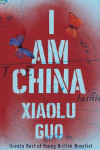
Iona is tasked with translating a set of letters and diary entries handed to a publisher by a Chinese woman. The publisher has a mind to release the work but first they have to know what it’s all about.
I Am China is a semi-literary novel about personal/political problems in China. It promises much but delivers little.
There are major issues with the book, namely the way the story is told. The set up is all very convenient, contrived; the story of Jian and Mu is told through the letters but it would’ve been much better had we heard directly from the characters themselves. The translator, Iona, is nothing but a plot device inserted to allow the story to come to fruition, as are the other few characters – the publisher, for instance. The problem becomes two-fold when Guo starts to try and make more of Iona. Guo is all about telling, never showing, and it’s far too obvious that she’s trying to insert some meaning into Iona’s own story – you can practically see the thought process as the author realises her readers are going to see through Iona as nothing but a device and she doesn’t want you to see her as a device.
Amongst all this telling, then, is repetition and a distinct lack of emotion and character development beyond Iona. Guo is relating a very important subject but that subject never becomes important because of the lack of anything to pull the reader in and make them care. The author tacks on various statements about Iona’s emotional state whilst reading these letters but it never rings true. And a publisher planning to publish work without any idea what it’s about or permission from the owner of the text… one of those, possibly, but both?
Unfortunately the writing itself is also problematic. English is Guo’s second language so it’s understandable there would be errors but it seems the author was left completely alone when it came to the copy-editing stages.
I Am China is a fair idea gone horribly wrong. Look elsewhere for books on the aftermath of Mao.
Related Books
Sunjeev Sahota – The Year Of The Runaways
Posted 14th December 2015
Category: Reviews Genres: 2010s, Commentary, Political, Social, Spiritual
2 Comments

The modern British version of the American dream.
Publisher: Picador (Pan Macmillan)
Pages: 466
Type: Fiction
Age: Adult
ISBN: 978-1-447-24164-5
First Published: 15th June 2015
Date Reviewed: 7th December 2015
Rating: 3/5
Ranjeev’s father is ill and despite his claims to the contrary, cannot work any more. The family, once fairly high up in society, find themselves nearing poverty. Avtar’s family is in need of money too, especially as his brother has to keep studying. Tochi’s family was killed in a gang war, their low caste status meaning they were hunted. The three men decide to take a risk and travel to England. Then there’s Narinder, the British Sikh who married Ranjeev because she felt called by God to help those in need. Britain may be said to offer better options, but as the men find, it’s not quite the opportunity they were led to believe.
The Year Of The Runaways is a long novel of job searches, spiritual searches, pain and suffering. It is more of a report than a story, the ending is a bit of a rush job, and it can be as arduous to read as the characters’ lives are to live.
There is a lot, and I mean a lot, of Punjabi in this novel. I’m not the best person to comment on this as I can speak a fair amount of Hindi (similar enough to Punjabi for me to have understood the majority of it) but anyone who knows only or less than how to say ‘hello’ in the language is going to be stumped, often. It’s an interesting situation because on the one hand it’s nice not to have a running translation commentary, which I think anyone could understand – those who speak the language don’t have to read everything twice and those who don’t speak the language don’t have to feel the language, being translated, is rendered pointless – but there is no glossary and only one or two translations for paragraphs of text. I would say that a small amount can be figured out from the English replies Sahota writes, but most cannot and you can’t always Google the words because everyone transliterates differently (I myself had many light bulb moments when I realised, for example, that ‘beita’ was ‘beta’ – an obvious example, but you see what I mean).
If you understand the language or are able to get past it, there is the general writing to consider. It’s mostly good but there’s some clunky phrasing and sudden uses of very colloquial terms in amongst the otherwise literary text.
As said, the book is a novel of job searches. Not much happens beyond the cycle of job search, fast food and construction work, losing the job, searching for another, getting harassed, and hiding from the authorities. Is it true to the real life situation? It would seem so, but it doesn’t make for a very good story when you’re talking over 450 pages and a non-ending. As far as the ending is concerned the story just suddenly stops, in the sense that you flip over the page to keep reading and find only a blank one, an epilogue tagged onto the end of the book, set a year or so into the future. The epilogue doesn’t fit the rest of the book and contains the most rose-tinted of rose-tinted scenes.
What is good in The Year Of The Runaways are the discussions of caste, wages, and treatment of the underclass – if we can call them that. The men find themselves at the mercy of others who share their ethnicity but have been in England most of if not their entire life, as well as at the mercy of each other. They are nobodies both figuratively and in the sense that they have no honest paperwork. They get less than minimum wage because of the catch-22 – they can’t complain because they’ll be deported and their employers can pay them as little as they want because it’s all under the radar.
Indian caste divisions apply to England – the low-caste Tochi, a chamaar (‘leatherworker’) is viewed as below the rest of the men even when he’s the one doing fairly well for himself and they are practically on the streets. This said, the man who is high-born doesn’t understand why that fact doesn’t have any sway in his treatment; he becomes the lowest of the lowest as far as living conditions are concerned. Throughout Sahota does not say anything, he lets his words, his stories, do the talking, and even then it is subtle. It’s a ‘take what you will’ method of storytelling and as such there are bound to be many views and interpretations as to what he is saying and what’s important. Sahota has said that his book owes a lot to those he’s met, the stories of NRIs in the UK.
In regards to Sahota’s fairly journalistic stance, it could be said that it doesn’t quite do what it ‘should’ be doing. You might expect a book about illegal immigration to show you there are reasons for it, that these people ought to be where they travel to and the residents of that country should welcome them. Sahota does this but only a little. Tochi, the chamaar, goes to England because his family have been killed, his auto-rickshaw has been destroyed, and he is being hunted because of his caste. His presence in England poses a question: shouldn’t he be a refugee? In many ways Tochi is the definition of the sort of immigrant host nations look for: he works hard and would surely look for a job for which workers were sorely needed if it weren’t for his status as an illegal. Sahota doesn’t look into refugees, the book doesn’t go into the process, but he is the character you are likely to remember most.
If you take away the issue of immigration and focus solely on the social issues, the book seems stronger. It has more going for it. The discussions of caste and money and religion, in a largely objective manner, are very detailed. Sahota shows both sides of the stories, for example, Narinder’s devotion that may look a bit much on occasion – certainly to those around her – but is built on true belief and love – and then her lessening belief as she sees the horrors in the world and cannot understand why God would bring so much misery. In this way you see that glimmer of a different viewpoint as she sees herself, a believer who can trust that god will help her fairly well-off self, contrasted with others who are not so lucky. The caste issues show that it can be easy to find help and help is available, but only if the classes match and that sometimes success, in this case financial, is of no matter – sometimes even no success is better than success.
In this way – the success or no success – Sahota also comments on the way people are sent abroad to help their families – not just the way it happens but the way one person is compelled to put themselves at risk and the way there’s no certainty. Considering the characters he writes we can assume he is making the point that sometimes it’s not needed, and it’s not that he’s saying it simply shouldn’t happen, it’s that he’s asking if all Randeep goes through, for example, is worth it. Is Randeep’s plight as a homeless man, is what Avtar goes through that requires urgent care, okay when placed against their family’s wishes to get to England, to have money? Now Sahota isn’t saying it isn’t, he isn’t saying that, no, this is not okay and it shouldn’t happen, because he’s included the other side, Tochi’s need to be in England – what the author is asking is that things be given more thought. And likely they are given a lot of thought, but Sahota is pressing the idea because of the tales he has come across. Like my analogy at the start of this review, he’s suggesting that the idea of going abroad isn’t what it seems, it’s not the gold mountain those who immigrated to America thought America would be… or at least that’s what the book says up until the ending.
To go back to the ‘should be doing’ debate and to look at that ending, the other characters besides Tochi are in that grey area. Randeep, high-born, is sent on a marriage visa so that he can get a good job and keep his family in the luxury they’re accustomed to. He is the one Sahota gives the most hardship to, once in England, but the ending (it’s difficult to call discussing it a spoiler) does kind of ruin it, leaving the character ultimately learning little or at least learning nothing that Sahota thinks important to impart. Narinder, Randeep’s visa wife, is the one who learns the most but it’s a bit too subtle and her section of the ending is strange. The other character, Avtar, who sells his kidney and gets a student visa, shows the desperation and a will to be himself and do well whilst trying to balance the hopes of his family. It’s the families that push their sons on, the sons living in dire straits whilst their relatives, by comparison, are wealthy. And then Randeep gets his planned divorce and brings his family over, Avtar gets the medical help he needs and throws college away for good, and there are no questions as to the horrors of the men’s lives whilst their families waited for them. Surely in real life something would be said, but Sahota’s ending is a dream world in which the men are suddenly in high-powered jobs with no telling of how they got there. Narinder and Randeep are free of their marriage but they applied for a divorce just days after a suspicious inspector visited which would’ve surely made the inspector even more suspicious. It is this gap in the narrative that would’ve made the book excellent had it been included – the drudgy of work and running is important but it’s not the be all end all of it.
To briefly sum it up, The Year Of The Runaways is okay but it’s not compelling enough for the length it is and requires a great amount of your attention due to its reliance on extreme subtlety. It’ll be your background book, so to speak, that one you’re reading alongside a slew of others.
I received this book at the Young Writer of the Year award blogger event.
Related Books
None yet
Lisa Hilton – Elizabeth: Renaissance Prince
Posted 27th November 2015
Category: Reviews Genres: 2010s, Biography, History, Political
1 Comment

Just don’t tell this monarch she’s a strong female character…
Publisher: Houghton Mifflin Harcourt
Pages: 342
Type: Non-Fiction
Age: Adult
ISBN: 978-0-544-57784-8
First Published: 9th October 2014
Date Reviewed: 26th November 2015
Rating: 3.5/5
Hilton looks at Elizabeth I and her court, aiming to show how the queen was more of a prince than a princess (in keeping with the monarch’s own view).
Elizabeth: Renaissance Prince is a fairly good read that examines much of the period but has a tendency to follow forks in the road rather than remain focused on the Queen herself.
Let’s start with the writing style. Hilton writes in a way that is both highly academic and very colloquial. ‘Big’ words join phrases such as ‘he gave out that’, making for a book that suggests authority whilst remaining easy enough to read. Sometimes the text can be very dry – the prologue, laborious, in particular shouldn’t be considered an example of the book as a whole – but the fun episodes slotted in throughout keep it from becoming too much.
The vast majority of statements are backed up in some way, be it by primary or secondary sources. Hilton does tend to favour the research of others rather than her own, which can seem as though she needs to rely on other people’s thoughts when what she’s saying is sound, but it does add up the points in her favour so far as evidence is concerned. Sometimes the evidence is sketchy, for example her use of Bernard to make a point – Bernard’s the man who bases books on hunches – and, as another example, her use of what Anne Boleyn said in the tower in her last days as proof of what Anne believed (which again follows Bernard and, as I mentioned in my review of his book, one can’t really take as fact words said in times of trial). The author sometimes neglects other evidence or mainstream opinion without re-enforcing it, such as her statement that Anne Boleyn was not an active reformer and her talk of the gospel to Henry VIII was but part of courtly love (most historians see it as a subtle way of influencing the easily-influenced king’s mind, possibly on behalf of her family).
However when Hilton gets it right, she really gets it right. She is very biased against certain people others favour but relates stories in such a way that show why she is right to be biased – she may call Katherine Parr’s ‘collusion’ with Seymour during the tickling incidents ‘nasty’ but she makes plain the reason why without resorting to name-calling or manipulating the narrative of the event. She points out that, okay, perhaps Anne could have been a reformer but that there is no evidence of her individual involvement, for example, in ‘promoting sympathetic clerics to bishoprics’.
As a book on the whole it’s good; the problem comes with the title and stated focus: this book is not so much a biography of Elizabeth as it is a book about Elizabeth and her courtiers. So much time is spent detailing other people instead of looking at what the queen was doing and thinking, which is almost inevitable when we’ve no diaries and so forth, but does weaken the argument being made. The assertion of princeliness is compelling and believable but beyond a couple of quotations and repetitions of ‘Machiavellian’, the proposal isn’t strong enough to warrant a whole book about it, as shown by the amount of time devoted to other subjects. Instead, unfortunately, we have a book in which a queen does come across as more of a man but there is so much planning and law-making by the actual men, often away from the queen, that it can look like an afterthought.
Away from this believable but hard to show statement of manliness is a competent non-fiction that whilst it needs to be read with the knowledge it’s one person’s work – as most history books are – succeeds in being informative and a good choice for those looking to learn more about the Queen and the upper classes. Hilton’s background in television gives her book an edge others lack, making it, as suggested, both academic and commercial, and the amount of research undertaken practically oozes from it.
Elizabeth: Renaissance Prince is one to look for once you have a good grasp of the basics (the opinions mean you’ll appreciate it more if you’ve read the mainstream views first) and a good reminder for those who’ve been away from the history for a while. Granted, not all that much is new, but the handling of the information and the presentation of it is on the whole excellent; reading this book is a bit of an experience in itself.
I received this book for review from the publisher.
Related Books


Sarah Howe – Loop Of Jade
Posted 23rd November 2015
Category: Reviews Genres: 2010s, Angst, Biography, Commentary, History, Poetry, Political, Social
Comments Off on Sarah Howe – Loop Of Jade

Figuring out the past. Concerning the present.
Publisher: Chatto & Windus (Random House)
Pages: 60
Type: Poetry
Age: Adult
ISBN: 978-0-701-18869-6
First Published: 7th May 2015
Date Reviewed: 21st November 2015
Rating: 5/5
I’ve never reviewed a book of poetry before, never reviewed a poem at all. As you may know I’m not a big reader of them – technically I like them a lot, the words, phrasing, beauty – but they often confuse me.
I’m giving it a go this time; Howe’s poetry is on the short-list for the Young Writer Of The Year award and having heard the poet read one of them herself, being able to hear her voice in my head and knowing when to pause, helped me a lot.
So, then, Howe’s collection is about her mother’s early life in China as an unwanted and later adopted girl. It’s about Howe’s own experiences as a young child in Hong Kong before the family moved to Britain. It’s a bit about politics, a bit about history, and a bit about Howe’s relationship with her husband. Many of the poems are also based around the divisions of animals as proposed by Dr Franz Kuhn. (The descriptions are included before the poetry begins.)
And whilst some of it flew over my head, I can still say it’s incredible. Howe makes use of various styles. She writes in one-word lines, she writes in a sort of way that echoes prose more than poetry, she uses long sentences, short ones, indented lines. The style that’s most compelling is the one used in the title poem. This is a poem wherein she’s listening to her mother talk about her life and near the end she writes as her mother speaks, using white space between words and phrases to show where her mother is pausing. You get a really good sense of how this conversation played out in reality.
Howe’s written voice moves through perspectives. She often writes from a distance, the third person. Sometimes she writes in the first; but the best times are when she questions the audience directly, or questions herself, or speaks in a particularly intimate way that defies description. It’s really lovely and makes you feel as though you’re privy to something special.
One of the standouts is Tame – hard-hitting, excellent. This is a poem in which Howe uses a quotation about how it’s better to raise geese than a girl as her base and works a fairy tale from it, dark, brutal ending and all. She wraps around the subject, coming full circle. Another is Innumerable wherein Howe remembers going on a day out around the time of Tiananmen; she contrasts the two and brings them together to show how things can be swept under the literal rug but not really.
About half the poems are stories, the other half tiny glimpses. The glimpses work well, you need to keep your wits about you to discover their true meaning.
The writing is quite flowery as you would expect, and very, very literary. Howe’s writing may require you to use a dictionary and you do have to pause sometimes, more than you usually would, to really make sense of what she’s saying – sort of the first step in the discovery program.
It’s a brilliant collection which I can confidently rate top marks even though I didn’t get it all.
I received this book at the Young Writer of the Year award blogger event.
Related Books
None yet


