


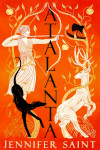


Magda Szubanski – Reckoning
Posted 25th November 2016
Category: Reviews Genres: 2010s, History, LGBT, Memoir, Political, Social
Comments Off on Magda Szubanski – Reckoning

Baa ram ewe.
Publisher: Text Publishing
Pages: 371
Type: Non-Fiction
Age: Adult
ISBN: 978-1-925-24043-6
First Published: 30th September 2013
Date Reviewed: 22nd November 2016
Rating: 4.5/5
British-born, Polish and Scottish rooted, Australian household name Magda Szubanski writes about growing up as the daughter of a man who rebelled against the Nazis – leading him to want the best for his children – finding herself as a comedian after years of academia, working through her sexuality, and the stories of her ancestors.
As the purposefully long heritage-detailed sentence hopefully shows, Reckoning is a book of both Szubanski’s own life, and the life of her Polish relatives living during World War Two. It’s a stunning book that is all the more poignant for the historical information Szubanski includes and it’s a bit of a literary experience to boot.
Szubanski, known best outside Australia for her role as Esme Hoggett in the film Babe as well as Sharon in Kath & Kim, details her life as her family made the move from gloomy Britain to brighter Australia right up until recent professional work. Weather differences, A-grade tennis, convent school. The author sports an open, easy writing style that shows off all her influences. It’s a text full of general cultural and more specific references – films old and new, classical literature – that help to bring clarity to what she says and makes it very readable. Brontë spars with black and white Polish cinema and the book is soaked in philosophical references, the latter in particular owing to Szubanski’s educational choices.
One of the themes is sexuality; in Szubanski’s telling of her life story you see the contention and confusion of a lesbian woman – or, as she puts it, ‘gay gay gay gay gay not gay gay’ – growing up in the 1960s and 1970s, the way Szubanski came to understand her feelings and the changes in society’s views. It’s a constant element that looks right back to childhood and right up to her coming out during which she details what was going on in her head, the confusion, her discomfort and later embrace of terminology. Another theme is Szubanski’s weight, as she talks openly about the way her size has often corresponded to the goings on in her life and also the way she has and is happy with her weight, indeed feels more like herself. Szubanski’s career in comedy lends the book a certain slant; the way the humour is written, opinions conveyed.
The book is also harrowing. One of the most important aspects of it is the look at the German occupation of Poland. Szubanski’s Polish heritage and in particular her father’s life, means that her work is full of information of the sort that is often forgotten.
We arranged to meet up again and I rejoined my family. As we shuffled through the cemetery, something caught my eye. A long line of wonky headstones, uniform and yet misaligned.
‘What does it say? Who are they?’ I asked Uncle Andrzej.
‘Girl scouts,’ he replied. ‘Among the first to be killed by the Nazis. Enemies of the Reich. This is how they frighten people. Killing girl scouts.’
Szubanski’s telling of the occupation and her father’s role in the Polish resistance is hard-hitting and superbly told. She leaves out nothing; there is a lot of shocking violence in this book that puts the spotlight on things that get lost in amongst the publication of the larger scale happenings. The killing of children, the choice to kill or be killed, the constant acting required of young people delivering anti-German information. To see this solely as a memoir of a modern day icon would be a mistake.
‘…a very evil man put this number on me.’
‘Why?’
‘Because he wanted to kill me.’
‘Why?’
‘Because I am a Jew.’
I didn’t really understand what a Jew was. Or why anyone would want to kill such a nice lady. Was she related to the Little Jewish boy Dad was always going on about?
‘I am telling you this, Magda, because it must never happen again.’
I nodded. I felt bad that this had happened to the nice woman. And I agreed it should never happen again. And I remember now – as I looked up, the other women all held out their arms and showed me their numbers.
At least on the face of it, Reckoning is bound to appeal more to Australian readers and those outside Australia who are familiar and interested in its popular culture, but if there’s one memoir you should read this year regardless of whether or not you know the author, it’s this one.
I received this book for review from FMCM Associates.
Related Books
None yet
Shan Sa – Empress
Posted 28th October 2016
Category: Reviews Genres: 2000s, Drama, Historical, Political, Social, Spiritual, Translation
2 Comments

Reigning for ten thousand years. It may indeed seem that long…
Publisher: Harper Perennial (HarperCollins)
Pages: 319
Type: Fiction
Age: Adult
ISBN: 978-0-061-14787-6
First Published: 2003; 2006 in English
Date Reviewed: 16th June 2016
Rating: 3/5
Original language: French
Original title: Impératrice (Empress)
Translated by: Adriana Hunter
Wu Ze Tian, as she would become known to history, begins life as the child of a privileged mother and a well-known but commoner father. After spending some years in a convent she is recommended to the Imperial City; a man who once aided her has found her a position as a royal concubine. Ze Tian finds no favour with her husband, the Emperor, but her ability as a horsewoman attracts the attention of his son who comes to desire her. She agrees to be his wife and thus starts a controversial era wherein for the first and only time a woman will rule China as Emperor.
Empress is an epic, fictionalised, account of Empress Wu’s life from her time in the womb and beyond her death. It’s the sort of book to read if the history intrigues you but you want to begin your lessons slowly.
Sa’s character is a difficult one. In Ze Tian you have a woman who was pulled from her life and put in a position that was both a source of envy and a horrible prospect – to be a concubine or wife was a high position in society, but most of the thousands of women kept in the City for the Emperor’s enjoyment would spend their days waiting for acknowledgement in vain. But you also have a woman who, once she gained power, was incredibly ruthless. Sa has balanced it all exceptionally well. For the most part the kindness of Ze Tian is kept to her early years – admittedly a lot shorter, page wise, than her reign – and her tyrannical decisions to said later reign. Sa does allow for moments of goodness and kind thoughts during Ze Tian’s time as emperor, but considering there is little chance at this point of your feeling any sympathy for the monarch, the author keeps it in the region of self-absorption and reflection. Sometimes this reflection just makes the horror worse, but one senses Sa just had to shrug her shoulders.
Ze Tian made a lot of positive changes in her time, even if many were later reverted. She set up a system wherein the regular person could state a grievance that would be listened to, she adjusted exams for hopeful scholars so that commoners could have a shot at governmental roles. She was a role model for women. Sa gives her what positivity she can but is realistic about the tyranny. Of course there’s always the thought in the background, which Sa addresses in the first person narrative – how much of the punishment Ze Tian metes out is due to any evil versus how much does she deem crucial to the success of her status? The narrative revolves around Ze Tian’s thoughts, everything that happens is couched in its relevance to her, how it impacts her, so, again, Sa ensures you’re getting as objective a picture as you can, at least as far as the limits of first-person go. (The book is limited by this narrative choice.)
Jousting with the graphic violence for Most Gratuitous Aspect is the sex. There’s no getting away from sex in this book; the women in the Inner Court had no choice and neither do you – there’s a lot of it, in various guises, sometimes because it’s a reflection of the facts and sometimes because – unfortunately – it seems Sa has run out of ideas. What’s interesting is that you eventually become numb to the idea of incest and old women having sex with consenting-but-under-pressure-to-do-so teenagers because it’s just so prevalent; and it’s interesting that you become numb because there’s a great possibly that that’s something Sa is wanting you to feel – the conquests were acceptable in the situation and so by becoming attuned, study-wise, to it yourself, you stop feeling so nauseated by it and start to see the societal concepts behind it.
The writing is very poetic. The translation reads well and it certainly matches the poetic nature of historical Chinese writings and artwork enough that you can assume it a faithful version. In terms of the writing’s impact on one’s reading, however, the book is very slow and can be a bit too flowery – sometimes it seems as though Sa is exploiting poetry in order to make her story longer than it should be. There is also a lot of info-dumping, Sa likes to go into meticulous, few-pages-long detail about events that could be summarised in a paragraph, and friends supposedly of many years pop up without you having heard of them before. It’s difficult to remember who anyone is in this book, the repetition makes everything so similar. No one is as important as Ze Tian and it shows.
And this is where we come to the main problem with the book – after a point, about two thirds of the way through, once Ze Tian is firmly ensconced on her throne, the novel becomes a series of repetitions. Ze Tian will worry about getting older; someone will suggest another is out to steal the throne; said accused person is condemned to death; Ze Tian is sad because she liked them; someone turns up in the royal bedroom to help the monarch remain young and energetic; that person is taken away; a pilgrimage or other journey happens; Ze Tian dreams of gods and her goodness… over and over again. Undoubtedly there was boredom to the routine of life at court and in the tedious nature of every action, every breath, having to adhere to etiquette… perhaps it is to show that tedium, and the slow decline of the body, but it’s overdone.
You’re never going to feel sorry for Ze Tian. You’re not going to like her and quite frankly it’s a relief to get out of her head. But if you can deal with the ennui I’ve mentioned, or if you’re happy to skip those sections, you might want to flick through Empress. Ze Tian’s reign was an important one, and if you’re at all interested in history your interest will be improved by knowing about her.
Or you could look for articles on the Internet and be just as, if not better, informed.
But I became a symbol of a corrupt woman… Novelists invented a life of debauchery for me, attributing their own fantasies to me.
This may be ironic.
Related Books
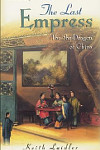
Tahmima Anam – The Bones Of Grace
Posted 19th September 2016
Category: Reviews Genres: 2010s, Angst, Domestic, Political, Romance, Science, Social, Spiritual
Comments Off on Tahmima Anam – The Bones Of Grace

One epic love letter.
Publisher: Canongate
Pages: 407
Type: Fiction
Age: Adult
ISBN: 978-1-847-67977-2
First Published: 19th May 2016
Date Reviewed: 14th June 2016
Rating: 4/5
Zubaida was studying in America when she met him: Elijah, a man she came to know for just a few days; she had to leave for Pakistan when her university department’s hopes of uncovering an ancient fossil were realised. But when the project came to an abrupt halt, Zubaida went back to her native Bangladesh and married her childhood friend, effectively bringing an end to her acquaintance with Elijah. Years later, after meeting and splitting from him again, she has chosen to tell him everything in a letter.
The Bones Of Grace is a somewhat epic story that also includes another story within the story. It’s the sort of book you’ll likely either love or hate (very difficult to rate!) but either way appreciate the background detailing.
What first strikes you is Anam’s writing – it’s sublime. There are no two ways about it. It’s the sort of writing that is so wonderful, so well put together, so constant, that it has a very real affect on the novel’s flaws. You won’t dismiss the flaws, but you will feel as though you want to dismiss them. But what’s interesting is that this isn’t necessarily Anam’s natural writing style, it’s all Zubaida – during the story within a story, where we hear directly from Anwar (and it’s just that Zubaida has included his words in her letter) the writing is very different. More… male, appropriately. (Anwar is a man looking for his past love who puts his search on hold when he runs out of money.) Zubaida’s words, the flow of her writing, does make up somewhat for what could be called a frustrating narrative.
And I could imagine almost every day of your childhood, because it would have been documented in films or on television – in that way, you had probably lived a deeply unremarkable life, had experiences without specificity, and that had bothered you, the way my own past grated at me. All the things that irrritated you were things that I longed for, and all the things you longed for were things I took for granted.
I want to tackle this narrative before moving forward (hopefully the above extract exudes the quality and how the narrative can be both beautiful in what it says and, to use a word from the extract, grating). Whether Zubaida is annoying is really up to you, your personality, and, likely, down to your own experience of love and heartbreak. That Anam has captured her particular tale in a very honest way is hard to dispute – I think we’ve all had times when we’ve realised we’re dwelling too much on something and need to stop discussing it, and that that doesn’t always mean we stop thinking about it – it’s just a case of whether you’re happy to spend 400 pages on it and, indeed, whether you believe in this woman, Zubaida, writing a 400 page letter of excuse and apology.
Of course without the number of pages, we wouldn’t have a novel, we’d have a pamphlet, a novella at most, so this is where the background and ship-breaking comes in.
“It’s a cruel industry. For years we’ve been working slowly, patiently with the owners. Suddenly she comes and tells us how terrible things are. A film isn’t going to change anything.”
Anam uses Zubaida to look at the end-of-life of ships, in this case a cruise ship. There is the time when the ship is created – overseas – and sets sail, multiple times – overseas – and then, when it’s deemed too old, it comes to Bangladesh where men work for little pay, breaking it into pieces to be sold on. Zubaida comes to the beach as a translator for a western reporter who is looking to make a film (and possibly press charges against the management). Through Zubaida, Anam shows the horrors of the situation – the lack of safety, the deaths, and the exposure to chemicals and other toxic ingredients the workers face. It’s a uniquely-realised story. The inclusion of Anwar’s story, in which he comes to work at a ship-breaking beach, adds to the level of detail involved.
Then there is the palaeontology. Zubaida’s passion is the study of the fossil of a walking whale – a creature that slowly evolved to live under water whilst other creatures evolved to live out of it. Her journey is set around her attempts to get access to the fossil, first overseas then through the removal and sending of the bones to America. The journey shows the conflict between work (the will to, in this case) and relationships. Anam is an anthropologist which means you get a lot of detailing, but her writer self stops it becoming too much.
Amidst this is Zubaida’s lifelong mental conflict – she was adopted, lives in a well-off family and her fiancé is rich, but she doesn’t know anything about her birth mother and starts to feel a need to know where she came from. This is where privilege and class enters, where the underlining of Zubaida’s poorer beginnings limits what there is for her to know. It’s there in the background when she begins to question, no matter what category the question comes under; her thoughts of love, duty, and Elijah are informed by her adoption. In meeting Elijah she finds herself thinking of things she’d never thought about before and quite possibly never would have otherwise, and family duty and a general lack of mental strength hold her back from taking it further. She has all this luxury in consequence of being with Rashid, she’s lucky, she shouldn’t be thinking of Elijah. But she is thinking of him.
And amidst this turmoil is a minor story – minor in how much time it takes up (it’s big in terms of real-world impact) – of war, of the effects of it and of war crimes coming to light. Zubaida’s mother has spent her years working towards justice. Her father’s work and business has been ethical. You see glimpses of the Bangladesh war.
Now the ‘twist’, if it can be called so, that you start to see when Anwar makes his entrance (because if a stranger becomes involved you know there’s got to be a connection somewhere), isn’t as predictable as you might first think. It’s quite likely you’ll guess correctly, and, yes, of course this part of the narrative could be considered a device because how likely is it that it’d all happen in real life and so on, but it’s a novel after all. The reveal is pretty satisfying – it won’t blow your socks off but it may well make up for any frustration you had been feeling due to the way Anam goes about it. Make no mistake – don’t go assuming the twist the main reason for the book. It’s not – the book is all about the journey, the writing, the history, the palaeontology, and the ship-breaking – but it does give it an extra lift.
The Bones Of Grace is a slow-paced book. There’s not really any action in it; certainly that it’s one long letter should suggest this as a possibility. It’s very much a literary book, an issues book, wherein the pleasure is in its bookish sensuality.
If you like the sound of that and if what’s heralded as good about it hits the right notes for you, it’s likely you’ll fall completely in love with it. If it doesn’t hit the right note, you’ll likely still appreciate it but it may take you a while to get through.
Related Books
None yet
Jemma Wayne – Chains Of Sand
Posted 12th September 2016
Category: Reviews Genres: 2010s, Commentary, Political, Social, Theological
5 Comments
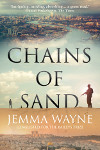
Current, constant, conflict.
Publisher: Legend Press
Pages: 315
Type: Fiction
Age: Adult
ISBN: 978-1-785-07972-6
First Published: 1st June 2016
Date Reviewed: 12th September 2016
Rating: 3.5/5
Udi wants to move to England, to join his cousins. Life in Israel does not offer him what he wants. His girlfriend and family may want him to stay but he hopes for more than menial jobs. In England, British Jew, Daniel, wants to move to Israel, seeing it as his destiny and the place he just ought to be. His friendship with Safia will never progress to a relationship because she is Muslim and he feels it would be wrong, and when he meets Orli in Tel Aviv he feels a draw greater than the one he feels towards Safia, and greater than the one he felt towards his old long-term girlfriend. Amidst these stories is that of Kaseem and Dara, a relationship that secretly crosses the border.
Chains Of Sand is a novel set during the here and now of the Arab-Israeli conflict. Taking on the narratives of Jews, Wayne has written a book that has the potential to divide before it brings everything back together for a short time at the end; in looking at the conflict, Wayne writes from a specific viewpoint first and foremost. She details the day-to-day of fighting, of security and the way such security has become par for the course by both necessity and anxiety. She shows the conflict between modernity and tradition, how in theory one might want to dispense with tradition but in reality it’s ingrained within them, sometimes in ways they don’t realise until they do dispense with it. She shows how holding steadfast can result in familial conflict and how not holding steadfast can result in familial conflict. And she shows obvious cultural differences, violence, lazy contentment-filled days, and everything in between. Reading from afar it’s a big reminder of everything that isn’t covered in the news, of the regular life going on behind the conflict, but also the irregularities that are ever apparent and the intolerance – whilst working from one side of the equation she shows the various intolerances as well as liberal views.
So this book is a look at the conflict right where it is happening, as well as a look from afar. It includes direct knowledge, lived knowledge, and rose-tinted glasses. But something is lacking in the overall presentation and it isn’t until much later that it becomes apparent that what’s lacking is emotion (other than thoughts of love, which themselves aren’t always convincing, the context more often lust). There is a divide between reader and character that is down to the way the story has been written and presented; as the end pages draw near this lack disappears and in its place is the emotion that the rest of the book needed, that helps you relate, that gives you a reason to read, that gets rid of the dryness. This is not to say that every thought any character has should be laced with emotion but a subject of this magnitude and current relevance… you gain knowledge of viewpoints and of the working of the war but the characters’ thoughts, when dealing with it, don’t really ask you to think or engage; it can be a struggle to work out what you are supposed to be taking from it as a reader. Is there a message? It seems so, but trying to work out what exactly that is (until the end, which is a bit late and a bit too much, playing catch-up) and even trying to just look at the book as a study is difficult without that authorial invitation to involve yourself in the text.
Some of this is due to the writing. The writing is okay but there are some odd choices of words, odd phrases that jolt you out of the narrative, and a strange way of translating tone and inference that doesn’t match the situation. (As an example, there are various lines of dialogue that end with “…, no?” which when dealing with Israeli characters seems a way to translate how Hebrew compares to English ways of speaking but it’s then used by British Jews when speaking their fluent first language of English.) It’s not a bad style by any means but the lack of flow often means sentences need a couple of re-reads to understand.
Something included that really works is Udi’s background – Udi is an Iraqi Jew whose family moved to Israeli. His presence in the story enables Wayne to study something that doesn’t get much of a look in – racism within – and open up the narrative far beyond stereotypes. There is a section, for example, where Udi and his friends go to a nightclub, but Udi is denied entry because the doorman will not believe he is Jewish rather than an Arab Muslim. This, whilst a different subject, helps set up the short narrative of a cross-cultural relationship wherein Wayne really delves into the variety of opinions in the region, the liberal sides of the equation, whilst harking back to a type of narrative that is tried and true and thus has a firm basis for the reader to start from. This said, some other uses of tried-and-true come across as devices and detract from the reading experience.
The timeline is confusing – with three narratives, two periods of time, and oft-usage of the present tense, the general confusion of who is speaking and when continues throughout. Most especially because within those sections once you’ve figured out the who and where and when, which becomes easier, you’ve then got to constantly adjust between paragraph and multi-paragraph sections within chapters and these aren’t labelled or set apart from the rest. It means that you could be reading something important but you won’t know because the context is not there and as you don’t really want to be reading a lot of text over and over you miss some of it.
Chains Of Sand has a good idea behind it – one thinks, it is difficult to be definite – but it is confusing. It informs, it’s bold in what it does, and it’s fairly balanced in its overall focus, if not in its characters, but you do need to be prepared to do a lot of legwork.
I received this book for review from Midas PR.
Related Books
None yet
Olumide Popoola and Annie Holmes – breach
Posted 3rd August 2016
Category: Reviews Genres: 2010s, Commentary, Political, Short Story Collections, Social
Comments Off on Olumide Popoola and Annie Holmes – breach

The hole in the fence. The gap in the conversation.
Publisher: Peirene Press
Pages: 146
Type: Fiction
Age: Adult
ISBN: 978-1-908-67032-8
First Published: 1st August 2016
Date Reviewed: 18th July 2016
Rating: 4.5/5
breach – lower-case first letter intentional – is a collection of short stories about the current refugee camp in Calais. It is a specially commissioned project – Meike Ziervogel, publisher, sent the two authors to Calais to interview refugees so that they could write a collection inspired directly by the situation. Set almost exclusively in the camp and featuring stories about both refugees and volunteers, the book is a timely creation amidst the current political climate.
The stories deal with a variety of nationalities. The writing has been divided, each author contributing four stories. The stories can be slightly vague: those from the point of view of the refugees don’t always show you exactly what’s happening; but because the stories from the point of view of volunteers are a lot easier to understand on a literal level, it could be said there’s an intentional use of language barriers – the authors showing how the refugees haven’t mastered English. There’s also the language/situation barrier wherein the refugees don’t know exactly what will happen. And you could point to the authors’ commission as to a reason for the vagueness, the difficulty of it.
The vagueness makes for something of an emphatic vein – it might be frustrating not to know exactly what’s going on in some of the stories but it enables you to learn more about the uncertain situation from the important point of view of the people actually living it. Because this book is providing the first person point of view and every so often reminds us of worried residents of the longed-for countries, without bias, this book is more of a report but not selective – Popoola and Holmes have made a book that revolves around the discussion we need to have but aren’t having, the questions and answers that get set aside when big politics is at hand. The title itself invokes the breach in the UK’s security, that allows illegal immigration – stories of smuggling and the deaths we know are associated with it, alongside the reasons people feel the need to try it nonetheless – as well as many other definitions: breach of empathy; crossing the breach; healing it.
Then there are the stories of the volunteers. These are quite meta because the authors are, in effect, commentating not only on the work of the relatively privileged but also on their own visit. They may not have written a story about writing a story, the ultimate meta situation – though some dialogue comes close – but they comment from the refugees’ points of view of the people who come to help them. In the questions posed by volunteers, Popoola and Holmes are talking about themselves – what use are some of these people, what use are we other than in writing this book which is for the benefit of people back home? And refugees are wondering ‘who are these volunteers?’ when interaction is all on the surface. In this way, the authors comment on a ‘problem’ posed – the way, for example, the volunteers put on a smile but it can seem patronising and at the end of the day they are free to go back home. They can leave whenever they want. There’s also some fictional appropriation going on.
Stand outs include Popoola’s Extending A Hand, in which two refugees grapple with the expectations of a volunteer, Holmes’ aforementioned Paradise wherein a refugee and young volunteer connect with each other on a romantic level whilst the volunteer’s aunt looks forward to finishing up her time at the camp and getting away from it – a story of attraction in an awkward situation – and Holmes’ Ghosts, which shows the other side of the smuggling story, where payment is a necessity for the danger the various third parties are put in, where refugees are repeatedly sent back to the camp when caught but keep trying, again and again, because they see no other hope, and Popoola’s Lineage, a story that features the appropriation I’ve alluded to above, a Frenchman choosing to live in the camp.
This book isn’t out to cause a sudden change of mind in those who are worried about immigration, indeed it’s unlikely to do so – the authors haven’t written heroes or particular sob stories, the refugees are just average people who’ve found trouble. The authors have included stories of illegal activity, as discussed above. But it will likely sow a seed and make you think about that third side of the equation and that is in its favour more than anything sudden could be. The success isn’t in what is actually said but in the subtext, in what you take away.
breach gives a voice to those we so rarely hear from. It may well start a more comprehensive discussion.
I received this book for review from the publisher.
Related Books
None yet


