





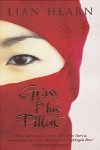
Jessie Burton – The Miniaturist
Posted 18th March 2015
Category: Reviews Genres: 2010s, Angst, Drama, Historical, LGBT, Magical Realism, Mystery, Social, Theological
4 Comments

He knows when you are sleeping; he knows when you’re awake.
Publisher: Picador (Pan Macmillan)
Pages: 424
Type: Fiction
Age: Adult
ISBN: 978-1-447-25089-0
First Published: 3rd July 2014
Date Reviewed: 16th March 2015
Rating: 2.5/5
It’s 1686 and Nella moves to the home of her new husband in Amsterdam. She expects happiness but instead receives a frosty reception – she’s not particularly wanted, her sister-in-law is clearly mistress of the house, the servants seem too big for their boots, and her husband makes no move to consummate the marriage. Instead of the life she thought she would have, Nella finds herself living in a mystery and this only increases further when her husband buys her a miniature of their house and the creator she assigns to complete it appears to know an uncanny amount about the family.
The Miniaturist is a book that could have been amazing but is sadly held back by a lack of focus, poor writing, and a decisive gap between the characters and the readers.
Burton seems to have chosen the 1600s to gain the attention of history lovers. The book could have been set at some other time at no cost, and the characters do not at all conform to the time period. By this I do not mean the way they defy convention – indeed servants on a par with their masters is not unbelievable – more it’s the way Burton wields power that is an issue. As an example, Nella has a fit over something most of her era would naturally have a fit about, before doing an about turn and completely changing her opinion within hours, emulating views of the present day.
Is Nella confident or nervous? Burton cannot decide. One moment her character is close to being obnoxious, the next she’s a delicate flower who will not speak a word. She leaves the house without question one day, then stays in her room and lets people make all the decisions for her the next. It is clear that Nella is a device – this is a plot-driven novel – but there is nothing to hang on to, so to speak. Burton hasn’t made up her mind and wants both worlds.
The characters never come into their own. You’re never given a reason to care about them; they are distant from the first page to the last. A lot of this is down to the way the author chose to write her story – the particular way she uses the present tense, third person narration, does not allow the reader to feel they are at all close to what’s happening. Instead there’s the sense Burton realised, at some point, that she should have been writing in the first person but didn’t want to rewrite what she already had. Nella does lots of thinking and imagining when dialogue would work better. Everything is too detailed, info-dump is common.
Much of the issue is that The Miniaturist is full of drama. Full of drama to a melodramatic, unnecessary degree. As the book progresses it reads ever more like a prose version of a theatrical production, the problem being that theatre has to be expressive to reach the audience at the back of the room but a book by its very nature has no requirement for it. Disaster follows disaster to a silly level and social issues are packed in like sardines.
As said, this book is not very well written. Whilst modern language is natural – a book in old English would be difficult to read – very modern slang and colloquialisms pull you out of the story. Burton moves between ‘oldy-worldy’ English grammar, modern English grammar, and American grammar, making for dialogue that doesn’t ring true. (The characters may be from Amsterdam, but they would not have peppered their language with Spanish grammar, for example.)
Lastly, it must be said questions are not answered. The question of the miniaturist is never answered. There is a half answer that spells out who they are in terms of background, but you never learn the mystery nor do you ever really meet the miniaturist. The question of what will happen to these characters now they are in a bad position is completely forgotten.
The Miniaturist is strictly okay. Read it if you will, but don’t pass up the chance to read another book for this one.
Related Books
None yet.
Erica Vetsch – A Bride’s Portrait Of Dodge City, Kansas
Posted 27th October 2014
Category: Reviews Genres: 2010s, Historical, Inspirational fiction, Mystery, Romance, Social, Spiritual, Western
Comments Off on Erica Vetsch – A Bride’s Portrait Of Dodge City, Kansas

As people learned to say cheese.
Publisher: Barbour Publishing
Pages: 309
Type: Fiction
Age: Adult
ISBN: 978-1-616-26506-9
First Published: 1st September 2011
Date Reviewed: 17th October 2014
Rating: 4/5
Addie moved to Dodge City with her uncle after troubles caused them to move from Abilene. Now Carl is dead and Addie is trying to build up their photography business by herself. She has a romance-minded friend, Fran, and then there’s the new Deputy Sheriff. Miles has started his new job, and has a few personal conflicts about the job, owing to his new found faith, but he’s excited nonetheless to be working as a lawman, especially given his past.
A Bride’s Portrait Of Dodge City, Kansas, is a pretty fair historical novel straddling the mystery, suspense, and romance genres.
Christianity features in this book. It is a big part of a few of the character’s lives however in terms of the novel itself the faith is woven in enough that the general reader should be okay with it. There are a couple of times where Miles feels he should be declaring his faith to his boss, which isn’t really appropriate, but otherwise the times the characters think of God are totally natural – Addie prays for help whilst hiding from shooting, for example. And there isn’t all that many textual references to it, it is more a case that the reader knows the characters have faith.
The language is generally very good, the characters well written. Addie is self-employed, a woman working as a photographer in the 1800s against various prejudices. She is strong throughout. Fran is a dreamer and doesn’t realise the potential danger ahead, and Vetsch does put her in some situations, including a scene of harsh words from the man who says he loves her, but overall you can see where the author was wanting to show how the good guy can be a mysterious knight in shining armour if given the chance. This said there is a scene in which a bad guy gets perhaps more nasty than he had previously seemed (yes, even for his associations) that readers may find uncomfortable for the way it plays out. Miles will appeal more to a Christian reader than otherwise, though either way you’re likely to see him as a fair hero.
There are repetitions, for instance you hear about Addie’s move from Abilene a few times and there aren’t really enough updates to warrant it until later in the book when she gives you the whole story, and these feel as though a word count was needed because as soon as the narrative moves away from it the story carries on well.
The book is somewhat predictable by fact of it’s romantic genre, but another thread that seems predictable is not so much. This said, the mystery and suspense take a somewhat surprising turn near the end and one of the most obvious suspects isn’t spoken of until this end. The suspense itself, however, is written excellently and Vetsch hasn’t shied away from the details, in fact it could be said she lures you into thinking everything will be just about drunken cowboys, red lights, and saloons, until getting to the gritty stuff. And she shows the difficult and otherwise immoral choices that must be made in times of emergency.
There is a great deal to learn about photography and the times in general. There is a lot of detail given to photography but not so much as to make it boring. Indeed if you’ve even the smallest interest in the subject you’ll likely enjoy Vetsch’s descriptions. The book is firmly in cowboy territory and the balance between ‘protect the women’ and Addie’s freedom is good. Fran could have done with more freedom to choose, but given the way she is presented from the start, you know she’s going to go back on her words somewhat.
Lastly, this may be a clean romance, but its kisses and thoughts are pretty steamy all the same. Indeed Vetsch shows you don’t need sex for a fair tale of romance.
What works in A Bride’s Portrait Of Dodge City, Kansas (it’s a long title but interesting for its difference) makes up the vast majority. There may be flaws but looking at the big picture the book is very good. Cowboys and photography, gangs and romance, independence and dependence; if you’re looking for a western with a bit of faith, you could do worse than read this book.
Related Books
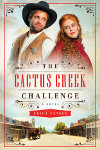
Pasi Ilmari Jääskeläinen – The Rabbit Back Literature Society
Posted 20th October 2014
Category: Reviews Genres: 2000s, Books About Books, Fantasy, Magical Realism, Mystery, Philosophy, Social, Translation
2 Comments

Write what you know, having made people tell you about themselves.
Publisher: Pushkin Press
Pages: 335
Type: Fiction
Age: Adult
ISBN: 978-1-782-227043-0
First Published: 2006
Date Reviewed: 16th October 2014
Rating: 4.5/5
Original language: Finnish
Original title: Lumikko ja yhdeksän muuta (Lumikko and Nine Others)
Translated by: Lola Rogers
Ella Amanda Milana, owner of lovely curved lips and defective ovaries, is a substitute literature and language teacher in Rabbit Back. Whilst the town boasts many writers, only nine have ever made it to Laura White’s Literature Society – but now Ella has been invited to join as the tenth member. Little is known of White, but everyone reads her children’s books. Little is known of the society but the writers are now famous. Nothing is known about the strange goings on in the library wherein the content of books is being changed.
The Rabbit Back Literature Society is a novel in a similar vein, atmospherically, to The Night Circus and The Snow Child and given its complexity, bizarreness, and otherworldliness, comparisons work best when trying to describe it. It’s difficult to pinpoint exactly why it works, much as it’s difficult to say anything definite about Laura White, but it just does. It’s all rather brilliant. The writing isn’t so brilliant, but as it is a translation one can’t really consider the writing the way they would normally.
There are many elements in this book, many themes, and most answers you have to decide upon for yourself, making the story ripe for discussion. It’s dark, the sort of dark that deliberately tries to hide itself and is all the more dark for it.
It’s probably best to start with what is apparent from the start – this is a book about books, about writing. It is a book for readers in that specific sense, in fact it could be said that the entire book is a plan for a book, for many books. You could in theory, ironically, take ideas from this book for your own, and I would say that this is one of the points. Jääskeläinen looks at the different concepts, the writing process, with a certain honesty than is nevertheless soaked in the strange fantasy world he has constructed. It is thus somewhat satirical.
The author turns the notion of writing what you know on its head. The writers of the Society, these geniuses identified as children, get all their ideas from the other members. A crucial part of the novel is The Game, a somewhat sadistic ritual in which each member may ‘challenge’ another, instructing them to answer a question about themselves or something they likely know about with complete honesty. To spill, as they put it, for fodder for the other’s next book.
So here we are with these ‘geniuses’ who seem to lack inspiration, ideas, and possibly the talent to even form the words. The questions ‘what is talent? What is special?’ are asked on a constant basis. Similar are questions of plagiarism and the extent to which a person should be allowed to write about what they hear. Jääskeläinen cleverly looks at his discussions from various angles, rather as his characters literally look at angles, pulling you along and back and then leaving you to laugh, or to be shocked at where he ends up. What does all of it mean? Are the authors really lacking in their own ideas? Where do ideas come from? And is there a point at which placing people on pedestals, seeing them as untouchable by our inferior selves becomes ridiculous?
And what of children, these young people who White writes for, whom the characters in turn give birth to for the sake of their partners, have but do not love, are incapable of having? Children in general form a large part of the book as Jääskeläinen studies the idea of children from an adult’s viewpoint, a particular viewpoint that conflicts with the wholesome way we are supposed to look at it. It makes you feel sympathetic, it makes you cringe and feel bad for the fictional children, and it makes you think. Detached from the usual emotions that surround the idea of having children, this book really makes you think and it’s really quite uncomfortable.
The theme of the infested, plague-ridden books continues throughout. You are completely on your own for this one, for it is never formally answered. It just continues, words keep being jumbled, stories are changed, and therefore books are burned. A version of a book should never buck the trend of the previous, it should always be the same.
Can you like anyone in Rabbit Back? Similarly to the characters themselves you may find someone you like for a short while before you inevitably end up sitting at a different table. But this book is not about liking people or getting on, and it’s safe to say that Jääskeläinen is using them as much as anyone else. In the hierarchy the author is surely top dog and that is a big part of what makes the book a crack in the fourth wall.
Is it all a metaphor for ideas and writing, a metaphor for story creation and difference? What’s real? See for yourself.
You won’t get any answers, perhaps there aren’t any. But you will have a fantastic few hours studying this book.
I received this book for review from the publisher.
Related Books
None yet
Merryn Allingham – The Crystal Cage
Posted 15th October 2014
Category: Reviews Genres: 2010s, Angst, Domestic, Historical, Mystery, Paranormal, Social, Spiritual
1 Comment

Time may change, but there will always be that person in a similar situation.
Publisher: Harlequin
Pages: 234
Type: Fiction
Age: Adult
ISBN: 978-1-460-33836-0
First Published: 1st August 2014
Date Reviewed: 14th October 2014
Rating: 3.5/5
Nick won’t give up, so Grace agrees – an otherwise usual day as a property historian/gallery assistant is changed when Grace accepts the energetic Nick’s proposal that they work together on his commission to discover whether a Victorian architect designed for the Great Exhibition. Grace’s life is ruled by her partner (bed and work) Oliver, and she’s done a good job of pretending she’s happy for nine years, but Nick’s offer, whilst overwhelming, piques her interest. Little is known of Lucas Royde’s career before he became famous, but that might just be about to change.
The Crystal Cage is a dual-plot novel that studies the art world and history but later takes a long look at the expectations people have of each other, especially those less well-off (in all ways), than themselves, to good effect.
None of the characters are likeable, however whether or not they are supposed to be is not obviously stated and so it would be fair to say that if you go into the book knowing that this is the case, you are likely to finish it more content than someone who goes in expecting happiness and romance. Be not ye fooled by the name of the publisher, there is little real romance here and, given the subjects, it is all the better for it.
Lucas, for example, is assuming and takes jealousy to an extreme level. A subtle, non-violent level, but one all the same. The man who is quite obviously in lust rather than love hates his rival from the word ‘go’ with scant reason and it can be hard to feel anything for him when he puts himself in such an awkward and socially unexceptionable position with little behind it that the reader can understand. His ‘romance’ is an interesting one, however, in part because of the way the author does not include any details from the point of view of the woman. Indeed the book would have been too long if she had been given a voice and so it may simply be that she was left out for no literary reason, so to speak, but nevertheless the effect is intriguing. You don’t hear a word from Alessia except through Lucas and therefore it is easy to believe that perhaps she is less in love with him than Lucas thinks, she is certainly more desperate and less powerful than Lucas can comprehend. Their story may be sad, and it may be true as much as the fiction can be, but what is left out ensures that there is a further link in the main social theme.
This theme is of control, the expectations I have stated above. Grace became Oliver’s partner in every sense of the word, but it was/is a case of what Oliver says, goes. He was the lifeline she needed – the security, the job, perhaps even the man in a sexual sense – as long as she was at his beck and call. It is somewhat a spoiler to say this, so you may want to move on to the next paragraph if you’d rather not know too much, but the theme continues somewhat with Nick. Bounding, get-up-and-go Nick, whom Grace likens to Tigger. Whereas Oliver’s persona may have been obvious from the start, at least it would have been if Grace had been less in need, Nick allows the author to show how control can come in different forms. Similarly Alessia is controlled by her reported love for Lucas, and by her husband. It’s interesting to compare the two situations because the contemporary version may hit harder, being closer to home than the Victorian period. But of course both are equally damning.
This all sounds very good, and it is, but this theme consumes the end rather than the main section of the book. The book is overwritten. It’s wordy, flowery, and rather repetitive, with ideas being repeated mere pages after they have already been stated. There is also an element of prolonged angst to it that can be difficult to read. The insistence by Lucas that he’s in love when the reader can see that it is pure lust makes the story difficult to continue.
Nick and Grace are rude. They literally run away from people who had made time for them as soon as they, Nick and Grace, realise the person doesn’t have much information for them. They are well-matched in their lack of tact and in their attitudes to others. Lucas is jealous, as said, hateful of too many, and assumes too much.
The mystery has many, many dead ends, and these are convenient, a way to keep the story going. After a couple of these occasions wherein a search looks promising but is then fruitless, it becomes too predictable and the meetings and searches boring. Then, later, this turns 180 degrees when ideas about Royde appear out of the blue with no ‘evidence’ (for Royde is fictional) behind them. Grace makes guesses that are correct, but they are too much of an assumption without the information the reader has been privy to.
Lastly there are a few names and places that invite confusion, and areas that, other than the filler content, could have used more editing.
Yet the history itself is appealing and there is enough factual information for the interested reader to jump from it into their own research. And the ending itself is highly appropriate and rather excellent. Allingham shows all the worries and backtracking of someone in a difficult situation but writes the ending that you could say is expected. She doesn’t make sweeping changes or include roses on doorsteps – she gives you the realistic truth and has her character remain strong. And she shows that backwards can often be a step forward.
Granted the history works best for the themes of control and independence and less so for the romance. It could be argued that the book would have been better without the Victorian romance, and certainly Grace’s story of discovery is more compelling, but the theme itself makes it all worth it in the end.
The Crystal Cage as a title is exactly what it seems to be, just as relationships often are not. It takes time and yes, effort, to get there, but the book is recommended.
I received this book for review from Historical Fiction Virtual Book Tours.
Related Books
None yet
Louise Douglas – In Her Shadow
Posted 23rd April 2014
Category: Reviews Genres: 2010s, Angst, Domestic, Mystery, Psychological
3 Comments

Three’s a crowd.
Publisher: Bantam Press (Random House)
Pages: 372
Type: Fiction
Age: Adult
ISBN: 978-0-593-07021-5
First Published: 2012
Date Reviewed: 8th April 2014
Rating: 4.5/5
Ellen drowned and Hannah has never got over it. The event haunts her still, twenty years later. When she starts to see Ellen in places that reference their past together as friends, as well as at her work place, Hannah wonders if it’s time to go back for therapy. But there’s something nagging at her, and, illusion or not, she feels it’s time to finally discover what happened whilst she herself was in Chile.
In Her Shadow is Douglas’s beautifully written fourth book. It’s a lot slower in pace than the author’s previous work, The Secrets Between Us, but the pace is warranted and it gives Douglas a lot of time in which to explore the themes she chose to include. Likewise the plot is fairly predictable, and this appears to be intended so that you focus on the ‘right’ things.
The book sports an unreliable narrator who presents a fantastic opportunity for the reader to really delve into what’s going on. Hannah is quite obviously unreliable from the very start and with good reason – during the chapters where the adult Hannah looks back on her childhood you’re inevitably presented with a child’s view of life. Where Hannah says that Ellen is a drama queen, where she says that Ellen is too lucky, beyond a couple of choice quotations (that of course could be coloured by jealously themselves), it is apparent that Hannah isn’t seeing reality. Hannah, once good friends with a boy called Jago, becomes the third-wheel when she introduces Ellen to the ‘circle’. That she is, in a way, third wheel, is true, but she is very wrong about the friendship in general.
What is most interesting, as the reader reads on and learns just how wrong Hannah’s thoughts of Ellen are, is that it’s Hannah who is better off. Due to Hannah’s unreliability, the reader can see for themselves not only the truth, easily, but also explore the way jealously affects people, and the extent to which it can destroy a person. And it is exactly because Hannah is too young to know what’s she’s doing that she enables you to see what’s really going on. Because she does not understand what she sees, she ends up telling you the reality just as much as her erroneous thoughts. Indeed it’s intriguing to think that whilst the first-person generally means less knowledge of others, usage of the third-person in this book would ironically have led to less knowledge of Ellen.
And so Douglas shows us just how much perception can play in the construction of opinions. Of course we all know this, but by using a child and making what’s actually going on a horrendous abuse, the author really hones in on it. And it shows how children will latch on to what works for them – a father who hugs his child when their own parent doesn’t, means he must be a good person and that his daughter is lying. Hannah isn’t mature enough to recognise dangerous obsession and abuse; she sees what’s on the surface.
It’s not a spoiler to say that abuse and mental illness is at the heart of this novel. Throughout the reader is presented with the questions – is this man violent? Is this man interested in young girls? Is he mad? There is also Hannah’s mental stability to consider. Jealousy is of course an issue in itself but in her case it’s intertwined with anxiety, fear, and regret. Perhaps it makes Hannah feel better to confine her feelings of guilt to the same box as her jealousy – it’s easier to push bad memories away if you believe the person was awful.
Hannah also has an issue with identity – the boy who kissed her becomes her brother, Hannah isn’t happy in her career, and her parents, though supportive, are not the affectionate kind.
This is where the slow-pacing makes the most sense – in that at first you might find it slow without reason, but as the book continues you see why Douglas has opted to use it. There is just so much to consider. Douglas wants you to really understand Hannah, to see what she thinks and how she got it wrong, to see what her life is really like, and as the book progresses you realise that perhaps it’s not ‘just’ that Hannah was wrong about Ellen, maybe Hannah isn’t as good a person as you thought. Is she misguided, is she led by her lack of information? And what on earth will she do to make things right? There are no huge shocks in this book, no big climax. There isn’t supposed to be.
In Her Shadow is a book with a main character you may not completely like but who you can relate to; you will find yourself rooting for her to learn the truth. There are many injustices and misunderstandings here and it is not a simple case of age making someone wiser. The book does end relatively quickly, and one plot thread in particular is wrapped up in a couple of pages and not particularly satisfactorily, but there are no threads left hanging.
In Her Shadow is a wonderful study of personality, mentality, and its extremes. It may make you want to praise it to the hills or it may not – either way it’s likely you’ll find it difficult to put down.
Related Books


