




Mikhail Elizarov – The Librarian
Posted 16th March 2015
Category: Reviews Genres: 2000s, Books About Books, Commentary, Fantasy, Magical Realism, Political, Psychological, Social, Translation
1 Comment

Taking fandom a little too far.
Publisher: Pushkin Press
Pages: 408
Type: Fiction
Age: Adult
ISBN: 978-1-782-27027-0
First Published: 2007 in Russian; 2015 in English
Date Reviewed: 7th March 2015
Rating: 4/5
Original language: Russian
Original title: Библиотекарь (Bibliotyekar) (Librarian)
Translated by: Andrew Bromfield
In the mid 1900s, a man called Gromov writes several books that don’t do particularly well and are thus forgotten. As time moves on, however, various readers start to find an inherent value in his work. They form ‘libraries’ of people and these libraries often fight to the death to obtain original copies (the only copies worth bothering about) and supremacy. Alexei finds himself in this world; due to his uncle’s death he was looking to sell an apartment and was accosted by these ‘readers’. They want him to be their leader.
The Librarian is a somewhat ambiguous book that looks at obsession, power, and the Soviet Union in a darkly humorous satirical manner. Heavy on gore and strict in its dealings, the content presents a rather unique premise to study.
Elizarov takes the basic idea of literary interest and runs with it. The ‘readers’, as they call themselves, are in essence fans who have taken their loyalty too far. Elizarov essentially looks at the way people find meaning in books and heightens the effect, giving the books power to change readers’ lives. Of course there is always the unanswered question: did Gromov know about this effect? (And did he plan the effect to happen?) This is cause for some of the humour because Elizarov provides extracts from the texts for your perusal and these extracts are undeniably dull. Whilst it is never studied, there is reason to believe that Gromov’s work is truly mundane to the extent that it means Elizarov’s characters are stereotypical fanboys and fangirls. Essentially, we’re looking at the extremely dedicated side of fandom here, the people who find meanings no one else would, and whilst Elizarov isn’t laughing at this concept itself, the way it is placed on those of older generations makes it easier to accept.
So, whether ‘true’ or not, these people are finding power in Gromov’s books. Regular people who work in factories; mothers and daughters; old ladies in nursing homes. The various books when read in one sitting with rapt attention instil inhuman strength, dominance of mind, incredible happiness, beautiful (if unreal) memories and so forth. A lot of the humour can be found in the first section of the book, which reads like a factual report and details the sudden coming to power of a group of elderly women who break through the ward doors, kill all the staff, and take over the building.
This book is very, very violent. Elizarov doesn’t shy from the details, presenting battles in all their graphic detail. And much of the book is about battles, which means it can be hard going. This said, it’s difficult to become numbed to the violence here, as it can be in other books (The Hunger Games comes to mind). You may find it repetitive after a while, but the battles are all as horrific as the first and you never get used to it.
There is a lot of commentary here about the Soviet Union. I can’t pretend to know a lot about this slice of history and it’s fair to say you may feel as though you’ve missed something if it’s not a period you’re particularly familiar with, however considering everything I’ve said above it should be noted that there is enough to ‘get’ in this book that doesn’t depend on knowledge. The basic ideas are obvious and aspects like false memories can be viewed as possible propaganda.
In view of knowledge, however, the writing must be examined. Be it due to the original prose or simply the decisions of the translator, The Librarian is rather dry. It can be difficult to read and unfortunately the eloquence and rather exceptional language doesn’t help. It’s fair to say some of the points and subtlety are lost in the words and where the plot is composed mainly of battles this is more prominent than it could have been otherwise. There is also the fact that many of the characters are referred to by both their full names (and patronymic) and a pet name, and then also a ‘comrade’ name and additional pet names; it’s more confusing than your average Russian novel may be. This, coupled with the constant usage of full names and a basic lack of characterisation (this is very much a plot/meaning-driven novel) takes the issue further. The translation comes with a great many proofreading errors, enough that it does impact the reading.
The book changes its focus towards the end, and this is where most of the ambiguity kicks in. There are a fair number of possibilities but you may still be surprised where it ends up. It could be argued that it finishes without finishing, forever loitering on the borders of an ending, however this is part of the point and something to take heed of when you come to sort through your thoughts. Much can be said: should we consider Alexei the author of the book? Have Alexei’s dreams come true, albeit in a roundabout way? What is Elizarov suggesting by the intimation that all these books can be read one after the other?
The Librarian is an exceptional example of hidden meanings and messages; making the reader work it out doesn’t get much stronger than this. It is dull, writing wise, and it is graphic, and it is absolutely, incredibly, bonkers, but it is also a very good book.
Unique and fascinating, be careful not to let yourself be too enthralled by The Librarian; you never know how much the cost of such a love may be.
I received this book for review from the publisher.
Related Books
None yet.
Pasi Ilmari Jääskeläinen – The Rabbit Back Literature Society
Posted 20th October 2014
Category: Reviews Genres: 2000s, Books About Books, Fantasy, Magical Realism, Mystery, Philosophy, Social, Translation
2 Comments

Write what you know, having made people tell you about themselves.
Publisher: Pushkin Press
Pages: 335
Type: Fiction
Age: Adult
ISBN: 978-1-782-227043-0
First Published: 2006
Date Reviewed: 16th October 2014
Rating: 4.5/5
Original language: Finnish
Original title: Lumikko ja yhdeksän muuta (Lumikko and Nine Others)
Translated by: Lola Rogers
Ella Amanda Milana, owner of lovely curved lips and defective ovaries, is a substitute literature and language teacher in Rabbit Back. Whilst the town boasts many writers, only nine have ever made it to Laura White’s Literature Society – but now Ella has been invited to join as the tenth member. Little is known of White, but everyone reads her children’s books. Little is known of the society but the writers are now famous. Nothing is known about the strange goings on in the library wherein the content of books is being changed.
The Rabbit Back Literature Society is a novel in a similar vein, atmospherically, to The Night Circus and The Snow Child and given its complexity, bizarreness, and otherworldliness, comparisons work best when trying to describe it. It’s difficult to pinpoint exactly why it works, much as it’s difficult to say anything definite about Laura White, but it just does. It’s all rather brilliant. The writing isn’t so brilliant, but as it is a translation one can’t really consider the writing the way they would normally.
There are many elements in this book, many themes, and most answers you have to decide upon for yourself, making the story ripe for discussion. It’s dark, the sort of dark that deliberately tries to hide itself and is all the more dark for it.
It’s probably best to start with what is apparent from the start – this is a book about books, about writing. It is a book for readers in that specific sense, in fact it could be said that the entire book is a plan for a book, for many books. You could in theory, ironically, take ideas from this book for your own, and I would say that this is one of the points. Jääskeläinen looks at the different concepts, the writing process, with a certain honesty than is nevertheless soaked in the strange fantasy world he has constructed. It is thus somewhat satirical.
The author turns the notion of writing what you know on its head. The writers of the Society, these geniuses identified as children, get all their ideas from the other members. A crucial part of the novel is The Game, a somewhat sadistic ritual in which each member may ‘challenge’ another, instructing them to answer a question about themselves or something they likely know about with complete honesty. To spill, as they put it, for fodder for the other’s next book.
So here we are with these ‘geniuses’ who seem to lack inspiration, ideas, and possibly the talent to even form the words. The questions ‘what is talent? What is special?’ are asked on a constant basis. Similar are questions of plagiarism and the extent to which a person should be allowed to write about what they hear. Jääskeläinen cleverly looks at his discussions from various angles, rather as his characters literally look at angles, pulling you along and back and then leaving you to laugh, or to be shocked at where he ends up. What does all of it mean? Are the authors really lacking in their own ideas? Where do ideas come from? And is there a point at which placing people on pedestals, seeing them as untouchable by our inferior selves becomes ridiculous?
And what of children, these young people who White writes for, whom the characters in turn give birth to for the sake of their partners, have but do not love, are incapable of having? Children in general form a large part of the book as Jääskeläinen studies the idea of children from an adult’s viewpoint, a particular viewpoint that conflicts with the wholesome way we are supposed to look at it. It makes you feel sympathetic, it makes you cringe and feel bad for the fictional children, and it makes you think. Detached from the usual emotions that surround the idea of having children, this book really makes you think and it’s really quite uncomfortable.
The theme of the infested, plague-ridden books continues throughout. You are completely on your own for this one, for it is never formally answered. It just continues, words keep being jumbled, stories are changed, and therefore books are burned. A version of a book should never buck the trend of the previous, it should always be the same.
Can you like anyone in Rabbit Back? Similarly to the characters themselves you may find someone you like for a short while before you inevitably end up sitting at a different table. But this book is not about liking people or getting on, and it’s safe to say that Jääskeläinen is using them as much as anyone else. In the hierarchy the author is surely top dog and that is a big part of what makes the book a crack in the fourth wall.
Is it all a metaphor for ideas and writing, a metaphor for story creation and difference? What’s real? See for yourself.
You won’t get any answers, perhaps there aren’t any. But you will have a fantastic few hours studying this book.
I received this book for review from the publisher.
Related Books
None yet
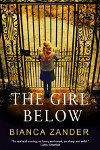
Bianca Zander – The Girl Below
Posted 4th March 2013
Category: Reviews Genres: 2010s, Angst, Domestic, Magical Realism, Mystery, Paranormal, Psychological
2 Comments
Returning to childhood when memories seem wrong.
Publisher: Alma Books
Pages: 308
Type: Fiction
Age: Adult
ISBN: 978-1-84688-235-7
First Published: 19th June 2012
Date Reviewed: 28th February 2013
Rating: 4.5/5
After ten years in New Zealand and twenty years away from home overall, Suki has returned to London hoping to get back to being who she was; but it’s not going to be that simple. Friends have moved on and no one wants her staying with them, but when she returns to her old apartment block she discovers her family’s neighbour, Peggy, still lives there. She might have found some stability with Peggy and the woman’s daughter, but Suki finds herself haunted by the air-raid shelter that used to be in the garden, no longer there, and what happened the night she descended the stairs.
The Girl Below is a compelling novel, equally driven by characters and plot, that is perhaps best described as realistic magical realism. Mostly consisting of thoughts but having an element that suggests the otherworldly, the book focuses on the reasons a person’s life can spiral completely away from what they had intended, and the need to recover from it when it’s not been a positive factor.
Aiming for detail, Zander tells her story by way of a duel plot line – Suki describes her former life and what is happening in the present. Unlike many stories with such a structure, Zander’s tale invites, perhaps, an equal amount of interest in both storylines, meaning that whilst you inevitably want to get on with the story and find out what happened, there isn’t that ingredient part and parcel of many books where one era is more interesting than the other. There is no divide between the two periods, perhaps because they are not so far apart compared to other books. And the number of characters that inhabit both eras mean you don’t feel like you’re reading two stories.
‘Who am I and how can I be me again?’ is the theme, with Suki’s constant nocturnal travels, in the present day, taking her back to that night she could have died in the flooded air-raid shelter. Because of her parents’ style of living and her father’s choices there has been much for Suki to understand. Whilst understandable, Suki’s character may prove difficult for some, however her actions fit the time period. She does think some thoughts which seem odd for her age, yet this is the first sign of the issues of the book. And as Suki discovers more she realises her childhood memories may not be correct.
The problem with The Girl Below is that whilst Zander wraps some of the plot points up in that dark, complex, and not-quite-obvious-but-fully-implied way that authors of magical realism do, a good half or so of all the questions you have are never answered or referred to at all. You could make guesses of course, but there is scant evidence or reasons for which to back those guesses up, and unfortunately these lost points are some of the most intriguing, the ones most likely to have kept you up at night to find out the truth.
It is for this reason that Suki’s development is stilted at the end. The author has Suki tell you, if not in so many words, that she understands now, but there is not enough showing for the reader to know why. And so abundant are Suki’s strange thoughts, for example that a statue is real, that there really needed to be explanations rather than very very vague suggestions. Suki’s sexual decisions needed more time, too, especially as they are taboo. It’s a case of feeling that the author wants you to be able to relate to Suki without giving you the information you need to know. The reader has to get used to an anxious, childishly scared, and unmotivated person, without a full discloser. It would have also been good to have further insight into Peggy’s grandson, Caleb, who presented an interesting addition to the tale but, whether to illustrate Suki’s anxiety or otherwise, has the focus on his behaviour somewhat diminished in the end.
And this is a pity because overall the book is fantastic and with more attention paid to reasoning it would have been a triumph. The pace is steady, the plot and atmosphere spooky, and there are plenty of times where, for the magical realism, you wonder if you’re reading a suspenseful scene (this wondering itself causes the suspense). One can work out a lot about Suki in the realm of possibility, but it’s not enough.
Writing-wise the book is on the whole very good. The author switches between contemporary British language and some rather old fashioned slang. Zander’s skills as a journalist shine through and it’s obvious she’s brought her own story of the immigrant to the table.
So the difficulty comes, then, in explaining why in general this is a superb book and why you should want to read it. Perhaps the best way to recommend it is to say that in choosing this book you are choosing to be scared, choosing atmosphere over story. Certainly you have to be willing to use the untied threads as a springboard for your own imagination. This book will, without a doubt, divide opinion. It will cause many people to wonder at the fact of a seemingly incomplete manuscript being published, whilst yet providing a satisfactory way to spend reading time. Maybe you will come to a conclusion that trumps all others, the issue is there is absolutely no way of knowing if you are anywhere near correct.
Still, I got the thing open, and propped up the sash with a hardback Dickens omnibus from Harold’s schoolboy collection. With much trepidation, I leaned a little way out. the night air was still but also sultry, humid. With one eye on Dickens – his long-windedness holding fast – I leaned out a bit further and dared to look down.
The Girl Below is unfinished, but brilliant.
I received this book for review from Alma Books.
Related Books
None yet.
Erin Morgenstern – The Night Circus
Posted 19th April 2012
Category: Reviews Genres: 2010s, Fantasy, Magical Realism, Paranormal, Romance
2 Comments

The circus is all fun and games, right?
Publisher: Harvill Seeker (Random House)
Pages: 385
Type: Fiction
Age: Adult
ISBN: 978-1-846-55523-7
First Published: 13th September 2011
Date Reviewed: 17th April 2012
Rating: 5/5
Almost every night a circus appears in an undisclosed location, staying there for a short while before moving on. To the patrons it’s spectacular but still a circus with tricks. Yet for those who work for it, especially a select few, it’s more than your average magic box, being a stage for some truly amazing spells and illusions, and one particular thread of illusions in particular.
The Night Circus is a fantastic fantasy-orientated novel that lures you in unknowingly. What is most important to discern, in many ways, is that while the promise of supernatural events seems evident from the first page, from, indeed, the cover of the book, it does take a while to really show its colours. For a good length of time, although there is magic there, true magic, it does not infiltrate the circus as much as you might have thought. In many ways the circus appears to be too realistic to warrant the supposed magic and sometimes the story does not appear to be heading anywhere. But when you reach the end of the book, you can’t help but wonder if that was part of the magic in itself. The supernatural element of the book becomes very important and becomes the book’s sole reason for being towards the end.
The story is told from the third-person points of view of a number of characters. The tense usage is present which adds to the mystery. On some occasions Morgenstern brings the reader into the story, addressing them directly, and describing the circus in the second person. It’s rather like listening to a meditation instructor, the words and the overall picture being one that you don’t want to walk away from, even if at times it seems incredibly regular. While the passages about the reader obviously symbolise the present day, the chapters from the characters’ points of view are written about various difference times, jumping back and forth between the late 19th century and early 20th.
And at first all that jumping seems silly and needlessly confusing, but like the circus managers who want the audience to be able to see the performances from every angle, so Morgenstern wants to tell her story through everyone, wanting to provide the back story and future story as well as numerous “present” stories. Of course this means that for a long time it gives the impression that Morgenstern is just describing her concept, that there isn’t actually a real plot and that the book is character led – but that is where the long ending comes into play, suddenly bringing all the different threads together, explaining everything you hadn’t thought to query, and sweeping you up into a magical realism written to perfection.
Whilst one can point to two main characters in this book, there are very few characters that would be considered secondary. Each person plays a specific role, roles that often only become apparent much later. And whilst you may feel you do not know the characters well, for Morgenstern spends little time detailing their general personalities, you find that actually, you know more than you thought. And you find that the characters probably know more about you than you know about them.
The magic and paranormal elements are of two kinds; the first of the kind that people often dream is real (illusions, controlling things with the mind), and the second, which is more to do with telling the future and with premonitions. Being that the second kind is quite widely accepted, that Morgenstern employs the less realistic, so woven into the first, actually succeeds in making the illusions and manipulations a real possibility in the world.
With a book so tied up in magic and fantasy, a romantic thread comes as no surprise. The way Morgenstern writes, her use of phrases, and the way the romance blends with the fantasy, makes for a new fairytale. Both epic and regular, the romance thread heightens the overall atmosphere and adds much to the plot.
Yet the book is dark. A dark fairytale more suited to huntsmen told to kill and having to turn into sea spray upon losing the prince, than fairy godmothers and kingdom-waking kisses. It is both very modern and very traditional, and it is clear from the detail that Morgenstern knows her subject very well. When the reader is sitting there in wonder, basking in the magic going on, Morgenstern takes a knife and tears it apart, showing that where there is skill, there is also abuse. That where there seems to be freedom, there is slavery.
It is difficult to talk of a book like The Night Circus in a way that does it justice without revealing everything; such is the way the story opens up to the reader. This review could never hope to truly present it convincingly unless the writer of it were able to conjure doves from paper, Ice Gardens that never melt, and never-ending mazes.
So let those three pictures be the conclusion. The Night Circus may stay around for a while, but no one knows when it will disappear, or when it will return. In order to visit you must go when it arrives and not hesitate. Thus it is the same with this book. A book is in the spotlight for a time, and then fades. Do not let this one be forgotten.
Related Books
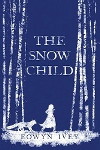
Eowyn Ivey – The Snow Child
Posted 27th February 2012
Category: Reviews Genres: 2010s, Domestic, Fantasy, Historical, Magical Realism, Spiritual
1 Comment
Days will be merry and bright if each Christmas is white.
Publisher: Headline Review
Pages: 404
Type: Fiction
Age: Adult
ISBN: 978-0-7753-8052-7
First Published: 1st February 2012
Date Reviewed: 27th February 2011
Rating: 5/5
Mabel and Jack moved to Alaska when Mabel suggested they could do with a new life. Having lost their child at birth, Mabel has never quite recovered and the solitary life of 1918 Alaska appealed to her greatly. A gulf is between the couple and Jack cannot understand how Mabel is still so affected. During their struggle to make it in Alaska they create a snow girl; the next day they see a child in the woods. Their world is suddenly filled with a happiness they never dreamed of but there is always the question of how long it will last.
The Snow Child is a sweeping story, encompassing many questions about how we connect with and treat each other. The setting allows the magic to be explored in a way that most anyone can identify with, while allowing Alaska to keep its reality, the author herself being from the state. Although the location never changes, the ride through the character’s lives can often make it feel as though you have been on a long journey. Though of course that is in many ways the point.
Albeit that The Snow Child rests firmly in what is termed “magical realism”, Ivey plays with her reader, coming back and forth with the idea that in fact everything is perfectly true, before throwing at them a snowball filled with thoughts to the contrary. Before the girl, Faina, entered their lives, Mabel and Jack’s relationship was uneasy at best. Faina’s entrance is the catalyst by which everything starts to change, because suddenly there is a child for them to look after, the gulf between them bridged.
And it is through Faina that Ivey shows us change over time. Jack was always more content with life than Mabel was, but the introduction of the girl causes him to move towards a feeling of fatherhood, one that is rather possessive. Mabel, on the other hand, sort of takes a reverse route, beginning by feeling desolate and depressed and ending as Jack begun, more accepting and open. In addition to this, the reader can see a parallel in the personalities and life of the couple’s neighbours, who come to feature strongly in the book.
Possession is a big theme of the book, with Jack and Mabel taking turns at being worried for Faina and wanting her to fit the mould of a child they have created in their minds. Ivey puts forward the idea that Faina might disappear if Mabel enforces her views of education and a stable home life, suggesting that one cannot direct the life of another, as Mabel cannot force a child of nature to be a child of the modern western world. As for Jack, his possessiveness comes to the fore when Faina makes strong choices of her own, choices that bring her properly into their world. Ivey demonstrates that while such possessiveness, especially on Mabel’s part, is due both to the sudden realisation that they have a child, and to the love they have for Faina, it can do untold damage where it is not held in check.
But the bigger theme is relationships. It takes Faina’s arrival for Mabel and Jack to remember who they were, both as individuals and as a couple, and there is a poignant moment when all three are skating on ice and Faina suggests they keep skating past the limits they had set themselves for safety. In this there is the idea that while they are happy, Jack and Mabel will not let themselves fly free, always remaining on solid ground, and Ivey demonstrates that while that is often seen as a good thing, there are times when one should let themselves go. And the reader is left to wonder what might have happened had Mabel and Jack agreed with Faina, and had literally skated past their boundaries.
What is interesting about The Snow Child is that for so long it is simply a nice story – a look at domestic relations – with only the smallest of magical pieces, and the reader may wonder what is happening in the sense that it can seem that nothing much is. The change in mood, pace, and magic comes swiftly – Ivey sets the major points in a section all on their own, and it’s rather like a latch being opened. From content and comfortable little story the book moves to extreme emotions and a much grander tale, from which there is no way back. Perhaps the most intriguing thing is that from this point it is likely the reader will be able to discern what will happen, and far from being a negative aspect, as it would be in other books, this is what propels you on. Like Mabel and Jack, you may have been happy enough with Faina coming and going before, but now you want to truly put her in the spotlight and find out who she is. Again, Ivey shows us that wanting all the knowledge may be part of the problem.
The choices Faina makes, and how she relates to the changes are pause for thought, as they illustrate both how human and, at the same time, how unreal, she is. And surely the final catalyst in her life is a nail in the coffin of the current flow of events and way of life. It is here that another theme, love, is shown most obviously. However it is up to the reader to decide whom exactly Faina loves, or indeed, if she does love or whether it is something else entirely that effects her actions.
But in doing what she does, Faina provides Mabel and Jack with what they always wanted and in that sense the story comes full circle. Who Faina is, was, and will be, why she came, if she had a purpose or if that is something we have come to believe, are all questions that Ivey leaves to the imagination. Ivey will control your thoughts throughout the novel – pushing you towards the realistic, the magical, the deluded, whenever she wants – but the questions themselves go unanswered. The lack of quotation marks during dialogue that includes Faina is cause itself to take a step back. Each reader will come to their own conclusion based on experience, beliefs, desires, and this brings a spiritual aspect to the book.
And that is what makes the book so compelling, and Ivey’s tale so wonderful, that while it is based on a fairytale that was given an explanation, Ivey has twisted it and drawn her own ending, inserting important musings along the way.
Ivey shows that while we may like to think that we can solve problems by rational thinking and talking things through, there is an element in all of us that benefits from the unknown and the magical, or spiritual, or whatever you want to call it. And she shows that maybe what we think we need isn’t it exactly.
The Snow Child is a brilliantly crafted story of learning to live and love. And the best news is that no matter whether winter or summer, real or not, it will always be around to delight and enthral.
I received this book for review from Waterstones.
Related Books


