





Helen Oyeyemi – Boy, Snow, Bird
Posted 11th January 2016
Category: Reviews Genres: 2010s, Angst, Domestic, Historical, Magical Realism, Social
8 Comments

Racial divide? What’s that?
Publisher: Picador (Pan Macmillan)
Pages: 306
Type: Fiction
Age: Adult
ISBN: 978-1-447-23713-6
First Published: 27th February 2014
Date Reviewed: 6th January 2016
Rating: 3/5
Boy, a girl, runs away from home, and the abuse from her father. She gets off the bus at the end of the line, moves through a few menial jobs, makes friends. The boy who loved her, who she loved, is forgotten as life takes her towards businessman Arturo and his reputedly perfect daughter, Snow.
Boy, Snow, Bird is based around three girls/women. There isn’t much plot – what little there is isn’t particularly compelling – this is a book written as a study. It’s not bad but beyond the study there’s little to cling to and the ending comes out of left field.
This study, then, forms the subtle backbone of the story. It’s great, full of the sorts of sentences that beg quotation for the meaning they provide because the handling is really very good. Oyeyemi hasn’t a unique viewpoint, but the way she’s written it is wonderful. To sum it up, the book is about race – divisions and broader social issues in the mid 20th century.
To speak of it in long form, the book is about the way this fictional group of black Americans – whose role in the story is to illustrate this particular angle – try to fit into the mostly white society. Strictly speaking, it’s about colour, for example you aren’t told until 1/3 of the way through that particular characters are black, showing the importance of the question, ‘does colour really matter?’ Now of course you may have viewed these characters as black anyway, the lack of detail at the beginning lets you imagine what you want to imagine – but being shown, suddenly, almost, that they are black is what Oyeyemi seems to have been aiming for, not in order to shock you (in case you’ve seen them as white people) but in a literary fiction shocking way, if that makes sense.
The family of Boy, Snow, Bird accomplish their desire to fit in by never acknowledging their colour. That the book is fictional, verging on magical realism, means that they are able to completely ignore their colour in a dismissive way (without actively being dismissive) that furthers the point without the need for the reader to suspend belief. A prime example of the way the family functions is in the scene wherein Boy is asked, by her black in-laws no less, if she slept with a coloured man to produce her mixed-raced daughter.
On the surface Boy, a white character, finds no shame in differences, and never mentions it beyond her discussions with her in-laws.
“Nice try, but I’m not going to stand here while a coloured woman tries to tell me that maybe I’m the one who’s coloured.”
Oyeyemi’s Boy is open, firm, no nonsense; rather than seeming at all superior, she causes Oyeyemi’s study to be more obvious. There is never any sense that Boy is higher or indeed lower because of her whiteness. Or is there? Why did Boy send away her beautiful step daughter?
The above said, you can likely see where ‘Snow’ comes in. Snow is not white but she’s the apple of her relatives’ eyes, a girl supposedly of lighter skin who everyone adores because of it. She fits into the white society, supposedly tricks white people into thinking she’s like them – of course that she’s like them is Oyeyemi’s whole point so the book is a little meta. As says Boy:
Snow’s beauty is precious because it’s a trick. When whites look at her, they don’t get whatever fleeting, ugly impressions so many of us get when we see a coloured girl – we don’t see a coloured girl. The joke’s on us.
In addition to this basic premise, Oyeyemi takes a glance further back to the days of plantations and the differences between ‘house negros’ and the people who worked in the field, the hierarchy there.
Moving on from this subject, it must be said that Boy, Snow, Bird is no fairytale re-telling. Yes there is a beautiful girl called Snow, and yes her stepmother sends her away, and there are mirrors, but beyond that there is nothing. If you want to read an exceptional dialogue of race relations and fitting in, give this book a try, but if you’re looking for a retelling go elsewhere.
Mirrors in this book suggest beauty, look at beauty and identity. What Boy sees in the mirrors she’s obsessed with point to many issues she has and it is primarily here that the book shows the distinction between fantasy and magical realism. It’s a fair subject and an interesting look at both the outer world and the inner world – what one sees in themselves, what others see, and what can cloud perception.
Where Boy, Snow, Bird fails, then, is in the way it’s written. It’s not the words – Oyeyemi writes beautifully – it’s the execution. The addition of characters that don’t aid the plot. Letters when prose and actually meeting the characters would’ve been better. An ending that seems thrown in for good measure. A lack of detail and a general confusion, different to the planned racial confusion, and distance between reader and characters, make it difficult to lose yourself in the text and work out where the characters are, what time they’re in, what’s going on, and what the book is about. Unfortunately the question ‘what does this book want to be?’ can be applied here.
It’s hard to say why the ending was written. In the last few pages Oyeyemi starts up on a completely new issue that is interesting in itself but has no baring on the rest of the book – or at least it shouldn’t; Oyeyemi sort of jams it in. If it is an attempt to provide a reasoning for abuse it fails miserably because it’s not a very nice thing to use in comparisons, at least not in the way it’s been written. If it’s to try and show that the author hasn’t forgotten the set up, it really wasn’t needed here. And if it’s some sort of girls in it together idea it just falls flat. (This issue warrants the use of an extra genre tag but I’m not going to use it because the book does not do that tag and its readership any favours.)
If Boy, Snow, Bird had been a novella or short story, more focused, it would’ve been excellent. As it is although there’s much to like about it on a historical and intellectual level there’s just as much that isn’t so good and as such it’s difficult to fully recommend it. If there was ever a chapter book to dip into, this one is it.
Related Books

Sarah Howe – Loop Of Jade
Posted 23rd November 2015
Category: Reviews Genres: 2010s, Angst, Biography, Commentary, History, Poetry, Political, Social
Comments Off on Sarah Howe – Loop Of Jade

Figuring out the past. Concerning the present.
Publisher: Chatto & Windus (Random House)
Pages: 60
Type: Poetry
Age: Adult
ISBN: 978-0-701-18869-6
First Published: 7th May 2015
Date Reviewed: 21st November 2015
Rating: 5/5
I’ve never reviewed a book of poetry before, never reviewed a poem at all. As you may know I’m not a big reader of them – technically I like them a lot, the words, phrasing, beauty – but they often confuse me.
I’m giving it a go this time; Howe’s poetry is on the short-list for the Young Writer Of The Year award and having heard the poet read one of them herself, being able to hear her voice in my head and knowing when to pause, helped me a lot.
So, then, Howe’s collection is about her mother’s early life in China as an unwanted and later adopted girl. It’s about Howe’s own experiences as a young child in Hong Kong before the family moved to Britain. It’s a bit about politics, a bit about history, and a bit about Howe’s relationship with her husband. Many of the poems are also based around the divisions of animals as proposed by Dr Franz Kuhn. (The descriptions are included before the poetry begins.)
And whilst some of it flew over my head, I can still say it’s incredible. Howe makes use of various styles. She writes in one-word lines, she writes in a sort of way that echoes prose more than poetry, she uses long sentences, short ones, indented lines. The style that’s most compelling is the one used in the title poem. This is a poem wherein she’s listening to her mother talk about her life and near the end she writes as her mother speaks, using white space between words and phrases to show where her mother is pausing. You get a really good sense of how this conversation played out in reality.
Howe’s written voice moves through perspectives. She often writes from a distance, the third person. Sometimes she writes in the first; but the best times are when she questions the audience directly, or questions herself, or speaks in a particularly intimate way that defies description. It’s really lovely and makes you feel as though you’re privy to something special.
One of the standouts is Tame – hard-hitting, excellent. This is a poem in which Howe uses a quotation about how it’s better to raise geese than a girl as her base and works a fairy tale from it, dark, brutal ending and all. She wraps around the subject, coming full circle. Another is Innumerable wherein Howe remembers going on a day out around the time of Tiananmen; she contrasts the two and brings them together to show how things can be swept under the literal rug but not really.
About half the poems are stories, the other half tiny glimpses. The glimpses work well, you need to keep your wits about you to discover their true meaning.
The writing is quite flowery as you would expect, and very, very literary. Howe’s writing may require you to use a dictionary and you do have to pause sometimes, more than you usually would, to really make sense of what she’s saying – sort of the first step in the discovery program.
It’s a brilliant collection which I can confidently rate top marks even though I didn’t get it all.
I received this book at the Young Writer of the Year award blogger event.
Related Books
None yet
Leo Tolstoy – Anna Karenina
Posted 11th November 2015
Category: Reviews Genres: 1870s, Angst, Commentary, Domestic, Drama, Philosophy, Psychological, Romance, Social, Spiritual
3 Comments

In which war and peace both have a place in an affair.
Publisher: Various (I read the Penguin Classics edition)
Pages: N/A
Type: Fiction
Age: Adult
ISBN: N/A
First Published: 1878
Date Reviewed: 7th November 2015
Rating: 4/5
Original language: Russian
Original title: Anna Karenina
Translated by: Pevear and Volokhonsky
Anna catches Vronsky’s eye whilst he is supposedly courting Kitty. The attraction is mutual and so they begin an affair to the sadness of both Kitty and Karenin, Anna’s husband. It may not be all doom and gloom for Kitty – she’d turned down a proposal from Levin due to Vronsky and Levin still wants her, but Anna’s life will be very different as there is more to consider than she wishes to think about.
Anna Karenina is a tome of a book that focuses on the lives of five main characters and several secondary ones. Whilst the climax may deal with the titular character she is not the be all, end all – that’s to say the book’s about far more than the one woman. At 800-odd pages, no matter the edition, it’s a slog sometimes, but a good book nonetheless.
You likely won’t be surprised to hear that Tolstoy is wordy. There are limits as to how much can be put down to translation and Tolstoy can drone on on occasion – compared to Dickens it’s nothing but it does make for lulls in the text. This is somewhat but not completely to do with the themes of the novel; Anna Karenina owes much to philosophy – economic, religious, political, social.
This philosophy is explored through the character of Levin who in part represents the author himself. The narrative of Levin and Kitty’s courtship is comparable to that of Tolstoy and his wife, Sofia, and beyond that much of Levin’s thinking is based on Tolstoy’s own. This is surely why there is so much non-Anna in the book and knowing that it relates to Tolstoy can make it far more interesting than it would be by itself.
Whether because the author flipped back and forth himself or because he just wanted to explore the ideas (the likelihood is of Tolstoy flipping) there is a lot about Levin’s thinking that is objective. Tolstoy sends Levin’s thoughts flying in one direction before pulling him back the other way, not on every subject but a vast many. Of course he comes to particular conclusions in the end that may or may not fit the reader but he gives ample time to other viewpoints beyond his own. He appropriates lifestyles and thoughts whilst Levin figures out what he wants – and he aims to be respectful even if it doesn’t end up that way. Besides this consideration of one character, Tolstoy provides counterparts in Levin’s friends and family. Levin’s story isn’t exactly thrilling; it is the inactive (as opposed to physical action, extroversion) musing that balances out Anna and Vronsky’s social life.
To Anna then – yes, it feels odd not to have spoken of her thus far but somewhat right nevertheless – Tolstoy succeeds in luring you in. Everyone who meets Anna falls a little in love with her and damn it if you won’t also. It is in this way, the almost interactive nature of the text wherein Tolstoy makes you love her too, that the author shows you why people do the things they do. Making the reader fall for Anna does the job better than any descriptions, even if descriptions are what make you fall. Things get a little awry later insofar as reasoning goes – not everything Anna does makes perfect sense – but in general she is a fantastic character in that whether you like or dislike her she will make her mark on you.
With Vronsky it’s a little different. You don’t ‘have’ to fall for him and likely you won’t. Tolstoy sets him up as only a semi-hero from the start. Because you hear so much from both men – husband Karenin and lover Vronsky – you’re never in danger of putting them before Anna, which is quite possibly what Tolstoy planned. You will feel for all three characters in the triangle at various points, Tolstoy showing no major favouritism, rather exploring to an objective outcome the effects of an affair in such a time and society.
Explore he does. Of initial interest, perhaps, in our modern view with our particular mores, is the fact that it’s not the affair itself, the affair as a concept, that is the issue in this book. The society of which Tolstoy writes does not care for morals in this way – people have affairs all the time. What it does care about is divorce and the actual physical relocation of a couple from the bonds of marriage. It is Anna’s move to Vronsky’s side that heralds the start of her troubles, a queen moving anywhere she wants on the board that will eventually be brought down no matter how far she goes. Anna’s incapability to accept the changes in society’s view of her causes many problems and whilst Tolstoy invariably strikes her story with a God-like hand he then sits back and lets it play out. He may be saying something, moralising as he does with Levin, but he wants the reader to see things for themselves, to come to their conclusions without too much help.
There are no evil-doers in Tolstoy’s book, no wicked husband, no wicked wife, no stepmothers keeping children from balls. A huge part of the book’s triumph lies in its objectivity – again that same word. Yes, Anna decides to have an affair when she had previously loved her husband and could have said ‘no’, but even though Tolstoy has a narrative all prepared for her that may be upsetting and unnecessary to us nowadays it is somewhat a result of the era rather than the character herself. And Vronsky may become rather disaffected and you may emphasise or dislike him for it but you can see his reasons and they aren’t bad; there’s a misunderstanding afoot. Karenin is shown in a fair light, very fair, but whilst you will feel sorry for him Tolstoy never rams him down your throat, indeed he gives Karenin a bit of get-up-and-go that will have you wishing he had held back.
The questions are thus: is this right or wrong? Why? What should be happening? What is going to happen and ought it? There is certainly something to be said regarding Tolstoy’s choice to end the book with several chapters devoted to Levin rather than the aftermath of the triangle but whether that’s moralising or simply down to Tolstoy’s wish to talk about himself is hard to decipher.
A note on Kitty, then, because I’ve left her out, and Dolly because there’s a short piece that is mightily compelling: Kitty’s a nice enough character. She represents the home life Levin hopes for and is obviously meant to balance out Anna’s presence in the text. She’s the wife whose existence brings Levin to the place Tolstoy wants him to be, who grounds him from going too far with the appropriating. It could be said she’s what stops Levin from just throwing his money away and pitching in with his workers – which may sound like appropriation itself but is a welcomed change from it because it becomes uncomfortable reading about a rich man helping out in the fields and being jolly about it because it’s a novelty and nothing he’ll have to do full-time. Kitty’s character lends the book a younger feel, providing readers who may be on the cusp of age but not quite someone they can relate to as they wade through a mature text. Dolly? She helps Tolstoy explore the emotional effects of affairs, more so than Karenin, because of her husband’s (Oblonsky) inability to stay faithful. Society may see affairs as almost inevitable but Dolly reminds us not everyone feels that way. The compelling short piece? Tolstoy has Dolly consider for a moment how her life might have been had she not had children. It is only a moment, it takes place amongst a few pages only and is neatly tied up by the end of the chapter with the assertion that she much prefers life the way it is – as you would expect of a novel from the 1800s. But it’s there and it reveals perhaps a tiny inkling of Tolstoy’s possible opinion that women ought to have more say and a bigger role in society. When added to the statement several chapters before that a woman’s lack of rights stemmed from a lack of education and vice-versa, it becomes quite the poignant concept in terms of Tolstoy’s message.
As said, Tolstoy waffles on occasion. He repeats himself and talks about things that would be edited out these days. Worthy of 800 pages this book is not, but it’s also not bad. The writing is fair and insofar as one can judge when referring to a translation the text is easy to read and alluring. It can be funny. And when not bogged down in meetings that will never get anywhere it’s a quick read. I must recommend the translation I chose, Pevear and Volokhonsky’s. The colloquial English grammar at times overlooks the fact it’s Russian but it’s a much simpler read than some. The Maude translation, which I read 500 pages of, is quite clunky and poorly written. (Not to mention it seems one of the Maudes disliked Tolstoy – they knew each other – so what they were doing translating it in the first place and how much that infers reliability is quite the question.)
Anna Karenina is an undertaking. In deciding to read it you’re signing yourself up for the long haul and whilst it’s a good long haul it isn’t the most thrilling or satisfying one out there. There are parts you can take away with you but the likelihood is you’ll be relieved once you’ve finished.
Read it; it’s worth it and it feels good to say you’ve read it, but have another book on the go at the same time and remember to keep your wits about you because everyone has three to four names they go by.
Related Books
None yet
James Rhodes – Instrumental
Posted 23rd October 2015
Category: Reviews Genres: 2010s, Angst, Commentary, Domestic, Memoir, Music, Psychological, Social, Spiritual
2 Comments

Instru, mental (health), and music.
Publisher: Canongate
Pages: 264
Type: Non-Fiction
Age: Adult
ISBN: 978-1-782-11337-9
First Published: 28th May 2015
Date Reviewed: 20th October 2015
Rating: 5/5
On paper, James Rhodes had a privileged childhood. He went to posh prep schools and later to Harrow. In reality, his first years were marred by sexual abuse. Now a fairly successful pianist, Rhodes looks back on his past, the multiple mental illnesses he developed that stifled any happiness and success for a long while and saw him hospitalised, and at the way classical music saved him.
How much can a 38 year old say that is worthy of a memoir? In this case, a lot. Rhodes’ book is one of suffering, of healing (somewhat – this book is realistic), of music, and in many ways advice, all compiled into chapters that begin with a look at the mental health of a particular composer and a suggestion for a musical interlude.
Rhodes is modest, very humble, and what makes the book so successful is that whilst he is privileged and can name drop like the best (he went to school with Benedict Cumberbatch, for example) there is a very true feeling throughout that he believes it. This is not to say that it’s good to read about someone who had everything and is suffering – do not take my meaning the wrong way – it is to say that Rhodes’ place in the world means he’s truly in the middle, having had a lot but being right on a level with your average Joe. And he has had advantages, that’s true, but his has not been a simple journey of boom, healed, and then success.
And he writes with a particular honesty. There is the frankness in what Rhodes says; he speaks openly and harshly without going into too much detail for his own piece of mind. His prose is casual and welcoming, simple yet literary. He swears as he talks, casually, often, but sometimes because it is an effective way to explain a feeling.
Rhodes gives advice on some subjects, for example his advice on relationships (which I’ll point out is short in case it sounds like this is a self-help book – it’s not) that he has learned from the way he sees and deals with his own. He offers a lot of his opinion on how the classical music industry should change (this part is a little preachy but no less worthy). What he doesn’t advise on, however, is self-harm, drug use, suicide. Rhodes, though still falling back occasionally, has made his peace with many of the things he’s done in his life but says that people need to be careful with their support. In fact what he says is that we need to stop judging and worrying about and medicating those who self-harm and think of suicide. He shows how what others saw as support hindered him from healing. As far as the book’s importance in a general sense, this information is perhaps the most compelling reason for reading it.
Rhodes writes as much for those who haven’t had his experience as for those who have. He’s showing hope whilst remaining realistic, he shows that there are amazing ways out whilst showing that some are just average. And all through it is his self-effacing view of himself that wins you over because you can see how much good he is doing and you hope that he sees it himself.
I said above that Rhodes is preachy on the subject of music. His opinions themselves aren’t but do seem so when he speaks about music being the last art to have a strict classic genre and forgets books, and one hopes he knows of a previous attempt (successful in many cases) to bring children to classical music – The Magical Music Box magazine of the 90s. Rhodes makes a strong case that is absolutely fair – one hopes he succeeds in bridging the divide between the general populous and the elitism in the genre. Just one nitpick: he rules out contemporary classical music, stating that by all means a musician should play a new piece of music but that it won’t ever rival the old masters. The issue is that in making people, young people who don’t fit the stereotype of hoity toity classical music rah rahs, interested in it, is going to result in some of those people being inspired to create some themselves. To restrict such growth would be to come full circle and limit classical music to the old posh listeners.
Instrumental is important; it should to be read, it needs to be discussed. It needs to be read all the more so because of the ridiculous law suit raised to attempt to stop it being published which led to Rhodes being unable to talk about his abuse, just as he was unable to as a child. Writing it might just be the most important thing the pianist has ever done.
Related Books

Tracy Rees – Amy Snow
Posted 9th October 2015
Category: Reviews Genres: 2010s, Angst, Domestic, Historical, Romance, Social, Spiritual
Comments Off on Tracy Rees – Amy Snow
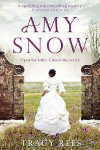
Guided to change.
Publisher: Quercus
Pages: 551
Type: Fiction
Age: Adult
ISBN: 978-1-784-29145-7
First Published: 9th April 2015
Date Reviewed: 8th October 2015
Rating: 4/5
Aurelia, heiress to her parents’ fortune, finds a baby in the snow and takes her home. Her parents are furious but they love their daughter and give in to her pleas to keep the child. And so the girl grows up amongst the servants in the kitchen and later with Aurelia as a companion. Later, Aurelia becomes sick and goes travelling whilst she still can, stating she’ll be a few months but remaining away for longer. Upon her death Amy is thrown out of the house with the ten pounds left to her. Only it’s not ten pounds, it’s more, and Aurelia is sending her on a journey from beyond the grave.
Amy Snow is a long historically-rich story of self-discovery and friendship. Written with close attention to detail it is as much about the Victorian period as it is the mystery.
Because, truly, the mystery isn’t much of one. The story is simple and the answers very predictable but this was the intention – Amy works out the most likely scenario long before she learns it officially; this leaves her able to contemplate what happened otherwise. You could call this a cosy mystery – the answer is not imperative, though of course you want to know it, and the pacing is slow. But that is the beauty of the book.
Why? Because it’s not the mystery you want to read this book for, it’s its atmosphere. Amy Snow is a blending of Jane Eyre and any work of Austen. It is a classic Victorian novel written in the 21st century. It’s not perfect – there are some anachronisms, for example – but this book is the book for any reader who has looked at their finished collection of 19th century British novels and wished those authors were still writing today. It’s quite the feat.
So it’s a slow novel, full of waiting around and going to balls and dressing up. It’s got your evil Lady and your awesome elder who defies convention. It’s got your respectable gentleman suitor and your average shopkeeper’s son suitor. It’s got letters and calling cards and upstairs downstairs and your walking around looking at bonnets in the window and exclaiming at their beauty. Rees has worked hard to get it right. Yes there are anachronisms and even more exclamation marks than the Victorians used (this is something you get used to as you settle down into it) but by and large the writing style fits beautifully. It’s obvious that Rees has spent time working through the differences between modern and Victorian speech, and it lets you get pulled back in time. Amy Snow is not as confident as Elizabeth Bennet and whilst she is in a not dissimilar situation to Miss Eyre she spends too much time on herself; but she can be placed beside these two heroines with ease as far as feelings go.
Before I leave off from the writing I want to show you an example of Rees’ metaphors. She favours a certain sort of style that is quite fun, however much it becomes noticeable later on for its repeated use:
He proceeds to grill Mr Garland as thoroughly as a fish for his views about the railway.
The mystery in this book takes second place to Amy’s self-discovery. Aurelia’s treasure hunt, as it were, is important and ought to be followed, but Amy’s journey towards acceptance and who she wants to be takes centre stage. Amy’s journey whilst journeying is of course set apart from Aurelia. It comes with the baggage of knowing she wasn’t wanted by anyone but her friend and is something Aurelia knew but would never understand completely due to their difference in station. Amy struggles with her sudden fortune. At home with the relatively wealthy but down-to-earth family who accept that she would prefer to wear more modest dresses, she finds it difficult adjusting to her next situation which requires her to mix with the upper echelons and dress accordingly. Rees’ novel is somewhat the Cinderella story but unlike Cinderella, Amy can’t simply abandon her past. She has to learn for herself that Aurelia, by giving her riches, is giving her a choice – she can live as a virtual Lady; she can be amongst the gentry; she could become a servant. Aurelia was a Lady who wanted to be independent, see the world, speak to those lower than her, but could do none of those things precisely because she was a Lady. In Amy she posthumously lives her dream.
The self-discovery is where the main flaw of the book lies, one I must discuss if I’m to be objective. (This book left me in raptures, I loved it and it’s joined my all-time favourites, but I can’t deny there are flaws.) A lot of Amy Snow is composed of naval-gazing. Amy thinks a great deal, she over-thinks, re-hashes, and whilst it’s very realistic and happens to the best of us when in a situation where we have to choose and aren’t sure, or have had a sudden change that we’re adjusting to, it doesn’t work in a book. It becomes boring, as do her moans that she doesn’t want to keep following Aurelia’s treasure hunt. If you’re enjoying the rest of what the book does, it’s not going to be enough to make you abandon it, but it does affect it.
Apart from the anachronisms and exclamation marks there are sentences that use American grammar. As the spelling is American it can be assumed the erroneous grammar is not accidental, though of course it should be.
There are some very convenient second meetings where people Amy leaves behind just happen to turn up where she travels to – absolutely understandable when she’s mixing in high society and it’s a high society person she sees as they tended to stick together across the country, but less believable when it’s your average Joe. In this way you’ll need to put on your Rochester’s-voice-echoes-all-these-miles-away hat – is it lovely or just deus ex machina?
Lastly, there are many proof reading errors, distinct from the copy editing problems.
Amy Snow is a trip to the classics section of the bookshop. It’s a dream of a book for anyone who wants their Victorian-setting 21st century novels to be wonderful. It has the sort of epic story vibes, romanticism, that tend to make half of all readers swoon and the other half label it sappy. It’s both phenomenal and flawed.
This reviewer read the epic story and swooned just as she did when she read Brontë; her opinion on whether or not one should read this book is of course going to be ‘yes’ and for that reason she’s going to suggest you decide for yourself.
Related Books
None yet
Speaking to Tracey Rees about Amy Snow, Florence Grace, The Hourglass, Darling Blue, and The House At Silvermoor (spoilers included)
Charlie and Tracy Rees discuss Richard, Judy, Dickens, Austen, and Brontë – not all at once – coffee houses in Victorian times, landslides and hourglasses, changes to the Yorkshire mines in the late 1800s to early 1900s, and the inclusion of the average person in historical fiction.
If you’re unable to use the media player above, this page has various other options for listening.


