

Tahmima Anam – The Bones Of Grace
Posted 19th September 2016
Category: Reviews Genres: 2010s, Angst, Domestic, Political, Romance, Science, Social, Spiritual
Comments Off on Tahmima Anam – The Bones Of Grace

One epic love letter.
Publisher: Canongate
Pages: 407
Type: Fiction
Age: Adult
ISBN: 978-1-847-67977-2
First Published: 19th May 2016
Date Reviewed: 14th June 2016
Rating: 4/5
Zubaida was studying in America when she met him: Elijah, a man she came to know for just a few days; she had to leave for Pakistan when her university department’s hopes of uncovering an ancient fossil were realised. But when the project came to an abrupt halt, Zubaida went back to her native Bangladesh and married her childhood friend, effectively bringing an end to her acquaintance with Elijah. Years later, after meeting and splitting from him again, she has chosen to tell him everything in a letter.
The Bones Of Grace is a somewhat epic story that also includes another story within the story. It’s the sort of book you’ll likely either love or hate (very difficult to rate!) but either way appreciate the background detailing.
What first strikes you is Anam’s writing – it’s sublime. There are no two ways about it. It’s the sort of writing that is so wonderful, so well put together, so constant, that it has a very real affect on the novel’s flaws. You won’t dismiss the flaws, but you will feel as though you want to dismiss them. But what’s interesting is that this isn’t necessarily Anam’s natural writing style, it’s all Zubaida – during the story within a story, where we hear directly from Anwar (and it’s just that Zubaida has included his words in her letter) the writing is very different. More… male, appropriately. (Anwar is a man looking for his past love who puts his search on hold when he runs out of money.) Zubaida’s words, the flow of her writing, does make up somewhat for what could be called a frustrating narrative.
And I could imagine almost every day of your childhood, because it would have been documented in films or on television – in that way, you had probably lived a deeply unremarkable life, had experiences without specificity, and that had bothered you, the way my own past grated at me. All the things that irrritated you were things that I longed for, and all the things you longed for were things I took for granted.
I want to tackle this narrative before moving forward (hopefully the above extract exudes the quality and how the narrative can be both beautiful in what it says and, to use a word from the extract, grating). Whether Zubaida is annoying is really up to you, your personality, and, likely, down to your own experience of love and heartbreak. That Anam has captured her particular tale in a very honest way is hard to dispute – I think we’ve all had times when we’ve realised we’re dwelling too much on something and need to stop discussing it, and that that doesn’t always mean we stop thinking about it – it’s just a case of whether you’re happy to spend 400 pages on it and, indeed, whether you believe in this woman, Zubaida, writing a 400 page letter of excuse and apology.
Of course without the number of pages, we wouldn’t have a novel, we’d have a pamphlet, a novella at most, so this is where the background and ship-breaking comes in.
“It’s a cruel industry. For years we’ve been working slowly, patiently with the owners. Suddenly she comes and tells us how terrible things are. A film isn’t going to change anything.”
Anam uses Zubaida to look at the end-of-life of ships, in this case a cruise ship. There is the time when the ship is created – overseas – and sets sail, multiple times – overseas – and then, when it’s deemed too old, it comes to Bangladesh where men work for little pay, breaking it into pieces to be sold on. Zubaida comes to the beach as a translator for a western reporter who is looking to make a film (and possibly press charges against the management). Through Zubaida, Anam shows the horrors of the situation – the lack of safety, the deaths, and the exposure to chemicals and other toxic ingredients the workers face. It’s a uniquely-realised story. The inclusion of Anwar’s story, in which he comes to work at a ship-breaking beach, adds to the level of detail involved.
Then there is the palaeontology. Zubaida’s passion is the study of the fossil of a walking whale – a creature that slowly evolved to live under water whilst other creatures evolved to live out of it. Her journey is set around her attempts to get access to the fossil, first overseas then through the removal and sending of the bones to America. The journey shows the conflict between work (the will to, in this case) and relationships. Anam is an anthropologist which means you get a lot of detailing, but her writer self stops it becoming too much.
Amidst this is Zubaida’s lifelong mental conflict – she was adopted, lives in a well-off family and her fiancé is rich, but she doesn’t know anything about her birth mother and starts to feel a need to know where she came from. This is where privilege and class enters, where the underlining of Zubaida’s poorer beginnings limits what there is for her to know. It’s there in the background when she begins to question, no matter what category the question comes under; her thoughts of love, duty, and Elijah are informed by her adoption. In meeting Elijah she finds herself thinking of things she’d never thought about before and quite possibly never would have otherwise, and family duty and a general lack of mental strength hold her back from taking it further. She has all this luxury in consequence of being with Rashid, she’s lucky, she shouldn’t be thinking of Elijah. But she is thinking of him.
And amidst this turmoil is a minor story – minor in how much time it takes up (it’s big in terms of real-world impact) – of war, of the effects of it and of war crimes coming to light. Zubaida’s mother has spent her years working towards justice. Her father’s work and business has been ethical. You see glimpses of the Bangladesh war.
Now the ‘twist’, if it can be called so, that you start to see when Anwar makes his entrance (because if a stranger becomes involved you know there’s got to be a connection somewhere), isn’t as predictable as you might first think. It’s quite likely you’ll guess correctly, and, yes, of course this part of the narrative could be considered a device because how likely is it that it’d all happen in real life and so on, but it’s a novel after all. The reveal is pretty satisfying – it won’t blow your socks off but it may well make up for any frustration you had been feeling due to the way Anam goes about it. Make no mistake – don’t go assuming the twist the main reason for the book. It’s not – the book is all about the journey, the writing, the history, the palaeontology, and the ship-breaking – but it does give it an extra lift.
The Bones Of Grace is a slow-paced book. There’s not really any action in it; certainly that it’s one long letter should suggest this as a possibility. It’s very much a literary book, an issues book, wherein the pleasure is in its bookish sensuality.
If you like the sound of that and if what’s heralded as good about it hits the right notes for you, it’s likely you’ll fall completely in love with it. If it doesn’t hit the right note, you’ll likely still appreciate it but it may take you a while to get through.
Related Books
None yet
Abubakar Adam Ibrahim – Season Of Crimson Blossoms
Posted 3rd June 2016
Category: Reviews Genres: 2010s, Angst, Domestic, Political, Psychological, Social, Spiritual, Theological
Comments Off on Abubakar Adam Ibrahim – Season Of Crimson Blossoms

Yes, it’s likely to fall apart.
Publisher: Cassava Republic
Pages: 339
Type: Fiction
Age: Adult
ISBN: 978-1-911-11500-7
First Published: 20th May 2016
Date Reviewed: 2nd June 2016
Rating: 4.5/5
Grandmother Hajiya Binta and drug dealer Reza meet when Reza breaks into Binta’s house. He steals her jewellery and threatens to kill her but there is a moment between them; he returns in peace. The two begin an affair that must be hidden – not only is the age gap wide, in Binta’s culture it is shameful. As Binta hides the affair from her family and Reza tries to work out the conflict between his care for her and the murders he commits for others, we also see the trauma of Binta’s niece, Fa’iza, starting to slip through the cracks in the armour she created for herself when her father and brother were killed.
Season Of Crimson Blossoms is a book that looks at a fair few things, namely the emotions and sexuality of an older woman and the life of Reza; it also delves into corruption and religious conflict.
Ibrahim is one of those writers who writes the opposite gender really well and succeeds in giving life to the various ages of his characters. In many ways his book is about the effects of culture on women in conservative Northern Nigeria and it’s a well-rounded study. He looks at the effects of violence through memories. And it’s through Fa’iza’s story that Ibrahim’s talent sparkles for the first time.
When we hear about Fa’iza, beyond her liking for romantic novellas and film stars and television, it’s in the form of a flashback. In the space of a mere few pages, Ibrahim manages to provide the sort of shock most authors spend time leading up to – he shows us the reason Fa’iza can be quiet, the horror of what she experienced as a child. As men beat down the door to the family home, Fa’iza’s father has the family run to the bathroom where they stay cramped for some minutes before they are found. It is an incredible piece of writing, as stunning as if he’d been working on it for several chapters.
This is an unrelated moment to the one above, but it’s another, even more succinct, that shows Ibrahim’s skill:
He was there when the other boys spotted a girl in tight black trousers heading up the street. Her hair – permed in Michael Jackson Thriller style – streamed behind her as she swung her hips ostentatiously.
Then the chants started.
“Biri da wando!” the boys sang, running after her. Some ran ahead and pulled down their trousers and wiggled their little backsides before the embarrassed girl. The racket drew more boys from their houses and playfields and Yaro, too, was sucked in. Women in purdah came out and stood by the front door, trying to call back their sons, but their voices were drowned in the maelstrom.
Then the pelting started.
Missiles of damp mud struck the girl on her offending trousers, the imprint of dirt standing out starkly against the black of the nylon. She started crying, cowering and shielding her head from the missiles. The racket went up several decibels. Some women ran out and tried to dissuade the boys, but they were too many. In the excitement, they did not see Zubairu, who was not much taller than the biggest boys, until he reached out and grabbed his son. Like flustered bees, the boys scattered, dodging into neighbouring houses and running down slime-covered alleys. […] She poured in some damp guinea corn from the basin beside her and when she heard the flogging start, she began pounding. The harder the boy cried out, the harder Binta pounded, her pestle thumping heavily.
There is not too much of this type of scene; there doesn’t need to be – once you’ve read a few, with the narrative alluding to other situations, you’re all set, as it were, for the rest of the book.
Binta likes Reza because he reminds her of the son she lost. Reza likes Binta because her face reminds him of the mother who was never there for him, who left him, tore his hands from her hijab as she went to leave. Their relationship, as much as it’s sexual, is their way of grieving. Binta’s loss of her son, Yaro, is compounded by the fact culture forbid her from showing him, the oldest child, any affection. She always wished she could show him she cared because as an oldest child herself she’d experienced the same thing, knew what it was like to be neglected. And so her time with Reza, though sexual, could be seen as a penance, or a making up for what she didn’t do, spending time with someone who looks like Yaro who wouldn’t be far off his age. Whilst inappropriate socially, the relationship serves an innocent, important purpose.
At first appearing to be a case of a drug ring, Reza’s narrative expands to working for corrupt leaders. You see Reza’s conflict – on one side he’s assigned people to kill to help others get further on the board. Chess is alluded to. On the other side he has Binta spending time with him and nudging him to go back to school and gain an education. He’s always working on things Binta has no idea of; his oft-repeated ‘you understand?’ at the end of dialogues packs in different concepts: it’s the way he speaks, it’s a phrase with a lot of subtext behind it that differs every time, it’s the way Reza tries to signal warnings.
Ibrahim is very open about society, culture. This is what makes the character of Binta stand out – she’s taking a chance with Reza and is being led by her sexuality, talking of being free. Her relationship with her deceased husband was not a bad one per se, but she laments not having been able to enjoy their time together as a couple. She takes a chance in the name of sex, knowing she might be found out and worrying about it, but she’s led by her desire to be happy before she becomes too old. It would be shameful if she were found out.
The relationship between men and women and the differences between how they can live their lives are given time, too. Binta has a suitor but he’s never present in their conversations, always listening to his radio, preferring to talk about politics. The reality behind Binta’s daughter’s separation from her husband is revealed slowly – is she a bit over-the-top or is there something else? But at the end of the day, as much as it may be down to either or them, Hureira’s husband can take another wife.
I believe it was E Lockhart who said that a book should deliver a series of small shocks. Ibrahim’s novel is the best example of this idea I have ever read. Whilst it may not be a constant series of shocks – if it were you’d be at risk of becoming numb to it all – the 1-3 page horrors I spoke about earlier fit this perfectly. They’re short, small. They are a big shock due to Ibrahim’s ability to create such powerful scenes in such a short space of time.
Season Of Crimson Blossoms is a book to read slowly. Not because it’s boring or because you’re going through a patchy part but because you want to appreciate it, you want to think about what you are reading and you want to savour the writing; it’s a sort of close reading, only off the page. It’s really very good.
I received this book for review from FMCM Associates.
Related Books

Speaking to Abubakar Adam Ibrahim about The Whispering Trees, and Season Of Crimson Blossoms (spoilers included)
Please note: this episode includes discussion of sexual content, and the second reading includes a sex scene.
Charlie and Abubakar Adam Ibrahim discuss Nigeria at this time, publishing a novel on a very controversial subject and reactions to it, effects of grief, and looking at cultural expectations of women as the generations change.
If you’re unable to use the media player above, this page has various other options for listening.
Amy Liptrot – The Outrun
Posted 23rd May 2016
Category: Reviews Genres: 2010s, Angst, History, Memoir, Nature, Spiritual
3 Comments

Running to rather than from.
Publisher: Canongate
Pages: 278
Type: Non-Fiction
Age: Adult
ISBN: 978-1-782-11547-2
First Published: 31st December 2015
Date Reviewed: 25th April 2016
Rating: 4/5
Understanding she has become dependent on alcohol and that despite earlier thoughts it’s not making her feel better, rather it’s making her feel worse, Amy Liptrot enrolls at a treatment centre and then decides to move back home to Orkney from London to see if bettering her location can help her recover from her addiction. In moving back she becomes in tune with nature, enjoying all the things she’d left, helping her father on the farm, taking long coastal walks, and helping the RSPB in their research.
The Outrun is part memoir, part nature book, that Liptrot wrote whilst back in Orkney. It’s got a lovely atmosphere to it and it’s full of information both historical and natural, about addiction and the journey to sobriety with all its struggles.
The first thing you notice is that Liptrot can really write. Whilst writing was therapeutic for her in her time of upheaval, in its publication it could be said to have become therapeutic for the reader too. There’s nothing particular about it – one can’t say she uses big or small words or the work is peppered with such and such – it’s more the general feel of it. The book’s written atmosphere is shaped in part by its theme – flocks of birds, windy but beautiful days, talk of old stones and cliffs and everything of the sort the Brontës would have championed, which of course play a big role – as it is by Liptrot’s sheer raw talent. The text ebbs and flows, never gaining a momentum it could lose, and at many points you’d think you were reading an award-winning novel.
This said there’s a great deal of repetition in the book. Writing for herself, it makes sense that there would be rambling and repetition, but as a publication the book could’ve done with being a bit shorter, more linear (it’s very easy to become confused as to where you are in time). The self-absorbed feel to the book is more a case of this repetition than Liptrot’s feelings, or at least it certainly seems that way. (Some self-absorption is of course par for the course.) For this repetition the book can be easy to put down and difficult to resume.
To the subjects, then, and as said, the nature writing is lovely. In many ways this book seems more about the nature and history of Orkney than Liptrot’s addiction which, given what I’ve said about self-absorption, works in its favour, though by no means does the recovery take a back seat. Liptrot is adept at blending her personal life with the nature of Orkney; they become one and the same when she can find a way to speak in metaphors, but equally there are times when it all just seems so natural to blend them together. Liptrot’s focus is on the wildlife of the islands, specifically the birds – there is less on farming than you might expect though she does talk at length about methods and the journey from bog-standard farming to organic. (Any lamb you happen to buy from the north of Britain may well have come from Liptrot’s family farm.)
The hill is studded with craters from when it was used by the Royal Navy for target practice in the Second World War and test shells were fired from ships onto the island. The holes are filled with rainwater in the winter and range from the size of a paddling pool to that of a jacuzzi. It is said that one bomb came further south than intended and just missed a farmer’s wife but killed her cow. After the war, a sailor from one of the launch ships
could not believe their target island had been inhabited.
In focus, too, is astronomy. Perhaps inevitably given the location, Liptrot becomes a connoisseur of the night sky, speaking of stars, the planets, and also cloud formations and the Northern Lights. And then there’s the Neolithic history all over the isles: Skara Brae, a settlement of stone-built homes under the earth to protect from the harsh weather, ancient tombs, standing stones. Tragedies at sea, wherein ships crash against the cliffs, result in their own historic stories and findings. There is so much to this book, something for most people, and because of Liptrot’s determination to make her book as informative as it is personal, you learn a lot.
Lately I’ve noticed a gradual reprogramming. In the past when I was under stress, my first impulse was to drink, to get into the pub or the off-license. A house-moving day years ago once ended a month-long attempt at sobriety. Now, sometimes, I’m not just fighting against these urges but have developed new ones. Even back in the summer, set free after a frustrating day in the RSPB office, my first thought was sometimes not a pint but ‘Get in the sea’. Swimming shakes out my tension and provides refreshment and change. I am finding new priorities and pleasures for my free time. I’ve known this was possible but it takes a while for emotions to catch up with intellect. I am getting stronger.
I wanted to focus on the wider aspects before dealing with the alcohol side of the book. Liptrot details her time as an alcoholic with a fierce openness; she discusses parties and a break-up that haunts her for years, and also an attack, sexual encounters, and other incredibly personal details. There’s a picking apart of right and wrong, missteps, but never any self-pity beyond a few what ifs. This isn’t to say that any other way of speaking is wrong, it isn’t, but Liptrot’s manner means her book may interest people who might not be otherwise interested. The recovery is spoken of in detail, too, so this could be considered both a self-help aid without the negative associations often levied on self-help books, and a book with a wealth of information for those who want to know what it’s like. The book may well aid another’s recovery as well as help a person who knows someone with addiction develop more empathy and an understanding to help them assist and show support.
The Outrun is an impressive work in many ways for many reasons, its beauty slipping out from every crevice. It may lose its way textually at times but never errs in its wonder.
I received this book at the Wellcome Book Prize blogger’s brunch.
Related Books

Elizabeth Chadwick – Shields Of Pride
Posted 23rd March 2016
Category: Reviews Genres: 1990s, Angst, Domestic, Historical, Political, Romance, Social
2 Comments

And prejudice.
Publisher: Sphere (Little, Brown)
Pages: 361
Type: Fiction
Age: Adult
ISBN: 978-0-751-54027-7
First Published: 1994; re-printed and edited 2007
Date Reviewed: 7th March 2016
Rating: 3/5
Joscelin’s been a mercenary for years but when he gets in a fight with a man who accuses him of trying to carry off his wife, things start to change. The man, now dead, leaves a widow and child and they will need taking care of. And in the background is the conflict between Joscelin and his half-brothers – Joscelin is the child of his father’s other woman – and the fight between the king and his son.
Shields Of Pride is one of Chadwick’s earlier novels, recently reprinted, that deals with completely fictional characters. It’s a fair book but far outmatched by some of her others.
The history is as strong as always; Chadwick’s knack for throwing the reader back in time is just as good here as elsewhere. The details ensure an almost film-like, immersed quality, and the two main characters are stunning. Particularly Joscelin. Chadwick’s hero is fully medieval. Unlike some of her books wherein the hero is a historical dream, inevitably very similar to her other historical dream heroes, and sometimes a little too modern in sensibility, Joscelin is simply a medieval man. He’ll fight to the death, no holds barred and in anger, then kiss his wife who, similarly unaffected by any misplaced modernity, doesn’t comment on the fight and happily follows him to bed. If it feels like the book lacks any nicety, it’s for good reason.
Not so good is the plot. One could say there isn’t a plot, just a scene, a man who takes to wife the woman whose husband he killed, and their resulting average life together; indeed if that were it it would be fine – and it is for a good chunk of pages. What happens, then, is that the story begins to drag and continues to drag until the end. Unnecessary minor conflicts are conveniently added to, it can only be assumed, lengthen it. (The book would have made a lovely novella.) Fights happen then life happens then fight happens and rinse, repeat; you can see the conflicts coming a mile off. Each battle is meticulously detailed but as you know who is going to win you could skip them if you wanted to. It’s hard to say there’s a climax because the end of the book is a lot weaker than the middle.
Amongst this is the family set-up: Joscelin is the lauded, loved, out-of-wedlock oldest son whose father treats his wife and younger sons badly. The initial introduction works – you’re introduced to the hurt wife who had to live in the footsteps of the other woman (who lived with them) and the official heirs who are constantly criticised because their mother was married out of duty and isn’t loved. The thing here is that these people are rightly angry and it’s well established that they have reason, but as the book carries on they are written more and more as crazy bad guys who are too hateful and as much as one might agree that they shouldn’t blame the messenger for the faults of the sender it all becomes a bit too hubble bubble toil and trouble, and a bit too good versus evil. Add to this the young-skinny-woman and older-large-woman divide and the release date shows.
Where Shields Of Pride works, then, is in the afore-mentioned factual hero and the history. It works as a generally upbeat, escapist read, that doesn’t demand anything of you, but shouldn’t be picked instead of others.
Related Books

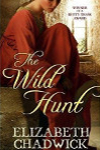


Paula Hawkins – The Girl On The Train
Posted 15th January 2016
Category: Reviews Genres: 2010s, Angst, Psychological, Social, Thriller
6 Comments

She may not see you when you’re sleeping, but she knows when you’re awake.
Publisher: Doubleday (Random House)
Pages: 310
Type: Fiction
Age: Adult
ISBN: 978-0-857-52231-3
First Published: 13th January 2015
Date Reviewed: 14th January 2016
Rating: 4.5/5
Every day Rachel takes the train to work and back home; she has a favourite house on the route whose occupants she’s made up life stories for. She gets used to their routine, seeing them in their garden most days that summer but one day the man stands alone and the news breaks that the woman has disappeared. Rachel had seen her with another man and it occurs to her that she might be able to help with the inquiries.
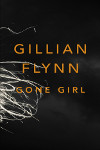
The Girl On The Train is a chilling psychological thriller with no reliable characters. Constantly compared to Gone Girl, there are some similarities but the atmosphere differs.
It’s the page-turner factor that stands out most in this respect. Whilst other thrillers make you want to speed through their pages, Hawkins’ book stays steady, a bit like a steadily moving train, ironically. You do want to keep reading because the execution is excellent, bar none, but there’s a subtlety to it, the feeling that you could put the book down, it’s just you don’t want to at present. You will finish the book quickly enough whilst feeling you were able to relax. Yes, for all grimness you’ll enjoy an even ride.
To this excellent execution then; this book is well-paced, well-plotted, and well-edited. In hindsight you can see that Hawkins gives the whodunnit away fairly early, in fact when you look back you can see the neon lights blazing above the person’s head. The reason you don’t see, straight away, who the criminal is is because of all the work Hawkins has put in to fleshing out the characters. She makes you sceptical of everyone – everyone is unreliable, in part because you come to feel they should be (that’s not to say they are in fact reliable, more that Hawkins messes your head up). The book feeds off a sort of reader prejudice, if you will, in which Hawkins plants an idea and lets you run with it. But of course you’re right to be sceptical – as much as this author-reader interaction is a game, it’s something that’s important. The nature of the situation requests that you learn how to identify who you’re looking for, to work out how to spot lies and manipulation.
Aside from their unreliability, none of the characters are particularly likeable. You’ll find yourself wondering if perhaps you should be sympathetic – and right at that time Hawkins comes in and messes with your head again. This is an author who is on the ball, who has thought of everything.
There obviously comes a time when you work it out but it’s not at the end. No, Hawkins keeps the book going for a good amount of time after this reveal, skirting the line between perfect length and too much, so you can get that bookish satisfaction. She keeps up a thin thread of mystery right until the end.
Rachel’s life is marred by her failed marriage. It’s marred by her childlessness, the depression this caused, the drinking it resulted in. The character’s unreliability is down in part to her inability to retain memories, due to drink and sometimes a sort of blanking out of the event. Is it convenient? Most certainly, but we wouldn’t have a book if she just knew everything. In this way, The Girl On The Train echoes Elizabeth Is Missing; both books feature heroines (anti-heroine in Hawkins’ case?) trying to solve puzzles they’ve forgotten the clues to. Rachel sports bruises she can’t remember getting, realising that’s par for the cause, but it makes her think nonetheless.
Through Rachel, because of her utter despair, Hawkins is able to delve into issues. She can have Rachel repeat things, which might be annoying but is understandable. Whilst unlikeable in a way you know is down to genre, Rachel comes across as real. Her issues are grounded in reality, and despite your uncertainty as to her role in the disappearance Hawkins urges you to empathise. This is a woman who needed help and didn’t get it, who has gone crazy from pain and instead of support has received scorn, at least from those she wants support from. She wears out those who care. Part of this whole thread, this subplot of sorts, relies on the ending and shows how easy it can be for someone to slip through the net. Whilst the emphasis is of course on the thriller aspect, Hawkins’ writing about what Rachel’s dealing with is important. The other characters, particularly the two other narrators are focused on, too, if for a lesser amount of time. In the case of issues this is largely a book about women but it’s not exclusive.
The writing itself is pleasant. It flows well, Hawkins makes good use of language and whilst it’s not going to be called literary fiction any time soon in terms of the text it’s not too far from it either.
The Girl On The Train isn’t going to wow everyone and it’s the sort of book that is ripe to disappoint if your expectations are too high. It’s best to go into it with a view to having a good reading time, to enjoy the journey an author can take you on. It isn’t Gone Girl and your feelings for that book won’t necessarily translate to this one whichever way you felt. Take this book as an individual and for what it is; hop aboard and take a seat.
Related Books