




Beatrice Colin – The Luminous Life Of Lilly Aphrodite
Posted 23rd January 2013
Category: Reviews Genres: 2000s, Domestic, Historical, LGBT, Political, Romance, Social
3 Comments

Because the cinema is always an escape, no matter how bad the world outside.
Publisher: John Murray (Hodder & Stoughton)
Pages: 400
Type: Fiction
Age: Adult
ISBN: 978-1-848-54031-6
First Published: 24th July 2008
Date Reviewed: 16th January 2013
Rating: 4/5
Lilly Nelly Aphrodite was sent to an orphanage after a failed adoption, and in the first years of the 20th century, living in such a place is bleak. She loves the nun who runs the orphanage, however, and makes friends with Hanne, who brought her (Hanne’s) siblings to the door following the suicide of their mother. But the orphanage will not always be around and life is destined to lose its peacefulness. And in war-torn Germany, it’s hard to get by when you have no relations to help you.
The Luminous Life Of Lilly Aphrodite (titled The Glimmer Palace in America) is the story of a girl’s struggle to live a good life and break free of the stigma of her background. Not quite the luminous life you might expect (more on this in a moment) it manages to not only show how awful the First and Second World Wars were but also puts them in the context of life in Germany. Some of the main characters are Jewish, which gives Colin the opportunity to explore the strife of Jews in a first-hand manner. The inclusion of the film industry allows her to show how life went on despite major social problems, and how the government exploited the media for their own gain.
To be sure this book isn’t, for the most part, about film, despite what the summary and title (both British and American) suggest. Lilly does become an actress but she must make it through several hardships first. Indeed one could consider the title to be ironic, looking at the realities of the backgrounds of film stars who have not come from wealthy families, and the way that Lilly’s early life is the very opposite of happy and luminous. What Lilly’s life is, however, is incredibly interesting, both as a work of fiction and for the factual content it offers the reader. In a world where the villain is not given a voice, Colin’s focus on Germany, and on its citizens, is poignant.
There is a lot of sexual content in the book; there are affairs and the odd sex scene, but what is put in the spotlight is the way adults reacted to children. Colin never implies that paedophilia was widespread, but she does imply that it happened a lot – in other words she never glosses over it. The author tells of street corners and girls dressed as women. Lilly’s friend, Hanne, enables Colin to look further, as Hanne becomes a prostitute and performer at a seedy bar. Where Lilly demonstrates liberation and bettering oneself, Hanne demonstrates what happens when people are neglected and left to fend for themselves. Colin deals with this well and never casts any character as bad unless necessary. It should be noted that there is also a lot of love, both platonic and romantic, and not all of it is mutual or appreciated. Yet behind all this is the fact of the war and the way it made sex more prominent, taboo preferences no longer hidden, and meetings for payment rife.
Given that the book focuses on Lilly’s early life, there is in fact little overall about the German film industry. For the most part, the industry is confined to the first page of each chapter and Colin accounts film premieres, the relationships between stars, and the reaction of people to the extras on screen that they recognise and denigrate for appearing in propaganda. Whilst these events relate to Lilly few times, they provide plenty of new voices to aid Colin in the description of war-torn and then Nazi Germany.
And war-torn Germany was as awful if not worse than other countries. Colin describes the starving, the effect of disease on an already weakened population, and the lengths desperate people go to obtain food. All this is contrasted with wealth, as Colin not only details the lives of those who had no reason to worry about inflation or hunger, but has some of her characters be part of that set also to the effect that the reader, who has just witnessed utter poverty, is thrown with Lilly into a world of expensive toiletries and plentiful amenities. Not only does it give you something to think about, it exposes the corruption and has the ability to truly impact the reader on the average person’s behalf.
The book may be about Lilly in name, premise, and angle, but really it is the story of a nation. It could have used more detailing about the film industry and not been quite so convenient at times, but it cannot be said that it fails to make an impact. The Luminous Life Of Lilly Aphrodite is not so much about Lilly but about anyone of the time. And it is that that makes it a winner.
Related Books



Richard Weihe – Sea Of Ink
Posted 8th October 2012
Category: Reviews Genres: 2000s, Art, Biography, Historical, Philosophy, Spiritual, Translation
2 Comments
Describing the self without words.
Publisher: Peirene Press
Pages: 100
Type: Fiction
Age: Adult
ISBN: 978-0-9562840-8-2
First Published: 2003
Date Reviewed: 1st October 2012
Rating: 4/5
Original language: German
Original title: Meer der Tusche (Sea of Ink)
Translated by: Jamie Bulloch
Bada Shanren was born in luxury but chose to abandon said luxury for the robes of a monk. Inspired by his father and taught by the abbot he begins to paint, learning about himself and the world in a unique way as he does so.
A mixture of fact and fiction, Weihe’s chaptered novella spans almost an entire life in a very short time. Whilst the background is given to the reader as a non-fiction account, and non-fiction it is – the story of the Manchu conquest of China – the rest is a mostly imaginary tale of Shanren’s life. For what Weihe includes in his narrative is the sort of content you do not find in biographies: detailed thoughts and a tale that is as artistic in its written style as it is in its subject.
And there is a large amount of detail in this book; indeed just like art, it is varied, some details existing as part of the narrative, others being more about structure of subtext. A great deal consists of a subtle philosophy – sentences, ideas – often not discussed and simply just put out there, so to speak. And on the other hand there is, for example, a difference in the written style of the military non-fictional section compared to the fiction – the non-fiction reading rather like a set of bullet points without the bullet points themselves, and the fiction flowing more like the water that plays such a big part in Shanren’s life. If the non-fiction feels stilted, the fiction is liquid prose and beautiful.
The philosophy concerns art, first and foremost, but is inevitably linked to life in general. Often poetic, it draws from a pool that seems a blend of regular worldly philosophy and classical Chinese sayings, the result being highly interesting.
For me as a painter the value of the mountain is not in its size, but in the possibility of mastering it with the paintbrush. When you look at a mountain you are seeing a piece of nature. But when you paint a mountain it becomes a mountain. You do not paint its size, you imply it.
What is particularly intriguing about Shanren, at least in the way Weihe presents him, is the link between the self and the way the painter continually changes his name. Weihe himself, in the afterword, speaks of the artwork being a representation of the painter. Whilst it may not always be the case, there often seems a match of one style or atmosphere to the paintings and the name Shanren goes by at the time. He changes his name to suit the place he is at in his journey to master technique, his art, and the answers to his abbot’s questions.
As an additional point the reader may find the parallel between Shanren’s life and the life of Siddhartha Gautama, The Buddha, rather poignant. Like The Buddha, Shanren has an epiphany of sorts and decides to leave his wife and son in order to live simply with a spiritual aim. And like The Buddha – although Shanren does in fact seek a new wife after he realises his diversion from the path set by his ancestors – he comes to a spiritual awakening. The two figures shared a basic understanding of the world through Shanren’s following of the way of life created by The Buddha.
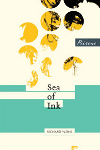
To read Sea Of Ink is to have a history lesson, art lesson, and language lesson at once. Jamie Bulloch’s translation seems at one with the original text, a good substitute where the original cannot be read. Weihe has included a lot of information and yet when reading it does not feel at all so. And the additions of the paintings themselves is a boon that allows Weihe to describe the method of painting in a way that means the reader can literally follow the brush. This written technique may at times feel overused, but it is an intriguing concept nonetheless.
If you are guided by human feelings you will easily lose your way, a wise saying went, but if you are guided by nature you will rarely go wrong.
Sea Of Ink, about art in its many forms, transcends the usual notions of appeal; it is far from restricted to those who have an interest in its most obvious aspects.
Sea Of Ink was originally written in Swiss German, and was translated into English by Jamie Bulloch.
I received this book for review from Peirene Press.
Related Books
None yet
Joanna Denny – Anne Boleyn
Posted 7th September 2012
Category: Reviews Genres: 2000s, Biography, History
2 Comments
It’s all well and good to be positive about your subject, but you can’t let it allow you to be hateful to all opposition, especially when the opposition is long dead.
Publisher: Piatkus
Pages: 327
Type: Non-Fiction
Age: Adult
ISBN: 978-0-74995-051-4
First Published: 2004
Date Reviewed: 5th September 2012
Rating: 3/5
Denny presents us with a biography of Anne Boleyn, the first wife to be executed by Henry VIII. Claiming to reveal the truth and to be unique, Denny recounts Anne’s life from young lady-in-waiting to Queen facing death.
The author begins well. Although she may be wrong about her book’s uniqueness – other historians such as Eric Ives had already produced detailed biographies – her overall purpose includes the sadly true snippet that Anne was vilified in her lifetime. She also says, “tradition has presented us with a totally unconvincing one-dimensional picture”, suggesting that she will work through this ‘picture’. And she does.
Denny provides good background context. Throughout the book she makes much use of the accounts of the Spanish ambassador, Eustace Chapuys, but cautions the reader, saying that Chapuy’s English was poor and he could only rely on spies. Likewise Denny debunks popular ideas to good effect, for example she points out that if Anne was truly as unattractive as Nicholas Sander described, she, Anne, would never have captured and held Henry’s attention for over a decade. Sanders was the person who gave us the idea of Anne being a witch with six fingers – with all Henry’s superstitions and worries, Denny’s points stand to reason, especially when you consider that Henry refused to sleep with Anne of Cleves because she looked like a horse. Yes, the description there was Henry’s own.
Something that is vastly in Denny’s favour is the way she backs up her statements. Even when she is using questionable opinions she adds a reference for where she found the information or a reference that aids her in making her point. This system enables her to bypass an issue found in many non-fiction works – unlike other writers, when Denny writes something that sounds overly romantic or fictitious, such as saying “Anne thought…” or “it was an exhausting journey” there is always a reference, in these cases state papers or the accounts of Anne’s friends. Work like this is utterly refreshing and it’s nice not to have to read such assertions with a sceptical mind.
The points that Denny makes are quite often simply fascinating, and whilst her unnecessary hatred of some of the leading players is cause for complaint (to be discussed later) this scorn of hers yields some particularly interesting facts, such as Catherine of Aragon’s silence over the issue of her virginity, silence that she kept up until Henry planned to divorce her. Intriguing too is the surprise of the Pope’s that, given Henry’s conviction that his marriage to Catherine was unlawful, he [Henry] hadn’t just gone and married Anne already. Henry was certainly an anomaly in his family when it came to scruples, as his sisters didn’t have many – Denny remarks that Margaret sought and won a divorce on similar grounds to her brother and that Mary had married the bigamist Charles Brandon without batting an eyelid.
In regards to Catherine of Aragon’s sudden revelation, to the court, of her virginity, it is interesting that this was a second concept she’d hidden from Henry, as Denny remarks on an earlier event when Catherine had pretended she was pregnant. Denny’s point is that Henry must have remembered this “pregnancy” when Catherine showed the decree of virginity, but what is truly captivating is the fact that Catherine pretended to be pregnant at all. Pretence you can understand of a woman who is aware she is considered responsible for producing heirs, but pretence would lead to sex being suspended, sex that could have made her truly pregnant.
Here it would be appropriate to discuss the overall way in which Denny portrays Catherine. Unfortunately no allowances can be made because there aren’t any – Denny hates Catherine with a passion and it is clear that her [Denny] love for Anne means she sees Catherine as a she-devil. The author does later provide a couple of quotations in evidence but isn’t it ironic that one of those references is not included in the bibliography? Plowden, who is not described and could be either a primary or secondary source for all this book is concerned, called Catherine arrogant, stubborn, and bloody-minded. This description is not enough, it is like a get out of jail free card that Denny snitched from another player, and it does not stand to reason.
The second quote is a better-known source and intriguing. Given that Catherine was Spanish and aligned her interests with Spain, it is rather telling for Denny’s conviction that the source is the Spanish ambassador, Campeggio. The man said:
“I have always judged her [Catherine] to be a prudent lady, [but] her obstinacy in not accepting this sound council does not please me.”
Compelling; but the problem with Denny’s use of this source is that Campeggio speaks of a single event, Catherine’s refusal to become a nun – which would have ended the Great Matter (Henry wanting a divorce) – and her insisting that her case went to Rome. It would have ultimately been in Spain’s interests for Catherine to become a nun as the Pope was having a difficult time with Henry; Campeggio’s words could easily be the result of in-the-moment frustration. Though this is all as much speculation as Denny’s own, the difference is that Denny gives decorum and other possibilities the cold shoulder, making herself quite the wretched writer.
Like mother, like daughter: Denny hates the youthful Mary, Catherine’s heir, as much as Catherine herself. Because of her love for Anne, Denny on occasion puts on rose-tinted glasses when viewing Henry’s actions, to the effect that she overlooks some terrible behaviour by the King towards his daughter. A prime example of this is Denny’s statement that refers to Mary’s refusal to acknowledge herself as a literal bastard, illegitimate on the grounds of Henry’s discomfort in his first marriage.
“Henry had been irritated… by her unnatural hatred.”
Here Denny calls “unnatural hatred” the anger of a daughter for a father who has treated her and her mother with distain, casting her mother aside, denying their marriage, and forcing the daughter to live away from her mother. Henry’s actions caused Mary a lot of stress. There was nothing unnatural about Mary’s hatred at all, indeed her refusal to comply with Henry’s requests was the very natural response of a girl whose father repeatedly demonstrates that he despises her.
There are two possible birth dates cited for Anne, with a few years between them. Historians have given varying reasons as to which is the more likely, but Denny’s reason is a little off. She says that since Henry preferred women to girls the older birth date must stand. But Henry did like girls – he courted and married the 15-year-old Catherine Howard when he was in his 50s.
Accounts by Chapuys, one of the Spanish ambassadors, are included throughout the book. Denny says we must take his words with a pinch of salt because he didn’t speak English and had to rely on spies, that he never met Anne. This is commonly accepted – Chapuys can’t be trusted. But when it comes to opposing evidence, Denny takes Chapuys’s word over Jane Dormer’s as to Anne’s true birth date. She takes Chapuys’s words, “that thin old woman”, as good evidence, yet Chapuys was surely being derogatory, his words are hardly nice and he despised Anne. Dormer didn’t like Anne either, but at least her words are neutral.
And in relation to Anne’s birth date, Denny says that Anne wouldn’t have bemoaned lost youth and chances of marriage if she was only in her mid-twenties. Yet mid-twenties was considered old, especially when it came to marriage.
Denny takes a very romantic view of parent-child relationships. Of the letter by Anne to her father that talks of love and obedience, Denny says that this demonstrates closeness. But in those days it was usual for such things to be written, so while it’s possible, the letter is not compelling evidence.
So Denny is struck with a hatred of Spain as well as a sort of semi-romantic notion not unlike the literal romantic notion of Fraser when dealing with Marie Antoinette and Count Fersen. Whilst it is not a case of Denny being wrong, per se, her presentation of her thoughts being undeniably correct is an example of a possible lack of interest in opposing evidence due to her convictions of Anne’s goodness. Denny has all the qualities of a historian and a fine debater but lets her bad qualities take over.
Anne Boleyn is a good book to read if you want interesting additional information. It also offers some alternative interpretations, but the reader will have to wade through malicious slander to find it, and there is a lot more of it than could be covered in a review. There is plenty of content in the book that could be used as research for other work but due to the nature of it one should be sceptical of using Denny’s opinions in any academic debates.
Related Books

Kate Morton – The House At Riverton
Posted 5th September 2012
Category: Reviews Genres: 2000s, Domestic, Historical, Mystery, Romance, Social
4 Comments

What the elders want the elders will get, but it will come at a cost.
Publisher: Pan Macmillan
Pages: 591
Type: Fiction
Age: Adult
ISBN: 978-0-330-44844-4
First Published: 2006
Date Reviewed: 27th August 2012
Rating: 3.5/5
At 98, Grace is approached by a film-maker who is creating a movie about the murder mystery surrounding the house she, Grace, used to work at. What the world doesn’t know, however, is the truth; and this Grace has kept to herself her entire life. Only now, facing inevitable death, does she decide to create some cassette tapes for her grandson explaining everything, including what really happened on the night a famous poet killed himself at the lake.
The House At Riverton is a long look at the early decades of the 20th century and how society came to dictate lives in such a way that people made drastic choices they wouldn’t nowadays. The book could have easily been cut by about 300 pages – the back story, whilst fascinating, especially for those with a particular interest in the era, is unnecessary, and it takes three quarters of the book for the story to actually begin. The build-up is for the most part predictable and thus all the extra details surrounding it are irrelevant. It’s nice to get an idea of what went on in the characters’ heads (so far as Grace can determine) but what would otherwise have been a big reveal is, of course, not there.
However this doesn’t mean that the book is a failure, indeed even if it required heavy editing, the superfluous content does illustrate well the life and society of the time. If you’re a reader looking for a thrilling mystery you won’t find it here – this is a book for people who enjoy period dramas and the sorts of incidences that were considered monumental back then but would be a non-issue today. Family structure is discussed, such as marriage in order to produce heirs to keep hold of property. And seeing as the book follows the lives of a couple of generations of the same family, Morton also details, through the characters themselves, how change occurred as the children of the 1910s became the adults of the 1920s and began to challenge the strict rules imposed upon them by their elders. Both these issues, woven together, cause the most conflict in the family, as well as the streak of feminism and want for equality that comes as second nature to one of the young women, Hannah.
It would be fair to say that although the characters are well written, their purpose is to enable Morton to put her point across and to explain history and society, and so whilst the reader knows them enough they are not the sort to commit to memory in a fond manner.
It should be noted that The House At Riverton isn’t all that much of a romance story and that the mystery aspect of the book is hampered by the fact that the reader knows the basics, even if the true mystery does remain a secret. Yet, in these two factors there does remain some interest – the romantic threads form more of the commentary on society, and as there are a few of them Morton is able to look at the issue as a whole in detail. The veils over the classes are pulled down and Morton shows the reader that the relationship between upstairs society and downstairs subservience was a lot more complicated than either section would have admitted, maybe than they would have known. The romances also highlight the need for loyalty that is often inherent in us. The true mystery is what the film-maker, Ursula, is after, but only Grace knows it, and the reader is only party to it from being inside Grace’s head; thus the ending is good, as it ties everything together and the reader being given all the ingredients to work out what would happen next. Indeed the reader may know more than the characters, even after those happenings happened.
The House At Riverton is too long for what it sets out to accomplish, and the real thrill takes a while to get going; it is recommended thus as a good resource for gaining knowledge of past society and exploring the class system inherent in the day.
Related Books


Pia Juul – The Murder Of Halland
Posted 18th June 2012
Category: Reviews Genres: 2000s, Angst, Crime, Domestic, Translation
3 Comments

Death awakens life.
Publisher: Peirene Press
Pages: 157
Type: Fiction
Age: Adult
ISBN: 978-0-9562840-7-5
First Published: 2009 in Danish; 2012 in English
Date Reviewed: 14th June 2012
Rating: 5/5
Original language: Danish
Original title: Mordet på Halland (The Murder of Halland)
Translated by: Martin Aitken
Bess is woken by the sound of someone being shot – her husband. She had fallen asleep in another room when he’d want to go to bed and she’d wanted to keep working. Who murdered Halland? The neighbours think it was Bess, but it soon becomes obvious that that idea is wrong. Bess tells the reader of her life with Halland, and how they had grown apart. She loved him, and she is grieving, but is she grieving for him?
If there’s one thing reading Peirene Press’s translations for the last year or so has taught this reviewer, it’s that she needs to time her readings with when she is most mentally awake. The Murder Of Halland, like Tomorrow Pamplona before it, is an incredibly complex novella that runs to the rooftops screaming a need to be discussed before full understanding can be reached. You can imagine how difficult this book is to think about by oneself.
Central to the story is the seemingly misplaced sadness of Bess. The woman appears to be suffering from depression, and from what she says at first you’d be forgiven for thinking she is upset with the hazy nature of her relationship. But what develops is a situation where the reader understands, better than the character, how she, Bess, feels, and why she is feeling that way. You might wonder if there was, storyline wise, another purpose for Halland’s death. Juul’s plotting is magnificent for the way she brings it all together.
Apart from this, from all the complex domestic-social-psychological discussion, there is a crime story. Who killed Halland and why did they do it? This part of the book is relatively easy to unravel and the motivations usual enough. What is interesting about it is that is shows a parallel way that people deal with a situation, and this of course links back to Bess’s misplaced sadness. Yet amongst all the complexities there was surely real love behind Bess’s decision to be with Halland.
Every character in this book is there to help Bess find herself, even if at first they just seem to be there as a friend or in the background as scenery. The secondary plot shows itself as a potential affair, for example, and the reader must work out if there really was one, or if the character is being truthful in the story they provide. And what does the sub-plot do to alter Bess’s state of mind? – in every case read the included quotations carefully to fully explore every issue and consequence.
The Murder Of Halland is confusing, intricate, and appears to be a whole lot of mixed up storylines pulled together. And it can take thinking about it afterwards to realise it, indeed this review has reached its conclusion precisely because it was written.
This is so much more than a murder mystery, and for that it should satisfy the delights of many a reader. It may be a short book, but don’t let that fool you any more than the suggestion that Bess was the killer.
The Murder Of Halland was originally written in Danish, and was translated into English by Martin Aitken.
I received this book for review from Peirene Press.
Related Books
None yet.


