


Lian Hearn – Grass For His Pillow
Posted 13th June 2012
Category: Reviews Genres: 2000s, Angst, Domestic, Fantasy, Historical, Paranormal, Romance, Social
Comments Off on Lian Hearn – Grass For His Pillow
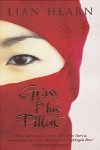
The issue is that the right path is considered the wrong one by many.
Publisher: Picador
Pages: 305
Type: Fiction
Age: Young Adult
ISBN: 0-3304-1526-3
First Published: 2003
Date Reviewed: 31st October 2011
Rating: 4.5/5
Please note that I wrote most of this review over a year ago and that the tone is different due both to the shift in my writing style and the fact that I wanted to make reference to the book being a re-read. I suppose you could call it the ultimate reflective review.
Please note that as this is the second book in the series, there are likely to be a few spoilers of the first book in this review.
So Takeo chose the Tribe and forsook Kaede, but it’s not over yet. The Tribe are demanding things of him that he does not like and feels he cannot do, but how can he leave? For Kaede, the heartbreak is too much yet she knows she must remain strong and take what is hers.
You may remember me saying that I first read Across The Nightingale Floor, the debut of the series, when I was young, and that my recent re-reading led to revelations that I found uncomfortable. In my maturity I could now understand that Takeo was bisexual and that he had slept with the monk, but it wasn’t this that led me to lose some of my love for the book, it was rather that Takeo was so quick to sleep with someone else after having chosen a different path, no matter the gender of the person he slept with.
However sex was simply not viewed as it is today and thus anyone expecting Takeo to wait for Kaede should know that although his heart does, his body does not. In Grass For His Pillow he sets himself up for issues later on by the actions he takes. Though I agree with the book being true to history in such a way, I still cannot comprehend this man with an all-consuming love going and sleeping with others so easily. And while the book may reflect life back then, it jars with modern morality and does make Takeo difficult to accept. (I’m aware that I’m saying this even as someone who disagrees with projecting the present day onto history.)
Kaede is the complete opposite and a good comparison. For she is just as strong as Takeo, perhaps more so, and does very well despite the man-orientated society she lives in. It would be easy enough for Kaede in her growing power to have a fling with anyone she wants, yet she doesn’t.
Aside from this moral aspect however, the book is very good. There is some upset and Kaede is on occasion prone to fall ill when she recalls her passion for Takeo, which is a little over the top, but Hearn is setting up both of them for some amazing battles in the later books.
Many of the chapters are novellas in themselves, indeed if you’re a person who likes to read a chapter before bed you’ll have to abandon that idea here and go by page numbers. Hearn has her story well planned and does not let length hold her back. Despite this the book is an easy read and not particularly long. There are few dull patches. Where either of the characters are waiting for something to happen the author gives a reason and follows it through well and there is always Takeo’s narrative in his sections to keep the story interesting.
The reader learns a lot more about the Tribe in this book as well as some exciting genetic news, and Hearn pads out her world with information about the temples and the afterlife. The blend of history and fantasy becomes natural, so that when Takeo becomes invisible to escape an enemy it doesn’t wreak of convenience as it would in many other books. This reviewer was rather surprised when Kaede was visited by a goddess, as it is so easy to forget just how much fantasy plays a part.
The narrative is quick owing to Hearn’s equal division of the book between the two characters, and it all ends rather suddenly meaning that it’s good to have the next book to hand.
Although billed as a young adult book, the series will be better understood by those approaching the end of their teens. The adult content is at times shocking even to the older reader.
Grass For His Pillow is a book to set up the next one, yet it does not feel like a filler for the amount of effort Hearn has obviously given to it. The latter third more than makes up for the uncomfortable start, and many old characters return so that it feels very much like a book from the series rather than something new. Highly recommended.
Related Books
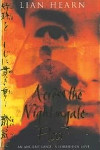
Lian Hearn – Across The Nightingale Floor
Posted 11th June 2012
Category: Reviews Genres: 2000s, Angst, Domestic, Fantasy, Historical, LGBT, Paranormal, Romance, Social
2 Comments
A rather epic historical flavoured with fantasy.
Publisher: Picador
Pages: 292
Type: Fiction
Age: Young Adult
ISBN: 0-330-49334-5
First Published: 2002
Date Reviewed: 9th February 2011
Rating: 4/5
Please note that I wrote most of this review over a year ago and that the tone is different due both to the shift in my writing style and the fact that I wanted to make reference to the book being a re-read. I suppose you could call it the ultimate reflective review.
On the day his village was burned to the ground, Tomasu was found by a Lord who named him Takeo and took him under his wing. Now Takeo joins Lord Otori in wanting revenge, and it appears Lord Otori chose well, for when Takeo stops speaking through shock, magical talents begin to show themselves. Takeo’s not sure what’s happening but he knows that with these talents he may be able to defeat the tyrant.
I first read this book around its publication date and absolutely loved it, I remember staying up all night to finish it; through this I came to discover how fantastic February mornings are as the sun rises, something I try to be awake to experience at least once a year to this day. Because of my reading speed at the time, the climax took me 45 minutes to get through and along with the historic subject I was in heaven. But reading it again I can see the flaws I didn’t see then.
The book is a brilliant example of Young Adult Asian historical fiction (albeit written by a white westerner), and it takes the reader to various different locations without any big changes in plot. The main characters are strong, the heroine especially, and the reader is able to get to know them well in a reasonably short period of time. The talents are supernatural, but they aren’t over the top, they are in the main the sorts of talents that we often think might be possible to develop, such as acute hearing.
But something that I didn’t notice the first time I read the book, due to my age, was the main character’s sexual promiscuity. The character actually appears to be a closet bisexual, but this isn’t the point, rather the point is that the romantic storyline revolves around an intensely passionate love and then a moment later the hero will go and sleep with someone else. For this reason I had a lot of trouble accepting the romance in the book whereas the first time I read it I thought it was amazingly romantic. All I felt was that he was disrespecting Kaede and their supposed love.
However apart from this the characters are exceptional. They are very much a product of their writing time, written before Young Adult books became what they are today, and are all the better for it. The plot switches between them, Takeo’s chapters being written in the first person, and Kaede’s in the third.
The book is not for the faint hearted. Hearn never shies away from descriptions of torture and death, and scenes of a sexual nature are relayed in their historical truthfulness. For fantasy this may be, but the Japanese historical aspects are rather factual.
The story has it all, the keen warrior, mystery and magic, adventure, political issues concerning leadership, and a sweeping romance. It shows why political alliances were important, but family more so, and how devastating the wrong choice could be. It displays the extreme prejudice towards women, the strong Kaede struggling to be accepted as her father’s heir and having to pass up being known as the heroine of a part of the plot that cannot be told here if the plot isn’t to be spoiled.
This is not your contemporary Young Adult novel, and should be recommended to young people with care. However that said, for its realism it is nothing more than true to historical life.
Across The Nightingale Floor is fiction for anyone who has seen a wuxia film and fallen in love, for the historian who wants to know more, and for the dreamer who believes. It is not flawless, even if the hero’s movements are, but it is a book that will hopefully stand the test of time.
Related Books
Elizabeth Chadwick – The Greatest Knight
Posted 30th May 2012
Category: Reviews Genres: 2000s, Domestic, Historical, Political, Romance, Social
4 Comments

When loyalty to the crown isn’t quite straightforward.
Publisher: Sphere (Little Brown)
Pages: 545
Type: Fiction
Age: Adult
ISBN: 978-0-751-53660-7
First Published: 3rd November 2005
Date Reviewed: 28th May 2012
Rating: 3.5/5
William Marshal began his career in a position of forced service to King Stephen, but as he got older he became a little more in charge of his dealings, albeit that his service continued to pass down to Stephen’s heirs. First William works for Henry II and Eleanor, then their youngest son, before working directly again for the crown, but it’s not all doom and gloom, at least not in the start when he was able to compete in tourneys and live his youth to the full. But when battles begin for the throne upon Henry II’s death, reality will set in.
The Greatest Knight follows, in a balance of fact and fiction, the life of William Marshal from his days as a teenage squire, to the point when King Richard the Lionheart had to fight against his younger brother John for the right to rule. But although this is the first book of two regarding William’s life (first in a series actually, though two is the number that focus solely on William) there is not a lot in this book that recommends its title. Yes William is loyal, at all times, and proves a reliable militant, but it is never apparent from his actions how he could have been the greatest knight. Of course the title was created for the book and not necessarily ever applied to Marshal in his time, but it is still cause for thought because of its usage.
There is a plot, of sorts, but William’s life in this book is more a series of political meetings, the combat mainly left to afterthoughts. William’s life seems to meander along, and while he makes for a very likeable hero, the stories he recounts sometimes give you the feeling that those people ought to be given more time for their stories are more exciting.
And unfortunately, it takes until about four fifths of the way into the book for the story to pick up. This comes in the form of William’s marriage, a ceremony and plot point that greatly enhances his ability to intrigue the reader because no longer is it only his thoughts, of a man in relative security, that you can listen to – and this is something that Chadwick does to great effect, her female characters tending to be on the strong side. William’s family make the story much better and it is perhaps a pity that Chadwick decided to include so much of his life before he married. The good thing is that as the first of two books, you can be sure that the next is going to be a lot more involving, and especially as the book ends with a proposed battle, that things are going to pick up in the narrative too.
To be sure The Greatest Knight doesn’t follow the usual path of romance, there are scenes of a romantic and sexual nature dotted here and there, but unlike many of Chadwick’s other books, this one focuses on society, dynastic disputes, and general politics, in a far more detailed way than when the hero or heroine has a partner throughout.
What there is here is a lot of information about England and English France in the 1100s. Yes, a little is fictional when needs must, but the book is incredibly factual, and that it looks at the rivalry between royal members from an outsider angle, brings new life to an old topic. Chadwick presents her royal charges from a generally unbiased viewpoint, and whilst one may surmise that, when it comes to Marshal at least, she favours Richard over John, she nevertheless gives each equal time to pitch their beliefs and reasoning to the reader through William’s thoughts and dialogue.
However whilst reading you can’t help but remember that there’s a second book, and that the promise of a blossoming romance meaning more main characters, and the fact (because it’s historical fact) that the politics is going to get a lot more interesting, means that you want to rush through this first book for the wrong reasons. For now, at least, the knight in question is more “good” than “great”.
Related Books



Madeleine Thien – Certainty
Posted 13th April 2012
Category: Reviews Genres: 2000s, Domestic, Historical, Political, Romance, Social
Comments Off on Madeleine Thien – Certainty

If you love someone, stay with them.
Publisher: Faber & Faber
Pages: 304
Type: Fiction
Age: Adult
ISBN: 978-0-571-23419-6
First Published: 2006
Date Reviewed: 20th December 2011
Rating: 2/5
This book’s plot is best summed up by giving a true (as in not what the back cover says) insight. Ansel was married to Gail but she recently died. Matthew was in love with Ani but ended up marrying Clara. Both men continue to live in the past – for one of them it’s sort of reasonable, for the other it’s really not right.
Certainty is a book that promises much but fails to deliver on all accounts. It details the day-to-day as well as the past, and while the information on war is interesting and worth reading, the rest is forgettable. The book brings all the characters together to celebrate Gail’s life before moving on to discuss Ansel’s present situation and then Matthew’s past. Gail, although dead, lives through both their memories and Thien’s inclusion of a short piece told about her actions before death. The issue is that the male characters are depressed and neither of them have a true reason to be since they set themselves up for upset; nor do they recommend themselves as good husband material.
This reviewer felt sorry for Ansel as Thien presented him as someone very much in love with his wife. Then a little further into the book she, Thien, tells us how Ansel went behind Gail’s back. This reviewer put the book down, and only returned to it over two months later because she likes to finish what she starts. She felt as betrayed as Gail had. Thien had been making me feel for Ansel and then suddenly told me how he cheated. Instead of feeling sorry for his loss I now found irony in the fact that Gail had died a short while after it all. Neither was I satisfied by Ansel’s admittance or the way he acted towards Gail in future – it all seemed false.
Then there’s Matthew. Clara gets with him and he tells her about the hard life he had, and about Ani, and Clara has to deal with his continuing depression over his father’s death. If it were that simple, okay, but the fact that Matthew is obviously also moping about Ani (who didn’t die) is just stupid. It sets Clara up as a weak follower who does Matthew’s bidding for nothing in return. Matthew should have stayed with Ani, should have waited until he finished university and gone back to her.
Thien’s characters have nothing redeemable about them, except Gail who is unfortunately already dead. The author obviously wanted to write a literary novel that would win awards, and it’s obvious, the writing is too flouncy and pretty and every sentence is short.
Thien goes into irrelevant details, telling us how things are made or prepared that have no bearing on the story whatsoever. And the use of flashbacks is ridiculous. Not only are they used far too much but also there are flashbacks within the flashbacks with no attempt to specify where one ends and another begins.
There is no story to this book – it’s as if the flowery language is supposed to be enough – the characters are pointless and unpleasant, and the women need to stop looking after men who love others instead of them.
The idea behind the book may be about not trusting that things are guaranteed, but all this reader took away from it was the feeling she’d wasted her time. Perhaps this has value as an art form, but barring that there are plenty of other books in the world that should be read and reading this means that one of the valuable ones won’t get a look in.
Related Books

David Starkey – Henry: Virtuous Prince
Posted 4th February 2012
Category: Reviews Genres: 2000s, Biography, History
2 Comments

Aiming at the goal rather than the sidelines is the best way to go.
Publisher: Harper Perennial (Harper Collins)
Pages: 370
Type: Non-Fiction
Age: Adult
ISBN: 978-0-007-24772-1
First Published: 2008
Date Reviewed: 29th December 2011
Rating: 3/5
Starkey presents to his readers the youthful Henry VIII – a man totally at odds with the tyrant he would become – in the first part of a process to show us the two very different people who came to be one king.
Starkey is a very learned man, and he quite obviously knows Henry VIII like the back of his hand. He has a talent for humour and his research is of great worth. The problem is that he has written a book the contents of which are more suited to a speculative essay. The way he has come up with elements that are ideas is no good for a book that is supposed to be factual. It is fascinating, granted, but the work is by and large pure speculation. Starkey does not base many of his ideas on evidence – which is a must when writing history – and when he does reference the work of someone else the details of the source are not thorough.
There are far too many probablys, maybes, likelys – so instead of a good account of Henry’s youth we have a lot of guesswork. And anybody can write a book on their ideas, especially if, like Starkey, they don’t feel the need to provide some sort of evidence.
Similarly, like with Philippa Gregory’s The Other Boleyn Girl, there will be many people not already well read about Henry VIII (or, in Gregory’s case, Anne Boleyn) and they will likely consider Starkey’s work true without question. While Starkey may not be vicious towards his subject, unlike Gregory, it just does not bode well. And there is the rather awkward subtle inclusion of the fact that he supports the idea of Richard III killing the princes in the tower and presents these opinions as facts.
But the more pressing thing about this book is that it does not follow in the path set out in the introduction. In the introduction Starkey says that the book is solely about Henry and that any references to other people will only be employed if they serve the purpose of explaining further the character of the second Tudor monarch. Yet the vast majority of the book chronicles the lives and ancestry of Henry VII and Henry VIII’s friends, in a way that does not link back enough to the development of the man himself. Small passages provide ideas, but they are strictly ideas as has already been discussed, and it would seem that Starkey forgot, very soon into the proceedings, that his book was supposed to be about Henry VIII. Indeed this book would be more appropriately titled Henry VIII And His Court. To use a word made infamous by Starkey, he probably got put off by Alison Weir having already written such a title.
Starkey needs to remember that he cannot simply write whatever he wants. He has a duty to both his subjects and readers, and while in regards to the former his speculations may have been accepted with mirth, for the latter that duty has been forsaken for indulgence.
And considering that readers cannot provide indulgences, and neither could Henry’s Papacy-hating Anglican church, Starkey should think again before pursuing his next inquiry with the same tactic.
Related Books