Sara Taylor – The Lauras
Posted 5th September 2016
Category: Reviews Genres: 2010s, Commentary, Domestic, LGBT, Social, Spiritual
2 Comments

A common name. An uncommon story.
Publisher: William Heinemann (Random House)
Pages: 298
Type: Fiction
Age: Adult
ISBN: 978-1-785-15077-7
First Published: 4th August 2016
Date Reviewed: 22nd August 2016
Rating: 5/5
When Ma wakes Alex and says they’re leaving, it’s a surprise; Ma and Dad often argue but life goes on. Not this time – Ma has a plan, a long journey to various states, to find various Lauras, and Alex is to join her. School’s about to finish for the summer anyway and Alex is glad – it’s starting to become difficult. (If you read my review of Taylor’s last book you may remember I found summarising that difficult, too.)
The Lauras is Taylor’s second book and it features the same general excellence and talent for seeing right into things and commenting on them, as The Shore.
The Lauras centres around the road trip, the journey that holds everything together. It’s that symbolic use of a journey and the progression of time, growing into one’s self, learning how to be comfortable in your skin. Taylor’s wonderful prose, full of her own dialect, flows slowly, letting you enjoy the story and grounding you in the setting. It’s the sort of book that, if you’re not from America, sounds like it’s set in a whole other world – blisteringly hot days, southern states. Taylor says what needs to be said and nothing more. Things aren’t hidden but they aren’t overly apparent either; they simmer in the background. It’s quite like Thelma And Louise – various bits of plot scattered throughout conversation.
There’s a lack of pronouns in this book but you don’t really notice it at first. Alex is a unisex name therefore it’s really down to your experience as to which sex you imagine Alex to be. Know more men called Alex and maybe the character will be to you a teenage boy. Know more women and the reverse may happen. The use of a unisex name is intentional; throughout the book you get snippets of description – clothes, objects, things relating to the character – that question your visual of Alex.
Genderlessness – Alex is happily androgynous. As one great section towards the end shows – a scene in which a gay friend gets Alex to play dress-up – gender can be an either/or situation, a neither situation, or both at once. The great thing about this subject here – well, one of them as I’m not sure a review could deal with all of them – is that this is an excellent book for discussion. Taylor’s decision is to not tell you one way or the other about Alex. (Will you find out anyway? The point Taylor makes is that there doesn’t need to be any pigeon-holing.) You wonder and that is okay. In writing Alex, Taylor is looking at our social need to label. It’s one of the biggest, core things in society, in regards to our forming relations and emphasising with people and Taylor shows that this is understandable, as it’s been this way for a long time, whilst showing how little gender matters. And, crucially, why it doesn’t matter.
Most of this exploration happens in the subtext. Taylor is all about getting you to think for yourself and without telling you to do so, though by the end of the book the subject’s been covered in a direct manner – the author waits until you’ve had time to process your thoughts by yourself. It’s a fairly short section focused on bullying and as with everything else it’s to the point. It’s a sensitive exploration and highly accessible.
Taylor uses Alex’s coming of age in her detailing of the mother’s story, contrasting, comparing them. It’s interesting how vivid a picture of the mother you get, and Taylor’s inclination for the reader’s imagination to hold sway is active here. Your image of Ma, whatever it is, is correct.
Ma’s story unravels away from Alex’s, during it, but the two narratives get their time. And – you knew I’d get to it eventually – Ma is where the title of the book comes in. There have been various people called Laura in her life and this extract says everything you need to know:
She’d been quiet for a while before answering, so I wasn’t sure if she was inventing a cover story, if I’d been right in guessing she’d rechristened them all to make the remembering easier, or if she was trying to determine herself why it was that so many of the women who had had a lasting impact on her were named Laura.
“First of all,” she said, “they’re not all Laura. You’re conveniently forgetting everyone else. My girlfriend who ran off with the preacher wasn’t named Laura. Second, when we got to Florida you were complaining that every kid in school was named Jason or Brittany – it just so happens that when I was born everyone was naming their daughter ‘Laura’. And third -” she paused for a drag on her cigarette – “well. When you’re eight or nine, say, and you make your first best friend, they’re the greatest person in the world and you know that you’ll be friends forever. But one day one of you moves away and they leave a vacancy. And then you meet someone with the same name, and because you’re eight part of you thinks not exactly that they’re the same person, but they were made from the same block of clay, maybe. And you try to get the new Laura to fit into the hole the old Laura left. And when you get older it doesn’t matter that you know things don’t work like that, because your ears will be primed and your heart will beat faster at the sound of that name. It will stand out to you and make something inside you go soft, and since it stands out you’ll pay more attention to them, and if you pay more attention more often than not you wind up being friends with them, until you look back when you’re forty years old and realize that you have a long string of Lauras behind you who were all important, and it isn’t just coincidence but the eight-year-old you trying to fill in the hole that the first Laura made.”
There’s no concrete ending, the perfect road trip never ends and you wouldn’t want to remember a regional destination. But it’s not an ambiguous ending either – things not answered aren’t necessary to know.
The Lauras is a superb book that is likely to stay with you long past the border, long after you’ve left the cheap apartment in nowhere-land. You won’t need much, just a bookmark because you won’t want to lose your place and you’re likely devour this book despite wanting to go slowly to soak it all up.
Related Books

Rachel Elliot – Whispers Through A Megaphone
Posted 22nd August 2016
Category: Reviews Genres: 2010s, Comedy, Domestic, LGBT, Psychological, Spiritual
2 Comments
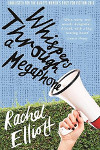
It’s no good keeping it all to yourself.
Publisher: Pushkin Press
Pages: 342
Type: Fiction
Age: Adult
ISBN: 978-0-992-91826-2
First Published: 26th August 2015
Date Reviewed: 22nd August 2016
Rating: 4/5
Miriam hasn’t left her house for three years. All her life she’s been dealing with the effects of her mother – first as it happened as a child, then the repercussions as an adult. She’s also suffering from a worry over her ‘feral’ reaction when someone attacked her. But now she wants to leave the house. Ralph’s been married to Sadie for sixteen years but it’s not a happy marriage; there is something amiss with Sadie and she’s always on her phone. One day, thrown a birthday party he doesn’t want to have, Ralph decides to leave.
Whispers Through A Megaphone is a witty book about healing and living life with its various neurotic aspects.
Jilly Perkins was a genius. Ralph wanted to tell her this, but she hated compliments. They filled her with wind and suspicion.
Elliot’s story is one that’s based in reality with a bit of a bizarre twist that one could say has been added in part to make it easier to relate to. Beyond Miriam’s stay in her house the narratives, numerous on occasion (Elliot details a few strangers every so often, all with their own quirks), and situations are easy to relate to and because of this the humour and skewing slightly towards the extreme mean the book remains light and nice to read instead of bogged down, depressing.
Because the subjects are depressing. The abuse Miriam experienced at the hands of her mother is painful to read and something that happens a lot in our world. It’s affected Miriam to her core; there’s a constant voice in her head that she recognises as her mother’s. Miriam whispers because her mother hated hearing her and threatened her with atrocious punishments. But she’s always been aware of what’s outside her mother’s clutches – in leaving the house and meeting people she knows it’s potentially going to take some getting used to. This is what happens when a child is abused, says Elliot.
Alongside healing, regret is one of the subjects. Ralph’s wife, Sadie, has spent their marriage pushing back memories of her time at university, at the almost-relationship she had with Alison, wishing she’d done things differently, and for lack of anywhere to go, her grief has spilled into all other aspects of her life. She blogs and tweets almost compulsively, telling everyone about what’s going on at home and including things about her husband whose patients (he became a Psychoanalyst to please Sadie, who didn’t like him gardening) are following her. She has developed a crush on her best friend who is already married. She is what people would call ‘high maintenance’ – Elliot shows there’s generally a reason for neurotic personalities. The family is very normal in their dysfunction.
The writing is nice; it’s short, snippy, always to the point. There’s a lot of white space during the many dialogues because the lines are often just a few words long. The pace speeds up during some narratives, Sadie’s, for example, and then back down for Miriam, but it’s never slow. There are some tweeted sections to give you a good idea of Sadie and a brief look-back at the lives of periphery characters. The only difficulty here is when the narrative moves back in time; it’s not always easy to tell what period you’re reading about. It can also be hard not to see Ralph and Sadie with heads of white hair though they’re said to be in their 30s.
This is a book that doesn’t necessarily go the way you think it will. It has an ending of sorts but it’s far more about the exploration. It’s quite clever really, this book that’s about the absolute everyday, looking into the smallest of smallest details – it’s an ‘ah ha’ sort of book, Elliot’s keen sight for what’s behind the surface and her way of interpreting it for us. She says what we often know deep down but have trouble connecting to other aspects of our lives.
Joe Schwartz was the first guest to arrive. He was early, nervous, drenched in aftershave.
Stanley answered the door.
“You look amazing,” said Joe.
“Thanks,” said Stanley, his nose twitching. He hoped he wasn’t allergic to Joe. It was too early in their relationship for hypersensitivity, aversion, turning into his parents.
Whispers Through A Megaphone shows that one shouldn’t be afraid to speak up, that it’s in keeping quiet that regrets are formed (obviously it’s a little different in the case of abuse). It’s a lovely book that uncovers a lot in a short period of time, wading into tough waters whilst remaining something you want to go back to.
I received this book for review from the publisher.
Related Books
None yet
Colette Dartford – Learning To Speak American
Posted 8th August 2016
Category: Reviews Genres: 2010s, Domestic, Romance, Spiritual
Comments Off on Colette Dartford – Learning To Speak American

Sidewalks and pavements.
Publisher: Twenty7 (Bonnier)
Pages: 371
Type: Fiction
Age: Adult
ISBN: 978-1-785-77002-9
First Published: 1st October 2015
Date Reviewed: 7th August 2016
Rating: 3/5
Lola and Duncan lost their daughter two years ago. They’re still suffering as though it was yesterday; their marriage, once very happy, is a fragment of what it was before. Desperate to make her happy again, Duncan agrees to Lola’s idea of buying a holiday home in California – they are spending their anniversary across the pond – but doesn’t factor in his own issues. Duncan’s been unfaithful for a long time, though he’d never admit it, and there are problems at work.
Learning To Speak American is a quick, easy read, that has a nice premise – hope for healing – but doesn’t achieve its potential.
This is largely down to the writing – the level of telling over showing is very high and it means there is little room for imagination. Lola boils pasta and we’re told her face steams up, the dog brings back the ball and we’re told it’s soggy. On these occasions there is no space to feel for the characters – at times it can seem as though they are puppets, walking around so that things can be detailed.
When the narrative turns to dialogue, the book is a lot better. The first few chapters and the scenes in the book that are mostly dialogue are great examples of showing. The dialogue itself is generally very good. It isn’t always perfect grammatically as the phrasing doesn’t always ring true – the book could have done with more editing and proofreading – but as an overall element it works and the pages pass swiftly. The characters come into their own.
Unfortunately the editing issues involve repetitive statements that should have been noted and some of the plot elements are odd, for example the estate agents that sell Lola and Duncan the house know the neighbours, which makes sense on some level as the house had been on the market for a while, but they all seem bosom buddies and it’s not explained. The details of daughter Clarissa’s fatal accident are kept from you until the end. And it has to be noted that many will find Duncan’s infidelity, the nature of it and the way it carries on, difficult. When does the story take place? Bush and Blair are mentioned, but Lola’s forty-two years and no computer or phone knowledge don’t add up. Mobile phones that everyone has speaks more of our present time.
Learning To Speak American is an easy read and that’s due to the good parts but it really needed more time spent on the drafting and editing process.
I received this book for review from Midas PR.
Related Books
None yet
Thomas Hardy – Far From The Madding Crowd
Posted 27th June 2016
Category: Reviews Genres: 1870s, Domestic, Drama, Social, Spiritual
2 Comments
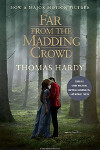
Take your independence and use it wisely.
Publisher: Various (I read the Penguin Classics movie tie-in edition)
Pages: N/A
Type: Fiction
Age: Adult
ISBN: N/A
First Published: 1874
Date Reviewed: 10th May 2016
Rating: 4/5
When Gabriel Oak falls for his new neighbour, the pretty, vain, Bathsheba Everdene, he wonders if he might stand a chance. But what he doesn’t know is that Bathsheba is also incredibly strong-willed and independent – she’s not up for marrying. One Valentine’s Day, however, she gets ahead of herself and sends a proposal to Farmer Boldwood, whom she’s not met – she’s incredulous the man hasn’t paid her any attention. Boldwood takes it seriously and pleads his case. There will be a third, too, a soldier. With three men revolving around her choices, Bathsheba’s in a precarious position.
Far From The Madding Crowd is a lengthy book for its amount of plot, that is generally average but sports a stunning latter section. It’s both a product of its time and advanced for it, lending much to discuss. In Bathsheba, Hardy has created a very independent Victorian woman. Whilst she’s hardly the only one we have from the period, the way Hardy goes about presenting her is fairly different; Hardy admires her. And he’s fair to her character, showing where she makes poor choices that hamper her and bring upset to others whilst not suggesting that it’s bad she has the ability to make such a choice.
Bathsheba goes where she wants, when she wants, and in the manner she chooses. Hardy sets up his unconventional character early on – one day, once Bathsheba knows she can no longer be seen from the house, she lays back on the horse she had been riding in the manly fashion, and continues her journey. This, in fact, she does for two reasons – the first so Hardy can show the reader her personality and the second so that Gabriel can spy her personality as his knowledge of her will be required later on.
Bathsheba’s selfishness is frivolous rather than malicious. She just doesn’t think far enough ahead, choosing to do things in the moment. This is best shown in the aforementioned Valentine – her servant says Boldwood was the only man who didn’t look at her, Bathsheba, and Bathsheba is so used to being looked at and admired, that she sends a proposal. Boldwood takes it to extreme levels, and Hardy shows how she utterly failed to think about how Boldwood would feel having received such a proposition.
So Hardy looks at gender and suggests there shouldn’t be such a divide. He has Bathsheba receiving proposals as could be expected of a woman of beauty and money in the period, and he has his male characters making stereotypical comments, but that’s the feeling of it – that he’s doing that for his plot and to maybe appease his readers. There are lessons his characters must learn; it’s a slow progression that starts from the first chapter. It’s in this way that the book still has so much relevance – think before you act, don’t dismiss out-of-hand things you think are silly.
When Bathsheba does choose to marry she throws herself into it, suddenly reversing all her talk of wanting to marry without having a husband, and acting on impulse and instant attraction. She never did have a level head, but the reader can smell problems a mile away, it’s just a question of how bad things will get. Of course Bathsheba would say they won’t be bad, don’t say such a thing, but if love is blind and everyone else can see the problems in their friend’s ‘perfect’ boyfriend, similar is true here in fiction.
The problem with Far From The Madding Crowd is unfortunately down to its era – there’s a lot of filler content. The plot is deathly slow for over half the book, there’s a lot of irrelevant conversation held over alcohol by farmhands who talk in accents that are hard to decipher (it’s a lot like Wuthering Heights in this way), and Hardy absolutely adores description. He adores it so much he spends pages upon pages discussing the night sky, spends a whole chapter on the history of a gargoyle he’s created; he loves to impart advice he places under the guise of narration, but all this does is pull you away from the story at hand. (Though the advice is interesting in itself.)
But if you can get past the sluggishness, the last third is top-notch. The pace is swift, the plotting superb, the action never lets up, and whilst everything that happens here at once wouldn’t happen in real life, it’s a treat to read. It is all rather sudden but by this point it’s something you’ll be happy with, it’s like Hardy’s woken up and remembered he wanted to surprise and shock you. He does. Whilst the themes of the book may be the reason it’s taught in schools, it’s surely this latter section of the whole that’s the reason it’s remained popular.
Far From The Madding Crowd is one bigger part average, one smaller part exceptional. It’s a 2:1 ratio that is worth taking a chance on because the conclusion does succeed in making up for all the drudgery, but it’s definitely best to do your homework before going in so you know what to expect and to have another book on the go so you can take a break when the irrelevant farm talk gets too much.
Related Books
None yet
Marie-Sabine Roger – Soft In The Head
Posted 8th June 2016
Category: Reviews Genres: 2000s, Books About Books, Domestic, Social, Spiritual, Translation
Comments Off on Marie-Sabine Roger – Soft In The Head

But now getting better and better.
Publisher: Pushkin Press
Pages: 210
Type: Fiction
Age: Adult
ISBN: 978-1-782-27204-5
First Published: 2008; 9th June 2016 in English
Date Reviewed: 28th April 2016
Rating: 5/5
Original language: French
Original title: La Tête En Friche (Fallow-Headed – as in a field in fallow)
Translated by: Frank Wynne
Walking in the park one day, Germain sees an old woman spending time with the birds he likes to count. He’s semi-illiterate, had a neglected upbringing, and doesn’t consider himself worth much, whereas Marguerrite has been through university and worked in science; the unlikely pair begin a friendship based on their mutual interest in the park’s birds, and Marguerrite’s wish to read aloud. Slowly Germain finds himself changing.
“Well, well. Germain sitting at a bar? Now, there’s a coincidence!”
I used to think it was his way of saying, Hi, nice to see you. But, no, apparently, it meant he thought I was a pathetic drunk clinging to the bar like a limpet to a rock.
Soft In The Head is a stunning book that’s comprised of so much more than its thinness suggests. It was first written in French and adapted for the big screen, and now it’s been translated into English.
Perhaps the most important factor, at least initially: the translated text is superb. Wynne has transposed the French into the English equivalent, for example he’s used swear words and distinctively British terms, such as ‘chav’ (I’ve no idea what the French equivalent is or if there is one, but know the Australian is ‘bogun’) so that you get a picture of Germain from the first. What Wynne has effectively done is take the book and give it an English flavour meaning that the intended English-speaking market will understand the book more than they might have if it was a straight translation. In other cases you might feel a bit duped but here it just makes sense and the book is incredibly readable. It means that all the showing, rather than telling, Rogers has done, is carried over – the atmosphere and feel of the book. Despite the fact you can tell it’s a translation (the French names contrasted to British terms kind of make this obvious) you can see Roger’s text underneath. She was writing for her students and thus the translation matches this sort of concept of youthful phrasing and unimpeded speech. You can see the teacher’s mind in this book.
This book is a page-turner. It’s full of literary references and humour and observations and a beautiful admiration, a platonic love of sorts. Whilst we never get to hear from Marguerrite as a narrator, Roger has ensured we know enough about her – Germain may spend more of his time on himself but Marguerrite, as the driving force, gets a lot of time.
Words are boxes that we use to store thoughts the better to present them to others. Show them to their best advantage. For example, on days when you just feel like kicking anything that moves, you can just sulk. Problem is, people might think you’re ill, or depressed. whereas if you just say out loud: Don’t piss me around, I’m really not in the mood today! It avoids all sorts of confusion.
The beauty of the book lies in what is shown, in the way that Germain starts out believing he’s not worth much of anything, swearing a lot, using simple terms peppered with words he’s learned from the dictionary (he includes the definitions), and as the novel progresses the reader sees him become more educated, intellectual – he starts to use these words he’s learning from his time with Marguerrite, sees the conflict (that seems more an anxiety on his part than a reality) that occurs when his friends think he’s getting too ahead of himself, and sees if not a completely different future then at least a happy one. He comes to view love differently, see more to the world, and so forth. He comments on this change from time to time, as he does the learning, but it’s in the subtext and what is shown through the words themselves that the reader will discover just how much he’s achieved.
A book about books, this novel is delightfully satisfying. Marguerrite and Germain read Camus and a couple of other authors (who aren’t as well-known). They discuss the text mostly by way of Germain’s understanding; Germain, knowing more than he realises, brings in different interpretations. Marguerrite teaches him by example; it’s a friendship of equals.
By now it should be obvious – there’s a thread of the thought of tolerance in this book. It’s not a theme, more that Roger promotes tolerance towards others, in this case someone who hasn’t had the privilege of growing up book-rich, who has never set foot in a library. Germain may seem stupid but how much of that is actually true and how much does that thought depend on his own view of himself?
It’s hard to say exactly how wonderful and well-written Soft In The Head is without quoting a swath of text. Suffice to say if you like reading about reading and if you’ve even the slightest interest in education and educational access issues, you will very likely appreciate this novel.
I received this book for review from the publisher.
Related Books