
Kay Kenyon – A Thousand Perfect Things
Posted 19th March 2014
Category: Reviews Genres: 2010s, Fantasy, Historical, Political, Romance, Social
4 Comments

An alternative to the British occupation of India.
Publisher: Premier Digital Publishing
Pages: 312
Type: Fiction
Age: Adult
ISBN: 978-1-624-67096-1
First Published: 27th August 2013
Date Reviewed: 17th March 2014
Rating: 3/5
In 1800s Londinium, those with power want to use the bridge that spans from their land to Bharata so that they can control the inferior continent and destroy the magic that has made its way from the east. Astoria wants to go to Bharata, too, but for a very different reason. Having been schooled in botany by her grandfather, and with no possibility of marriage ahead of her due to disability, she wants to find the legendary golden lotus, complete the herbarium, and find acclaim. But in a world where men rule, this will be difficult, and as the Bharati people begin to rebel against foreign rule, everything is subject to change.
A Thousand Perfect Things is a book with an interesting premise and thematic concept, but one that doesn’t always deliver.
The most obvious issue is the writing. The narrative, and more so the dialogue, are full of modern phrasing and Americanisms, meaning that the story reads as though not enough research was conducted. American ways of speaking such as ‘in back’ and ‘also was’, where Britons, and most definitely the Victorian middle classes, would say ‘in the back’ and ‘was also’, are jarring.
Along with the writing comes the transliterations of Hindi words. This isn’t an issue as such, but there are some well-known words, even to people otherwise unfamiliar with the language, that are written in a confusing form, such as ‘rani’ being written as ‘ranee’. Some of these words are actually more correct – that is to say that in Hindi the spelling is ‘raanii’ – but it does tend to be written as ‘rani’. Words like ‘pyaari’ become confusing when spelt ‘piari’, and again whilst the former is not completely correct, it is as correct as it could be without making words too long. There is a lot of Hindi which is then always translated, suggesting the dialogue is more a language lesson than part of the story.
There are some characters that aren’t developed enough, or are inserted into the story suddenly, that for the lack of information about them are hard to care for. These tend to be the characters who are killed off, but it is sad that they can be so easily forgotten.
Kenyon has included enough factual information about both England and India to make the story appealing as a historical, but the best part is undeniably her focus on the British occupation of India. In Kenyon’s Londinium and Bharata, Indians travel easily to London and vice versa, making, if not for equality (because after all, the English built the bridge for their own gain) then a good prelude to the later action. This is because Kenyon has, by way of historical fantasy, written the occupation in the way we might wish it had happened – namely that the English didn’t gain much control and were pushed back, the Indians retaining control of what was theirs. (Comparisons can be drawn between Kenyon’s story and the Sepoy Rebellion, however Kenyon’s action is on a larger scale.) In A Thousand Perfect Things, Kenyon shows how the cultural exchange, even if largely a one-way import of English to India, could be of interest to the receiving country, but that that should have been where it ended. The author sticks to history enough to make her point obvious – she has the English seeing the Indians as inferior, and takes a sharp look at the entitlement to discipline the English felt they had – and then changes the continuation and conclusion.
Through Tori, Kenyon shows how cultures can work more in harmony if given the chance, and whilst it’s the case that Tori’s change and views of Bharata are fanciful and sometimes a little condescending, they fit the idea of magic and the exotic fantasy that Kenyon uses. In some ways the exoticism is over the top, but it works as an extra study into how the Victorians saw India.
It should be noted that although the book begins with Tori being interested only in science, there is some romance in the book, and less time spent on science as the story continues. In regards to this romance, by itself it is an interesting element. First there is the sad fact that a woman with a relatively minor condition (at least we would view Tori’s club foot as such today as it is easily treated) has been told she’ll never marry. She is essentially a second-class person. The prejudice of Victorian society is matched by the second, happier, fact that by not having any thoughts of marriage, Tori is free from the limitations placed on married women. She may not be allowed to be a female Faraday, but she could devote herself to a scientific path nevertheless. It is these factors that make the romance one to watch – who will accept Tori; how will a romance impact her studies? The answer to these questions, and your reception of them, will depend on your reading preferences and whether you’re after a romantic thread. It must be said that Tori’s wish for a sexual awakening does appear out of the blue, but either way you feel about the romance you will likely appreciate the way that difference was not as much of a problem as Tori’s family believed.
The book has issues, but it also has an excellent theme, a very different idea in the design of the world, and a section on travelling that never becomes boring.
There may have been A Thousand Perfect Things for the people of Bharata to find, but in this story the better things help to overturn history and the book is finer for it.
I received this book for review from the publisher.
Related Books
None yet
Heather Walsh – The Drake Equation
Posted 5th March 2014
Category: Reviews Genres: 2010s, Political, Romance, Social
2 Comments

Love, work, and the environment.
Publisher: (self-published)
Pages: 208
Type: Fiction
Age: Adult
ISBN: 978-1-492-29531-0
First Published: 31st April 2013
Date Reviewed: 21st February 2014
Rating: 3.5/5
Emily works at GeoForce, a charity that wishes to rid the planet of SUVs. She’s very forthright in her opinions and quick to dismiss from an argument anyone who thinks differently – until she meets Robert. Robert works for a car manufacturer and his political views are at odds with hers; Emily’s beliefs ensure a massive debate. But Robert isn’t deterred, and he’s not as ‘bad’ as Emily thinks.
The Drake Equation is a book full of politics (the amount may take some getting used to) and difficult characters, but also with a romance that is in the main well-written, and believable thanks to the amount of effort the author puts into the build up.
Let’s deal with the negative first. The book needs a lot of editing. There are unnecessary dialogue tags when there are only two people in the conversation, odd turns of phrase, and mistakes such as the couple walking out of a shop in a strange manner because they continued out the door still holding the same hands they had shaken. These sorts of problems can jolt you from the text momentarily but they are not major issues overall. What is an issue is Emily’s lack of time spent actually working when contrasted with her strong views and a later promotion up the charity’s ladder (albeit that the lack of work is considered by the character at that time).
Then there are aspects that many may find negative but which cannot be called issues in themselves. Emily will be difficult for many readers to like, and even readers who agree with her views about fuel-hungry cars may find her too much – but it is evident that you’re not necessarily supposed to like the character. In regards to GeoForce there are a vast number of conflicting thoughts, statements, and actions. A prime example is the charity’s working with McDonalds wherein the latter provides the former with drink for the public at the rally. Whilst McDonalds may be improving, it’s not the sort of company you would expect an environmental group to align with. Depending on the reader, aspects of this sort will likely be met with confusion, or the thought that the charity may work on one issue at a time. A lesser divide will be caused by the employees’ mocking of the people they cold call for donations.
As the book progresses, the author gets better at showing how the characters are a good fit despite their differing views. (This is not to say she is ever bad at it, but it of course only becomes apparent as you read on and come to know the characters yourself.) Debates and other conversations do go on for a long time, however this means that all the groundwork for the relationship has been done by the time they are a couple – thereafter Walsh can just get on with the scenes without needing any big purpose for them. It means she can write purely character-driven scenes and the relationship becomes extremely believable. The author shows how, views aside, the characters are similar and well-matched. Even if their views are different, their strength of belief and ability to converse on these beliefs are equal.
In the same way, sudden conversational changes work because of Walsh’s dedication to detailing Emily’s beliefs. Where a sudden change is generally jarring in a book, Emily’s switch to her topic of choice aligns with her personality. Emily is arrogant, narrow-minded, and selfish, and because Walsh has shown you all this, her writing decisions work beautifully. You may not like Emily but it is impossible to say that Walsh hasn’t written her well.
As the book reaches its conclusion, readers may be divided as to whether or not the ending is equal to the rest of the story. Walsh’s decisions on Emily’s growth as a person will likely please some and annoy others, and the book could have done with more time spent on the time just before the change, as it is rather sudden. Similarly, a suitable conclusion to the conflict in the relationship is reached but not every one may believe in the result. But given that, either way Walsh was swayed to write, some readers were always likely to have been disappointed.
The Drake Equation looks at opposites and shows that when the difference is big enough, the situation may circle back around to the effect that there are more similarities than would be supposed. It takes the romance genre and moulds it into its own creation; it digs deeper into the general idea of a good match.
It has its flaws and it won’t satisfy everyone, but in The Drake Equation many may find what they’ve been looking for in a romance.
I received this book for review from the author.
Related Books
None yet.
N K Jemisin – The Hundred Thousand Kingdoms
Posted 7th February 2014
Category: Reviews Genres: 2010s, Domestic, Fantasy, Political, Romance, Social, Spiritual, Theological
8 Comments
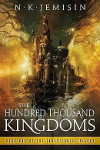
Where Gods walk amongst us.
Publisher: Orbit Books
Pages: 234
Type: Fiction
Age: Adult
ISBN: 978-1-909039-45-2
First Published: 1st January 2010
Date Reviewed: 4th February 2014
Rating: 3/5
Yeine, happily living in Darr, was commanded to ‘return’ to her maternal family’s palace in Sky to become one of three heirs to the kingdom and the world. As she learns what her role is to be, she’s given a proposition by the earth-bound gods that may not save her but will save her homeland.
The Hundred Thousand Kingdoms is a book that sports a different sort of fantasy but is unfortunately rather confusing, static, and badly written.
The world itself, or, rather, the possibilities for it, are wonderful and promising but Jemisin only goes so far in the building of it, and albeit that detailing the palace is understandable (the story is almost exclusively located there) it does make it hard for the reader to really see Yeine’s plight and her reasons for her actions.
The writing is often confusing. There is a constant switch between Yeine’s usual narration and her inner thoughts and torment, and there are times when she looks back at the day just passed in order to tell you something she forgot to tell you earlier. Whilst the style lends the book an individuality and Yeine a distinct voice, it also hints at a lack of planning, or, at least, the look of such. And at the end of the day the look of poor planning has the same result as an actual lack of planning.
The constant ‘switch’ in narration is a pity because it becomes apparent later on in the book that there was a real reason for it. The problem is, of course, that it is too little too late. What could have been an interesting exploration of Yeine’s sense of self is simply left to hindsight. It means that the switch may indeed work for the remainder of the book but that this doesn’t atone for the confusion of what came before.
The book lacks a true focus – is Yeine concerned about the gods, her homeland, or does she simply want to find out the truth of her mother? Yeine’s mother’s life may be intriguing but it is no match, story-wise, for what is happening at that present moment, to what is happening to the world and the gods, and Jemisin’s increasing focus on it moves away from the fantastical possibilities brought forth by the premise. Nor would Yeine’s mother’s life have a true bearing on Yeine in the future as Jemisin’s focus changes once again towards the very end.
Where the book does shine is in the variation of fantasy it employs. This is no high-fantasy travelling-the-world tale of dragons and witches, and whilst those are not bad elements and whilst the book could have spent more time away from the palace, it is good to have this difference. The city of Sky is at once realistic and utterly imagined. In Yeine’s land women rule (even if Yeine is not written convincingly in that way). There is a lot of unnecessary violence and bizarre thoughts but this does fit the genre. The problem is that Jemisin does not provide any reasons for the reader to care about anyone.
The Hundred Thousand Kingdoms had potential but much of that is lost. It’s possible Jemisin may detail more of the world in later books but without having much of an idea about anything beyond the palace already, not least the knowledge of what the hundred thousand kingdoms are, you may decide it’s not worth finding out.
Related Books
None yet
Irène Némirovsky – Suite Française
Posted 20th January 2014
Category: Reviews Genres: 2000s, Commentary, Domestic, Political, Social, Translation
11 Comments

A book written during the events it tells of.
Publisher: Vintage (Random House)
Pages: 342
Type: Fiction
Age: Adult
ISBN: 978-0-099-48878-1
First Published: 2004
Date Reviewed: 16th January 2014
Rating: 5/5
Original language: French
Original title: [As above] (French Suite)
Translated by: Sandra Smith
As the Germans invade France, numerous people head to the regions still free. The refugees are composed of all the social classes, including the middle class Pericands, regular bank workers the Michaunds, and an uppity novelist. As the invasion becomes occupation, a German moves into the Angellier house, where an unhappy Lucile awaits the someday arrival of her unfaithful husband. No one, neither French nor German, knows what will happen in the days ahead.
Suite Française is a theme and character driven book that defies tradition and looks at war with a unique, humorous, and tragic lens. Published posthumously, decades after the author was killed at Auschwitz, the book as it stands is composed of two of a planned five novellas, still in the drafting stage.
What a draft this is. Némirovsky’s book, translated into English by Sandra Smith, reads as though it were almost ready for publication. Beyond a few errors, some of which the translator has edited, there is little to suggest that the work, beyond the obvious lack of a conclusion, had not been through several rewrites already.
The writing is exceptional. Némirovsky speaks of the horrors of her time yet includes a constant thread of humour. It is not laugh-out-loud humour and mostly pertains to social class differences, but for its use it shows that in times of plight some light-heartedness goes a long way – the characters don’t find much funny; the humour is from the author. The book is very literary and may prove easy to loose yourself in. This is particularly interesting when you consider that the book, beyond the basic thread of the war, lacks a plot.
There are ‘mini’ plots here and there, for example the story of one character’s love for another, but by and large the book simply discusses the day to day life, if it can be called such, of the characters. Indeed the major aspect of this book isn’t the characters per se, it is society. In looking at the war, Némirovsky isn’t describing the acts of the enemy and saying how awful they are. She does include horrors, of course, but the awfulness focused on in Suite Française is the lack of compassion and community of the refugees. The middle classes thank God the lower classes were bombed instead of them, the lower classes don’t understand the middle classes, an egotistical man thinks his celebrity will continue to get him whatever he wants, and everywhere people are stealing everything from everybody else. For the most part no one helps anyone else, and that is the point Némirovsky makes in the first novella, Storm In June. Not that being out for oneself leads to long-lasting complications – though, again, this is another point that is made; maybe being out for themselves should affect the characters.
Class divides remain in times of strife. A prime example of the irony of a Christian woman of the middle class is shown here:
“Do you see how good our Lord Jesus is? Just think, we could be those unfortunate wretches!”
In the above case, the author is blunt – the sentence is a flashback a young man has of his mother after he has returned from running off to join the army, and, as he says, “Hypocrites, frauds!”
What is particularly interesting about the book, yes, beyond the theme work and different approach, is Némirovsky’s writing of the Germans in the second novella, Dolce. Whilst the Germans were written as one mass in the first novella, in Dolce there are various individuals assigned to live in certain French homes, and these men are written in a way that borders on compassion. This may not sound so strange as a whole, as war is known to be more important at the top than the bottom, and the German soldiers want to fit in despite being the conquerors, but it is somewhat strange when you consider that Némirovsky was writing of the enemy sitting outside her window, so to speak. In Dolce, the author gives personality and voice to the people despised as she wrote her book, to an enemy that wanted those of her background dead – an enemy that would later arrest and kill her. For this personification, Dolce makes for uncomfortable reading, most especially now in our present day (who knows how it might have been received if the work had been published just after the war?), where we know what happened and we know a lot more than Némirovsky would have at the time. How should the reader respond to the feelings of compassion the author invites – should we just read the book as a work of fiction or is it Némirovsky’s hope that we look inside ourselves and question those feelings? Should we be chastising ourselves for even considering these invaders’ thoughts? Should we be viewing them as people that are as human as the French? Should we be thinking about how easy it is to be led by someone to believe they are a good person?
Finally, another factor that is interesting due to the time and situation in which the book was written, there is a somewhat ironic (sadly ironic) comparison to be made between the French soldier, Jean-Marie Michaund, and the author herself. Jean-Marie wants to be a writer, and during his stay at a farm, Némirovsky writes:
He wrote with a chewed-up pencil stub, in a little notebook which he hid against his heart. He felt he had to hurry: something inside him was making him anxious, was knocking on an invisible door.
Suite Française is a masterpiece; it makes no difference that it is unfinished. (Though it must be said that, at least in the English translation, Némirovsky’s notes and a rough plan for the rest of the book have been included.) It may be low on plot, but it is high in social studies, in character development, and in beautiful language. Sporting vast appeal for those interested in social history as well as those who simply enjoy reading, Suite Française is one you shouldn’t pass up.
Related Books





Elizabeth Chadwick – The Summer Queen
Posted 8th January 2014
Category: Reviews Genres: 2010s, Domestic, Historical, Political, Romance, Social
3 Comments
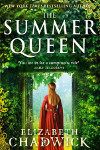
Struggling for independence in a man’s world.
Publisher: Sphere (Little Brown)
Pages: 467
Type: Fiction
Age: Adult
ISBN: 978-1-84744-545-2
First Published: 20th June 2013
Date Reviewed: 16th December 2013
Rating: 5/5
When Eleanor’s (of Aquitaine, and referred to as Alienor in the book and for the remainder of this review) father dies, the thirteen-year-old marries Louis of France to become queen so that lands can be bound together. It begins as a happy marriage but Alienor’s independence is curbed by the relationship and Louis is not the husband she hoped for. Strong-willed and now Queen of France, Alienor will not become the docile wife she is expected to be, nor will she allow Louis to rule her family’s land. But it will be a long fight to gain what she sees as her right.
The first book in a fictional trilogy about Eleanor, The Summer Queen is of almost epic proportions and spans from Alienor’s childhood to the beginning of her time as Queen of England. Blending fact with fiction (the latter to both fill in gaps and study possibilities) the book is a wonderful journey for the reader even when it is a trying journey for the queen.
There is a lot of content in this book, indeed Chadwick has packed this first section with the same quantity of information you might expect to be in a whole trilogy or at least the first two books. It is therefore safe to say that if you are thinking of reading this book you must be prepared for the long ride. Whilst Chadwick does skip over months, sometimes years, of Alienor’s life, as is her style, it is fair to suggest that this was actually necessary given both the length and nature of Alienor’s life.
Is it worth it? Most definitely. Chadwick is on top form; her characters are written brilliantly, there is a lot of attention to detail and (presuming you enjoy reading about the period) the only dull moments are aptly those moments that Eleanor herself is not enjoying. By including Alienor’s teenage years the author shows how the woman became powerful (in mind and thought), which means that there is all the more time spent on gender expectations too. And it means that Alienor is written as far from infallible meaning that she feels as realistic as she would have been.
Realistic also are the other characters. Even of the ‘negative’ influences in Alienor’s life Chadwick is fair. Louis, who causes a lot of pain, is still portrayed in a good light, which means that the reader can see exactly how monarchs could be manipulated and their good name destroyed by the ambitions of others. Chadwick never strays from this, and so even when Louis is at his worse you can still see where his actions stem from. Even if you can’t quite forgive Louis, because he could have been stronger and resisted some ‘advice’, the book may make you question just how reliable our sources really are.
As acknowledged in the afterword, Chadwick has made use of ‘what ifs’. One such question that has never been answered, the speculation over whether Alienor had an affair or, at the very least, feelings, for one of her countryman, is employed here. The resolution that Chadwick writes may seem convenient but at the same time it is understandable. When you consider the fact that this is an author who likes facts beyond all else, the brief foray into fiction that is neatly tied up so that it is almost detached from the factual content is something to be read without contention.
However it is this relationship that causes the one ‘major’ (in quotes because it is the biggest but far from being off-putting overall) issue of the text – the author’s repeated references to the subtext of Alienor and her lover’s letters and gestures. They touch, it is intimate to them but no one else would notice, they speak, there is a hidden meaning in their words that no one else would notice.
Beyond this there is little to find fault with. One can only wonder how much research must have gone into this book and there is so much information included – shown, not told – that you may finish the book feeling as though you’ve had the most interesting history lesson. The Queen does not stay in France, her progress and journeys are documented at length so that you are provided a brief introduction to various eastern European monarchs and customs.
The Summer Queen is a story of an independently-minded woman learning how to exert that independence when society is against her. It is a story of a woman who defied convention, and a story of partnerships and how equality could lead to good things even when the world did not believe in the notion.
The Summer Queen is as magnificent as any of Alienor’s sumptuous gowns and will delight those who enjoy reading about the medieval period.
Related Books