

Bianca Zander – The Girl Below
Posted 4th March 2013
Category: Reviews Genres: 2010s, Angst, Domestic, Magical Realism, Mystery, Paranormal, Psychological
2 Comments
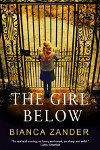
Returning to childhood when memories seem wrong.
Publisher: Alma Books
Pages: 308
Type: Fiction
Age: Adult
ISBN: 978-1-84688-235-7
First Published: 19th June 2012
Date Reviewed: 28th February 2013
Rating: 4.5/5
After ten years in New Zealand and twenty years away from home overall, Suki has returned to London hoping to get back to being who she was; but it’s not going to be that simple. Friends have moved on and no one wants her staying with them, but when she returns to her old apartment block she discovers her family’s neighbour, Peggy, still lives there. She might have found some stability with Peggy and the woman’s daughter, but Suki finds herself haunted by the air-raid shelter that used to be in the garden, no longer there, and what happened the night she descended the stairs.
The Girl Below is a compelling novel, equally driven by characters and plot, that is perhaps best described as realistic magical realism. Mostly consisting of thoughts but having an element that suggests the otherworldly, the book focuses on the reasons a person’s life can spiral completely away from what they had intended, and the need to recover from it when it’s not been a positive factor.
Aiming for detail, Zander tells her story by way of a duel plot line – Suki describes her former life and what is happening in the present. Unlike many stories with such a structure, Zander’s tale invites, perhaps, an equal amount of interest in both storylines, meaning that whilst you inevitably want to get on with the story and find out what happened, there isn’t that ingredient part and parcel of many books where one era is more interesting than the other. There is no divide between the two periods, perhaps because they are not so far apart compared to other books. And the number of characters that inhabit both eras mean you don’t feel like you’re reading two stories.
‘Who am I and how can I be me again?’ is the theme, with Suki’s constant nocturnal travels, in the present day, taking her back to that night she could have died in the flooded air-raid shelter. Because of her parents’ style of living and her father’s choices there has been much for Suki to understand. Whilst understandable, Suki’s character may prove difficult for some, however her actions fit the time period. She does think some thoughts which seem odd for her age, yet this is the first sign of the issues of the book. And as Suki discovers more she realises her childhood memories may not be correct.
The problem with The Girl Below is that whilst Zander wraps some of the plot points up in that dark, complex, and not-quite-obvious-but-fully-implied way that authors of magical realism do, a good half or so of all the questions you have are never answered or referred to at all. You could make guesses of course, but there is scant evidence or reasons for which to back those guesses up, and unfortunately these lost points are some of the most intriguing, the ones most likely to have kept you up at night to find out the truth.
It is for this reason that Suki’s development is stilted at the end. The author has Suki tell you, if not in so many words, that she understands now, but there is not enough showing for the reader to know why. And so abundant are Suki’s strange thoughts, for example that a statue is real, that there really needed to be explanations rather than very very vague suggestions. Suki’s sexual decisions needed more time, too, especially as they are taboo. It’s a case of feeling that the author wants you to be able to relate to Suki without giving you the information you need to know. The reader has to get used to an anxious, childishly scared, and unmotivated person, without a full discloser. It would have also been good to have further insight into Peggy’s grandson, Caleb, who presented an interesting addition to the tale but, whether to illustrate Suki’s anxiety or otherwise, has the focus on his behaviour somewhat diminished in the end.
And this is a pity because overall the book is fantastic and with more attention paid to reasoning it would have been a triumph. The pace is steady, the plot and atmosphere spooky, and there are plenty of times where, for the magical realism, you wonder if you’re reading a suspenseful scene (this wondering itself causes the suspense). One can work out a lot about Suki in the realm of possibility, but it’s not enough.
Writing-wise the book is on the whole very good. The author switches between contemporary British language and some rather old fashioned slang. Zander’s skills as a journalist shine through and it’s obvious she’s brought her own story of the immigrant to the table.
So the difficulty comes, then, in explaining why in general this is a superb book and why you should want to read it. Perhaps the best way to recommend it is to say that in choosing this book you are choosing to be scared, choosing atmosphere over story. Certainly you have to be willing to use the untied threads as a springboard for your own imagination. This book will, without a doubt, divide opinion. It will cause many people to wonder at the fact of a seemingly incomplete manuscript being published, whilst yet providing a satisfactory way to spend reading time. Maybe you will come to a conclusion that trumps all others, the issue is there is absolutely no way of knowing if you are anywhere near correct.
Still, I got the thing open, and propped up the sash with a hardback Dickens omnibus from Harold’s schoolboy collection. With much trepidation, I leaned a little way out. the night air was still but also sultry, humid. With one eye on Dickens – his long-windedness holding fast – I leaned out a bit further and dared to look down.
The Girl Below is unfinished, but brilliant.
I received this book for review from Alma Books.
Related Books
None yet.
Kate Morton – The House At Riverton
Posted 5th September 2012
Category: Reviews Genres: 2000s, Domestic, Historical, Mystery, Romance, Social
4 Comments

What the elders want the elders will get, but it will come at a cost.
Publisher: Pan Macmillan
Pages: 591
Type: Fiction
Age: Adult
ISBN: 978-0-330-44844-4
First Published: 2006
Date Reviewed: 27th August 2012
Rating: 3.5/5
At 98, Grace is approached by a film-maker who is creating a movie about the murder mystery surrounding the house she, Grace, used to work at. What the world doesn’t know, however, is the truth; and this Grace has kept to herself her entire life. Only now, facing inevitable death, does she decide to create some cassette tapes for her grandson explaining everything, including what really happened on the night a famous poet killed himself at the lake.
The House At Riverton is a long look at the early decades of the 20th century and how society came to dictate lives in such a way that people made drastic choices they wouldn’t nowadays. The book could have easily been cut by about 300 pages – the back story, whilst fascinating, especially for those with a particular interest in the era, is unnecessary, and it takes three quarters of the book for the story to actually begin. The build-up is for the most part predictable and thus all the extra details surrounding it are irrelevant. It’s nice to get an idea of what went on in the characters’ heads (so far as Grace can determine) but what would otherwise have been a big reveal is, of course, not there.
However this doesn’t mean that the book is a failure, indeed even if it required heavy editing, the superfluous content does illustrate well the life and society of the time. If you’re a reader looking for a thrilling mystery you won’t find it here – this is a book for people who enjoy period dramas and the sorts of incidences that were considered monumental back then but would be a non-issue today. Family structure is discussed, such as marriage in order to produce heirs to keep hold of property. And seeing as the book follows the lives of a couple of generations of the same family, Morton also details, through the characters themselves, how change occurred as the children of the 1910s became the adults of the 1920s and began to challenge the strict rules imposed upon them by their elders. Both these issues, woven together, cause the most conflict in the family, as well as the streak of feminism and want for equality that comes as second nature to one of the young women, Hannah.
It would be fair to say that although the characters are well written, their purpose is to enable Morton to put her point across and to explain history and society, and so whilst the reader knows them enough they are not the sort to commit to memory in a fond manner.
It should be noted that The House At Riverton isn’t all that much of a romance story and that the mystery aspect of the book is hampered by the fact that the reader knows the basics, even if the true mystery does remain a secret. Yet, in these two factors there does remain some interest – the romantic threads form more of the commentary on society, and as there are a few of them Morton is able to look at the issue as a whole in detail. The veils over the classes are pulled down and Morton shows the reader that the relationship between upstairs society and downstairs subservience was a lot more complicated than either section would have admitted, maybe than they would have known. The romances also highlight the need for loyalty that is often inherent in us. The true mystery is what the film-maker, Ursula, is after, but only Grace knows it, and the reader is only party to it from being inside Grace’s head; thus the ending is good, as it ties everything together and the reader being given all the ingredients to work out what would happen next. Indeed the reader may know more than the characters, even after those happenings happened.
The House At Riverton is too long for what it sets out to accomplish, and the real thrill takes a while to get going; it is recommended thus as a good resource for gaining knowledge of past society and exploring the class system inherent in the day.
Related Books


Daphne du Maurier – Rebecca
Posted 7th May 2012
Category: Reviews Genres: 1930s, Crime, Domestic, Drama, Mystery, Romance
Comments Off on Daphne du Maurier – Rebecca
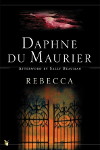
You have never known a writer as uniquely talented as this.
Publisher: Virago Modern Classics (Virago)
Pages: 428
Type: Fiction
Age: Adult
ISBN: 978-1-84408-038-0
First Published: 1938
Date Reviewed: 27th April 2012
Rating: 4.5/5
The heroine meets Maxim de Winter while she is training to be a lady’s companion under the tutorage of an American woman. Bored of her life, and fed up with the snobbery possessed by Mrs Van Hopper, when Maxim makes a surprise proposal of marriage, the heroine accepts. Maxim’s first wife has died, but that does not worry her; however on arriving at Manderley, the de Winter’s home, she finds that Rebecca is very much alive in the constant references and laments of staff and those who knew her. And from being happy, the heroine sinks into a place where she feels as though this haunting atmosphere will always be about her. What does it matter how Maxim tells her it’s fine, when everyone else is living in the past?
Rebecca, the novel with the unnamed heroine, is rather individual. The basic plot itself is far from incredible as it has been done before, indeed comparisons could be made with Jane Eyre in many respects, so what makes the novel spellbinding is Du Maurier herself. The writing in Rebecca – the structure of the book, the characterisation, and the detailing – is exceptional. The words themselves may be usual enough, and it might be a difficult task to identify any short passage of the book as Du Maurier’s without knowing beforehand, but the overall presentation is completely unique. No other author has ever brought such individuality to the table as Du Maurier does.
I thought how little we know about the feelings of old people… Did she know that Beatrice was yawning and glancing at her watch? Did she guess that we had come to visit her because we felt it right, it was a duty, so that when she got home afterwards Beatrice would be able to say, “Well that clears my conscience for three months”?
The characters in Rebecca are rather abrupt, almost in your face. There is no added lingering emotion, and Du Maurier never starts from the shallows – she throws you in the deep end. There is no time for the reader to become acquainted slowly with Max, for example – you either become acquainted instantly or you shy away.
And no matter how far into the book you are, these characters, despite being personalities confined to fictional history and therefore of a different nature to readers further on in the world’s years, continue to shock. They are the sorts that waste no time, don’t bother with pleasantries, and have no time for dreamers.
Maxim is, by himself, a fantastic creation. He never shows emotion whilst at the same time practically oozing it. He is completely obvious whilst being totally obscure. Yet he is utterly likeable for the way he has been written. Rather like Jane Eyre’s Mr Rochester, he defies the usual limitations of books, and comes out as one of the best heroes in literature in terms of being memorable.
I wanted to go back again, to recapture the moment that had gone, and then it came to me that if we did it would not be the same, even the sun would be changed in the sky, casting another shadow, and the peasant girl would trudge past us along the road in a different way, not waving this time, perhaps not even seeing us.
The heroine, who can never be named, is the opposite. She is emotional, she is an analyst, and she is a compulsive dreamer. A great deal of the book is taken up by her daydreams and worrying, her “what if”, her dissection of her relationship, her craving to relieve the past, and her function in a home wherein the dead wife is still the queen. Her role at Manderley she doesn’t actually realise because she spends so much time daydreaming. That Du Maurier was a daydreamer herself is obvious. She writes so knowingly, expressing how easy it can be to look to a future that may or may not be, how easy it is to think over and over of the past. Her writing here is most universal and eternal, and Du Maurier aptly portrays the plight of a woman who feels she cannot bring up in conversation the woman who came before her.
Not surprisingly, the majority of the book’s themes arise from, and orbit around, the heroine’s story and her development. The reader can see in her thoughts where she is thinking the wrong things, how she has come to believe that she is secondary to Rebecca despite never asking if she is so, and how she has come to be confused as to who she should be. From being a little interested, the heroine becomes obsessed by the idea of Rebecca, so much so that the amount of her (artificial) memories of Rebecca eclipse those of any other character, perhaps of all the other characters combined. She is the reason the reader can sit back and think that yes, this book does indeed deserve to be called after a dead and never fully introduced person, because the heroine always puts Rebecca before herself.
Because that’s the nub of the book, one of the elements of it that leaves you amazed. There is this sense throughout that somehow, some when, you as the reader are going to meet Rebecca. You are going to be able to see her away from biased thoughts, and hear her speak for herself. But Rebecca has gone, and Du Maurier never suggests otherwise. Yet so crafty is the author, so clever are her dialogues and scenes, that just like the heroine, you can never fully believe that Rebecca is dead. The phrase “Rebecca has won” crosses over into reality. The fictional never-actually-there woman does win, because despite never being fully realised she is likely to be the “character” that remains in your mind. And the fact that we can only call the heroine “the heroine” is surely further testament to this.
Perhaps the most apparent quality to the book is the way that the reader is obliged to read it. The pages don’t often beg to be turned, in fact for the most part, if not all, of the book, there is no pressing reason to finish it quickly. Each section is long, and the climax itself is drawn out, but the pace is never fast. In any other situation, that would be a bad thing. The genius of the narrative lies in the way that once you do pick it up it’s incredibly easy to get carried away and lose track of time. Chapters go by without notice. Du Maurier’s writing is so effortless to read – whilst being far from dull – that although she favours descriptions often, it’s difficult to really comprehend that that’s the case until you have moved on to dialogue. She employs an intriguing balance, while her descriptions are detailed and run on for pages at a time, the dialogue is edited to perfection, there are no superfluous words and every response to a question has a ton of subtext and meaning to it. A simple seeming “yes” is never that, but instead holds in three letters an entire story all of its own. The book is a glorious example of showing rather than telling.
Regarding the detailed descriptions, the way Du Maurier includes so much of the goings on in the day is refreshing. The mundane she makes interesting and of those days during which she chooses to spend hours with the characters, you feel as though you have indeed spent the entire day with them. The mixture of these detailed days and the ones she leaves in the dark make for a shock when you discover, for example, that far from being a few months down the line, the characters are still leaving in the same week.
Just as Rebecca herself is stunningly beautiful, so is the book that Du Maurier has written. The plot may be straightforward given the heroine’s analysing nature that takes time, and Du Maurier’s almost carefree attitude to events that other authors would turn into thrillers, but there is a splendour to the complete creation that defies any notion of the glory bestowed upon other stories. The heroine may be alive and Rebecca dead, the heroine may have gained our admiration whilst Rebecca is in no position to speak, but it is Rebecca we will remember evermore. And so we should, as it is a book that surely heralds an addition to our lists of eternal classics.
Related Books


Kenneth Cameron – The Bohemian Girl
Posted 7th July 2011
Category: Reviews Genres: 2000s, Historical, Mystery
1 Comment

Sugar and spice and everything nice, and maybe some frogs and snails, too.
Publisher: Orion Books
Pages: 310
Type: Fiction
Age: Adult
ISBN: 978-0-7528-8396-0
First Published: 2009
Date Reviewed: 1st July 2011
Rating: 3.5/5
Denton, a novelist and ex-Town Marshal from America, now living in England, has had issues with enemies before. Now, in amongst his fan mail is a letter from a man who wants a signed copy of every book he’s written, but doesn’t provide an address. And there is a letter from someone who has found a letter addressed to Denton that speaks of fear. Mary Thomason is afraid, but what of, and why was her letter to Denton not sent?
This is the second book about Denton, but although there are references to the first, The Bohemian Girl can be read as a standalone, which is just as well in this reviewer’s case. Lured by a beautiful hardback and later the reader of the paperback, she didn’t know a first book existed until she sat down to read the second.
Atkins stopped him at the front door. “Going to rain.” He held out an umbrella.
“I’m not English.”
Atkins draped a mackintosh over his left arm. “The rain will be.”
The Bohemian Girl begins with great promise and keeps it up for a good length of time. The setting is Victorian/Edwardian England (the book takes place after Victoria’s death but before the coronation of her son), gritty and full of period detail. The characters are fun to read about and because of them it’s very much a cross between Sherlock Holmes, at least the film, and Philip Pullman’s Sally Lockhart Quartet – for the good relationship between master and sidekick, and the thrill of mystery. The relationship between Denton and Atkins is complimented by fast-paced dialogue that is a lot of the reason for the humour. The female character, Mrs Striker, is one of those strong heroines who makes historical fiction so readable in our current time.
Yet the writing could be more detailed in itself. Sometimes it’s difficult to understand what Cameron is trying to say because he will leave out required words or use words that don’t quite work. His inclusion of accents doesn’t always stay true to the reality of what they actually sound like, and sometimes it seems he forgot that he gave a person an accent once upon a time.
But it’s the plot that really lets the story down. Although there is not so much intrigue and mystery for the reader (one gets the sense Cameron thought he was providing enough, and unfortunately he was wrong) the first two thirds or thereabouts are interesting and there are plenty of reasons to keep reading. But then it just stops, and the story becomes more about medicine, and there came a time when I wondered if Cameron had had a mid-book crisis and decided he wanted to write about philosophy instead. This part of the book is written in the manner of a film sequence where they show you glimpses of different days one after the other, the sort of stuff that has sorrowful music behind it as day after day a person tries to get something done. The technique doesn’t really work in a book.
The issue with there being not enough intrigue is the in the sparse details. Well, they aren’t really sparse, but there aren’t as many as in other novels of the same nature. It’s as though Denton is ready to work hard to find answers, but Cameron thinks that taking it slowly is better. It’s a case of there not being enough “get-up-and-go”. And there is little work done to create good red herrings or a good basis for the reader to decide who did the crime.
The romantic subplot is crafted well and Cameron stays true to the person he made in Mrs Striker, keeping her strong throughout.
The Bohemian Girl is a good enough book, but Cameron needs to believe in his characters more and let them guide him. He succeeds in writing about England (no exotics or the like) and has the skill to write a masterpiece. Unfortunately this particular book isn’t it, but it’s a definite step in the right direction.
Related Books

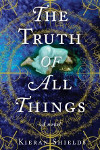
Shelley Munro – The Spurned Viscountess
Posted 22nd June 2011
Category: Reviews Genres: 2000s, Historical, Mystery, Paranormal, Romance
1 Comment
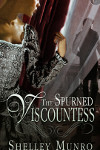
In a time when witches were burned, having a special ability could be a gift or a curse. It could even be both.
Publisher: Carina Press
Pages: 241
Type: Fiction
Age: Adult
ISBN: 978-1-4268-9058-1
First Published: 2005
Date Reviewed: 27th April 2011
Rating: 4/5
Please note that this is a revised version of an earlier book and that it is the earlier book’s release date I have referred to.
Rosalind, a young woman considered a witch by her village, took her chance and married Viscount Hastings, the man her cousin didn’t want. But there is far more to Hastings than the scar that everyone looks away from, as he comes with baggage from a doomed previous marriage. Rosalind can read people’s thoughts and comes to accept Hastings’ issues, but can he? And who keeps trying to harm Rosalind and why?
I really wasn’t sure what to expect with this book. The title suggested something clichéd, and the historic period and romance genre emphasised my thoughts. But I wanted to read more romance and it seemed a good place to begin, something away from Mills & Boon but not something erotic. This is in my attempt to get a good overview of romance and all it offers.
Aside from a weak start, which did suggest cheese, The Spurned Viscountess is rather good. There are a few repetitions employed by Munro that could have been left out, such as Rosalind always lifting her chin, and “a moue of disappointment” used a few too many times for one to appreciate the interesting description, but the story is sound and the characters agreeable.
What is great about the development of Rosalind is that it is something that affects the reader more than the character, that is to say that in the beginning Rosalind doesn’t impress very well but as the story continues it becomes easy to root for her. She doesn’t listen to advice from men to stay at home, although admittedly sometimes she should, and apart from a few stubborn moments, is a strong woman. Hastings is a good hero and his slow development into realising his true feelings is well written. That he bucks the trend of the day and doesn’t wear a white wig is fantastic. Even the bad characters are interesting.
The romance is important, as expected, but it doesn’t rule the story so much that you forget the backdrop. The mystery surrounding Hastings’ problems and Rosalind’s accidents comes to the fore many a time and is the reason to keep reading as you already know where the romance will lead. The identity of the mystery person may surprise you, the descriptions of locations delight. Although the book focuses on the two main characters you get to experience the odd social event.
As this is a romance rather than erotic romance the love scenes are few and comfortable enough to read.
There is a slight paranormal bent coming from Rosalind’s telepathy, but it is not treated in the same way as general paranormal fiction and is actually quite believable for the way in which it is written.
As a lover of the classics and what is known as “literary fiction”, although I do not like the term myself, you may wonder why I rate this book so highly. True, the writing is in a different league to the books I generally read, but for what it is it is good and it is with this in mind that I rate it. As a romance it is worthy of a read and provides that all important element – for it’s story and mystery it stays in your head after you’ve finished it.
Related Books