Charlaine Harris – Dead Until Dark
Posted 10th May 2011
Category: Reviews Genres: 2000s, Comedy, Mystery, Paranormal, Romance
Comments Off on Charlaine Harris – Dead Until Dark

Elvis isn’t dead, but unlike the band Scouting For Girls who say that it’s because they heard him on the radio, Harris has seen him in person.
Publisher: Gollancz (Orion Books)
Pages: 326
Type: Fiction
Age: Adult
ISBN: 978-0-575-08936-5
First Published: 2001
Date Reviewed: 4th May 2011
Rating: 3.5/5
Sookie Stackhouse can read minds and is met with caution by most people. She could date, heck there are enough guys about who would like to take her out, but the idea of knowing what they want to do in the bedroom beforehand makes desire an endangered species. When Bill walks into the bar Sookie hears nothing, and that makes him a possibility. Except that Bill’s a vampire – except that doesn’t matter. Vampires are an accepted minority now, after all, and her grandmother certainly approves. But then women start being murdered and Sookie isn’t sure of anything.
This was pretty exotic stuff for a telepathic barmaid from northern Louisiana.
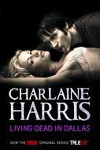
Dead Until Dark is nothing like the cover suggests. Well, ok, there is some blood, obviously, but it’s actually a pretty quirky book and at times hilariously funny. Harris has created a world where vampires are slowly being accepted into mainstream society, and the name of the hero himself, Bill, should give you a good idea of the angle she takes on the whole fantasy element.
The style of writing is rather different and although it fits the book I found it difficult to get used to. Sookie is the narrator and her voice is very unique. In due course you discover that the style is something Harris has constructed specifically to aid the comedy and strength of the book itself. The emphasis is on short sentences and natural reactions. However the writing is still rather bad and a lot of times I had to re-read a sentence to check if I really ought to have felt so shocked by it – and it turned out that yes, I should have.
He was unconscious or dead. With a vampire it was hard to tell the difference.
Because of the style of writing you get a real sense of how Sookie feels, in fact if I were to meet her and tell her that she’d probably say “well you don’t say” – in other words she’s very casual, very open, and more personal than if she were writing a diary; however she is also very naïve about some things to the point of it being silly. Bill is good to read about mostly because of Sookie’s descriptions, but also because of his efforts to be as human as possible.
Vampires aren’t the only paranormal creatures in this book. I’ll just say that if someone told me Stephenie Meyer studied this series before she wrote hers I wouldn’t be surprised. But unlike Meyer, Harris is compelled by humour and because of the age of the characters, and the situation, it’s a lot more fun to read. There’s a reality, almost, that Meyer didn’t reach.
One of the themes is romance but the other major theme, mystery, and the genre of comedy, mean that the narrative never slows down. The mystery is well planned and the importance given to it stays the same throughout.
Make no mistakes, this is more horrific than most paranormal books released in our current era, as, might I say, most pre-Meyers are, but the light-heartedness makes it an ok choice for most adults – be aware that this is very much an adult book and some of the subplots and the sex are not for younger readers.
Dead Until Dark has its flaws and is maybe a little too easy a read at times but if you are up for the challenge of story surpassing, by far, the writing, then I’d give it a go. Just make sure you read it where the idea of someone reading a book with a bloodthirsty cover while laughing their head off would be acceptable.
Related Books


Charlotte Brontë – Jane Eyre
Posted 8th October 2010
Category: Reviews Genres: 1840s, Drama, Mystery, Romance
3 Comments

When I opened Jane Eyre I don’t know what I expected, Austen, perhaps – humour, entertainment, but an all too familiar tale of an emboldened young woman making her way in a society that was not her own. I didn’t expect what I actually found.
Publisher: (Numerous, but I’d wager Vintage would be a good one)
Pages: N/A
Type: Fiction
Age: Adult
ISBN: (Vintage’s is 978-0-099-51112-0)
First Published: 1847
Date Reviewed: 1st October 2010
Rating: 5/5
Not long ago I was in the bookshop buying a copy of Pride And Prejudice for my mother (who, I lament, has still not read it). The assistant said it was a great book but then proceeded to recount the glories of the Brontës. I listened in earnest as I intended to read Charlotte Brontë’s work next. The sisters were darker, he said, Austen was too light humoured. He asked his colleague, who was browsing the shelves on this mid-week slow day, for her opinion on who was better. Austen, she said. My assistant said I should read Brontë. How right he was in his pronunciations.
Now one could say that I have missed the boat by over a hundred years in writing this review, but, and this is something I believe I touched on in my review of Pride And Prejudice, there is the idea that it’s ok to review a classic. It is important, I feel, that each generation brings to the book’s reputation their own reflections on it as surely this routine will enable those of a particular generation to decipher how this book might appeal to them. Without modern day discussion, or indeed simply educational study, all a potential reader has to go on is ancient reviews written by people of a different time; it is by updating opinion that future readers will see for themselves how the book might be accepted by them in a way that is appropriate for their own time.
I suppose I should stop there with my views on classical literature and turn specifically to the subject at hand, so here is a basic plot summary:
When Jane Eyre was a child she had no one, at least no one who gave her the love and caring attention she needed. Growing up in her aunt’s house she was bullied and treated with disdain despite her obedient ways. Sent to a boarding school Jane later flourished, but assuming the role of a teacher at the same school could only hold her interest for a short time. In seeking further employment, Jane alighted at Thornfield Hall. Mr Rochester, her employer, is a peculiar one – cryptic, seemingly forgetful, impulsive, and secretive. But how can he demand her full attention when the house, beautiful though it is, appears to be haunted by secrets?
Jane Eyre is a story that, for the most part, is ever moving and shifting between genres. It is so clear in its sections that one can point out the different “acts” with little difficulty. And Charlotte (as there were three Brontës I will refer to the eldest as such) doesn’t stick to one or two themes either, the book contains a plethora, and their subjects are such that some are just as relevant in their original sense today.
The story is told as a memoir, directly to the audience. In the first person, for Jane hasn’t written a diary, she addresses the reader in an interactive way, asking them questions and for their opinion, as well as accurately guessing what they might be wanting to know. Be sure that whatever you are thinking, Charlotte has realised and will inform you of accordingly. Many a time I believed I wouldn’t get an answer to my query and then not only did Charlotte bring it to the fore, she had Jane speak to me in person.
A new chapter in a novel is something like a new scene in a play; and when I draw up the curtain this time, reader, you must fancy you see a room in the George Inn at Millcote, with such large figured papering on the walls as inn rooms have; such a carpet, such furniture, such ornaments on the mantelpiece, such prints, including a portrait of George the Third, and another of the Prince of Wales, and a representation of the death of Wolfe. All this is visible to you by the light of an oil lamp hanging from the ceiling, and by that of an excellent fire, near which I sit in my cloak and bonnet; my muff and umbrella lie on the table, and I am warming away the numbness and chill contracted by sixteen hours’ exposure to the rawness of an October day: I left Lowton at four o’clock a.m., and the Millcote town clock is now just striking eight.
A comparison I will make now with Jane Austen. Although I love Austen’s work it cannot be denied that she has a tendency to go into far too much detail than is required, forming incredibly long sentences wherein one can easily become lost. There is no such worry in Charlotte’s writing. Except perhaps during a specific section, which I will come to in a minute, Charlotte never pauses to provide superfluous description. The story, as said before, is ever moving. Charlotte knows her reader, she knows that (at least in her time) they are well versed in her world, for it is a real one, and that they don’t need to read about it apart from the descriptions of the made-up situation. I would say that it is quite possible that this style of writing is what enables Charlotte to bring in so many different elements of story to the book because she doesn’t have to worry about spending time – and pages, thus not becoming long-winded – on description. If you require definite evidence of Charlotte’s quest to remove unnecessary information, you only need look several pages in where Jane says that she is leaving out eight years of life from her account because they aren’t interesting enough to speak of.
Every setting in the book is beautifully lamented upon and a pleasure to create in memory and imagination. Though the book may begin shrouded in grey, Charlotte later moves it into hues of green, yellow, and white. She uses time of day wisely, contriving with the weather to create her own version of pathetic fallacy.
There was just one area that I found disappointing, the part where Jane comes into certain social arrangements in a village. I wished fervently that it wouldn’t be a cliché, that it would be different – but it wasn’t. I do not understand how someone so brilliant and able a storyteller could fall to such boring and coincidental devices. I failed to see, for that space of time, the genius reported by Virginia Woolf – a quotation displayed in glory on the back cover of my copy of the book.
The cook hung over her crucibles in a frame of mind and body threatening spontaneous combustion.
The characters are first-class. Although, where classic literature is concerned, Austen’s Darcy may be more famous, of more note is surely Charlotte’s Edward Rochester. Rochester is a fine creation; funny, sarcastic, and very much a speedy speaker; few were the times when I could imagine him speaking any slower than quickly. And it is in part because of his backtracking and contradictions of his words that he is so full of colour – you may not find out all that much about his interests but it is clear that here is a well-rounded person, no matter how gloomy he may aspire to be at times. Several of the quotations I made note of for their humour come from his dialogue; as an example, his supposing that you might not think of hating someone you already despise. With these in mind I would like to reference a scene that particularly stood out for me, that of the gypsy’s visit to Thornfield Hall. Make no mistake, it goes on for several pages but it is here that Charlotte first demonstrates true comedic genius.
Jane Eyre herself is just as fantastic a character, but one can overlook her qualities sometimes due to the fact that she is the eternal focus, being the narrator. She is as appealing and relevant today as a character newly penned in the 21st Century.
The writing is superb. So differently to Austen, Charlotte writes in a way that is very near to how we write today, save for perhaps her fondness for colons and semi colons, which she includes as if she earned a pound for each addition. Because of the style there is no need to study the text at all in order to make out her meaning, and so in style at least the book remains an easy read. However I would like to point out that there is a substantial amount of French used in the book. Charlotte has chosen her words well and included in most sentences hints as to the overall meaning, as long as you have a bare basic knowledge you should be able to get the gist. My own GCSE education from years ago sufficed.
The love story is perfect, and it is during the scenes between the anguish-ridden couple that dialogue takes over, as does of course interesting conversation (think of the character descriptions provided) and, because the dialogue is generally balanced between the two these are the scenes that flow quickly. The only time you really realise just how long the book is is once you get to the end of one of these dialogues and turn the page to see line upon line of description in preparation for the next sequence.
One of the ways in which the book amazes me is the ending, and looking back on it I can see how Charlotte was not making it into the kind of scene you might have expected and would’ve expected had it been written by someone else. Everything points to her being a person open to modern ideas. That doesn’t mean she is perfect, she was of course a product of her society and so some issues in the book you have to read remembering that, but she was a forward thinker and far away from being narrow-minded, by both the standards of her time and now.
Charlotte Brontë is a master storyteller and although I’m yet to read her other work I have a feeling this will remain my favourite. I have tried my best in this review but a summing up could never really explain just how and why this book is so incredible. I heartily recommend it to one and all with no exceptions.
Related Books


Alex Bell – The Ninth Circle
Posted 11th August 2010
Category: Reviews Genres: 2000s, Mystery, Theological, Thriller
Comments Off on Alex Bell – The Ninth Circle

Good and evil fight against each other, but sometimes it’s the middleman who is in the right.
Publisher: Gollancz (Orion Books)
Pages: 262
Type: Fiction
Age: Adult
ISBN: 978-0-575-08465-0
First Published: 2008
Date Reviewed: 15th June 2010
Rating: 5/5
Gabriel doesn’t remember how he ended up on the floor of his flat, but he’s been bleeding and there’s a significant amount of money on the kitchen table. He’s able to find out his name pretty quickly but no other information seems to exist. Should he wait for someone to come looking for him, wondering about his absence in their life? He knows that he’s in Hungary and that he speaks Hungarian but that he’s from England and speaks English as well as a possible several other languages. He seems to be a writer – an unpublished one by the look of his zealous manuscripts – and possibly a madman. For Gabriel has been having weird visions since he woke up, of flaming men, and has seen people who don’t appear to actually be there. Why is he receiving packages and whom are they from? And why was his previous self so obsessed with Hell?
The Ninth Circle is a remarkable book, and for the first time in ages my sky-high expectations were justified, ten-fold. Bell has written a novel that successfully takes a look at subjects that have been raised before, but applied them to her characters in a whole new way. The book is structured as a diary but unlike a lot of diary-structured books it’s easy to forget that it’s in the first person.
Bell has done research, and put her education to good use. She’s read up on a variety of topics, some of which aren’t even fundamental to the plot, and delivered back to the reader her findings. On her blog she herself says that she’s interested in World War II (and there is an event described in her book in great detail), and she studied Religious Studies – but baring her own interests it is clear she’s spent time on extra and useful information. This means that you come away with a lot more knowledge on things that aren’t neccersarily imperative to the story itself.
The nucleus of the novel is religion, which I’m actually not too happy about saying because for me it was a shock (a good one) and the thing that first made me start reading faster because it was so unexpected – but I know that won’t be the case for everyone and so it must be said. The Ninth Circle deals with the apocalypse, the beginnings of it that is – there are no full-scale battles – and in case you are put off by this idea I must say that this book is not Christian fiction, in fact although one may believe that Bell is a devoted Christian if you are excited by this suggestion then you will be disappointed later. Bell does not look at the topic with a religious fervour, rather she has stood watching from the sidelines. And if I have appeased those who do not want to read Christian fiction then I should also appease those who do want to read it – Bell is no Philip Pullman, she is fair in her convictions without bias. There is no reason why either camp should not enjoy this book.
Gabriel is a strange character to get used to, not so strange in himself (because you understand early on that there’s going to be a reason for all his visions and feelings) but because he edges toward one notion before seeming to go back to another. Is he a likable person? That’s hard to decide, but he’s certainly compelling and a fantastic fictional hero and narrator. The other character of particular note is Stephomi. You’ll change your mind many a time about him, but is that perhaps what he’s looking for? Because you want to believe he’s good, don’t you? It’s a relief to find out that he is, isn’t it? There is equality between characters and plot, both are as important as each other. The locations in the book are all real places in Budapest and Bell is adept at weaving eerie mists over it to make you curious and longing to visit, while simultaneously being alarmed by the idea.
Bell’s writing is of very high quality; the only thing that sticks out is her reliance on emphasised words. There are a lot of them, sometimes too many, but it does cause you to delve deeper into the presented situation overall, and once you’re a fair way through the book you get used to it, it’s just her style.
The Ninth Circle is brilliant – but do I like it, as in did I feel comfortable reading it? The thing is that you’re forced to think about things that we, as humans, generally try not to think about. Whether or not we believe in God we do in general believe that there is a distinction of sorts between right and wrong and good and bad (though Bell makes the poignant proposal that they are not so different, like heat at it’s hottest feels cold, like the phrase “two sides of the same coin”), and also, to my knowledge, we tend to believe in evil, again no matter our faith. It’s easier to be bad than good, being good takes more effort, and it’s easier to submit to the devil – this is a well known thought in religion, God needs us to work (and so does the devil, but his requests are easier). Submitting to evil brings instant reward, working hard to be good may not and often leads to pain before happiness. We know this, and it scares us, and in introducing us to the demons in an intimate way through the characters Bell is exposing us to what we fear, and that concept is something we worry about – being exposed to our fears.
I wonder if the reader feeling uncomfortable was what Bell had in mind. In fact no matter what she had in mind she’s succeeded in her goal, as I will definitely be thinking about this novel further and recommending it to everyone who talks to me about books. It’s going to stay in my head for a long time and will probably factor in any conversations I may have on religion, the future, and the apocalypse.
Read it and enjoy. Gabriel’s loss is our gain.
Related Books