





Elizabeth Chadwick – The Champion
Posted 14th November 2012
Category: Reviews Genres: 1990s, Domestic, Historical, Romance, Social
5 Comments

A moment of weakness, a lifetime of ambition, and a hope for happiness somewhere in-between.
Publisher: Sphere (little Brown)
Pages: 499
Type: Fiction
Age: Adult
ISBN: 978-0-7515-3869-4
First Published: 1997
Date Reviewed: 12th November 2012
Rating: 5/5
Alexander turns up on his brother’s tourney circuit, having run away from a deprived monastery. Hervi agrees to take him on, but he’ll have to start at the bottom of the career ladder. If career is what one can call the dead-end “work” that Hervi does. The brothers share their time with the Cerizays, Alexander getting on well with Monday who is close to him in age. It’s a good familial relationship for the most part, until the night both teenagers get drunk and the atmosphere becomes intimate. But Monday doesn’t want the life Alexander offers, a continuation of the life they already lead – she wants the riches her mother once possessed. But leaving it behind won’t be easy after what has happened between them, especially with the added threats posed by Alexander’s enemy and Monday’s earl of a grandfather.
The Champion is a particularly good work. Focusing on ambitions of ordinary people, the personalities of the characters allow the story to move between varying locations and social classes, giving the reader a broad overview of life at the time. The characters also allow for some leadership history also, as whilst the hero, heroine, and their family, are creations of Chadwick’s mind, many others are from the past.
And what fine creations those fictional characters are. As always, Chadwick has conjured some well-rounded people, with many things to both worry about and enjoy, but although they are very likeable, they aren’t without flaws. Indeed part of the plot, the need to better oneself, is cause for a large part of the separation between Alexander and Monday, and there is a place for domestic history too.
Neither Alexander nor Monday start out particularly faithful where sexual relations are concerned, which leaves Chadwick able to examine subjects such as prostitution, sexual favours, and in regards to sex in general, contraception. The latter is particularly prominent in this novel, being discussed by the women openly when they are away from the men, showing the power that a woman could yield over her body when the information was attainable. Whilst a little of the information has been fashioned by Chadwick (she acknowledges this in the back of the book) the vast majority is true to life and demonstrates that things weren’t nearly as straightforward as illustrations may first suggest. Indeed far from being happy with their lot as mothers, Chadwick’s book shows that women in the Middle Ages were just as concerned with pregnancy as we are now, and that away from the obvious issues of childbirth in an unsanitary age, the idea of women being married to pro-create was often limited to the men of the family.
Aside from this, time is spent on sexuality, with Chadwick demonstrating the affects a forced monastic life could have on monks – both on those targeted and those who shouldn’t really have been ordained in the first place, and also the issues that arose in a society where being homosexual was acknowledged but frowned upon. What is nice, where the latter is concerned, is how Chadwick shows that people could still command respect and loyalty, though of course the jokes and the fact that it wouldn’t be the case for less well-off people show society for what it was. And no holds are barred when explaining King John’s marriage to a twelve-year-old – you are told that it happened even if the actual intimate details are left out.
Of course a historical romance would not be such without the sex. As is generally the case, Chadwick both creates spice and closes the door.
Chadwick favours bold females, however in Monday’s case she has laced this boldness with a strong stubbornness that takes some getting used to. Whilst Monday is admirable most of the time, some of her choices may be difficult to fathom, and the consequences of conduct are demonstrated to good effect. Yet Chadwick never suggests that Monday gets what was coming to her; aside from a conversation of how choices have affected lives, Chadwick remains fair, treating her flawed heroine as she would an angelic one. This means that Monday is very real.
Sharing the basic ambition of betterment, Alexander also strays from his path, attracted by a potentially glittering career. He is more grounded, perhaps, than Monday, but this helps the development of both of them flourish, enabling differences both in the subject of their ambitions, and the strength of them, to be discussed fully. Part of the reason the book works so well is this constant evaluation of their development.
And whilst many of Chadwick’s books have family members included, Hervi is an exception. He gets his own storyline, his own development, and continues to play a role. Perhaps best of all, he is funny without being a comic relief, and his thread is just as important as the others.
There are several encounters with the enemy, meaning the concept can feel overused, but it’s important to remember that it is realistic, too. It shows just how crucial family was seen to be, even where there were separations.
A major boon of this book is that unlike many of the others, the plot of The Champion stays right until the end – compared to, for example, Lords Of The White Castle, where the last few chapters seemed to be holding on to a horse that had bolted. This is in part due to the multi-layered story, and the myriad of extra issues that the characters have to deal it – it enables the book to be lacking in dull moments. In addition to this, the story takes place over a few years, with little time spent off page, as it were. In other words you will never turn a page to see a date a few years later after having read something compelling in the last chapter. There are some gaps, but they are minimal, short enough for the reader to be able to guess what would have happened.
The Champion is Chadwick at her best; a detailed novel that includes both fact and fiction, plenty of culture and social politics, a drawn out romance, and ordinary people you can root for. The addition of extra historical issues is a further recommendation and the icing on the cake. To put it simply, if you know little before starting this book, you will know a lot once finished, and unlike the basic information provided by basic education, you will come away knowing a great deal more; and with the added bonus of knowing how it relates to our present day and how far our society has come.
Related Books




Laura Navarre – By Royal Command
Posted 7th November 2012
Category: Reviews Genres: 2010s, Domestic, Historical, Political, Romance, Social
2 Comments

Can obeying the king lead to happiness?
Publisher: Carina Press (Harlequin)
Pages: 284
Type: Fiction
Age: Adult
ISBN: 978-1-4268-9400-8
First Published: 2nd July 2012
Date Reviewed: 4th November 2012
Rating: 4.5/5
Katrin was trapped in a wretched marriage, a match made in the interests of her uncle, the king. Now her husband has died, Ethelred wants to make another match for her in order to suit his interests, but Katrin does not want to be sold again and tries to resist. She can’t resist her uncle’s sword-theyn, however, albeit that he is much lower in status than her. If her uncle finds out it may be their undoing, however Katrin may find the outcome better than she’d thought to hope.
Whilst the official blurb of this book gives a lot more insight into the narrative, having, as it does, two heroes, it seemed a good idea to provide only the basics here in case this is your introduction to the book.
Navarre’s Anglo-Saxon tale is in a similar league to the famous Elizabeth Chadwick, featuring sweeping romances, politics, and a cast of believable characters. Navarre’s heroine may seem weaker, but she fits the time. In fact there is a balance within Katrin; she is strong in personality and aims to be as active in domestic society as possible, but she realises where it is better to step back and be meek in order to save her skin. Navarre aptly portrays the men of the time, in fact the first hero, Eomond, is a particularly alpha hero, being incredibly domineering though obviously enthralled by Katrin. It might take the reader some getting used to, this strong woman who will bow down when the pressures of her era take over, but Navarre always keeps her heroine steady – Katrin will always find certain situations difficult and won’t change her personality or feelings at any time. She recognises danger and takes the safest route, and when she knows she can be bold she will be. There is development in the way that Katrin decides to act, namely that she will throw caution to the wind after a time spent assessing the situation, and the way that Navarre makes the development of Raphael match that of Katrin is wonderful.
As said, Eomond is a rather strong character. At times the reader might wonder where the story is headed due to the way he treats Katrin, but Navarre balances it out via his love and his frustrations at his low situation in life. It is interesting, due to Eomond’s character, that the later Raphael is so different. The better match Katrin finds in him seems to demonstrate the difference between the woman naïve about love, and the woman who knows what she wants. Where the heroes are strong but likeable, the author deftly illustrates the fact that Katrin is rather lucky – the other men in her life are not as caring, and indeed King Ethelred himself makes for difficult reading.
It must be noted that Navarre has taken artistic liberties with the history she uses. The good thing is that this is discussed at the back of the book. Anyone who finds Ethelred hard to bear can take note that Navarre made him that way (and it’s nice that whilst the fictional Ethelred is rather horrid, he’s not nearly as misaligned as Gregory’s Anne Boleyn). That said, the basic period has been adhered to, and the interested reader will find that the politics and basic society of the day mirror Navarre’s portrayal.
The romance(s) are well written and mostly devoid of discomfort (the odd phrase may sound over-much, it’s up to the reader to decide how much historic-sounding phrasing they are okay with). Navarre does not always draw the curtains around the bed; when described the scenes are such that they add to the story. For surely scenes where the sex is accompanied by a burgeoning sense of emotional realisation can only develop the narrative further. What is interesting is the way, given the characters Navarre created herself, the strict Christianity is woven into the romance. Rather than simply relegating ideas of pleasure to prostitution and mistresses, and pro-creational intercourse to a marriage, Navarre demonstrates how the church viewed such concepts and how the people sought to align with them – or not, as sometimes happens, which in itself provides a good insight into how early Christianity could hinder relationships when adhered to.
The writing is generally good. There are a couple of occasions when words sound a bit off, for example near the beginning characters say “I say” and “look here” as though they’ve just stepped out of a wardrobe, chain mail is called ring mail, and there is perhaps a bit too much effort made to make the dialogue historic, but these do not detract from the overall experience. Accents remind you of the native lands of the characters as well as the fact that the story started in Scotland, and there is ample medieval phrasing that does work. Katrin has a tendency to think to herself a lot, which sometimes feels strange after all the third-person narrative, but it suits the story to have the insight it provides and offers a real chance for the reader to see what went on in the mind of a strong medieval woman. And it gives evidence and reasoning for the way Katrin acts where dialogue and regular narration does not suffice.
By Royal Command is a stunning epic that spans a long enough period of time for the reader to feel they’ve learned something, without being so long that gaps are present. Whilst being incredibly serious in its illustration of life the book glitters with fantastical romantic elements and plenty of emotion. And whilst having romance at its heart, it doesn’t shy away from the difficulties of the day in terms of gender, political marriage, and sexual relations, as well as showing well how these same elements affected both men and women. In Navarre’s case, men especially, which makes the social history all the more poignant.
History, fictional but fine characters, and a good dose of true politics. By Royal Command rivals the best.
Related Books
Richard Weihe – Sea Of Ink
Posted 8th October 2012
Category: Reviews Genres: 2000s, Art, Biography, Historical, Philosophy, Spiritual, Translation
2 Comments
Describing the self without words.
Publisher: Peirene Press
Pages: 100
Type: Fiction
Age: Adult
ISBN: 978-0-9562840-8-2
First Published: 2003
Date Reviewed: 1st October 2012
Rating: 4/5
Original language: German
Original title: Meer der Tusche (Sea of Ink)
Translated by: Jamie Bulloch
Bada Shanren was born in luxury but chose to abandon said luxury for the robes of a monk. Inspired by his father and taught by the abbot he begins to paint, learning about himself and the world in a unique way as he does so.
A mixture of fact and fiction, Weihe’s chaptered novella spans almost an entire life in a very short time. Whilst the background is given to the reader as a non-fiction account, and non-fiction it is – the story of the Manchu conquest of China – the rest is a mostly imaginary tale of Shanren’s life. For what Weihe includes in his narrative is the sort of content you do not find in biographies: detailed thoughts and a tale that is as artistic in its written style as it is in its subject.
And there is a large amount of detail in this book; indeed just like art, it is varied, some details existing as part of the narrative, others being more about structure of subtext. A great deal consists of a subtle philosophy – sentences, ideas – often not discussed and simply just put out there, so to speak. And on the other hand there is, for example, a difference in the written style of the military non-fictional section compared to the fiction – the non-fiction reading rather like a set of bullet points without the bullet points themselves, and the fiction flowing more like the water that plays such a big part in Shanren’s life. If the non-fiction feels stilted, the fiction is liquid prose and beautiful.
The philosophy concerns art, first and foremost, but is inevitably linked to life in general. Often poetic, it draws from a pool that seems a blend of regular worldly philosophy and classical Chinese sayings, the result being highly interesting.
For me as a painter the value of the mountain is not in its size, but in the possibility of mastering it with the paintbrush. When you look at a mountain you are seeing a piece of nature. But when you paint a mountain it becomes a mountain. You do not paint its size, you imply it.
What is particularly intriguing about Shanren, at least in the way Weihe presents him, is the link between the self and the way the painter continually changes his name. Weihe himself, in the afterword, speaks of the artwork being a representation of the painter. Whilst it may not always be the case, there often seems a match of one style or atmosphere to the paintings and the name Shanren goes by at the time. He changes his name to suit the place he is at in his journey to master technique, his art, and the answers to his abbot’s questions.
As an additional point the reader may find the parallel between Shanren’s life and the life of Siddhartha Gautama, The Buddha, rather poignant. Like The Buddha, Shanren has an epiphany of sorts and decides to leave his wife and son in order to live simply with a spiritual aim. And like The Buddha – although Shanren does in fact seek a new wife after he realises his diversion from the path set by his ancestors – he comes to a spiritual awakening. The two figures shared a basic understanding of the world through Shanren’s following of the way of life created by The Buddha.
To read Sea Of Ink is to have a history lesson, art lesson, and language lesson at once. Jamie Bulloch’s translation seems at one with the original text, a good substitute where the original cannot be read. Weihe has included a lot of information and yet when reading it does not feel at all so. And the additions of the paintings themselves is a boon that allows Weihe to describe the method of painting in a way that means the reader can literally follow the brush. This written technique may at times feel overused, but it is an intriguing concept nonetheless.
If you are guided by human feelings you will easily lose your way, a wise saying went, but if you are guided by nature you will rarely go wrong.
Sea Of Ink, about art in its many forms, transcends the usual notions of appeal; it is far from restricted to those who have an interest in its most obvious aspects.
Sea Of Ink was originally written in Swiss German, and was translated into English by Jamie Bulloch.
I received this book for review from Peirene Press.
Related Books
None yet
Hélène Grémillon – The Confidant
Posted 3rd October 2012
Category: Reviews Genres: 2010s, Angst, Domestic, Historical, Political, Social, Translation
5 Comments

What happens when no one is telling the truth about how they feel?
Publisher: Gallic Books
Pages: 253
Type: Fiction
Age: Adult
ISBN: 978-1-908313-29-4
First Published: 12th September 2012
Date Reviewed: 30th September 2012
Rating: 4.5/5
Original language: French
Original title: Le Confident (The Confidant)
Translated by: Alison Anderson
Upon the death of her mother, editor Camille starts receiving letters from a sender who only gives his first name. Believing the letters to be a clever method of mailing a novel, Camille does not realise for a while that the correspondence relates to her own life. The story of lovers split by outside events and other people, of babies conceived for questionable reasons, and of the hatred of everyone for everyone else, does not register as real until Camille finds proof of its relevance. The meaning of the words is catastrophic, and it seems the sender is the only one who knew the truth. Until now.
The Confidant, translated from the French by Alison Anderson, is a story about how selfishness, and misplaced belief and love, can become so twisted around each other that they leave truth to be confined to the mind – never spoken, with dire consequences. Set against the backdrop of the German invasion of France during World War 2, the factual history included weaves its way into the narrative to create situations that further destroy the humanity of the characters.
And like all stories with a similar narrative – in the way that it feels, the atmosphere, the confusion – it may be difficult to enjoy the book in the usual sense. In regards to the characters, it is difficult to be impressed by a group consisting of a sexual pervert, an obsessed and allegedly dangerous childless woman, and a younger woman who appears to lie to everyone. These aspects take a while to become apparent, but they may be difficult to comprehend when they do. What is interesting, however, is the way one may question their opinion of Camille as the book continues.
The book is told using a series of letters – all sent by Louis but formed of both his words and the words of others – as well as the thoughts of Camille as she comes to the end of each instalment of the story. The formatting is a little unorthodox, the use of a typeface generally spurned by the publishing industry, but it has the interesting affect of not only ensuring the reader knows who they are listening to but of actually adding to the atmosphere; Camille, is incoherent at times, her world a confusion to herself. Indeed the first couple of pages are so peculiar in their written style that you could easily believe Anderson’s translation poor, were it not for the elegance of the rest of the book.
The book is actually rather short, due to both page count and the easy-to-read nature of the text. But Grémillon makes the most of what she has – everything included is important, there are no “filler” events and there is no feeling that the book would have been better served by additions. The narrative gets right into the action, Camille provides a brief but sufficient background, and whilst Louis rushes on occasion it is not a drawback. It is a very welcome style in a world where books continue unnecessarily.
One ought not to feel disappointed by the predictability of the tale, indeed if you read the blurb you will know a lot, and the reason is that Grémillon wishes to explore her topics with a reader who will know, confidently, what she is talking about.
And if the most obvious theme is cause and affect, then the major theme is surrogacy (this comes to light as the major theme in part due to the acknowledgements in the back of the book). Being infertile in the 1930s and 1940s was of course nothing like it is today with all the advancements we have made both technologically and socially. Grémillon shows how society placed such a role in the expected life of a woman, and how it could affect those women who did not live up to the standard set. Due to the narrative structure, and the way in which the author divulges the characters’ beliefs and thoughts, the suggested routes to happiness are laid bare, often with the consequence of creating burdensome personalities. Grémillon portrays the historical infertile woman in the extreme – which creates some of the gross horror in the book – as well as discussing surrogacy in more simple terms. And to a great extent her discussion is relevant today, highlighting the issues that can surround a woman who agrees to carry a child for another without the experience of knowing how such an occasion will make them feel.
It is impossible to retain the same opinions one had at the beginning of the novel once the end has been reached, such is the fine decision Grémillon made to explain the story from different angles. The book does require diligent attention but it rewards with clarity and confirmation. And in addition it also provides a basic knowledge of the lives of the French in German-occupied Paris, which describes in subtext, if not always via direct experience (of the characters), the martial law of the time.
When I try to understand the reasons behind the whole tragedy, I always come to the same conclusion: if Annie had not been passionate about painting, none of this would ever have happened. I am as certain of this as are those who maintain that if Hitler had not failed his entrance exam to art school the world would have been a better place.
It may not be easy to like what happens in The Confidant but that is not the point and Grémillon is not worried if you feel that way. What matters is the subject at hand, the details imparted, and in that the book has surely succeeded in its conquest.
The Confidant was originally written in French, and was translated into English by Alison Anderson.
I received this book for review from ED Public Relations.
Related Books

K Hollan Van Zandt – Written In The Ashes
Posted 17th September 2012
Category: Reviews Genres: 2010s, Fantasy, Historical, Romance, Social, Spiritual
6 Comments
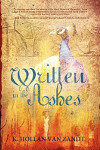
Burning libraries in the name of Christ.
Publisher: (self-published)
Pages: 393
Type: Fiction
Age: Adult
ISBN: 978-1-4525-3513-5
First Published: 2011
Date Reviewed: 13th September 2012
Rating: 3/5
Written In The Ashes is the story of one girl’s journey from slave to potential saviour of the right to religious freedom, and the way the events of society culminated in the burning of the Great Library of Alexandria. At once combining the regular workings of ancient Egyptian life and a somewhat epic adventure, the book is the first in a series.
Unfortunately the beginning section of the book does not express the above. The first part of Written In The Ashes is badly written; there is unnecessary melodrama and plot points are left hanging when they require resolution. The melodrama comes in the form of the main character, Hannah, being unreasonably gallant – she throws caution to the wind many times without thinking about the consequences. An example of a plot point left hanging is when Tarek gets bitten right to the bone and then proceeds to help Hannah, who has sprained an ankle during a show of gallantry, get home, carrying her weight by himself. When they get home Hannah is looked after and stays in bed recovering for weeks, whilst Tarek… well nothing happens, you never hear of his mortal wound again. By all accounts, in an unsanitary society Tarek should be dead.
There is a significant amount of info-dumping about locations and ideas that are not needed. The author describes things that don’t matter, such as telling us that while Hannah was speaking her hair escaped her hair-tie; one can presume from the context that Van Zandt wanted to insert a romantic atmosphere into the scene but without continuation it is superfluous. There is constant repetition of the word “so” that has no meaning, as well the device of “an angel” you’ve never been introduced to, who is doing something, be it smiling, being irritated, and so forth. In the second section Van Zandt finally introduces the reader to the concept, at which time you realise the idea itself is a good one, it’s just a pity it was poorly handled.
So we come to this second section of the book and we do this specifically because suddenly that change in section does everything for the story. The writing style is wonderfully different, plot holes are no longer employed, and the characters come into their own. The story takes on a brilliant mythical religious atmosphere and invites the fantasy genre to stake a claim in its contents. The adventure suggested in the summaries begins and everything here after is much better than the initial first section of the book. It is incredibly easy to get lost in the tale and forget all that came before.
For the most part, the third section continues the goodness of the second, but there are a couple of bad aspects to it, in particular the jump in time. The second section ends with the characters in a rather vulnerable position, and then the narrative suddenly jumps ahead by three years. If this was due to factual events happening that Van Zandt had to subscribe to, it is understandable, but due to the narrative of her fictional characters it does not work – and whilst Van Zandt shows that a threat is still there and must be dealt with hastily, it appears in the backs of the characters’ minds. It would have been better had Van Zandt taken artistic liberty with the historical facts and moved events forward, especially as to all intents and purposes it seems the characters forgot all about their friend for three years for no reason.
Yet whilst it needs editing and duplicate actions removed, on the whole Written In The Ashes isn’t a bad book. Indeed although the violence is strong it fits the period, and there is the element of early Christianity included that is so rarely spoken of elsewhere. Van Zandt really looks into the Parabolani, the so-called Christians (in other words people who believed themselves Christians but behaved as anything but) who took to persecuting anyone who would not convert. The situation was the complete reverse of the Biblical stories of Rome against Christianity and whilst Van Zandt may have created some of the episodes that happen, it is merely the extra details that are fictional. Thus the book is important because in a western world where every other sort of persecution has been publicised, little is taught of this situation. And it gives the library’s female academic, Hypathia, an expanded, if fictional, story, bringing to light both the success and plight of women.
It is unfortunate that the book lacks an air of completion (away from the slight cliff-hanger ending as this is the first book in a series) but there is a deal of goodness here and it would appear that Van Zandt has the potential to be a great storyteller.
Written In The Ashes is a fair look at society and religion in era of the ancients. It will invite research and thoughts to be overturned, though it may be difficult at times to get there.
I received this book for review from the author.
Related Books
None yet.


