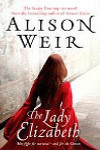
Pam Jenoff – The Ambassador’s Daughter
Posted 18th February 2013
Category: Reviews Genres: 2010s, Angst, Domestic, Historical, Political, Romance, Social
3 Comments

Love and war. They change everything.
Publisher: Mira (Harlequin)
Pages: 376
Type: Fiction
Age: Adult
ISBN: 978-1-848-45203-9
First Published: 29th January 2013
Date Reviewed: 13th February 2013
Rating: 3/5
Margot, a German Jew, has spent the war (WW1) living abroad with her father whilst he works at universities. She has a fiancé who went to war but when he returned wounded, Margot decided to stay with her father. She loves Stefan, but not enough, and feels trapped by the idea of marrying him. In Paris, where her father has moved to attend the conference for the treaty at Versailles, she meets Krysia, a woman very different to her who urges her to be her own person in this new world. But because of Krysia, Margot is found by Ignatz, and when Margot meets Georg Richwalder, from the German delegation, she is no longer able to live her life through her own choices.
The Ambassador’s Daughter is a book that looks at the confusion that came with the war and its end, the way the world changed, and the way that a person was able to remake themselves accordingly. Focused on the main character, the war provides the context and backdrop for Margot’s decisions, but it also allows Jenoff to look at the effects of war in general.
The only issue with these two topics being placed together – a historic war and the trials of a young woman – is that one was always going to be used less than the other, and while it’s not bad, per se, that Jenoff chose Margot, it does mean that there is space for further problems.
The main problem with The Ambassador’s Daughter is the main character. Whilst it is in no way necessary to have a character a reader can like, Margot’s constant worries, repetitious thoughts, and poor choices make her rather unrealistic. It is true a person might be indecisive and worry, especially in times of war, but the fact of the first person narrative makes the tale complex for the wrong reasons; if written in the third person Margot may have come across very differently.
The war being considered very little unfortunately makes Margot seem self-absorbed. She is often oblivious to what people have said, even when it is paramount, and does not see what is staring her in the face. When there is hope and a real chance, she pushes it away. The era was not good for women but her father’s support for her education, even if he wished to see her settled, would have made for a stronger sense of reason and fight, if not strength itself.
So the plot is confusing and there are many points that are not expanded. This does mirror, however, the confusion of war and thus makes it difficult to say with confidence that Margot is unreasonable. Her religion, her relative wealth, her father’s position in the world, would have in reality made for a tricky situation, especially when her mother’s death is included in that mix. It’s the fact that Margot never really saw the war that makes her self-absorption so difficult to accept.
Apart from Margot there are some very well developed and poignant characters. Georg, emotionally wounded but striving to stay strong, provides a brilliant contrast to Margot’s indecision; Stefan, for all his misplaced loyalty, is understandable and if anything this makes Margot’s choices worse. Her father is a different story. Revelations in the book may make the reader’s feelings for him change, or at least create a reason for reassessment.
The book is full of lies; lies between the characters, lies towards the reader, indeed it could almost be said that the theme of the book is lies. By themselves they may be considered too numerous. When looked at generally, these are actually clever devices, drawing everything together in their deception and showing that the war might be over but nothing will ever be the same.
There are some plot points that may be considered too convenient. Jenoff deals with the result well, and in fact in at least one place there is a great show of not using it to get to an easy situation, however it does still detract from the book.
Whilst the writing is, overall, rather good, there are a number of Americanisms that do not fit. Margot uses terms such as “gotten” and “fall” (as in autumn). Considering she has spent years in England and never speaks of America except when referring to another’s discussion, the terms are out of place. There is also the matter of research and the usage of objects not yet invented.
However for all this, The Ambassador’s Daughter is not all bad. The romance is lovely, if spoiled by Margot’s indecision, and the focus on Germans is interesting. Looking at the Treaty of Versailles from the point of view of the everyday German provides much food for thought, and learning about the aftermath for the common person is interesting in general. The characterisation of Georg is so fantastic it could keep the book going even if Jenoff had everyone suddenly break into song.
The exploration of change after war, the way people were practically forced to change, is wonderful. The varying nature of the characters and the different ways they cope or choose to move on provides plenty of food for thought. And whilst it is difficult to write off Margot’s anxiety with this statement, Jenoff never gives the reader any need to feel that they must like the narrator.
The detailing may be misplaced and interesting threads lost to oblivion, but there is much to take away from this book. It will not suit everyone; it will likely divide opinion and cause contention for its structure and lack of adherence to history, but it is far from bad. The Ambassador’s Daughter has many flaws, but the ideas it imparts are appealing.
I received this book for review from ED Public Relations.
Related Books


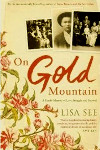
Lisa See – Shanghai Girls
Posted 15th February 2013
Category: Reviews Genres: 2000s, Domestic, Historical, Political, Social
8 Comments

Unfortunately for some it was more of a fool’s gold mountain.
Publisher: Bloomsbury
Pages: 307
Type: Fiction
Age: Adult
ISBN: 978-1-4088-0112-3
First Published: 2009
Date Reviewed: 24th January 2013
Rating: 5/5
When Pearl and May’s father loses the family’s wealth and is threatened by a gang, the girls must marry the sons of another client and leave Shanghai for Los Angeles. The Japanese have started bombing China, but the sisters hope to trick the gang and somehow stay put, keeping their lives as models intact. But that cannot happen and instead they find themselves in dire circumstances before beginning the journey to a country that does not welcome Chinese people, seeking the protection of their new husbands and the family that claims to be making lots of money on the gold mountain.
Shanghai Girls is an excellent novel that looks at how the Japanese invasion of China, and then Communist China, affected those people who had left for America. With a well-developed cast of characters and a detailed backdrop, the story has an atmosphere that few readers, if any, could pass up.
Suffice to say that the story by itself is fantastic – See is a master at writing characters, story, and prose to hook the reader – but the brilliance of the book is the detailing and handling of the conflicts. Set over a couples of decades, beginning in the 1930s and ending in the late 1950s, See places the sisters in situations that allow her to fully explain the events of the times.
This does mean that the story is often gruesome. As in previous books See never shies away from in-depth examination of bound feet, for example, but whereas Snow Flower And The Secret Fan and Peony In Love were set in an earlier period and focused on different types of women, the modernity and setting in Shanghai Girls means that there is a look at how violence towards women escalates during war, and how intrusive and immoral people could be to those they saw as below them. However as much as the violence is explicit, See manages to balance her writing, staying on the line between unnecessary content and lessons.
One of the major aspects of the story is the way the Chinese who immigrated to America reacted to events at home, and how they balanced their old lives with the new ones. One part of this, for example, is the way in which many people wanted to keep traditions, but were not in favour of Mao; this is focused on when See brings in the interrogation of the Chinese by the American government who wanted to rid their land of Communists (and, indeed, simply rid the country of Chinese, full stop). Not only had the Chinese been held, sometimes for months, on their arrival during the Japanese occupation (when America was seeking to deport any illegal immigrants) but the beginning of Communism in China stopped the slow progress of tolerance and began a new wave of discrimination and hate, all in the name of keeping America’s liberty and freedom. Of the initial interrogations, See devotes whole chapters, letting the reader live with May and Pearl throughout the months they tried to gain freedom to travel to Los Angeles, rather than giving readers the easy task of simply knowing it happened. See’s wish to inform her readers of the history may be obvious and hard to read at times, but it is never overbearing or preachy.
See’s characters, for the most part, were all born in China, and whilst May and Pearl begin as modern Shanghai women – intent on being western – Pearl especially starts to see her parents’ traditions as something to adopt herself. This means that for a long time See is restricted to viewing the historical events through their eyes and in the context of immigrants. So when American-born Chinese characters are introduced, See not only shows the arguments that can arise from a culture clash, but also the way young minds can be susceptible to outside influences. And whilst her focus is on communism, See’s handling of the subject enables her message to be timeless.
As to the characters themselves they are developed to the extent that the reader may feel that longing for a continuation after the final pages. (In this regard it’s wonderful that there is a sequel, even if Shanghai Girls‘s cliff-hanger ending is difficult to accept.) And of course there is a vast scope – young and modern, modern but somewhat set in tradition, and strict tradition. Not only are the characters interesting in themselves but also the grouping of them as one family allows for the exploration of family and religious values.
There is a lot of information on the film industry at the time. The sisters, immigrants, can see the way in which Hollywood looks for the exotic rather than the realistic – portraying China as something it never was – as well as the discrimination and stupidity of relegating Chinese people to the roles of extras whilst employing caucasians to play the prominent Chinese characters in the script. The differences between the sisters gives See the opportunity to look at these issues from the view of the person who didn’t care, and the person who saw the hate for Asians. It also gives her the chance to comment on the way in which Asians often look the same to Westerners, where one character with talent is interchangeable with another who lacks it and the director does not realise why he needs so many takes. This issue is looked at further when the American Chinese have to take to wearing clothes with text that says they are not Japanese.
A particularly interesting aspect of the story is the way the sisters feel about each other. The reader may think time and again that this time they will have a bond-breaking argument, but See shows how arguments are different in families as well as showing how allowances are made.
Shanghai Girls spans many years but never feels rushed. The periods See chooses to skip are understandable and lets you see how life trundles along despite hardship. Because of the events See wanted to include in her story, the gaps make sense – this had the potential to be incredibly long when it is just the right length as it is.
Shanghai Girls is a look at war, culture, and everything that is included. It looks at the affects of war on family and country and gives a timeless message of what can happen if people do not work together during those wars. Above all it is the story of a family thrown together by circumstance where the one true bond is between two sisters, and includes the added effect that lies and suspicion have on lives. The book is a triumph in every way and whilst it ends on a huge cliff-hanger it is the sort of book that makes you desperate to move straight on to the sequel.
Related Books


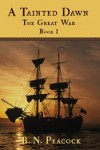
B N Peacock – A Tainted Dawn
Posted 6th February 2013
Category: Reviews Genres: 2010s, Historical, Social
4 Comments
A rocky dawn.
Publisher: Fireship Press
Pages: 339
Type: Fiction
Age: Adult
ISBN: 978-1-61179-212-6
First Published: 2012
Date Reviewed: 5th February 2013
Rating: 0.5/5
Edward’s father is dead and the boy wants respect; when his family scorn him he signs on as a ship-man, finding no respect there either. Jemmy, the fiddler, runs away from home. Louis wants France to be better off. This all takes place around the time of the French Revolution and slavery.
A Tainted Dawn is, unfortunately, for all the history in it, a rather bad book. The writing is poor and the novel is full of spelling and grammatical errors. It would appear that no editing was performed. There is little in the way of plot, the author focusing on characters; this would usually be fine but in this case the story is very confusing due to the writing and it is incredibly difficult to know whether people are coming or going. There is nothing to recommend the characters to the reader and despite the abundance of description in the book, scant time is given to the protagonists’ own.
Peacock uses “big words” when they are not needed. It does infer that the author wanted to create an epic, which is fair, but it does not work. Sentences such as “All three went their separate ways, but all three retained the memory of others”, and phrases such as “Edward perversely inventoried the paintings” are prime examples of the problems with the text.
The issue with all of this, beyond the idea of “big words”, is that it is evident Peacock knows her history well and wants to impart her knowledge to the reader. Evidence comes in the form of info-dumping, where long paragraphs or even pages are taken up by descriptions of people or situations that are not warranted in the book but would be rather useful otherwise. It is no use knowing all about a character you are not going to encounter in more than one scene, for example, yet the historical information provided in the description might be of use to a student. Doubtless Peacock loves all her characters, but that doesn’t mean the reader will accept them similarly without a proper introduction to them, and there is far too much telling (no showing). There are also peculiar descriptions such as “she had skin the colour of chocolate richly laced with cream” for a mulatto (mixed-race) woman.
There are a few occasions where Peacock succeeds and may captivate the reader, unfortunately these are short-lived, being followed by puzzling plot points. There is also too much emphasis on bullying and punishment – though believable in reality, in this book it does not work.
The backdrop is the French Revolution – but there is not nearly enough time given to it, indeed although the characters think about it and live in a changing world they are so removed in other ways that it would be easy enough to allocate them to a completely different era. Instead of worrying about war they worry about their family tree, one even goes so far as to travel to the Caribbean before jumping ship, literally, and going home due to a dream they had about their father being arrested. The connection between the three characters is tenuous at best.
Peacock knows her history and her wish to teach readers is commendable. But it must be said that her teachings are better suited to non-fiction and would likely be rather compelling if presented in that manner. As it is, A Tainted Dawn is confusing, rushed, and includes too many incomprehensible episodes. A naval enthusiast may enjoy the sailing, but it’s likely leisurely readers will not find it smooth.
I received this book for review from Historical Fiction Virtual Author Tours.
Related Books
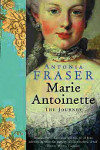


Beatrice Colin – The Luminous Life Of Lilly Aphrodite
Posted 23rd January 2013
Category: Reviews Genres: 2000s, Domestic, Historical, LGBT, Political, Romance, Social
3 Comments
Because the cinema is always an escape, no matter how bad the world outside.
Publisher: John Murray (Hodder & Stoughton)
Pages: 400
Type: Fiction
Age: Adult
ISBN: 978-1-848-54031-6
First Published: 24th July 2008
Date Reviewed: 16th January 2013
Rating: 4/5
Lilly Nelly Aphrodite was sent to an orphanage after a failed adoption, and in the first years of the 20th century, living in such a place is bleak. She loves the nun who runs the orphanage, however, and makes friends with Hanne, who brought her (Hanne’s) siblings to the door following the suicide of their mother. But the orphanage will not always be around and life is destined to lose its peacefulness. And in war-torn Germany, it’s hard to get by when you have no relations to help you.
The Luminous Life Of Lilly Aphrodite (titled The Glimmer Palace in America) is the story of a girl’s struggle to live a good life and break free of the stigma of her background. Not quite the luminous life you might expect (more on this in a moment) it manages to not only show how awful the First and Second World Wars were but also puts them in the context of life in Germany. Some of the main characters are Jewish, which gives Colin the opportunity to explore the strife of Jews in a first-hand manner. The inclusion of the film industry allows her to show how life went on despite major social problems, and how the government exploited the media for their own gain.
To be sure this book isn’t, for the most part, about film, despite what the summary and title (both British and American) suggest. Lilly does become an actress but she must make it through several hardships first. Indeed one could consider the title to be ironic, looking at the realities of the backgrounds of film stars who have not come from wealthy families, and the way that Lilly’s early life is the very opposite of happy and luminous. What Lilly’s life is, however, is incredibly interesting, both as a work of fiction and for the factual content it offers the reader. In a world where the villain is not given a voice, Colin’s focus on Germany, and on its citizens, is poignant.
There is a lot of sexual content in the book; there are affairs and the odd sex scene, but what is put in the spotlight is the way adults reacted to children. Colin never implies that paedophilia was widespread, but she does imply that it happened a lot – in other words she never glosses over it. The author tells of street corners and girls dressed as women. Lilly’s friend, Hanne, enables Colin to look further, as Hanne becomes a prostitute and performer at a seedy bar. Where Lilly demonstrates liberation and bettering oneself, Hanne demonstrates what happens when people are neglected and left to fend for themselves. Colin deals with this well and never casts any character as bad unless necessary. It should be noted that there is also a lot of love, both platonic and romantic, and not all of it is mutual or appreciated. Yet behind all this is the fact of the war and the way it made sex more prominent, taboo preferences no longer hidden, and meetings for payment rife.
Given that the book focuses on Lilly’s early life, there is in fact little overall about the German film industry. For the most part, the industry is confined to the first page of each chapter and Colin accounts film premieres, the relationships between stars, and the reaction of people to the extras on screen that they recognise and denigrate for appearing in propaganda. Whilst these events relate to Lilly few times, they provide plenty of new voices to aid Colin in the description of war-torn and then Nazi Germany.
And war-torn Germany was as awful if not worse than other countries. Colin describes the starving, the effect of disease on an already weakened population, and the lengths desperate people go to obtain food. All this is contrasted with wealth, as Colin not only details the lives of those who had no reason to worry about inflation or hunger, but has some of her characters be part of that set also to the effect that the reader, who has just witnessed utter poverty, is thrown with Lilly into a world of expensive toiletries and plentiful amenities. Not only does it give you something to think about, it exposes the corruption and has the ability to truly impact the reader on the average person’s behalf.
The book may be about Lilly in name, premise, and angle, but really it is the story of a nation. It could have used more detailing about the film industry and not been quite so convenient at times, but it cannot be said that it fails to make an impact. The Luminous Life Of Lilly Aphrodite is not so much about Lilly but about anyone of the time. And it is that that makes it a winner.
Related Books

Jesse Blackadder – The Raven’s Heart
Posted 12th December 2012
Category: Reviews Genres: 2010s, Domestic, Historical, LGBT, Political, Romance, Social
5 Comments

Nothing but the castle.
Publisher: Bywater Books
Pages: 454
Type: Fiction
Age: Adult
ISBN: 978-1-61294-027-4
First Published: September 2012
Date Reviewed: 10th December 2012
Rating: 4.5/5
Please note that this book is the fictionalised story of the author’s family and therefore there are a lot of references to “Blackadder” that will not necessarily refer to the author herself.
Alison Blackadder, instructed by her father to become invaluable to Mary Queen of Scots with the aim of retaining Blackadder castle, begins a life of deception. Having been brought up as a boy in order to mask her from the family’s enemies, Alison finds it easy to be Mary’s eyes and ears in the city, as well as the sovereign’s guard when Mary wants to see the city for herself. Whilst Mary is unattainable, Alison finds herself attracted to other people, however for all her desires one remains the most important – to stay in the Queen’s favour until the castle is regained.
The Raven’s Heart is a grand epic that combines history, politics, and romance, accompanied throughout by a lot of suspense. Indeed the suspense rarely lets go of the narrative; the story speeds along in no time. And considering that almost the entirety of Mary Queen of Scot’s time in her homeland is included, that is a very fine thing.
The epic nature is very much apparent in the storytelling. The beginning of the book focuses on love – Alison’s feelings for the Queen, and the later relationship with one of the maids – creating a sweeping romance, mini plot points arising where Alison’s sexuality causes religion and taboo subjects to enter the fray. But as the book moves on and decisive blows are struck (literally, if you consider the use of execution in those times), romance takes a step back to allow politics, domestic situations, and social history to stake a claim. In other words, the events that do not relate to Blackadder Castle are from popular record and therefore the author lets the dynastic history take over. This in itself is rather wonderful when you consider that the author set out to tell the tale of her ancestors (albeit somewhat fictionalised to fill in the gaps) and means that both the Blackadder tale and the story of Mary Queen of Scots are given ample time; thereby creating a book that is very broad in appeal. The author wants to tell her family’s story, but she never forgets the period of which she is writing and the interest her contemporaries have in it.
Nevertheless, for all the book moves swiftly, it must be said that at times it can seem a bit like a bullet-pointed list. Whilst there is nothing that feels overly quick or lacking in detail, the reader may wonder why the narrative moves quite so fast, even if it’s obvious that Blackadder has made a conscious effort to strip away any text that is unnecessary. Yet the author does look at some events, both fictional and factual, in great detail, and it should be said that the speed and change of scenes and time are a big part of why the book keeps its suspense. Whether the written structure is complimentary or not will likely depend on the reader.
Regardless of the fact the book incorporates romance, attention should be brought to the way sexuality has been approached. Looking at the surface, so to speak – the reference to same-gender relationships on the book’s cover – it must be said that Blackadder’s use of a cross-dressing bisexual woman provides a fantastic contrast to the violent aspects of male perversion present in the novel. The author shows to good effect the difference between harmless same-sex relationships, and perversion. Given that same-sex relationships and bisexuality are often still linked with perversion today, Blackadder demonstrates the marked difference that surely makes the cause for acceptance easy to see. And most interestingly, in choosing these subjects as well as the references to the liberal court of France, the author openly displays the fact that such ways of living have always been a part of humanity. In so doing Blackadder makes use of the opportunity presented to comment on the way different people responded.
The character of Alison, a woman more aligned with manhood, also allows Blackadder the chance to comment somewhat on gender as a whole, and to study the way in which society’s restrictions on what makes a man or woman creates expectations of how people should act. For example, Alison, having lived as a boy all her life, finds talking in a lower register and walking with a wider gait comes more naturally than the dainty traits of the stereotypical woman, and is able to make a decision as to which traits she would like to adopt from her days as a lady-in-waiting.
Unfortunately, with all the events that have been included, the book does start to loosen its grip on suspense before the end. Depending on how invested the reader is in the story of the castle, this may happen when that thread is tied, partly because it can be a surprise, otherwise the natural winding down of the narrative whilst aiming to detail the rest of the reign inevitably slows everything down. In the case of the castle, the story has finished, and thus the continuation of the narrative, albeit necessary to the dynastic tale, shines less brightly. There is also a short period of personification that whilst aligning with the thoughts of the main character, can feel a little convenient and forced.
However the few negatives are relatively minor. Finding anything really off-putting is rather difficult and it has to be said that Blackadder has done a fabulous job of not only introducing her family to the world, but in providing an accessible account of Mary’s reign. There are times when artistic liberties have been taken with the history, but it is easy enough to discover the reality.
The Raven’s Heart is an extraordinary tale of society, politics, love, and one woman’s aim to get back the heritage that ought to have been hers. It will delight the literary interests of a myriad of readers, and perhaps most of all it warrants that the name Blackadder should no longer be confined to a British television series.
I received this book for review from Historical Fiction Virtual Book Tours.
Related Books