




Shelley Munro – The Spurned Viscountess
Posted 22nd June 2011
Category: Reviews Genres: 2000s, Historical, Mystery, Paranormal, Romance
1 Comment
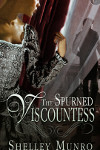
In a time when witches were burned, having a special ability could be a gift or a curse. It could even be both.
Publisher: Carina Press
Pages: 241
Type: Fiction
Age: Adult
ISBN: 978-1-4268-9058-1
First Published: 2005
Date Reviewed: 27th April 2011
Rating: 4/5
Please note that this is a revised version of an earlier book and that it is the earlier book’s release date I have referred to.
Rosalind, a young woman considered a witch by her village, took her chance and married Viscount Hastings, the man her cousin didn’t want. But there is far more to Hastings than the scar that everyone looks away from, as he comes with baggage from a doomed previous marriage. Rosalind can read people’s thoughts and comes to accept Hastings’ issues, but can he? And who keeps trying to harm Rosalind and why?
I really wasn’t sure what to expect with this book. The title suggested something clichéd, and the historic period and romance genre emphasised my thoughts. But I wanted to read more romance and it seemed a good place to begin, something away from Mills & Boon but not something erotic. This is in my attempt to get a good overview of romance and all it offers.
Aside from a weak start, which did suggest cheese, The Spurned Viscountess is rather good. There are a few repetitions employed by Munro that could have been left out, such as Rosalind always lifting her chin, and “a moue of disappointment” used a few too many times for one to appreciate the interesting description, but the story is sound and the characters agreeable.
What is great about the development of Rosalind is that it is something that affects the reader more than the character, that is to say that in the beginning Rosalind doesn’t impress very well but as the story continues it becomes easy to root for her. She doesn’t listen to advice from men to stay at home, although admittedly sometimes she should, and apart from a few stubborn moments, is a strong woman. Hastings is a good hero and his slow development into realising his true feelings is well written. That he bucks the trend of the day and doesn’t wear a white wig is fantastic. Even the bad characters are interesting.
The romance is important, as expected, but it doesn’t rule the story so much that you forget the backdrop. The mystery surrounding Hastings’ problems and Rosalind’s accidents comes to the fore many a time and is the reason to keep reading as you already know where the romance will lead. The identity of the mystery person may surprise you, the descriptions of locations delight. Although the book focuses on the two main characters you get to experience the odd social event.
As this is a romance rather than erotic romance the love scenes are few and comfortable enough to read.
There is a slight paranormal bent coming from Rosalind’s telepathy, but it is not treated in the same way as general paranormal fiction and is actually quite believable for the way in which it is written.
As a lover of the classics and what is known as “literary fiction”, although I do not like the term myself, you may wonder why I rate this book so highly. True, the writing is in a different league to the books I generally read, but for what it is it is good and it is with this in mind that I rate it. As a romance it is worthy of a read and provides that all important element – for it’s story and mystery it stays in your head after you’ve finished it.
Related Books
Jan van Mersbergen – Tomorrow Pamplona
Posted 6th June 2011
Category: Reviews Genres: 2000s, Angst, Domestic, Spiritual, Translation
4 Comments

An intensive look at ourselves, humans, that can’t really be summed up.
Publisher: Peirene Press
Pages: 183
Type: Fiction
Age: Adult
ISBN: 978-0-9562840-4-4
First Published: 2007 in Dutch; 6th June 2011 in English
Date Reviewed: 1st June 2011
Rating: 4.5/5
Original language: Dutch
Original title: Morgen zijn we in Pamplona (Tomorrow we are in Pamplona)
Translated by: Laura Watkinson
Danny is a boxer, and right now he’s running away from his life. Something seems to have happened in the boxing ring (the reader doesn’t know) that’s made him rethink things. He’s also had trouble with the woman he loves. Robert lets him hitchhike in his car to Pamplona, where Robert is going to run from the bulls in order to get away from his routine life, something he does once a year. It may seem a simple decision, but nothing is simple to Danny anymore.
Every now and then a book comes into my life where I know that there is a deeper meaning in the words but I have trouble finding it. Tomorrow Pamplona is one of them. This isn’t to say it is too highbrow to be fully enjoyed, rather that the way Van Mersbergen has told his tale requires the reader’s undivided attention. Of course you’ll be wondering if I worked it out by the end, and the answer is yes, at least sort of.
But although this not knowing is frustrating it gives the book a real staying power. I find myself wanting to pass my copy around for others to read, not just because it would make an interesting discussion but because I think part of the way to gain a truer understanding is to talk about it with at least a few people. One thing that this reviewer will definitely be musing over for some time is just who Robert is or what he is supposed to signify. I got the feeling that although he’s incredibly regular there is something else about him.
If Paulo Coelho provides food for thought then Van Mersbergen provides the ingredients – but you’ll have to roast the chicken yourself. And you get less of a finished story than a lot of books that leave you with multiple options for what happens next – yet at the same time you instinctively know what will happen.
This book is spiritual, borders on angst, and may even be psychological. One of the themes is inevitably coping with loss, Danny’s development focuses on it, and we see this right at the beginning where he copes by leaving home, and later when a minor character copes by staying where the loss occurred.
And characters are everything in this book. Robert may seem to take a metaphorical backseat (and again I wonder about who he is, is his position as car driver relevant in a spiritual sense to Danny) but he is as important as Danny, albeit that the book revolves around the latter. The stage is Pamplona but it’s more about how the place reflects the mind at the time and what is needed by that person.
They drive past fields that are crisscrossed by straight drainage ditches. […] He rolls the car across his palm.
There is a beautiful simplicity in the way the novel is written. Told in both present tense and flashbacks, it seems abstract, disjointed even, but in fact it is meticulously detailed – Van Mersbergen has thought deeply about human actions and the world around us, and used words that read like a soothing lullaby.
The style isn’t particularly poetic and yet the way it makes you feel is as though you’re reading a poem. The writing is comparable to Markus Zusak’s, and if you’ve read my review of The Book Thief you should be able to get a sense of the way I feel about Van Mersbergen’s text, albeit that Tomorrow Pamplona is a translation (by Laura Watkinson). I should probably add that there are a few sex scenes in the book. They are there to help illustrate what is going on in the character’s mind.
Never before have I felt I’ve given a book such an unsatisfactory write up, but I know that I could do no more without revealing it’s entire contents. Truly the only way you are going to find out if this book is worth your time is to read it, because it’s really not the sort of thing you can decide upon without having the words in your own hands.
Tomorrow Pamplona was originally written in Dutch, and was translated into English by Laura Watkinson.
I received this book for review from Peirene Press.
Related Books
Charlaine Harris – Dead Until Dark
Posted 10th May 2011
Category: Reviews Genres: 2000s, Comedy, Mystery, Paranormal, Romance
Comments Off on Charlaine Harris – Dead Until Dark

Elvis isn’t dead, but unlike the band Scouting For Girls who say that it’s because they heard him on the radio, Harris has seen him in person.
Publisher: Gollancz (Orion Books)
Pages: 326
Type: Fiction
Age: Adult
ISBN: 978-0-575-08936-5
First Published: 2001
Date Reviewed: 4th May 2011
Rating: 3.5/5
Sookie Stackhouse can read minds and is met with caution by most people. She could date, heck there are enough guys about who would like to take her out, but the idea of knowing what they want to do in the bedroom beforehand makes desire an endangered species. When Bill walks into the bar Sookie hears nothing, and that makes him a possibility. Except that Bill’s a vampire – except that doesn’t matter. Vampires are an accepted minority now, after all, and her grandmother certainly approves. But then women start being murdered and Sookie isn’t sure of anything.
This was pretty exotic stuff for a telepathic barmaid from northern Louisiana.
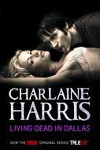
Dead Until Dark is nothing like the cover suggests. Well, ok, there is some blood, obviously, but it’s actually a pretty quirky book and at times hilariously funny. Harris has created a world where vampires are slowly being accepted into mainstream society, and the name of the hero himself, Bill, should give you a good idea of the angle she takes on the whole fantasy element.
The style of writing is rather different and although it fits the book I found it difficult to get used to. Sookie is the narrator and her voice is very unique. In due course you discover that the style is something Harris has constructed specifically to aid the comedy and strength of the book itself. The emphasis is on short sentences and natural reactions. However the writing is still rather bad and a lot of times I had to re-read a sentence to check if I really ought to have felt so shocked by it – and it turned out that yes, I should have.
He was unconscious or dead. With a vampire it was hard to tell the difference.
Because of the style of writing you get a real sense of how Sookie feels, in fact if I were to meet her and tell her that she’d probably say “well you don’t say” – in other words she’s very casual, very open, and more personal than if she were writing a diary; however she is also very naïve about some things to the point of it being silly. Bill is good to read about mostly because of Sookie’s descriptions, but also because of his efforts to be as human as possible.
Vampires aren’t the only paranormal creatures in this book. I’ll just say that if someone told me Stephenie Meyer studied this series before she wrote hers I wouldn’t be surprised. But unlike Meyer, Harris is compelled by humour and because of the age of the characters, and the situation, it’s a lot more fun to read. There’s a reality, almost, that Meyer didn’t reach.
One of the themes is romance but the other major theme, mystery, and the genre of comedy, mean that the narrative never slows down. The mystery is well planned and the importance given to it stays the same throughout.
Make no mistakes, this is more horrific than most paranormal books released in our current era, as, might I say, most pre-Meyers are, but the light-heartedness makes it an ok choice for most adults – be aware that this is very much an adult book and some of the subplots and the sex are not for younger readers.
Dead Until Dark has its flaws and is maybe a little too easy a read at times but if you are up for the challenge of story surpassing, by far, the writing, then I’d give it a go. Just make sure you read it where the idea of someone reading a book with a bloodthirsty cover while laughing their head off would be acceptable.
Related Books


Elizabeth Chadwick – Lords Of The White Castle
Posted 14th April 2011
Category: Reviews Genres: 2000s, Historical, Political, Romance, Social
1 Comment

The lovers are married in a ceremony lasting minutes and then flee from the king. It’s the stuff fairytales are made of.
Publisher: Sphere (Little Brown)
Pages: 673
Type: Fiction
Age: Adult
ISBN: 978-0-7515-3939-4
First Published: 2000
Date Reviewed: 21st March 2011
Rating: 4.5/5
The Fitzwarin family seat was at Whittington until it was taken from them. For years Fulke’s father strove to regain it but when he died it was still in the hands of another and thus Fulke and his brothers took over the fight. Yet Whittington doesn’t remain the only thing in the young man’s mind and once he meets Maude, who he’d first come across when she was a headstrong girl of twelve, his loyalty will be split.
Something that may interest you to know, and to give you a general sense of the book, is that the man this book is based on, Fulke Fitzwarin III, is one of the possibilities for the inspiration of the legend of Robin Hood.
For the longest time I lingered on the fence between wanting to review this novel to let you know how good it is, and not wanting to review it because the idea of reviewing Chadwick’s work seems to me blasphemous. It is just so difficult to explain how amazing her creations are, and indeed the first book I read of hers, Shadows And Strongholds, has still not seen a review from me since two autumns ago when I read it.
The success of the book, above anything else, above the themes, even above the story, is the way that Chadwick makes the history accessible. The style of writing doesn’t so much invite you as envelope you without warning into the world in the book, Chadwick’s style is very much show rather than tell and the details she goes into about the domestic life mean that imaging everything is delightfully simple. Unlike many books where you can be hard pressed to create a whole picture of the scene in your mind, Chadwick’s work fills you in on everything; you hear about the different weapons, the way clothes were made, the cultural traditions such as the bedding ceremony. And as you can no doubt tell from the way I have written it, this paragraph applies just as much to her other books as it does to Lords Of The White Castle.
Because there is not much factual information to go on, and what information there is about the Fitzwarin’s cannot always be trusted, it was inevitable that Chadwick would adopt a more fictional outlook than authors who write of later periods. As someone who thrives on historical fiction that is more or less factual I have to say that it really doesn’t matter here, and dates are included which makes it easier if you later wish to research the factual elements.
The book takes a while to come into it’s own but the lead up to the romance is far from boring, the reader is provided with all the necessary background details and then some, and the characters are strong and well developed. When the romance does enter fully the narrative speeds along because of everything else that is going on. It’s thrilling. Perhaps the best aspects are the times the characters know they are assuming a stereotype and exploit it magnificently.
Fulke smiled at the apprehension in Ivo’s voice. Put his brother in the midst of a melee or ask him to charge across open ground at opposing cavalry and he would not balk. But give him the massive greenery of the Welsh mountain forests and the possibility of wild Welshmen lurking in ambush and he became as anxious as a nun in a brothel.
Humour places a substantial role, although you wouldn’t call the book a comedy. There are some great lines in the story and the metaphors tend to enlist the time period.
“You may seduce me as much as I like,” she declared with a wrinkle of her nose, “but not until we are wed.”
The sex scenes in the book often take place “behind the curtain” so to speak, but when they don’t they are hot and sensual. This doesn’t mean it is erotic fiction, and the words used are not crass, but Chadwick goes further than many romances.
The characters are strong, and Maude, the leading lady, strives to be on a par with her husband – apart from societal constraints, they are equals. There is a brilliant scene where Maude pulls out her crossbow and, after seeing her husband’s hesitation, reminds him that she is better than most men. If you’re looking for a kick-arse chick, you’ll find one here. Fulke is just as good, his dialogue is often priceless and his manner admirable, at least usually. And to bring in the Robin Hood reference I spoke of at the start, Chadwick’s story does include things that relate well to the legend. The rest of the characters are no less developed and the Fitzwarin household and their allies are a joy to read about.
Unsurprisingly Lords Of The White Castle deals with social issues, including the differences in gender. Chadwick generally lets the laws of the period hold sway but often points to times when men were happy to have their women be knowledgeable in politics. The two elements balance well and from her 20th century position she illustrates how some people were ahead of their time. Poignant is the retort made by a man to his father-in-law that if a woman can marry and run her household then she should be able to own land. It strikes as similar to many of the debates we have today regarding the placement of age restrictions, such being able to drive and be married before having the right to vote.
The only problem I had with the book was its length. It carries on for a long while after the threads are tied and although you can understand why it does, because Chadwick is wanting to present you with her version of the relationships, after the afore mentioned threads are tied there is nothing particularly interesting to keep reading for.
Lords Of The White Castle brings a piece of history that is often forgotten to life and fills in the gaps with fiction that is interesting, fun, and believable. If you are at all interested in swords and shields or if you have ever wanted to travel back in time and live in the medieval period then this book for you. And if you’re anything like me then the idea of bread and cheese becomes an incredibly viable option for dinner when hunger strikes and you have to put the book down.
Marketplaces, kings, tournaments, traditional cooking methods, and knights in shining armour coming to rescue their lovers. It’s all here.
Related Books


Véronique Olmi – Beside The Sea
Posted 23rd March 2011
Category: Reviews Genres: 2000s, Angst, Domestic, Psychological, Translation
3 Comments

When obsession takes over everything else.
Publisher: Peirene Press
Pages: 103
Type: Fiction
Age: Adult
ISBN: 978-0-9562840-2-0
First Published: 2001 in French; 2010 in English
Date Reviewed: 9th March 2011
Rating: 5/5
Original language: French
Original title: Bord de Mer (By The Sea)
Translated by: Adriana Hunter
A mother takes her children out of school to go on a trip to the seaside. She wants to take them and herself away from everything and thinks that they should see the sea. They spend the time in a grotty hotel and have little money to spend. It will be the last journey they take.
All that I’d heard about this book could never have prepared me for what I was going to experience. Beside The Sea deals with depression, obsession, and mental illness, although the only one of these issues actually confronted by the mother in words is depression, and then only swiftly. A big part of the problem is that the mother is having a hard time accepting that she has a problem, rather than everything that affects her being caused by society and the world in general. Practically every sentence uttered is to do with a certain issue.
The way the book is written aptly projects the mother’s mindset. Short sentences, the sudden inclusion of swear words and other harsh statements indicate she’s become extremely irrational, as does the way she recounts the conversations of others. This means that the book is, to use a metaphor, one punch after another, repeatedly, beginning in a way that you feel you can understand her reasoning and ending in a way so incomprehensible to anyone but the mother.
It’s been the same sailor for thirty years, what I mean is the way I see him’s still the same, he’s still got his torn clothes and holes in his boots because it’s the bit about “boots all worn” that really matters, it’s terrible having sore feet, and shoes are the ruination of many a mother.
Olmi also shows us how troubled the woman has become by allowing us to see how others have responded. We are told about visits from the social worker and about things that other people have commented on, all described from the mother’s point of view. This means that the reader can understand what other people have done to try and help, and we see the reasons why the woman is against it. Unfortunately it also means that the reader is the one in the middle, wishing the social workers had made more inquiries in order to know what they, the reader, do.
The sad thing is that although the woman is staunchly against her children mixing in the world and she’s afraid of it for herself, you can tell that a part of her is desperate to be included and that perhaps if she was accepted by people, no matter how many (for it seems she has no friends) she might be alright. But then she is her own worse enemy in that respect, making a point of only leaving her home when others aren’t around outside.
One of the biggest issues is a spin-off of the woman’s personal problems – neglect. Because the woman thinks mostly of herself, even when she believes she is thinking of her children, we see, through what she says, that the children, especially the eldest, are not coping. The youngest is still at an age where he doesn’t understand but Stan is nine and has ultimately become the adult in the family. The mother sees what Stan does as being against her, and at times she’s right, but when he is against her it is because he is becoming both frustrated and depressed himself. Stan’s actions, such as the episode at the seashore where the mother describes how he runs into make-believe walls, show the boy’s torment. Stan clearly understands what has happened to his mother and understands that he has to look after both her and his younger brother, but at the same time he sees that the world isn’t as bad as his mother makes out. The wall incident provides the metaphor for the times when he is trying to get through to his mother and fails, and the later dream his mother has of his walking into the sea but not drowning shows her misunderstanding of the other situation. Stan walks into the sea. The sea represents the world, but unlike what the mother is expecting, the sea doesn’t swallow him up, rather he walks through it boldly. Although we are shown that Stan is bullied we are also shown his strength and when he hits his mother all the hurt and burdens he carries with him are presented.
The above is summed up by the following statement:
…he looked so alone… how could he cope so well without me?
Unfortunately because of the difference in age and understanding of the two boys, Kevin and Stan are not always happy together, but the reader can see where Stan is trying to pull Kevin to “safety” as his mother holds onto the child’s unconditional love.
…it’s like he’s laughing to hear himself laugh, that he’s making the most of that laughter, having fun with it, and I know that a laugh like that runs away the minute you grow up.
To refer back to Stan’s strength I would like to comment that the metaphors and usage of imagery to demonstrate the other character’s emotions is absolutely fantastic. It’s rare to find a book so powerful in so many respects.
Why did the mother tell this tale? We are not given an explanation – was it just because she was thinking of it as one might as they write a diary, are we seeing it as it plays out, or is she giving a statement to the authorities? The last is a possibility purely because of what occurs – the book ends without the reader knowing what happens afterwards. But it gives you a glimpse as to how a mind can be thus affected, even if we do not know how long she has been like this or if there was a specific event or thought that triggered it.
The book has a truly haunting quality in that the issues at hand are never resolved and because they are supplied in such detail they are more difficult to accept than the unresolved issues in many other books.
The writing, and dare I say this English translation, for we must give Adriana Hunter her good due, is exquisite, the structure is superb, and what is at once a simple book and a complex one is just incredible.
Beside The Sea is a difficult read but is of great importance for the frank reality it shows of the workings of a mind in such turmoil.
Beside The Sea was originally written in French, and, as previously said, was translated into English by Adriana Hunter.
Related Books
None yet


