Pamela Samuels Young – Murder On The Down Low
Posted 10th January 2011
Category: Reviews Genres: 2000s, Crime, Law, LGBT, Social
Comments Off on Pamela Samuels Young – Murder On The Down Low

If you aim high while staying low, there may be someone in the middle waiting for you to fall.
Publisher: Goldman House
Pages: 369
Type: Fiction
Age: Adult
ISBN: 978-0-9815627-0-4
First Published: 2008
Date Reviewed: 10th November 2010
Rating: 4/5
Successful African-American men are being killed in the city and at first it seems that they are linked only by their wealth and status; but as lawyer Vernetta and her friends begin to discover there may be a well-kept secret that binds the men together. And for the women living with the men, the cost can sometimes be immense.
I’ve no qualms about saying that except for a brief foray, at age twelve and of only a few pages, I’m clueless when it comes to crime fiction. The furthest I’ve ever come is Philip Pullman’s Sally Lockhart Quartet, and those are more about the mystery and suspense than the crime. So in the case of this book I’ve little to compare it to and thus my opinions may not be sound, but they are true, and this book has confirmed something I already knew – reading about law firms can be incredibly interesting.
Samuels Young is extremely bold to have broached the subject she does because if you become angry at what seems to be the message at any given time, and stop reading it, you could possibly go away with a bad impression that isn’t warranted. It takes some time for all of the moral teachings to be discussed and I don’t think it would be spoiling the book to say that Samuels Young is not condemning homosexuality. The subject is viewed from many different angles and she allows each their own say, effectively providing an unbiased account of not just sexuality but modern lifestyle as a whole.
If you flick through this book before reading you may be shocked by the number of chapters, which runs over 100. But this is just part of the overall good structure of the book. Rarely are chapters more than three pages long and this means that the story is constantly moving back and forth between different characters and situations. The narrative is easy to fly through because although it may not be a thriller, the business of crime solving has been written to be fascinating and the constant changes in scenery mean there is never a dull moment. The shortness of chapters adds to this. The book may be as long as your average favourite, but the writing style makes it a much quicker read, even if you’re not devoting many hours per sitting.
Samuels Young has brought her own working knowledge of the world of the attorney to the table, and it shows. There is so much detail here that it is easy to become engrossed, but she always includes enough information about the life of her characters away from their jobs so that the book never becomes bogged down. In addition she relies little on law jargon making this an ideal candidate for someone wanting to read a law novel while knowing nothing about the subject.
“You think gynaecologists ever get tired of staring between a woman’s legs?” He inspected J.C.’s exposed thigh through the slit in her skirt.
“I don’t know, Gerald. You ever get tired of being such an asshole?”
There are quite a few characters in the book, and while the reader is given a bit of their background, again Samuels Young doesn’t overdo it, while it must be said that this is the third book to feature Vernetta and her friends so maybe that’s why (I’ve not read the others). The plot is in the driver’s seat so that although the characters are interesting they aren’t the reason you turn the pages. The only thing that is perhaps dispiriting here is Samuels Young’s approach to explaining a character’s personality by detailing their food and drink choices. Reading it, it feels as though you should be gaining something from it, but there isn’t anything to be had.
The other characters are great, and I’d put a spotlight on all of them, but it’s Special who runs the show for being the catalyst for so many reasons. She isn’t actually given more space in the book than the rest, but her dealings are so completely different to them and her manner too that it’s likely her you’ll remember most. The boyfriends are also great and easy to imagine. While they might not intentionally be humorous their place in the story, firmly outside lawyer proceedings, means that they bring a certain element of enjoyment to the book that wouldn’t have existed otherwise. Where the women are naturally busy and uptight because of the lawsuits, the men are laid back and the reason you get to see the other sides of the ladies. They are a very good plot device.
In lure of the accessibility of the book regarding law, it might also be useful to note that this book is fully accessible as a whole. People unfamiliar with African-American slang should find no problems when reading this book.
Having read Murder On The Down Low I can see why Samuels Young wished to tap into a community that isn’t being included in the genre she loves. You see so many movies where solving a crime involves the black community but very rarely does the plot allow for the characters to be more than two-dimensional except for the occasional main character who is the one to lead the investigation into the neighbourhood. Samuels Young presents the community as an interesting backdrop to a story, the people fully included. And she shows that when it comes down to it the differences that come from culture aren’t big and thus it’s a pity that there isn’t more fiction like the work she produces.
He tried to smile, but she could tell his lips weren’t used to moving in that direction.
If you can solve the mystery I congratulate you, because it’s been well hidden. Samuels Young never invites you to guess and interestingly, although you may want to, there is never the feeling that you should. These people are more than capable of solving it while you make your way through the pages.
Murder On The Down Low makes a field of shells from a single bullet and weaves a mile from a few yards. It may not be worth the time Special puts into it, but it’s worth yours.
I received this book for review from the author thanks to Pump Up Your Book.
Related Books
None yet
David Nicholls – One Day
Posted 15th December 2010
Category: Reviews Genres: 2000s, Chick-Lit
2 Comments

We may know the answer well, but when it comes to actually acting on it why do we generally jump ship?
Publisher: Hodder
Pages: 433
ISBN: 978-0-340-89698-3
First Published: 2009
Date Reviewed: 19th November 2010
Rating: 3/5
Dexter and Emma were acquainted during university, and Emma fell for Dexter pretty much instantly; but it isn’t until their graduation that they finally hook up. This doesn’t equate to happy ever after however, due to silly reasoning and steadfast views. There’s definitely something there though, and it seems there always will be, no matter what happens along the way.
I have to admit disappointment, and a lot of that has to do with the rave reviews I’ve read (I’ve not found a negative one yet) and all the quotations on the cover of the book from well-known authors. Why the disappointment? For one, I’m afraid that the book is far too similar to Cecelia Ahern’s Where Rainbows End, which I read a few years ago. While Ahern’s book isn’t exactly stellar, it is dramatic, bold, contains enough angst, and ends in the way you’d expect – whereas One Day isn’t as engrossing and the idea of only including a single day of each year becomes off-putting when you realise you don’t know half as much about the characters as you should do. There is also the fact that Nicholls has to fill you in on all the days you’ve missed in-between, and because he’s used the same date every year there are a lot of events referred to that you can’t help but think would’ve made for a better book, had they been included.
The characters are alright, but as previously discussed you don’t get enough time to know them. This is a shame because it’s akin to knowing that the person you just struck up a conversation with would be a fantastic friend for you – if only protocol didn’t dictate that now you must go your separate ways because the party has ended and that at this stage in your acquaintance asking for phone numbers would be too forward.
The climax comes several chapters before the end, leaving you wondering why – and then you find out as a second climax rears its head. This second climax is unfortunately very cliché. It isn’t predictable but upon reading it I just wanted to groan.
One thing Nicholls does do well is raise a few laughs, and there are some great extracts, humorous and not so, which I’m adding here so that you don’t wonder why I’ve given this book better-than-half marks when it seems like I’m giving it zero:
…this would be the third girlfriend, lover, whatever, that she had met in the last nine months, Dexter presenting them up to her like a dog with a fat pigeon in his mouth.
“It’s like everyone has a central dilemma in their life, and mine was can you be in a committed, mature, loving adult relationship and still get invited to threesomes?”
“And what’s the answer, Dex?” she asked, solemnly.
“The answer is no, you can’t. Once you’ve worked that out, it all gets a bit simpler.”
“It’s true; an orgy won’t keep you warm at night.”
“An orgy won’t care for you when you’re old.”
It takes until the very, very end before Nicholls finally divulges what happened at the start of the friendship, the day after the one he talked about, but this is cut short and, to use the dog and pigeon metaphor afforded by Nicholls himself, as soon as you think he’s presenting you his finds and you reach towards them, he snatches his head away and runs off with the pigeon. Some details you will never know.
And it’s a great pity really, because similarities with Ahern aside this could have been a very good book.
Related Books
None yet
Kelly Hunter – Exposed: Misbehaving With The Magnate
Posted 21st November 2010
Category: Reviews Genres: 2000s, Domestic, Romance, Social
1 Comment

I know, I know, I know. I’ve thrown away my – hopefully good – taste in books and settled for a trashy novel. I’m no longer a Mills & Boon virgin.
Publisher: Mills & Boon
Pages: 138
ISBN: 978-1-408-90710-8
First Published: 2009
Date Reviewed: 4th November 2010
Rating: 2.5/5
When I was a young teenager, and asked an adult about Mills & Boon, a publisher I’d heard of, the response was less than positive. I was told that they produced the worst books, riddled with sex, and were completely pointless. I took it to heart, but ever since I’ve been meaning to rebel, because the opinion had been so awful I just had to see what was so bad, and having a laugh at a cheesy book sounded a fun idea.
So when I found out that Mills & Boon were providing free ebook downloads of some of their titles I acted the wanton lass and downloaded them all so that I’d have a number of novels to choose from. I wanted the most sex-laden book possible without breaking the barrier into full-on erotica. Downloading was good, because no way in heck was I going to walk up to a counter in a bookshop with a seedy-looking book in tow.
Out of the 12 I chose to read Hunter’s book, lured by the bright cover image (different to the one shown in this review). It sounded the least dodgy and relatively cheese-free. The plot was thus:
Gabrielle left France unwillingly when she was caught kissing her mother’s boss’s son (the heir to his family’s castle and wine industry). Her mother, the housekeeper, believed Gabrielle’s association with a man of a far higher social class unbecoming. But now Gabrielle is back, and she never had managed to get over her feelings for Luc. It’s quite possible that he never got over her either.
I was very surprised that it took so long to get to the sex. There I was expecting it soon and expecting it rampant and instead by page 50 Hunter was still trundling along detailing vineyards and the wine business. I went to make a coffee. Whether this is usual for the genre I have no idea, but I did start to wonder if this would be any “worse” than an Elizabeth Chadwick novel, where the sex is passionate but the history equally important. When the sex did finally arrive it was steamy, and actually not all that different to a regular fiction book. There was little to cringe at and the basis of the relationship was an all-consuming and true love.
Which brings me to the writing; it was quite good. Again I was surprised, and very happy to find no spelling mistakes whatsoever, which is more than can be said for most mainstream fiction. The plot was well developed and there was plenty of information about what goes on backstage in the wine industry (and no, I’m not meaning sex).
There were a good few issues covered; one that was explored in detail was the relationship between Gabrielle and her mother. The social standing of the people didn’t make me feel separated from the story; it was simply that they just happened to have money. The characters were solid and although there wasn’t sufficient time to really get to know who they were, the details were ample enough.
So yes, I’ve been shocked at my foray into this genre, but I’m aware that my previous opinions gained from hearsay may have been too harsh anyway. Maybe I didn’t really know what Mills & Boon were about.
The cover of my copy was scandalous but in fact this is a story of people who could never love anyone else the way they love each other. I wouldn’t recommend it as something you should make a point of reading, but if you happen to come across it and have nothing else to do I’d say it’s not such a terrible use of time.
Related Books
None yet
Molly Roe – Call Me Kate
Posted 14th October 2010
Category: Reviews Genres: 2000s, Historical, Political
2 Comments
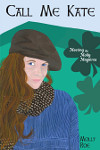
A young girl secretly takes on the rebellion before the war.
Publisher: Tribute Books
Pages: 148
Type: Fiction
Age: Young Adult
ISBN: 978-0-9814619-5-3
First Published: 2008
Date Reviewed: 24th September 2010
Rating: 3/5
When I was asked to join the blog tour for Call Me Kate, saying “yes” was easy. Having read recently about the creation of the United States, but knowing nothing about the issues faced by the Irish, the idea of adding to my knowledge interested me greatly.
Katie McCafferty lives with her family in the newly created United States, but their Irish heritage does not permit them the same freedoms granted other Americans, and they are forced to live in a community with other Irish families, mining for coal. The mines are dangerous places – the owners not caring if they lose workers to avalanches – and slowly the Irish people have come to form unions. Those in power want them to join the war but why should they when they are treated as second-class citizens?
The first thing that struck me about Call Me Kate was the chapter list – yes, something before the story! Roe has made a big effort to title all chapters with words beginning with “C”. There are only three that don’t begin this way but they do have a word beginning with the letter somewhere in their title. For a book with twenty-two chapters I reckon that’s pretty damn awesome.
The book is very short and unfortunately this means that a lot of detail is invariably missed out. Dialogue is preferred in favour of description and scenes move from one to the other without time to get your bearings, the chapters themselves don’t feature the subtle gaps that most books do. All this means that the story moves far too quickly, never staying in one place long enough, it’s as though author only had a couple of days in which to write it. The narrative is at times melodramatic, caused in part by the plenty dialogue. Because of Katie’s age the scene where a few tragedies happen at once seems unrealistic and more akin to a soap-opera storyline, no matter how realistic it actually is.
But despite this the novel manages to pack some great issues into its slim width. It brings to mind issues that were at the forefront of Lisa See’s On Gold Mountain, where the reader can’t but find the whole set up of infant America ridiculous. The Irish were treated as nasty immigrants, but wasn’t the majority of the population made up of immigrants? And there was a lot of awful prejudice against the native people but it’s absurd how the white Americans, a great number not being many generations from born and bred British themselves, thought that the Irish shouldn’t be allowed. Many of them probably had Irish ancestors.
Something that really makes you think is the opinion of the Irish, and this links in to the way the Americans treated them. In many respects you have to concede that the Americans had a point in wanting to keep the Irish out – because the Americans had got there first and you can understand that they might have been worried about resources being taken from them (consider the current issues of immigration in Britain). However, the Americans treated the Irish like dirt and had no intention of giving citizenship to those who fought for the country – so it is with that said that the situation was wrong. And you can’t forget that previously the Americans had taken the land from the natives anyway.
Roe’s character, and the narrator of the book, is a fourteen-year-old female. Katie is a strong character and Roe has portrayed her brilliantly. You must approach this book remembering her age because it atones for a lot of the simplistic style of writing in the book. Having a female as the main character also makes the story more fictional and thus less open to dispute about historical accuracy because of the point of view allowed by society for Katie to see. The problem with a female lead in this situation refers to that point of view – you don’t get to read about as much of the action and atrocities that went on. Of course you do read about them because Katie sees the wounded, hears the news, but it feels as though Roe’s research hasn’t been able to flourish. While Katie is a great character, Roe appears to have a lot more information to impart, and I for one would love to read a book by her written about the same era and from a character possessing more first-hand experience, a character like Con, for instance.
I couldn’t help but compare Call Me Kate to Celia Ree’s Sovay. In both the main characters are strong but Katie definitely shines over Sovay for her more realistic qualities.
Something that I hope Roe will continue to focus on, because she can be very inventive, is the use of similes. As an example, here is a quote that stands out:
I was as jumpy as a rasher of bacon on a hot griddle.
The book improves in the last several pages, including more descriptions, but the end is too sudden. As a debut Call Me Kate is good, but Roe needs to work further on the difference between compiling fact and being a novelist because while it’s in recounting historical fact that her talent lies chiefly, there’s no reason why her creations in future should not be first-rate.
I received this book for review from Tribute Books.
Related Books


Alison Weir – Innocent Traitor
Posted 21st September 2010
Category: Reviews Genres: 2000s, Historical, Political
Comments Off on Alison Weir – Innocent Traitor

A brilliant re-telling of a life that other lives conveniently forgot.
Publisher: Arrow Books (Random House)
Pages: 404
Type: Fiction
Age: Adult
ISBN: 978-0-09-949379-2
First Published: 2007
Date Reviewed: 16th September 2010
Rating: 4/5
Lady Jane Grey, the great-niece of Henry VIII, was executed on 12th February 1554. A puppet at the hands of her elders, she was abused by her parents and shown little care all her short life, being set up as queen against the rightful succession for the welfare of those very people who abused her. She “ruled” as queen for nine days having been forced to take the title by her power-driven father-in-law, before being arrested and made to suffer the pain of waiting while her second-cousin, the rightful queen, attempted to have her set free.
Weir has the story narrated by various people, those associated with Jane in some way, and of course Jane herself. Weir uses this device in order to give full details of what was happening so that you hear the story from different view points and can gather a lot of the evidence avaliable from different sources. Where Jane’s information is lacking Weir switches to her nurse, and where the nurse is stuck at home with her mistress Weir turns to the Dudleys.
There is a single point that I find cause for debate with, and it is not so much to do with the story as the author herself so I will deal with it first. Because much of Jane’s life was included in those of Katherine Parr and Elizabeth I’s, much of the narrative is very similar to that of Weir’s later book, The Lady Elizabeth (which I do not hesitate to admit that I read first), and also her non-fictional account of the heirs of Henry VIII, Children Of England. In literal terms this could not be helped and it is understandable that, being a lover of Tudor history, Weir would want to write about all three women, but the stories are too similar. So the question is, was it a good idea for Weir to produce three books that, in part, deal with the same subject? The case for the books is that the accounts are each told from different points of view, so in that way to read all three means you gain a very good understanding of events. The case against is that it reads a bit like a cut and paste job. Weir hasn’t reused the same phrases but the problem is that for the most part she may as well have because of the similarity.
It’s difficult to review objectively a book that deals with a very real and very terrible subject, so it’s just as well that Weir has produced a book that had me angry for good reason, and emotionally involved. As Weir reminds us, Mary was not disposed to kill Jane but when the Spanish ambassador said that her husband-to-be would not go to England unless she did, she relented. It’s horrifying to read, because even if the dialogue of the scene is fiction the basis is factual. It’s abhorrent to think that Mary put her husband-to-be before Jane’s life even if you can understand somewhat that she was afraid that to lose him would mean no marriage or children from her; because Mary didn’t want to lose the power to change the faith back from Protestant to Catholic. We all know that in truth Mary was an incredibly mislaid Catholic for believing Protestants needed burning, but the case of Jane versus Catholicism is just disgusting. Unfortunately it happened and there’s nothing we could have done about it. And all that for a man who was constantly unfaithful, uncaring, scheming, and evidently only Catholic in name.
And religion is something you definitely find yourself thinking about, towards the end of the book especially. The monologues regarding religion demonstrate the lack of thought both denominations had regarding the ways to God. Both sides consider themselves the true faith but did either really have a right to the claim? In essence very few truly practiced what they preached, and it wasn’t just a case of being lax in their Christian duties.
Something Weir causes you to do is re-assess Guilford Dudley. She tells you about the cruel ways in which he treated Jane, which may or may not be true but if not certainly would have mapped to other ways, and then shows his remorse. Guilford was unfortunately a product of his parents and it took the threat of death to change his actions towards Jane. In Guilford and Jane we see where a path has forked – Jane has dealt with her neglectful parents in a mature manner, whereas spoiled yet subtly neglected Guilford is a mess.
As she does later, in The Lady Elizabeth, Weir peppers the text with lots of factual bites, but you can tell in the way that it’s done, like dialogue, that Weir wants to impart as much factual knowledge as possible. This the book read more like a non-fiction so that, effectively, what you’ve got here is a factual book disguised.
Weir takes the chance, while the story is less harrowing, to inject some humour into the it to lighten the mood, but she never strays from fact which means that the laughs you will find are ones the people of the time would also have shared. For example, Henry VIII wanted to annul his marriage to Anne of Cleves post haste because he found she smelt bad and was overall unattractive to him – but he was very upset when she agreed without pause that that was a good idea. It’s also fun to read the description of Jane Seymour by Frances Brandon, whether factual or not, who describes her as “that pale witless milksop”. In addition to these snippets you get to hear what the servants thought of their masters, and of course as they were actually normal people (for can you really say the sheep-like nobles with their disloyal ways would make preferable companions?), it’s very interesting. The servants were the satirical reporters of the day.
Children are often head strong and inclined to speaks their minds, and perhaps none more so than the young kings of old. Although King Edward VI is part of the background cast, Weir provides through him a very good source of the nature of privileged children in those times, including all the thoughts a nine-year-old boy would have given his thirty-year-old sister regarding the redemption of her soul. Of course the young king wasn’t always obeyed, and in fact had a tendency to be stroppy.
I know people speak in hushed whispers of young brides dead within a year of their wedding, or of mothers of large families cruelly taken from them.
Speaking of children, Weir doesn’t shy from providing accounts of childbirth, indeed there are at least three included in the book of varying success. Childbirth was fraud with danger in Tudor times and it makes you think how far we’ve come, yet also reminds you that many places in the world still suffer, which is crazy really because medicine has come so far.
Weir’s style of writing is compelling without being difficult to put down for a while. In my opinion her best moment is in the final pages where she moves between the point of view of Jane and her executioner. But she makes a few errors that should have been picked up on, most noticeably saying that baby Mary Grey went to bed with Katherine while they were in Oxford – after saying Mary had been left at home. This isn’t a problem however, and it’s perhaps a reason to be thankful that she made the error there where historical fact wasn’t imperative to know.
In a bad time and a bad place there lived many awful and self-righteous people who would give their daughter’s happiness for their own promotion. Lady Jane Grey’s story is an all too often but very important one and Weir has produced a work worthy of the time you may want to dedicate to her.
Related Books