Julie Buxbaum – After You
Posted 8th September 2010
Category: Reviews Genres: 2000s, Domestic
1 Comment

Life can get ahead of you and it can take a shocking event to make you realise how precious things are before you lose them and yourself.
Publisher: Bantam Books (Random House)
Pages: 399
Type: Fiction
Age: Adult
ISBN: 978-0-55381-884-0
First Published: 2009
Date Reviewed: 2nd September 2010
Rating: 2.5/5
When Ellie hears that her best friend Lucy has been killed she immediately flies to the UK to be with Sophie, the daughter left behind. Ellie introduces Sophie to The Secret Garden and together they read the book for therapy. But Ellie makes no plans to go back home and as the days wear on her husband begins to question her reasons for staying. It seems that through Lucy’s death and Ellie’s upheaval the issues that were haunting Ellie, unwittingly, have been dragged to the surface. She now realises where things need to change, but the question is how to go about it?
The idea for the book is simple and although not utterly compelling it’s a good enough reason to read. However I had a major issue with this book that really spoilt it for me so I’d like to discuss that first.
Buxbaum makes her character a commentator of British life and the assumptions made I personally found rather offensive. Had these assumptions and slurs been few it would have been easy to overlook but there were many many references to “Brits” and “Britain” throughout the book and 90% of them dealt with it’s people. The tragedy of Lucy’s death is placed behind a myriad of subtle and not-so-subtle prejudiced remarks. What started as a humorous look at difference turned into a slander match, which is especially odd when you consider that Americans and Brits aren’t so different.
An example, one of the worst, is the statement that British children are not demonstrative of love. I’m sorry, but this is rubbish and I can see no possibility but this being Buxbaum’s own opinion.
Unfortunately it took a lot of digging for me to unearth the goodness from where it had got lost under the remarks.
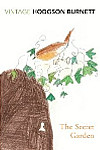
A well-used topic in the book is another book itself – Ellie and Sophie read their way through Frances Hodgson Burnett’s The Secret Garden, and the story overlaps with their life and with the themes in After You itself. Here I’ll quote from the quotation included from The Secret Garden:
To let a sad thought or a bad one get into your mind is as dangerous as letting a scarlet fever germ get into your body. If you let it stay there after it has got in you may never get over it as long as you live.
The above has been used by Buxbaum to illustrate one of the themes in After You – Ellie’s loss a few years before the book started has been allowed to fester and grow out of control so much so that it impacted her marriage to dire effect. The quotation from The Secret Garden comes right at the time when Ellie is starting to realise exactly how her life has become the sad event it has and when she’s realising that if she’d stopped it things would be different.
The biggest theme of the book is questioning what you have; is it enough, is it good enough for you, do you need more? Buxbaum never talks about “you don’t know what you had until you lose it”, though this could be applied, rather she talks about living contented and not letting difficulties ruin things that aren’t related to them. One of the characters in the book says that they failed the test, and it is then that the concept comes into play – something that should have brought joy brought instead sorrow, but it didn’t stop there, it brought sorrow to a place where it was not untitled to go.
It is evident where Ellie’s problems stem from, and the reader knows this long before she does. In many books this structure is frustrating but here it is warranted. It allows you to sympathize and cheer for Ellie, to really understand how someone can be affected by what she went through, and allows for character growth.
Buxbaum loves her metaphors and hiding themes and ideas within cleverly designed sentences. She doesn’t make it hard to discover what she’s really talking about which, on the face of it that may be considered a bad thing, but in the case of this book and it’s style it’s perfectly fine. The very end sentence of the story is one such example where words relating to a current activity are clearly a metaphor for the bigger picture.
Not unlike Katherine Webb in The Legacy, Buxbaum likes to comment on the human condition and society. (The following quotation has been edited so that spoilers are not included):
“We had lost the potential of…not a real…, another universal thought shared but not said aloud by those who hadn’t lost a thing.”
There are things in life that are difficult to get over, no matter how hard you try, and it’s very important that it is done, within reason, in one’s own time. In this particular case the whole concept of just getting up in the morning and working through it didn’t work, just as in real life.
We want what we don’t have, and in trying to get what we don’t have we lose and forget what we do have. So says Buxbaum in the middle of the book and this sums up a big section of After You wonderfully.
Buxbaum has taken an everlasting issue and applied to it very real and equally everlasting problems of life. She asks that those who have had trouble understanding before take time to try and understand now and asks everyone else to look at their lives and consider what they have. Away from the offensiveness of the book the story is a very worthy read and one which has given me a fair few things to mull over.
What happens after? After everything, when the world goes quiet again – what are you left with? Ellie now knows, do you?
I received this book for review from Transworld Publishing, Random House.
Related Books

Gayle Forman – If I Stay
Posted 3rd September 2010
Category: Reviews Genres: 2000s, Paranormal, Romance, Spiritual
1 Comment

When there are people in different corners of existence, and both sets are people you love, who do you choose to go to?
Publisher: Doubleday (Random House)
Pages: 210
ISBN: 978-0-385-61621-8
First Published: 2009
Date Reviewed: 12th August 2010
Rating: 3.5/5
If I Stay has been given a very warm reception by bookstores and online media. It has been hailed as the forerunner to other tales and indeed Lauren Oliver’s (later) release, Before I Fall, was compared to it.
Mia’s family car crashes while they are all in it. She (Mia) locates her parents but where she thinks she’s found her brother she’s actually found herself. Her spirit has left her body – but she’s not dead yet. Throughout her time in the Intensive Care Unit, Mia continues her out of body experience, looking back on her life, at the extended family, friends, and boyfriend who visit her, and wonders what’s next. What can she do? What should she do? Both are questions she must answer for herself.
Maybe it was all the hype, or maybe the fact that I’d already read Before I Fall, but I didn’t find If I Stay to be as compelling as I’d hoped. Forman tells a good story, Mia’s unpredictable state over the course of the day, but although there were flashbacks I never felt enough for the characters. And this is important for a book dealing with such a subject. If it had been longer there would’ve been more to grasp hold of as Mia didn’t have enough time within the 210 pages to develop herself. I wasn’t convinced of Mia’s relationship with Adam. This wasn’t the fault of the relationship itself but rather in the way Mia saw it. We get a good glimpse of the strength of Adam’s feelings but they needed to be written stronger rather than eluded to. It was Mia’s love that was the problematic part.
Adam is a hero, but often Mia doesn’t understand his motives. The reader does, however, and this is frustrating because everything points to the obvious choice of life. Personally I was confused as to how she could choose anything else because the reasons were staring her in the face. In that way she sometimes seemed selfish, even if she actually wasn’t. Perhaps some space for Adam’s point of view here would have remedied that and I am very happy to have heard that a sequel is being written as If I Stay may not be perfect but it’s good enough for you to want to stick around.
Music is everything in this story. It’s the reason for Mia’s parent’s relationship, the reason they have their good family friends, and it’s the reason Mia became close to Adam. Most of the time Mia’s thinking reverts to her cellist training and she is constantly, though unknowingly, reminding herself that music is the reason to stay. Because of her family’s dependence on music one believes that Mia’s parents would, in the situation she is in now, tell her to put it before all else. I’m not sure if I am correct in this because I am a musician myself, but I would guess that people not familiar with the art would be able to understand most of the terms.
Mia and Adam’s shared devotion provides the meaning for a rather original intimate scene. In a way it’s quite strange and certainly a lot more graphic than most accounts of intercourse in fiction; and yet the sex is not introduced at that point. Forman favours this over any detailed tale of Mia’s loss of virginity, which she simply mentions instead of describing. The whole concept of the scene and Forman’s later reluctance are cause for a lot more thought than had she just had the characters ripping each others’ clothes off. Forman is subtly reminding us that sex doesn’t just have to be sex, doesn’t just have to be what everyone thinks. We can interpret it in our own way and make it specifically relevant to ourselves. And surely that makes for a more satisfactory and spiritual experience.
Forman’s writing is simple but it makes the book an easy read. Forman can be humorous and, considering the upsetting topic at hand, chooses her timing wisely. There is a fabulous scene involving birth that is worthy of many laughs out loud.
I often like to mention in a review what the reader can take away from the book, to cherish long after they’ve finished. Regarding If I Stay this is surely the central point of who you would choose. Forman isn’t suggesting you think of death per se, the idea can be applied to everyday situations; and to apply it to everyday situations doesn’t mean you have to take it literally and consider whether your parents are as important as your romantic interest, rather that you consider your feelings for everyone more than you usually would. Mia’s experience is the suggestion that you should.
If I Stay may be short but it does what it sets out to do within the limits of it’s page count. There are many books that will teach you the same things but if you’re looking for something that will still reach out to you in a small amount of time then this may be it.
Related Books


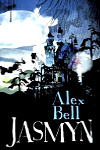
Alex Bell – Jasmyn
Posted 27th August 2010
Category: Reviews Genres: 2000s, Fantasy, Thriller
1 Comment
An epic tale of love, dark magic, and mystery, told in a reasonably short time.
Publisher: Gollancz (Orion Books)
Pages: 311
Type: Fiction
Age: Adult
ISBN: 978-0-575-08029-4
First Published: 2009
Date Reviewed: 24th June 2010
Rating: 4.5/5
Jasmyn’s husband is dead, that’s all there is to it – there were no warnings, no signs, it was sudden, he’s gone. And now Jasmyn’s started to experience strange things – swans falling from the sky at his funeral, photographs of her wedding day being altered so that she no longer looks happy, cruel people around her. We say that fairy tales aren’t real, but Jasmyn knows better and, actually, fairy tales may be exactly what this is about.
Jasmyn boasts a fantastic story. In it Bell has blended reality with fantasy. There are a lot of fantasy books that are strictly fantasy, and then there are some that mix our world with a pretend one, but in these latter cases the worlds are more clear-cut. What Bell has done here, not unlike in The Ninth Circle but certainly to better effect (because of course in The Ninth Circle the fantasy was theological, therefore more knowingly realistic than unicorns and fairies) is set the bare basics of the story – Jasmyn herself – in our world and then tease at the edges until they fray and become twisted around the make-believe. The fairy world in Jasmyn isn’t happy-go-lucky – this is a dark fantasy – and the dark element aids the blending further. This is in part due to the fact that the actual fairy world comes into the story only a few times because the emphasis is on keeping the characters away from it. Similarly to Lex Trent Versus The Gods, Bell has included a range of different tales from different countries. I found the book made me re-think all the things we are told are myths. Is our world really as black and white as we’re taught?
Jasmyn, the character, is an interesting one. Bell has made her albino and so alone this brings in the question of whether or not Jasmyn may be mystical herself. To think about it beggars the question of whether this would be acceptable in real life because, like anyone whose looks differ from the “norm”, albinos would not like to be singled out in such a way – but then at the same time some might find it empowering to see themselves in the way that Jasmyn has been taught by her husband. The inclusion of Liam’s love for Jasmyn and his understanding of her is a great attribute of the book. The character will likely appeal to anyone who has a disability or has trouble with social expectations for her internal discussions about how she is accepted.
In general Jasmyn is a fine narrator, but at times she can be irritating. It suits the telling of the story to have her not realising or understanding things every now and then, but although it may provide more space for extra subplots it causes the story to slow down. It suits its length but it’s slower compared to Bell’s other work. Some of the dialogue is superfluous as are some internal conflicts within Jasmyn’s mind.
Through the character of Ben, Bell has re-used the same idea she did for Stephomi in her previous book. Is he good or is he bad? She writes this element well so that although it may basically be a repetition – and a very apparent one – it never feels stale, and most importantly is, as with The Ninth Circle, a big reason to keep reading.
Bell brought up differences in the form of Jasmyn, but she doesn’t stop at looks. Included in the book is a laboratory and it is here that Bell proudly stands up and makes a statement about animal testing. It doesn’t impact the plot, and she hasn’t gone overboard. She has made her point but now the story will continue, and actually, the way it’s been done makes it one of the most memorable parts of the book.
Jasmyn takes the fairytale and turns it on it’s head. It takes the legend away from it’s comfort zone and often to some very unexpected locations. And it’s believable because of the extent of the mundane throughout.
I defy anyone not to travel with Jasmyn into this parallel world – even if it’s not quite the happy place you would expect.
Related Books



Alex Bell – The Ninth Circle
Posted 11th August 2010
Category: Reviews Genres: 2000s, Mystery, Theological, Thriller
Comments Off on Alex Bell – The Ninth Circle
Good and evil fight against each other, but sometimes it’s the middleman who is in the right.
Publisher: Gollancz (Orion Books)
Pages: 262
Type: Fiction
Age: Adult
ISBN: 978-0-575-08465-0
First Published: 2008
Date Reviewed: 15th June 2010
Rating: 5/5
Gabriel doesn’t remember how he ended up on the floor of his flat, but he’s been bleeding and there’s a significant amount of money on the kitchen table. He’s able to find out his name pretty quickly but no other information seems to exist. Should he wait for someone to come looking for him, wondering about his absence in their life? He knows that he’s in Hungary and that he speaks Hungarian but that he’s from England and speaks English as well as a possible several other languages. He seems to be a writer – an unpublished one by the look of his zealous manuscripts – and possibly a madman. For Gabriel has been having weird visions since he woke up, of flaming men, and has seen people who don’t appear to actually be there. Why is he receiving packages and whom are they from? And why was his previous self so obsessed with Hell?
The Ninth Circle is a remarkable book, and for the first time in ages my sky-high expectations were justified, ten-fold. Bell has written a novel that successfully takes a look at subjects that have been raised before, but applied them to her characters in a whole new way. The book is structured as a diary but unlike a lot of diary-structured books it’s easy to forget that it’s in the first person.
Bell has done research, and put her education to good use. She’s read up on a variety of topics, some of which aren’t even fundamental to the plot, and delivered back to the reader her findings. On her blog she herself says that she’s interested in World War II (and there is an event described in her book in great detail), and she studied Religious Studies – but baring her own interests it is clear she’s spent time on extra and useful information. This means that you come away with a lot more knowledge on things that aren’t neccersarily imperative to the story itself.
The nucleus of the novel is religion, which I’m actually not too happy about saying because for me it was a shock (a good one) and the thing that first made me start reading faster because it was so unexpected – but I know that won’t be the case for everyone and so it must be said. The Ninth Circle deals with the apocalypse, the beginnings of it that is – there are no full-scale battles – and in case you are put off by this idea I must say that this book is not Christian fiction, in fact although one may believe that Bell is a devoted Christian if you are excited by this suggestion then you will be disappointed later. Bell does not look at the topic with a religious fervour, rather she has stood watching from the sidelines. And if I have appeased those who do not want to read Christian fiction then I should also appease those who do want to read it – Bell is no Philip Pullman, she is fair in her convictions without bias. There is no reason why either camp should not enjoy this book.
Gabriel is a strange character to get used to, not so strange in himself (because you understand early on that there’s going to be a reason for all his visions and feelings) but because he edges toward one notion before seeming to go back to another. Is he a likable person? That’s hard to decide, but he’s certainly compelling and a fantastic fictional hero and narrator. The other character of particular note is Stephomi. You’ll change your mind many a time about him, but is that perhaps what he’s looking for? Because you want to believe he’s good, don’t you? It’s a relief to find out that he is, isn’t it? There is equality between characters and plot, both are as important as each other. The locations in the book are all real places in Budapest and Bell is adept at weaving eerie mists over it to make you curious and longing to visit, while simultaneously being alarmed by the idea.
Bell’s writing is of very high quality; the only thing that sticks out is her reliance on emphasised words. There are a lot of them, sometimes too many, but it does cause you to delve deeper into the presented situation overall, and once you’re a fair way through the book you get used to it, it’s just her style.
The Ninth Circle is brilliant – but do I like it, as in did I feel comfortable reading it? The thing is that you’re forced to think about things that we, as humans, generally try not to think about. Whether or not we believe in God we do in general believe that there is a distinction of sorts between right and wrong and good and bad (though Bell makes the poignant proposal that they are not so different, like heat at it’s hottest feels cold, like the phrase “two sides of the same coin”), and also, to my knowledge, we tend to believe in evil, again no matter our faith. It’s easier to be bad than good, being good takes more effort, and it’s easier to submit to the devil – this is a well known thought in religion, God needs us to work (and so does the devil, but his requests are easier). Submitting to evil brings instant reward, working hard to be good may not and often leads to pain before happiness. We know this, and it scares us, and in introducing us to the demons in an intimate way through the characters Bell is exposing us to what we fear, and that concept is something we worry about – being exposed to our fears.
I wonder if the reader feeling uncomfortable was what Bell had in mind. In fact no matter what she had in mind she’s succeeded in her goal, as I will definitely be thinking about this novel further and recommending it to everyone who talks to me about books. It’s going to stay in my head for a long time and will probably factor in any conversations I may have on religion, the future, and the apocalypse.
Read it and enjoy. Gabriel’s loss is our gain.
Related Books
Lauren Kate – Fallen
Posted 3rd August 2010
Category: Reviews Genres: 2000s, Paranormal, Romance
3 Comments
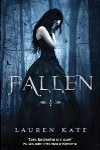
The cover looked amazing. I turned the title pages to the beginning and was floored by the Victorian dark paranormal romance – this was going to be an incredible story. But then I reached chapter one and the modern day America set-up. My heart sunk. Twilight, only this time Edward Cullen was to be an angel.
Publisher: Corgi (Random House)
Pages: 452
Type: Fiction
Age: Young Adult
ISBN: 978-0-552-56173-0
First Published: 2009
Date Reviewed: 2010
Rating: 0.5/5
For the first time ever I’ve started writing a review long before I’ve finished the book – because I can, because I know exactly what’s going to happen throughout. Rest assured however that by the time this review is finished the book will have been also as I don’t like the idea of heckling something I’m not completely knowledgeable about.
Yes, there are a lot of problems with Fallen which is quite ironic considering it’s title, so I’d like to get all the similarities with Twilight listed so that we can move on to more positive aspects (indeed there actually are some).
Luce asks her friend what the arrogant boy’s problem is – the hero is an arrogant boy, prone to bouts of anger; Luce is clumsy and boring, her home town is called Thunderbolt and she has an old banger of a car; there’s a girl with a pixie haircut and Daniel seems to have unlikely friends; Daniel saves Luce from a falling statue; Luce does research to find out about Daniel; there’s a big lovely looking place they go to, open and scenic; Daniel’s skin looks golden and radiates the light when he’s in the sun; Daniel is always telling Luce to stay away from him; when a fight breaks out outside school, suddenly Daniel’s there and he whisks her home in a car. He’s very angry throughout the journey. The bad guys are after Luce and only Luce all the time; the long drawn out ending doesn’t solve anything; it looks like Daniel won’t be in the next book with Luce much…
I am astonished that Kate hasn’t been had up in court and fined profusely for this blatant plagiarism. Kate would have to be a very slow writer to have started this book before Meyer came on the scene.
None of the things I mentioned in the list are spoilers because this is a very predictable book. The one thing I was hoping for however was that Luce would be something else, and she’s not, she is Bella all over; in fact she is a contradiction. Kate tells us that Luce is very clever and at one point Luce is telling Daniel about all the academic achievements she’s gained in life – but never once does Luce come across as a good student. She seems incredibly ignorant and although she gets bored in classes it’s only because they are so long, not because the are at such a low level. She never once acts at all like someone who is studious.
There are some good points to the book, the most important being that yes, it does intrigue you to read the next one, even if you decide that there are a hundred books worth your time first and even if it’s just to find out how much like New Moon it will be. It takes a while but Kate finally lets up on the paraphrasing and starts crafting her own story and although it may not be what it could’ve been it’s decent enough (as long as what you’re expecting is teenage angst and damsels in distress). The history element is unique. Daniel may have lived as long as those sparkly vampires but we’ve got Luce’s lives to catch up on too. It will be interesting to see what Kate does about the religious aspect of the story: will she just exploit the angel idea or will she put a theological bent on it?
The writing is bad and at times it appears Kate forgets even the biggest issues. Luce gives her watch to a teacher because the pupils aren’t allowed them – but a little while later she looks at the time on her watch. Luce takes a sip from a bone-dry latte – how that works I’ve no clue.
The sky was that no-color color.
So was the sky coloured or not?
She’d always loved the fairly sweet musty way that only a roomful of books smelled.
Terrible.
Fallen would have been a far better book had Kate set it back in time during one of Luce’s previous lives, and made the story darker and more mature. If she had done that she would have escaped a lot of the criticism given to her.
If you want to read Twilight without reading Twilight, read Fallen. You’ll be able to converse fluently in discussions about Stephenie Meyer’s work by the time you’ve reached the end.
Related Books