





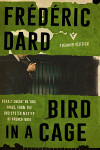
Frédéric Dard – Bird In A Cage
Posted 24th June 2016
Category: Reviews Genres: 1960s, Crime, Domestic, Thriller, Translation
5 Comments
Making a U-turn.
Publisher: Pushkin Press
Pages: 117
Type: Fiction
Age: Adult
ISBN: 978-1-782-27199-4
First Published: 1961; 2nd June 2016 in English
Date Reviewed: 3rd June 2016
Rating: 4/5
Original language: French
Original title: Le Monte-charge (The Elevator)
Translated by: David Bellos
Albert has just returned home. His mother has died and after staying away for several years he’s returned without his girlfriend, who has also died. Coming to terms with the changes, he decides to visit the expensive restaurant he’d always wished he could visit as a child. There at a table nearby are a young girl and her mother. The mother is more than happy for him to chat to her daughter and seems interested in him, but there’s something about the woman and he just can’t put his finger on it.
Bird In A Cage is a slick novella that looks at a probable murder from the point of view of a potential conspirator. It’s a book that gets straight to the point and has no room for deviations in its storyline.
How reliable is Albert? That is a question and a half – from the start you get the feeling he can’t be trusted, but is that because of your knowledge of this genre or is it down to the character himself? For that matter how reliable is anyone here? Dard deals with few characters, a grand total of four specific ones, in fact, so there’s lots of room for suspicion. He holds your attention. Indeed due to the shortness of the tale, its pithy structure and overall atmosphere, you’re likely to finish this book within a couple of hours. Perhaps it was created this way, perhaps not, but Dard’s conciseness and detailing means you won’t feel the need to put the book down and that’s really the best way to read it.
A smidgen of mystery drips from the text – is what Albert’s seeing true? Depending on what aspect of the book is taking your fancy at any given moment you may well gain a suspicion as to what’s happening but if you do it will be only a half-formed idea. If you have spotted the clue you may well feel the age of the book more than a reader who hasn’t. This is to say the book is slightly outdated due to its atmosphere and the obvious now-historical nature of it, but it’s just so different and succinct that the age has only a minor impact. Unlike the work of Georges Simenon, who Dard has been compared to (and they knew each other), Bird In A Cage is written in such a way that it’ll likely entertain a wider age range.
The ending is deliciously ambiguous; there’s some wrapping up of the story but it’s only that which directly affects Albert – the rest is left unfinished in a literal way (it hasn’t happened yet). In saying this I’m reflecting on the way the story is told as a whole – whilst the plot is important, it’s Albert’s role in it all that is key, and the ending is one that, if you hadn’t already been doing a lot of thinking, will make you want to interact with the text. It brings a whole different flavour to the book, mixing two opposing tastes in one dish to create something that sounds unworkable but is really a triumph.
Enough with the food analogies. Bird In A Cage is a very solid, good book.
I received this book for review from the publisher.
Related Books
None yet
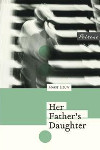
Marie Sizun – Her Father’s Daughter
Posted 20th June 2016
Category: Reviews Genres: 2000s, Commentary, Domestic, Drama, Historical, Translation
2 Comments
Don’t tell children only half the secret.
Publisher: Peirene Press
Pages: 144
Type: Fiction
Age: Adult
ISBN: 978-1-908-67028-1
First Published: 2005; 13th June 2016 in English
Date Reviewed: 9th June 2016
Rating: 5/5
Original language: French
Original title: Le Père de la Petite (The Father Of The Little)
Translated by: Adriana Hunter
Her Father’s Daughter is a superb book about something that doesn’t often get thought of when we talk about war – the effect of a soldier’s homecoming on his very young children. It’s also a study in how war messes with the emotions of those back home, and in this case the damning effects that can have.
Sizun writes in the third person from the perspective of the child. France, the girl at hand whose show-of-patriotism name is rarely used, is at once spoiled, kind, and almost precocious. The author brilliantly shows how, for example, a child may be annoying but not at fault – we all know this, that children do not understand subtleties especially when adults don’t answer their questions comprehensively, but it’s how Sizun goes about her detailing, putting the point out there in an ironically comprehensive way.
The book studies the change when France’s father returns, after which she’s no longer the only person in her mother’s life and no longer possesses her.
‘When your poor little daddy comes home’… Off hand. Just like that. […] But right there, in what her mother said, in those words, something loomed before her, something quite new. Something that intruded into the intimate, familiar world of the kitchen. Something the child perceives as a threat. When. Come home.
This is where Sizun addresses the breach: to the mother, everything will right itself and life will be good again but to France a stranger is set to arrive, a man whose role she has no concept of. She doesn’t know a father is like a mother and the photograph of him in the apartment has no meaning for her. She’s resentful, sees disruption ahead in the life she likes. Her mother has spoiled her to the point of madness, letting her draw on the wall, sing loudly inside, even letting her pick her (the mother’s) outfits. We can assume the mother does this out of sadness and, on some level, guilt.
What is a father? The notion of fatherhood is beyond the child… Fathers are found in fairy tales, and they’re always slightly unreal or not very kind.
In Sizun’s child-sized detailing we can read between the lines – we can tell what this big ‘secret’ of the mother’s is, where the ‘baby’ has gone. Sizun shows how important it is to tell a child the why instead of just telling them it was a dream.
When the father comes home the parents don’t perform a proper introduction, instead they push a kiss on a child from a stranger. The father is strict – he doesn’t like the drawing and singing – and it’s a while before France sees his fatherly side, Sizun demonstrating what happens when there are different parenting styles with the addition of having to adapt to life after living in a prisoner of war camp. The father does not represent all fathers of his situation – the author also shows a man who has come home in good spirits, a neighbour with a daughter France’s age. And some of the changes France must make are due to the time period – seen but not heard.
As her father starts to treat her with kindness she turns against her mother. Does the mother use poor discipline as a weapon, as a way of having control in spite of her own mother’s words? Is it down to the guilt she feels over her illicit situation? The mother is an ambiguity; Sizun leaves her open for your interpretation.
Her Father’s Daughter is downright splendid. It tells an unfamiliar tale in a particularly affecting way and succeeds at making you question a child’s actions in a child’s context because you’re never out of her head. Whilst translated (Adriana Hunter is on top form) the word choice is everything, the length of the sentences key. This is a World War II book you don’t want to miss; and it’s in the top tier of Peirene Press’s acquisitions.
I received this book for review from the publisher.
Related Books

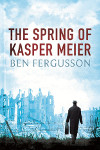
Ben Fergusson – The Spring Of Kasper Meier
Posted 17th June 2016
Category: Reviews Genres: 2010s, Historical, LGBT, Political, Social, Thriller
1 Comment
Blow a kiss, fire a gun.
Publisher: Abacus (Little, Brown)
Pages: 386
Type: Fiction
Age: Adult
ISBN: 978-0-349-13976-0
First Published: 15th April 2014 in translation; 17th June 2015
Date Reviewed: 15th March 2016
Rating: 3/5
In the year following the end of WWII, the rubble of ruined buildings sprawls across the streets of Berlin. Kasper, a black market trader, is not acquainted with any rubble women until one day he is stopped by one who wants him to find a pilot. She won’t say why but to Kasper it’s clear there’s some sort of underground factor to it.
The Spring Of Kasper Meier is a thriller that looks at a certain aspect of the aftermath of war. It’s categorised under the thriller genre, but doesn’t quite match it.
This is a novel wherein the vast majority of the book doesn’t do anything to recommend itself but the last 50 pages are excellent. It’s a case of the reader having no real idea as to what’s happening, and that’s not good here. There’s no suspense until those last pages start and it just feels like a lost chance. Nine out of ten times you don’t have a clue what’s happening or why you’re reading about a person and even if you manage to figure some of it out the raison d’etre will likely still evade you. It’s the lack of any clues that is the problem.
The writing doesn’t help. There’s a decided lack of commas which means clauses run together so you have to work out what the sentence is saying. Of facial expressions there are too many in each piece of dialogue – speaking then smiling then speaking then surprised then speaking and laughing, that sort of thing. All tell, no show.
The history’s good. That’s the one plus side of the telling – you get a good picture of the period. One of the themes is sexuality, in this case being gay in 40s Europe. It’s dealt with well – there’s commentary when needed but otherwise Fergusson just gets on with it. As the majority of the characters and certainly the main characters are German, there is more time spent on Kasper’s romantic history than, for example, the plight of the Jews. Women also get a look in, though mostly it’s in the form of Kasper’s friendship with Eva.
Like other recent writers of the occupation of Germany by the allied forces, Fergusson doesn’t shy from showing the realities of German life and the way that not all those in the allied forces were good. He shows the horror of it, reminding us that regular people faired the same way everywhere.
The Spring Of Kasper Meier, then, is a book of good history, but otherwise isn’t so great. If you’re able to figure out – or guess correctly – what’s happening early on, you may enjoy it more, but most will want to keep it on the to-be-read pile for a while longer.
I received this book at the Young Writer of the Year award blogger event.
Related Books
None yet
Marie-Sabine Roger – Soft In The Head
Posted 8th June 2016
Category: Reviews Genres: 2000s, Books About Books, Domestic, Social, Spiritual, Translation
Comments Off on Marie-Sabine Roger – Soft In The Head

But now getting better and better.
Publisher: Pushkin Press
Pages: 210
Type: Fiction
Age: Adult
ISBN: 978-1-782-27204-5
First Published: 2008; 9th June 2016 in English
Date Reviewed: 28th April 2016
Rating: 5/5
Original language: French
Original title: La Tête En Friche (Fallow-Headed – as in a field in fallow)
Translated by: Frank Wynne
Walking in the park one day, Germain sees an old woman spending time with the birds he likes to count. He’s semi-illiterate, had a neglected upbringing, and doesn’t consider himself worth much, whereas Marguerrite has been through university and worked in science; the unlikely pair begin a friendship based on their mutual interest in the park’s birds, and Marguerrite’s wish to read aloud. Slowly Germain finds himself changing.
“Well, well. Germain sitting at a bar? Now, there’s a coincidence!”
I used to think it was his way of saying, Hi, nice to see you. But, no, apparently, it meant he thought I was a pathetic drunk clinging to the bar like a limpet to a rock.
Soft In The Head is a stunning book that’s comprised of so much more than its thinness suggests. It was first written in French and adapted for the big screen, and now it’s been translated into English.
Perhaps the most important factor, at least initially: the translated text is superb. Wynne has transposed the French into the English equivalent, for example he’s used swear words and distinctively British terms, such as ‘chav’ (I’ve no idea what the French equivalent is or if there is one, but know the Australian is ‘bogun’) so that you get a picture of Germain from the first. What Wynne has effectively done is take the book and give it an English flavour meaning that the intended English-speaking market will understand the book more than they might have if it was a straight translation. In other cases you might feel a bit duped but here it just makes sense and the book is incredibly readable. It means that all the showing, rather than telling, Rogers has done, is carried over – the atmosphere and feel of the book. Despite the fact you can tell it’s a translation (the French names contrasted to British terms kind of make this obvious) you can see Roger’s text underneath. She was writing for her students and thus the translation matches this sort of concept of youthful phrasing and unimpeded speech. You can see the teacher’s mind in this book.
This book is a page-turner. It’s full of literary references and humour and observations and a beautiful admiration, a platonic love of sorts. Whilst we never get to hear from Marguerrite as a narrator, Roger has ensured we know enough about her – Germain may spend more of his time on himself but Marguerrite, as the driving force, gets a lot of time.
Words are boxes that we use to store thoughts the better to present them to others. Show them to their best advantage. For example, on days when you just feel like kicking anything that moves, you can just sulk. Problem is, people might think you’re ill, or depressed. whereas if you just say out loud: Don’t piss me around, I’m really not in the mood today! It avoids all sorts of confusion.
The beauty of the book lies in what is shown, in the way that Germain starts out believing he’s not worth much of anything, swearing a lot, using simple terms peppered with words he’s learned from the dictionary (he includes the definitions), and as the novel progresses the reader sees him become more educated, intellectual – he starts to use these words he’s learning from his time with Marguerrite, sees the conflict (that seems more an anxiety on his part than a reality) that occurs when his friends think he’s getting too ahead of himself, and sees if not a completely different future then at least a happy one. He comes to view love differently, see more to the world, and so forth. He comments on this change from time to time, as he does the learning, but it’s in the subtext and what is shown through the words themselves that the reader will discover just how much he’s achieved.
A book about books, this novel is delightfully satisfying. Marguerrite and Germain read Camus and a couple of other authors (who aren’t as well-known). They discuss the text mostly by way of Germain’s understanding; Germain, knowing more than he realises, brings in different interpretations. Marguerrite teaches him by example; it’s a friendship of equals.
By now it should be obvious – there’s a thread of the thought of tolerance in this book. It’s not a theme, more that Roger promotes tolerance towards others, in this case someone who hasn’t had the privilege of growing up book-rich, who has never set foot in a library. Germain may seem stupid but how much of that is actually true and how much does that thought depend on his own view of himself?
It’s hard to say exactly how wonderful and well-written Soft In The Head is without quoting a swath of text. Suffice to say if you like reading about reading and if you’ve even the slightest interest in education and educational access issues, you will very likely appreciate this novel.
I received this book for review from the publisher.
Related Books

Abubakar Adam Ibrahim – Season Of Crimson Blossoms
Posted 3rd June 2016
Category: Reviews Genres: 2010s, Angst, Domestic, Political, Psychological, Social, Spiritual, Theological
Comments Off on Abubakar Adam Ibrahim – Season Of Crimson Blossoms

Yes, it’s likely to fall apart.
Publisher: Cassava Republic
Pages: 339
Type: Fiction
Age: Adult
ISBN: 978-1-911-11500-7
First Published: 20th May 2016
Date Reviewed: 2nd June 2016
Rating: 4.5/5
Grandmother Hajiya Binta and drug dealer Reza meet when Reza breaks into Binta’s house. He steals her jewellery and threatens to kill her but there is a moment between them; he returns in peace. The two begin an affair that must be hidden – not only is the age gap wide, in Binta’s culture it is shameful. As Binta hides the affair from her family and Reza tries to work out the conflict between his care for her and the murders he commits for others, we also see the trauma of Binta’s niece, Fa’iza, starting to slip through the cracks in the armour she created for herself when her father and brother were killed.
Season Of Crimson Blossoms is a book that looks at a fair few things, namely the emotions and sexuality of an older woman and the life of Reza; it also delves into corruption and religious conflict.
Ibrahim is one of those writers who writes the opposite gender really well and succeeds in giving life to the various ages of his characters. In many ways his book is about the effects of culture on women in conservative Northern Nigeria and it’s a well-rounded study. He looks at the effects of violence through memories. And it’s through Fa’iza’s story that Ibrahim’s talent sparkles for the first time.
When we hear about Fa’iza, beyond her liking for romantic novellas and film stars and television, it’s in the form of a flashback. In the space of a mere few pages, Ibrahim manages to provide the sort of shock most authors spend time leading up to – he shows us the reason Fa’iza can be quiet, the horror of what she experienced as a child. As men beat down the door to the family home, Fa’iza’s father has the family run to the bathroom where they stay cramped for some minutes before they are found. It is an incredible piece of writing, as stunning as if he’d been working on it for several chapters.
This is an unrelated moment to the one above, but it’s another, even more succinct, that shows Ibrahim’s skill:
He was there when the other boys spotted a girl in tight black trousers heading up the street. Her hair – permed in Michael Jackson Thriller style – streamed behind her as she swung her hips ostentatiously.
Then the chants started.
“Biri da wando!” the boys sang, running after her. Some ran ahead and pulled down their trousers and wiggled their little backsides before the embarrassed girl. The racket drew more boys from their houses and playfields and Yaro, too, was sucked in. Women in purdah came out and stood by the front door, trying to call back their sons, but their voices were drowned in the maelstrom.
Then the pelting started.
Missiles of damp mud struck the girl on her offending trousers, the imprint of dirt standing out starkly against the black of the nylon. She started crying, cowering and shielding her head from the missiles. The racket went up several decibels. Some women ran out and tried to dissuade the boys, but they were too many. In the excitement, they did not see Zubairu, who was not much taller than the biggest boys, until he reached out and grabbed his son. Like flustered bees, the boys scattered, dodging into neighbouring houses and running down slime-covered alleys. […] She poured in some damp guinea corn from the basin beside her and when she heard the flogging start, she began pounding. The harder the boy cried out, the harder Binta pounded, her pestle thumping heavily.
There is not too much of this type of scene; there doesn’t need to be – once you’ve read a few, with the narrative alluding to other situations, you’re all set, as it were, for the rest of the book.
Binta likes Reza because he reminds her of the son she lost. Reza likes Binta because her face reminds him of the mother who was never there for him, who left him, tore his hands from her hijab as she went to leave. Their relationship, as much as it’s sexual, is their way of grieving. Binta’s loss of her son, Yaro, is compounded by the fact culture forbid her from showing him, the oldest child, any affection. She always wished she could show him she cared because as an oldest child herself she’d experienced the same thing, knew what it was like to be neglected. And so her time with Reza, though sexual, could be seen as a penance, or a making up for what she didn’t do, spending time with someone who looks like Yaro who wouldn’t be far off his age. Whilst inappropriate socially, the relationship serves an innocent, important purpose.
At first appearing to be a case of a drug ring, Reza’s narrative expands to working for corrupt leaders. You see Reza’s conflict – on one side he’s assigned people to kill to help others get further on the board. Chess is alluded to. On the other side he has Binta spending time with him and nudging him to go back to school and gain an education. He’s always working on things Binta has no idea of; his oft-repeated ‘you understand?’ at the end of dialogues packs in different concepts: it’s the way he speaks, it’s a phrase with a lot of subtext behind it that differs every time, it’s the way Reza tries to signal warnings.
Ibrahim is very open about society, culture. This is what makes the character of Binta stand out – she’s taking a chance with Reza and is being led by her sexuality, talking of being free. Her relationship with her deceased husband was not a bad one per se, but she laments not having been able to enjoy their time together as a couple. She takes a chance in the name of sex, knowing she might be found out and worrying about it, but she’s led by her desire to be happy before she becomes too old. It would be shameful if she were found out.
The relationship between men and women and the differences between how they can live their lives are given time, too. Binta has a suitor but he’s never present in their conversations, always listening to his radio, preferring to talk about politics. The reality behind Binta’s daughter’s separation from her husband is revealed slowly – is she a bit over-the-top or is there something else? But at the end of the day, as much as it may be down to either or them, Hureira’s husband can take another wife.
I believe it was E Lockhart who said that a book should deliver a series of small shocks. Ibrahim’s novel is the best example of this idea I have ever read. Whilst it may not be a constant series of shocks – if it were you’d be at risk of becoming numb to it all – the 1-3 page horrors I spoke about earlier fit this perfectly. They’re short, small. They are a big shock due to Ibrahim’s ability to create such powerful scenes in such a short space of time.
Season Of Crimson Blossoms is a book to read slowly. Not because it’s boring or because you’re going through a patchy part but because you want to appreciate it, you want to think about what you are reading and you want to savour the writing; it’s a sort of close reading, only off the page. It’s really very good.
I received this book for review from FMCM Associates.
Related Books

Speaking to Abubakar Adam Ibrahim about The Whispering Trees, and Season Of Crimson Blossoms (spoilers included)
Please note: this episode includes discussion of sexual content, and the second reading includes a sex scene.
Charlie and Abubakar Adam Ibrahim discuss Nigeria at this time, publishing a novel on a very controversial subject and reactions to it, effects of grief, and looking at cultural expectations of women as the generations change.
If you’re unable to use the media player above, this page has various other options for listening.


