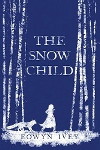
Eowyn Ivey – The Snow Child
Posted 27th February 2012
Category: Reviews Genres: 2010s, Domestic, Fantasy, Historical, Magical Realism, Spiritual
1 Comment
Days will be merry and bright if each Christmas is white.
Publisher: Headline Review
Pages: 404
Type: Fiction
Age: Adult
ISBN: 978-0-7753-8052-7
First Published: 1st February 2012
Date Reviewed: 27th February 2011
Rating: 5/5
Mabel and Jack moved to Alaska when Mabel suggested they could do with a new life. Having lost their child at birth, Mabel has never quite recovered and the solitary life of 1918 Alaska appealed to her greatly. A gulf is between the couple and Jack cannot understand how Mabel is still so affected. During their struggle to make it in Alaska they create a snow girl; the next day they see a child in the woods. Their world is suddenly filled with a happiness they never dreamed of but there is always the question of how long it will last.
The Snow Child is a sweeping story, encompassing many questions about how we connect with and treat each other. The setting allows the magic to be explored in a way that most anyone can identify with, while allowing Alaska to keep its reality, the author herself being from the state. Although the location never changes, the ride through the character’s lives can often make it feel as though you have been on a long journey. Though of course that is in many ways the point.
Albeit that The Snow Child rests firmly in what is termed “magical realism”, Ivey plays with her reader, coming back and forth with the idea that in fact everything is perfectly true, before throwing at them a snowball filled with thoughts to the contrary. Before the girl, Faina, entered their lives, Mabel and Jack’s relationship was uneasy at best. Faina’s entrance is the catalyst by which everything starts to change, because suddenly there is a child for them to look after, the gulf between them bridged.
And it is through Faina that Ivey shows us change over time. Jack was always more content with life than Mabel was, but the introduction of the girl causes him to move towards a feeling of fatherhood, one that is rather possessive. Mabel, on the other hand, sort of takes a reverse route, beginning by feeling desolate and depressed and ending as Jack begun, more accepting and open. In addition to this, the reader can see a parallel in the personalities and life of the couple’s neighbours, who come to feature strongly in the book.
Possession is a big theme of the book, with Jack and Mabel taking turns at being worried for Faina and wanting her to fit the mould of a child they have created in their minds. Ivey puts forward the idea that Faina might disappear if Mabel enforces her views of education and a stable home life, suggesting that one cannot direct the life of another, as Mabel cannot force a child of nature to be a child of the modern western world. As for Jack, his possessiveness comes to the fore when Faina makes strong choices of her own, choices that bring her properly into their world. Ivey demonstrates that while such possessiveness, especially on Mabel’s part, is due both to the sudden realisation that they have a child, and to the love they have for Faina, it can do untold damage where it is not held in check.
But the bigger theme is relationships. It takes Faina’s arrival for Mabel and Jack to remember who they were, both as individuals and as a couple, and there is a poignant moment when all three are skating on ice and Faina suggests they keep skating past the limits they had set themselves for safety. In this there is the idea that while they are happy, Jack and Mabel will not let themselves fly free, always remaining on solid ground, and Ivey demonstrates that while that is often seen as a good thing, there are times when one should let themselves go. And the reader is left to wonder what might have happened had Mabel and Jack agreed with Faina, and had literally skated past their boundaries.
What is interesting about The Snow Child is that for so long it is simply a nice story – a look at domestic relations – with only the smallest of magical pieces, and the reader may wonder what is happening in the sense that it can seem that nothing much is. The change in mood, pace, and magic comes swiftly – Ivey sets the major points in a section all on their own, and it’s rather like a latch being opened. From content and comfortable little story the book moves to extreme emotions and a much grander tale, from which there is no way back. Perhaps the most intriguing thing is that from this point it is likely the reader will be able to discern what will happen, and far from being a negative aspect, as it would be in other books, this is what propels you on. Like Mabel and Jack, you may have been happy enough with Faina coming and going before, but now you want to truly put her in the spotlight and find out who she is. Again, Ivey shows us that wanting all the knowledge may be part of the problem.
The choices Faina makes, and how she relates to the changes are pause for thought, as they illustrate both how human and, at the same time, how unreal, she is. And surely the final catalyst in her life is a nail in the coffin of the current flow of events and way of life. It is here that another theme, love, is shown most obviously. However it is up to the reader to decide whom exactly Faina loves, or indeed, if she does love or whether it is something else entirely that effects her actions.
But in doing what she does, Faina provides Mabel and Jack with what they always wanted and in that sense the story comes full circle. Who Faina is, was, and will be, why she came, if she had a purpose or if that is something we have come to believe, are all questions that Ivey leaves to the imagination. Ivey will control your thoughts throughout the novel – pushing you towards the realistic, the magical, the deluded, whenever she wants – but the questions themselves go unanswered. The lack of quotation marks during dialogue that includes Faina is cause itself to take a step back. Each reader will come to their own conclusion based on experience, beliefs, desires, and this brings a spiritual aspect to the book.
And that is what makes the book so compelling, and Ivey’s tale so wonderful, that while it is based on a fairytale that was given an explanation, Ivey has twisted it and drawn her own ending, inserting important musings along the way.
Ivey shows that while we may like to think that we can solve problems by rational thinking and talking things through, there is an element in all of us that benefits from the unknown and the magical, or spiritual, or whatever you want to call it. And she shows that maybe what we think we need isn’t it exactly.
The Snow Child is a brilliantly crafted story of learning to live and love. And the best news is that no matter whether winter or summer, real or not, it will always be around to delight and enthral.
I received this book for review from Waterstones.
Related Books
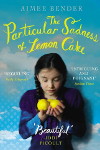


Elizabeth Chadwick – The Wild Hunt
Posted 13th January 2012
Category: Reviews Genres: 1990s, Domestic, Historical, Political, Romance, Social
Comments Off on Elizabeth Chadwick – The Wild Hunt
Two Normans may be able to work out their relationship given time, but add Wales to the mix along with a lot of angry kin and life is unlikely to go smoothly.
Publisher: Sphere (Little Brown)
Pages: 341
Type: Fiction
Age: Adult
ISBN: 978-0-7515-4026-0
First Published: 1990
Date Reviewed: 12th December 2011
Rating: 5/5
Please note that this is a review of the updated version of the book, which, it seems, was published in 2008.
When Guyon attempts to gain his uncle’s lands through supplication to the king, he is granted them – on the condition that he marries a particular girl. Judith is the sole heir to her father’s domain and the king wants to be sure that there will not be a war over it. In marrying Judith, Guy gives up his mistress for a fifteen-year-old girl. Judith is terrified of marriage, having witnessed the violence of her father towards her mother and the slap of his hand to herself. But that isn’t the only issue Guyon will have to deal with – the king may have ordered the marriage to aid relations, but Judith’s extended family aren’t about to let the lands pass to another.
In this, Chadwick’s very first novel, we see all the talent that she has continued to wield to this day, only here it is targeted towards absolute fiction. Whereas in her later novels Chadwick focuses on real people in history, here she creates the main characters from scratch and makes use of history for secondary characters. And her weavings in and out between the factual and fictional are flawless. She references many real events and has Guyon and Judith join them, and looks too to legends, such as that concerning William II’s sexuality.
The book is drenched in the issues that arose from the Norman conquest of the British Isles, there are insults between the Welsh and the Normans – and Chadwick makes the story of Guyon’s ex-mistress a part of this by having her and her family mock his Norman wife – as well as touching on the murder of William II and the rise to power of his son Henry. In the latter case she puts forward a comical version of why the eldest son was unable to inherit the throne, which aligns, in its treatment, with fact.
Something that is important to mention is that although Chadwick creates her own characters from their historical bases, for example she creates the character of Henry I, one never feels that she is turning history on its head. A quick bit of research on the reader’s part proves that Chadwick has thought through her book and written it in accordance with real life.
Although the book is character-driven, the world building is, to use an old word given new life in our modern age, epic. It is so easy to be engrossed in it all that you can forget where you are in the present day. Neither does it take long to get into the story. As the story is based in battles and family feuds there is little time to get to know the common people but there is enough on the workings of settlements to keep the budding historian interested.
And while Chadwick is a modern author and often uses elements that are more acceptable to a modern audience, there is never a case of changing history to suit today’s principles and political correctness. An example of this would be Chadwick’s description of her heroine as a fast learner and able fighter – while not by any means reflective of medieval society at large it is nonetheless easy to believe that some women would have been, and evidence backs this up.
Talking of the heroine, both the main characters are winners. They have chemistry enough to explode any science lab and are not perfect while being totally likeable. As said, Chadwick does not step back from looking at things from the medieval mind set, the marriage is important to both Judith and Guyon, but as Guyon waits for Judith to mature and be ready to accept him in the bedroom, things become difficult. In regards to this issue of Judith’s acceptance, Chadwick spends time detailing effects that are still relevant.
And, as in any Chadwick novel, when they end up in bed there are no holds barred. There are racy scenes, there are curtains drawn in front of the reader, and the innuendo is well written. Chadwick masters all of these scenes brilliantly and even when there isn’t a pressing reason for one, for example when both characters are completely comfortable with each other, they serve to inch the relationship further.
The Wild Hunt is a feast for anyone interested in this period of history. Chadwick’s writing is just something else and her passion emanates from the pages. Whether you are new to her work or a returning admirer, The Wild Hunt is as good a place as any to start.
Related Books


Barbara Longley – Heart Of The Druid Laird
Posted 9th November 2011
Category: Reviews Genres: 2010s, Fantasy, Historical, Paranormal, Romance
Comments Off on Barbara Longley – Heart Of The Druid Laird
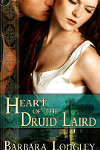
Where love doesn’t just get your average definition of a second chance.
Publisher: Carina Press (Harlequin)
Pages: 235
Type: Fiction
Age: Adult
ISBN: 978-1-4268-9227-1
First Published: 19th September 2011
Date Reviewed: 16th October 2011
Rating: 3.5/5
Sidney and her friend Zoe work and live together, but neither of them would ever have guessed that they had done similarly before. That’s until Dermot MacKay and his men turn up at their shop. Dermot is immortal, born in the fifth century, and trying to break out of his eternal existence. He knows that the key to doing this is finding the reincarnated soul of his wife. But even if Sidney’s shop holds fantastical items, it’s going to be difficult to get her to believe him and even more difficult to leave the long life he had previously wanted to get away from.
Heart Of The Druid Laird is a book that encompasses many genres, some better than others, to deliver a well-written romantic novel. However, it does start rather quickly, and the reader looking primarily for historical content should know that it’s the fantasy element that is the focus.
It can be a little weird how quickly Sidney’s friend, Zoe, accepts everything, indeed it takes less than a couple of days for her to be spouting information as though she has known it forever, and while that is in part true for the nature of her soul’s journey, a quick reminder of the contents of the women’s shop, largely presented as New Age, shows that she would be quite open to it, even invite it. Of course this leads into the whole idea of reincarnation – the reader who believes only in what can be explained may have to suspend belief in order to enjoy it.
The first half of the book is very enjoyable. The genres weave in together well, the imagery is good, the dialogues too. Sidney isn’t easily swayed by Dermot, even when she finally accepts his story. She doesn’t miraculously fall suddenly in love with him: when she has sex with him it is from pure lust, which the reader can easily recognise. For love to work the reader needs her to transition slowly, but for lust nothing needs work except chemistry, which the characters have in bounds. And even when Sidney starts to acknowledge her feelings, she doesn’t suddenly lose the plot – she remains strong, stubborn, and independent throughout. But this last clause is where the book rapidly begins to fall apart as the chapters continue on – although it is understandable that Sidney would become afraid at what might lie ahead she becomes incredibly soppy. Maybe the reader can accept some of that due to the repetition of the idea that she’s been looking for The One, but because the change happens so swiftly, and she was so strong before, it does affect the satisfaction you find in the novel. And as much as the first episodes with the fae can be acknowledged, when the entire story becomes wrapped up in fantasy and everything comes down to something so easily upturned, no matter whether or not you always knew that it came down to the fae, it becomes lacking.
However the characters are in the main very good and the story well plotted. Longley seems to have had a solid idea of where she was headed from the start, everything is tied up nicely and all the questions that you could ask that are directly related to the text are answered. Longley makes a stellar effort with the accents, even if at times some words don’t fit in, and she clearly knows her stuff.
The world-building is excellent, and even though this reviewer is more attuned to the Tudor period, what she knows of the early AD years ran alongside Longley’s creations. And Longley isn’t happy with just her two chosen time periods, she includes in her interior design Elizabethan furniture too. Longley is certainly a fan of history and this positively exudes from her work.
The sex scenes are brilliant – they are not crass, the word choice is regular, and because of this they are hotter than your standard fare. It’s easy to believe in both the couples in this book. However when Sidney worries about contraception and then lets Dermot off, and he, after they’ve had sex, says he couldn’t have kids anyway, there may be eyebrows raised. Sidney didn’t know he couldn’t have children until after the act, so she shouldn’t have let him get on with it after an almost frivolous suggestion for protection on her part. And if this man came from the fifth century… well even people with no knowledge of the period know that those who lived before, often especially those in power, tended to favour fornication and had no idea about sexual health. Maybe a disease would die a swift death in an immortal body, but the idea would surely have crossed Sidney’s mind. Or at least it should have.
While Heart Of The Druid Laird may not quite meet expectations is isn’t far from the mark and is certainly worth the time it takes. People after a bit of mystery will find it here, there’s a drop of angst for those who wish it, and those wanting some history will be pleased that Longley goes back to the past to provide the full story. If Dermot has been waiting over sixteen hundred years for his life to get somewhere he ought to be proud of his narrator’s presentation.
I received this book for review from Carina Press.
Related Books
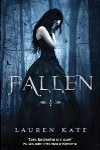
Kenneth Cameron – The Bohemian Girl
Posted 7th July 2011
Category: Reviews Genres: 2000s, Historical, Mystery
1 Comment

Sugar and spice and everything nice, and maybe some frogs and snails, too.
Publisher: Orion Books
Pages: 310
Type: Fiction
Age: Adult
ISBN: 978-0-7528-8396-0
First Published: 2009
Date Reviewed: 1st July 2011
Rating: 3.5/5
Denton, a novelist and ex-Town Marshal from America, now living in England, has had issues with enemies before. Now, in amongst his fan mail is a letter from a man who wants a signed copy of every book he’s written, but doesn’t provide an address. And there is a letter from someone who has found a letter addressed to Denton that speaks of fear. Mary Thomason is afraid, but what of, and why was her letter to Denton not sent?
This is the second book about Denton, but although there are references to the first, The Bohemian Girl can be read as a standalone, which is just as well in this reviewer’s case. Lured by a beautiful hardback and later the reader of the paperback, she didn’t know a first book existed until she sat down to read the second.
Atkins stopped him at the front door. “Going to rain.” He held out an umbrella.
“I’m not English.”
Atkins draped a mackintosh over his left arm. “The rain will be.”
The Bohemian Girl begins with great promise and keeps it up for a good length of time. The setting is Victorian/Edwardian England (the book takes place after Victoria’s death but before the coronation of her son), gritty and full of period detail. The characters are fun to read about and because of them it’s very much a cross between Sherlock Holmes, at least the film, and Philip Pullman’s Sally Lockhart Quartet – for the good relationship between master and sidekick, and the thrill of mystery. The relationship between Denton and Atkins is complimented by fast-paced dialogue that is a lot of the reason for the humour. The female character, Mrs Striker, is one of those strong heroines who makes historical fiction so readable in our current time.
Yet the writing could be more detailed in itself. Sometimes it’s difficult to understand what Cameron is trying to say because he will leave out required words or use words that don’t quite work. His inclusion of accents doesn’t always stay true to the reality of what they actually sound like, and sometimes it seems he forgot that he gave a person an accent once upon a time.
But it’s the plot that really lets the story down. Although there is not so much intrigue and mystery for the reader (one gets the sense Cameron thought he was providing enough, and unfortunately he was wrong) the first two thirds or thereabouts are interesting and there are plenty of reasons to keep reading. But then it just stops, and the story becomes more about medicine, and there came a time when I wondered if Cameron had had a mid-book crisis and decided he wanted to write about philosophy instead. This part of the book is written in the manner of a film sequence where they show you glimpses of different days one after the other, the sort of stuff that has sorrowful music behind it as day after day a person tries to get something done. The technique doesn’t really work in a book.
The issue with there being not enough intrigue is the in the sparse details. Well, they aren’t really sparse, but there aren’t as many as in other novels of the same nature. It’s as though Denton is ready to work hard to find answers, but Cameron thinks that taking it slowly is better. It’s a case of there not being enough “get-up-and-go”. And there is little work done to create good red herrings or a good basis for the reader to decide who did the crime.
The romantic subplot is crafted well and Cameron stays true to the person he made in Mrs Striker, keeping her strong throughout.
The Bohemian Girl is a good enough book, but Cameron needs to believe in his characters more and let them guide him. He succeeds in writing about England (no exotics or the like) and has the skill to write a masterpiece. Unfortunately this particular book isn’t it, but it’s a definite step in the right direction.
Related Books

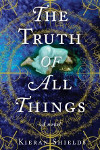
Shelley Munro – The Spurned Viscountess
Posted 22nd June 2011
Category: Reviews Genres: 2000s, Historical, Mystery, Paranormal, Romance
1 Comment
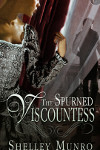
In a time when witches were burned, having a special ability could be a gift or a curse. It could even be both.
Publisher: Carina Press
Pages: 241
Type: Fiction
Age: Adult
ISBN: 978-1-4268-9058-1
First Published: 2005
Date Reviewed: 27th April 2011
Rating: 4/5
Please note that this is a revised version of an earlier book and that it is the earlier book’s release date I have referred to.
Rosalind, a young woman considered a witch by her village, took her chance and married Viscount Hastings, the man her cousin didn’t want. But there is far more to Hastings than the scar that everyone looks away from, as he comes with baggage from a doomed previous marriage. Rosalind can read people’s thoughts and comes to accept Hastings’ issues, but can he? And who keeps trying to harm Rosalind and why?
I really wasn’t sure what to expect with this book. The title suggested something clichéd, and the historic period and romance genre emphasised my thoughts. But I wanted to read more romance and it seemed a good place to begin, something away from Mills & Boon but not something erotic. This is in my attempt to get a good overview of romance and all it offers.
Aside from a weak start, which did suggest cheese, The Spurned Viscountess is rather good. There are a few repetitions employed by Munro that could have been left out, such as Rosalind always lifting her chin, and “a moue of disappointment” used a few too many times for one to appreciate the interesting description, but the story is sound and the characters agreeable.
What is great about the development of Rosalind is that it is something that affects the reader more than the character, that is to say that in the beginning Rosalind doesn’t impress very well but as the story continues it becomes easy to root for her. She doesn’t listen to advice from men to stay at home, although admittedly sometimes she should, and apart from a few stubborn moments, is a strong woman. Hastings is a good hero and his slow development into realising his true feelings is well written. That he bucks the trend of the day and doesn’t wear a white wig is fantastic. Even the bad characters are interesting.
The romance is important, as expected, but it doesn’t rule the story so much that you forget the backdrop. The mystery surrounding Hastings’ problems and Rosalind’s accidents comes to the fore many a time and is the reason to keep reading as you already know where the romance will lead. The identity of the mystery person may surprise you, the descriptions of locations delight. Although the book focuses on the two main characters you get to experience the odd social event.
As this is a romance rather than erotic romance the love scenes are few and comfortable enough to read.
There is a slight paranormal bent coming from Rosalind’s telepathy, but it is not treated in the same way as general paranormal fiction and is actually quite believable for the way in which it is written.
As a lover of the classics and what is known as “literary fiction”, although I do not like the term myself, you may wonder why I rate this book so highly. True, the writing is in a different league to the books I generally read, but for what it is it is good and it is with this in mind that I rate it. As a romance it is worthy of a read and provides that all important element – for it’s story and mystery it stays in your head after you’ve finished it.
Related Books