






Pia Juul – The Murder Of Halland
Posted 18th June 2012
Category: Reviews Genres: 2000s, Angst, Crime, Domestic, Translation
3 Comments

Death awakens life.
Publisher: Peirene Press
Pages: 157
Type: Fiction
Age: Adult
ISBN: 978-0-9562840-7-5
First Published: 2009 in Danish; 2012 in English
Date Reviewed: 14th June 2012
Rating: 5/5
Original language: Danish
Original title: Mordet på Halland (The Murder of Halland)
Translated by: Martin Aitken
Bess is woken by the sound of someone being shot – her husband. She had fallen asleep in another room when he’d want to go to bed and she’d wanted to keep working. Who murdered Halland? The neighbours think it was Bess, but it soon becomes obvious that that idea is wrong. Bess tells the reader of her life with Halland, and how they had grown apart. She loved him, and she is grieving, but is she grieving for him?
If there’s one thing reading Peirene Press’s translations for the last year or so has taught this reviewer, it’s that she needs to time her readings with when she is most mentally awake. The Murder Of Halland, like Tomorrow Pamplona before it, is an incredibly complex novella that runs to the rooftops screaming a need to be discussed before full understanding can be reached. You can imagine how difficult this book is to think about by oneself.
Central to the story is the seemingly misplaced sadness of Bess. The woman appears to be suffering from depression, and from what she says at first you’d be forgiven for thinking she is upset with the hazy nature of her relationship. But what develops is a situation where the reader understands, better than the character, how she, Bess, feels, and why she is feeling that way. You might wonder if there was, storyline wise, another purpose for Halland’s death. Juul’s plotting is magnificent for the way she brings it all together.
Apart from this, from all the complex domestic-social-psychological discussion, there is a crime story. Who killed Halland and why did they do it? This part of the book is relatively easy to unravel and the motivations usual enough. What is interesting about it is that is shows a parallel way that people deal with a situation, and this of course links back to Bess’s misplaced sadness. Yet amongst all the complexities there was surely real love behind Bess’s decision to be with Halland.
Every character in this book is there to help Bess find herself, even if at first they just seem to be there as a friend or in the background as scenery. The secondary plot shows itself as a potential affair, for example, and the reader must work out if there really was one, or if the character is being truthful in the story they provide. And what does the sub-plot do to alter Bess’s state of mind? – in every case read the included quotations carefully to fully explore every issue and consequence.
The Murder Of Halland is confusing, intricate, and appears to be a whole lot of mixed up storylines pulled together. And it can take thinking about it afterwards to realise it, indeed this review has reached its conclusion precisely because it was written.
This is so much more than a murder mystery, and for that it should satisfy the delights of many a reader. It may be a short book, but don’t let that fool you any more than the suggestion that Bess was the killer.
The Murder Of Halland was originally written in Danish, and was translated into English by Martin Aitken.
I received this book for review from Peirene Press.
Related Books
None yet.
Daphne du Maurier – Rebecca
Posted 7th May 2012
Category: Reviews Genres: 1930s, Crime, Domestic, Drama, Mystery, Romance
Comments Off on Daphne du Maurier – Rebecca
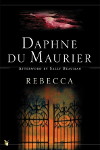
You have never known a writer as uniquely talented as this.
Publisher: Virago Modern Classics (Virago)
Pages: 428
Type: Fiction
Age: Adult
ISBN: 978-1-84408-038-0
First Published: 1938
Date Reviewed: 27th April 2012
Rating: 4.5/5
The heroine meets Maxim de Winter while she is training to be a lady’s companion under the tutorage of an American woman. Bored of her life, and fed up with the snobbery possessed by Mrs Van Hopper, when Maxim makes a surprise proposal of marriage, the heroine accepts. Maxim’s first wife has died, but that does not worry her; however on arriving at Manderley, the de Winter’s home, she finds that Rebecca is very much alive in the constant references and laments of staff and those who knew her. And from being happy, the heroine sinks into a place where she feels as though this haunting atmosphere will always be about her. What does it matter how Maxim tells her it’s fine, when everyone else is living in the past?
Rebecca, the novel with the unnamed heroine, is rather individual. The basic plot itself is far from incredible as it has been done before, indeed comparisons could be made with Jane Eyre in many respects, so what makes the novel spellbinding is Du Maurier herself. The writing in Rebecca – the structure of the book, the characterisation, and the detailing – is exceptional. The words themselves may be usual enough, and it might be a difficult task to identify any short passage of the book as Du Maurier’s without knowing beforehand, but the overall presentation is completely unique. No other author has ever brought such individuality to the table as Du Maurier does.
I thought how little we know about the feelings of old people… Did she know that Beatrice was yawning and glancing at her watch? Did she guess that we had come to visit her because we felt it right, it was a duty, so that when she got home afterwards Beatrice would be able to say, “Well that clears my conscience for three months”?
The characters in Rebecca are rather abrupt, almost in your face. There is no added lingering emotion, and Du Maurier never starts from the shallows – she throws you in the deep end. There is no time for the reader to become acquainted slowly with Max, for example – you either become acquainted instantly or you shy away.
And no matter how far into the book you are, these characters, despite being personalities confined to fictional history and therefore of a different nature to readers further on in the world’s years, continue to shock. They are the sorts that waste no time, don’t bother with pleasantries, and have no time for dreamers.
Maxim is, by himself, a fantastic creation. He never shows emotion whilst at the same time practically oozing it. He is completely obvious whilst being totally obscure. Yet he is utterly likeable for the way he has been written. Rather like Jane Eyre’s Mr Rochester, he defies the usual limitations of books, and comes out as one of the best heroes in literature in terms of being memorable.
I wanted to go back again, to recapture the moment that had gone, and then it came to me that if we did it would not be the same, even the sun would be changed in the sky, casting another shadow, and the peasant girl would trudge past us along the road in a different way, not waving this time, perhaps not even seeing us.
The heroine, who can never be named, is the opposite. She is emotional, she is an analyst, and she is a compulsive dreamer. A great deal of the book is taken up by her daydreams and worrying, her “what if”, her dissection of her relationship, her craving to relieve the past, and her function in a home wherein the dead wife is still the queen. Her role at Manderley she doesn’t actually realise because she spends so much time daydreaming. That Du Maurier was a daydreamer herself is obvious. She writes so knowingly, expressing how easy it can be to look to a future that may or may not be, how easy it is to think over and over of the past. Her writing here is most universal and eternal, and Du Maurier aptly portrays the plight of a woman who feels she cannot bring up in conversation the woman who came before her.
Not surprisingly, the majority of the book’s themes arise from, and orbit around, the heroine’s story and her development. The reader can see in her thoughts where she is thinking the wrong things, how she has come to believe that she is secondary to Rebecca despite never asking if she is so, and how she has come to be confused as to who she should be. From being a little interested, the heroine becomes obsessed by the idea of Rebecca, so much so that the amount of her (artificial) memories of Rebecca eclipse those of any other character, perhaps of all the other characters combined. She is the reason the reader can sit back and think that yes, this book does indeed deserve to be called after a dead and never fully introduced person, because the heroine always puts Rebecca before herself.
Because that’s the nub of the book, one of the elements of it that leaves you amazed. There is this sense throughout that somehow, some when, you as the reader are going to meet Rebecca. You are going to be able to see her away from biased thoughts, and hear her speak for herself. But Rebecca has gone, and Du Maurier never suggests otherwise. Yet so crafty is the author, so clever are her dialogues and scenes, that just like the heroine, you can never fully believe that Rebecca is dead. The phrase “Rebecca has won” crosses over into reality. The fictional never-actually-there woman does win, because despite never being fully realised she is likely to be the “character” that remains in your mind. And the fact that we can only call the heroine “the heroine” is surely further testament to this.
Perhaps the most apparent quality to the book is the way that the reader is obliged to read it. The pages don’t often beg to be turned, in fact for the most part, if not all, of the book, there is no pressing reason to finish it quickly. Each section is long, and the climax itself is drawn out, but the pace is never fast. In any other situation, that would be a bad thing. The genius of the narrative lies in the way that once you do pick it up it’s incredibly easy to get carried away and lose track of time. Chapters go by without notice. Du Maurier’s writing is so effortless to read – whilst being far from dull – that although she favours descriptions often, it’s difficult to really comprehend that that’s the case until you have moved on to dialogue. She employs an intriguing balance, while her descriptions are detailed and run on for pages at a time, the dialogue is edited to perfection, there are no superfluous words and every response to a question has a ton of subtext and meaning to it. A simple seeming “yes” is never that, but instead holds in three letters an entire story all of its own. The book is a glorious example of showing rather than telling.
Regarding the detailed descriptions, the way Du Maurier includes so much of the goings on in the day is refreshing. The mundane she makes interesting and of those days during which she chooses to spend hours with the characters, you feel as though you have indeed spent the entire day with them. The mixture of these detailed days and the ones she leaves in the dark make for a shock when you discover, for example, that far from being a few months down the line, the characters are still leaving in the same week.
Just as Rebecca herself is stunningly beautiful, so is the book that Du Maurier has written. The plot may be straightforward given the heroine’s analysing nature that takes time, and Du Maurier’s almost carefree attitude to events that other authors would turn into thrillers, but there is a splendour to the complete creation that defies any notion of the glory bestowed upon other stories. The heroine may be alive and Rebecca dead, the heroine may have gained our admiration whilst Rebecca is in no position to speak, but it is Rebecca we will remember evermore. And so we should, as it is a book that surely heralds an addition to our lists of eternal classics.
Related Books


Louise Douglas – The Secrets Between Us
Posted 4th September 2011
Category: Reviews Genres: 2010s, Crime, Domestic, Paranormal, Psychological, Romance, Social, Thriller
1 Comment
The truth can haunt you.
Publisher: Bantam Press (Random House)
Pages: 451
Type: Fiction
Age: Adult
ISBN: 978-0-593-06708-6
First Published: 7th July 2011
Date Reviewed: 31st August 2011
Rating: 5/5
Sarah left Laurie after he’d decided to sleep with her friend because he couldn’t understand her [Sarah’s] depression over giving birth to a stillborn baby. She travelled to Sicily with her sister in order to get away from everything and it’s there she meets Alexander and his son Jamie. Alexander’s wife has left him after a turbulent marriage and no one knows what’s happened to her, but to Sarah that’s not as important as the feelings she is starting to have for him. When Alexander suggests she move in with him and Jamie and live in the village of Burrington Stoke, where outsiders are not welcome, she joins him on impulse. But the mystery of the wife is far from over.
Douglas has created a work that binds different genres together into something quite extraordinary. What’s intriguing about it is the way in which it’s told. Douglas favours a sort of detailed abstract style – there is plenty of detail in it but sometimes it feels as though she’s left things out, the not so important things, even if in actual fact she hasn’t. It’s a unique style and means that you come away with a completely different experience than you do with so many writers who are hard to tell apart from style alone.
The story is well plotted. There is never a dull moment, during the mundane activities Douglas never lets her narrator stop thinking. The book takes place over several months yet it could just as easily have been a few days for how quickly it moves, and rather than be strange this aspect is interesting. It shows how rapidly problems can escalate.
Now Sarah is a difficult one to place on the spectrum of good or bad because she is clearly affected by the death of her child, and the reader can see times where her judgment is affected because of it where she can’t herself. Because her depression continues throughout the book one only knows her in this state. Yet a few things she does makes you wonder how much is due to her trauma and how much is due to that usual feeling of jealousy in love. Does what Sarah does sometimes illustrate control from outside, her mental state, or a spiteful character?
The book dissects the idea of a perfect living situation and shows how undercurrents can produce more harm than situations generally thought to be harmful. When everyone is living in everyone else’s pockets, everyone seems to know everything. But this feature of the village actually introduces the situation where no one actually knows anything and had there been true discretion the mystery might have been solved a lot quicker. Lives lived in public produced more secrets.
There is so much detail and thought given to the twists in the plot and the red herrings. Unlike a lot of books where at least some of the results are obvious early on, in The Secrets Between Us you really can’t say for certain what’s happened or who played a part. It’s like a whodunit only in pure “literary fiction” style and without the detective narrator.
The characters and their secrets affect the reader’s knowledge, as the reader only ever knows as much as Sarah does about Alexander. In this way the book’s title takes on a second meaning – not only are there secrets between the couple, those secrets spill over to the reader.
Some things are never used in the plot, such as the similarities between the wealthy mother and her daughter. When Virginia discusses her theories with Sarah never does the irony of the situation come into play, whether in discussion or in thought. And an idea about police involvement doesn’t get resolved.
But the few negatives are nothing when placed in the whole. Douglas is an extremely talented author whose ability to spread out a plot over a vast number of pages without once waning, still has this reviewer in awe. When she does exploit the idea of drama she still keeps a hold of the element of realism and possibility and so the book is truly spooky. And even though it’s spooky you just can’t stop reading it.
You will take away with you knowledge – the knowledge that you still have so little knowledge about the characters, which is something you don’t actually realise until you think back on the book. Douglas had you going there for a minute, thinking you know everything, but you don’t. Those secrets that were between you and the book are actually still there. And that feeling is incredibly satisfying.
The Secrets Between Us is for anyone who is looking for one of those elusive blow-me-away books, those that are off the scale for reasons you could never quite explain.
I received this book for review from Transworld Publishing, Random House.
Related Books



Pamela Samuels Young – Murder On The Down Low
Posted 10th January 2011
Category: Reviews Genres: 2000s, Crime, Law, LGBT, Social
Comments Off on Pamela Samuels Young – Murder On The Down Low

If you aim high while staying low, there may be someone in the middle waiting for you to fall.
Publisher: Goldman House
Pages: 369
Type: Fiction
Age: Adult
ISBN: 978-0-9815627-0-4
First Published: 2008
Date Reviewed: 10th November 2010
Rating: 4/5
Successful African-American men are being killed in the city and at first it seems that they are linked only by their wealth and status; but as lawyer Vernetta and her friends begin to discover there may be a well-kept secret that binds the men together. And for the women living with the men, the cost can sometimes be immense.
I’ve no qualms about saying that except for a brief foray, at age twelve and of only a few pages, I’m clueless when it comes to crime fiction. The furthest I’ve ever come is Philip Pullman’s Sally Lockhart Quartet, and those are more about the mystery and suspense than the crime. So in the case of this book I’ve little to compare it to and thus my opinions may not be sound, but they are true, and this book has confirmed something I already knew – reading about law firms can be incredibly interesting.
Samuels Young is extremely bold to have broached the subject she does because if you become angry at what seems to be the message at any given time, and stop reading it, you could possibly go away with a bad impression that isn’t warranted. It takes some time for all of the moral teachings to be discussed and I don’t think it would be spoiling the book to say that Samuels Young is not condemning homosexuality. The subject is viewed from many different angles and she allows each their own say, effectively providing an unbiased account of not just sexuality but modern lifestyle as a whole.
If you flick through this book before reading you may be shocked by the number of chapters, which runs over 100. But this is just part of the overall good structure of the book. Rarely are chapters more than three pages long and this means that the story is constantly moving back and forth between different characters and situations. The narrative is easy to fly through because although it may not be a thriller, the business of crime solving has been written to be fascinating and the constant changes in scenery mean there is never a dull moment. The shortness of chapters adds to this. The book may be as long as your average favourite, but the writing style makes it a much quicker read, even if you’re not devoting many hours per sitting.
Samuels Young has brought her own working knowledge of the world of the attorney to the table, and it shows. There is so much detail here that it is easy to become engrossed, but she always includes enough information about the life of her characters away from their jobs so that the book never becomes bogged down. In addition she relies little on law jargon making this an ideal candidate for someone wanting to read a law novel while knowing nothing about the subject.
“You think gynaecologists ever get tired of staring between a woman’s legs?” He inspected J.C.’s exposed thigh through the slit in her skirt.
“I don’t know, Gerald. You ever get tired of being such an asshole?”
There are quite a few characters in the book, and while the reader is given a bit of their background, again Samuels Young doesn’t overdo it, while it must be said that this is the third book to feature Vernetta and her friends so maybe that’s why (I’ve not read the others). The plot is in the driver’s seat so that although the characters are interesting they aren’t the reason you turn the pages. The only thing that is perhaps dispiriting here is Samuels Young’s approach to explaining a character’s personality by detailing their food and drink choices. Reading it, it feels as though you should be gaining something from it, but there isn’t anything to be had.
The other characters are great, and I’d put a spotlight on all of them, but it’s Special who runs the show for being the catalyst for so many reasons. She isn’t actually given more space in the book than the rest, but her dealings are so completely different to them and her manner too that it’s likely her you’ll remember most. The boyfriends are also great and easy to imagine. While they might not intentionally be humorous their place in the story, firmly outside lawyer proceedings, means that they bring a certain element of enjoyment to the book that wouldn’t have existed otherwise. Where the women are naturally busy and uptight because of the lawsuits, the men are laid back and the reason you get to see the other sides of the ladies. They are a very good plot device.
In lure of the accessibility of the book regarding law, it might also be useful to note that this book is fully accessible as a whole. People unfamiliar with African-American slang should find no problems when reading this book.
Having read Murder On The Down Low I can see why Samuels Young wished to tap into a community that isn’t being included in the genre she loves. You see so many movies where solving a crime involves the black community but very rarely does the plot allow for the characters to be more than two-dimensional except for the occasional main character who is the one to lead the investigation into the neighbourhood. Samuels Young presents the community as an interesting backdrop to a story, the people fully included. And she shows that when it comes down to it the differences that come from culture aren’t big and thus it’s a pity that there isn’t more fiction like the work she produces.
He tried to smile, but she could tell his lips weren’t used to moving in that direction.
If you can solve the mystery I congratulate you, because it’s been well hidden. Samuels Young never invites you to guess and interestingly, although you may want to, there is never the feeling that you should. These people are more than capable of solving it while you make your way through the pages.
Murder On The Down Low makes a field of shells from a single bullet and weaves a mile from a few yards. It may not be worth the time Special puts into it, but it’s worth yours.
I received this book for review from the author thanks to Pump Up Your Book.
Related Books
None yet


