





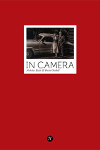
Guy Ware – The Fat Of Fed Beasts
Posted 8th April 2015
Category: Reviews Genres: 2010s, Angst, Crime, Mystery
1 Comment

When banks do not store money.
Publisher: Salt
Pages: 233
Type: Fiction
Age: Adult
ISBN: 978-1-784-63024-9
First Published: 1st March 2015
Date Reviewed: 7th April 2015
Rating: 4/5
Alex, Rada, and D are ‘loss adjusters’ – they deal with lives that have ended, reporting on the worth. Alex gets up later than D and Rada. He wanted to be with Rada but she chose Gary. D is sick of Rada’s detailing and just completely sick of Alex, and hopes for better. Rada is in the bank when it’s robbed, can’t get the old man to lay on the floor and her following suspension leaves her aloof in the world. And then there are the demoted police who want to give something unlawful a try.
The Fat Of Fed Beasts is a somewhat confusing novel that looks at work, the worth of a life, society, and individual reactions to situations. Honing in on one particular situation, it deals with its subjects swiftly, mostly devoid of extraneous detail.
‘Mostly’ is the the keyword here because there is an aspect of The Fat Of Fed Beasts that is best noted prior to reading – the book is told from various viewpoints (it takes time to work out who is who) and one of these viewpoints is going to make you want to throw the book across the room. It takes a chapter of this viewpoint to realise what is going on and that chapter is a long, tiresome, one. The character provides every minute detail. They are frustrating, repetitive, and take forever to get to the point. It’s important to mention all this because for a time you may well wonder where the editor was: this is a style Ware makes use of for this (one) character. Odds are, Ware found them as tedious to write as the reader will to read; Ware has ensured his characters are different. In sum, you’re going to want to give up early on but bare with it. The author’s on your side, as are the other characters.
The minute detailing takes us to the next point: this is largely a book about personal responses to situations; the bank robbery. Characters worry about their jobs, about the person called Likker who no one seems to know, about society in general. The frustrating character allows us to look at customs and etiquette, British mannerisms, all in a relaxed but nevertheless slightly satirical way. The character who swears a lot shows the way a younger person can strive to keep up to be listened to (not that the swearing is due to age). Another character shows varying levels of anxiety, angst, and a certain sort of empathy that to name would spoil part of the story. It could be said that Ware’s little use of first names, especially at the start, shows that whilst these are individuals, their issues could be anyone’s.
So it’s about people, crime, features a bit of comedy and a smattering of mystery. The writing style, almost to suit this smorgasbord, is part literary, part general. It’s hard to say it’s literary fiction but at the same time that’s sort of what is it.
To be sure The Fat Of Fed Beasts isn’t for everyone, though even those who aren’t overly keen are likely to take something from it. It’s short, almost necessarily so; the length is pretty perfect actually. The ambiguity is something to savour; it let’s you focus on what’s most important.
Give this one a chance; there’s a chance you’ll like it.
I received this book for review from the publisher.
Related Books
None yet.
Paula Lichtarowicz – The First Book Of Calamity Leek
Posted 13th March 2015
Category: Reviews Genres: 2010s, Commentary, Crime, Psychological, Social
Comments Off on Paula Lichtarowicz – The First Book Of Calamity Leek

Is it a bird? Is it a plane? No; it’s something else entirely.
Publisher: Hutchinson (Random House)
Pages: 296
Type: Fiction
Age: Adult
ISBN: 978-0-091-94422-3
First Published: 7th February 2013
Date Reviewed: 11th March 2015
Rating: 4/5
Calamity Leek lives with her ‘sisters’ in Mother’s garden. It’s mainly aunty who looks after them. They have lovely furs to wear, work in the garden, and gain an excellent education. Oh, and they are being trained to fight and sleep on straw. Calamity is reaching the age where she’ll be sent off to war, but one day sister Truly decides to climb The Wall. Nothing will be the same again.
Let’s get this out of the way – The First Book Of Calamity Leek is not a book about books. The title relates to the way in which Calamity must think through her life and come to terms with everything that does not align with what she’s read in her aunty’s appendix. What Lichtarowicz’s book actually is is a very strange, silly-sounding but surprising story.
The writing style is odd. Calamity talks strangely, a particular sort of childish language; uppity, almost. So odd is it, that’s it very possible you’re going to read a few pages and want to move on to something better. (It’s also strangely humorous, both naturally and in that way children can be when you know you shouldn’t be laughing.) Calamity can be irritating, obnoxious, a bit of a pain when compared to her sisters. The truth is that even if you persevere it’s going to take quite a while before you become used to it as well as understand it all.
Understanding. There are two schools of thought here. One is that Lichtarowicz is a genius, that the way she lures you into considerations of a bizarre fantasy world is wonderful. The other is that the subject has been handled in a way you may not find comfortable. Is this a book about pigs living in a barn, about animals? Is it about children? Perhaps it is about birds? Fairies? Ghosts? Suffice to say the confusion, alongside the oddity, is likely going to put you off. Upon working it out you may want to flick through the previous pages.
References to modern media abound to confuse you further. Aunty’s actress days ensure plenty of singalongs: Mary Poppins, The Sound of Music, Grease, and a nod to The Phantom Of The Opera. Whether these were designed to confuse or whether they suggest something more is never explained, but there is plenty to wonder about. The children watch show-reels to learn about men, videos wherein aunty is, to the reader at least, acting in various musicals; they’re are taught that these are real events, or that at least they represent the reality of aunty’s life.
There is much that can be said as to the realistic possibility of what happens – in both the past and present sections. Whether Lichtarowicz wanted realism here is not obvious: it’s more than possible that the things that go on, and the reactions that would be frowned upon in reality are based solely on the way Calamity perceives them. At the same time it’s also possible that it’s the result of the adult way of doing things that may not always gel with a child’s understanding, especially not one in Calamity’s state.
The First Book Of Calamity Leek is incredibly odd and difficult to get through. Its narrator is irritating and it takes a long time until you realise exactly why. The ending is a little ambiguous. This is a book in which you are thrown into a situation with only so much explanation given.
Nevertheless it’s a good book and worth reading. What you discover may shock or surprise you and it will certainly make you consider what you’ve read and the reasons the author has chosen to write the tale the way she has. Calamity is not trustworthy but she’s innocent enough not to realise it and not to see that by reporting what she’s experienced, we will learn the truth.
Give it a go; see what you think. And make time to chew it over afterwards.
Related Books
None yet.
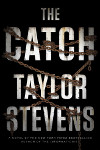
Taylor Stevens – The Catch
Posted 26th September 2014
Category: Reviews Genres: 2010s, Angst, Crime, Social, Thriller
1 Comment
All aboard.
Publisher: Crown (Random House)
Pages: 356
Type: Fiction
Age: Adult
ISBN: 978-0-385-34893-5
First Published: 1st January 2014
Date Reviewed: 25th September 2014
Rating: 3/5
When Munroe is employed to join Leo’s team on the ship in east Africa, she quickly realises that she hasn’t been told everything about what’s going on. She’s been kept in the dark – and kept out of the payment, too. When the ship is hijacked it’s time to reveal her true colours to Leo and the crew, and time to try and find out what happened. She doesn’t care what happened to Leo, but she feels for his wife and Victor, a kind team mate, and whilst she could leave them to fate, she’ll stay to help.
The Catch is the fourth book in the Vanessa Michael Munroe series. Whilst fair, it pales in comparison to the other books, especially as the previous, The Doll, was so exceptionally good.
The story itself is okay, but there isn’t enough of it and so the narrative has been padded out with repeated details. It’s both a case of necessary filler content and lacklustre editing. Repeated phrases and info-dumps slow the pace to a halt in many places and it may prove difficult to get through a number of chapters and work out exactly what’s happening. There are a great many characters in this book.
However Michael is as good as always, straddling the fence between good and bad, her background continuing to have an affect on her. In The Catch the reader sees her weaknesses – whereas she mostly escapes unscathed, here she is wounded badly and so Stevens is able to explore her willpower further than ever. The wounds are a bit of a problem, as they fall under the repetition – Munroe spends most of the book in pain and we know about it – but it does fill in for the previous occasions. And because Stevens has always managed to have Munroe escape unscathed without it seeming convenient, it is excellent that here she’s allowed the reader to see what happens when she is harmed.
The book feels more a standalone than the others; Bradford is not here and Munroe’s dealings with Leo are new and presumably not to be continued. Certainly it seems like a spin-off of sorts, illustrating what Munroe gets up to without her ‘usual’ team. We may have known she took on similar jobs, but this goes one further.
The Catch may not sport a particularly interesting story, and it most definitely is not the first Munroe book a reader should choose, but it does give you more insight into Munroe.
I received this book for review from the publisher.
Related Books

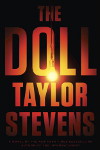
Taylor Stevens – The Doll
Posted 24th July 2013
Category: Reviews Genres: 2010s, Angst, Crime, Social, Thriller
2 Comments
A race against time and death.
Publisher: Crown (Random House)
Pages: 335
Type: Fiction
Age: Adult
ISBN: 978-0-307-88878-5
First Published: 4th June 2013
Date Reviewed: 15th July 2013
Rating: 5/5
Please note that this reviewer has read the first book in the series but not the second, so any confusion discussed may or may not be the result of not having read the second book.
Vanessa Michael Munroe was enjoying a respite with Miles Bradford when she was whisked to hospital following a blackout. Bradford saw it happen but it’s not obvious at first what truly happened. Together with this a rising star of the screen has disappeared, and no one knows where she is either. Are they connected, and if so why would the same group wanting a young girl want Munroe as well?
The Doll is the fantastic third book in Stevens’s Munroe series. A book with no slowing of pace, no fillers, and a constant awareness of reader intelligence, The Doll is a triumphant example of the thriller genre at its best.
Munroe is the same tortured soul as before, but Stevens has again created a good balance, allowing the darkness to make its mark but never letting Munroe really succumb to weakness. Munroe can be harsh at times but her strength and belief makes her easy to love as a character, especially in a time when so many books have weak heroes; and the word ‘heroes’ is not a spelling mistake. Here again we have Munroe posing as both genders and the affects such a lifestyle has had on her is portrayed, subtlety in her words and movements. She has the respect of a man and never needs to do anything to prove herself in that vein.
Stevens has also put a lot of work into the book’s particular other main character, the celebrity. You would expect that (assumable if you consider each book has its own criminal storyline) Neeva wouldn’t be fleshed out as much, but Stevens has created in her the most memorable character.
The ongoing relationship between Bradford and Munroe follows the same pattern. The love is obvious, but you could never assign the label ‘romance’ as a theme. Even the strong love Munroe has for others have their limits on her character.
The awareness of intelligence is one of the most intriguing aspects of the book, because Stevens never makes concepts or plot points unnecessarily obvious. She gives you the basics – all you need to work it out – and then the rest is up to you. This means that sometimes the book is confusing, but it also adds longevity to the plot. In addition, the book is not predictable and barring Munroe’s almost reluctant humanity, which ‘had’ to occur sometime, anything could happen. And it does. Stevens never promises a smooth ride, beginning, middle, or end.
The pacing is just something else. From start to finish you’re speeding 100 miles per hour and even the chapter breaks leave no time to catch your breath.
A book with such a poignant subject had to be treated carefully and Stevens has done that. She gives you as much as is needed to feel entertained by a novel and then goes all out to show how awful it is. She doesn’t just use the situation and create a happy ever after, she brings the reality of the situation into it. Of course there is a measure of apology from the criminals but it’s clearly definable as something to help the story and not suggested as realistic. The horror is never glossed over.
Stevens has bypassed the description of ‘promising’. It would be impossible to say that this book holds promise for the future because Stevens is already beyond promise. The Doll is a masterpiece and one of the best books of this year.
I received this book for review from Crown Publishers.
Related Books
Lee Martin – Break The Skin
Posted 19th December 2012
Category: Reviews Genres: 2010s, Angst, Crime, Domestic, Thriller
4 Comments

Anything for you.
Publisher: Broadway (Random House)
Pages: 270
Type: Fiction
Age: Adult
ISBN: 978-0-307-71676-7
First Published: 2011
Date Reviewed: 3rd December 2012
Rating: 4/5
Laney tells her story of why she was arrested for a crime, including all the heartache and tears that led to the moment a trigger was pulled. Miss Baby also tells her story, a tale laced with a similar longing for love but of a differing nature. Both stories, initially separate, join together as gaps in one story are filled by the other and the women find themselves in like situations.
Break The Skin rests quite firmly in “literary fiction” whilst simultaneously keeping both feet in a blend of thriller and crime. At once housing aspects of loneliness and love akin to a YA book, the story touches on issues that place it in an older age range. To say that the novel would appeal to many would be an understatement.
It ought to be noted that the thriller element is quite minor. There is a crime, and a good lead up to it, but the reveal isn’t, perhaps, as surprising or sudden as would generally be expected in a book with such a structure. However this is somewhat negated by the general category as well as the locations and characters.
Because it can’t be said that Martin’s emphasis on personality rather than crime was a bad one, indeed the way the author weaves the two tales together whilst ultimately providing two separate stories is rather compelling. The focus on a need to be loved at all costs puts two characters that are otherwise very different in the same box, literally at times, and keeps the threads tied even when they seem loose. Martin’s characters, especially Laney, are at the extreme ends of neediness, but they surely demonstrate a reality that isn’t given enough notice in our world. Perhaps the saddest part is that both situations could have been avoided, in particular Laney’s, if things were just that little bit different.
Thus, neediness being prominent, the possibilities for manipulation and the way a person in need can do the wrong thing, or anything that isn’t appreciated either way, are centre stage. What’s interesting is how Martin includes the manipulation – it’s subtle, sometimes barely apparent, but there nevertheless. And the secondary characters, such as parents, show how easy it is for others not to notice everything that is happening, to only see part of the story, and thus to make the situation worse. And in Miss Baby’s case, one manipulates another, letting them think the other is manipulating them.
The writing is generally good, although sometimes a bit “clunky”. However there are occasions where accents or dialects are used which can help a reader unfamiliar with the setting, and cultural references tend to be explained well.
The differences in time between the two narratives are incredibly interesting, not just for the changes in setting but for the periods themselves. Whereas Laney’s story, the more informed story, takes place over a number of months, Miss Baby’s is after the event and shows the affects of that event on one of the characters. In a way it could be wondered how relevant Miss Baby is besides being akin to Laney in status, because Miss Baby doesn’t really play much of a part to her Donnie’s story, but it allows Martin to demonstrate feelings, and how people don’t always realise how another feels for them.
Witchcraft makes a play for the reasoning behind the crime, and its inclusion is interesting. Martin doesn’t take a side; he shows how the occult could have an effect, whether real or as a consequence of belief, as well as showing how it might not have played a part at all. He allows space for suggesting it’s a bad thing that affects lives, and space for suggesting it doesn’t work. His handling is objective and includes all sorts of perceptions.
Break The Skin deals with people being very down on their luck, as well as those who believe they are but are in fact not. It shows how a person can easily slide from ambition and self-worth to thinking they are nothing, and highlights the differences in worlds that can allow that to escalate. Its characters are not particularly special, and it’s for that reason the premise and themes work, because they are so normal. Even the fact that there is nothing to recommend them works in Martin’s favour.
In the case of this book, extra analysis may prove indispensable, due to the way that the book can, on the surface, appear dull. Because there is a lot to Break The Skin, and in a way the title is apt far more than in view of the narrative. Martin’s thoughts are there, but he wants you to really think about it, instead of handing it to you on a plate and making it easier to read and forget. Once you break the spell, you’ll see it all.
I received this book for review from Crown Publishers.
Related Books
None yet.


