Zoë Duncan – The Shifting Pools
Posted 14th July 2017
Category: Reviews Genres: 2010s, Magical Realism, Psychological, Spiritual
Comments Off on Zoë Duncan – The Shifting Pools
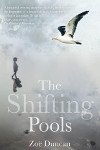
What you see will be.
Publisher: Lightning Books (Eye Books)
Pages: 346
Type: Fiction
Age: Adult
ISBN: 978-1-785-63036-1
First Published: 6th July 2017
Date Reviewed: 14th July 2017
Rating: 4.5/5
Eve’s family lived in a country that was torn by war; in childhood Eve lost them all and suffered further trauma. She moved to England where her well-meaning aunt never stopped trying to cover up any news of the war and never referred to the family. Now in her adult years, Eve is yet to confront her memories and her grief continues as strongly as ever. Her dreams are nightmares and she’s not living anywhere near her potential, but her imagination believes it’s time to heal.
The Shifting Pools is an incredibly moving novel about grief and learning to live despite it. Using many different styles of storytelling, referencing, and ideas, Duncan has created something very different and very special.
This is a slow-moving book. The pace echoes the way utter loss, grief, can take over a life, and Duncan never moves the narrative away from it. Every detail is examined, every thought spoken, in the way it naturally occurs in life, Duncan doing away with the very notion that being repetitive in fiction is bad – she shows well how it is important to delve into grief and give it the time it needs.
One of the first things of note is Duncan’s writing – it’s wonderful. It keeps the pacing constant, it stays steady during tense changes, and it brings something very beautiful to the work. It’s not difficult to fly through this book, despite the subject, and the writing and Duncan’s overall handling of the situation is why. And there is a lot of wisdom here that anyone who has lost someone or been in an awful situation will be able to relate to.
The style of the text as a whole is intriguing. Sections about Eve’s childhood are narrated in the third person. The first person is used for everything else: the ‘present’ as Eve lives through her days and details her thoughts; the vignettes of dreams dotted throughout the book, that explore Eve’s mental state in various imagined situations; the sections in war-torn Enanti, the fantasy world that may or may not be real. And then there are several well-known and not so well-known poems, generally a single verse of each, spread throughout, included in the text as vignettes in their own right. It’s almost of collage, a multi-media project, full of different ideas and voices, and works very well. The term ‘fractured narrative’ comes to mind.
The Shifting Pools uses nature, drawing comparisons between it and the themes of the story, and using its beauty as a way to help Eve. Of note is the character’s name, which, after you have spotted potential influences of other texts and concepts (including Narnia and The NeverEnding Story) does bring forth the question of Eve’s faith. Is there a comparison to be drawn between Eve and the Eden of the Bible? Of Heaven? Quite possibly.
Eve is always at war with herself; as much is said in one of the sections. Her dreams concern various war or battle or prison situations. Of the war that tore apart her family, little is said. Duncan never tells you which war – if any, in reality – she refers to, though there are glimpses of a couple of possibilities; it’s more the basic idea of war that is important.
Reading this book is something of a honour, and a surreal experience. It feels fantastical from the very first page and the amount of research, knowledge, and detail Duncan has included is excellent. She unapologetically runs straight past the border between what we are told is the ‘right’ amount of time and energy to spend grieving to show that the idea of a ‘right’ time never works. This said you can see the thought that’s gone in to getting it right in terms of the reading experience, empathy, and not repeating what has been said unless to view it differently – something that wouldn’t work in many cases but does here.
The only thing that may work against the book is the amount of time spent on the journey in Enanti. It depends on your enjoyment of the fantasy world being included alongside the real world, how much you’re invested in that genre, and how much you personally feels it all relates.
The Shifting Pools is a fantastic reading experience, full of care, love, and, ultimately, hope.
I received this book for review.
Related Books
Speaking to Zoë Duncan about The Shifting Pools (spoilers included)
Charlie and Zoë Duncan discuss coping with and healing from war trauma in reality and fiction, the use and power of dreams, employing various styles and formats, and how fascinating reader interpretations can be.
If you’re unable to use the media player above, this page has various other options for listening.
Rory Gleeson – Rockadoon Shore
Posted 12th July 2017
Category: Reviews Genres: 2010s, Angst, Commentary, Psychological
Comments Off on Rory Gleeson – Rockadoon Shore

If we took a holiday… it would be so nice.
Publisher: John Murray (Hachette)
Pages: 291
Type: Fiction
Age: Adult
ISBN: 978-1-473-63407-7
First Published: 12th January 2017
Date Reviewed: 12th July 2017
Rating: 3/5
A group of friends go away to a house in a remote part of Ireland for a weekend break. There have been tensions for a while but despite Cath’s best wishes, confining them all to a small space and adding in drink and drugs just makes things worse. The friends start to split off, fights begin, and from where local resident, Malachy sits with his view of the house, it looks like things will get awry rather soon.
Rockadoon Shore is a fairly short, focussed book, that looks at the sudden breakdown of a friendship group composed of very differing people. Told in third person through the various characters’ viewpoints, it’s a look at an average situation with more thought than tends to happen in reality.
There are six friends and one outsider (or, in the context of location, insider), and Gleeson casts the spotlight on each of them in turn, always continuing the narrative of the whole rather than reiterating it from different perceptions, but he does pause sometimes to look back when decisions in the group have had a lasting effect on any particular person. Whilst this style makes the book move slowly – though with its three-day focus confined to a house it was always going to be like this – it’s one of the defining aspects and when the plot – what there is, as the story is character-driven – drifts, it can be the reason to keep reading.
Part of this style’s reason for being is the characterisation. Whilst obviously devices and slight stereotypes – in many ways this book is like an episode of a soap opera – Gleeson’s characters have been developed to a fair extent. For the author, meanings are most important, personalities a little less so. This creates an interesting situation, particularly in the case of the women, where you have characters being written in a way that echoes the stereotype of men writing about women and then other times that echoes women writing about women. Due to Gleeson’s general idea to study the breakdown of friendship, this style, the switching of gender gazes, if you will, seems intentional. It allows for more reality, for ultimately broken stereotypes, to show that people aren’t all one way or another. It’s more obvious with the female characters – at least from this reviewer’s standpoint – but it does happen with the men, too.
The writing itself is okay; difficult is the decision to use dashes instead of quotation marks. It could well be, indeed, it seems to be sometimes, that the confusion as to who is talking at any one time is deliberate because it often doesn’t matter who’s saying what, but that does not necessarily put paid to reader frustration. There are grammatical and tense errors but they may well be intended.
The character of Malachy is a bit redundant. He goes through some realisations but as he does not really affect the group of friends beyond a plot device, you can skip his chapters without issue. His personal drama at the end is difficult to care about.
Of that plot device, the ending, which is more a metaphor for fissure than anything else, it must be repeated that there’s not much plot. As much as the book does an excellent job of reflecting current life, there’s little to take away with you. Rockadoon Shore isn’t a bad book or a good book, it just is.
This book was one of several available at a showcase I attended.
Related Books
None yet.
Further Thoughts On Kate Chopin’s Désirée’s Baby
Posted 10th July 2017
Category: Further Thoughts Genres: N/A
Comments Off on Further Thoughts On Kate Chopin’s Désirée’s Baby
I found Désirée’s Baby rather profound, which somewhat surprises me due to the similarity between its ending and the ending of The Awakening – one would have thought it wouldn’t seem so shocking given both the similarity of the actions and the similarity between the reasons. Away from that, I think it’s fair to say that many, many people like the story.
One of the biggest questions regards Armand’s background and behaviour. The Kate Chopin International Society’s website describes the likelihood of Armand having black mistresses, quoting:
“And the way he cries,” went on Désirée, “is deafening. Armand heard him the other day as far away as La Blanche’s cabin.”
The site says that this could be evidence of Armand’s affairs with black women – La Blanche is one of the women on the estate. Significantly, however, they remind us that all we have to go by are Chopin’s words. They also quote this:
One of La Blanche’s little quadroons…
Who knows what Chopin meant exactly, but this is the point when Désirée starts to worry and it seems she is literally putting two and two together – the site suggests Désirée’s baby is also a ‘quadroon’, a person who is a quarter black, and that perhaps Désirée also spots a likeness between La Blanche’s child and her own, facially.
Beyond the site’s ideas of family connection, Désirée has seen something in her baby’s skin tone that wasn’t noticeable before and with Valmondé having already pointed out a change – we can assume this is the baby’s skin colour – it’s possible that what Désirée notices is that resemblance to La Blanche’s son. We can assume that for whatever reason at birth, it was not noticed.
Then Armand’s opinion and behaviour:
“It means,” he answered lightly, “that the child is not white; it means you are not white.”
We don’t know much about Armand, but this assumption, if we can be so kind to call it thus, fits in with the age-old idea that a woman is at fault for the sex of a baby being female – it’s Désirée’s fault the baby isn’t white; her lack of known heritage means it’s her problem.
What’s particularly interesting is how Désirée chooses death in a similar fashion to Edna Pontellier. Although for different reasons, both have been rejected. Désirée does not take the offer of moving back to her adopted parents’ home. Was her mother’s feeling that something was off, and the offer of returning home, due to knowledge of Armand that Désirée didn’t have?
And is there anything in the eeriness of Armand’s house? We can possibly see something there, a foreboding, and a metaphor for his personality, which the International Society says could have been dark, pointing to the details about his father and the difference cited between father and son.
In burning his wife and child’s possessions, Armand effectively and symbolically throws away his own heritage. We do not know if he knew about his heritage prior to this, and indeed the reading is more profound if we consider it was a revelation to him upon discovery of the letter, but it’s possible he did and that he’s doing his best to ‘pass’; a subject recently studied by Helen Oyeyemi. In wondering if Armand knew, we can look to this:
…the unconscious injury she had brought upon his home and name…
Is injury a strong enough word for Désirée has supposedly done?
Beyond this tragedy is another: when Valmondé says to return, she doesn’t refute Désirée’s fear. In terms of what Chopin was saying, it’s fair to say Valmondé didn’t think Désirée was black and that her lack of acknowledgement of that is a device that allows Chopin to create the ending. Had Valmondé addressed the question she may have saved Désirée’s life.
Désirée meets her death whilst looking angelic:
…her hair was uncovered and the sun’s rays brought a golden gleam from its brown meshes
She has feet ‘delicately shod’ and a ‘thin white garment’ that’s been torn by her journey. And she ‘disappeared among the reeds and willows’ – symbolic, perhaps, as the baby’s cradle, we learn shortly afterwards, was made of willow and that cradle also ‘dies’.
Of Armand’s possible discovery – rather than reminder – of his heritage, all Chopin says is this:
There was a remnant of one back in the drawer from which he took them. But it was not Désirée’s; it was part of an old letter from his mother to his father. He read it.
He read it – Chopin says that, and ‘dear Armand will never know that his mother, who adores him, belongs to the race that is cursed with the brand of slavery’.
The jury’s out but we can assume if it was in the back of the drawer and a remnant, it could have been there since the days of his father, because otherwise the question is what happened to the rest of the letter and why did Armand keep only that bit?
First Half Of 2017 Film Round-Up
Posted 7th July 2017
Category: Film Genres: N/A
5 Comments
These past months, I’ve spent most of my screen time watching TV shows, or, rather, one TV show. I’m loving Parks & Recreation but there is a lot of it to get through. The natural casualty has been films – I have been reading a good amount; screen time is pretty low overall. I’m on series 6 now and whilst there are some other shows I’m planning to watch they’re a lot shorter and, I expect, not as addictive. I will, however, not be setting any film goals. I’m wondering if saying, at year’s end, that my next year’s film resolution is to ‘watch as many as I comfortably can’, as I have in regards to reading and books, would be best.


Independence Day: Resurgence (USA, 2016) – Is it really 20 years since Will Smith fought aliens? This follow up is good if technically unnecessary. It’s the only film other than the Hunger Games trilogy/quartet in which I’ve seen Liam Hemsworth, so I might have been watching Gale go after extraterrestrials…
Mirror Mirror (USA, 2011) – The second of the two Snow White movies of 2011; I’d wanted to see both and now have. This one’s a lot lighter than Snow White And The Huntsman, and the first half stays fairly closely to the storyline. It does lose its way in the second half, gets a bit too silly, but the Bollywood-esque item number at the end is awesome.
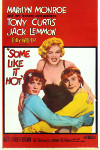
Some Like It Hot (USA, 1959) – One of the two remaining ‘big’ Monroe movies I had yet to see (the other is The Prince And The Showgirl). It was a hit with my family many moons ago so I’d seen various bits and pieces over the years but far from the whole thing. One I enjoyed – not a favourite, but a fun couple of hours.
So, no goals.
Which films have you seen recently that you’d recommend?
F Scott Fitzgerald – Tender Is The Night
Posted 5th July 2017
Category: Reviews Genres: 1930s, Angst, Autobiography, Drama
3 Comments

And confused is the book.
Publisher: Various (I read Alma Books’ edition)
Pages: N/A
Type: Fiction
Age: Adult
ISBN: 978-1-847-49259-3
First Published: April 1934
Date Reviewed: 23rd June 2017
Rating: 1.5/5
When young film star Rosemary Hoyt holidays in France, she is attracted to the group of Americans on the beach, two in particular. Dick and Nicole Diver are wealthy residents who appear to have it together; Rosemary swiftly becomes infatuated with Dick and the two begin an emotional and somewhat physical affair. Dick and Nicole’s marriage had a rocky beginning, Dick’s own problems are causing wider issues, but Rosemary’s not on holiday for very long.
The publication of Tender Is The Night followed The Great Gatsby by a space of nine years. Received to mixed response on publication, Fitzgerald kept changing the chapter order throughout his life, his belief that it was his best work never fading. There are two ‘main’ versions of this book – the first, the one I’m reviewing today, is the original with the story told in flashbacks, and the second, released posthumously, a completion of Fitzgerald’s chronological altering that is currently not in the publishing industry. There are rumoured to be 17 versions in total and the book was first drafted with the genders switched.
Dealing with the idea that Fitzgerald thought this his best work, it’s surprisingly understandable. Taking into account the fact the book is highly autobiographical, it’s not hard to see a certain genius in the way the author observes what were essentially his own problems. While it’s included in the novel in an oft-subtle way (more on that in a bit), Fitzgerald gives a frank portrayal of the way drink can affect relationships and life in general, looking at himself openly and discussing rather than debating the problems. He leads Dick to alcoholic destruction at the same time it happened in his own life (though in Fitzgerald’s case, the result was dire). In terms of the author’s marriage to Zelda Sayre, it is looked into in the context of mental illness; it is revealed in the second ‘book’ that Nicole and Dick met in what we would now see as awkward, inappropriate circumstances, where Dick was Nicole’s doctor. Fitzgerald was never his wife’s doctor – he was no medic – but the position he puts Dick in allows him to deal with the situation from a new angle as well as his own angle as husband.
This is what is excellent about the book, this blunt and personal look at alcoholism, depression, extra-marital relationships, mental illness, that very much relate to Fitzgerald’s own life, if fictionalised enough to not be an autobiography.
But perhaps it is all this that is the reason the book is a mess. Beyond the use of metaphor – the specific nods to his own life – the book falls flat. The story is a muddle of chapters that for the most part could be placed in any order and be no more or less confusing than before. Besides the very obvious storylines of Rosemary meeting Dick, of the hospital, and of – so long as you know the details – Fitzgerald and Sayre’s life, everything else is murky. It’s hard to say exactly what the book is about beyond these three elements, and they don’t constitute much of a plot.
This has a lot to do with the writing. The book is full of devices, and random people pop in and out of the story without leaving any sort of mark on the page – perhaps they are figments of Dick’s increasingly cloudy mind but it seems more a choice made by the author as there are never any discussions of these pop-ins later on. Dialogue presents a particular problem wherein someone will talk and then they’ll appear to speak again for the next line of dialogue that by rights and format should be spoken by someone else. Very little is clear and the plot jumps here, there, everywhere.
Talking of the subtlety of Fitzgerald’s inclusion of drinking, the narrative, when told in third-person from Dick’s perspective, muddies the waters of what people in the novel are thinking. Mostly, things happen to Dick and you’re not in the know. You’re as baffled as Dick might be at any given moment (this is different to the general unclear nature of the text). It’s in the dialogue, conversations with others, that the drinking and the social effects of it are confronted. Rather clever, but due to it being steeped twice in that murky pool, the effect on the literary aspect of the novel is not as profound as it could have been.
There are glimpses of interest. One chapter ends in a blood bath that you might expect to signal a mystery element to the story, but it’s never looked at again. Similarly the chapter in which Rosemary finds a dead body in her hotel room and Dick quietly removes it; in context with the reported fight between Dick’s friend and a ‘Negro’ (the word is used in context with the era rather than a pointer towards racism) this seems to usher in the great possibility of a discussion on race… but then nothing happens. The event simply drops out of the narrative.
The confusion takes a break at the start of ‘book two’ or, depending on who you ask, from page 100 onwards. (Around page 100 – of any edition, it seems – is the place quoted by most people at which the novel starts to become better.) Book two opens on Nicole’s time in hospital and the beginnings of her relationship with Dick and is much more straight forward and utterly linear.
There are a few good things about Tender Is The Night, particularly from an academic angle, but they are slight. If you’re really into the idea of reading everything Fitzgerald wrote you’ll likely want to read this book regardless of the reviews, but everyone else would be much better off spending their time with another. It might be a Fitzgerald and it might be called a classic, but it’s difficult to say it’s worthy of either designation.
Related Books