





Paulo Coelho – Manuscript Found In Accra
Posted 8th May 2013
Category: Reviews Genres: 2010s, Philosophy, Translation
9 Comments

Questions and answers in a straight forward format.
Publisher: Knopf (Random House)
Pages: 188
Type: Fiction
Age: Adult
ISBN: 978-0-385-34983-3
First Published: 2010
Date Reviewed: 29th April 2013
Rating: 4.5/5
Original language: Portuguese
Original title: Manuscrito Encontrado em Accra (Manuscript Found in Accra)
Translated by: Margaret Jull Costa
Coelho presents one of the ‘lost manuscripts’ – a fictional take on a real situation – and divulges its contents. As a town prepares to be attacked, a philosopher answers questions from the worried residents.
Coelho’s books are based in spiritual, philosophical content. In Manuscript Found In Accra he takes this a step further, styling the book as a question and answer session, keeping the text concise and devoid of superfluous detail, and borrowing from scripture. Indeed enough here is borrowed from scripture to make you wonder whether this book was produced too quickly, yet it fits the theme to have it included as Coelho writes the manuscript as one akin to the books of the Bible.
It is a very short book with little plot, but this means, as said, that there is nothing more than what needs to be said. Coelho’s never suggests he isn’t out to change minds, and the teachings are a good mix of common sense and thoughts that people tend to reach after a lot of thinking. The book is akin to Plato in style, and reads just like the ancient philosopher himself.
As there isn’t a plot besides the general setting of a town on the brink of extinction, it is possible to describe the questions without ruining the book. The prospective reader will find the following themes, amongst others: defeat being a bad thing, solitude, how to live happily, and love. The themes are more detailed than this list can suggest, though they work as general answers.
It could be said that this is a lazy offering from Coelho: short, sparse, lots of empty space on the page. It could be said that in essence it is more of the same from him. But those looking for a book of wisdom to be dipped into will likely appreciate this. And that is the take-away here – it is similar to the rest of Coelho’s work, but it still has its place on shelves.
I received this book for review from Crown Publishers.
Related Books
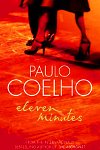
Richard Weihe – Sea Of Ink
Posted 8th October 2012
Category: Reviews Genres: 2000s, Art, Biography, Historical, Philosophy, Spiritual, Translation
2 Comments
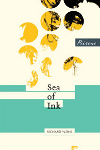
Describing the self without words.
Publisher: Peirene Press
Pages: 100
Type: Fiction
Age: Adult
ISBN: 978-0-9562840-8-2
First Published: 2003
Date Reviewed: 1st October 2012
Rating: 4/5
Original language: German
Original title: Meer der Tusche (Sea of Ink)
Translated by: Jamie Bulloch
Bada Shanren was born in luxury but chose to abandon said luxury for the robes of a monk. Inspired by his father and taught by the abbot he begins to paint, learning about himself and the world in a unique way as he does so.
A mixture of fact and fiction, Weihe’s chaptered novella spans almost an entire life in a very short time. Whilst the background is given to the reader as a non-fiction account, and non-fiction it is – the story of the Manchu conquest of China – the rest is a mostly imaginary tale of Shanren’s life. For what Weihe includes in his narrative is the sort of content you do not find in biographies: detailed thoughts and a tale that is as artistic in its written style as it is in its subject.
And there is a large amount of detail in this book; indeed just like art, it is varied, some details existing as part of the narrative, others being more about structure of subtext. A great deal consists of a subtle philosophy – sentences, ideas – often not discussed and simply just put out there, so to speak. And on the other hand there is, for example, a difference in the written style of the military non-fictional section compared to the fiction – the non-fiction reading rather like a set of bullet points without the bullet points themselves, and the fiction flowing more like the water that plays such a big part in Shanren’s life. If the non-fiction feels stilted, the fiction is liquid prose and beautiful.
The philosophy concerns art, first and foremost, but is inevitably linked to life in general. Often poetic, it draws from a pool that seems a blend of regular worldly philosophy and classical Chinese sayings, the result being highly interesting.
For me as a painter the value of the mountain is not in its size, but in the possibility of mastering it with the paintbrush. When you look at a mountain you are seeing a piece of nature. But when you paint a mountain it becomes a mountain. You do not paint its size, you imply it.
What is particularly intriguing about Shanren, at least in the way Weihe presents him, is the link between the self and the way the painter continually changes his name. Weihe himself, in the afterword, speaks of the artwork being a representation of the painter. Whilst it may not always be the case, there often seems a match of one style or atmosphere to the paintings and the name Shanren goes by at the time. He changes his name to suit the place he is at in his journey to master technique, his art, and the answers to his abbot’s questions.
As an additional point the reader may find the parallel between Shanren’s life and the life of Siddhartha Gautama, The Buddha, rather poignant. Like The Buddha, Shanren has an epiphany of sorts and decides to leave his wife and son in order to live simply with a spiritual aim. And like The Buddha – although Shanren does in fact seek a new wife after he realises his diversion from the path set by his ancestors – he comes to a spiritual awakening. The two figures shared a basic understanding of the world through Shanren’s following of the way of life created by The Buddha.
To read Sea Of Ink is to have a history lesson, art lesson, and language lesson at once. Jamie Bulloch’s translation seems at one with the original text, a good substitute where the original cannot be read. Weihe has included a lot of information and yet when reading it does not feel at all so. And the additions of the paintings themselves is a boon that allows Weihe to describe the method of painting in a way that means the reader can literally follow the brush. This written technique may at times feel overused, but it is an intriguing concept nonetheless.
If you are guided by human feelings you will easily lose your way, a wise saying went, but if you are guided by nature you will rarely go wrong.
Sea Of Ink, about art in its many forms, transcends the usual notions of appeal; it is far from restricted to those who have an interest in its most obvious aspects.
Sea Of Ink was originally written in Swiss German, and was translated into English by Jamie Bulloch.
I received this book for review from Peirene Press.
Related Books
None yet
Hélène Grémillon – The Confidant
Posted 3rd October 2012
Category: Reviews Genres: 2010s, Angst, Domestic, Historical, Political, Social, Translation
5 Comments

What happens when no one is telling the truth about how they feel?
Publisher: Gallic Books
Pages: 253
Type: Fiction
Age: Adult
ISBN: 978-1-908313-29-4
First Published: 12th September 2012
Date Reviewed: 30th September 2012
Rating: 4.5/5
Original language: French
Original title: Le Confident (The Confidant)
Translated by: Alison Anderson
Upon the death of her mother, editor Camille starts receiving letters from a sender who only gives his first name. Believing the letters to be a clever method of mailing a novel, Camille does not realise for a while that the correspondence relates to her own life. The story of lovers split by outside events and other people, of babies conceived for questionable reasons, and of the hatred of everyone for everyone else, does not register as real until Camille finds proof of its relevance. The meaning of the words is catastrophic, and it seems the sender is the only one who knew the truth. Until now.
The Confidant, translated from the French by Alison Anderson, is a story about how selfishness, and misplaced belief and love, can become so twisted around each other that they leave truth to be confined to the mind – never spoken, with dire consequences. Set against the backdrop of the German invasion of France during World War 2, the factual history included weaves its way into the narrative to create situations that further destroy the humanity of the characters.
And like all stories with a similar narrative – in the way that it feels, the atmosphere, the confusion – it may be difficult to enjoy the book in the usual sense. In regards to the characters, it is difficult to be impressed by a group consisting of a sexual pervert, an obsessed and allegedly dangerous childless woman, and a younger woman who appears to lie to everyone. These aspects take a while to become apparent, but they may be difficult to comprehend when they do. What is interesting, however, is the way one may question their opinion of Camille as the book continues.
The book is told using a series of letters – all sent by Louis but formed of both his words and the words of others – as well as the thoughts of Camille as she comes to the end of each instalment of the story. The formatting is a little unorthodox, the use of a typeface generally spurned by the publishing industry, but it has the interesting affect of not only ensuring the reader knows who they are listening to but of actually adding to the atmosphere; Camille, is incoherent at times, her world a confusion to herself. Indeed the first couple of pages are so peculiar in their written style that you could easily believe Anderson’s translation poor, were it not for the elegance of the rest of the book.
The book is actually rather short, due to both page count and the easy-to-read nature of the text. But Grémillon makes the most of what she has – everything included is important, there are no “filler” events and there is no feeling that the book would have been better served by additions. The narrative gets right into the action, Camille provides a brief but sufficient background, and whilst Louis rushes on occasion it is not a drawback. It is a very welcome style in a world where books continue unnecessarily.
One ought not to feel disappointed by the predictability of the tale, indeed if you read the blurb you will know a lot, and the reason is that Grémillon wishes to explore her topics with a reader who will know, confidently, what she is talking about.
And if the most obvious theme is cause and affect, then the major theme is surrogacy (this comes to light as the major theme in part due to the acknowledgements in the back of the book). Being infertile in the 1930s and 1940s was of course nothing like it is today with all the advancements we have made both technologically and socially. Grémillon shows how society placed such a role in the expected life of a woman, and how it could affect those women who did not live up to the standard set. Due to the narrative structure, and the way in which the author divulges the characters’ beliefs and thoughts, the suggested routes to happiness are laid bare, often with the consequence of creating burdensome personalities. Grémillon portrays the historical infertile woman in the extreme – which creates some of the gross horror in the book – as well as discussing surrogacy in more simple terms. And to a great extent her discussion is relevant today, highlighting the issues that can surround a woman who agrees to carry a child for another without the experience of knowing how such an occasion will make them feel.
It is impossible to retain the same opinions one had at the beginning of the novel once the end has been reached, such is the fine decision Grémillon made to explain the story from different angles. The book does require diligent attention but it rewards with clarity and confirmation. And in addition it also provides a basic knowledge of the lives of the French in German-occupied Paris, which describes in subtext, if not always via direct experience (of the characters), the martial law of the time.
When I try to understand the reasons behind the whole tragedy, I always come to the same conclusion: if Annie had not been passionate about painting, none of this would ever have happened. I am as certain of this as are those who maintain that if Hitler had not failed his entrance exam to art school the world would have been a better place.
It may not be easy to like what happens in The Confidant but that is not the point and Grémillon is not worried if you feel that way. What matters is the subject at hand, the details imparted, and in that the book has surely succeeded in its conquest.
The Confidant was originally written in French, and was translated into English by Alison Anderson.
I received this book for review from ED Public Relations.
Related Books

Pia Juul – The Murder Of Halland
Posted 18th June 2012
Category: Reviews Genres: 2000s, Angst, Crime, Domestic, Translation
3 Comments

Death awakens life.
Publisher: Peirene Press
Pages: 157
Type: Fiction
Age: Adult
ISBN: 978-0-9562840-7-5
First Published: 2009 in Danish; 2012 in English
Date Reviewed: 14th June 2012
Rating: 5/5
Original language: Danish
Original title: Mordet på Halland (The Murder of Halland)
Translated by: Martin Aitken
Bess is woken by the sound of someone being shot – her husband. She had fallen asleep in another room when he’d want to go to bed and she’d wanted to keep working. Who murdered Halland? The neighbours think it was Bess, but it soon becomes obvious that that idea is wrong. Bess tells the reader of her life with Halland, and how they had grown apart. She loved him, and she is grieving, but is she grieving for him?
If there’s one thing reading Peirene Press’s translations for the last year or so has taught this reviewer, it’s that she needs to time her readings with when she is most mentally awake. The Murder Of Halland, like Tomorrow Pamplona before it, is an incredibly complex novella that runs to the rooftops screaming a need to be discussed before full understanding can be reached. You can imagine how difficult this book is to think about by oneself.
Central to the story is the seemingly misplaced sadness of Bess. The woman appears to be suffering from depression, and from what she says at first you’d be forgiven for thinking she is upset with the hazy nature of her relationship. But what develops is a situation where the reader understands, better than the character, how she, Bess, feels, and why she is feeling that way. You might wonder if there was, storyline wise, another purpose for Halland’s death. Juul’s plotting is magnificent for the way she brings it all together.
Apart from this, from all the complex domestic-social-psychological discussion, there is a crime story. Who killed Halland and why did they do it? This part of the book is relatively easy to unravel and the motivations usual enough. What is interesting about it is that is shows a parallel way that people deal with a situation, and this of course links back to Bess’s misplaced sadness. Yet amongst all the complexities there was surely real love behind Bess’s decision to be with Halland.
Every character in this book is there to help Bess find herself, even if at first they just seem to be there as a friend or in the background as scenery. The secondary plot shows itself as a potential affair, for example, and the reader must work out if there really was one, or if the character is being truthful in the story they provide. And what does the sub-plot do to alter Bess’s state of mind? – in every case read the included quotations carefully to fully explore every issue and consequence.
The Murder Of Halland is confusing, intricate, and appears to be a whole lot of mixed up storylines pulled together. And it can take thinking about it afterwards to realise it, indeed this review has reached its conclusion precisely because it was written.
This is so much more than a murder mystery, and for that it should satisfy the delights of many a reader. It may be a short book, but don’t let that fool you any more than the suggestion that Bess was the killer.
The Murder Of Halland was originally written in Danish, and was translated into English by Martin Aitken.
I received this book for review from Peirene Press.
Related Books
None yet.
Asko Sahlberg – The Brothers
Posted 6th March 2012
Category: Reviews Genres: 2010s, Angst, Domestic, Drama, Historical, Political, Translation
1 Comment

A lot of surprises and shocks in a very short amount of time.
Publisher: Peirene Press
Pages: 116
Type: Fiction
Age: Adult
ISBN: 978-0-9562840-6-8
First Published: 2010 in Finnish; 2012 in English
Date Reviewed: 2nd March 2012
Rating: 5/5
Original language: Finnish
Original title: He (They)
Translated by: Emily and Fleur Jeremiah
Henrik and Erik are back from the war between Sweden and Russia, where they were fighting on opposite sides. But this isn’t the only issue between them as they arrive home at different times. There has been animosity between them, and between Henrik and his family since childhood, and yet there is something else lingering in the darkness, ready to pounce.
Once again Peirene Press has delivered a stunning novella from the minds of continental Europe. However where previous publications have brought a few particular issues to the forefront of the mind, it is more the structure of this book that stands out. Entirely different in every way, it really does feel as though you are being introduced to Sahlberg, and perhaps Finnish writing in general, in a way that suggests that like the Nordic countries’ most internationally recognised musicians, their writings are in a wonderful realm all of their own.
What is perhaps most striking about the book is the way that it has been told and structured. The sectioning off of the story into short pieces, into the different points of view of the several characters, reads like a script from theatre. While Sahlberg (for although the book has been translated one can assume that Emily and Fleur Jeremiah have been as accurate as possible) does not break the fourth wall, the way that his characters tend to speak in the present tense, as a monologue, comes very close to it. And the very way in which each monologue begins is reminiscent of the strong introductions from the sorts of productions that critics of drama herald as magnificent. One cannot help but imagine how the book might be performed on stage, the monologues being strong enough in themselves that a group could simply sit on the stage with a spotlight to highlight the one speaking and the effect would be powerful enough to warrant use of props or set design as absolutely unnecessary.
The monologues are of varying lengths, indeed some are so short you would imagine that the structure would render those characters minor, and yet the separate elements of both the differing points of view offered, and the inclusion of the “quieter” characters in the speeches of others, means that almost every character is given full description and development by the end of the book. Ironically, it could be said that The Brothers manages to make a better attempt at fleshing out characters than many a longer and more linear novel. Here it is impossible not to imagine a director in future seeing it as perfect for the stage, Peirene Press’s description of it as a Shakespearean drama is surely most apt. And it would be noteworthy to include the fact that while you read each person’s point of view, the story never repeats old ground. The book continues to flow forward (accept for the odd flashback), as though the characters had got together beforehand to decide who would narrate each scene.
Moving on to the content itself, there is an interesting thing in the way that Henrik is the person everybody hates, yet he is the only one who can see how the house is falling apart. The way he speaks of it suggests that it is more than simply the house. And indeed there are tensions which it seems no one picks up on besides the individual themselves. Everyone hides everything from everyone else.
Should everyone direct their thoughts to Henrik? There are many times when Sahlberg implies that the reader ought to look at other people more critically, and remember that while Henrik is disliked widely, there are biases at work.
For such a short book, there really are a lot of twists, and you may find yourself wanting to adopt Anna’s period-centric response of putting hands to face in shock. A couple of the twists are more or less obvious from the outset, but it’s almost as if Sahlberg has made them obvious as a sort of compensation for the utter surprise that comes with the out-of-the-blue moments. The family is both closer and more estranged than you think. And the manifestation of their pain can be difficult to read.
Hate and love are two sides of the same coin, and where one party may think they are providing from one side, the other party may think the reverse is true. Such is the case often here. And those who have caused us pain may actually be the ones wanting a relationship where others have given up. Sahlberg’s story may be historical, but there is a great deal that is relevant on an eternal level. Intriguing, mesmerising, upsetting in so many ways, and always surprising, The Brothers proves that length and time are not necessary ingredients in order to take a person on an immense journey.
I received this book for review from Peirene Press.
Related Books


