


Ella Drake – Desert Blade
Posted 10th August 2012
Category: Reviews Genres: 2010s, Erotic Romance, Science Fiction, Social
Comments Off on Ella Drake – Desert Blade

Love and survival in an apocalyptic world.
Publisher: Carina Press (Harlequin)
Pages: 71
Type: Fiction
Age: Adult
ISBN: 978-1-4268-9367-4
First Published: 23rd April 2012
Date Reviewed: 5th June 2012
Rating: 3.5/5
Derek and Lidia met when Lidia was the doctor in charge of rehabilitating him after he lost his arm. The riots and outright violence that had filled the streets of America threatened everyone’s lives, and whilst the two appeared to strike a rapport, it couldn’t last for long. 10 years later and Lidia still wonders what happened to Derek. When he turns up at her new community’s secured dwelling, looking for a doctor for a young friend, the feelings that had had little time to develop come racing back.
As this is a very short book, giving a basic plot summary without including any “spoiler” information is pretty impossible. However considering that the book’s strength lies in its setting and that the book is fairly predictable in an acceptable way, I do not see summarising it as a bad thing.
Drake once again provides us with an example of how creative and interesting she is when it comes to constructing worlds and elaborating on them. We’ve had sci-fi fairytales, romance in space with cowboys, and now we have an empty apocalyptic world. But this isn’t the apocalyptic world of the Young Adult genre, chilling and tyrannical, no, this is your bona fide obliteration, a world where nature has succumbed to the destructive forces of man and given in. Technology still exists but infrequently, and the world is notable for its desert.
The only issue with this is that there’s undoubtedly much to explore and a lot to learn – whilst the reader does learn a lot, the shortness of the book means that a good deal is left unsaid. Indeed the story itself is so short that it feels less of a novella and more the sort of piece that would fit into a collection. Because of the quick pace and few details you wonder if it would have worked better had it been in a compilation.
However that’s not to say that the book is bad, because as inferred, a book with such world building could not be so. And there is a lot to like about Desert Blade. One such example is the beginning, where everything feels rushed and you wonder if this will be the pace throughout. Once you get to the “10 years later” you realise just how appropriate such a fast pace was, not only because it was provided as background context, but because such a format is used for flashbacks in films – a quick glimpse of something, explosive in its revelations, before the story starts for real. You realise that the entire section was in fact one scene.
Something that was pointed out in reviews of Jaq’s Harp, was the inappropriate nature of a couple casually discussing whether they should revive their sexual relationship – all the while being chased by the enemy. Drake clearly took this criticism to heart, however she wove the criticism around her own preferences to good effect. In Desert Blade there may be enemies chasing the couple, but they will find a safe place before discussing their relationship. That Drake took the criticism of her readers and used it to improve an idea that she liked is to be admired and respected. In this one small element of her writing she has improved as a writer ten-fold, and shown that her readers important.
Desert Blade has a good concept behind it, a fascinating world that begs to be portrayed on the big screen, and an interesting mix of traditional and modern values. It may even have a hint of present media culture in the form of an element not unlike X-Men. The sole aspect that holds it back is its length. While we may know enough to understand the attraction between the characters, especially physically, we do not get to spend enough time with them to truly appreciate their positive roles in the community, and whilst another might say that that’s okay given the romantic focus, the fact that Drake included enough about the context to intrigue us, makes it an issue. The concept of lost and found is completed, but it could have been developed a lot more. Whilst the characters are the focus, it can be easy to instead get lost in the setting.
Something that has so far been left out of this review is the reasoning for this book being an erotic rather than fade-to-black romance. There are a couple of scenes, one in particular, with explicit language and no-holds-barred descriptions. However unlike Drake’s previous books, they are not as prevalent and indeed one of them is woven around the issue of contraception, providing a lesson at the same time. That said, Derek is rather open about his love of women in a way that may prove uncomfortable with some readers, especially when his need to protect oversteps the mark.
Desert Blade is an interesting story combined with a compelling sorry world. Appropriate as an introduction to Drake’s work, it demonstrates the author’s strengths well. It perhaps ought to have been longer but is good on its own merit – and it does succeed in continuing the tradition of making you look forward to whatever world Drake has in mind next.
I received this book for review from Carina Press.
Related Books


Nichole Bernier – The Unfinished Work Of Elizabeth D.
Posted 6th August 2012
Category: Reviews Genres: 2010s, Domestic, Social
2 Comments

Healing the self in an age of unrest.
Publisher: Crown (Random House)
Pages: 305
Type: Fiction
Age: Adult
ISBN: 978-0-307-88780-1
First Published: 2012
Date Reviewed: 1st July 2012
Rating: 3.5/5
Elizabeth died in a plane crash shortly before 9/11, and Kate has found it easier to grieve for longer without people criticising because of the devastation that came afterwards. But did Kate really know Elizabeth? When she’s given Elizabeth’s diaries she finds that their friendship may have only touched the surface of who Elizabeth really was. And in learning about Elizabeth, Kate must reassess the person she has herself become.
It should be noted straight away that while official summaries of the book suggest that Elizabeth died on 9/11, she did not, and thus the story does not refer to the event much except to explain Kate’s state of mind.
The Unfinished Work Of Elizabeth D. revolves around a friend reading the diaries of a recently deceased woman against the backdrop of the woman’s grieving husband, the friend’s strained marriage, and the friend’s issues, which seem to have formed because of the death.
How many things in life are like this, near misses? … Every move you make and a million ones you don’t all have ramifications that mean life or death or love or bankruptcy or whatever. It could paralyse you if you let it. But you have to live your life. What’s the alternative?
Kate is a worrier, and since Elizabeth’s death she has worried about attacks happening in her city and in the places her husband goes to on his business trips, and also about diseases that could claim the lives of her children. As the book continues the reader finds that her worrying is at risk of becoming an OCD and that if she doesn’t get her head around the fact that one has to live with the future unknown, her marriage could reach breaking point and her life become even more of a mess than it is now. Kate is also struggling with balancing her need for a career with bringing up her children.
If Elizabeth’s death was somewhat of a catalyst for the extreme changes in Kate, then it also plays a part in getting Kate back to normality. The diaries of a woman who Kate finds she didn’t really know open her up to the situations she’s put herself in and how she’s let other things in life take over from doing what she wants to do. Elizabeth’s role is to teach Kate how to be, how to do things the right way. Although it may not seem it, especially considering the title, Kate is the main character, not Elizabeth.
Another theme is a lack of communication – between Chris and Kate, between Dave and Elizabeth, between Kate and Elizabeth. Elizabeth’s issues may have stemmed from a particular event, but the way she never let anyone see the real her was the reason for her continued issues and indeed for misunderstandings after her death. That she didn’t discuss important issues with Dave, and this is apparent very early on, caused the equilibrium she was trying to keep to simply just result in more pain. The communication issues between Chris and Kate have obviously been there a long time, but the arrival of the diaries and Kate’s reading of them to the expense of couple time with Chris, brings matters to a head. It is almost as if Kate has brought a third person into the marriage and in discussing the content of the diaries with Chris, Kate is effectively describing a lot of the problems in her own marriage.
But something feels missing in this book. It feels unfinished due to Kate’s feelings about Chris not being confronted – they may have been thoughts but to the reader they are presented as real possibilities and thus needed to be dealt with. And whilst we come full circle with Elizabeth’s diaries there are still a few things that could have been included. The story is good, but not as compelling as others that dwell on the same psychological themes. There are subplots that are left open, such as Max’s bakery and the looming fear that he will have to close it, as well as a wondering of why such subplots were included in the first place.
The ending is very much opened-ended. Will they stay where they are, will there be a separation, how will Kate respond to her discoveries – all the questions that the reader asked the book at the start remain questions at the end. And while it is okay that not every thread is tied, there needed to be at least some sort of resolution so that the reader had more of an idea how things might turn out.
The Unfinished Work Of Elizabeth D. is a nice, somewhat laid-back look at how awful events can effect us in less typical ways, but whether planned or not, the second word of its title is an apt description of the book. The messages and lessons are solid, but the execution could have been better.
I received this book for review from Crown Publishing Group, Random House.
Related Books

Lian Hearn – Grass For His Pillow
Posted 13th June 2012
Category: Reviews Genres: 2000s, Angst, Domestic, Fantasy, Historical, Paranormal, Romance, Social
Comments Off on Lian Hearn – Grass For His Pillow
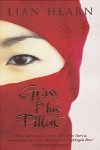
The issue is that the right path is considered the wrong one by many.
Publisher: Picador
Pages: 305
Type: Fiction
Age: Young Adult
ISBN: 0-3304-1526-3
First Published: 2003
Date Reviewed: 31st October 2011
Rating: 4.5/5
Please note that I wrote most of this review over a year ago and that the tone is different due both to the shift in my writing style and the fact that I wanted to make reference to the book being a re-read. I suppose you could call it the ultimate reflective review.
Please note that as this is the second book in the series, there are likely to be a few spoilers of the first book in this review.
So Takeo chose the Tribe and forsook Kaede, but it’s not over yet. The Tribe are demanding things of him that he does not like and feels he cannot do, but how can he leave? For Kaede, the heartbreak is too much yet she knows she must remain strong and take what is hers.
You may remember me saying that I first read Across The Nightingale Floor, the debut of the series, when I was young, and that my recent re-reading led to revelations that I found uncomfortable. In my maturity I could now understand that Takeo was bisexual and that he had slept with the monk, but it wasn’t this that led me to lose some of my love for the book, it was rather that Takeo was so quick to sleep with someone else after having chosen a different path, no matter the gender of the person he slept with.
However sex was simply not viewed as it is today and thus anyone expecting Takeo to wait for Kaede should know that although his heart does, his body does not. In Grass For His Pillow he sets himself up for issues later on by the actions he takes. Though I agree with the book being true to history in such a way, I still cannot comprehend this man with an all-consuming love going and sleeping with others so easily. And while the book may reflect life back then, it jars with modern morality and does make Takeo difficult to accept. (I’m aware that I’m saying this even as someone who disagrees with projecting the present day onto history.)
Kaede is the complete opposite and a good comparison. For she is just as strong as Takeo, perhaps more so, and does very well despite the man-orientated society she lives in. It would be easy enough for Kaede in her growing power to have a fling with anyone she wants, yet she doesn’t.
Aside from this moral aspect however, the book is very good. There is some upset and Kaede is on occasion prone to fall ill when she recalls her passion for Takeo, which is a little over the top, but Hearn is setting up both of them for some amazing battles in the later books.
Many of the chapters are novellas in themselves, indeed if you’re a person who likes to read a chapter before bed you’ll have to abandon that idea here and go by page numbers. Hearn has her story well planned and does not let length hold her back. Despite this the book is an easy read and not particularly long. There are few dull patches. Where either of the characters are waiting for something to happen the author gives a reason and follows it through well and there is always Takeo’s narrative in his sections to keep the story interesting.
The reader learns a lot more about the Tribe in this book as well as some exciting genetic news, and Hearn pads out her world with information about the temples and the afterlife. The blend of history and fantasy becomes natural, so that when Takeo becomes invisible to escape an enemy it doesn’t wreak of convenience as it would in many other books. This reviewer was rather surprised when Kaede was visited by a goddess, as it is so easy to forget just how much fantasy plays a part.
The narrative is quick owing to Hearn’s equal division of the book between the two characters, and it all ends rather suddenly meaning that it’s good to have the next book to hand.
Although billed as a young adult book, the series will be better understood by those approaching the end of their teens. The adult content is at times shocking even to the older reader.
Grass For His Pillow is a book to set up the next one, yet it does not feel like a filler for the amount of effort Hearn has obviously given to it. The latter third more than makes up for the uncomfortable start, and many old characters return so that it feels very much like a book from the series rather than something new. Highly recommended.
Related Books
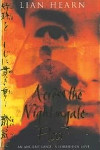
Lian Hearn – Across The Nightingale Floor
Posted 11th June 2012
Category: Reviews Genres: 2000s, Angst, Domestic, Fantasy, Historical, LGBT, Paranormal, Romance, Social
2 Comments
A rather epic historical flavoured with fantasy.
Publisher: Picador
Pages: 292
Type: Fiction
Age: Young Adult
ISBN: 0-330-49334-5
First Published: 2002
Date Reviewed: 9th February 2011
Rating: 4/5
Please note that I wrote most of this review over a year ago and that the tone is different due both to the shift in my writing style and the fact that I wanted to make reference to the book being a re-read. I suppose you could call it the ultimate reflective review.
On the day his village was burned to the ground, Tomasu was found by a Lord who named him Takeo and took him under his wing. Now Takeo joins Lord Otori in wanting revenge, and it appears Lord Otori chose well, for when Takeo stops speaking through shock, magical talents begin to show themselves. Takeo’s not sure what’s happening but he knows that with these talents he may be able to defeat the tyrant.
I first read this book around its publication date and absolutely loved it, I remember staying up all night to finish it; through this I came to discover how fantastic February mornings are as the sun rises, something I try to be awake to experience at least once a year to this day. Because of my reading speed at the time, the climax took me 45 minutes to get through and along with the historic subject I was in heaven. But reading it again I can see the flaws I didn’t see then.
The book is a brilliant example of Young Adult Asian historical fiction (albeit written by a white westerner), and it takes the reader to various different locations without any big changes in plot. The main characters are strong, the heroine especially, and the reader is able to get to know them well in a reasonably short period of time. The talents are supernatural, but they aren’t over the top, they are in the main the sorts of talents that we often think might be possible to develop, such as acute hearing.
But something that I didn’t notice the first time I read the book, due to my age, was the main character’s sexual promiscuity. The character actually appears to be a closet bisexual, but this isn’t the point, rather the point is that the romantic storyline revolves around an intensely passionate love and then a moment later the hero will go and sleep with someone else. For this reason I had a lot of trouble accepting the romance in the book whereas the first time I read it I thought it was amazingly romantic. All I felt was that he was disrespecting Kaede and their supposed love.
However apart from this the characters are exceptional. They are very much a product of their writing time, written before Young Adult books became what they are today, and are all the better for it. The plot switches between them, Takeo’s chapters being written in the first person, and Kaede’s in the third.
The book is not for the faint hearted. Hearn never shies away from descriptions of torture and death, and scenes of a sexual nature are relayed in their historical truthfulness. For fantasy this may be, but the Japanese historical aspects are rather factual.
The story has it all, the keen warrior, mystery and magic, adventure, political issues concerning leadership, and a sweeping romance. It shows why political alliances were important, but family more so, and how devastating the wrong choice could be. It displays the extreme prejudice towards women, the strong Kaede struggling to be accepted as her father’s heir and having to pass up being known as the heroine of a part of the plot that cannot be told here if the plot isn’t to be spoiled.
This is not your contemporary Young Adult novel, and should be recommended to young people with care. However that said, for its realism it is nothing more than true to historical life.
Across The Nightingale Floor is fiction for anyone who has seen a wuxia film and fallen in love, for the historian who wants to know more, and for the dreamer who believes. It is not flawless, even if the hero’s movements are, but it is a book that will hopefully stand the test of time.
Related Books
Elizabeth Chadwick – The Greatest Knight
Posted 30th May 2012
Category: Reviews Genres: 2000s, Domestic, Historical, Political, Romance, Social
4 Comments

When loyalty to the crown isn’t quite straightforward.
Publisher: Sphere (Little Brown)
Pages: 545
Type: Fiction
Age: Adult
ISBN: 978-0-751-53660-7
First Published: 3rd November 2005
Date Reviewed: 28th May 2012
Rating: 3.5/5
William Marshal began his career in a position of forced service to King Stephen, but as he got older he became a little more in charge of his dealings, albeit that his service continued to pass down to Stephen’s heirs. First William works for Henry II and Eleanor, then their youngest son, before working directly again for the crown, but it’s not all doom and gloom, at least not in the start when he was able to compete in tourneys and live his youth to the full. But when battles begin for the throne upon Henry II’s death, reality will set in.
The Greatest Knight follows, in a balance of fact and fiction, the life of William Marshal from his days as a teenage squire, to the point when King Richard the Lionheart had to fight against his younger brother John for the right to rule. But although this is the first book of two regarding William’s life (first in a series actually, though two is the number that focus solely on William) there is not a lot in this book that recommends its title. Yes William is loyal, at all times, and proves a reliable militant, but it is never apparent from his actions how he could have been the greatest knight. Of course the title was created for the book and not necessarily ever applied to Marshal in his time, but it is still cause for thought because of its usage.
There is a plot, of sorts, but William’s life in this book is more a series of political meetings, the combat mainly left to afterthoughts. William’s life seems to meander along, and while he makes for a very likeable hero, the stories he recounts sometimes give you the feeling that those people ought to be given more time for their stories are more exciting.
And unfortunately, it takes until about four fifths of the way into the book for the story to pick up. This comes in the form of William’s marriage, a ceremony and plot point that greatly enhances his ability to intrigue the reader because no longer is it only his thoughts, of a man in relative security, that you can listen to – and this is something that Chadwick does to great effect, her female characters tending to be on the strong side. William’s family make the story much better and it is perhaps a pity that Chadwick decided to include so much of his life before he married. The good thing is that as the first of two books, you can be sure that the next is going to be a lot more involving, and especially as the book ends with a proposed battle, that things are going to pick up in the narrative too.
To be sure The Greatest Knight doesn’t follow the usual path of romance, there are scenes of a romantic and sexual nature dotted here and there, but unlike many of Chadwick’s other books, this one focuses on society, dynastic disputes, and general politics, in a far more detailed way than when the hero or heroine has a partner throughout.
What there is here is a lot of information about England and English France in the 1100s. Yes, a little is fictional when needs must, but the book is incredibly factual, and that it looks at the rivalry between royal members from an outsider angle, brings new life to an old topic. Chadwick presents her royal charges from a generally unbiased viewpoint, and whilst one may surmise that, when it comes to Marshal at least, she favours Richard over John, she nevertheless gives each equal time to pitch their beliefs and reasoning to the reader through William’s thoughts and dialogue.
However whilst reading you can’t help but remember that there’s a second book, and that the promise of a blossoming romance meaning more main characters, and the fact (because it’s historical fact) that the politics is going to get a lot more interesting, means that you want to rush through this first book for the wrong reasons. For now, at least, the knight in question is more “good” than “great”.
Related Books