





Robin Shulman – Eat The City
Posted 28th September 2012
Category: Reviews Genres: 2010s, Domestic, Food, History, Social
6 Comments

Are you sure farming is rural?
Publisher: Crown (Random House)
Pages: 301
Type: Non-Fiction
Age: Adult
ISBN: 978-0-307-71905-8
First Published: 2012
Date Reviewed: 17th September 2012
Rating: 4/5
Shulman presents the often deceptively small groups of people who defy the notion of modern urbanisation to grow and produce their own food in the heart of New York City. Covering both traditional gardening and industrial manufacture, Shulman illustrates how history has moved from one extreme to the other and back again, showing that whilst such production may seem shocking to those who live unknowingly amongst it, it is actually part of how New York City first came into being.
Eat The City is a rather in-depth look at those who produce food, both en masse and in small quantities. It spans a range of tastes and traditions, including both solids and liquids. Each food in question is given its own section as Shulman recounts visits to the individuals who make it and refers back to historical records to detail how things used to be done. But far from the historical parts being all about the economic and culinary history, Shulman also looks into family history to explain how those she visits and interviews are culturally linked to the foods they produce.
And for the most part such a method of storytelling works well; the present flows into the past and back again and one feels that they know the individuals assessed as well as Shulman herself. Indeed it is only when right in the midst of the book that the method feels a little overused and you start to wonder whether more time ought to have been spent on the present, regardless of the fact that Shulman aptly describes the manufacturing and growing process. Yet this is more a case of retaining interest than writing style as the book requires the history – it is simply that having the book split into sections and the same method of writing being employed each time becomes wearing. For this reason the book can favour a dip-in approach so that the report doesn’t become heavy. The presence of the history fits Shulman’s aim – present-day is incredibly intriguing, but the context and reasoning even more so.
There is a good mix of vegetables and animals accounted for. The first half of the book favours natural, unaltered, produce, with the second half full of industrial manufacture and traditional methods that have been tainted by modernity, for example fishing. Shulman’s section on fishing is a particularly favourable addition because the entirety of it highlights the dangers of the practise. Whilst you are shown that it is possible to farm organically and safely in the city, fishing has inevitably been literally tainted by the chemicals that are dumped into the surrounding waters. For an overall subject that presents hardship and hard work but with resounding success, the section on fishing is difficult to read because of the knowledge Shulman brings to the table. And it is all the more harrowing given that whilst many poor people are fishing for mercury-filled fish, there are others who have the money to eat well but are unknowingly feeding themselves and their family poison.
Shulman brings the era of Atlantic slavery into the section on sugar, detailing not just the history but how the work has been passed down so that even now the successors of the African slaves grow cane. The difference being, of course, that their gardens are the result of choice. This is just one instance of immigration adding to the workings of the city, as detailed too are the Arab Jewish wines and Caribbean vegetable growers. Shulman’s book is a fantastic look at how a city is shaped by everyone who lives there, be they natives, invaders, or otherwise, and how it is impossible to separate such cultures when everything has become mixed together to become one mass society and way of life.
It must be said that the book is not apologetic. If the beginning sections invite the interest of vegetarians then the latter ones will put them off, and there are interviews on both sides of the GM debate. There are inclusions from newspaper articles on political decisions and overturning when the common man did not meet the specifications of those on high, as well as the disagreements within neighbours of those who wanted land for food and those who opposed it. And there is the ever-imposing divide between man and machine, the foodie and the real estate company, as well as the man and the Industrial Revolution. Because food production, even today, is considered backwards when urbanisation is forwards.
There is not really much to be said in disagreement to the way the book has been written. To be sure there are too many lists, wherein Shulman provides all the different elements of a particular system and the number of commas is at least a dozen over several lines, and there is the instance of a misquotation of Apollo 17 moon walker Eugene Cernan as having said “man oh Manischewitz” when he simply said “Manischewitz”, but these are meticulous points.
If ever there was an interesting tale to be told about a place that appears to be the height of urbanity, then this is it. For the European who can only view the city via Friends, the film The Devil Wears Prada, and Google’s Streetview, New York is perhaps the ultimate in urban business areas with a few residential neighbours thrown in. Indeed whilst what Shulman says may shock the average American citizen (and that in itself is a supposition) the impact will likely be greater on the onlooker.
Eat The City is a unique and inspiring exploration of an idyllic way of life, both surviving and being newly imported into a place that is not assumed to be appropriate for it. It does this whilst including a host of people who are from different walks of life and who have different goals. The traditionalist, the hobbyist, the entrepreneur and the capitalist – Shulman brings them all together as one movement: the everyday citizen, be he rich or poor, who just wants to have a hand in the way his food is produced and bring back production to a local level.
I received this book for review from the Crown Publishing Group.
Related Books

K Hollan Van Zandt – Written In The Ashes
Posted 17th September 2012
Category: Reviews Genres: 2010s, Fantasy, Historical, Romance, Social, Spiritual
6 Comments
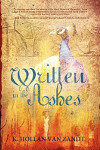
Burning libraries in the name of Christ.
Publisher: (self-published)
Pages: 393
Type: Fiction
Age: Adult
ISBN: 978-1-4525-3513-5
First Published: 2011
Date Reviewed: 13th September 2012
Rating: 3/5
Written In The Ashes is the story of one girl’s journey from slave to potential saviour of the right to religious freedom, and the way the events of society culminated in the burning of the Great Library of Alexandria. At once combining the regular workings of ancient Egyptian life and a somewhat epic adventure, the book is the first in a series.
Unfortunately the beginning section of the book does not express the above. The first part of Written In The Ashes is badly written; there is unnecessary melodrama and plot points are left hanging when they require resolution. The melodrama comes in the form of the main character, Hannah, being unreasonably gallant – she throws caution to the wind many times without thinking about the consequences. An example of a plot point left hanging is when Tarek gets bitten right to the bone and then proceeds to help Hannah, who has sprained an ankle during a show of gallantry, get home, carrying her weight by himself. When they get home Hannah is looked after and stays in bed recovering for weeks, whilst Tarek… well nothing happens, you never hear of his mortal wound again. By all accounts, in an unsanitary society Tarek should be dead.
There is a significant amount of info-dumping about locations and ideas that are not needed. The author describes things that don’t matter, such as telling us that while Hannah was speaking her hair escaped her hair-tie; one can presume from the context that Van Zandt wanted to insert a romantic atmosphere into the scene but without continuation it is superfluous. There is constant repetition of the word “so” that has no meaning, as well the device of “an angel” you’ve never been introduced to, who is doing something, be it smiling, being irritated, and so forth. In the second section Van Zandt finally introduces the reader to the concept, at which time you realise the idea itself is a good one, it’s just a pity it was poorly handled.
So we come to this second section of the book and we do this specifically because suddenly that change in section does everything for the story. The writing style is wonderfully different, plot holes are no longer employed, and the characters come into their own. The story takes on a brilliant mythical religious atmosphere and invites the fantasy genre to stake a claim in its contents. The adventure suggested in the summaries begins and everything here after is much better than the initial first section of the book. It is incredibly easy to get lost in the tale and forget all that came before.
For the most part, the third section continues the goodness of the second, but there are a couple of bad aspects to it, in particular the jump in time. The second section ends with the characters in a rather vulnerable position, and then the narrative suddenly jumps ahead by three years. If this was due to factual events happening that Van Zandt had to subscribe to, it is understandable, but due to the narrative of her fictional characters it does not work – and whilst Van Zandt shows that a threat is still there and must be dealt with hastily, it appears in the backs of the characters’ minds. It would have been better had Van Zandt taken artistic liberty with the historical facts and moved events forward, especially as to all intents and purposes it seems the characters forgot all about their friend for three years for no reason.
Yet whilst it needs editing and duplicate actions removed, on the whole Written In The Ashes isn’t a bad book. Indeed although the violence is strong it fits the period, and there is the element of early Christianity included that is so rarely spoken of elsewhere. Van Zandt really looks into the Parabolani, the so-called Christians (in other words people who believed themselves Christians but behaved as anything but) who took to persecuting anyone who would not convert. The situation was the complete reverse of the Biblical stories of Rome against Christianity and whilst Van Zandt may have created some of the episodes that happen, it is merely the extra details that are fictional. Thus the book is important because in a western world where every other sort of persecution has been publicised, little is taught of this situation. And it gives the library’s female academic, Hypathia, an expanded, if fictional, story, bringing to light both the success and plight of women.
It is unfortunate that the book lacks an air of completion (away from the slight cliff-hanger ending as this is the first book in a series) but there is a deal of goodness here and it would appear that Van Zandt has the potential to be a great storyteller.
Written In The Ashes is a fair look at society and religion in era of the ancients. It will invite research and thoughts to be overturned, though it may be difficult at times to get there.
I received this book for review from the author.
Related Books
None yet.
Kate Morton – The House At Riverton
Posted 5th September 2012
Category: Reviews Genres: 2000s, Domestic, Historical, Mystery, Romance, Social
4 Comments

What the elders want the elders will get, but it will come at a cost.
Publisher: Pan Macmillan
Pages: 591
Type: Fiction
Age: Adult
ISBN: 978-0-330-44844-4
First Published: 2006
Date Reviewed: 27th August 2012
Rating: 3.5/5
At 98, Grace is approached by a film-maker who is creating a movie about the murder mystery surrounding the house she, Grace, used to work at. What the world doesn’t know, however, is the truth; and this Grace has kept to herself her entire life. Only now, facing inevitable death, does she decide to create some cassette tapes for her grandson explaining everything, including what really happened on the night a famous poet killed himself at the lake.
The House At Riverton is a long look at the early decades of the 20th century and how society came to dictate lives in such a way that people made drastic choices they wouldn’t nowadays. The book could have easily been cut by about 300 pages – the back story, whilst fascinating, especially for those with a particular interest in the era, is unnecessary, and it takes three quarters of the book for the story to actually begin. The build-up is for the most part predictable and thus all the extra details surrounding it are irrelevant. It’s nice to get an idea of what went on in the characters’ heads (so far as Grace can determine) but what would otherwise have been a big reveal is, of course, not there.
However this doesn’t mean that the book is a failure, indeed even if it required heavy editing, the superfluous content does illustrate well the life and society of the time. If you’re a reader looking for a thrilling mystery you won’t find it here – this is a book for people who enjoy period dramas and the sorts of incidences that were considered monumental back then but would be a non-issue today. Family structure is discussed, such as marriage in order to produce heirs to keep hold of property. And seeing as the book follows the lives of a couple of generations of the same family, Morton also details, through the characters themselves, how change occurred as the children of the 1910s became the adults of the 1920s and began to challenge the strict rules imposed upon them by their elders. Both these issues, woven together, cause the most conflict in the family, as well as the streak of feminism and want for equality that comes as second nature to one of the young women, Hannah.
It would be fair to say that although the characters are well written, their purpose is to enable Morton to put her point across and to explain history and society, and so whilst the reader knows them enough they are not the sort to commit to memory in a fond manner.
It should be noted that The House At Riverton isn’t all that much of a romance story and that the mystery aspect of the book is hampered by the fact that the reader knows the basics, even if the true mystery does remain a secret. Yet, in these two factors there does remain some interest – the romantic threads form more of the commentary on society, and as there are a few of them Morton is able to look at the issue as a whole in detail. The veils over the classes are pulled down and Morton shows the reader that the relationship between upstairs society and downstairs subservience was a lot more complicated than either section would have admitted, maybe than they would have known. The romances also highlight the need for loyalty that is often inherent in us. The true mystery is what the film-maker, Ursula, is after, but only Grace knows it, and the reader is only party to it from being inside Grace’s head; thus the ending is good, as it ties everything together and the reader being given all the ingredients to work out what would happen next. Indeed the reader may know more than the characters, even after those happenings happened.
The House At Riverton is too long for what it sets out to accomplish, and the real thrill takes a while to get going; it is recommended thus as a good resource for gaining knowledge of past society and exploring the class system inherent in the day.
Related Books


Thomas More – Utopia
Posted 29th August 2012
Category: Reviews Genres: 1510s, Philosophy, Political, Social, Theological
Comments Off on Thomas More – Utopia

Utopia may not be Utopia, but does that matter?
Publisher: N/A (I read Penguin’s version)
Pages: N/A
Type: Fiction
Age: Adult
ISBN: N/A
First Published: 1516
Date Reviewed: 10th August 2012
Rating: 4.5/5
Please note that the version I read was translated by Paul Turner (from the original Latin).
Utopia is a work of fiction, however it does overlap with reality and depending on the edition you read the editor and/or translator may or may not have included a couple of letters that sound very much like true correspondence. The plot is simple and detail is everything: More meets his friend Peter and Peter introduces him to Raphael, a man who has lived in the New World. Raphael spends time conferring upon the friends the knowledge he has learned from the country, and discusses his convictions that life in Utopia is fairer than Europe and that Europe ought to use Utopian society and politics as an ideal to aspire to. Filled with references to Plato, the conversation is seemingly an attempt by More to preach his suggestions for a different system of government and living.
The book is quite a feat, yet whether or not the author himself knew just how much of a feat it was, and would remain to be, is a subject that would require a differing style of writing to a review; one can assume he knew something of it as Wolsey had made him publish it under the name of William Rosse1. Utopia is at once a product of its time and ahead of its era. Although some of the topics it addresses fall solely in the realm of the late medieval/early modern period, the vast majority are relevant today in a rather scary fashion. Indeed More is so accurate in his ruminations of structures that continue, even now, to be used in the (western) world, that he would be well placed were he to sit in the British House Of Commons tomorrow.
More’s book contains a lot of thoughts that successfully appeal to both a minority of people in his day – or maybe they were a majority? Who really knows what the common person thought? – and to us in our 21st century world. There are “discussions” on subjects such as capital punishment for burglary:
“We’re hanging them all over the place,” he said, “I’ve seen as many as twenty on a single gallows. And that’s what I find so odd. Considering how few of them get away with it, why are we still plagued with so many robbers?”
“What’s odd about it?” I asked – for I never hesitated to speak freely in front of the Cardinal. “This method of dealing with thieves is both unjust and socially undesirable. As a punishment it’s too severe, and as a deterrent it’s quite ineffective. Petty larceny isn’t bad enough to deserve the death penalty, and no penalty on earth will stop people from stealing, if it’s their only way of getting food. In this respect you English, like most other nations, remind me of incompetent schoolmasters, who prefer caning their pupils to teaching them. Instead of inflicting these horrible punishments, it would be far more to the point to provide everyone with some means of livelihood, so that nobody’s under the frightful necessity of becoming first a thief and then a corpse.”
Here More, through his character Raphael, speaks out against the fatal punishment meted out to thieves. More points out that a great many of the thieves apprehended are poor and that they are not in a situation where they can act upon the fact that thieves are executed. And More quite rightly suggests, although at least in the western world he can be happy that such extreme measures no longer exist even if jail applies to both, that there being no difference in punishment for a thief as for a murderer does not change the way a thief will behave; indeed a thief may as well have been a murderer in the 1500s.
And when it comes to bringing up the youth of society, More’s words are seemingly even more political than before as what he says is incredibly relevant to Britain today, as 21st century Britain struggles with crime which many link back to unemployment and few opportunities in both childhood and adulthood. More remarks:
“You allow these people to be brought up in the worst possible way, and systematically corrupted from their earliest years. Finally, when they grow up and commit the crimes that they were obviously destined to commit, ever since they were children, you start punishing them. In other words, you create thieves, and then punish them for stealing!”
If you do not help people to get out of their poor backgrounds they will have no way to get onto the career ladder, to make money legally. And, to go back to a 1500’s issue, how can stealing money equate to a death sentence? Both are against the Ten Commandments and surely murder is worse than stealing.
More doesn’t leave it there – he goes on to explain why there are these issues in the first place. What is interesting is that he speaks out against the way the church would take land for its own use and how the begging for alms by monks would effectively leave less money available for true beggars – this being interesting because More was himself a strong Catholic. One could liken his thinking to that of Erasmus, who also spoke out against the church whilst remaining one with it. Yet it is interesting how these two writers, More and Erasmus, were effectively giving a prior warning to their readers about the Reformation action that was to come, being people who remained loyal whilst others who spoke out fell out of love with Catholicism and became Protestants.
As a last look at examples of how More’s work fits so well into our world may we consider the information he provides that it is the expense of raw materials, created by a greedy government, that caused many people to be out of work?
It is interesting and ironic how some of the items More discusses were to happen so soon after publication. These are the references to the men employed by government turning against that government – this is what the New Model Army did in the 1600s, the turning point towards England becoming a republic for that short time – and the use, by a king, of ancient laws that everyone had forgotten, in order to raise money – exactly what Charles I did to fund his fight against the afore-mentioned NMA. So uncanny are these discussions, so spot-on in their warning, that it’s hard to believe that More was writing five monarchs previous when the country was, if not completely, better settled.
As to be expected in our modern society, though the book may have great relevance, it is difficult to agree with everything More is saying. Indeed there are observations made about Utopia that prove quite disagreeable, such as that the “mentally deficient” (read “mentally disabled”) ought to be laughed at whilst being looked after – because that is the right way to communicate with them if one is nursing them. This by itself is typical of views at the time, but what makes it particularly difficult to accept is that it is comes before a paragraph that urges acceptance of the physically deformed and ugly (read “physically disabled or deformed”) because such deformities are not their fault. Whilst one could perhaps surmise that the phrase “mentally deficient” is More’s way of saying “those who haven’t bothered to try to improve their intellect”, the fact is that coming straight before a statement about the physically disabled does very much suggest that More is speaking of the mentally disabled, and this is a point on which the translator of the text agrees. The only thing that truly suggests More is talking of intellect-by-choice is that he says those who are physically deformed did not choose to be so, thus possibly inferring that the mentally deficient are their opposites – because which mentally disabled person has had a choice over whether or not they are mentally disabled? It is not their fault, just as it is not a physically disabled person’s fault. However, a fact trumps all these charges to single this piece out as prejudice by More – physically disabled people were more understood; the mentally disabled, for a very long period of time, were simply viewed as mad or strange with no real studies conducted to find out what was really going on. With a physical disability, even doctors of the 1500s would have recognised a limp, a wounded arm, or an inability to move, as a medical issue.
Then there is the idea of religious tolerance. Through the fictional Raphael, More announces that Utopia is home to a variety of religions and that the citizens are free to believe in what they will – then he says that everyone goes to church and kneels before the priest. Unfortunately here, in our modern eyes, More is but confirming his own beliefs, firstly by the use of the word “church” – a Christian term – and secondly because people of differing religions should not be made (as you soon realise that Utopia is in fact more akin to an apocalyptic dictatorship than heaven) to use one priest and one all-encompassing service, at least not as their sole form of community worship. And if beliefs are allowed to be different, then the prayer More details makes no sense as it talks about a “true religion”. “More was intolerant of all dissident opinion,” wrote the historian Joanna Denny2. Whilst Denny was incredibly biased against More, it cannot be denied that More’s own words back her up.
But these negatives in no way set the modern reader back, for later on comes such comments as this one on the elderly poor:
Having taken advantage of them throughout the best years of their lives, society now forgets all the sleepless hours they’ve spent in its service, and repays them for all the vital work they’ve done, by letting them die in misery.
It seems 1500s Britain was as notorious as the 21st century version in its care of the older generation – a quick bit of research on the part of anyone not acquainted with the UK system will find that the above quotation could quite easily have been taken from a leaflet about the current non-treatment of the aged population.
So we have a book that was ahead of its time whilst being a product of its time, that is philosophical and political – almost dangerously political given that More was the friend of the oft-cited tyrant Henry VIII – and is eternally relevant. But what we don’t have, and this is intriguing given that the very word “utopia” is in our dictionaries thanks to More’s usage of it, is a particularly Utopian society. Utopia the country, for all More’s debate – albeit that More does criticise it from time to time – is in fact more deserving of the terms undemocratic, unfree, police state, and lots of other words beginning with “un” that end in a description that brings to mind strict governmental control. The Utopians have free time every day, but they live in regimental housing, eat at certain times in huge communal dining halls, have one set of clothes, and if they fall out of line at all, are punished by slavery or enforced celibacy. These falls include premarital sex (understandable given More’s religion, but surely a Utopian society would simply suggest the couple get married since they obviously have a connection) and disobedience to one’s husband – children must confess to their parents, wives to their husbands, but there is no mention of whom a husband confesses to. There is no money because the country produces enough for everyone, which sounds idyllic, until you learn that there is in fact money in the country because they collect it to pay other armies to go to war for them. Indeed their whole process of war is abhorrent, for all its notions of peace.
So Utopia is not Utopia, and even More supports this conclusion. Whether or not he intended to be ironic in this way cannot be fully known, especially as a lot of what he pronounces is so good. But surely there is a case to be made in favour of More being intentionally ironic in order to show that even the best places on earth can get it wrong in some aspects. Maybe he just wanted to create a slighter better place than England, if Turner is correct.
What, then, was More definitely trying to do here? It would not be wrong to say that he wanted to use his exalted position in court and society to try and influence people to change Britain into the way he felt it ought to be. And whilst this would have been the case for any number of individuals, one cannot help thinking that a lot of what More said would have been very good to implement. Was More in part preparing the way for the burgeoning Protestantism that was happening in Europe? This is possible but rather unlikely given that More produced a diatribe of Martin Luther’s views that, according to secondary sources, included plentiful swear words – clearly More was not as tolerant as he suggests in his fiction; yet he could still have wanted to change things somewhat. The one thing that can be said for certain is that whilst More liked Henry VIII he saw a great many things that were not particularly savoury in his friend and doubtless would have been happy had Henry read the book and introduced to his court some of the suggestions. Sadly considering that Henry would not have been amused by much of the content, and given that the monarch passed on books he was given for others to read instead of him, that was very unlikely to happen.
There is so much in Utopia to discuss, which is remarkable for such a short book. More never wastes a moment, giving only a few sentences to background set ups, and his various references to Plato, combined with the detail and constant stream of information provided, only stands to further the idea that More is attempting to emulate to a degree the great ancient philosopher’s work. Such is the content in Utopia that you are bound to find both items you agree on and items you disagree on, and plenty for debate. To ask whether it is a good book is irrelevant in the usual way – as pure fiction a plot solely of discussion is horrendous – but apply the “philosophy” label to it and suddenly you are in the correct territory.
Utopia forces you to think about the past, the present, and the future – what you like about your country and its past and how far your society has come since times long gone. Whilst it may be concentrated on Britain/Europe and contrasted with a mythical Native America, much of it can be applied to the world at large, both historically and in relation to our modern era. In terms of philosophical debate, to use an extremely bad pun, the more the better.
1 Denny, J. (2004) Anne Boleyn, Britain, Piatkus, p.102.
2 ibid., p.171.
Related Books


Subscribe to this site via email and you’ll receive 3 posts a week. If you use Gmail, you may find the posts are stored in your ‘social’ or ‘promotions’ tab.
Dodie Smith – I Capture The Castle
Posted 24th August 2012
Category: Reviews Genres: 1940s, Books About Books, Comedy, Domestic, Romance, Social
3 Comments

The continuation of 1800s novels.
Publisher: N/A (but I’d wager Vintage’s a good one)
Pages: N/A
Type: Fiction
Age: Young Adult
ISBN: N/A (Vintage’s is 978-0-099-46087-9)
First Published: 1949
Date Reviewed: 16th August 2012
Rating: 5/5
Cassandra lives with her family in a house adjoining a ruinous castle. From having a fair amount of money they have become poor, and it doesn’t look like Mr Mortmain will start writing again anytime soon – despite his wife spending time outside in the nude in order to commune with nature. But then the Cottons arrive, American brothers who have just inherited the estate the castle stands on. And far from being angry about the unpaid rent they’re positively entranced by what they’ve found.
I Capture The Castle is a rather quirky novel about relationships and the power of money. It presents itself initially as relaxing and intriguing, but as soon as it gets a hold of you it branches off, showing deeper colours, just like the women’s dresses after they decide to dye them into new life. What’s particularly appealing about the book is that it is heavily influenced by Victorian literature, both obviously and subtly. There are worded references to Jane Austen and the Brontës, but further than that the book’s story itself feels like it could have been written by, say Austen. Indeed it can be so easy at times to snuggle down, knowing that you’re reading the work of an admirer, that when Smith diverts from the era of chasteness it’s rather a shock. It would not be wrong to say that I Capture The Castle is Austen without the limitation of Victorian etiquette.
I am not so sure I should like the facts of life, but I have got over the bitter disappointment I felt when I first heard about them, and one obviously has to try them sooner or later.
And the book truly strikes a chord. Told from Cassandra’s point of view, via her diary, often she will say something that is so compelling and always considered by ourselves, but rarely shared, such as her ruminations over the idea of her sister wanting a wedding rather than a marriage.
“As we’ll never be able to stop her turning on the Early Victorian charm, we ought to accentuate it.”
Referring back to the Victorian influence, it is apt to discuss the characters. Rose, for example, is paramount in Smith’s dedication of her work to Victorian literature; the character has gathered her knowledge of how to conduct a courtship via the processes in place a century before her own, and the reactions her “victim” experiences due to her theatrics are duly recorded by Cassandra. Rose feels it is time she had money after having lived in near poverty for so long, and if the opportunity arises she will take it. Cassandra is less passionate than Rose, and tends to keep her feelings to her journals, but her potential to love is huge. The Father, Mortmain is rather random in his actions and one never knows if he is working or not, and Topaz, his wife, is completely bohemian. The family is completed by a brother, Thomas, and Stephen, an unpaid servant who is devoted to Cassandra. The Cotton family are colourful too, if less so. The collection of such a set of characters means that whenever the narrative slows down – which it does a lot because the plot as a whole is slow and rather simple – it’s not long before you’re laughing, and as such it’s difficult to want to put it down.
Of course a big draw for the reader, considering that the novel has a simple, fairly predictable plot, is surely the factor of the house/castle in addition to the cast of characters. Though difficult to imagine at times, it is an interesting and individual setting that permits the exploration of history without the burden of superfluous or detailed information.
The romance may be a love square, or perhaps even a love hexagonal – Smith, although agreeing to honour the well-established trope, takes a while to release her hold on the information, so that whilst certain parts are predictable, she might attempt to lead you down the garden path, protesting against readers who have worked it out already.
I asked him if he liked Rose’s dress – mostly to change the conversation.
He said: “Not very much, if you want the honest truth – it’s too fussy for me. But she looks very pretty in it. Knows it too, doesn’t she?”
There was a twinkle in his eye which took off the rudeness. And I must admit that Rose was knowing it all over the place.
I Capture The Castle attempts and succeeds in being the very sort of book a lover of both classics and contemporary work wishes to read – it combines all the trappings of the 1800s novel with the boldness of the early 20th Century, and such boldness enables there to be a further blend of the 1930s and our current 21st Century present. Indeed so wrapped up in the past can Smith become, that mentions of technology, for example a gramophone, may cause you to pause for a moment so that you can adjust your visions of women in Victorian dresses to women of later fashions.
And in addition to all of the above, I Capture The Castle is surely a novel of the arts. Cassandra likes writing, the text is structured as her diary, and the family is forever trying to get Mr Mortmain to author another book. Topaz is an artist and model, and the Cottons are bathed in the world of literature.
“Look, Mortmain, look! Oh, don’t you long to be an old, old man in a lamp-lit inn?”
“Yes, particularly one with rheumatism,” said Father. “My dear, you’re an ass.”
Smith’s work is an absolute triumph.
Related Books
None yet.


