

Roelof Bakker (ed.) – Still
Posted 5th December 2012
Category: Reviews Genres: 2010s, Angst, Art, Domestic, Political, Science Fiction, Short Story Collections, Social
6 Comments

Visuals, the written word, and a vast reach.
Publisher: Negative Press
Pages: 171
Type: Fiction
Age: Adult
ISBN: 978-0-9573828-0-0
First Published: 2012
Date Reviewed: 14th November 2012
Rating: 5/5
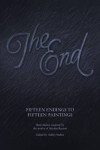
Still is an anthology of short stories by an international mix of 26 writers. Each story is based on inspiration gained from a certain photograph. The concept of Bakker, credited as the editor, the book invites new interpretations of his photographic work. With submissions from writers such as Evie Wyld and Jan Van Mersbergen, and including some up-and-coming authors, the book is an assortment from the industry as a whole.
Combining artistry and writing, Still is a work stunning in both presentation and textual content. Not only are the photographs wonderful to look at – the oft-used macro details, the sharpness and detail, the sheer truth of the emptiness that engulfs you perhaps even more so than it might in real life – the design of the book is as much a strong point as the rest. Whilst for Bakker the photography is important, the book itself almost favours the writing, the photographs covering only 3/4s of a single page per story, the rest of that page given to the title. This makes it truly a book for those interested in either subject as well as those interested in both. Bakker took centre stage for his photography exhibition, and in continuing the theme by incorporating the stories and putting them first he has ensured the longevity of his own work, longer than it might have been otherwise.
The fantastic thing about the stories in Still is something Bakker notes in his introduction – often the writer has taken the photographic inspiration and run with it, leaving behind the notion of the derelict town hall. This means that there is a rough three categories of writing: the story based entirely around the photograph and its context, the story that starts with the photograph before leaping somewhere else, and the story that uses the photograph as a cleverly integrated device. Whilst the stories are in nature quite similar, which will be discussed in due course, the differences mean that the book never loses its brilliance, never becomes dull.
‘…entering or exiting through a doorway serves as an “event boundary” in the mind, which separates episodes of activity and files them away.’
The book is incredibly international, with authors from all over the world contributing stories that highlight particular cultures, and bring into focus the similar experiences that everyone faces. And “faces” is the right word – these are not joyous stories, indeed some are harrowing, and most share an interesting sort of disconnect. This disconnect is between reader and the character and it almost emphasises the vacant nature of the town hall, which when you think of the way some stories do not reference the hall, makes for a whole new topic of discussion. Similar too is the basic storytelling method, one of the reasons the book is so disturbing in that fascinating way. The often sparse language, the difference in dialects and speech patterns that don’t necessarily conform to the author’s choice of setting, and the hard-hitting atmosphere these elements bring to the table.
There is a specific theme that runs through most of the book, that of politics, society, and domesticity. They may be different subjects generally, but the way they are all compiled in one binding effectively puts across the fact that they are connected. Though it is not as simple as saying that politics affects society that affects domesticity. In addition there is the theme of self and how one fits into the world. There are stories focusing on themes such as cleaning an old work place that was important to the person, a loss of place in the life of one’s child, seeking sanctuary in the church, the difference between sisters, and the loss of self and identity that can happen after an accident.
Burdensome womanhood: inviting unwanted attention from unsavoury men who give themselves permission to see a young sapling as a full-grown tree, ready to be mounted. Tiresome womanhood: bringing with it expectations of marriage, of fecundity and of the fruit of the womb. Worrisome womanhood: ushering in responsibilities and tentative, anxious dreams for one’s offspring. Militant womanhood: in a state of perpetual readiness to do battle, a lioness ready to kill for her cubs.
Bakker has achieved his aim of creating something new from something already existing, as well as creating an art book, a literary work, and a combination of both. Still would make a superb addition to the shelves of anyone who favours the freedom provided by short stories and the quick dose of cerebral reading that accompanies them.
The quotations used in this review were taken from the stories of Justin Hill and Barbara Mhangami-Ruwende respectively.
I received this book for review from the editor, Roelof Bakker.
Related Books



Elizabeth Chadwick – The Champion
Posted 14th November 2012
Category: Reviews Genres: 1990s, Domestic, Historical, Romance, Social
5 Comments

A moment of weakness, a lifetime of ambition, and a hope for happiness somewhere in-between.
Publisher: Sphere (little Brown)
Pages: 499
Type: Fiction
Age: Adult
ISBN: 978-0-7515-3869-4
First Published: 1997
Date Reviewed: 12th November 2012
Rating: 5/5
Alexander turns up on his brother’s tourney circuit, having run away from a deprived monastery. Hervi agrees to take him on, but he’ll have to start at the bottom of the career ladder. If career is what one can call the dead-end “work” that Hervi does. The brothers share their time with the Cerizays, Alexander getting on well with Monday who is close to him in age. It’s a good familial relationship for the most part, until the night both teenagers get drunk and the atmosphere becomes intimate. But Monday doesn’t want the life Alexander offers, a continuation of the life they already lead – she wants the riches her mother once possessed. But leaving it behind won’t be easy after what has happened between them, especially with the added threats posed by Alexander’s enemy and Monday’s earl of a grandfather.
The Champion is a particularly good work. Focusing on ambitions of ordinary people, the personalities of the characters allow the story to move between varying locations and social classes, giving the reader a broad overview of life at the time. The characters also allow for some leadership history also, as whilst the hero, heroine, and their family, are creations of Chadwick’s mind, many others are from the past.
And what fine creations those fictional characters are. As always, Chadwick has conjured some well-rounded people, with many things to both worry about and enjoy, but although they are very likeable, they aren’t without flaws. Indeed part of the plot, the need to better oneself, is cause for a large part of the separation between Alexander and Monday, and there is a place for domestic history too.
Neither Alexander nor Monday start out particularly faithful where sexual relations are concerned, which leaves Chadwick able to examine subjects such as prostitution, sexual favours, and in regards to sex in general, contraception. The latter is particularly prominent in this novel, being discussed by the women openly when they are away from the men, showing the power that a woman could yield over her body when the information was attainable. Whilst a little of the information has been fashioned by Chadwick (she acknowledges this in the back of the book) the vast majority is true to life and demonstrates that things weren’t nearly as straightforward as illustrations may first suggest. Indeed far from being happy with their lot as mothers, Chadwick’s book shows that women in the Middle Ages were just as concerned with pregnancy as we are now, and that away from the obvious issues of childbirth in an unsanitary age, the idea of women being married to pro-create was often limited to the men of the family.
Aside from this, time is spent on sexuality, with Chadwick demonstrating the affects a forced monastic life could have on monks – both on those targeted and those who shouldn’t really have been ordained in the first place, and also the issues that arose in a society where being homosexual was acknowledged but frowned upon. What is nice, where the latter is concerned, is how Chadwick shows that people could still command respect and loyalty, though of course the jokes and the fact that it wouldn’t be the case for less well-off people show society for what it was. And no holds are barred when explaining King John’s marriage to a twelve-year-old – you are told that it happened even if the actual intimate details are left out.
Of course a historical romance would not be such without the sex. As is generally the case, Chadwick both creates spice and closes the door.
Chadwick favours bold females, however in Monday’s case she has laced this boldness with a strong stubbornness that takes some getting used to. Whilst Monday is admirable most of the time, some of her choices may be difficult to fathom, and the consequences of conduct are demonstrated to good effect. Yet Chadwick never suggests that Monday gets what was coming to her; aside from a conversation of how choices have affected lives, Chadwick remains fair, treating her flawed heroine as she would an angelic one. This means that Monday is very real.
Sharing the basic ambition of betterment, Alexander also strays from his path, attracted by a potentially glittering career. He is more grounded, perhaps, than Monday, but this helps the development of both of them flourish, enabling differences both in the subject of their ambitions, and the strength of them, to be discussed fully. Part of the reason the book works so well is this constant evaluation of their development.
And whilst many of Chadwick’s books have family members included, Hervi is an exception. He gets his own storyline, his own development, and continues to play a role. Perhaps best of all, he is funny without being a comic relief, and his thread is just as important as the others.
There are several encounters with the enemy, meaning the concept can feel overused, but it’s important to remember that it is realistic, too. It shows just how crucial family was seen to be, even where there were separations.
A major boon of this book is that unlike many of the others, the plot of The Champion stays right until the end – compared to, for example, Lords Of The White Castle, where the last few chapters seemed to be holding on to a horse that had bolted. This is in part due to the multi-layered story, and the myriad of extra issues that the characters have to deal it – it enables the book to be lacking in dull moments. In addition to this, the story takes place over a few years, with little time spent off page, as it were. In other words you will never turn a page to see a date a few years later after having read something compelling in the last chapter. There are some gaps, but they are minimal, short enough for the reader to be able to guess what would have happened.
The Champion is Chadwick at her best; a detailed novel that includes both fact and fiction, plenty of culture and social politics, a drawn out romance, and ordinary people you can root for. The addition of extra historical issues is a further recommendation and the icing on the cake. To put it simply, if you know little before starting this book, you will know a lot once finished, and unlike the basic information provided by basic education, you will come away knowing a great deal more; and with the added bonus of knowing how it relates to our present day and how far our society has come.
Related Books




Laura Navarre – By Royal Command
Posted 7th November 2012
Category: Reviews Genres: 2010s, Domestic, Historical, Political, Romance, Social
2 Comments

Can obeying the king lead to happiness?
Publisher: Carina Press (Harlequin)
Pages: 284
Type: Fiction
Age: Adult
ISBN: 978-1-4268-9400-8
First Published: 2nd July 2012
Date Reviewed: 4th November 2012
Rating: 4.5/5
Katrin was trapped in a wretched marriage, a match made in the interests of her uncle, the king. Now her husband has died, Ethelred wants to make another match for her in order to suit his interests, but Katrin does not want to be sold again and tries to resist. She can’t resist her uncle’s sword-theyn, however, albeit that he is much lower in status than her. If her uncle finds out it may be their undoing, however Katrin may find the outcome better than she’d thought to hope.
Whilst the official blurb of this book gives a lot more insight into the narrative, having, as it does, two heroes, it seemed a good idea to provide only the basics here in case this is your introduction to the book.
Navarre’s Anglo-Saxon tale is in a similar league to the famous Elizabeth Chadwick, featuring sweeping romances, politics, and a cast of believable characters. Navarre’s heroine may seem weaker, but she fits the time. In fact there is a balance within Katrin; she is strong in personality and aims to be as active in domestic society as possible, but she realises where it is better to step back and be meek in order to save her skin. Navarre aptly portrays the men of the time, in fact the first hero, Eomond, is a particularly alpha hero, being incredibly domineering though obviously enthralled by Katrin. It might take the reader some getting used to, this strong woman who will bow down when the pressures of her era take over, but Navarre always keeps her heroine steady – Katrin will always find certain situations difficult and won’t change her personality or feelings at any time. She recognises danger and takes the safest route, and when she knows she can be bold she will be. There is development in the way that Katrin decides to act, namely that she will throw caution to the wind after a time spent assessing the situation, and the way that Navarre makes the development of Raphael match that of Katrin is wonderful.
As said, Eomond is a rather strong character. At times the reader might wonder where the story is headed due to the way he treats Katrin, but Navarre balances it out via his love and his frustrations at his low situation in life. It is interesting, due to Eomond’s character, that the later Raphael is so different. The better match Katrin finds in him seems to demonstrate the difference between the woman naïve about love, and the woman who knows what she wants. Where the heroes are strong but likeable, the author deftly illustrates the fact that Katrin is rather lucky – the other men in her life are not as caring, and indeed King Ethelred himself makes for difficult reading.
It must be noted that Navarre has taken artistic liberties with the history she uses. The good thing is that this is discussed at the back of the book. Anyone who finds Ethelred hard to bear can take note that Navarre made him that way (and it’s nice that whilst the fictional Ethelred is rather horrid, he’s not nearly as misaligned as Gregory’s Anne Boleyn). That said, the basic period has been adhered to, and the interested reader will find that the politics and basic society of the day mirror Navarre’s portrayal.
The romance(s) are well written and mostly devoid of discomfort (the odd phrase may sound over-much, it’s up to the reader to decide how much historic-sounding phrasing they are okay with). Navarre does not always draw the curtains around the bed; when described the scenes are such that they add to the story. For surely scenes where the sex is accompanied by a burgeoning sense of emotional realisation can only develop the narrative further. What is interesting is the way, given the characters Navarre created herself, the strict Christianity is woven into the romance. Rather than simply relegating ideas of pleasure to prostitution and mistresses, and pro-creational intercourse to a marriage, Navarre demonstrates how the church viewed such concepts and how the people sought to align with them – or not, as sometimes happens, which in itself provides a good insight into how early Christianity could hinder relationships when adhered to.
The writing is generally good. There are a couple of occasions when words sound a bit off, for example near the beginning characters say “I say” and “look here” as though they’ve just stepped out of a wardrobe, chain mail is called ring mail, and there is perhaps a bit too much effort made to make the dialogue historic, but these do not detract from the overall experience. Accents remind you of the native lands of the characters as well as the fact that the story started in Scotland, and there is ample medieval phrasing that does work. Katrin has a tendency to think to herself a lot, which sometimes feels strange after all the third-person narrative, but it suits the story to have the insight it provides and offers a real chance for the reader to see what went on in the mind of a strong medieval woman. And it gives evidence and reasoning for the way Katrin acts where dialogue and regular narration does not suffice.
By Royal Command is a stunning epic that spans a long enough period of time for the reader to feel they’ve learned something, without being so long that gaps are present. Whilst being incredibly serious in its illustration of life the book glitters with fantastical romantic elements and plenty of emotion. And whilst having romance at its heart, it doesn’t shy away from the difficulties of the day in terms of gender, political marriage, and sexual relations, as well as showing well how these same elements affected both men and women. In Navarre’s case, men especially, which makes the social history all the more poignant.
History, fictional but fine characters, and a good dose of true politics. By Royal Command rivals the best.
Related Books
Tom Reiss – The Black Count
Posted 22nd October 2012
Category: Reviews Genres: 2010s, Biography, History, Political, Social
9 Comments

After slavery came acceptance in France, which allowed something remarkable to happen.
Publisher: Crown (Random House)
Pages: 330
Type: Non-Fiction
Age: Adult
ISBN: 978-0-307-38246-7
First Published: 18th September 2012
Date Reviewed: 19th October 2012
Rating: 4/5
Reiss details the life and career of the novelist Alexandre Dumas’s father, General Alex Dumas, born of a white French father and black African mother, who led armies during the French Revolution.
The Black Count is a remarkable book that details what can be learned from previously unpublicised sources to introduce to the world a fantastic soldier whom history had forgotten due to later racial prejudice. A rather long book for the sources used, Reiss provides ample context in which to set Dumas’s trials and happiness. This context can sometimes be a distraction as there is a great deal of it, perhaps too much, and it often goes off on a tangent. It is brilliant for the overall history and especially the history of abolition, but doesn’t quite match the premise of the book, which is to tell Dumas’s story.
However what is provided inevitably ends up trumping any arguments for premise; Reiss has given the history of slavery, abolition, general life, and the journey from acceptance back to intolerance. Whilst books about the period will include information about freed slaves and otherwise, the coverage and particular angle the writer takes puts them to shame. Instead of simply detailing, Reiss gets to the heart of his subject, discussing such aspects as the aristocratic day-to-day lives of free mixed-race citizens of the Caribbean and how accepting pre-Napoleonic France was of such citizens when they arrived in Europe. The author opens the door to a world that the modern world in general does not know nearly enough about, and it is surely important that these facts, as they relate to our present day, are provided for general consumption. In fact, the first few chapters themselves are so detailed as to render a several week course in colonial slavery somewhat superfluous. Reiss even includes the irony that came with a society suddenly finding their fashions being lauded by ex-slaves, feeling the need to be meticulous in their rules concerning the ban of such fashion in the colonies.
When, years later and by then a war hero, he lost his lackey in a storm at sea, he would find himself in a true predicament: facing enemy attack was one thing; arranging his own clothes was quite another.
Reiss provides all the knowledge he can about General Alex Dumas, the hero of wars who single-handedly won battles whilst living in a racially liberal world. He, Reiss, goes back and forth between sources to surmise the most likely story and, crucially, includes excepts from Dumas’s letters that only serve to further what is said – Reiss’s conclusions and suggestions are the understandable product of reading primary source material. The writer makes pauses for thought no concern, there is no reason not to believe what Reiss says. Dumas is the family man, the freedom fighter who unwittingly becomes a victim of his side’s success, and a true humanitarian. Despite what later goes against him, his aims remain strong and well meant: a republic for the equality of all.
The cautious reader may wish to know whether or not a prior acquaintance with the novelist Dumas’s works are necessary for comprehension. At first it seems so, but although he may not say it, Reiss has made his biography accessible and details all the literature references needed. He repeats information when new facts are to be added. Also included are quotations from (the novelist) Alexandre Dumas’s own memoirs, and these are treated with respect whilst being analysed for what they are – Reiss explains that the son idolised the father and thus although his words are used, they are acknowledged to be biased when other sources present opposing material.
Reiss refers to himself throughout the book, and it feels very natural. The references are there to demonstrate the discovery and usage of sources, and also to better describe to the reader present-day situations, such as the difficulty in gaining access to a vault. It’s a unique way of writing, more often used in documentaries, but due to the overall style, it works. As for the style it is readable, casual. Reiss himself says at the end that he wanted to avoid making his work particularly academic. However there are some occasions when it doesn’t quite seem right, such as references to a modern person in order to provide an illustration readers will understand. It doesn’t work because the people chosen are not universal, and thus the handy metaphor can be lost.
Reiss has an evident enthusiasm for his subject, yet remains objective. Indeed considering the sources he presents it is incredibly difficult to see Dumas as anything other than who Reiss presents him to be. There is some bias, however, and obvious personal opinions – for example Reiss dislikes Marie Antoinette, who he describes as “frivolous” and “fierce Austrian music snob that she was”, and leaves it like that without elaborating. Yet he achieves his basic aim, to introduce to the world General Alex Dumas. The book may be lacking in Dumas detail, but it is difficult to put that down to the author himself. The availability of sources and the likelihood of their destruction means that Reiss has undoubtedly made the best job of anyone yet, if indeed anyone else has tried. Such a work and research are to be commended for the valuable information they have uncovered for study.
With The Black Count, Reiss has done his job. May others now extend it and let it set an example.
I received this book for review from Crown Publishers.
Related Books


Hélène Grémillon – The Confidant
Posted 3rd October 2012
Category: Reviews Genres: 2010s, Angst, Domestic, Historical, Political, Social, Translation
5 Comments

What happens when no one is telling the truth about how they feel?
Publisher: Gallic Books
Pages: 253
Type: Fiction
Age: Adult
ISBN: 978-1-908313-29-4
First Published: 12th September 2012
Date Reviewed: 30th September 2012
Rating: 4.5/5
Original language: French
Original title: Le Confident (The Confidant)
Translated by: Alison Anderson
Upon the death of her mother, editor Camille starts receiving letters from a sender who only gives his first name. Believing the letters to be a clever method of mailing a novel, Camille does not realise for a while that the correspondence relates to her own life. The story of lovers split by outside events and other people, of babies conceived for questionable reasons, and of the hatred of everyone for everyone else, does not register as real until Camille finds proof of its relevance. The meaning of the words is catastrophic, and it seems the sender is the only one who knew the truth. Until now.
The Confidant, translated from the French by Alison Anderson, is a story about how selfishness, and misplaced belief and love, can become so twisted around each other that they leave truth to be confined to the mind – never spoken, with dire consequences. Set against the backdrop of the German invasion of France during World War 2, the factual history included weaves its way into the narrative to create situations that further destroy the humanity of the characters.
And like all stories with a similar narrative – in the way that it feels, the atmosphere, the confusion – it may be difficult to enjoy the book in the usual sense. In regards to the characters, it is difficult to be impressed by a group consisting of a sexual pervert, an obsessed and allegedly dangerous childless woman, and a younger woman who appears to lie to everyone. These aspects take a while to become apparent, but they may be difficult to comprehend when they do. What is interesting, however, is the way one may question their opinion of Camille as the book continues.
The book is told using a series of letters – all sent by Louis but formed of both his words and the words of others – as well as the thoughts of Camille as she comes to the end of each instalment of the story. The formatting is a little unorthodox, the use of a typeface generally spurned by the publishing industry, but it has the interesting affect of not only ensuring the reader knows who they are listening to but of actually adding to the atmosphere; Camille, is incoherent at times, her world a confusion to herself. Indeed the first couple of pages are so peculiar in their written style that you could easily believe Anderson’s translation poor, were it not for the elegance of the rest of the book.
The book is actually rather short, due to both page count and the easy-to-read nature of the text. But Grémillon makes the most of what she has – everything included is important, there are no “filler” events and there is no feeling that the book would have been better served by additions. The narrative gets right into the action, Camille provides a brief but sufficient background, and whilst Louis rushes on occasion it is not a drawback. It is a very welcome style in a world where books continue unnecessarily.
One ought not to feel disappointed by the predictability of the tale, indeed if you read the blurb you will know a lot, and the reason is that Grémillon wishes to explore her topics with a reader who will know, confidently, what she is talking about.
And if the most obvious theme is cause and affect, then the major theme is surrogacy (this comes to light as the major theme in part due to the acknowledgements in the back of the book). Being infertile in the 1930s and 1940s was of course nothing like it is today with all the advancements we have made both technologically and socially. Grémillon shows how society placed such a role in the expected life of a woman, and how it could affect those women who did not live up to the standard set. Due to the narrative structure, and the way in which the author divulges the characters’ beliefs and thoughts, the suggested routes to happiness are laid bare, often with the consequence of creating burdensome personalities. Grémillon portrays the historical infertile woman in the extreme – which creates some of the gross horror in the book – as well as discussing surrogacy in more simple terms. And to a great extent her discussion is relevant today, highlighting the issues that can surround a woman who agrees to carry a child for another without the experience of knowing how such an occasion will make them feel.
It is impossible to retain the same opinions one had at the beginning of the novel once the end has been reached, such is the fine decision Grémillon made to explain the story from different angles. The book does require diligent attention but it rewards with clarity and confirmation. And in addition it also provides a basic knowledge of the lives of the French in German-occupied Paris, which describes in subtext, if not always via direct experience (of the characters), the martial law of the time.
When I try to understand the reasons behind the whole tragedy, I always come to the same conclusion: if Annie had not been passionate about painting, none of this would ever have happened. I am as certain of this as are those who maintain that if Hitler had not failed his entrance exam to art school the world would have been a better place.
It may not be easy to like what happens in The Confidant but that is not the point and Grémillon is not worried if you feel that way. What matters is the subject at hand, the details imparted, and in that the book has surely succeeded in its conquest.
The Confidant was originally written in French, and was translated into English by Alison Anderson.
I received this book for review from ED Public Relations.
Related Books