

Cat Clarke – Torn
Posted 21st May 2012
Category: Reviews Genres: 2010s, Angst, Paranormal, Psychological, Romance, Social
2 Comments

No matter what, do what is right.
Publisher: Quercus
Pages: 372
Type: Fiction
Age: Young Adult
ISBN: 978-0-85738-205-4
First Published: 22nd December 2011
Date Reviewed: 18th May 2012
Rating: 4/5
Something happened on the school trip to rainy Scotland. Tara died. And although it was an accident, it could have been prevented. Alice knows all about it, she would do. But it’s difficult to tell people because of the repercussions – on her, on her friends. Yet not telling also leads to difficulties. When Tara appears as a ghost to Alice, asking her to do something about it, or rather, knowing Tara, jesting her about it all, Alice knows she has to do something. But can she, especially when there’s love in the air for her, a love that is now somewhat impossible?
Here. Now. Jack. Me. And a room full of dead lizards.
The first thing that strikes you about Clarke – it did in Entangled and does again in Torn – is just how blunt and straight to the point her writing is. Clarke doesn’t hold back, confining views and words to subtext, no, she lets it all out, hitting you smack in the face so that you are under no illusions. And it means that you become more invested in what’s going on than you might have otherwise, because if you are going to read the book, then you are damn well going know everything and accept it.
You would think that this would make for an offensive style, but Clarke is one of the best authors of young adult literature in getting to the real issues and not glossing over them. She doesn’t use lovely language in order to make her stories bittersweet, but she succeeds every single time in presenting the reader with exactly why they should do this or that or believe in something.
Because Clarke’s talent is most certainly in her storytelling, and it’s clear that she has something to say. And while she is blunt, there is no pressure, which mixed together makes a strong impact. You follow Alice’s story, her days when she wonders what she should do, and while the emphasis is on doing the right thing, Clarke does show you why it would be tempting to keep quiet, to think of how speaking out would affect your self, your life. The book is a very easy read with no slow moments, it looks like it will take no effort, but the power lies between the words, it’s woven around them and before you know it you’re knee deep in a multi-threaded story.
While the overall concept is basic, it allows the author to really analyse everything and to go into the small details. What is most interesting is that there are no sub-plots. Although at first it appears that some plot points are secondary stories, every part relates back to the main plot. You get the present, you get the future, you get the back story and the back back story, and you get it from various points of view while never straying from Alice’s first-person present tense monologue.
Alice proves an interesting choice of character because her strength takes a long time to develop, and for the most part she is very passive. Yet she represents the average teenager who wants to fit in while making sure others aren’t left out, and wanting a good life while acknowledging that doing so would cause issues. Ultimately it’s a case of everything happening at the wrong time, and the worst things that could happen colliding with the best things that could happen. And when things don’t happen as they should, there are repercussions.
The bluntness of Clarke’s writing, together with the passiveness and very much usual (in YA) personality of Alice means that the book can appeal to and catch the eye of the regular paranormal and dystopian teenage audiences, whilst giving them a few life lessons. Indeed while Lauren Oliver’s Before I Fall is a great example of how to present issues to readers, there is a lot of emphasis on the romance that somehow blurs your thoughts to the other issues at times. Clarke, on the other hand, uses romance purely to aid what she wants to say, and to demonstrate just how bad things can get. Romance is a big draw in teenage stories, and she adheres to it, but she’ll use it to get the result she wants. Not surprisingly the romance in Torn is very believable and true to life. You can believe in it because you can relate to it in some way.
And when it comes to the romance, Clarke uses her influence as a writer to educate on safe sex, in fact she makes it so that it’s the boy who points out that there is no contraception and thus it would be an idea to wait. And again, it’s real, and Clarke doesn’t portray Alice in a bad light for having said that contraception didn’t matter. The author shows that forgetting things in a moment of lust is natural and okay, but be sure you realise what the consequences would be before you continue so that you don’t continue – in other words, lust is there and that’s fine, but don’t let it control you. And always put one on. It’s a short scene with a strong message, but because she has used the message as content for dialogue it does not sound like preaching, it sounds natural, the sort of conversation a person should have, and will thus surely make readers think.
Clarke isn’t one for finishing her books with a full ending, and her work is surely better for it because it leaves you wondering about all the possibilities and dissecting which one is most likely from what you have read. She does give you all the information you need to work it out, however.
Entangled was a very promising start. Torn has cemented Clarke’s importance and talent in the young adult market.
Related Books


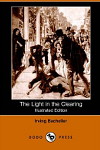
Irving Bacheller – The Light In The Clearing
Posted 4th May 2012
Category: Reviews Genres: 1910s, Historical, Political, Social
1 Comment
Social issues and politics inevitably blend together.
Publisher: Dodo Press (The Book Depository)
Pages: 260
Type: Fiction
Age: Adult
ISBN: 978-1-4065-0366-1
First Published: 1917
Date Reviewed: 4th May 2012
Rating: 3.5/5
Bart lives with his aunt and uncle in a modest house in a modest village. He befriends a girl from a higher social class, but her reciprocation of his flourishing love is marked by periods of disdain for his humble status. One day he meets a senator and his life begins to change. Wanting to improve himself, Bart looks up to Mr Wright and learns from him. And Wright is more than willing to aid him in both his learning and his transition from child to adult, seeing how much potential he has.
The Light In The Clearing is rather like an American version of Great Expectations, only where Dickens exaggerates his themes, Bacheller dampens each down so that the story is far less dramatic. This has the effect of bringing more attention to those elements he does not share with Dickens, the overall result being to show how people can live with falseness and goodness and still manage to come out well.
Though it does take a long while for the book to become more than average. A lot of time is given to the every day, and there are many dialogues that are littered with accents that can be hard to decipher. The time spent at home, with Bart living with his poor relatives and later going to school, does not have enough interesting episodes to make it worthwhile, and it’s peculiar that Bacheller puts all his eggs in one basket – putting the majority of the romance, politics, and opinion in the last few chapters. Because those last few chapters are excellent, but it’s difficult to get that far.
The differences between poverty and wealth are contrasted throughout. Bart’s family are poor but they do their best to give Bart everything he needs, and it is really only when he goes to school that he learns that he is at a social disadvantage. His family and friends protect him, and Bacheller uses the whole concept to show where richness lies in love and accepting what you have. He also demonstrates that wealth does not always make a good person, and indeed the richer characters are often false and deceitful.
This theme is intertwined with the romance as Sally, for a time Bacheller’s own Estella Havisham in the making, flits between liking and disliking Bart, depending on how he is being treated by others and what he is wearing. Bacheller shows the innocence of a boy brought up to feel equal to others and contrasts it with Sally’s feelings about his poverty. The relationship between the affluent Dunkelberg and Baynes families, with its changes of friends and foe, expresses the idea of fair-weather friends.
It is the senator, Wright, and his entrance into the story, that signals the first of the changes in Bart. Wright is well-off in society, but as a resident in the town he has no problem befriending Bart, and it is Wright’s influence that gives Bart his goal in life and reminds him that he is indeed equal in nature’s eyes. Wright teaches Bart to be an adult, and to follow his heart rather than follow what society suggests. Wright’s own decision at the end of the book is a surprising but very heartening action that ministers of present parliaments would do well to observe.
Some of the politics, especially near the end, focuses on the abolition of slavery, the story being historical in Bacheller’s own time. The focus is not huge, and it is used more to set the scene, but there is enough material to gather an overview of how people at the time felt about it all. Where social relations are concerned, the person of Old Kate, a woman who blends fortune-telling with regular premonition, shows what happens to bad people who con their neighbours, with a morbid element thrown in for effect.
Whilst the first two thirds of the book are rather like Great Expectations, and there is even the inclusion of a room left the way it was after a last meal – and described rather like Miss Havisham’s abode – the latter third moves away completely from the classic, heading in the opposite direction on all accounts. The romance thread is confusing and the quickened pace of Bart’s progression from poor boy to lawyer is too fast to keep up with. But the overall atmosphere, the positives in the way that Bart overrules higher society’s choices, and the ethical Wright, makes the end an outstanding piece of work. It is just a pity it takes so long to get there.
The Light In The Clearing was the number two best-seller in America, but while it is easy to see why, for it’s political and social messages, it has not stood the test of time as well as it could have, and that is a shame. The length of time it takes to get somewhere, and that the time is spent on not so interesting tales of home life, does indeed encourage comparisons to the older work of Dickens, and not favourable ones.
The Light In The Clearing is a book that is worth a read, but not so much for pleasure as for studies of history. For history it is a fantastic fictional source but for pleasure the dampening of themes and 180 degree changes are too irregular to invite particular acclaim. It’s a good book, but its purpose has been served better elsewhere.
Related Books

Madeleine Thien – Certainty
Posted 13th April 2012
Category: Reviews Genres: 2000s, Domestic, Historical, Political, Romance, Social
Comments Off on Madeleine Thien – Certainty

If you love someone, stay with them.
Publisher: Faber & Faber
Pages: 304
Type: Fiction
Age: Adult
ISBN: 978-0-571-23419-6
First Published: 2006
Date Reviewed: 20th December 2011
Rating: 2/5
This book’s plot is best summed up by giving a true (as in not what the back cover says) insight. Ansel was married to Gail but she recently died. Matthew was in love with Ani but ended up marrying Clara. Both men continue to live in the past – for one of them it’s sort of reasonable, for the other it’s really not right.
Certainty is a book that promises much but fails to deliver on all accounts. It details the day-to-day as well as the past, and while the information on war is interesting and worth reading, the rest is forgettable. The book brings all the characters together to celebrate Gail’s life before moving on to discuss Ansel’s present situation and then Matthew’s past. Gail, although dead, lives through both their memories and Thien’s inclusion of a short piece told about her actions before death. The issue is that the male characters are depressed and neither of them have a true reason to be since they set themselves up for upset; nor do they recommend themselves as good husband material.
This reviewer felt sorry for Ansel as Thien presented him as someone very much in love with his wife. Then a little further into the book she, Thien, tells us how Ansel went behind Gail’s back. This reviewer put the book down, and only returned to it over two months later because she likes to finish what she starts. She felt as betrayed as Gail had. Thien had been making me feel for Ansel and then suddenly told me how he cheated. Instead of feeling sorry for his loss I now found irony in the fact that Gail had died a short while after it all. Neither was I satisfied by Ansel’s admittance or the way he acted towards Gail in future – it all seemed false.
Then there’s Matthew. Clara gets with him and he tells her about the hard life he had, and about Ani, and Clara has to deal with his continuing depression over his father’s death. If it were that simple, okay, but the fact that Matthew is obviously also moping about Ani (who didn’t die) is just stupid. It sets Clara up as a weak follower who does Matthew’s bidding for nothing in return. Matthew should have stayed with Ani, should have waited until he finished university and gone back to her.
Thien’s characters have nothing redeemable about them, except Gail who is unfortunately already dead. The author obviously wanted to write a literary novel that would win awards, and it’s obvious, the writing is too flouncy and pretty and every sentence is short.
Thien goes into irrelevant details, telling us how things are made or prepared that have no bearing on the story whatsoever. And the use of flashbacks is ridiculous. Not only are they used far too much but also there are flashbacks within the flashbacks with no attempt to specify where one ends and another begins.
There is no story to this book – it’s as if the flowery language is supposed to be enough – the characters are pointless and unpleasant, and the women need to stop looking after men who love others instead of them.
The idea behind the book may be about not trusting that things are guaranteed, but all this reader took away from it was the feeling she’d wasted her time. Perhaps this has value as an art form, but barring that there are plenty of other books in the world that should be read and reading this means that one of the valuable ones won’t get a look in.
Related Books

Charles Dickens – Great Expectations
Posted 6th April 2012
Category: Reviews Genres: 1860s, Drama, Social
1 Comment
Because the grass is always greener on the other side, isn’t it?
Publisher: N/A (but I’d wager Vintage’s a good one)
Pages: N/A
Type: Fiction
Age: Adult
ISBN: N/A (Vintage’s is 978-0-099-51157-1)
First Published: 1860-1861
Date Reviewed: 2nd April 2012
Rating: 4/5
Pip, brought up in a relatively poor family, meets a convict and, soon after, a rich woman who was jilted at the altar and has ever since lived in the moment she found out the wedding was off, one shoe on one shoe off mouldy bridal cake and all. In meeting the crazy Miss Havisham, Pip first turns his thoughts to the idea of becoming a gentleman, and when he is told of a fortune due to be his, he leaves for London, confident of Miss Havisham’s kindness and her daughter, Estella’s, hand in marriage. Pip knows he’s not to speak to his patron of the fortune bestowed on him, and he complies, but why should he not thank Miss Havisham?
There is little doubt that while there are many problems with this book – least not the reams of unnecessary writing – Dickens’s story of a self-righteous misunderstanding boy is universally relevant and a well-explained example of why such things need to be reassessed by anyone coming close to behaving like any one of the characters.
The main plot, of Pip’s physical, mental, and emotional journey from blacksmith’s apprentice to landed gentleman incorporates a vast number of themes in and of itself, and be it that the “visual” focus that commands the attention is the literal happenings, it is the subtext that drives the reader on. Pip’s continual waiting, doing very little for the several years that fall between his being propelled to higher society and the arrival of his benefactor to his notice, is cause for thought. Pip doesn’t do anything with his money because he is waiting for the notice of who his benefactor is, and it would also be okay to assume that there was a thought in his mind that the very well off do not work, at least not in his day. That he gives money to a friend is commendable but it’s rather interesting that by the end of the book, the situation that Pip is in would have been eased somewhat if he had applied himself when he had been able to do so. Dickens shows that one should make the best of opportunities, realise them to the “max”, but never forget your friends because you never know when you might need them. Pip is rather like the prodigal son of the Gospel, spending all his money. And aren’t Joe and Biddy, those whom Pip scorns, the ultimate of unconditional love while the girl he loves is the complete opposite? It takes the twist in the story for Pip to start changing.
Change is rather necessary. While the characters in Great Expectations serve purposes beyond their entertainment value, such as Miss Havisham, though eccentric, illustrates how revenge gone too far can have bitter consequences, it is surely only the very forgiving reader who would be able to say they liked more than half of them. Indeed while the split is equal, the less palatable people have a tendency to accost more memories in the reader than the compassionate ones, such is the variety in their personalities and the way they demonstrate their disdain. So the development of Pip, that from straddling both sides of the fence he moves more fully into a single territory, is a most welcome aspect of the book. Not only does Pip’s development give cause for personal celebration, it also allows the reader to see how brilliant Dickens is with characterisation. The plot may be very good, but the book is character driven.
Yet while Dickens may have a basic sub textual conclusion to make, he doesn’t condemn either sort of life. He has a laugh at many of his characters, but while he may appear to find London unsavoury, the way in which Pip does not realise the potential in his life shows that a good life can be found in either.
The reader looking for the definitive will find that there were two endings written for the book. The original ending is well worth finding because of the vast difference in direction that is portrayed.
Structure is where one must call in the word “mud”. The word “mud” being called in because it is used so often in the best example of where Dickens goes wrong. The word “mud” being used a third time and a repetitive sentence demonstrating this further – if not already apparent, the issue here is wordiness. Dickens drones on terribly at times. While some of the narrative is quick, other parts move as slowly as Pip’s boat does and only then because Dickens takes so long in describing the water that the people in the boat likely took to watching the Thames water evaporate while waiting for him to get a move on. Maybe all that mud was apparent because Dickens had taken so long in the first place. The wordiness is understandable given that Great Expectations originally appeared in a magazine and had a word count, but that doesn’t mean it is easy to overlook.
Sometimes Dickens is predictable, aided of course by the stereotypical elements found in Victorian literature, but at others he is completely surprising. Of course a lot of the success of the latter, and the acknowledgement of the former, will likely rely on whether or not the reader is familiar with the stereotypes, knew the plot beforehand, or knows nothing at all.
Dickens is credited as being both a comedian and a gothic writer of depressing words, but although the decision of which book to read may rest on the mood of the audience, the blend of sadness and hilarity in Great Expectations make it a suitable choice for both the seasoned fan and the novice. There are some awful moments in the book but take the chapter devoted to the Pocket family and see the satirical humour on high society and lesser means explode in a wonder of genius and perceptiveness.
Great Expectations may put off potential admirers by its verbosity and often-dull writing, but those cases are a literal loss for words. Despite the problems and slow moments, the book stands out as one to be remembered and if it has been obliterated by education then at least it is easy to see why teachers have chosen it.
And it doesn’t hurt if Aged P’s replies to his son mirror your own grandfather’s.
Related Books


Elizabeth Chadwick – The Marsh King’s Daughter
Posted 3rd March 2012
Category: Reviews Genres: 1990s, Domestic, Historical, Romance, Social
1 Comment

For richer, for poorer, whether worked for or stolen.
Publisher: Sphere (Little Brown)
Pages: 406
Type: Fiction
Age: Adult
ISBN: 978-0-7515-3940-0
First Published: 1999
Date Reviewed: 22nd February 2012
Rating: 4.5/5
Miriel had never seen eye to eye with her parents and, being unable to deal with her as both his daughter and the object of his lust, her step-father throws her into a convent. But Miriel won’t be staying – this she decides immediately. On finding a wounded man and bringing him to the convent, she comes up with a plan. Nicholas, for his part, is on the run from his captors, and upon leaving the convent goes in search of the treasure he had taken and hidden. When he sees Miriel following he agrees to guard her passage – but just as he didn’t bet on falling for her, he also didn’t bet on her running off with the money.
The Marsh King’s Daughter contains a very different story to other books by Chadwick you may have read. Set in the midst of bustling towns and featuring a cold ancient convent and merchant trips across the sea, it is quite the world away from tales of castles and battles for land. Indeed the book sports a somewhat nautical narrative that provides a good if brief background to medieval shipping.
There is a lot of content about commerce, with plenty of looks at the economy at large and the day-to-day workings of production and trade. This is not only a boon for the story, it also sets further background context for the era that Chadwick favours.
The author likes a brave hero, one who is strong and has morals that fit our present day, yet is undoubtedly a historical person. Nicholas is the subject this time and while he is not as spotlight stealing as Miriel – neither, for that matter, as stubborn – he nevertheless is someone to root for. Miriel is stubborn, as said, sometimes a little too much, but then she is always aware of the discomfort of her position as a female business owner. The characters are delightful and hateful in turn, and as always Chadwick has created memorable personalities. Some of them even truly existed.
The setting and subjects in the book make it perhaps more detailed than others, but it allows for a study into gender roles in the Middle Ages, and shows what could happen when they were turned on their head.
The romance is complex. It’s a case of wondering what could have been while making up for time. So of course memories surface, and there is a sort of anti-romance in the marriage Miriel makes. Miriel’s husband is another good blend of medieval and modern only in his case Chadwick makes things not as positive. Possession is nine tenths of the law.
The book is good in the way that it can command interest, however towards the end it’s easy to wonder why it is still going, even if the inevitable ending is yet to come. There is a lot of angst that is heartbreaking but it fits the story and characters. Miriel is a trooper but her decisions can be hard to comprehend for their foolhardiness. Though sometimes it is the decision of others that are hard to swallow and the reader is presented with the tough lives lead before equality and healthcare.
The Marsh King’s Daughter succeeds in creating a detailed vision of the trading business and of illustrating the way people at the lower to middle section of society communicated and treated one another. And it delves into piratical realms often forgotten about. Miriel may not allow the crown out of her sight, but Chadwick can at least add a feather to her cap.
Related Books