




N K Jemisin – The Hundred Thousand Kingdoms
Posted 7th February 2014
Category: Reviews Genres: 2010s, Domestic, Fantasy, Political, Romance, Social, Spiritual, Theological
8 Comments
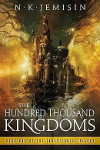
Where Gods walk amongst us.
Publisher: Orbit Books
Pages: 234
Type: Fiction
Age: Adult
ISBN: 978-1-909039-45-2
First Published: 1st January 2010
Date Reviewed: 4th February 2014
Rating: 3/5
Yeine, happily living in Darr, was commanded to ‘return’ to her maternal family’s palace in Sky to become one of three heirs to the kingdom and the world. As she learns what her role is to be, she’s given a proposition by the earth-bound gods that may not save her but will save her homeland.
The Hundred Thousand Kingdoms is a book that sports a different sort of fantasy but is unfortunately rather confusing, static, and badly written.
The world itself, or, rather, the possibilities for it, are wonderful and promising but Jemisin only goes so far in the building of it, and albeit that detailing the palace is understandable (the story is almost exclusively located there) it does make it hard for the reader to really see Yeine’s plight and her reasons for her actions.
The writing is often confusing. There is a constant switch between Yeine’s usual narration and her inner thoughts and torment, and there are times when she looks back at the day just passed in order to tell you something she forgot to tell you earlier. Whilst the style lends the book an individuality and Yeine a distinct voice, it also hints at a lack of planning, or, at least, the look of such. And at the end of the day the look of poor planning has the same result as an actual lack of planning.
The constant ‘switch’ in narration is a pity because it becomes apparent later on in the book that there was a real reason for it. The problem is, of course, that it is too little too late. What could have been an interesting exploration of Yeine’s sense of self is simply left to hindsight. It means that the switch may indeed work for the remainder of the book but that this doesn’t atone for the confusion of what came before.
The book lacks a true focus – is Yeine concerned about the gods, her homeland, or does she simply want to find out the truth of her mother? Yeine’s mother’s life may be intriguing but it is no match, story-wise, for what is happening at that present moment, to what is happening to the world and the gods, and Jemisin’s increasing focus on it moves away from the fantastical possibilities brought forth by the premise. Nor would Yeine’s mother’s life have a true bearing on Yeine in the future as Jemisin’s focus changes once again towards the very end.
Where the book does shine is in the variation of fantasy it employs. This is no high-fantasy travelling-the-world tale of dragons and witches, and whilst those are not bad elements and whilst the book could have spent more time away from the palace, it is good to have this difference. The city of Sky is at once realistic and utterly imagined. In Yeine’s land women rule (even if Yeine is not written convincingly in that way). There is a lot of unnecessary violence and bizarre thoughts but this does fit the genre. The problem is that Jemisin does not provide any reasons for the reader to care about anyone.
The Hundred Thousand Kingdoms had potential but much of that is lost. It’s possible Jemisin may detail more of the world in later books but without having much of an idea about anything beyond the palace already, not least the knowledge of what the hundred thousand kingdoms are, you may decide it’s not worth finding out.
Related Books
None yet
Shannon Stacey – All He Ever Needed
Posted 10th January 2014
Category: Reviews Genres: 2010s, Angst, Domestic, Romance
2 Comments

The One you don’t need to drop anything for – except the building you’ve been contracted to demolish, of course.
Publisher: Carina Press (Harlequin)
Pages: 177
Type: Fiction
Age: Adult
ISBN: 978-1-426-89433-6
First Published: 10th September 2012
Date Reviewed: 20th June 2013
Rating: 5/5
With his brother running the family’s lodge and his home town, Whitford, being rife with gossip, Mitch prefers to stay away, making full use of the travel his demolition business requires. His meetings with women are strictly no-strings and he’s spent time with many of the women in Whitford, leaving before any attachment can form. Now back to help broken-legged Josh, the arrangement with new-girl Paige is the same as any other. Paige has a business too, and no intention of leaving her adoptive town, but that won’t necessarily make it easier to leave once the couple realise they’ve more than just sexual chemistry.
All He Ever Needed is the first book to deal with the boys in Maine, and the fourth book in the Kowalski series overall. The family aspect is different to the other three, given the lack of children and the fact the siblings don’t live near each other, but this is made up for somewhat by the sheer number of secondary characters that form the backdrop of Whitford. The character development is fantastic, each person in the lives of Mitch and Paige is detailed well enough that the reader can feel as though they live in the town themselves.
This is not a story of giving up what you like in order to be with another, indeed the no-strings arrangement itself is to save Mitch and Paige from the hassle of working out which elements of their lives to leave by the wayside. Both characters are ambitious in their own right – both have built their own businesses almost from scratch, and whilst there are no plans for any leaps financially, both like what they’ve made. Stacey never suggests that either should give up their dreams, beyond the odd understandable moment of wistfulness, and the reader is likely to be satisfied with the resolution at the end.
The chemistry is fine. The characters may not commend themselves to memory quite as much as, say, Sean and Emma (Sean and Emma having a particularly comic arrangement) but it works, and Stacey makes a strong enough case for their being together. The sex may be the initial reason for the match but there aren’t too many scenes with it included; the overall set-up of the family dominates the book, as is expected by now.
The book lacks the secondary romance that a few of the others have, concentrating on Mitch and Paige and taking the odd glance at other people just to keep the town dynamic. A few premises are created, which the reader will later find were the planning stages for future books.
The only blemish is, perhaps, the way the characters remain steadfast. This may sound the reverse of the above paragraph that lauds ambition, but it is the repetition rather than the fact that is more the issue. For example much of Paige’s decision to swear off men has been influenced by her flighty mother’s numerous going-after-him relationships, but once love enters the equation Paige’s continuing self-imposed rule seems a little redundant as you know what the ultimate conclusion will be. Nevertheless it is a far cry from ruining the book and is but, as said, a blemish.
All He Ever Needed may feel very different to the previous books, but with good reason. The change of setting was necessary for Stacey to introduce these cousins that were often mentioned in the previous trilogy, and the sentiment is still the same. These Kowalskis are certainly a different part of the family, but there is enough similarity to appeal to fans of Joe, Kevin, and Sean.
All He Ever Needed is all you ever wanted in the continuing saga of the Kowalski family.
Related Books


Elizabeth Chadwick – The Summer Queen
Posted 8th January 2014
Category: Reviews Genres: 2010s, Domestic, Historical, Political, Romance, Social
3 Comments
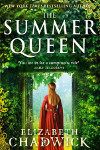
Struggling for independence in a man’s world.
Publisher: Sphere (Little Brown)
Pages: 467
Type: Fiction
Age: Adult
ISBN: 978-1-84744-545-2
First Published: 20th June 2013
Date Reviewed: 16th December 2013
Rating: 5/5
When Eleanor’s (of Aquitaine, and referred to as Alienor in the book and for the remainder of this review) father dies, the thirteen-year-old marries Louis of France to become queen so that lands can be bound together. It begins as a happy marriage but Alienor’s independence is curbed by the relationship and Louis is not the husband she hoped for. Strong-willed and now Queen of France, Alienor will not become the docile wife she is expected to be, nor will she allow Louis to rule her family’s land. But it will be a long fight to gain what she sees as her right.
The first book in a fictional trilogy about Eleanor, The Summer Queen is of almost epic proportions and spans from Alienor’s childhood to the beginning of her time as Queen of England. Blending fact with fiction (the latter to both fill in gaps and study possibilities) the book is a wonderful journey for the reader even when it is a trying journey for the queen.
There is a lot of content in this book, indeed Chadwick has packed this first section with the same quantity of information you might expect to be in a whole trilogy or at least the first two books. It is therefore safe to say that if you are thinking of reading this book you must be prepared for the long ride. Whilst Chadwick does skip over months, sometimes years, of Alienor’s life, as is her style, it is fair to suggest that this was actually necessary given both the length and nature of Alienor’s life.
Is it worth it? Most definitely. Chadwick is on top form; her characters are written brilliantly, there is a lot of attention to detail and (presuming you enjoy reading about the period) the only dull moments are aptly those moments that Eleanor herself is not enjoying. By including Alienor’s teenage years the author shows how the woman became powerful (in mind and thought), which means that there is all the more time spent on gender expectations too. And it means that Alienor is written as far from infallible meaning that she feels as realistic as she would have been.
Realistic also are the other characters. Even of the ‘negative’ influences in Alienor’s life Chadwick is fair. Louis, who causes a lot of pain, is still portrayed in a good light, which means that the reader can see exactly how monarchs could be manipulated and their good name destroyed by the ambitions of others. Chadwick never strays from this, and so even when Louis is at his worse you can still see where his actions stem from. Even if you can’t quite forgive Louis, because he could have been stronger and resisted some ‘advice’, the book may make you question just how reliable our sources really are.
As acknowledged in the afterword, Chadwick has made use of ‘what ifs’. One such question that has never been answered, the speculation over whether Alienor had an affair or, at the very least, feelings, for one of her countryman, is employed here. The resolution that Chadwick writes may seem convenient but at the same time it is understandable. When you consider the fact that this is an author who likes facts beyond all else, the brief foray into fiction that is neatly tied up so that it is almost detached from the factual content is something to be read without contention.
However it is this relationship that causes the one ‘major’ (in quotes because it is the biggest but far from being off-putting overall) issue of the text – the author’s repeated references to the subtext of Alienor and her lover’s letters and gestures. They touch, it is intimate to them but no one else would notice, they speak, there is a hidden meaning in their words that no one else would notice.
Beyond this there is little to find fault with. One can only wonder how much research must have gone into this book and there is so much information included – shown, not told – that you may finish the book feeling as though you’ve had the most interesting history lesson. The Queen does not stay in France, her progress and journeys are documented at length so that you are provided a brief introduction to various eastern European monarchs and customs.
The Summer Queen is a story of an independently-minded woman learning how to exert that independence when society is against her. It is a story of a woman who defied convention, and a story of partnerships and how equality could lead to good things even when the world did not believe in the notion.
The Summer Queen is as magnificent as any of Alienor’s sumptuous gowns and will delight those who enjoy reading about the medieval period.
Related Books





Eloisa James – An Affair Before Christmas
Posted 11th December 2013
Category: Reviews Genres: 2000s, Comedy, Domestic, Historical, Romance, Social
1 Comment

An affair to remember, because it is between a husband and his wife.
Publisher: Avon (HarperCollins)
Pages: 386
Type: Fiction
Age: Adult
ISBN: 978-0-061-24554-1
First Published: 2007
Date Reviewed: 20th November 2013
Rating: 4/5
Poppy and the Duke of Fletcher have been married for four years. They started their wedded life in love, and they may still be in love, but the marriage has gone sour. Does Poppy love him? – Fletcher does not know. Certainly she hates having to be intimate with him. With Poppy’s mother ruling her daughter’s head, and a society that expects a man to be unfaithful, it’s going to be a difficult journey if there is to be no divorce.
An Affair Before Christmas is the second book in James’s hilarious duchess series that sees the continuation of the many couples’ lives in the background whilst focusing on the Duke and Duchess of Fletcher.
James’s characters are, once again, magnificent. It is true that these Georgian nobles might indeed scandalise even the most scandalous of real-life Georgians, but it is rather obvious from the start that James’s work isn’t your standard historical romance. The ladies and gentlemen do everything you ‘expect’ them to do, and then go and behave particularly ahead of their time in a way that isn’t quite unbelievable, but is certainly a whole lot more entertaining than reality. Once in a while the entire plot will get a little too silly, but again, that is half the fun. Make no mistake – the covers may suggest a lot of sex and nudity, and that’s really quite correct, but it is far from the main takeaway of the book.
Whereas Roberta of Desperate Duchesses had her own mind but was rather naïve, Poppy’s naivety is similar yet vastly different. In Poppy there is a budding scientist just waiting to be allowed into university, which of course will never happen; a woman who if she can just separate her mother’s thoughts from her own, will be quite the popular person. She may be silly, but she’s endearing all the same.
The Duke of Fletcher isn’t far behind, indeed he is only slightly less well drawn than Poppy simply because as a man in a male-led society he already has an advantage. The cautious reader will love Fletch, the handsome duke who could have anyone he chooses but is not interested in being unfaithful, and the way his success in his career is aided by Poppy, even though she actually has little knowledge, is particularly appealing for the modern reader. Make no mistake – James writes for the modern reader, no matter how obvious that may sound.
The writing is great, and befitting of the time, if not quite historical. There are a few errors, modern American terms that could be categorised as certain English dialects but not ones that are relevant to the characters, but they are used more often in the narration rather than in dialogue.
The themes are both historical and eternal – it is less likely today that a woman would know nothing of the pleasures to be had during sex, but it is all too common for communication to break down in a marriage. Poppy’s mother is both the Georgian matriarch would believes a woman should obey her husband, and an example of the eternal stereotype of the interfering mother-in-law. All these clauses come together to form the bulk of the content.
However the themes do take their toll on the narrative. The romance in this book, the active love between the characters (as opposed to the feelings themselves), does not start until the book is nearing its end. The miscommunication is there throughout, and Poppy’s first (bad) ideas of how to deal with her husband dominate the book, leaving very little time for the couple once they come to realise what went wrong. Of course it is lovely (and predictable, which is why this reviewer isn’t worried about spoilers) that the book ends with the happy couple, but when so much time later on is taken up by the secondary characters it is hard not to wonder why the book was marketed as Poppy and Fletch’s story. This ultimately means that sex ends up taking what’s left of that short space of time which, while expected, does mean the resolution is even shorter. That said, given the reason for the estrangement, perhaps it makes sense – it’s just that it doesn’t particularly make for a great story structure.
Beyond the mother’s rule, which, yes, does seem strange given the four years, there is as aspect of Poppy’s lack of desire that may irritate the reader, and the pun here is most definitely intended – Poppy suffers an allergy that renders a lot of her lack silly. But it does depend on the reader. If you can believe the miscommunication would extend to Poppy’s silence over it you may be okay, likewise if you view James’s decision as one concerned with comedic value. Otherwise it may just render the book too over the top, the pun here not intended, to continue.
It should be noted that whilst Christmas is specified on the cover, the book isn’t confined to the holiday season. While it may seem better when read beside a tree, there is enough of the story based in summer to make it an option at any time of year. The book could be read as a standalone, but the reader will appreciate it much more if it’s read in sequence.
An Affair Before Christmas isn’t quite as strong as the first book, but it is well worth the read. The characterisation is brilliant, the comedy is laugh-out-loud, and it’s good to have the same background setting written about from another angle. The secondary stories mean that you’re looking forward to the next book very early on, which in this case isn’t a bad thing.
Related Books


Rainbow Rowell – Eleanor & Park
Posted 18th November 2013
Category: Reviews Genres: 2010s, Angst, Domestic, Romance, Social
7 Comments

So take these broken wings, and learn to fly again, learn to live so free…1
Publisher: Orion Books
Pages: 325
Type: Fiction
Age: Adult
ISBN: 978-1-409-12054-4
First Published: 12th April 2012
Date Reviewed: 11th November 2013
Rating: 5/5
Everyone has their own seat on the bus, in fact Park has two as no one sits beside him. When the new girl – large and dressed in strange clothes – walks down the aisle, mockery is rife and the available seats are suddenly taken by backpacks. As the mockery continues, Park offers the girl the seat next to his and that is that. Only it isn’t. Eleanor isn’t quite as different to him as he first thought.
Eleanor & Park is a rather special book that deals with age-old school problems, domestic issues and self-worth, all woven into a beautifully-told love story. Set in the 1980s it offers the reader a chance to settle back into a life where keeping in touch wasn’t as simple as email and music was sold on cassette. There is some humour – there are Eleanor’s brilliant comebacks that would leave glittering princesses in an Austen-esque flutter, and there is some deep consideration.
The beauty is that the book itself doesn’t claim to be special. The plot sounds nice but usual; school romances have been done before. Even the themes aren’t particularly unique. Yet both as a whole and separated into parts, Rowell’s book is delightful. The storytelling is lovely – the emotion and subtext even better. The themes are studied to perfection. And the characterisation is out of this world.
Actually, the characters are completely in this world, and that is what is so brilliant about them. Rowell has access to the same dictionary as everyone else who writes in the English language yet her characters are more realistic than most. If Eleanor and Park showed up at your door, 1980s clothing aside you would not be shocked at all. The pair feel as though they belong in reality, that they are far more than the result of an author’s imagination.
Park is half-Korean just because and there is no massive history provided apart from the understandable dwelling on parents. Eleanor is fat, a description more likely to come from her rather than anyone else, just because. Their situations of course have reasoning to them, but baring that Rowell is content to let them just be.
Eleanor’s size is a subject frequently returned to. The reader will notice that she sounds large for a good while, and then once they are seeing her through Park’s eyes and his parents’ eyes rather than Eleanor’s, that perhaps she’s not as large as they had come to believe. Whether Eleanor is large or not is not the question – it is the character’s perspective of herself that is important. Eleanor isn’t worried about her style of dress (besides the fact her clothing is all from Goodwill), nor does she care about her hair – the two things that concern everyone else. Instead she portrays the many disbeliefs and lack of self worth that many young people face, those that are magnified when love is involved. Park’s life is a dream compared to Eleanor’s but it’s not all sunny days and happiness. He has his own inner turmoil to deal with, an identity issue and protective parents.
The book is told in the third person and it jumps back and forth from Park to Eleanor’s point of view. Rowell switches constantly during chapters, ensuring that you hear about each situation from both characters. This inevitably means that the narration is reliable in its own way and that no feelings are left behind. The switches become less prevalent during times when the couple are happily together, in a sort of textual imagery that shows how thoughts can be divided and people misunderstanding of each other when not together. A reinforcement of the idea of separation, of sorts, is in form of the necessary white-space that accompanies the switches.
Rowell’s style may not please everyone. There are many ellipses, emphasised words, and of course there are the references to the 1980s that younger readers may miss. There is also a lot about the then-present culture of the time, mainly in terms of music, that suits the reader who knows the era well. But the eternal stories of first love, of school, and the issues, means that these are not likely to cause major impediment to anyone.
There are some big domestic issues in the book that take a while to become obvious. Some may work the biggest out relatively quickly, others may require the answer. All the issues are difficult; Rowell has chosen to deal with them without delving into angst. This may mean that at times it doesn’t feel as true as it is, but that is surely a point in itself – when issues do not fit the socially-defined descriptions, they can be missed. What is actually the case is that Eleanor is simply used to it and has become a strong person.
Eleanor & Park is an extraordinary story of a love where the two people are similar but their situations very different. It will pull you in, spit you out, and churn you around with the rest of the washing in the machine that Eleanor’s family may or may not possess.
Whatever it will or won’t do it will definitely leave you a changed reader.
1 From Mr Mister’s Broken Wings.
Related Books
None yet.


