




Debbie Dee – Tiy And The Prince Of Egypt
Posted 18th October 2013
Category: Reviews Genres: 2010s, Adventure, Domestic, Historical, Political, Romance, Social
2 Comments

A fine story to introduce readers to ancient Egypt.
Publisher: (self-published)
Pages: 275
Type: Fiction
Age: Teen/YA
ISBN: 978-1-49230-609-2
First Published: 27th September 2013
Date Reviewed: 16th October 2013
Rating: 4/5
Twelve-year-old Tiy went to the bank of the Nile with her parents to watch the Royal barge as it sailed past, but when her curiosity wasn’t sated by the far off sight, she ran further downriver for a better glimpse. Hot on her tail was a sandstorm. As the prince and his friends leave the barge to play, Tiy has a choice to make – use her knowledge to save them and potentially harm herself, or leave them to their fate. She chooses to save them and her act of selflessness will be rewarded in ways she would never have imagined.
Tiy And The Prince Of Egypt is a story to fill in a gap history forgot. In writing her tale, Dee has relied on the history she was able to find (this is suggested in the author note) and constructed a story for young readers from what was left out. The target audience means that the book is by nature quite simple, lacking in detail, and often convenient.
And that is the way it should be. For the older reader, who must be referred to as this reviewer is one, the book may prove an incredibly easy read, but it would be impossible not to say that Dee has written something that is likely to open up the world of ancient history to her young audience. From the features of the story, one couldn’t recommend this to young children unless they were advanced for their age, but for the slightly older reader the book should prove appealing.
Just as she did in The Last Witch, Dee doesn’t coddle her reader. The violence of history, such as punishment for treason, is included as it surely would have been in the day – discussed as simply as if it were a question of who wanted coffee, and carried out without further thought.
It is this, along with the romance in the book, that sets it up as an older child’s read. There is no sex in the book, but there are scenes that might invite questions. The romance is drawn out and full of all the hearts and flowers. The theme of love envelopes the entire story; the characters are seventeen by the end of the tale.
There is not all that much action in the book, a lot of the time is spent on Tiy’s thoughts and day to day life with Amenhotep, but what action there is is thrilling. And whilst Tiy can be foolish and unthinking, she is generally a strong person.
What brings the book down a few notches are the errors and uses of modern day language. Perhaps many readers will not notice the language, but the keen historian will. The errors are of course a bigger draw back here than they might have been otherwise due to the target audience.
Besides the errors, the book is a fine story that will delight any reader looking for boys, adventure, royal status and to be a little awed. It is as much a fantasy as a regular story as much of what happens would never happen in real life, but reality wouldn’t be as appealing.
Tiy And The Prince Of Egypt blends a good dose of history with fun fiction and the sort of fantasy you look for.
I received this book for review from Sage’s Blog Tours.
Related Books


Bee Ridgway – The River Of No Return
Posted 7th October 2013
Category: Reviews Genres: 2010s, Comedy, Fantasy, Historical, Romance, Social
5 Comments
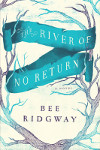
Forward to the past. (Reverse that and you’ll see the inspiration.)
Publisher: Michael Joseph (Penguin)
Pages: 546
Type: Fiction
Age: Adult
ISBN: 978-0-718-176-983
First Published: 28th March 2013
Date Reviewed: 26th September 2013
Rating: 4/5
As Nick was about to die, attacked in battle in the 1800s, he disappeared. He reappeared, alive, in the 21st Century, found by a group calling themselves the Guild. The Guild promises Nick $2million a year and sends him to South America for training where there are fellow surprised time travellers from every decade. The Guild teaches their members how to live in 2013 and then sends them off to use their education. That was fine with Nick, millions of dollars and a free reign sounded – and was – great for ten years, but now the Guild want him to return to headquarters and forget every rule they taught him. The Guild’s enemies are getting stronger, and Nick has a part to play in stopping them.
The River Of No Return is an imaginative and rather funny book that deals with a particular sort of time travel, the sort where you’re not going to meet different versions of yourself and where history isn’t to be changed unless the world is about to end.
The story is contained to a few people and only a couple of different times, meaning that the narration is pretty straight forward. This may mean disappointment for some readers, as other times are referred to and it’s safe to say where time travel is concerned the future is a magnet to our interests, but there appears to be a sequel in the works. In fact it’s worth commenting on the ending of the book. Ridgway creates a crafty ending the likes of which means the story could definitely do with a sequel, but if none were written she’s left you enough information for you to construct a conclusion.
She reminded him of modern women. The way she stood so confidently, the way she met his eye like an equal, the way she spoke unblushingly of the sex she was not having with her cousin.
It takes a good while for the humour to show itself. Indeed the cover and first several chapters do not in any way suggest that the book will be humorous. When it enters it is laugh out loud and rather clever, although there are occasions where it could be considered too much.
So to the affects of time travel on the characters. Nick, the nobleman, fits right into life in the 21st century. So changed is he, so happy with his new era, that his return inevitably results in plenty of thoughts about women, equality, voting, and so forth. And Ridgway creates the ideal romantic partner for him. Yes, it may seem convenient and unrealistic that Julia, the 1800 woman who may or may not be a time-manipulator (unknowingly), is ahead of her era, but Ridgway sets the foundation of the relationship in the days before Nick’s jump, so that it is more a simple case of two like-minded people getting together. Nick may not have been as modern in his youth as he obviously is in adulthood, but the flashbacks portray enough ambivalence to his situation ‘back then’ and enough remembrance of the younger Julia to suggest that, traveller or not, the pair would have got together.
“Demand you back? You’re a full-grown woman. You can do as you choose…” Even before the words were out of his mouth, Nick realized that the sentence he had just spoken only made sense after two centuries of struggle that had yet to happen.
The affects of the 21st century form a lot of the comedy. Like other ‘jumpers’, Nick is trained to be a modern man, with all the knowledge of beyond 1800s history and pop culture that that entails. In preparation to jump back again, to the 1800s, he has to re-train himself in the art of being a nobleman. Modern phrases and cultural references inevitably slip out whilst back in the past, and it happens a lot, but Ridgway’s particular usage of the theme stops it becoming annoying. As said above, the humour as a whole can become too much, but this takes a while to happen if indeed it does at all for the individual reader.
However it must be said that Nick does forget a crucial part of his 21st century life – sex in 2013 involves a foil packet, sex in 1815 involves no discussion of Nick’s new knowledge and it is left out of the book completely. Although this is only one instance of forgetfulness, the potential impact of such spontaneity, which Nick would ‘now’ know about, ought to have been addressed. His partner may be a virgin, but Nick isn’t and his nature suggests he would consider STDs. And as Ridgway has created no space for a pregnancy in her novel, regardless of the fact that a pregnancy is neither here nor there unless the author includes one, Nick would have surely thought of it, and likely his 1800s partner, too.
Julia has courage and guts, but she’s not superwoman. She is the realistic, if such a word can be used, result of a woman from a good, happy background, with a fantastical talent she cannot understand.
The book spends time on the concept and storytelling device of good versus evil, but Ridgway twists it to suit the people she has created. Unless things change drastically in any sequels, this isn’t going to be, and isn’t here, your typical science fiction save-the-world-from-the-bad-guys series. And it’s undeniably refreshing.
The book dips a bit towards the end, becoming, if not predictable, rather convenient. The reader may work the secrets out beforehand, but either way it does have the possibility of changing your thoughts as to whether or not you’d like to read further books about this world. It creates an expectation of an epic continuation but may seem too drastic a change, as such, to some readers. In many ways the sudden unveiling of answers and new plot points is a pity.
But overall The River Of No Return will delight. It will bring embarrassment to anyone who worries about laughing over a book in public, which should be considered a positive factor, and sate the appetites of those who love time travel novels but are a little worn. The River Of No Return is long, but then so is history. And if the title has you in mind of Marilyn Monroe, never fear – that is exactly what happened to Ridgway, too.
Related Books

Sherry Thomas – Private Arrangements
Posted 25th September 2013
Category: Reviews Genres: 2000s, Domestic, Historical, Romance
2 Comments
To have and to hold – at arm’s length.
Publisher: Bantam (Random House)
Pages: 351
Type: Fiction
Age: Adult
ISBN: 978-0-440-34431-8
First Published: 2008
Date Reviewed: 11th February 2013
Rating: 4.5/5
Camden and Gigi, married for ten years, have been living separately since the day after their wedding due to a betrayal on Gigi’s part. Now Gigi wants a divorce so she can marry her latest beau. It’s not going to be that easy. Camden doesn’t want to lose her, and at the end of the day was her betrayal so bad?
Private Arrangements was Thomas’s début. Whilst it may not be perfect, what a début it was (please excuse the usage of present and past tense here). The unconventional storyline – the infidelity of the characters – may divide opinion, but it cannot be said that this does not create originality in a genre that is already predictable due to its very theme.
The storyline is strong. It works in part because there is no infidelity within the confines of the book itself. Neither character has remained chaste throughout the separation, but when they are reunited there are no other physical relationships. Gigi puts off sexual relations with her lover for the duration of what is to be Camden’s yearlong time limit to get her pregnant with an heir. This on-page lack of extramarital sex may not be sufficient for every reader, but to those who are comfortable with the set-up of a marriage that is a marriage in name only, it will likely prove fair enough.
The characters are particularly well developed. Whilst neither could be called affable, they are strong people (to an extent) who know who they are, what they want, and take the necessary steps to get it. Gigi is the strong woman of wealth who has compassion for all, and Camden, whilst an alpha hero, has a sensitive side.
The chemistry is something special. The characters are a good fit and both their meetings and sexual relations are believable. Though in this there is cause for contention. It could easily be argued that some, if not most, of the sex is non-consensual – Gigi agrees to the plan of getting pregnant, but Camden’s solo decisions to suddenly ‘take’ her can seem rather selfish and arrogant. And whilst Gigi takes precautions (yes, this, because she’s not so sure about having children), Camden’s overruling of it is difficult to read, even if there is some thread of understanding in it.
There is also the issue of angst. This book is a fine recommendation for those who like hardships and, well, angst, in their reading, but as the story continues it can become difficult to take character decisions and assertions seriously. To put it simply, having a character continuously going against blatantly correct decisions just becomes silly. It is a reflection of stubbornness and some readers may enjoy it, but it doesn’t quite fit the rest of the book, making the characters weaker than they were. Then again, it could be said that their passion for each other has weakened their resolve.
The plot is proffered as a duel storyline with a secondary plot to boot. Flashbacks throughout keep you informed as to those first few weeks of the metaphorical honeymoon period and the literal but wretched honeymoon period, as well as everything you need to know about the ten year gap. It works well, meaning that when the present-day (1893) incarnations of the characters are in focus, their stubbornness is somewhat offset. It does mean you don’t know as much about the “now” but it is not a bad thing, per se.
The secondary plot line consists of Gigi’s mother’s attempt to find a new husband for her daughter. It may not be original, but if you enjoy reading about Austen’s Mrs Bennett, you’ll likely enjoy Victoria Rowland. It can detract from Camden and Gigi, but it is strong enough to keep you reading.
Lastly a special mention must be made regarding the writing. This is the sort of romance book that would likely appeal to typically non-romance readers. The writing is eloquent, almost historical itself, and it’s undeniably beautiful. Even language pertaining to things not considered beautiful, actions during intercourse, are written with taste.
Private Arrangements may not appeal to everyone for its story, but seen simply as a book rather than for its genre, it cannot be said that it isn’t good. Indeed it incorporates a great many elements considered crucial to a good novel and manages to break convention whilst not alienating the reader. It’s just as well the privacy of Camden and Gigi was breached else we’d be lacking a brilliant work.
Related Books
Margaret Mitchell – Gone With The Wind
Posted 9th September 2013
Category: Reviews Genres: 1930s, Domestic, Drama, Historical, Political, Romance, Social
9 Comments

Beware your attitude.
Publisher: N/A
Pages: N/A
Type: Fiction
Age: Adult
ISBN: N/A
First Published: 1936
Date Reviewed: 28th August 2013
Rating: 5/5
Scarlett O’Hara is vain, ignorant and arrogant, and is proud to be so. She steals other girls’ sweethearts and does whatever she pleases. Her rebellious nature suits her very much – until the north wages war against the slave-owning south. Suddenly she finds herself looking after people she does not like and being forced into roles she couldn’t care less about. She needs money, she needs food, but she most certainly does not need Rhett, the man in whom she met her match.
Gone With The Wind is the epic story of the early life of a woman ahead of her time, against the backdrop of the American Civil War. Comprising a great many pages, the book is just as much about society as it is Scarlett, and it provides information about the period in general.
It’s probably best to talk of Scarlett first, before anything else. Scarlett is selfish and always out for money, but it is difficult to say she is altogether bad. Going against the grain, she is a confident and intelligent woman (at least in some respects), and takes what she wants with little thought for others. She is hampered by her society’s views about women, and this, to the modern reader (and indeed likely Mitchell’s contemporaries, too), makes her easy to relate to, in that ahead-of-her-time way. Not so good is the way she views herself, beauty over everything, and how she steals the attention of men from every other girl. Of course there is a lot to be said about the fact the men could have been more faithful to their women, but there are nevertheless times when Scarlett manipulates a situation to the extent that the man can do nothing about it.
Undoubtedly Scarlett’s biggest issue is her lack of understanding for others. Intelligent in business matters, she is nevertheless ignorant when it comes to people’s feelings. She loves a bookish, academic man, but does not understand his nature and sees nothing foreboding in this. Even Rhett Butler, the hero, is a mystery to her.
As for Rhett, he is selfish and manipulative, too, but he possesses an element Scarlett does not that leads him to care when others are genuinely nice to him. And unlike Scarlett he learns from his mistakes. The two have near explosive chemistry, and for this it is a pity they do not share more episodes together than they do. The relationship provides much needed relief, via its modernity, to the stuffy historical society.
Mitchell’s writing of Scarlett enables the reader to see the bad side of society, and how people would act towards someone who didn’t fit the accepted mould. What is interesting here, however, is that ultimately dignity and goodness prevails. Yes, it’s bad that society washes its hands of Scarlett as Scarlett, for all her selfishness, does have a very hard time during the war and does offer to help others, but Mitchell shows that if her heroine would just be nice when she ought, she would be accepted. And she wouldn’t necessarily have to change her nature to do it. She would be accepted back into the fold – society values honesty and loyalty beyond all else – and whilst it may seem silly that it preferred ill health to ill-gotten wealth, the community was strong and helped one another. The reader can understand Scarlett’s desire for money, but it isn’t long before the reader equally understands society’s feelings towards her, too.
Inevitably one cannot think of the community without bringing Melanie into the picture. Melanie is the complete opposite of Scarlett. Quiet, supposedly and perhaps truly oblivious, but strong at heart, Melanie wins support that Scarlett can not understand. The good thing about Melanie is that the reader can always be assured that there is more than meets the eye – which is particularly interesting as Mitchell never really lets you into Melanie’s head.
A lot of the reason why Gone With The Wind is so long is due to the amount of history included in it. Truly there is a great deal and it may prove frustrating to the reader who is more interested in the characters. Not only does Mitchell place her characters in the south at the time of war, whole pages are filled with descriptions of what was going on. In a way it’s necessary, as Scarlett is not interested in the war and therefore you learn little about it when Mitchell focuses on her. The only issue is that the detailing slows the narrative down substantially.
Yet the information provided about the effects of war is worth its weight in gold. As the book is told from the southern perspective, all talk of evil slave ownership is confined to the northerners. This enables Mitchell to concentrate on those southerners we view as in the wrong. Mitchell’s characters are, in the main, good to their slaves, and Mitchell shows how true loyalty and affection between slaves and owners could arise. Of course this is idealistic and there were many more families that were cruel, but the light that shines on this other side of the story is somewhat revelatory, and it is always important to consider the other side.
And consider it Mitchell does. The author shows how many couldn’t understand the ‘problem’ the north had with slavery, and whilst the southern characters do see their slaves as childlike, there is a caring atmosphere surrounding them. In Mitchell’s story, house slaves are part of the family, the field hands are to be looked after.
It’s poignant that Mitchell explores the thoughts of the north. They wanted abolition, but when it comes down to it, the northern women Scarlett meets are incredibly prejudice of the ‘darkies’ and would never consider hiring them due to a lack of trust. This is contrasted by Scarlett’s stating that the darkies were good at their old jobs. What Mitchell infers is the lack of understanding both sides had of each other. And she puts the north under scrutiny, showing how they were all for blacks voting and setting them free – in many ways because they wanted to humiliate the southerners. It is interesting that despite abolition no true respect occurs and the darkies are manipulated still, if in a different way.
But perhaps the most interesting aspect about the book, from a historical perspective, is the exploration of the views of the slaves for one another. Mitchell demonstrates the hierarchy that existed between people who were, at heart, in the same situation. She shows how snobbishness grew in those who worked in houses towards the ‘field-niggers’. Her narrative of the field hands being those who joined the northerners supports the constant theme of loyalty amongst the house slaves. For example Scarlett’s servants remain with her, free but technically shunning freedom. They even show contempt for freed slaves, seeing themselves as more respectable and intelligent. And, to further comment on the north’s lack of care for the slaves, many freed people returned to their owners.
Now this is interesting, because the context supports the idea that uneducated and poor, a slave would rather be looked after and owned than have to learn to fend for themselves. But what it shines a light on is the way the northerners let people go without really thinking about them. Because whilst those first Africans who landed in America knew another way of life, working for white masters was all these newer generations knew. Of course it inevitably transpires that those who owned slaves look like the ‘good guys’ in this book, but in a way it is hard not to see Mitchell’s point that abolition could have been conducted in a far better manner.
Mitchell puts her black characters in a fine light. In fact the only negativity is stereotypical of the role no matter the person’s colour, for example Scarlett’s Mammy’s strictness towards children. Talking of Mammy, the reader should be aware that dialogue is written in accents that, due to issues in transliterating, can sometimes be hard to decipher.
So to the war. Due to Scarlett’s choice to remain ignorant, a lot is glossed over, even if Mitchell does spend sections telling you what was happening ‘abroad’ at the time. The book is both rose-tinted and horrific, and Mitchell has no qualms in discussing uncomfortable subjects.
Gone With The Wind is a book that deals with many themes, least not the ignorance and misunderstanding that accompany vanity and selfishness. It is often poignant, often humorous, and certainly very long. And as much as it could be said that it could have been shorter, it can’t be said that Mitchell was careless – there is real reasoning behind the length of the text, and Mitchell wants her reader educated.
Gone With The Wind presents a heroine who is hard to like but is far from being an anti-heroine. It presents a woman who is aptly detailed and criticised by her author when required, and lauded when expected. Its classic nature whilst being historical fiction in itself creates ample opportunity for discussion, as you’re getting the 1936 perspective of the 1860s war. And its lessons about love and the self are eternal.
Scarlett O’Hara is as memorable as they say, and Mitchell’s work a masterpiece.
Related Books
None yet
Andrea Zuvich – His Last Mistress
Posted 6th September 2013
Category: Reviews Genres: 2010s, Historical, Political, Romance, Social
2 Comments

Should the throne have passed to James Stuart?
Publisher: (self-published)
Pages: 190
Type: Fiction
Age: Adult
ISBN: 978-1-490-42556-6
First Published: 2013
Date Reviewed: 2nd September 2013
The Duke of Monmouth has had many mistresses and children, but when he sees Henrietta he falls in love for the first time. He is determined to have her, despite her status and later betrothal.
His Last Mistress is a brief look at the relationship between Charles II’s eldest illegitimate son and Henrietta Wentworth.
Zuvich’s research is excellent. There is no compulsion to fact-check, and speculation is accounted for in the acknowledgements. The sticking to history here is wonderful and the author even uses original sources in her work. Her wish to educate and create interest in the people she has written about is obvious and endearing.
But unfortunately the book reads as though the author was in a rush, few elements are explained or given reason, and the text really needs to be edited and proof-read. The writing style leaves a lot to be desired.
The reader never gets a feel for the characters – beyond the historical facts, there is nothing to the people who grace the pages. There are plot points such as a baby being given away to someone without the reader being told who the person is in relation to the parents and why they were chosen. This is made more apparent by episodes during which past chapters are needlessly referred to. It must be noted that the ending is particularly violent – this is not a negative point as the history is accurate, but it may prove difficult to read.
His Last Mistress has some solid research behind it, but it needed to undergo more drafts and checks before publication. Those interested in the period may find it useful.
I received this book for review from the author for Historical Fiction Virtual Book Tours.
Related Books
None yet


