





Julie Kagawa – The Iron Queen
Posted 21st August 2013
Category: Reviews Genres: 2010s, Domestic, Fantasy, Romance, Science Fiction
2 Comments

The first was good, the second bad; the third is rather special.
Publisher: Mira Ink (Harlequin)
Pages: 358
Type: Fiction
Age: Young Adult
ISBN: 978-0-778-30479-1
First Published: 25th January 2011
Date Reviewed: 23rd June 2013
Rating: 4.5/5
The battle for the Nevernever isn’t over. Called back from exile, Meghan is ordered by King Oberon to slay the new Iron King as the Nevernever loses ground and faces ultimate defeat. Together with Ash, Puck, and the cat Grimalkin, it’s up to the mortal to save fairyland from the burgeoning power of technology.
If we consider that the previous book in this series, The Iron Daughter, was but a filler, then The Iron Queen picks up from where The Iron King left off, bringing back the wonderment present at the start of the series. Kagawa is back on target and it must be said that whilst she doesn’t make the most of all the opportunities created by her stunning premise (technology threatening traditional imagination) she has certainly stepped up her game.
Meghan, the half-human heroine, is stronger this time and is becoming quite the powerful character. Though still silly at times, for example she says a trip was a waste of time despite being given an item deemed necessary by someone in the know, and seeming to never have seen a musical notation despite having a musical father, she has surely come into her own, being now rather bearable, it could be said, for most readers. Her kindness towards the Iron fey is at once surprising and utterly understandable – Meghan is very much a person of both the old world and the new, seeing the possibility of both co-existing whereas the older realm of course see the Iron world as the destruction of mankind.
In a style instantly recognisable as typical of fantasy storytelling, Kagawa creates another force of evil for the older fae to fight. And whilst there are romantic scenes a plenty, there are few occasions where deep discussions go on too long during battles – in other words the pacing and placement of dialogue is realistic.
Kagawa has reintroduced the epic nature of her story and her usage of Shakespeare’s work is an obvious foundation which she never strays from. The story looks into the dark side of fairytales but there is little to shock or feel uncomfortable about as it’s more a basic backdrop.
Being that Meghan is from our world and Puck has lived there a long time, the contemporary vocabulary and slang fits perfectly. It may jolt you out of the story for a moment but you soon remember that this is far from a case of Kagawa simply seeking to emulate your typical teen story, here the wording is appropriate. It also reminds you that humanity is never far from Meghan’s thoughts.
Meghan isn’t quite the leader you might expect, a somewhat indecisive and stubborn girl in love, but then given the title of the book you knew what to expect anyway. And it must be said that in the case of this series, the titles letting you know the subject of that particular book isn’t as much of a spoiler as you would have thought at the start.
One of the themes of the series is loyalty, and here it is used more than before. A lot of lore is employed to make a comparison between faery and our world, for example to show how Meghan wouldn’t feel for the lack of marriage in the realm, and to some extent Kagawa demonstrates how even the dark faery world can have its trust and vows. This is of course shown through the continuing romance between Meghan and Ash (readers may be happy to hear that Kagawa isn’t going to insist on continuing the triangle) and whilst Kagawa lets the relationship take on a fantastical atmosphere – of the knights and chivalry sort – she doesn’t shy from introducing contemporary views to the book, either.
So there is little time spent on the actual premise of technology taking over traditional dreams (meaning the logistics of it), which would have made an even better book, but it can’t be said that The Iron Queen isn’t a good book. Because it is a very good book.
Read The Iron King, skip The Iron Daughter, and move onto The Iron Queen. The characters will not always delight, and the incessant eye-rolling is… incessant, but the overall atmosphere might just create that magic for you that the fae surely hope for.
Related Books


Elizabeth Fremantle – Queen’s Gambit
Posted 12th August 2013
Category: Reviews Genres: 2010s, Domestic, Historical, Romance, Social
6 Comments

The one who survived.
Publisher: Michael Joseph (Penguin)
Pages: 446
Type: Fiction
Age: Adult
ISBN: 978-0-718-17706-5
First Published: 13th March 2013
Date Reviewed: 17th July 2013
Rating: 5/5
Katherine Parr had already been married twice when she met Thomas Seymour, but those unions had not been founded on love or produced children, so when she fell in love with the man it seemed as though her future was set for happiness. But King Henry VIII has other ideas – he wants Katherine for himself. Alongside this is the fictional tale of Dot, Katherine’s maid, who is practically a daughter to the destined queen.
Queen’s Gambit is a fine novel that combines history with what-ifs and dreams, and looks at the era from a particularly literary perspective.
The book is told slowly but never dully, from the points of view of Katherine, Dot, and occasionally Katherine’s doctor. This method is intriguing, a present tense in which no personal pronouns are used but the scenes are never confusing. Fremantle makes it clear within a paragraph or so who is telling their tale. If ‘telling their tale’ is an appropriate description, given the style.
For the most part, Fremantle sticks to what is widely known about Katherine, using her imagination for gaps and bringing the people to life with her ideas of how they would have felt. However Dot is completely fictional, representing not simply a stereotype but being a way for Fremantle to further demonstrate her thoughts about Katherine Parr – Dot is a lowly maid but Katherine treats her particularly well, aligning with what we know of her nature as a good woman. It’s obvious that Dot is fictional, partly because of this treatment, but that obviousness actually enhances Fremantle’s credibility. And the mixture of pure fiction with fact works well.
Considering what’s been said so far, it will come as no surprise that Fremantle takes liberties with the history overall. Most notable is the beginning, Latymer’s end. This has the potential to colour the entire reading as it makes a pretty bold statement, yet once again Fremantle shows her hand – she is speculating, providing ideas and creating entertainment, not trying to insert her views as fact.
The comparison, in Fremantle’s favour, with Philippa Gregory, is hard to escape. Fremantle makes some people dislikeable, but unlike Gregory she doesn’t show an active hatred herself, the dislike is all on the characters’ front. And the dislike is somewhat cancelled out by the thoughts of the other characters. You may unexpectedly dislike a certain red-headed teenager during this book, for example, but if anything Fremantle has provided that needed other opinion of a person generally regarded favourably. It is always important to bear both sides in mind and here we have that other side, and it’s not forced on you.
There is a lot of thinking in the book, in the main thoughts replace general descriptions, being rivalled only by dialogue for winner of most amount of space employed. In another situation these thoughts would be considered info-dumping, telling, but due to the amount of non-descriptive dialogue this possibility is in the main cancelled out. And whilst the book doesn’t move particularly fast, it’s not slow enough to bring too much attention to what little ‘telling’ there is.
Queen’s Gambit doesn’t offer anything new beyond speculation, but that was to be expected. The reader has to be willing to read Fremantle’s fictional take on Katherine that doesn’t completely match popular thinking but does provide the popular sentiment. And what Fremantle has done for this lesser-known queen is to be commended. We may not know as much about Katherine Parr as, say, Anne Boleyn, but she is worthy of our study and time.
Queen’s Gambit is a quiet but fine book about the queen who outlived the tyrannical Henry VIII and had a matrimonial history of her own. Enter into it with an open mind and enjoy, and don’t worry about historical accuracy or liberties taken too much – this reviewer is a stickler for accuracy and she enjoyed it a lot.
I received this book for review from the publisher.
Related Books



Kate Forsyth – The Wild Girl
Posted 7th August 2013
Category: Reviews Genres: 2010s, Angst, Domestic, Historical, Political, Romance, Social
8 Comments
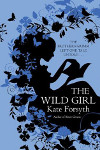
If they were the Brothers Grimm, then these were the Sisters Wild, and one in particular played a big role in the collecting of stories.
Publisher: Allison & Busby
Pages: 475
Type: Fiction
Age: Adult
ISBN: 978-0-7490-1328-8
First Published: March 2013
Date Reviewed: 26th July 2013
Rating: 5/5
Dortchen Wild fell in love with Wilhelm Grimm at first sight. Her love continues to grow over the years but the age gap between them and the difference in societal standing means that Dortchen already knows there’s no chance her father would allow her to marry him, he barely lets them socialise. Wilhelm and his brother are collecting folk tales for a book they wish to publish and Dortchen becomes one of their sources, but the Grimm family have only the faintest idea of what goes on behind the doors of the Wilds’ house, and about the anger of the father.
The Wild Girl is a necessarily slow but by no means quiet novel that takes as its premise the girl history forgot, her family, society at the time, and the possibilities brought forth by Forsyth’s research. In a similar vein but with major differences to Forsyth’s previous book, Bitter Greens, the story brings the concept of the dark fairy tale into reality whilst balancing that hard truth throughout on the other hand.
Forsyth has chosen as her subject the foundations of her previous story. Albeit that she told Bitter Greens, a retelling of Rapunzel, from the view of one of its earlier writers, it is widely known as the work of the Brothers Grimm and therefore The Wild Girl is a return home of sorts. The facts known about Dortchen can be found in Forsyth’s source information at the back of the book; she has followed the facts where possible and elaborated on the grey areas.
One of these grey areas is the possibility of violence, which is important to mention because of the nature of it. The domestic abuse is suggested very early in the book and it should be noted that this is in no way a story for young readers. Forsyth takes the route currently popular in retellings, showing the dark side of fairy tales, exposing their true routes, and this runs parallel to her interpretation of Dortchen’s family life. It is interesting the way Forsyth came to her conclusion of how Herr Wild acted, at least for the purposes of her book, and at the end of the book Forsyth makes a compelling case for what she has written whilst never saying that it is definite. For it is not, but her source information does support her tale.
Here we come to Dortchen’s later meetings with Wilhelm, and this bares responding to because it can be frustrating for the reader but is surely realistic of the situation. In writing what she has, Forsyth has turned the notion of ‘filler’ on its head because in any other context, Dortchen’s conduct would be considered dull. But Forsyth uses the time to remark upon the affects of violence and abuse on a person’s later view of relationships and shows that a fairytale ending is impossible, if not forever then at least for a very long time. And albeit that the backdrop is the 1800s and people respond, react, and keep quiet as they surely would have then, Forsyth’s commentary is relevant to our present day, too.
The book is steeped in French Revolutionary history, and here you get the point of view of the Germans. Forsyth brings the needed opinion of the common person into the picture and provides a lot of factual detail about the movement of the armies and the battles fought. You see the direct affects both the initial change and later reversal of changes had on the population of a country where religion was still important, society unequal, and the poor enslaved. Forsyth offers up the interesting detail of how Napoleon’s rules could be hated until society got used to them at which point, when the reversal happened, a lot of people saw the good in the Revolutionary rules – if not when it came to views about women. There is enough here to supplement the knowledge of anyone with an interest in the Revolution and how it affected Europe, with the foresight that only the inconsequential, such as individual one-scene characters, are fictional.
So The Wild Girl is a fairy tale of a different sort. The main plot isn’t based in fiction and there are no fairy godmothers, princes, or witches with towers. It is in the writing itself that the book makes a claim to the label and in the inclusion of the many stories told to the Grimm brothers. These inclusions are as much a source of knowledge as are the accounts of the wars. There is a very slight paranormal element used but it is more about the ideas Dortchen has, because it is never suggested that this paranormal element is real or that it has a true affect on the story. It is more a case of convenience for Dortchen’s imagination and to help her mental state (though in no way a convenience in terms of Forsyth wanting to hurry on with the story).
After all this, then, what about the characters? Dortchen is strong but understandably this nature is left in tatters as the story continues. The other Wild daughters are well-rounded and made easy to tell apart by Forsyth’s instant usage of stereotypes (stereotypes of a fashion used in fairy tales). The Grimm family, too, are developed, and Wilhelm is a worthy hero, all things considered. He was never going to be the knight in shining armour as real life rarely works that way, but instead he is believable and at times a fine example to use when Forsyth is discussing affects and reactions. Herr Wild shows the contradictions of religion and reality, and in Frau Wild you have at once the typical melodramatic mother you might expect from such a story, as well as a well-written example of both the hindsight of the present and the lack of knowledge – paired with discrimination – of the time. This is a hard book to read, there is no doubt about that, but it is both entertaining in its way and poignant and necessary in another.
The Wild Girl is about the women patriarchal history forgot, of the people who were crucial to the Grimms’ success. It is important, it is informative, and it is a compelling read. And it reminds you that there is always darkness to the sweetest tale and that even the hardest of times can include a little magic.
I received this book for review from Allison & Busby for Historical Fiction Virtual Author Tours.
Related Books

Eloisa James – Desperate Duchesses
Posted 17th July 2013
Category: Reviews Genres: 2000s, Comedy, Domestic, Historical, Romance, Social
3 Comments

Love and loyalty amongst lust and infidelity.
Publisher: Avon (HarperCollins)
Pages: 382
Type: Fiction
Age: Adult
ISBN: 978-0-060-78193-4
First Published: 2007
Date Reviewed: 4th March 2013
Rating: 5/5
Roberta needs to find a husband. Realising her problems lie in living with her eccentric father – a bad poet with an inclination towards melodrama – she decides to leave for London to stay with family. Her hope is that cousin Jemma will help her make a stunning entrance into Georgian life and improve on the reputation her father has ruined. It was love at first sight when Roberta careened into Villiers, but Villiers doesn’t favour marriage. When Jemma is asked to exact revenge on Villiers by another woman, the plans to shame him as well as marry him to Roberta come together – but then there’s Jemma’s brother Damon who does favour marriage and wants Roberta for himself.
Desperate Duchesses is a surprisingly funny novel with all the basics of a good romance. Set in Georgian England, there is plenty of time for James to poke a little fun at costumes, and opportunities to take advantage of the daring and stereotypically sexy idea of a man who refuses to wear a wig. And there is time for explorations of society to be presented with aplomb.
Roberta is the sort of character that, apart from her era-specific interests, would fit any time period. She worries about how her father’s behaviour will affect her future, she is sexually naïve but not at all reserved, and her propensity to correct the hero’s son’s grammar, though bordering on obsessive, will resonate with readers. She knows what she wants and will strive until she gets it, and her belief that she is in love with Villiers is funny rather than annoying. James never suggests that you ought to believe she is in love and truly it is a case of her believing without knowing what love is. She may not be as compelling as Jemma, who is more aware and gets to show off her intelligence due to her role, but she is a person you can root for – and you’ll be rooting for her to make that crucial realisation about her choices before long. Whether she is likeable is another question, however.
As said, Jemma is rather smart. She is also rather scandalous and the source of a lot of the comedy. Her ideas, such as having a naked woman as a table centre-piece, speak just as much of modern liberation than debauchery. In fact, despite the wide tendency of all to sleep with everyone but their spouses, the book is lacking in the sort of discomfort and lust (without love) that might put you off. It is this aspect that is one of the greatest elements of the book.
Because if the book is character-driven (and it must be said that Damon is just as wonderful a character as his sister and Roberta), then James has made a big effort to bring history into it in a way that won’t alienate. If a romance with infidelity is off-putting, then James has made sure to keep the infidelity confined to the other characters and referred to far more often than shown. Despite Damon’s prior mistresses and illegitimate child, and despite Roberta’s decision to throw caution to the wind, you will not find a faithless couple here. Whilst it might strike you as unbelievable given the setting and other characters, it is understandable and acceptable that James has left out infidelity from the development of the romantic thread.
The book asks, to some extent, what love is. Roberta wants to marry Villiers and believes she loves him. From the text it seems possible that she does indeed love him, but when Damon makes his move she finds what is obviously ‘purer’ than lust, and it is on the part of the reader to see what Roberta does not.
Bringing in something completely unrelated to sexuality is chess. Or rather chess is generally unrelated but of course James uses terminology for innuendo and suggestions. There is a great deal of information and playing of chess in the book, to the extent that a person who hates it will likely find the book boring. Most of the characters practically breathe chess and it forms the basis for other plot points, too. Indeed anyone who enjoys the game or wants to learn more about it may see its potential as a tips and trick book – there really is that much in there.
As supposed for a book where the heroine has been brought up in a house of literature, the book prizes the written word and good English. What errors there are are editing errors and James employs a believable mixture of historical and modern language. One of the characters even makes fun of the language of his ancestors.
As for the romance? Damon wants Roberta and does make decisions without her, but his weakness around her takes away any feeling of inequality and possession. You have a heroine who has learned a lot from her father’s lovers and isn’t shocked by impropriety but has no knowledge of the actual experience; therefore some of the sex scenes are lessons of sorts. There is no colourful language and the relationship begins and ends (as far as the book is concerned) with love. If not quite on Roberta’s side.
Desperate Duchesses sees a situation where the daughter of a man who adopts peculiar pets, runs to the house of her cousins who aren’t cousins, in order to get married to a man who thought she was a servant. It sees a situation where well-dressed people decide to start playing at discus with cow pats, and hilariously bad seamstresses are employed to make ball gowns for the gentry.
It’s silly, it’s stereotypical, and it’s an absolute riot.
Related Books


Kimberly Derting – Dead Silence
Posted 12th July 2013
Category: Reviews Genres: 2010s, Paranormal, Romance, Thriller
1 Comment
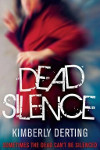
It’s been closer to home, now it’s at home.
Publisher: Headline (Hachette)
Pages: 389
Type: Fiction
Age: Young Adult
ISBN: 978-0-7553-8917-9
First Published: 16th April 2013
Date Reviewed: 9th May 2013
Rating: 4.5/5
Violet has recovered from her ordeal and still has the echo to prove it. But it won’t be long before she’s back to using her abilities. There’s to be two additions at school, making life complicated, and Violet never has been able to listen when people tell her to phone for help rather than investigate a crime scene herself.
Dead Silence is the fourth book in The Body Finder series. Derting is as good as ever, Violet is as strong as ever, the romance includes all those details and questioning you wish other YA books would include, and the series has got ever more unapologetic and mature as Violet gets older. As always Derting never shies from the gruesome truth, and in fact Dead Silence has some gruesome information about related subjects, too.
This time the story is more involved with the characters directly. Not that the series was ever lacking in either character development or plot (indeed Derting balances character and plot-driven nicely) but this time there is a little more focus on Violet and her friends for good reason – the setting doesn’t move so much between her ‘factions’ and there is reason to concentrate on her home and school life whereas before the concentration needed to be on the cases. And this, even though the crimes are just as thought-out and included. There is also a lot more back story as to the history of abilities, as well as insights into the mysterious Dr Lee.
Derting has focused on crimes that are fuelled by motives that have become very ‘every day’. She does provide lessons and suggestions for her readers but she also looks at the other side (in other words the book does not preach because of the basic structure of the books – the switch between Violet and the killer). Again ‘balance’ is the word of the day – the crimes are bad, like the other books, but there is a particular humanity in Derting’s portrayal of the killer’s life that demonstrates how upbringing has a lot to answer for. It does not excuse the crime, but puts it in terms that fit Violet’s life – gruesome, but not so far away that Violet, nor Derting, nor the reader, could put it in a box and move on. It might be a closed case now, because Derting doesn’t continue a crime beyond one book, but the way Derting has approached it means that it is poignant nonetheless, and perhaps the ultimate in showing rather than telling.
Violet makes a choice in this book to tell another person of her abilities. Her choice may not please everyone due to the way the person reacts, but it does bring a new element into the story, keeping it fresh, and one assumes Derting knows how this choice might affect her books as she uses it to a particular end.
The only thing that holds the book back is the writing; it’s not bad but it lacks Derting’s previous continuous strength, and there are some grammatical errors that aren’t the sort you would expect editors to pick up – they are style errors. There are also a couple of occasions where Derting is either too contemporary (regarding the way the back story is presented) or uses particular slang as her writer’s voice. These are generally ‘niggles’ but collectively they do faze the book.
Nevertheless, Dead Silence is a must-read. It could possibly be read as a stand-alone but it would be difficult for the reader to fully appreciate what Derting has created. For the faithful follower, it may just be the best yet.
I received this book for review from Headline.
Related Books


