




Susanna Kearsley – Mariana
Posted 10th October 2016
Category: Reviews Genres: 1990s, Angst, Historical, Paranormal, Romance, Spiritual
7 Comments

Making amends for the past.
Publisher: Allison & Busby
Pages: 387
Type: Fiction
Age: Adult
ISBN: 978-0-749-00706-5
First Published: 1994
Date Reviewed: 17th April 2016
Rating: 4.5/5
Julia moves into a little house in a lovely village that she had always admired. Very soon she’s experiencing very realistic daydreams wherein she’s herself but not quite, a historical person rather like her. It happens everywhere – the big old house, her own house, and outside. It’s worrying – one day she’s spotted pottering around oblivious to the road traffic – but also too mysterious not to follow. Someone many many years in the past experienced much sadness and Julia feels the need to work it out. And whilst her brother may have his reservations – her safety is at stake, after all – it seems others in the village might have played a role back then, too, including the rather handsome lord of the manor.
Mariana adheres to that particularly special set of mixed genres so many love: it’s a historical time-slip romance. And it’s an excellent one.
The story goes a bit further than your usual haunting or time-slip shadows idea, presenting you with a character who is both the modern day time ‘slipee’ and the ghost; Julia is ‘Julia’ during her waking and non-daydream hours and ‘Mariana’ in the opposite. It’s an excellent concept that plays right into the idea of reincarnation, karma, and unfinished business, and it’s not just Julia in the mix – there’s a suitor or two and a friend or three there, as well.
It really is very special and as it was written in the 90s there are no phones or computers to divert attention. It harkens back to days of yore when people spent more time outside – for many readers it’ll be as much a nostalgic trip as a historical time-slip, and it’s topped off by Julia’s career as a book illustrator; she’s all about drawing.
If you like nature and villages, this one’s for you. Rather than the totally stereotypical accent-full northern Cotswold village, or the Cornish seaside, Kearsley opts for Exbury in Wiltshire which is less romantic than some but makes sure you don’t get too carried away with the present. With this book you want to stay in the past until Aunt Freda says it’s time to move on.
The writing is fair. There are a few errors, understandable considering the author’s nationality, but nothing to stop you reading. Indeed it may surprise you that it’s Kearsley’s first book – there are niggles and perhaps hints that she’s following a well trodden path but it’s a very competent piece of work. It’s hard to put down even when you know where it’s headed. The ending may leave the question of ‘what about so and so…?’ unanswered but it’s not frustrating or ambiguous.
And when it’s predictable? It doesn’t matter – this book is all about the journey, the ride. As one of the characters says, Julia is on a journey and it will come to an end – we begin at the start and finish where she leaves off. There’s no superfluity here and only minimal, planned, convenience.
Mariana is a historical dream, a romantic’s wish, a reader’s demands satisfied. It is quite something.
Related Books


Linda Stift – The Empress And The Cake
Posted 30th September 2016
Category: Reviews Genres: 2000s, Historical, Psychological, Thriller, Translation
Comments Off on Linda Stift – The Empress And The Cake

There’s no way out. There’s every way out.
Publisher: Peirene Press
Pages: 172
Type: Fiction
Age: Adult
ISBN: 978-1-908-67030-4
First Published: 2007; 30th September 2016 in English
Date Reviewed: 20th September 2016
Rating: 5/5
Original language: German
Original title: Stierhunger (Bulimia)
Translated by: Jamie Bulloch
A young woman is approached by an older woman, asked if she’d share a cake because the cake is too large for one person. The older woman’s clothes are very old fashioned, from the 1800s, and her companion is similarly dressed. Though she avoids rich foods, the young woman agrees to take half the cake; after the purchase the older woman suggests sharing first her own half. The young woman finds she cannot say ‘no’, and whilst she believes it was her choice, it sets a precedent for the future.
The Empress And The Cake is an Austrian novella about three women of different generations who are connected. It’s got a bizarre, strange, atmosphere, a lot of history, looks at mental and physical health, and sports a brilliant uniqueness.
There are four major characters in this book, three in the present and one in the past. The present-day characters are our unnamed narrator, Frau Hohenembs, and the latter’s friend/servant, Ida. The fourth is the Empress Elisabeth of Austria, of the mid to late 1800s. Elisabeth is included via descriptions written by a friend – we view these scenes as reflections – and her presence in the novella is to show the basic ideas behind Stift’s drawing of Frau Hohenembs and Ida and thus the connection she has created between the factual Empress and the fictional characters.
This reviewer would recommend doing a bit of research into the personality and life of the Empress prior to starting the book. The book’s meaning won’t be lost without it but some knowledge of her will really enhance your reading experience and allow you to figure out what might happen, which when you consider the fact the Empress is likely well-known in Austria and this is an Austrian book, just makes sense. Elisabeth’s story is quite fascinating; she was reluctantly married to an Emperor who adored her and spent her time away from the court she disliked, often travelling incognito. Her mother-in-law practically removed her from her children’s lives and she was assassinated by a man who wanted to assassinate a royal and hadn’t been able to get close to his first choice, nor his second.
Part of the connection between the characters and something that is a major theme is an obsession with slimness, which in the unnamed heroine’s case is a disorder, bulimia. The book gets into very graphic detail at times so that Stift can show the way bulimia affects a person. It is a very frank portrayal, Stift’s character telling herself, or us, how this will be her last vomiting session, how she’s going to stop weighing herself so much – she’ll weigh herself several times a day instead of a dozen, for example (a difference the reader sees as inconsequential) – how she’ll start eating more again, only for her to revert almost instantly. The heroine is bound by her disorder but does not see it – she views herself as in control of it. And her increased contact with Frau Hohenembs furthers her it. (What’s interesting here is that the way the passage of time is shown in the book, the rough slowness that can be attributed to Stift’s detailing and repetition of the regular makes it seem as though more time passes between decisions than it truly does.)
Similarly she views herself as in control of her visitations to Frau Hohenembs’ apartment, and in control of the choice to go out, which happens often, with said lady and her servant; the truth is different. Not quite so different is her lack of control of her eating disorder, but a big part of the psycho-thriller aspect of the novella is the dwindling nature of personal agency. This is where the plot thread of cocaine comes in; the drug is not referenced directly for some time and we do not know whether the heroine and Ida take the drug, but there’s a vagueness, an ambiguity, in the story, that lets you imagine what is most likely. What, for example, was in that cake? Stift does not say either way – just sugar, or something more addictive? – that’s up to you to decide. (Does sugar itself perhaps reflect the addiction?)
Empress Elisabeth wanted to be very slim, and favoured being stitched into her clothes. Whilst the present-day fictional part of the story does not go this far, the factual forms a sort of backbone. Frau Hohenembs’s obsession with Elisabeth (does she think she is her or want to emulate her?) never wavers, and as such the heroine falls into line behind her. This thread is not resolved neatly, but then it doesn’t need to be. It’s the connection that Stift wants to show rather than any reason d’etre.
On the gruesome front it should be noted there are visits to a ‘specimen’ museum. These, as well as the vomiting scenes, if the reader finds them difficult, can be skipped because the importance in them lies in the sentiment rather than the scenes themselves – so long as you’ve the cause in mind, flicking past shouldn’t be a problem.
In regards to the translation, it reads well. Jamie Bulloch seems to have opted for a balance between literal word meaning and flow; there are some German words you may want to look up but the rough meaning is there in the text.
It’s hard to say exactly why The Empress And The Cake is so good. It has something to do with the complexity, the number of ideas in it, and the amount of thought that’s gone into it, but enough to say it’s excellent. It’s bizarre, random, and totally unique, and it makes you think, so much.
I received this book for review from the publisher.
Related Books
None yet
Pamela Hartshorne – House Of Shadows
Posted 26th August 2016
Category: Reviews Genres: 2010s, Commentary, Drama, Fantasy, Historical, Mystery, Psychological, Romance
3 Comments
Cast your mind back 400 years…
Publisher: Pan Macmillan
Pages: 466
Type: Fiction
Age: Adult
ISBN: 978-1-447-24958-0
First Published: 3rd December 2015
Date Reviewed: 22nd June 2016
Rating: 3.5/5
Kate wakes up in hospital. She’s had a fall but can’t remember anything about it or even who she is. Everyone calls her ‘Kate’ but it doesn’t feel right… she finds ‘Isabel’ more fitting. She can work an Ipad and recognise things in the hospital but is surprised by people’s clothing and the absence of Tudor items. Her relatives don’t seem too nice and there’s that malicious voice she heard when semi-conscious that said she should have died…
House Of Shadows is a modern day/Elizabethan time-slip in which a woman recovers from amnesia with the wrong memories, memories that nonetheless match up somewhat to her present situation. Author Julie Cohen, quoted on the back cover, called it a cross between Vertigo and Rebecca and whilst I can’t comment on the first reference, there are definite parallels with the latter.
Hartshorne has created a fair premise and the book succeeds in whisking you into that delicious time-slip experience. Kate has memories rather than dreams or travels so it’s not quite as ‘involved’ as some, but Hartshorne includes the memories as scenes so that the effect is the same as any other. The history is luscious, the romance well set up and believable, and it’s got that same big old house thing going on as Susanna Kearsley’s Mariana, only here the house isn’t a neutral element, instead it’s almost a character in its own right.
Hartshorne plays with the idea of ghosts, pitting the concept of spirits against possession but taking a less definitive route to most – Kate’s son can see there’s something not quite ‘Mummy’ about the woman presented as his mother, as can Kate’s devoted dog – but still it’s not quite your usual idea of possession; there’s just something unique about it that’s as difficult to put a finger on as the reader as it is difficult for Kate to put her finger on her memories. But it’s a lovely aspect.
One of the themes in the book is the treatment of people and the concept of privilege. Much like E Lockhart in We Were Liars, Hartshorne studies the way class divisions still rule in society, particularly in the upper echelons. Angie, Kate’s friend, helps out in every way she can, running errands for the family and helping out with the estate’s visitor system, without any real acknowledgement. She doesn’t have a defined role and isn’t considered important because she’s a commoner (she’s also of Polish decent), and Hartshorne spends various moments throughout the novel looking at the difference between the family needing her insomuch as there would be some chaos were she to leave, versus the family’s view of her which is completely coloured by her class status. Then there is the general hatred of anything other than complete heterosexuality and a major hatred for disability, interestingly also shared by said disliked Angie. The lord of the manor cannot be disabled and he can’t be gay. The lord cannot be a lady and the lord must uphold all the traditions that have never and must never be deviated from. (Whilst race isn’t commented on, one assumes the family keeps a draw full of smelling salts in case they happen to encounter any non-white tourists.)
There are a few problems with this book and one of them (two, it could be said) is major: Hartshorne gives away the mystery in the first couple of pages. First you understand that there’s hatred around Kate and then a few pages after that the major twist shines brightly and as the twists in both the modern storyline and Elizabethan storyline are exactly the same – you realise that straight away, too – you don’t have much in the way of a reveal to look forward to. It’s not clear whether Hartshorne meant for this to happen – it could easily be said that it’s a case of the author wanting to provide intrigue, a hint, and happening to go too far. Instead of hints you get answers.
This means that your interest in the book changes from wanting to know what’s happened to wanting to witness the journey Kate takes to get there, but, and likely mostly due to that fact of the answer being provided so early on, this does not work. Hartshorne’s use of amnesia is a good idea in theory and it means that you start to look forward to Kate uncovering what you, unfortunately, already know, but as the book goes on the amnesia becomes more of a plot device.
The amnesia becomes a device and then it turns into something akin to a deus ex machina move – by a quarter of the way through you know not just the major twists but have figured out everything that isn’t solely minor, but the amnesia remains a device. The answers are staring Kate and Isabel in the face, the answer is glaringly obvious, and you have to ask yourself could anyone be so, so stupid?
These plot and character problems are joined by poor proof reading and weird writing choices – made up verbs and words ending with -ly when there are perfectly useful words already in existence (‘studiedly’, for instance). Plot points and information are repeated in a way that’s either down to a disbelief in reader memory or a major editing error (it’s not to do with Kate’s memory). The book could’ve done with a heavier editing hand and a few more drafts.
You may well enjoy House Of Shadows if your interest in reading it is to experience a time-slip or to look at social division but if you want anything beyond that, you’re going to want to read something else. It’s fun enough as a story, and easy to go back to – it’s quite like the situation I found with Amy Snow, wherein it may not be great when looked at as a whole but it’s a very fun experience nonetheless.
Related Books
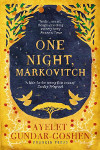
Ayelet Gundar-Goshen – One Night, Markovitch
Posted 18th July 2016
Category: Reviews Genres: 2010s, Comedy, Commentary, Historical, Political, Translation
2 Comments
History, war… and humour?
Publisher: Pushkin Press
Pages: 365
Type: Fiction
Age: Adult
ISBN: 978-1-782-27163-5
First Published: 2012; 15th June 2015 in English
Date Reviewed: 27th May 2016
Rating: 5/5
Original language: Hebrew
Original title: לילה אחד, מרקוביץ (Markovitch, Layla Echad) (Markovitch, One Night)
Translated by: Sondra Silverston
Yaacov Markovitch has an unremarkable face. No one really notices him. His friend, Zeev Feinberg has an amazing moustache that everyone knows about. The friends enlist in a programme designed to rescue Jewish women from Germany, to bring them back to the homeland and whilst Zeev has no issues with the idea of divorcing a wife – he has a girlfriend who smells of oranges – Yaacov finds himself married to the most beautiful woman he’s ever seen, a woman who wants nothing to do with him and will ignore him in the years that follow.
One Night, Markovitch is a funny yet poignant book (‘poignant’ is on the cover; it’s perfect) about all sorts of things related to the self as well as war and the effects of it on people’s lives. It’s one of those books that is solid throughout and very special.
The humour is mostly laugh out loud and very well timed – never too much, never something you forget. The book is peppered yet it would be difficult to label it a complete comedy because it’s anything but stereotypical. I’m going to have to share a quote:
“Are you excited about the journey to Palestine?”
That she would be excited about their marriage was something he dared not expect, but he hoped that the excitement she felt at the proximity of the Holy Land would project a bit onto the means of her reaching it, that is, onto him.
“Definitely. I’ve read a great deal about the oranges.”
Here Bella Zeigerman stopped speaking, and Yaacov Markovitch decided happily that his wife, like him, was a fan of agricultural literature. On the narrow, crowded bookshelf in his house in the village, next to the writings of Jabotinsky, stood all sorts of guides – the mother of wheat and how to improve species, how to plough and plant grain, how to graft a tree without causing pain. Bella Zeigerman knew how to recite Gothe, but it is doubtful that she would be able to memorize, with the same degree of success, the list of insects that threaten to destroy grapevines. When she mentioned oranges, it was because she recalled a line from the Hebrew poet’s poem [she is in love with his work] that had been published in the newspaper.
Humour is found in Sonya’s eyes, which are a couple of millimetres too far apart to be pleasing. It’s found in the way she stands on the shore yelling curses at the long-gone Zeev Feinberg who will return in time. It’s found in Zeev Feinberg’s moustache. And it’s found in some of the ‘lad-ish’ humour – this is in no way a women’s fiction book.
For a while it’s simply history and humour and then there comes a point where the mood is more sombre, the humour sensitive, almost, and whilst it’s not quite that because the story turns ‘sensitive’ on its head, whilst the war trickles in from the beginning, there is a turning point wherein it becomes the focus.
Gundar-Goshen mixes in some politics. The book deals with the beginnings of WWII, its situation for German Jews, whilst also dealing with the Arab-Israeli conflict, in which the Jews, their people persecuted in Germany, are in turn persecuting Arabs. Yes, it’s quite a bold statement. German Jews are fleeing Berlin before the major onslaught and in Israel, their ancestral land, they are in a good place. Gundar-Goshen does not say anything directly about the issues, the conflict betweens these conflicts, but there’s a flicker of an opinion.
This isn’t to say the wars are particularly detailed, however. For the most part they are in the background – Zeev Feinberg held an Arab by the throat today but now we’re seeing him at home with his children. The subtext is key. It spills out of the text – this conflict is everyday, a regular happening, and it’s in the ‘minor’ details like Zeev’s day that we see the horror of it.
Amongst this is the shock. It hits a few characters, informs their lives, but one in particular is commented on – Rachel Mandelblum. When in Germany – which she left for Israel, promptly ceasing to speak German, adopting Hebrew instead – Rachel experienced the horror of a murder, a skull being cracked. She can not escape the sound, it haunts her every day. Gundar-Goshen blends this specific horror into the humour of Rachel’s present situation, her pretending not to understand German, being not unhappy but no more than content living with the random butcher who proposed marriage when he saw her in the street. (She had no reason not to agree so she followed him home and had his child.)
The naming, whether cultural or not I’m not sure, is in a first-name-surname form every time. Rather than simply filling pages, it adds to the humour, though I can’t say why exactly.
The translation bares a strong sense of being true to the original. It’s an American translation, definite western words that are most certainly the choices of the translator rather than a choice based on how the text reads, but it’s by no means a bad text. It flows, it translates jokes into a western context for English speakers to understand… you know you’ve got a good translation when it doesn’t stand out.
The ending’s an interesting one for the way Gundar-Goshen refers to the audience, breaking the fourth wall (though there is, throughout, a feeling of that anyway) saying that, hey, she’s about to jump in time, but this is what happened in the interim she’s skipping, and it isn’t much, and this is why she’s had to do it, and so on. There are many books that jump in time for no reason – Gundar-Goshen’s explanation is a blessing.
One Night, Markovitch is superb. It’s fun, it’s serious with good reason and to good effect – it’s just a solid book all round.
Related Books
None yet
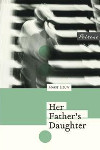
Marie Sizun – Her Father’s Daughter
Posted 20th June 2016
Category: Reviews Genres: 2000s, Commentary, Domestic, Drama, Historical, Translation
2 Comments
Don’t tell children only half the secret.
Publisher: Peirene Press
Pages: 144
Type: Fiction
Age: Adult
ISBN: 978-1-908-67028-1
First Published: 2005; 13th June 2016 in English
Date Reviewed: 9th June 2016
Rating: 5/5
Original language: French
Original title: Le Père de la Petite (The Father Of The Little)
Translated by: Adriana Hunter
Her Father’s Daughter is a superb book about something that doesn’t often get thought of when we talk about war – the effect of a soldier’s homecoming on his very young children. It’s also a study in how war messes with the emotions of those back home, and in this case the damning effects that can have.
Sizun writes in the third person from the perspective of the child. France, the girl at hand whose show-of-patriotism name is rarely used, is at once spoiled, kind, and almost precocious. The author brilliantly shows how, for example, a child may be annoying but not at fault – we all know this, that children do not understand subtleties especially when adults don’t answer their questions comprehensively, but it’s how Sizun goes about her detailing, putting the point out there in an ironically comprehensive way.
The book studies the change when France’s father returns, after which she’s no longer the only person in her mother’s life and no longer possesses her.
‘When your poor little daddy comes home’… Off hand. Just like that. […] But right there, in what her mother said, in those words, something loomed before her, something quite new. Something that intruded into the intimate, familiar world of the kitchen. Something the child perceives as a threat. When. Come home.
This is where Sizun addresses the breach: to the mother, everything will right itself and life will be good again but to France a stranger is set to arrive, a man whose role she has no concept of. She doesn’t know a father is like a mother and the photograph of him in the apartment has no meaning for her. She’s resentful, sees disruption ahead in the life she likes. Her mother has spoiled her to the point of madness, letting her draw on the wall, sing loudly inside, even letting her pick her (the mother’s) outfits. We can assume the mother does this out of sadness and, on some level, guilt.
What is a father? The notion of fatherhood is beyond the child… Fathers are found in fairy tales, and they’re always slightly unreal or not very kind.
In Sizun’s child-sized detailing we can read between the lines – we can tell what this big ‘secret’ of the mother’s is, where the ‘baby’ has gone. Sizun shows how important it is to tell a child the why instead of just telling them it was a dream.
When the father comes home the parents don’t perform a proper introduction, instead they push a kiss on a child from a stranger. The father is strict – he doesn’t like the drawing and singing – and it’s a while before France sees his fatherly side, Sizun demonstrating what happens when there are different parenting styles with the addition of having to adapt to life after living in a prisoner of war camp. The father does not represent all fathers of his situation – the author also shows a man who has come home in good spirits, a neighbour with a daughter France’s age. And some of the changes France must make are due to the time period – seen but not heard.
As her father starts to treat her with kindness she turns against her mother. Does the mother use poor discipline as a weapon, as a way of having control in spite of her own mother’s words? Is it down to the guilt she feels over her illicit situation? The mother is an ambiguity; Sizun leaves her open for your interpretation.
Her Father’s Daughter is downright splendid. It tells an unfamiliar tale in a particularly affecting way and succeeds at making you question a child’s actions in a child’s context because you’re never out of her head. Whilst translated (Adriana Hunter is on top form) the word choice is everything, the length of the sentences key. This is a World War II book you don’t want to miss; and it’s in the top tier of Peirene Press’s acquisitions.
I received this book for review from the publisher.
Related Books


