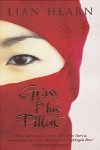
Lian Hearn – Grass For His Pillow
Posted 13th June 2012
Category: Reviews Genres: 2000s, Angst, Domestic, Fantasy, Historical, Paranormal, Romance, Social
Comments Off on Lian Hearn – Grass For His Pillow
The issue is that the right path is considered the wrong one by many.
Publisher: Picador
Pages: 305
Type: Fiction
Age: Young Adult
ISBN: 0-3304-1526-3
First Published: 2003
Date Reviewed: 31st October 2011
Rating: 4.5/5
Please note that I wrote most of this review over a year ago and that the tone is different due both to the shift in my writing style and the fact that I wanted to make reference to the book being a re-read. I suppose you could call it the ultimate reflective review.
Please note that as this is the second book in the series, there are likely to be a few spoilers of the first book in this review.
So Takeo chose the Tribe and forsook Kaede, but it’s not over yet. The Tribe are demanding things of him that he does not like and feels he cannot do, but how can he leave? For Kaede, the heartbreak is too much yet she knows she must remain strong and take what is hers.
You may remember me saying that I first read Across The Nightingale Floor, the debut of the series, when I was young, and that my recent re-reading led to revelations that I found uncomfortable. In my maturity I could now understand that Takeo was bisexual and that he had slept with the monk, but it wasn’t this that led me to lose some of my love for the book, it was rather that Takeo was so quick to sleep with someone else after having chosen a different path, no matter the gender of the person he slept with.
However sex was simply not viewed as it is today and thus anyone expecting Takeo to wait for Kaede should know that although his heart does, his body does not. In Grass For His Pillow he sets himself up for issues later on by the actions he takes. Though I agree with the book being true to history in such a way, I still cannot comprehend this man with an all-consuming love going and sleeping with others so easily. And while the book may reflect life back then, it jars with modern morality and does make Takeo difficult to accept. (I’m aware that I’m saying this even as someone who disagrees with projecting the present day onto history.)
Kaede is the complete opposite and a good comparison. For she is just as strong as Takeo, perhaps more so, and does very well despite the man-orientated society she lives in. It would be easy enough for Kaede in her growing power to have a fling with anyone she wants, yet she doesn’t.
Aside from this moral aspect however, the book is very good. There is some upset and Kaede is on occasion prone to fall ill when she recalls her passion for Takeo, which is a little over the top, but Hearn is setting up both of them for some amazing battles in the later books.
Many of the chapters are novellas in themselves, indeed if you’re a person who likes to read a chapter before bed you’ll have to abandon that idea here and go by page numbers. Hearn has her story well planned and does not let length hold her back. Despite this the book is an easy read and not particularly long. There are few dull patches. Where either of the characters are waiting for something to happen the author gives a reason and follows it through well and there is always Takeo’s narrative in his sections to keep the story interesting.
The reader learns a lot more about the Tribe in this book as well as some exciting genetic news, and Hearn pads out her world with information about the temples and the afterlife. The blend of history and fantasy becomes natural, so that when Takeo becomes invisible to escape an enemy it doesn’t wreak of convenience as it would in many other books. This reviewer was rather surprised when Kaede was visited by a goddess, as it is so easy to forget just how much fantasy plays a part.
The narrative is quick owing to Hearn’s equal division of the book between the two characters, and it all ends rather suddenly meaning that it’s good to have the next book to hand.
Although billed as a young adult book, the series will be better understood by those approaching the end of their teens. The adult content is at times shocking even to the older reader.
Grass For His Pillow is a book to set up the next one, yet it does not feel like a filler for the amount of effort Hearn has obviously given to it. The latter third more than makes up for the uncomfortable start, and many old characters return so that it feels very much like a book from the series rather than something new. Highly recommended.
Related Books
Lian Hearn – Across The Nightingale Floor
Posted 11th June 2012
Category: Reviews Genres: 2000s, Angst, Domestic, Fantasy, Historical, LGBT, Paranormal, Romance, Social
2 Comments
A rather epic historical flavoured with fantasy.
Publisher: Picador
Pages: 292
Type: Fiction
Age: Young Adult
ISBN: 0-330-49334-5
First Published: 2002
Date Reviewed: 9th February 2011
Rating: 4/5
Please note that I wrote most of this review over a year ago and that the tone is different due both to the shift in my writing style and the fact that I wanted to make reference to the book being a re-read. I suppose you could call it the ultimate reflective review.
On the day his village was burned to the ground, Tomasu was found by a Lord who named him Takeo and took him under his wing. Now Takeo joins Lord Otori in wanting revenge, and it appears Lord Otori chose well, for when Takeo stops speaking through shock, magical talents begin to show themselves. Takeo’s not sure what’s happening but he knows that with these talents he may be able to defeat the tyrant.
I first read this book around its publication date and absolutely loved it, I remember staying up all night to finish it; through this I came to discover how fantastic February mornings are as the sun rises, something I try to be awake to experience at least once a year to this day. Because of my reading speed at the time, the climax took me 45 minutes to get through and along with the historic subject I was in heaven. But reading it again I can see the flaws I didn’t see then.
The book is a brilliant example of Young Adult Asian historical fiction (albeit written by a white westerner), and it takes the reader to various different locations without any big changes in plot. The main characters are strong, the heroine especially, and the reader is able to get to know them well in a reasonably short period of time. The talents are supernatural, but they aren’t over the top, they are in the main the sorts of talents that we often think might be possible to develop, such as acute hearing.
But something that I didn’t notice the first time I read the book, due to my age, was the main character’s sexual promiscuity. The character actually appears to be a closet bisexual, but this isn’t the point, rather the point is that the romantic storyline revolves around an intensely passionate love and then a moment later the hero will go and sleep with someone else. For this reason I had a lot of trouble accepting the romance in the book whereas the first time I read it I thought it was amazingly romantic. All I felt was that he was disrespecting Kaede and their supposed love.
However apart from this the characters are exceptional. They are very much a product of their writing time, written before Young Adult books became what they are today, and are all the better for it. The plot switches between them, Takeo’s chapters being written in the first person, and Kaede’s in the third.
The book is not for the faint hearted. Hearn never shies away from descriptions of torture and death, and scenes of a sexual nature are relayed in their historical truthfulness. For fantasy this may be, but the Japanese historical aspects are rather factual.
The story has it all, the keen warrior, mystery and magic, adventure, political issues concerning leadership, and a sweeping romance. It shows why political alliances were important, but family more so, and how devastating the wrong choice could be. It displays the extreme prejudice towards women, the strong Kaede struggling to be accepted as her father’s heir and having to pass up being known as the heroine of a part of the plot that cannot be told here if the plot isn’t to be spoiled.
This is not your contemporary Young Adult novel, and should be recommended to young people with care. However that said, for its realism it is nothing more than true to historical life.
Across The Nightingale Floor is fiction for anyone who has seen a wuxia film and fallen in love, for the historian who wants to know more, and for the dreamer who believes. It is not flawless, even if the hero’s movements are, but it is a book that will hopefully stand the test of time.
Related Books
Erin Morgenstern – The Night Circus
Posted 19th April 2012
Category: Reviews Genres: 2010s, Fantasy, Magical Realism, Paranormal, Romance
2 Comments

The circus is all fun and games, right?
Publisher: Harvill Seeker (Random House)
Pages: 385
Type: Fiction
Age: Adult
ISBN: 978-1-846-55523-7
First Published: 13th September 2011
Date Reviewed: 17th April 2012
Rating: 5/5
Almost every night a circus appears in an undisclosed location, staying there for a short while before moving on. To the patrons it’s spectacular but still a circus with tricks. Yet for those who work for it, especially a select few, it’s more than your average magic box, being a stage for some truly amazing spells and illusions, and one particular thread of illusions in particular.
The Night Circus is a fantastic fantasy-orientated novel that lures you in unknowingly. What is most important to discern, in many ways, is that while the promise of supernatural events seems evident from the first page, from, indeed, the cover of the book, it does take a while to really show its colours. For a good length of time, although there is magic there, true magic, it does not infiltrate the circus as much as you might have thought. In many ways the circus appears to be too realistic to warrant the supposed magic and sometimes the story does not appear to be heading anywhere. But when you reach the end of the book, you can’t help but wonder if that was part of the magic in itself. The supernatural element of the book becomes very important and becomes the book’s sole reason for being towards the end.
The story is told from the third-person points of view of a number of characters. The tense usage is present which adds to the mystery. On some occasions Morgenstern brings the reader into the story, addressing them directly, and describing the circus in the second person. It’s rather like listening to a meditation instructor, the words and the overall picture being one that you don’t want to walk away from, even if at times it seems incredibly regular. While the passages about the reader obviously symbolise the present day, the chapters from the characters’ points of view are written about various difference times, jumping back and forth between the late 19th century and early 20th.
And at first all that jumping seems silly and needlessly confusing, but like the circus managers who want the audience to be able to see the performances from every angle, so Morgenstern wants to tell her story through everyone, wanting to provide the back story and future story as well as numerous “present” stories. Of course this means that for a long time it gives the impression that Morgenstern is just describing her concept, that there isn’t actually a real plot and that the book is character led – but that is where the long ending comes into play, suddenly bringing all the different threads together, explaining everything you hadn’t thought to query, and sweeping you up into a magical realism written to perfection.
Whilst one can point to two main characters in this book, there are very few characters that would be considered secondary. Each person plays a specific role, roles that often only become apparent much later. And whilst you may feel you do not know the characters well, for Morgenstern spends little time detailing their general personalities, you find that actually, you know more than you thought. And you find that the characters probably know more about you than you know about them.
The magic and paranormal elements are of two kinds; the first of the kind that people often dream is real (illusions, controlling things with the mind), and the second, which is more to do with telling the future and with premonitions. Being that the second kind is quite widely accepted, that Morgenstern employs the less realistic, so woven into the first, actually succeeds in making the illusions and manipulations a real possibility in the world.
With a book so tied up in magic and fantasy, a romantic thread comes as no surprise. The way Morgenstern writes, her use of phrases, and the way the romance blends with the fantasy, makes for a new fairytale. Both epic and regular, the romance thread heightens the overall atmosphere and adds much to the plot.
Yet the book is dark. A dark fairytale more suited to huntsmen told to kill and having to turn into sea spray upon losing the prince, than fairy godmothers and kingdom-waking kisses. It is both very modern and very traditional, and it is clear from the detail that Morgenstern knows her subject very well. When the reader is sitting there in wonder, basking in the magic going on, Morgenstern takes a knife and tears it apart, showing that where there is skill, there is also abuse. That where there seems to be freedom, there is slavery.
It is difficult to talk of a book like The Night Circus in a way that does it justice without revealing everything; such is the way the story opens up to the reader. This review could never hope to truly present it convincingly unless the writer of it were able to conjure doves from paper, Ice Gardens that never melt, and never-ending mazes.
So let those three pictures be the conclusion. The Night Circus may stay around for a while, but no one knows when it will disappear, or when it will return. In order to visit you must go when it arrives and not hesitate. Thus it is the same with this book. A book is in the spotlight for a time, and then fades. Do not let this one be forgotten.
Related Books
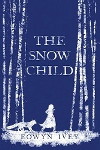
Eowyn Ivey – The Snow Child
Posted 27th February 2012
Category: Reviews Genres: 2010s, Domestic, Fantasy, Historical, Magical Realism, Spiritual
1 Comment
Days will be merry and bright if each Christmas is white.
Publisher: Headline Review
Pages: 404
Type: Fiction
Age: Adult
ISBN: 978-0-7753-8052-7
First Published: 1st February 2012
Date Reviewed: 27th February 2011
Rating: 5/5
Mabel and Jack moved to Alaska when Mabel suggested they could do with a new life. Having lost their child at birth, Mabel has never quite recovered and the solitary life of 1918 Alaska appealed to her greatly. A gulf is between the couple and Jack cannot understand how Mabel is still so affected. During their struggle to make it in Alaska they create a snow girl; the next day they see a child in the woods. Their world is suddenly filled with a happiness they never dreamed of but there is always the question of how long it will last.
The Snow Child is a sweeping story, encompassing many questions about how we connect with and treat each other. The setting allows the magic to be explored in a way that most anyone can identify with, while allowing Alaska to keep its reality, the author herself being from the state. Although the location never changes, the ride through the character’s lives can often make it feel as though you have been on a long journey. Though of course that is in many ways the point.
Albeit that The Snow Child rests firmly in what is termed “magical realism”, Ivey plays with her reader, coming back and forth with the idea that in fact everything is perfectly true, before throwing at them a snowball filled with thoughts to the contrary. Before the girl, Faina, entered their lives, Mabel and Jack’s relationship was uneasy at best. Faina’s entrance is the catalyst by which everything starts to change, because suddenly there is a child for them to look after, the gulf between them bridged.
And it is through Faina that Ivey shows us change over time. Jack was always more content with life than Mabel was, but the introduction of the girl causes him to move towards a feeling of fatherhood, one that is rather possessive. Mabel, on the other hand, sort of takes a reverse route, beginning by feeling desolate and depressed and ending as Jack begun, more accepting and open. In addition to this, the reader can see a parallel in the personalities and life of the couple’s neighbours, who come to feature strongly in the book.
Possession is a big theme of the book, with Jack and Mabel taking turns at being worried for Faina and wanting her to fit the mould of a child they have created in their minds. Ivey puts forward the idea that Faina might disappear if Mabel enforces her views of education and a stable home life, suggesting that one cannot direct the life of another, as Mabel cannot force a child of nature to be a child of the modern western world. As for Jack, his possessiveness comes to the fore when Faina makes strong choices of her own, choices that bring her properly into their world. Ivey demonstrates that while such possessiveness, especially on Mabel’s part, is due both to the sudden realisation that they have a child, and to the love they have for Faina, it can do untold damage where it is not held in check.
But the bigger theme is relationships. It takes Faina’s arrival for Mabel and Jack to remember who they were, both as individuals and as a couple, and there is a poignant moment when all three are skating on ice and Faina suggests they keep skating past the limits they had set themselves for safety. In this there is the idea that while they are happy, Jack and Mabel will not let themselves fly free, always remaining on solid ground, and Ivey demonstrates that while that is often seen as a good thing, there are times when one should let themselves go. And the reader is left to wonder what might have happened had Mabel and Jack agreed with Faina, and had literally skated past their boundaries.
What is interesting about The Snow Child is that for so long it is simply a nice story – a look at domestic relations – with only the smallest of magical pieces, and the reader may wonder what is happening in the sense that it can seem that nothing much is. The change in mood, pace, and magic comes swiftly – Ivey sets the major points in a section all on their own, and it’s rather like a latch being opened. From content and comfortable little story the book moves to extreme emotions and a much grander tale, from which there is no way back. Perhaps the most intriguing thing is that from this point it is likely the reader will be able to discern what will happen, and far from being a negative aspect, as it would be in other books, this is what propels you on. Like Mabel and Jack, you may have been happy enough with Faina coming and going before, but now you want to truly put her in the spotlight and find out who she is. Again, Ivey shows us that wanting all the knowledge may be part of the problem.
The choices Faina makes, and how she relates to the changes are pause for thought, as they illustrate both how human and, at the same time, how unreal, she is. And surely the final catalyst in her life is a nail in the coffin of the current flow of events and way of life. It is here that another theme, love, is shown most obviously. However it is up to the reader to decide whom exactly Faina loves, or indeed, if she does love or whether it is something else entirely that effects her actions.
But in doing what she does, Faina provides Mabel and Jack with what they always wanted and in that sense the story comes full circle. Who Faina is, was, and will be, why she came, if she had a purpose or if that is something we have come to believe, are all questions that Ivey leaves to the imagination. Ivey will control your thoughts throughout the novel – pushing you towards the realistic, the magical, the deluded, whenever she wants – but the questions themselves go unanswered. The lack of quotation marks during dialogue that includes Faina is cause itself to take a step back. Each reader will come to their own conclusion based on experience, beliefs, desires, and this brings a spiritual aspect to the book.
And that is what makes the book so compelling, and Ivey’s tale so wonderful, that while it is based on a fairytale that was given an explanation, Ivey has twisted it and drawn her own ending, inserting important musings along the way.
Ivey shows that while we may like to think that we can solve problems by rational thinking and talking things through, there is an element in all of us that benefits from the unknown and the magical, or spiritual, or whatever you want to call it. And she shows that maybe what we think we need isn’t it exactly.
The Snow Child is a brilliantly crafted story of learning to live and love. And the best news is that no matter whether winter or summer, real or not, it will always be around to delight and enthral.
I received this book for review from Waterstones.
Related Books

David Eddings – Guardians Of The West
Posted 12th December 2011
Category: Reviews Genres: 1980s, Comedy, Fantasy
Comments Off on David Eddings – Guardians Of The West

It’s time to battle against evil once more.
Publisher: Corgi (Random House)
Pages: 423
Type: Fiction
Age: Young Adult
ISBN: 978-0-552-14802-3
First Published: 1987
Date Reviewed: 4th December 2011
Rating: 3.5/5
Please note that as this is the first book in a follow-up series, The Malloreon, to The Belgariad (also a five-book series) there may be content in this review that is considered a spoiler for The Belgariad. You might also like to note that despite the book’s cover, all of the books about this particular world were actually written by both Eddings and his wife. It is only in more recent years that this information has come to light.
Garion, now king of Riva with his wife, Ce’Nedra, as his queen, has been finding life suitably routine. It is definitely hard work being the Overlord of his fellow kings, and it’s annoying how everyone comes to him to dump their problems at his feet – but war torn the West is not. But of course there would not be a story if this routine wasn’t to change, and as another prophecy appears to begin and the Orb starts speaking once more of trouble, Garion and his friends are sure to be displaced from peace soon enough. Who is this new Child of Dark and will the Rivan royal couple ever provide the kingdom with an heir?
If you enjoyed The Belgariad, picking up Guardians Of The West feels a bit like coming home. Whereas in the first series the reader was still getting to know the characters and Eddings wrote them accordingly, in Guardians Of The West there is very much the sense that Eddings has relaxed, believing (rightly, really) that his readers know the people he is talking about. He has altered the way that he writes about them ever so slightly – they are most certainly the same characters, but now it feels as though you’ve been invited into their inner circle. This said the plot is largely the same as the previous.
There are more jokes this time round, however this is at once both a very good thing – the jokes are often very funny – and a bad thing – it can become too self-indulgent. For the most part the truly laugh-out-loud moments outweigh the lesser ones, but towards the end of the book the sheer number of lines such as Barak’s constant declarations of liking a person, and the misfit that is humour during what is purported to be a massive bloody battle, doesn’t work. The reader sees a little bit of the battle and then spends the rest of the time listening to the characters, who are all royal or high up in society, discussing strategy or simply bantering amongst themselves. Although the series is a comic fantasy, the total disregard by Eddings to present anything resembling reality in this case is difficult to get over.
Unfortunately this is joined by predictability. As soon as battles happen, nay, as soon as they are a possibility, there is no need to read further as you know exactly how it will end. Such was also the case in The Belgariad. Unlike other authors, Eddings never includes any chances that the characters will fail. Although you know, considering the genre, that good will ultimately triumph, there is never any sense of danger. The characters arrive, talk for a bit, attack, win, find they haven’t won completely, go back to talk more, and etcetera. And winning is all too easy for them.
In regards to strategy, once the main crux of the book begins the narrative always going back to discussions. The discussions take ages, and while there can be interest in the minute details Eddings goes into, one can’t help but wonder if Eddings ought to have joined the army instead of becoming a writer because he clearly has a passion for working things out. Once the characters win, someone comes along to tell them that they haven’t actually won, and that is part of the cycle of repetition; there are a good several strategic discussions within a fifth of the book’s pages. After the first couple of discussions it becomes dreadfully boring.
Interspersed are pointless dialogues, silly ideas, and things the reader didn’t need to know. Indeed when the characters finally discover the true next step, one that needs to be taken then and there, they sit down for alcohol and humorous conversation. And individual characters are always going off to do something secret, something that generally turns the tide on things within the blink of an eye. The extensive use of magic to solve problems, despite the fact that the book is a fantasy and is therefore “allowed” to use magic, can make things that might have been exciting rather dull. And in addition to all of this, Ce’Nedra’s constant refrain of “I want my baby”, despite the reader’s knowledge of her personality, can make a person want to change the text so that she is less selfish and remembers that it takes two to make one.
So while Eddings knows how to plan battles, he does not know how to stage the action. But he does know a lot about showing rather than telling, which of course has a lot to do with the negative aspects but is overall a winner. Although he may be influenced by the likes of Tolkien, Eddings never goes down the path of describing so much scenery that you fall asleep. He prefers to tell his tale through dialogue, which makes his book a quick read. And for the most part his characters are well-defined, they never lose their personality and apart from the times when they are all complimenting each other too much it would be easy enough to be able to read the conversations between small groups without the name labels of who said what.
You have to be prepared that nothing will really happen for the vast majority of the book – unless you don’t mind reading about domestic routine – and that it is filled by short dips into the lives of the characters over the course of several years. Why Eddings felt the need to leave such a gap yet still try and fill the reader in is incomprehensible, he may as well have just begun by summarising. He wanted Errand to be more grown up, and that makes sense, but we do not learn that much about Errand that couldn’t have been condensed into a few pages. Some of the plot points are very interesting, but when Eddings employs a written, and thus longer, version of what film makers do to show the passing of time (think quick shots of scenes and music overlays) one does wonder why he is doing it.
Eddings is good at creating stories, but his writing could have done with more polish. Some phrasing is awkward and the modern Americanisms don’t always fit the rest of the text. This particular edition of the book is rife with errors that should have been picked up during the editing process and it’s just lucky that the story is strong enough to keep the reader from becoming distracted by them.
Guardians Of The West is a rather flawed book, but the setting and characters balance out the problems. It may work as a stand-alone, but is best read after having finished The Belgariad because the characters will likely appear funnier and the information gleaned from that first series helps to explain this one. Fans of fantasy will find it okay, but this series is definitely for those with a love for quick comedy.
Related Books