


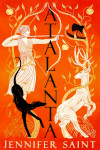


Debbie Dee – The Last Witch
Posted 2nd November 2012
Category: Reviews Genres: 2010s, Fantasy, Romance
2 Comments

A witch has power, but in some cases only as much as her commander allows.
Publisher: (self-published)
Pages: 293
Type: Fiction
Age: Young Adult
ISBN: 978-0-6156-8357-7
First Published: 12th September 2012
Date Reviewed: 29th October 2012
Rating: 3.5/5
Emmeline has always lived in a secluded area with her father, a father who tells her very little about anything. Longing for friends, she runs to the window when the sound of horses approaches their house, but her father tells her to run. Soldiers have come to take her away, and by the time Emmeline decides that obeying her father would be a good thing she is too late to avoid capture. The soldiers have come to escort her to the neighbouring country’s palace to wed the Crown Prince, an arrangement agreed at her birth, in order to protect her country. But no one will talk to Emmeline at the palace, the prince isn’t there, and Mahlon, the captain, isn’t quite as kind as his words suggested. Emmeline is apparently a witch, but she never knew it before and has certainly never experienced any power – so what is there to protect her from, and how long will she be able to continue to visit the King’s gamekeeper, Erick?
The Last Witch is a fantasy, set in a faux-medieval period, that deals with a somewhat unique idea: witches who have limited power and can be controlled. It is obvious from the book’s title where Emmeline comes in, but a lot of the plot is about how she starts to experiment and discover what she can do.
The premise and storyline are strong, but unfortunately haven’t been developed enough to make up for the speedy narrative. The book is disjointed, events happen very quickly before moving ahead a few paces, and there is not nearly enough detail. For example the reader does not witness Emmeline being reprimanded for escaping when the threat was heavy, and she escapes again the next day, as though she was allowed to come and go at will.
The writing is sometimes very good, but at others out of place. There are unnecessary question marks and suffixes that appear to be the result of an erroneous search and replace, and many grammatical issues. At times otherwise good dialogue is spoiled by a reversion to present-day colloquial terms, such as “I figured”, “gotten”, and “I sure did”. Whilst it’s not a bad thing overall for characters in fantasy novels to speak in a different dialect to the one associated with their history-based location, when not used consistently it sounds jarring. There are also episodes where plot threads get forgotten, however these are minor threads. The main issue is the narrative speed and lack of detail, which is a pity because the book would benefit rather than be hindered by a couple of hundred more pages.
Given that the book would benefit, it is not a surprise that the overall fairy-tale atmosphere is compelling. The book at times seems like a rewrite, though it isn’t one, and the basics of it are the sorts of elements that many modern readers look for. Perhaps best of all is the way Dee deals with predictable plot points. The book is largely predictable, but Dee uses this to her advantage, providing contexts and explanations that mean you are far less likely to be put off than you would be otherwise. And whilst Emmeline seems weak a lot of the time, this is for the most part fully explained, the necessity of development causing a slow transformation of Emmeline’s inner strength.
It doesn’t mean, however, that Emmeline is always understandable, and the reader may find themselves wishing she would put her thoughts into action once she has grasped the essentials of her power. Hard to read, too, is the character’s acceptance when people will not tell her what she wants to know. But the way Emmeline struggles with her wishes for friendship and people, balanced with how she feels when she gets that wish, is well written and devoid of the discomfort that could have occurred due to her never having met anyone – Emmeline is new to the world, but Dee doesn’t spend too much time on Emmeline’s thoughts. This may sound strange, and to begin with it may seem peculiar that Emmeline gets on so well with Erick, but as you read on it feels natural and doesn’t detract from the story – if anything it makes it better.
There are not many secondary characters so the reader comes to know all of the characters well, and there is time for wit and romance. To go back to the predictability, there is one element that may divide readers in regards to whether or not they pick up on the suggestions. This element is worth a mention because of the way Dee continually causes the suggestion to be clear and then hazy. It may at heart be easy to guess, but Dee isn’t going to let you go without a fight.
The reader should know that there is a lot of violence in the book, most of it alluded to, that is quite horrific on paper yet is appropriate to the situation.
The overall concept of The Last Witch is very good; the angst is strong but not overbearing, and the romance well written. The story races by too quickly, however the last couple of scenes, which are lengthy, demonstrate that with a little more time for description – other than world-building because a lot is spent on that to good effect – the book would be up there with the popular Young Adult recent releases. It’s good that there are more books to come, The Last Witch doesn’t end on a massive cliffhanger, and the set-up for the future is promising. And it’s good because for all the negatives, it is incredibly difficult not to like what Dee has created.
I received this book for review from Sage’s Blog Tours.
Related Books

David Eddings – King Of The Murgos
Posted 12th October 2012
Category: Reviews Genres: 1980s, Comedy, Fantasy
1 Comment

The search continues, and this time they’re heading east.
Publisher: Corgi (Random House)
Pages: 436
Type: Fiction
Age: Young Adult
ISBN: 978-0-552-14803-0
First Published: 1988
Date Reviewed: 26th September 2012
Rating: 3.5/5
Garion, his wife Ce’Nedra, and their friends, are still on the journey to find baby Prince Geran who was kidnapped by Zandramas. Fate unknown but destiny acknowledged, the company enter the land of the Murgos on the next step of their trek across the world. It will take them back to the Ulgos and land them in danger with the sacrificing Grolims, but there will be one or two surprises also.
Eddings’s story here is more of the same, which is a very good thing if you like his work in general but likely off-putting if you are looking for difference. There is, as always, the continuation of self-indulgent humour, coincidences that take away all worry that people will not survive a battle, and the unfortunate tendency to present murder followed by yet more humour. And whilst the latter can and often does work in television and other works of fiction, sadly in the case of Garion and company it can feel a little insensitive. Indeed of the humour one must find it particularly enjoyable for it to not become ingratiating, given that it is used in every book in exactly the same manner.
And yet in many ways this book surpasses the previous, Guardians Of The West, and the entire first series, The Belgariad. There is far less info-dumping – where Eddings has always included an entire battle strategy multiple times in one book, here he simply includes a few sentences or paragraphs, meaning that the afore-mentioned lack of worry that the reader has, considering the battles never end in tears, is less of an issue; it’s easier to accept the lack of true thrills when there isn’t any unnecessary logistical planning beforehand. The story features fewer instances of characters suddenly appearing to save the day, and more interesting conversation and revealing background context.
But the additional angles linked to battles and complications can be a disappointment. Indeed complications are never really complications – a ship is wrecked, magic heals, a holy fire is put out and the accused is easily let off. Magic and coercion are obviously going to be used, this is a fantasy book, but it does make conclusions more unbelievable than they would be otherwise.
Eddings has a view on women, but what is it is anyone’s guess. On the one hand we have an author who creates strong women who have no qualms about raising an army and leading it, but on the other we have a group of male characters that worry about their womenfolk seeing the bodies of slaughtered people. A woman will go into battle and kill, but her male friends will still worry about how “the ladies” might get upset over less than that. And in these series it could be argued that the women are far stronger than the men. One could say that Eddings was writing before gender equality became such a big issue, but this book was only released, if one may make a reference to popular culture, a few years before Girl Power entered the 90s. In addition to this there is the constant usage of “yes dear” both as a term of endearment and irritation and given the quasi-medieval yet futuristic landscape of the world Eddings created, it doesn’t sit right.
But for all this there is one striking element in this book that is not as apparent, if indeed it exists, in the others. This is the way Garion and Eriond react towards those who kill violently for no good reason. They, Garion and Eriond, have their values but these are never thrown at the reader, resting steadily with the characters. The reader is a mere observer; there is no lesson in morality, which is just as well because on one occasion there is quite a lot of violent retaliation. What is striking, then, is the way Eddings allows the feelings of the characters to pour onto the page – the way that whilst they will kill without thought when need arises, they see the difference between needs-must and glorified hatred, but their thoughts of action are in most cases given a lecture by the older members of their party.
For the most part, King Of The Murgos is surely a better work than any of the previous, but as it comes to a close the incidences that suggest otherwise rear their ugly heads all at once. One certainly needs to appreciate Eddings’s style considerably in order to find the book a spectacular success, but such appreciation is not required for simple enjoyment. There are a lot of issues with the book, but it is still a solid example of fun fantasy fiction that will appeal to various age groups and both genders.
Related Books

K Hollan Van Zandt – Written In The Ashes
Posted 17th September 2012
Category: Reviews Genres: 2010s, Fantasy, Historical, Romance, Social, Spiritual
6 Comments
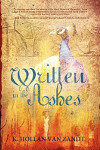
Burning libraries in the name of Christ.
Publisher: (self-published)
Pages: 393
Type: Fiction
Age: Adult
ISBN: 978-1-4525-3513-5
First Published: 2011
Date Reviewed: 13th September 2012
Rating: 3/5
Written In The Ashes is the story of one girl’s journey from slave to potential saviour of the right to religious freedom, and the way the events of society culminated in the burning of the Great Library of Alexandria. At once combining the regular workings of ancient Egyptian life and a somewhat epic adventure, the book is the first in a series.
Unfortunately the beginning section of the book does not express the above. The first part of Written In The Ashes is badly written; there is unnecessary melodrama and plot points are left hanging when they require resolution. The melodrama comes in the form of the main character, Hannah, being unreasonably gallant – she throws caution to the wind many times without thinking about the consequences. An example of a plot point left hanging is when Tarek gets bitten right to the bone and then proceeds to help Hannah, who has sprained an ankle during a show of gallantry, get home, carrying her weight by himself. When they get home Hannah is looked after and stays in bed recovering for weeks, whilst Tarek… well nothing happens, you never hear of his mortal wound again. By all accounts, in an unsanitary society Tarek should be dead.
There is a significant amount of info-dumping about locations and ideas that are not needed. The author describes things that don’t matter, such as telling us that while Hannah was speaking her hair escaped her hair-tie; one can presume from the context that Van Zandt wanted to insert a romantic atmosphere into the scene but without continuation it is superfluous. There is constant repetition of the word “so” that has no meaning, as well the device of “an angel” you’ve never been introduced to, who is doing something, be it smiling, being irritated, and so forth. In the second section Van Zandt finally introduces the reader to the concept, at which time you realise the idea itself is a good one, it’s just a pity it was poorly handled.
So we come to this second section of the book and we do this specifically because suddenly that change in section does everything for the story. The writing style is wonderfully different, plot holes are no longer employed, and the characters come into their own. The story takes on a brilliant mythical religious atmosphere and invites the fantasy genre to stake a claim in its contents. The adventure suggested in the summaries begins and everything here after is much better than the initial first section of the book. It is incredibly easy to get lost in the tale and forget all that came before.
For the most part, the third section continues the goodness of the second, but there are a couple of bad aspects to it, in particular the jump in time. The second section ends with the characters in a rather vulnerable position, and then the narrative suddenly jumps ahead by three years. If this was due to factual events happening that Van Zandt had to subscribe to, it is understandable, but due to the narrative of her fictional characters it does not work – and whilst Van Zandt shows that a threat is still there and must be dealt with hastily, it appears in the backs of the characters’ minds. It would have been better had Van Zandt taken artistic liberty with the historical facts and moved events forward, especially as to all intents and purposes it seems the characters forgot all about their friend for three years for no reason.
Yet whilst it needs editing and duplicate actions removed, on the whole Written In The Ashes isn’t a bad book. Indeed although the violence is strong it fits the period, and there is the element of early Christianity included that is so rarely spoken of elsewhere. Van Zandt really looks into the Parabolani, the so-called Christians (in other words people who believed themselves Christians but behaved as anything but) who took to persecuting anyone who would not convert. The situation was the complete reverse of the Biblical stories of Rome against Christianity and whilst Van Zandt may have created some of the episodes that happen, it is merely the extra details that are fictional. Thus the book is important because in a western world where every other sort of persecution has been publicised, little is taught of this situation. And it gives the library’s female academic, Hypathia, an expanded, if fictional, story, bringing to light both the success and plight of women.
It is unfortunate that the book lacks an air of completion (away from the slight cliff-hanger ending as this is the first book in a series) but there is a deal of goodness here and it would appear that Van Zandt has the potential to be a great storyteller.
Written In The Ashes is a fair look at society and religion in era of the ancients. It will invite research and thoughts to be overturned, though it may be difficult at times to get there.
I received this book for review from the author.
Related Books
None yet.
Malinda Lo – Ash
Posted 13th August 2012
Category: Reviews Genres: 2010s, Fantasy, LGBT, Romance
2 Comments

It’s not always the prince you want to go to the ball to meet.
Publisher: Hodder
Pages: 291
Type: Fiction
Age: Young Adult
ISBN: 978-0-340-98837-4
First Published: 2010
Date Reviewed: 4th July 2012
Rating: 4/5
Ash lived with her parents in Rook Hill until her mother died and her father passed away having remarried. Now Ash has been condemned to slave away for her stepmother and stepsisters for the “debt” her father caused the family. Ash has always believed in fairies, and when she meets one she is entranced. But not as much as she is when the King’s Huntress enters her life.
Ash uses the traditional tale of Cinderella as a base, but Lo moves far away from it most of the time, it’s almost as if the tale is there for when she strays too far. But this isn’t necessarily a bad thing, indeed Lo creates enough of her own story that when the reader is introduced to the traditional scenes it can be a shock in that it is easy to forget that Cinderella was incorporated at all.
The book is mature enough that it requires the Young Adult rating, but the writing is rather simple in that mystical, intriguing way of fairy tales. The book doesn’t require much time, however it does require full attention if the reader is to truly appreciate the way in which Lo tells her tale. Throughout the story there are hints of what is to come, the sections that may seem like world building are included to provide a lesson for Ash, and their inclusion makes the dark nature of the tale all the more apparent.
The story feels rather short, but this is in keeping with traditional tales – the book spans a good length of time, several years, but only a few aspects are focused on. Lo knows what is important and what is not and doesn’t spend time on superfluous details. And she manages to do this whilst simultaneously providing her reader with a thorough knowledge of the world she has made.
Ash is quite the strong heroine. She knows when keeping quiet will save her hassle, and she knows when speaking her mind will release her frustrations. Through her Lo demonstrates the difference between a small crush and real love, and whilst a lot of the lessons may not be so relative to real life, for their fairy basis, the overall idea is relevant.
Where tradition is included, Lo still pushes the boundaries of the tale and rarely leaves the elements unaltered, for example one of the stepsisters is rather likeable and a friend to Ash. Where there is stereotypically a good fairy godmother, there is darkness. The fae in Ash consists of a whole other world and there are a lot more mentions of them than just the one appearance. Indeed anyone looking to be totally wrapped in the magical realm will find what they are looking for here. One subject covered is how fast belief is fading, Ash is one of few who appear to still believe in fairies despite the way the two races were integrated in years gone by.
It is well known that the main way the story strays is in the romance department, and truly it would be difficult to review this book effectively without considering it. The bride-finding ball is included, but perhaps Ash isn’t concerned with the reason for it. There is no big literal emphasis on same-sex relationships; loving the same gender in Ash’s land is so natural that such a thing is never addressed, the reader simply witnesses women going off together without any comments from the characters or author. While this obviously brings the story right into the present day, it fits the set up of fairy land well, as often in fairy tales women are entranced by women and the same of men. The relationship itself is chaste, making it ideal for readers who are only just at the age for Young Adult books.
Where Ash fails to hit the mark is in its pace and description. It is true that such issues blend perfectly with the way that traditional tales are told, but because the book is longer than, say, a Christian Andersen story, the requirement for a fast pace is greater. And whilst there is more than enough information on fairies, sometimes the story does feel lacking in appropriate detail. This is where the difficulty in categorising it rears its head – on the one hand Ash feels like a children’s book and in that sense everything works, but the content places it firmly in the realm of Young Adult, causing detail to be important.
Ash is not for the reader who wants a straight retelling of Cinderella. The main character’s name may be a clever substitute, but her life does not mirror the mythical girl’s closely enough to please such a reader. For those not so concerned, especially readers interested in the modern nature of the book, success is likely to be found, if not celebrated.
Some girls do not wish for a prince, and as Lo explains, that’s completely fine.
Related Books


Samantha Sotto – Before Ever After
Posted 27th June 2012
Category: Reviews Genres: 2010s, Adventure, Angst, Comedy, Fantasy, Historical, LGBT, Romance
Comments Off on Samantha Sotto – Before Ever After

When “forever” doesn’t mean “forever” for reasons that no one’s considered.
Publisher: Broadway (Random House)
Pages: 294
Type: Fiction
Age: Adult
ISBN: 978-0-307-71988-1
First Published: 2011
Date Reviewed: 18th June 2012
Rating: 4.5/5
Shelley’s husband died from a bomb in a backpack on the subway in Madrid, a few years after they had met. Two years afterwards Shelley is still grieving, and when she answers the door to a man who looks like her husband and says he is Max’s grandson, she wonders if the bruise to her head she gained when she fainted on the doorstep is the reason why she is seeing the impossible. But Paulo isn’t Max. Indeed Paulo has issues of his own, he wants to know who his grandfather is because he knows the man is still alive. And for Paulo to find out who Max is, he must ask Shelley, even if this will be the first she has heard of it too.
Before Ever After is the debut novel of an author who shows much promise. It successfully combines a range of ideas and genres to create something not merely magical but also extremely romantic, up-to-date, and informing. At once a travel log, a historical fantasy, a comedy, and a tragedy, the book presents itself as something incredible.
The story is told through a compilation of flashbacks and present-time reflections. As the basic idea is for the characters to discover who Max is, the flashbacks are used in order to show how Max had hinted at things all along, and the present-time is used for Paulo and Shelley to work out what was going in. Indeed the flashbacks are stories within a story within a story, the book is three layers thick, but the structure and format means that you will never be at a loss for what time period you are currently reading about. The setting of the present day is mostly a plane, which gives the characters plenty of time to chew things over, and while you may find yourself wanting it to be over already so that you can meet Max, the fast pace of the novel means that the satisfaction of reading it and taking in all of the information is much more exciting. Indeed you never know if you actually will get to meet Max in the present time, and that in itself spurs you on because he’s such a great character that you really hope you will. All of the suggestions and especially the very first page of the book, tell you that he is very likely paranormal in some way, but Sotto does a good job of letting you wait to find out if it is true or not. And you will be wondering until the end.
“Now listen campers,” Max said. “Take note of this place in case you get lost during our field trip and need to find your way back home. If you don’t think you can remember where we started from, you can purchase a baguette and leave a trail of bread crumbs. Oh, and before we head off, there are three things you must remember. First, don’t talk to strangers. Second, you need to be aware that your travel insurance does not cover acts of stupidity or alien abduction. Please do your best to avoid them. And third, hold on to your mates.”
[…]
Shelley raised a brow. “Mating?”
“Mating,” Max said, “from the word mate, a word derived from the Old Dutch word maet or companion, which shares the same root as mete, which means ‘to measure’.”
“I see,” Shelley said. “So what you are in fact offering me is a measure of companionship, correct?”
“Indeed.” Max stuck out the crook of his arm. “The length of my arm to be exact. All in accordance with the guidelines of the Poultry Club, I assure you. You won’t get lost, I have a place to rest my arm, and the chickens are secure in my fidelity.”
Max is one of those characters who comes along very rarely. This reviewer would liken him to Mr Rochester of Jane Eyre and Max de Winter of Rebecca for his difference – whilst he is not like them he shares with them this certain uniqueness in quality. Max is surely a great romantic hero, yet on the face of it, for his dialogue, he is anything but. Shelley may be a strong heroine in herself, but Max is the winner here.
The inclusion of Shelley allows Sotto to show her reader a widely known issue, that of being afraid of relationships because of prior hurt. Shelley is almost paranoid about being a relationship, keeping a list on her at all times that tells her when to jump ship from dating a man – to ensure she doesn’t end up like her widowed mother, who in turn showed her how much depression could come with loss. Max too is worried about losing people, and this is apparent throughout the book; it is the way the couple figure out their relationship in a way that works for them that is so compelling.
Another factor in the book is the number of everyday issues and taboos Sotto fills her story with, and the way that she includes them like any other element. This is done through the secondary characters. Max and Shelley met when Shelley decided to sign up to join the tour group Max was taking to the continent, and it is the people on the tour with them that make the novel so valuable. The tour group consists of a young American called Dex – Shelley’s cultural male counterpart, Rose and Jonathan – an elderly couple in the prime of their sexual lives, and camera-wielding Brad and his partner Simon. Rose is very open about her sex life, and Brad and Simon are just a gay couple – there is no reasoning behind anything, Sotto has included subjects to be as normal as anything else, and this lack of pointed political correctness in a book that otherwise oozes it is particularly refreshing. With the historical content and present-day happens race is also included, and Max’s nature as a possibly paranormal person is drenched in issues of morality.
She sank her teeth into melted cheese and summer, unleashing a silk stream of eggs and cream in her mouth. A buttery earthiness lingered on her tongue. She gulped orange juice to keep from moaning from the world’s first egg orgasm.
Rose gave Shelley a knowing look. “I came as well, dear. Twice.”
Jonathan sputtered, turning a shade brighter than the raspberry preserves on his baguette. “Ah… um… yes, yes, wonderful eggs, Max. Très magnifique.”
Shelley did not recover quite as elegantly, and was still choking on the juice that had spurted out of her nose and onto Max’s shirt. Max came to her rescue with a couple of solid pats to her back, a napkin, and a grin.
Considering Rose’s frankness about her sex life, it should not surprise you that at times the book is hilarious. Whilst it is not graphic, Sotto lets the jokes run wild and there are numerous references to loud noises and length as much as there is travelling around the continent.
And travel makes up a huge section of this book, providing the basis for the character’s meeting, the reason for the history, and what Sotto wanted to talk about as a keen traveller herself. There is a great deal of information on the places visited, which are diverse in location and culture. What is interesting is that Sotto is relentless in her goal of introducing her characters, and thus her readers, to lesser-known gems in Europe. Through these lesser-known places, Sotto is able to create the world she wishes for Max to explain to his tourists, and it gives her free reign in the historical fiction department. Quick research will show you what is factual and what is not, and this is another part of what makes the book so appealing, that you are reading a blend of travel log and history and learning so much all at once. The historical rewrites are something in themselves, with Sotto often referencing well-known figures in order to provide background context, and twisting both facts and possibilities, such as the idea that Marie Antoinette’s Petit Trianon was a place of debauchery, in order to produce the result she wants. Stretching from the 1970s all the way back to Ancient Rome, across different religions and cultures, with a variety of fantasy characters and just plain interesting ones, there is bound to be something to interest you in the history chapters.
“I told you it was nothing,” Adrien said. “Although the duchess did appear to be the tiniest bit cross with me. But then again, I could be mistaken.”
“Mistaken? How so?”
“Well, I was rather busy dodging the various heavy brass objects she was throwing my way to really pay attention to what she was saying.”
There are a couple of less positive factors to the book and these concern the way Sotto uses description. There is an excess use of similes where what is really happening is sacrificed for descriptive and poetic metaphors. The issue with the similes is that they create melodrama in places where melodrama is not needed and can sometimes cause confusion as to what is happening. And there are short bursts of info-dumping and a few clunky dialogues. However these negative parts are rather like the excessive use of humour in a Terry Pratchett Discworld novel – it is easy to accept because the good vastly outweighs it and it is understandable that Sotto is still coming into her own as a writer, still working out her style and voice. The plot and characters are what’s important, and they are enough to keep you reading when the written word falls down a bit.
Before Ever After is a very apt name, giving you everything you need to know about the book without really giving you anything at all. If this is what happened before, then what happens after? Is there an after? Was there ever really a “before”?
The scent of strawberries, or rather what strawberries might smell like if they were made from melted plastic and disinfectant, filled the white-tiled room.
It is impossible to do justice to this story. Let that statement be the conclusion.
I received this book for review from Crown Publishing Group, Random House.
Related Books



Speaking to Samantha Sotto about Before Ever After, Love & Gravity, and A Dream Of Trees (spoilers included)
Tune in as Charlie Place and Samantha Sotto discuss characters that join you in your car in the midst of a traffic jam, time travelling with Issac Newton, switching from your fully researched work in progress to a story that needs to be told, and… chickens?
If you’re unable to use the media player above, this page has various other options for listening.


