




Midge Raymond – My Last Continent
Posted 27th July 2016
Category: Reviews Genres: 2010s, Adventure, Commentary, Drama, Nature, Romance, Science
2 Comments
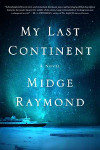
Some have check-lists. Others just a particular passion.
Publisher: Text Publishing
Pages: 306
Type: Fiction
Age: Adult
ISBN: 978-1-925-35548-2
First Published: 21st June 2016
Date Reviewed: 4th July 2016
Rating: 4/5
Deb works as a naturalist. She’s rarely at home, instead spending most of her time studying penguins and teaching tourists, travelling to Antarctica and spending nights there. On one such trip she met Keller, an ex-lawyer who had signed up as a dishwasher in a bid to get to the coldest continent; he had persuaded her to let him tag along on explorations. Speaking now of the past, Deb interweaves these stories with the one in which a cruise ship has veered too close to the ice – a ship Keller happened to be on at the time.
My Last Continent is an oft-epic tale of Antarctic exploration, the damage of tourism to that environment and the effects of very real dangers, complimented by an at times very moving love story.
Dealing with the storytelling first, the story jumps this way and that way in time – the only constant is that you know you’ll be heading back to the story of the ship wreck and that that story will command the end section of the book. The structure means you know a disaster will happen – the ‘present day’ chapters, for want of a better term, are labelled in terms of days before the tragedy and the rest of the chapters move about on a very flexible time scale, any when from ‘six months until shipwreck’ to ‘twenty years before shipwreck’. This means that it’s difficult to get a sense of where exactly you are in time because the structure is so jumpy, but it’s not a loss overall. Yes, you may be confused by, for example, Deb mentioning Dennis in a particular chapter when you’d thought he’d not arrived in her life by that time, but as the main event is that shipwreck, it’s not much to worry about.
As you know how the book will end (you know what’s happened to Deb and Keller before Keller is introduced in person) this book’s romantic element is focused more on the journey than any result. This works in Raymond’s favour; whilst you as the reader may feel you can pull back somewhat from being enveloped, knowing how it will end and that you’re reading of Keller in the past also means that Raymond can throw caution to the wind. Would Deb and Keller’s story sound, yes, sad, but also too… mushy… in another book? Perhaps. But here it works. That’s not to say we’ve Titanic – Jack and Rose – levels of romance, because we haven’t. Raymond’s dedication to the research element of her story, and her non-tourist characters’ dedication to their work, has a very grounding affect on the romance.
Let’s look at Raymond’s dedication to the facts – in My Last Continent we have a book that sports a lot of info-dumping, but in this case the result can be considered a unicorn, that word now used as much to describe things that are miraculously unique as much as it describes a mythical animal. When you consider fiction normally, info-dumping is bad because it tells us things we could work out on our own – just tell us the basic details, we can add the dining room and picket fence all on our own. We know how people eat, sleep, bathe. But as Raymond is talking about Antarctica all bets are off – how many readers have been to Antarctica? It’s a case of knowing Raymond has info-dumped but truly being able to gloss over it because it’s interesting. We need the world building. (This said there are a couple of conversations that push it a bit too far, conversations that are obvious devices, that could have done with a rewrite.)
The information serves a second purpose. Beyond helping you form a not-so-stereotypical image in your head, Raymond is concerned about conservation and the impact human exploration has on the wildlife and climate of Antarctica. She doesn’t preach – what she does most is to show the effects. Her story, which effectively casts you, the reader, as a passenger on the journey along with the fictional tourists who will come to be aware of the problems. Sometimes you’ll know about the problems because Deb’s talked about them, other times your ever-expanding knowledge will clue you in itself. So this means that you are reading a work that sits on the fence between fact and fiction and is obviously heavily tuned towards teaching, but this lesson doesn’t over-burden. And that’s all down to Raymond’s crafting of the romance.
Raymond doesn’t draw too many lines. Whilst she points out that tourism is a problem, her tourist characters are mostly people who want to help, through their discovery of the problems en route. Many characters are there to show how dangerous the continent can be. As much as tourism is a problem, she says in subtext, these explorers are here and whilst they’re studying they aren’t immune from that label themselves.
In reading My Last Continent you’re signing up for a romance in snow that’s anything but a winter wonderland. You’re signing up to a book that’s not quite fiction. You’re signing up for a book that’s not a relaxing read. You’re here to learn. But for all that you get an excellent introduction to Antarctica, a fast-paced story, a good romance, and knowledge you can take with you beyond the last pages.
I received this book for review from FMCM Associates.
Related Books

Speaking to Midge Raymond about Forgetting English, and My Last Continent (spoilers included)
Charlie and Midge Raymond discuss the current situation in Antarctica and the balance of keeping it clean whilst allowing research and tourism, environmental and climate changes in the same location, and being followed to the toilet by a penguin.
If you’re unable to use the media player above, this page has various other options for listening.
Thomas Hardy – Far From The Madding Crowd
Posted 27th June 2016
Category: Reviews Genres: 1870s, Domestic, Drama, Social, Spiritual
2 Comments
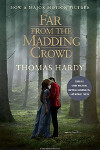
Take your independence and use it wisely.
Publisher: Various (I read the Penguin Classics movie tie-in edition)
Pages: N/A
Type: Fiction
Age: Adult
ISBN: N/A
First Published: 1874
Date Reviewed: 10th May 2016
Rating: 4/5
When Gabriel Oak falls for his new neighbour, the pretty, vain, Bathsheba Everdene, he wonders if he might stand a chance. But what he doesn’t know is that Bathsheba is also incredibly strong-willed and independent – she’s not up for marrying. One Valentine’s Day, however, she gets ahead of herself and sends a proposal to Farmer Boldwood, whom she’s not met – she’s incredulous the man hasn’t paid her any attention. Boldwood takes it seriously and pleads his case. There will be a third, too, a soldier. With three men revolving around her choices, Bathsheba’s in a precarious position.
Far From The Madding Crowd is a lengthy book for its amount of plot, that is generally average but sports a stunning latter section. It’s both a product of its time and advanced for it, lending much to discuss. In Bathsheba, Hardy has created a very independent Victorian woman. Whilst she’s hardly the only one we have from the period, the way Hardy goes about presenting her is fairly different; Hardy admires her. And he’s fair to her character, showing where she makes poor choices that hamper her and bring upset to others whilst not suggesting that it’s bad she has the ability to make such a choice.
Bathsheba goes where she wants, when she wants, and in the manner she chooses. Hardy sets up his unconventional character early on – one day, once Bathsheba knows she can no longer be seen from the house, she lays back on the horse she had been riding in the manly fashion, and continues her journey. This, in fact, she does for two reasons – the first so Hardy can show the reader her personality and the second so that Gabriel can spy her personality as his knowledge of her will be required later on.
Bathsheba’s selfishness is frivolous rather than malicious. She just doesn’t think far enough ahead, choosing to do things in the moment. This is best shown in the aforementioned Valentine – her servant says Boldwood was the only man who didn’t look at her, Bathsheba, and Bathsheba is so used to being looked at and admired, that she sends a proposal. Boldwood takes it to extreme levels, and Hardy shows how she utterly failed to think about how Boldwood would feel having received such a proposition.
So Hardy looks at gender and suggests there shouldn’t be such a divide. He has Bathsheba receiving proposals as could be expected of a woman of beauty and money in the period, and he has his male characters making stereotypical comments, but that’s the feeling of it – that he’s doing that for his plot and to maybe appease his readers. There are lessons his characters must learn; it’s a slow progression that starts from the first chapter. It’s in this way that the book still has so much relevance – think before you act, don’t dismiss out-of-hand things you think are silly.
When Bathsheba does choose to marry she throws herself into it, suddenly reversing all her talk of wanting to marry without having a husband, and acting on impulse and instant attraction. She never did have a level head, but the reader can smell problems a mile away, it’s just a question of how bad things will get. Of course Bathsheba would say they won’t be bad, don’t say such a thing, but if love is blind and everyone else can see the problems in their friend’s ‘perfect’ boyfriend, similar is true here in fiction.
The problem with Far From The Madding Crowd is unfortunately down to its era – there’s a lot of filler content. The plot is deathly slow for over half the book, there’s a lot of irrelevant conversation held over alcohol by farmhands who talk in accents that are hard to decipher (it’s a lot like Wuthering Heights in this way), and Hardy absolutely adores description. He adores it so much he spends pages upon pages discussing the night sky, spends a whole chapter on the history of a gargoyle he’s created; he loves to impart advice he places under the guise of narration, but all this does is pull you away from the story at hand. (Though the advice is interesting in itself.)
But if you can get past the sluggishness, the last third is top-notch. The pace is swift, the plotting superb, the action never lets up, and whilst everything that happens here at once wouldn’t happen in real life, it’s a treat to read. It is all rather sudden but by this point it’s something you’ll be happy with, it’s like Hardy’s woken up and remembered he wanted to surprise and shock you. He does. Whilst the themes of the book may be the reason it’s taught in schools, it’s surely this latter section of the whole that’s the reason it’s remained popular.
Far From The Madding Crowd is one bigger part average, one smaller part exceptional. It’s a 2:1 ratio that is worth taking a chance on because the conclusion does succeed in making up for all the drudgery, but it’s definitely best to do your homework before going in so you know what to expect and to have another book on the go so you can take a break when the irrelevant farm talk gets too much.
Related Books
None yet
Marie Sizun – Her Father’s Daughter
Posted 20th June 2016
Category: Reviews Genres: 2000s, Commentary, Domestic, Drama, Historical, Translation
2 Comments
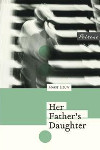
Don’t tell children only half the secret.
Publisher: Peirene Press
Pages: 144
Type: Fiction
Age: Adult
ISBN: 978-1-908-67028-1
First Published: 2005; 13th June 2016 in English
Date Reviewed: 9th June 2016
Rating: 5/5
Original language: French
Original title: Le Père de la Petite (The Father Of The Little)
Translated by: Adriana Hunter
Her Father’s Daughter is a superb book about something that doesn’t often get thought of when we talk about war – the effect of a soldier’s homecoming on his very young children. It’s also a study in how war messes with the emotions of those back home, and in this case the damning effects that can have.
Sizun writes in the third person from the perspective of the child. France, the girl at hand whose show-of-patriotism name is rarely used, is at once spoiled, kind, and almost precocious. The author brilliantly shows how, for example, a child may be annoying but not at fault – we all know this, that children do not understand subtleties especially when adults don’t answer their questions comprehensively, but it’s how Sizun goes about her detailing, putting the point out there in an ironically comprehensive way.
The book studies the change when France’s father returns, after which she’s no longer the only person in her mother’s life and no longer possesses her.
‘When your poor little daddy comes home’… Off hand. Just like that. […] But right there, in what her mother said, in those words, something loomed before her, something quite new. Something that intruded into the intimate, familiar world of the kitchen. Something the child perceives as a threat. When. Come home.
This is where Sizun addresses the breach: to the mother, everything will right itself and life will be good again but to France a stranger is set to arrive, a man whose role she has no concept of. She doesn’t know a father is like a mother and the photograph of him in the apartment has no meaning for her. She’s resentful, sees disruption ahead in the life she likes. Her mother has spoiled her to the point of madness, letting her draw on the wall, sing loudly inside, even letting her pick her (the mother’s) outfits. We can assume the mother does this out of sadness and, on some level, guilt.
What is a father? The notion of fatherhood is beyond the child… Fathers are found in fairy tales, and they’re always slightly unreal or not very kind.
In Sizun’s child-sized detailing we can read between the lines – we can tell what this big ‘secret’ of the mother’s is, where the ‘baby’ has gone. Sizun shows how important it is to tell a child the why instead of just telling them it was a dream.
When the father comes home the parents don’t perform a proper introduction, instead they push a kiss on a child from a stranger. The father is strict – he doesn’t like the drawing and singing – and it’s a while before France sees his fatherly side, Sizun demonstrating what happens when there are different parenting styles with the addition of having to adapt to life after living in a prisoner of war camp. The father does not represent all fathers of his situation – the author also shows a man who has come home in good spirits, a neighbour with a daughter France’s age. And some of the changes France must make are due to the time period – seen but not heard.
As her father starts to treat her with kindness she turns against her mother. Does the mother use poor discipline as a weapon, as a way of having control in spite of her own mother’s words? Is it down to the guilt she feels over her illicit situation? The mother is an ambiguity; Sizun leaves her open for your interpretation.
Her Father’s Daughter is downright splendid. It tells an unfamiliar tale in a particularly affecting way and succeeds at making you question a child’s actions in a child’s context because you’re never out of her head. Whilst translated (Adriana Hunter is on top form) the word choice is everything, the length of the sentences key. This is a World War II book you don’t want to miss; and it’s in the top tier of Peirene Press’s acquisitions.
I received this book for review from the publisher.
Related Books

Leo Tolstoy – Anna Karenina
Posted 11th November 2015
Category: Reviews Genres: 1870s, Angst, Commentary, Domestic, Drama, Philosophy, Psychological, Romance, Social, Spiritual
3 Comments

In which war and peace both have a place in an affair.
Publisher: Various (I read the Penguin Classics edition)
Pages: N/A
Type: Fiction
Age: Adult
ISBN: N/A
First Published: 1878
Date Reviewed: 7th November 2015
Rating: 4/5
Original language: Russian
Original title: Anna Karenina
Translated by: Pevear and Volokhonsky
Anna catches Vronsky’s eye whilst he is supposedly courting Kitty. The attraction is mutual and so they begin an affair to the sadness of both Kitty and Karenin, Anna’s husband. It may not be all doom and gloom for Kitty – she’d turned down a proposal from Levin due to Vronsky and Levin still wants her, but Anna’s life will be very different as there is more to consider than she wishes to think about.
Anna Karenina is a tome of a book that focuses on the lives of five main characters and several secondary ones. Whilst the climax may deal with the titular character she is not the be all, end all – that’s to say the book’s about far more than the one woman. At 800-odd pages, no matter the edition, it’s a slog sometimes, but a good book nonetheless.
You likely won’t be surprised to hear that Tolstoy is wordy. There are limits as to how much can be put down to translation and Tolstoy can drone on on occasion – compared to Dickens it’s nothing but it does make for lulls in the text. This is somewhat but not completely to do with the themes of the novel; Anna Karenina owes much to philosophy – economic, religious, political, social.
This philosophy is explored through the character of Levin who in part represents the author himself. The narrative of Levin and Kitty’s courtship is comparable to that of Tolstoy and his wife, Sofia, and beyond that much of Levin’s thinking is based on Tolstoy’s own. This is surely why there is so much non-Anna in the book and knowing that it relates to Tolstoy can make it far more interesting than it would be by itself.
Whether because the author flipped back and forth himself or because he just wanted to explore the ideas (the likelihood is of Tolstoy flipping) there is a lot about Levin’s thinking that is objective. Tolstoy sends Levin’s thoughts flying in one direction before pulling him back the other way, not on every subject but a vast many. Of course he comes to particular conclusions in the end that may or may not fit the reader but he gives ample time to other viewpoints beyond his own. He appropriates lifestyles and thoughts whilst Levin figures out what he wants – and he aims to be respectful even if it doesn’t end up that way. Besides this consideration of one character, Tolstoy provides counterparts in Levin’s friends and family. Levin’s story isn’t exactly thrilling; it is the inactive (as opposed to physical action, extroversion) musing that balances out Anna and Vronsky’s social life.
To Anna then – yes, it feels odd not to have spoken of her thus far but somewhat right nevertheless – Tolstoy succeeds in luring you in. Everyone who meets Anna falls a little in love with her and damn it if you won’t also. It is in this way, the almost interactive nature of the text wherein Tolstoy makes you love her too, that the author shows you why people do the things they do. Making the reader fall for Anna does the job better than any descriptions, even if descriptions are what make you fall. Things get a little awry later insofar as reasoning goes – not everything Anna does makes perfect sense – but in general she is a fantastic character in that whether you like or dislike her she will make her mark on you.
With Vronsky it’s a little different. You don’t ‘have’ to fall for him and likely you won’t. Tolstoy sets him up as only a semi-hero from the start. Because you hear so much from both men – husband Karenin and lover Vronsky – you’re never in danger of putting them before Anna, which is quite possibly what Tolstoy planned. You will feel for all three characters in the triangle at various points, Tolstoy showing no major favouritism, rather exploring to an objective outcome the effects of an affair in such a time and society.
Explore he does. Of initial interest, perhaps, in our modern view with our particular mores, is the fact that it’s not the affair itself, the affair as a concept, that is the issue in this book. The society of which Tolstoy writes does not care for morals in this way – people have affairs all the time. What it does care about is divorce and the actual physical relocation of a couple from the bonds of marriage. It is Anna’s move to Vronsky’s side that heralds the start of her troubles, a queen moving anywhere she wants on the board that will eventually be brought down no matter how far she goes. Anna’s incapability to accept the changes in society’s view of her causes many problems and whilst Tolstoy invariably strikes her story with a God-like hand he then sits back and lets it play out. He may be saying something, moralising as he does with Levin, but he wants the reader to see things for themselves, to come to their conclusions without too much help.
There are no evil-doers in Tolstoy’s book, no wicked husband, no wicked wife, no stepmothers keeping children from balls. A huge part of the book’s triumph lies in its objectivity – again that same word. Yes, Anna decides to have an affair when she had previously loved her husband and could have said ‘no’, but even though Tolstoy has a narrative all prepared for her that may be upsetting and unnecessary to us nowadays it is somewhat a result of the era rather than the character herself. And Vronsky may become rather disaffected and you may emphasise or dislike him for it but you can see his reasons and they aren’t bad; there’s a misunderstanding afoot. Karenin is shown in a fair light, very fair, but whilst you will feel sorry for him Tolstoy never rams him down your throat, indeed he gives Karenin a bit of get-up-and-go that will have you wishing he had held back.
The questions are thus: is this right or wrong? Why? What should be happening? What is going to happen and ought it? There is certainly something to be said regarding Tolstoy’s choice to end the book with several chapters devoted to Levin rather than the aftermath of the triangle but whether that’s moralising or simply down to Tolstoy’s wish to talk about himself is hard to decipher.
A note on Kitty, then, because I’ve left her out, and Dolly because there’s a short piece that is mightily compelling: Kitty’s a nice enough character. She represents the home life Levin hopes for and is obviously meant to balance out Anna’s presence in the text. She’s the wife whose existence brings Levin to the place Tolstoy wants him to be, who grounds him from going too far with the appropriating. It could be said she’s what stops Levin from just throwing his money away and pitching in with his workers – which may sound like appropriation itself but is a welcomed change from it because it becomes uncomfortable reading about a rich man helping out in the fields and being jolly about it because it’s a novelty and nothing he’ll have to do full-time. Kitty’s character lends the book a younger feel, providing readers who may be on the cusp of age but not quite someone they can relate to as they wade through a mature text. Dolly? She helps Tolstoy explore the emotional effects of affairs, more so than Karenin, because of her husband’s (Oblonsky) inability to stay faithful. Society may see affairs as almost inevitable but Dolly reminds us not everyone feels that way. The compelling short piece? Tolstoy has Dolly consider for a moment how her life might have been had she not had children. It is only a moment, it takes place amongst a few pages only and is neatly tied up by the end of the chapter with the assertion that she much prefers life the way it is – as you would expect of a novel from the 1800s. But it’s there and it reveals perhaps a tiny inkling of Tolstoy’s possible opinion that women ought to have more say and a bigger role in society. When added to the statement several chapters before that a woman’s lack of rights stemmed from a lack of education and vice-versa, it becomes quite the poignant concept in terms of Tolstoy’s message.
As said, Tolstoy waffles on occasion. He repeats himself and talks about things that would be edited out these days. Worthy of 800 pages this book is not, but it’s also not bad. The writing is fair and insofar as one can judge when referring to a translation the text is easy to read and alluring. It can be funny. And when not bogged down in meetings that will never get anywhere it’s a quick read. I must recommend the translation I chose, Pevear and Volokhonsky’s. The colloquial English grammar at times overlooks the fact it’s Russian but it’s a much simpler read than some. The Maude translation, which I read 500 pages of, is quite clunky and poorly written. (Not to mention it seems one of the Maudes disliked Tolstoy – they knew each other – so what they were doing translating it in the first place and how much that infers reliability is quite the question.)
Anna Karenina is an undertaking. In deciding to read it you’re signing yourself up for the long haul and whilst it’s a good long haul it isn’t the most thrilling or satisfying one out there. There are parts you can take away with you but the likelihood is you’ll be relieved once you’ve finished.
Read it; it’s worth it and it feels good to say you’ve read it, but have another book on the go at the same time and remember to keep your wits about you because everyone has three to four names they go by.
Related Books
None yet
Jessie Burton – The Miniaturist
Posted 18th March 2015
Category: Reviews Genres: 2010s, Angst, Drama, Historical, LGBT, Magical Realism, Mystery, Social, Theological
4 Comments

He knows when you are sleeping; he knows when you’re awake.
Publisher: Picador (Pan Macmillan)
Pages: 424
Type: Fiction
Age: Adult
ISBN: 978-1-447-25089-0
First Published: 3rd July 2014
Date Reviewed: 16th March 2015
Rating: 2.5/5
It’s 1686 and Nella moves to the home of her new husband in Amsterdam. She expects happiness but instead receives a frosty reception – she’s not particularly wanted, her sister-in-law is clearly mistress of the house, the servants seem too big for their boots, and her husband makes no move to consummate the marriage. Instead of the life she thought she would have, Nella finds herself living in a mystery and this only increases further when her husband buys her a miniature of their house and the creator she assigns to complete it appears to know an uncanny amount about the family.
The Miniaturist is a book that could have been amazing but is sadly held back by a lack of focus, poor writing, and a decisive gap between the characters and the readers.
Burton seems to have chosen the 1600s to gain the attention of history lovers. The book could have been set at some other time at no cost, and the characters do not at all conform to the time period. By this I do not mean the way they defy convention – indeed servants on a par with their masters is not unbelievable – more it’s the way Burton wields power that is an issue. As an example, Nella has a fit over something most of her era would naturally have a fit about, before doing an about turn and completely changing her opinion within hours, emulating views of the present day.
Is Nella confident or nervous? Burton cannot decide. One moment her character is close to being obnoxious, the next she’s a delicate flower who will not speak a word. She leaves the house without question one day, then stays in her room and lets people make all the decisions for her the next. It is clear that Nella is a device – this is a plot-driven novel – but there is nothing to hang on to, so to speak. Burton hasn’t made up her mind and wants both worlds.
The characters never come into their own. You’re never given a reason to care about them; they are distant from the first page to the last. A lot of this is down to the way the author chose to write her story – the particular way she uses the present tense, third person narration, does not allow the reader to feel they are at all close to what’s happening. Instead there’s the sense Burton realised, at some point, that she should have been writing in the first person but didn’t want to rewrite what she already had. Nella does lots of thinking and imagining when dialogue would work better. Everything is too detailed, info-dump is common.
Much of the issue is that The Miniaturist is full of drama. Full of drama to a melodramatic, unnecessary degree. As the book progresses it reads ever more like a prose version of a theatrical production, the problem being that theatre has to be expressive to reach the audience at the back of the room but a book by its very nature has no requirement for it. Disaster follows disaster to a silly level and social issues are packed in like sardines.
As said, this book is not very well written. Whilst modern language is natural – a book in old English would be difficult to read – very modern slang and colloquialisms pull you out of the story. Burton moves between ‘oldy-worldy’ English grammar, modern English grammar, and American grammar, making for dialogue that doesn’t ring true. (The characters may be from Amsterdam, but they would not have peppered their language with Spanish grammar, for example.)
Lastly, it must be said questions are not answered. The question of the miniaturist is never answered. There is a half answer that spells out who they are in terms of background, but you never learn the mystery nor do you ever really meet the miniaturist. The question of what will happen to these characters now they are in a bad position is completely forgotten.
The Miniaturist is strictly okay. Read it if you will, but don’t pass up the chance to read another book for this one.
Related Books
None yet.


