





Charles Dickens – Nicholas Nickleby
Posted 18th February 2015
Category: Reviews Genres: 1830s, Domestic, Drama, Social
3 Comments

An a-typical Victorian life.
Publisher: N/A
Pages: N/A
Type: Fiction
Age: Adult
ISBN: N/A
First Published: 1838
Date Reviewed: 16th February 2015
Rating: 2.5/5
Following the death of the patriarch, the Nickleby family finds itself fairly impoverished and Nicholas goes out to look for work. Thus begins a journey that will take him through three jobs, across England, for richer and poorer and caring and hate, whilst his mother and sister make the best of their own bad situations.
Nicholas Nickleby is an epic book that sees Dickens cut and paste together what could have easily been several separate stories. It contains the stuff of the greater works, and therefore may be considered worth the read just for that, but it pales in comparison to Dickens’ other tales and is to all intents and purposes a Victorian Neighbours or Eastenders, carrying on and on instead of finishing where it should, much like this sentence.
Given the nature of the book and the general agreement nowadays that Dickens is wordy at best, this review will be focusing on the book purely in the context of the modern reader. It is fair to say that the Victorian reader would have found the format and longevity a lot less tedious.
What’s good about the book is that it is, as said, very Dickens. It can be funny, if not as much as other novels, and when Dickens isn’t trying to add words for count it can be easy to get lost in. Dickens is as welcoming as ever, as clever and as witty, and the funny stereotypical characters he likes to exploit are here by the dozens.
Nicholas’s sister, Kate, makes the book a much better read than it might have been had it focused just on him. Through Kate, Dickens is able to look at more concepts, ones that affected women, and this makes for a good balance. In addition to this, Kate is the opposite of Nicholas in most ways so if you find Nicholas less of a hero than you’d have presumed, you can rest assured Kate will be there to pick up the pieces, so to speak.
Mrs Nickleby is rather like an extreme Mrs Bennett. Dickens has ‘gone to town’ on her character – she is the comic relief and, whilst frustrating, worth the time.
The problem with this book is that there are just too many negatives and the length of it means that these negatives are further cemented than they may have been otherwise.
In the context of our present day, the book may have worked as a serial, but compiled into a book (albeit that this happened in the Victorian era, too) it doesn’t work so well nowadays. Wordiness apart, there are just too many superfluous plot threads that go on for too long (and then, ironically, are wrapped up far too soon), too many characters (many completely unnecessary) and there are too many comings and goings between these characters and plot threads.
It can be frustrating when you’re just getting into the particular plot thread at hand, to have it finished so quickly. The threads that stick out are the school and the theatre which could both have been very good stories in their own right. It’s easy to invest yourself and then feel cheated when Dickens sweeps Nicholas away suddenly without a true conclusion. The school gets a proper conclusion later, as you expect, but it’s not as satisfying as it could’ve been. It’s safe to say that Nicholas Nickleby is in some ways a less satisfying Oliver Twist, which presents a similar concept in the beginning but concludes with more strength.
On this subject is the ending during which Dickens ties everything a little too neatly and conveniently. It is that little too predicable and sweet.
Lastly, to this reviewer at least and, due to the reasoning, likely many other modern readers, Nicholas comes across as hot tempered to the point of worry. What will happen in the future if he and Kate have an almighty argument? His tendency to physically lash out does not recommend him, especially when he is seen as so kind and goodhearted throughout.
Nicholas Nickleby can take a long time to read and a lot of your courage to get through. It’s for the most part a slog and whilst it’s of course recommended if you want to read every novel Dickens wrote, otherwise your literary and classics needs would be best served by a better work.
Related Books


Davina Blake – Past Encounters
Posted 3rd December 2014
Category: Reviews Genres: 2010s, Domestic, Drama, Historical, Political, Psychological, Social
1 Comment
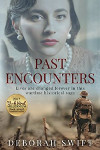
When the past isn’t in the past.
Publisher: (self-published)
Pages: 431
Type: Fiction
Age: Adult
ISBN: 978-1-499-56825-7
First Published: 30th June 2014
Date Reviewed: 22nd October 2014
Rating: 4.5/5
Rhoda finds her married life difficult and always has. Neither she nor Peter are particularly close, and when she discovers he’s been meeting another woman she decides to find out about his supposed affair. Rhoda herself is hiding something from Peter, an event that happened whilst he was in a prisoner of war camp, and just as Rhoda has never spoken of her time, neither has Peter spoken of war.
Past Encounters is an excellent novel that looks at the way secrets, events in the past, continue to affect the way the characters treat each other. The book is a multi-plot novel, of sorts, moving between two decades for the two main characters and including a brief sojourn into the life of another.
In writing Past Encounters, Blake has delved into WWII in a way that is different to many other writers. It may not neccersarily ‘read’ different – others have written about the war camps as have films – but there is a difference nonetheless.
As said, the majority of the book switches between Rhoda and Peter – Rhoda in the 1940s and 1950s, and Peter almost exclusively in the 1940s. Rhoda’s chapters are written in the first person, Peter’s in the third, and perhaps in part because of this, both points of view are equally compelling. In Rhoda’s case you are reading about her search for the truth and the event that changed her, in Peter’s you are finding out about war and why he may not have wanted to speak of it. What’s interesting here is that Blake spends much time telling you all of this yet shows at the end that it’s obviously not black and white. There is a hint – though only a hint – of unreliability, or, rather, the fact that it’s best to remember there are two sides to every story.
The characters aren’t particularly special; apart, perhaps, from Peter’s trials in war, you’re likely not going to remember them for themselves, however this is a point worth considering. It is often more what Rhoda and Peter represent, how they remind you to look at your own life from different perspectives, that is most important. They are two ordinary people living lives in ordinary situations (but for the war), and this makes the book shine.
Blake doesn’t hold back on her descriptions of war. She doesn’t describe everything in gory detail, but her word choice, her style of writing, says so much. You get the facts and you get the raw feelings. And sometimes, because she includes the happier moments and always reminds you of the thoughts of the regular people, even the soldiers, it is all the more compelling. Blake repeats details and talks of the mundane because that was the reality of the situation, and it keeps you reading. Never should you forget how war affected the other side and how most simply wanted to live their lives.
Yet this doesn’t mean that the book falls prey to that known situation wherein a reader prefers one plotline to another, as often occurs when a book switches back and forth. Yes, you may prefer one or the other, but you’ll likely enjoy reading both nonetheless and be happy to catch up. In Rhoda’s story there is longing, there is the change in character that is of course less ‘important’ than Peter’s changes but still important, and there is also the foray into film.
The book’s title owes a lot to the film, Brief Encounter, and it is the production of it that features in the story. The title sports many references therein – the literal past, the brief encounter during Brief Encounter and the way the filming affects Rhoda, the way words and small arguments can cause major changes. The film doesn’t take up a lot of the time, but it’s enough to give you a fair background of it, the working methods during war, the differences between people that remained during war, and so on. And then there is the way the filming clashes with Peter’s internment which may not speak for everyone’s experience but does show how people might have coped in such a situation.
There is that third narration, but it can’t really be discussed without spoiling the story, suffice to say it serves to show how chances taken at the right or wrong moment can have a major affect on everything else.
The sole element that stops the book taking the top spot is the text. There are batches of errors – proofreading and copy editing problems. The story and the book in general is so good it’s very possible to overlook the errors, but in terms of objectivity and the whole, it must be taken into account.
Past Encounters is masterful. It is compelling, and whilst diligently keeping to the specific topics at hand, it never becomes boring or falls into the trap of filler content. It is epic without requiring lots of action and changes, an epic about war without battles.
This book is wonderful.
I received this book for review from the author for Historical Fiction Virtual Book Tours.
Related Books

Philip Pullman – The Broken Bridge
Posted 15th August 2014
Category: Reviews Genres: 1990s, Angst, Commentary, Domestic, Drama, LGBT, Social, Spiritual
2 Comments

Who am I? Who are you? Do we care?
Publisher: Macmillan
Pages: 295
Type: Fiction
Age: Young Adult
ISBN: 978-0-330-39797-1
First Published: 1990
Date Reviewed: 14th August 2014
Rating: 4.5/5
Ginny’s not really sure whether or not she fits in. At sixteen, she’s happy in Wales, has a great relationship with her devoted father, and a fair few friends. But being one of only two black people in her town, she doesn’t feel quite… right. Okay, so she’s not completely black, unlike Andy, because her father is white, but when her skin colour is added to her artistic nature the question of who she is starts to become more prevalent. Yet suddenly this isn’t so important. Her father’s about to bring an unknown brother home. If he’s never told her she has a brother, what else is he hiding, and if she was wondering where she fit in before, where does this leave her now?
The Broken Bridge is a fantastic little novel that, although a YA book, has just as much if not more to offer the adult reader. I’ve read it three times now – as a child, as a teenager, and just yesterday, and each experience has been very different, but this last time had the most impact on me.
Perhaps it’s to do with the book’s age – as in all Pullman’s books, the content is not censored and real issues are confronted, and in the 90s when subjects such as homosexuality and racial diversity weren’t discussed quite so openly, and given that The Broken Bridge was written for teenagers, it is somewhat ahead of its time, or at least it feels as though it is. This is a major reason why I say it offers a lot to adult readers.
The story revolves around the theme of identity. Racial identity, familial identity, identity in the world in the long term. Pullman effectively pits one after the other, showing that everything is just as important – Ginny feeling happy in herself is important, but here’s her brother and her identity in this new set-up is just as important, and hey, look, here are a bunch of questions about her mother and where all her memories of her childhood stem from and what impact do these have on her?
There is the furthering of the theme beyond Ginny, and it touches on her brother, father, and in a rather compelling way her mother, too, but the main focus of course remains on Ginny as she makes mistakes, makes rash but good decisions, and works out who and what she is.
Pullman asks us to consider what makes a family and what is and isn’t ‘right’ in this context. He sets some difficult challenges for the reader – reunions that do not go the way you would expect them to and for their subject are very hard to read, relationships that are full of angst. He challenges the status quo almost to excess when you consider the book as a whole. But it’s a good excess. And, anyway, what is family and what is important? Almost everyone in the book lies somewhat or keeps the truth hidden, but Pullman does let go at the end, explaining everything. It’s particularly unsavoury but a good look at how people view independence differently, and how others can view dependence and routine as important.
And, somewhat obviously, the author takes time to look at racism. He shows how it isn’t always in your face, so to speak, how it can be quiet, how it can be worse depending on the situation, and how sometimes it can be part of a bigger burst of anger.
Lastly, if you are an artist or lover of art, of any kind – not just painting or drawing – you will love the detailing in this book. Pullman doesn’t just inform you about the great artists and about good paintings, he brings to mind the utter pleasure and passion that comes with working out what another is saying through their art, and the sparks, the love, that creators and enthusiasts feel.
The Broken Bridge is one you don’t want to miss. My copy, at least, looks to be very much a children’s book, and as Pullman’s writing is at times quite literary and of that earlier decade, you would be forgiven for starting it and wondering if it’s going to be a satisfying read. But it is, so much.
Mend this bridge – read this book.
Related Books


Margaret Mitchell – Gone With The Wind
Posted 9th September 2013
Category: Reviews Genres: 1930s, Domestic, Drama, Historical, Political, Romance, Social
9 Comments

Beware your attitude.
Publisher: N/A
Pages: N/A
Type: Fiction
Age: Adult
ISBN: N/A
First Published: 1936
Date Reviewed: 28th August 2013
Rating: 5/5
Scarlett O’Hara is vain, ignorant and arrogant, and is proud to be so. She steals other girls’ sweethearts and does whatever she pleases. Her rebellious nature suits her very much – until the north wages war against the slave-owning south. Suddenly she finds herself looking after people she does not like and being forced into roles she couldn’t care less about. She needs money, she needs food, but she most certainly does not need Rhett, the man in whom she met her match.
Gone With The Wind is the epic story of the early life of a woman ahead of her time, against the backdrop of the American Civil War. Comprising a great many pages, the book is just as much about society as it is Scarlett, and it provides information about the period in general.
It’s probably best to talk of Scarlett first, before anything else. Scarlett is selfish and always out for money, but it is difficult to say she is altogether bad. Going against the grain, she is a confident and intelligent woman (at least in some respects), and takes what she wants with little thought for others. She is hampered by her society’s views about women, and this, to the modern reader (and indeed likely Mitchell’s contemporaries, too), makes her easy to relate to, in that ahead-of-her-time way. Not so good is the way she views herself, beauty over everything, and how she steals the attention of men from every other girl. Of course there is a lot to be said about the fact the men could have been more faithful to their women, but there are nevertheless times when Scarlett manipulates a situation to the extent that the man can do nothing about it.
Undoubtedly Scarlett’s biggest issue is her lack of understanding for others. Intelligent in business matters, she is nevertheless ignorant when it comes to people’s feelings. She loves a bookish, academic man, but does not understand his nature and sees nothing foreboding in this. Even Rhett Butler, the hero, is a mystery to her.
As for Rhett, he is selfish and manipulative, too, but he possesses an element Scarlett does not that leads him to care when others are genuinely nice to him. And unlike Scarlett he learns from his mistakes. The two have near explosive chemistry, and for this it is a pity they do not share more episodes together than they do. The relationship provides much needed relief, via its modernity, to the stuffy historical society.
Mitchell’s writing of Scarlett enables the reader to see the bad side of society, and how people would act towards someone who didn’t fit the accepted mould. What is interesting here, however, is that ultimately dignity and goodness prevails. Yes, it’s bad that society washes its hands of Scarlett as Scarlett, for all her selfishness, does have a very hard time during the war and does offer to help others, but Mitchell shows that if her heroine would just be nice when she ought, she would be accepted. And she wouldn’t necessarily have to change her nature to do it. She would be accepted back into the fold – society values honesty and loyalty beyond all else – and whilst it may seem silly that it preferred ill health to ill-gotten wealth, the community was strong and helped one another. The reader can understand Scarlett’s desire for money, but it isn’t long before the reader equally understands society’s feelings towards her, too.
Inevitably one cannot think of the community without bringing Melanie into the picture. Melanie is the complete opposite of Scarlett. Quiet, supposedly and perhaps truly oblivious, but strong at heart, Melanie wins support that Scarlett can not understand. The good thing about Melanie is that the reader can always be assured that there is more than meets the eye – which is particularly interesting as Mitchell never really lets you into Melanie’s head.
A lot of the reason why Gone With The Wind is so long is due to the amount of history included in it. Truly there is a great deal and it may prove frustrating to the reader who is more interested in the characters. Not only does Mitchell place her characters in the south at the time of war, whole pages are filled with descriptions of what was going on. In a way it’s necessary, as Scarlett is not interested in the war and therefore you learn little about it when Mitchell focuses on her. The only issue is that the detailing slows the narrative down substantially.
Yet the information provided about the effects of war is worth its weight in gold. As the book is told from the southern perspective, all talk of evil slave ownership is confined to the northerners. This enables Mitchell to concentrate on those southerners we view as in the wrong. Mitchell’s characters are, in the main, good to their slaves, and Mitchell shows how true loyalty and affection between slaves and owners could arise. Of course this is idealistic and there were many more families that were cruel, but the light that shines on this other side of the story is somewhat revelatory, and it is always important to consider the other side.
And consider it Mitchell does. The author shows how many couldn’t understand the ‘problem’ the north had with slavery, and whilst the southern characters do see their slaves as childlike, there is a caring atmosphere surrounding them. In Mitchell’s story, house slaves are part of the family, the field hands are to be looked after.
It’s poignant that Mitchell explores the thoughts of the north. They wanted abolition, but when it comes down to it, the northern women Scarlett meets are incredibly prejudice of the ‘darkies’ and would never consider hiring them due to a lack of trust. This is contrasted by Scarlett’s stating that the darkies were good at their old jobs. What Mitchell infers is the lack of understanding both sides had of each other. And she puts the north under scrutiny, showing how they were all for blacks voting and setting them free – in many ways because they wanted to humiliate the southerners. It is interesting that despite abolition no true respect occurs and the darkies are manipulated still, if in a different way.
But perhaps the most interesting aspect about the book, from a historical perspective, is the exploration of the views of the slaves for one another. Mitchell demonstrates the hierarchy that existed between people who were, at heart, in the same situation. She shows how snobbishness grew in those who worked in houses towards the ‘field-niggers’. Her narrative of the field hands being those who joined the northerners supports the constant theme of loyalty amongst the house slaves. For example Scarlett’s servants remain with her, free but technically shunning freedom. They even show contempt for freed slaves, seeing themselves as more respectable and intelligent. And, to further comment on the north’s lack of care for the slaves, many freed people returned to their owners.
Now this is interesting, because the context supports the idea that uneducated and poor, a slave would rather be looked after and owned than have to learn to fend for themselves. But what it shines a light on is the way the northerners let people go without really thinking about them. Because whilst those first Africans who landed in America knew another way of life, working for white masters was all these newer generations knew. Of course it inevitably transpires that those who owned slaves look like the ‘good guys’ in this book, but in a way it is hard not to see Mitchell’s point that abolition could have been conducted in a far better manner.
Mitchell puts her black characters in a fine light. In fact the only negativity is stereotypical of the role no matter the person’s colour, for example Scarlett’s Mammy’s strictness towards children. Talking of Mammy, the reader should be aware that dialogue is written in accents that, due to issues in transliterating, can sometimes be hard to decipher.
So to the war. Due to Scarlett’s choice to remain ignorant, a lot is glossed over, even if Mitchell does spend sections telling you what was happening ‘abroad’ at the time. The book is both rose-tinted and horrific, and Mitchell has no qualms in discussing uncomfortable subjects.
Gone With The Wind is a book that deals with many themes, least not the ignorance and misunderstanding that accompany vanity and selfishness. It is often poignant, often humorous, and certainly very long. And as much as it could be said that it could have been shorter, it can’t be said that Mitchell was careless – there is real reasoning behind the length of the text, and Mitchell wants her reader educated.
Gone With The Wind presents a heroine who is hard to like but is far from being an anti-heroine. It presents a woman who is aptly detailed and criticised by her author when required, and lauded when expected. Its classic nature whilst being historical fiction in itself creates ample opportunity for discussion, as you’re getting the 1936 perspective of the 1860s war. And its lessons about love and the self are eternal.
Scarlett O’Hara is as memorable as they say, and Mitchell’s work a masterpiece.
Related Books
None yet
F Scott Fitzgerald – The Great Gatsby
Posted 29th April 2013
Category: Reviews Genres: 1920s, Commentary, Domestic, Drama, Social
13 Comments
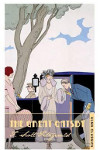
The okay Gatsby. The great writer.
Publisher: N/A (I read the version by Alma Books)
Pages: N/A
Type: Fiction
Age: Adult
ISBN: N/A
First Published: 1925
Date Reviewed: 17th April 2013
Rating: 4.5/5
When Nick Carraway moves home, he finds his neighbour to be the host of many all-night parties. Having met his (Nick’s) cousin and her friend, he is encouraged to join the friend, Jordan, in attending one of them, and finally meets his allusive neighbour. What he doesn’t know is that his new acquaintances are familiar with each other.
The Great Gatsby is a novel of money and aiming high for innocent reasons. It’s relatively short with enough characters to get the messages across but not too many that you lose track of them, and at once both lives up to its reputation and falls short of it.
The story itself is basic – written before, written since, without much to recommend it. Gatsby himself isn’t as great as described, but then that could be the point, and therefore the statement at the beginning of this review refers primarily to the book as a whole. It is therefore in the writing that the success of the book can be found. Fitzgerald’s writing style is literary, political, satirical, and spot on for the time. Indeed so woven into the era his book is, it can seem dated today in ways that many classics aren’t – references to political events that have not stood the test of time (in other words are not particularly well known today) inevitably mean that whilst the sentiment may be obvious, in order to fully appreciate what Fitzgerald is saying some research may need to be conducted. For this reason a version of the novel with notes included is recommended.
Whilst Fitzgerald was reported to be nonchalant about the title of the book, the name undoubtedly fits well in both a potentially sarcastic manner and in the feelings of the crowds of people who supposedly know Gatsby himself. Gatsby is both a well-developed character in his own right, and a representative of all those who try their best to make something of themselves for whatever reason.
None of the characters are particularly likeable except, perhaps, Nick, who is simply a bystander who becomes exploited whilst trying to do the right thing. Here there are innocent aims, together with snobbery, material wealth above all else, and a distinct lack of care for anyone.
Fitzgerald portrays the romances in an intriguing way. He uses the word ‘love’ many times, but whilst reading it may be hard for the reader not to wonder where this referenced love is. Certainly there is love of money, as a particularly poignant line imparts, but of romantic love there is little. If Nick is to be believed, then the love was mostly in the past, and perhaps it’s the money itself that causes the physical separations, in terms of the space between two people on a sofa, for example. Yet there is an interesting contrast in the book between those who separated because of money, and those who have come together despite it, even if those who transcend money do not truly transcend it. And the subtext that money makes the world go round – money causes separation, which causes poor choices, which causes situational conflicts between characters, which causes a look to someone of less money – is ironic and exploited to great effect.
The story is average – it is the message that is to be taken away; the warnings for those who dream without considering the reality, the alerts to the fact that some people are not genuine or will move on if their pretentious needs are not met. These messages are presented in books often, so it is Fitzgerald’s writing that makes the book one of those you ought to read.
On many levels it’s the fact that it’s anything but great that makes The Great Gatsby worthy of your time.
Related Books


