




Nancy Bilyeau – The Chalice
Posted 27th February 2013
Category: Reviews Genres: 2010s, Drama, Historical, Paranormal, Political, Romance, Social, Theological
6 Comments

An attempt to end the Reformation.
Publisher: Orion Books
Pages: 427
Type: Fiction
Age: Adult
ISBN: 978-1-409-13309-4
First Published: 28th February 2013
Date Reviewed: 26th February 2013
Rating: 4/5
Joanna Stafford, ex-novice at the dissolved Dartford priory, is trying to get used to the secular life. But when her cousin visits the town and it becomes apparent that his wife wishes to continue the proceedings of the prophecy Joanna heard from Elizabeth Barton1, the novice has a choice to make. Does she refuse, and live in danger of those who wish Protestantism gone, or does she agree to work towards the deposition of the formidable Henry VIII?
The Chalice is a cleverly written novel that looks at the effects of the dissolution on those it impacted the most, and provides a semi-plausible and well-implemented reasoning for much of the happenings during the time between Jane Seymour and Anne of Cleves.
Considering the success of the book historically, it makes sense to discuss what does not work first. Whilst the secondary and “background” characters are factual, the main characters have been created by Bilyeau to varying effect. Some are mostly there to provide knowledge and opinions of the period – for example, although Brother Edmund is of importance to Joanna, his value to the reader is surely as a source of social information. Bilyeau’s creations may not always fit into the history entirely but their stories are woven into the factual events enough; it is less a case of pausing for thought, more a case of pausing for wonderment.
However Joanna herself is a complex and difficult character. She changes her mind constantly and although one can understand her hesitation and continuous worry there is something not quite right about it. One day she will adamantly be against something, the next very much for it, and she continually backs out when she’s already come too far.
Indeed whilst Joanna is a much-needed representation of the stricken Sister, she is perhaps too much an example of the stereotypical weak woman. Seeing that Joanna is supposedly well-read and strong in other ways it does cause confusion. An otherwise wise woman who suddenly decides to reveal her background whilst undercover is incomprehensible. She doesn’t think about how her actions will ruin careful planning and makes for an incredibly bad agent. Strange also is Joanna’s dislike of admirers when she constantly leads them on.
But however odd these factors are, they do not mean that Joanna is a bad character overall. As suggested she is a good source for learning about the affects of the Reformation and has been placed into the factual history with care.
All this usage of history is what sets Bilyeau’s book on a pedestal. The author never lets her own ideas come in the way of truth, and instead of pulling the reader away from it she finds the gaps where she can insert her characters so that they don’t disrupt. Bilyeau will take a snippet, for example the exact way an ambassador discovered information (which historians do not know), and pitch her characters as the sources. It is for this reason that even the most vigilant of readers, those on the lookout for liberties taken, should be able to relax. Bilyeau may not be the only author to value accuracy, but her method is rather unique and completely satisfying. She even supplies a reason for Henry VIII’s impotence in his later life – unnecessary really, but still absolutely gripping.
Whilst the premise rests on mystery and spying, the book does not move with any speed; it drifts along comfortably, taking its time. In the hands of another author this might have been a negative aspect, but Bilyeau’s focus on social history and detailing the setting mean that whilst you want to know about the intrigue, you are happy just to wait. And you can rest safe in the knowledge that Bilyeau will reveal all.
The Chalice is the book for those who love Tudor nobles but are bored with life at court (your average Tudor noble would have welcomed this book). It may be repetitive at times (everyone always says “no, no, no!”) but on the whole it is a very, very good book. Whilst officially a sequel it can be read by itself as the references to The Crown are detailed enough, and perhaps most importantly it gives a much needed voice to the victims of the changed society.
A superior novel of the dissolution and attempted restoration, The Chalice will delight readers of historical, spy, and perhaps even Christian fiction.
1 The nun, or “Holy Maid” of Kent. Barton prophesied the death of Henry VIII if he married Anne Boleyn, and was killed for it.
I received this book for review from Historical Fiction Virtual Books Tours.
Related Books


Speaking to Nancy Bilyeau about the Joanna Stafford trilogy, The Blue, and Dreamland (spoilers included)
Charlie Place and Nancy Bilyeau discuss the lifestyle of Dissolution-era nuns, using a website’s ‘contact me’ form to great success, there being more relics than there were items, using your family’s name in your work, and the grand amusement parks and luxury hotels of New York’s past.
If you’re unable to use the media player above, this page has various other options for listening.
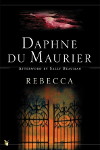
Daphne du Maurier – Rebecca
Posted 7th May 2012
Category: Reviews Genres: 1930s, Crime, Domestic, Drama, Mystery, Romance
Comments Off on Daphne du Maurier – Rebecca
You have never known a writer as uniquely talented as this.
Publisher: Virago Modern Classics (Virago)
Pages: 428
Type: Fiction
Age: Adult
ISBN: 978-1-84408-038-0
First Published: 1938
Date Reviewed: 27th April 2012
Rating: 4.5/5
The heroine meets Maxim de Winter while she is training to be a lady’s companion under the tutorage of an American woman. Bored of her life, and fed up with the snobbery possessed by Mrs Van Hopper, when Maxim makes a surprise proposal of marriage, the heroine accepts. Maxim’s first wife has died, but that does not worry her; however on arriving at Manderley, the de Winter’s home, she finds that Rebecca is very much alive in the constant references and laments of staff and those who knew her. And from being happy, the heroine sinks into a place where she feels as though this haunting atmosphere will always be about her. What does it matter how Maxim tells her it’s fine, when everyone else is living in the past?
Rebecca, the novel with the unnamed heroine, is rather individual. The basic plot itself is far from incredible as it has been done before, indeed comparisons could be made with Jane Eyre in many respects, so what makes the novel spellbinding is Du Maurier herself. The writing in Rebecca – the structure of the book, the characterisation, and the detailing – is exceptional. The words themselves may be usual enough, and it might be a difficult task to identify any short passage of the book as Du Maurier’s without knowing beforehand, but the overall presentation is completely unique. No other author has ever brought such individuality to the table as Du Maurier does.
I thought how little we know about the feelings of old people… Did she know that Beatrice was yawning and glancing at her watch? Did she guess that we had come to visit her because we felt it right, it was a duty, so that when she got home afterwards Beatrice would be able to say, “Well that clears my conscience for three months”?
The characters in Rebecca are rather abrupt, almost in your face. There is no added lingering emotion, and Du Maurier never starts from the shallows – she throws you in the deep end. There is no time for the reader to become acquainted slowly with Max, for example – you either become acquainted instantly or you shy away.
And no matter how far into the book you are, these characters, despite being personalities confined to fictional history and therefore of a different nature to readers further on in the world’s years, continue to shock. They are the sorts that waste no time, don’t bother with pleasantries, and have no time for dreamers.
Maxim is, by himself, a fantastic creation. He never shows emotion whilst at the same time practically oozing it. He is completely obvious whilst being totally obscure. Yet he is utterly likeable for the way he has been written. Rather like Jane Eyre’s Mr Rochester, he defies the usual limitations of books, and comes out as one of the best heroes in literature in terms of being memorable.
I wanted to go back again, to recapture the moment that had gone, and then it came to me that if we did it would not be the same, even the sun would be changed in the sky, casting another shadow, and the peasant girl would trudge past us along the road in a different way, not waving this time, perhaps not even seeing us.
The heroine, who can never be named, is the opposite. She is emotional, she is an analyst, and she is a compulsive dreamer. A great deal of the book is taken up by her daydreams and worrying, her “what if”, her dissection of her relationship, her craving to relieve the past, and her function in a home wherein the dead wife is still the queen. Her role at Manderley she doesn’t actually realise because she spends so much time daydreaming. That Du Maurier was a daydreamer herself is obvious. She writes so knowingly, expressing how easy it can be to look to a future that may or may not be, how easy it is to think over and over of the past. Her writing here is most universal and eternal, and Du Maurier aptly portrays the plight of a woman who feels she cannot bring up in conversation the woman who came before her.
Not surprisingly, the majority of the book’s themes arise from, and orbit around, the heroine’s story and her development. The reader can see in her thoughts where she is thinking the wrong things, how she has come to believe that she is secondary to Rebecca despite never asking if she is so, and how she has come to be confused as to who she should be. From being a little interested, the heroine becomes obsessed by the idea of Rebecca, so much so that the amount of her (artificial) memories of Rebecca eclipse those of any other character, perhaps of all the other characters combined. She is the reason the reader can sit back and think that yes, this book does indeed deserve to be called after a dead and never fully introduced person, because the heroine always puts Rebecca before herself.
Because that’s the nub of the book, one of the elements of it that leaves you amazed. There is this sense throughout that somehow, some when, you as the reader are going to meet Rebecca. You are going to be able to see her away from biased thoughts, and hear her speak for herself. But Rebecca has gone, and Du Maurier never suggests otherwise. Yet so crafty is the author, so clever are her dialogues and scenes, that just like the heroine, you can never fully believe that Rebecca is dead. The phrase “Rebecca has won” crosses over into reality. The fictional never-actually-there woman does win, because despite never being fully realised she is likely to be the “character” that remains in your mind. And the fact that we can only call the heroine “the heroine” is surely further testament to this.
Perhaps the most apparent quality to the book is the way that the reader is obliged to read it. The pages don’t often beg to be turned, in fact for the most part, if not all, of the book, there is no pressing reason to finish it quickly. Each section is long, and the climax itself is drawn out, but the pace is never fast. In any other situation, that would be a bad thing. The genius of the narrative lies in the way that once you do pick it up it’s incredibly easy to get carried away and lose track of time. Chapters go by without notice. Du Maurier’s writing is so effortless to read – whilst being far from dull – that although she favours descriptions often, it’s difficult to really comprehend that that’s the case until you have moved on to dialogue. She employs an intriguing balance, while her descriptions are detailed and run on for pages at a time, the dialogue is edited to perfection, there are no superfluous words and every response to a question has a ton of subtext and meaning to it. A simple seeming “yes” is never that, but instead holds in three letters an entire story all of its own. The book is a glorious example of showing rather than telling.
Regarding the detailed descriptions, the way Du Maurier includes so much of the goings on in the day is refreshing. The mundane she makes interesting and of those days during which she chooses to spend hours with the characters, you feel as though you have indeed spent the entire day with them. The mixture of these detailed days and the ones she leaves in the dark make for a shock when you discover, for example, that far from being a few months down the line, the characters are still leaving in the same week.
Just as Rebecca herself is stunningly beautiful, so is the book that Du Maurier has written. The plot may be straightforward given the heroine’s analysing nature that takes time, and Du Maurier’s almost carefree attitude to events that other authors would turn into thrillers, but there is a splendour to the complete creation that defies any notion of the glory bestowed upon other stories. The heroine may be alive and Rebecca dead, the heroine may have gained our admiration whilst Rebecca is in no position to speak, but it is Rebecca we will remember evermore. And so we should, as it is a book that surely heralds an addition to our lists of eternal classics.
Related Books


Charles Dickens – Great Expectations
Posted 6th April 2012
Category: Reviews Genres: 1860s, Drama, Social
1 Comment

Because the grass is always greener on the other side, isn’t it?
Publisher: N/A (but I’d wager Vintage’s a good one)
Pages: N/A
Type: Fiction
Age: Adult
ISBN: N/A (Vintage’s is 978-0-099-51157-1)
First Published: 1860-1861
Date Reviewed: 2nd April 2012
Rating: 4/5
Pip, brought up in a relatively poor family, meets a convict and, soon after, a rich woman who was jilted at the altar and has ever since lived in the moment she found out the wedding was off, one shoe on one shoe off mouldy bridal cake and all. In meeting the crazy Miss Havisham, Pip first turns his thoughts to the idea of becoming a gentleman, and when he is told of a fortune due to be his, he leaves for London, confident of Miss Havisham’s kindness and her daughter, Estella’s, hand in marriage. Pip knows he’s not to speak to his patron of the fortune bestowed on him, and he complies, but why should he not thank Miss Havisham?
There is little doubt that while there are many problems with this book – least not the reams of unnecessary writing – Dickens’s story of a self-righteous misunderstanding boy is universally relevant and a well-explained example of why such things need to be reassessed by anyone coming close to behaving like any one of the characters.
The main plot, of Pip’s physical, mental, and emotional journey from blacksmith’s apprentice to landed gentleman incorporates a vast number of themes in and of itself, and be it that the “visual” focus that commands the attention is the literal happenings, it is the subtext that drives the reader on. Pip’s continual waiting, doing very little for the several years that fall between his being propelled to higher society and the arrival of his benefactor to his notice, is cause for thought. Pip doesn’t do anything with his money because he is waiting for the notice of who his benefactor is, and it would also be okay to assume that there was a thought in his mind that the very well off do not work, at least not in his day. That he gives money to a friend is commendable but it’s rather interesting that by the end of the book, the situation that Pip is in would have been eased somewhat if he had applied himself when he had been able to do so. Dickens shows that one should make the best of opportunities, realise them to the “max”, but never forget your friends because you never know when you might need them. Pip is rather like the prodigal son of the Gospel, spending all his money. And aren’t Joe and Biddy, those whom Pip scorns, the ultimate of unconditional love while the girl he loves is the complete opposite? It takes the twist in the story for Pip to start changing.
Change is rather necessary. While the characters in Great Expectations serve purposes beyond their entertainment value, such as Miss Havisham, though eccentric, illustrates how revenge gone too far can have bitter consequences, it is surely only the very forgiving reader who would be able to say they liked more than half of them. Indeed while the split is equal, the less palatable people have a tendency to accost more memories in the reader than the compassionate ones, such is the variety in their personalities and the way they demonstrate their disdain. So the development of Pip, that from straddling both sides of the fence he moves more fully into a single territory, is a most welcome aspect of the book. Not only does Pip’s development give cause for personal celebration, it also allows the reader to see how brilliant Dickens is with characterisation. The plot may be very good, but the book is character driven.
Yet while Dickens may have a basic sub textual conclusion to make, he doesn’t condemn either sort of life. He has a laugh at many of his characters, but while he may appear to find London unsavoury, the way in which Pip does not realise the potential in his life shows that a good life can be found in either.
The reader looking for the definitive will find that there were two endings written for the book. The original ending is well worth finding because of the vast difference in direction that is portrayed.
Structure is where one must call in the word “mud”. The word “mud” being called in because it is used so often in the best example of where Dickens goes wrong. The word “mud” being used a third time and a repetitive sentence demonstrating this further – if not already apparent, the issue here is wordiness. Dickens drones on terribly at times. While some of the narrative is quick, other parts move as slowly as Pip’s boat does and only then because Dickens takes so long in describing the water that the people in the boat likely took to watching the Thames water evaporate while waiting for him to get a move on. Maybe all that mud was apparent because Dickens had taken so long in the first place. The wordiness is understandable given that Great Expectations originally appeared in a magazine and had a word count, but that doesn’t mean it is easy to overlook.
Sometimes Dickens is predictable, aided of course by the stereotypical elements found in Victorian literature, but at others he is completely surprising. Of course a lot of the success of the latter, and the acknowledgement of the former, will likely rely on whether or not the reader is familiar with the stereotypes, knew the plot beforehand, or knows nothing at all.
Dickens is credited as being both a comedian and a gothic writer of depressing words, but although the decision of which book to read may rest on the mood of the audience, the blend of sadness and hilarity in Great Expectations make it a suitable choice for both the seasoned fan and the novice. There are some awful moments in the book but take the chapter devoted to the Pocket family and see the satirical humour on high society and lesser means explode in a wonder of genius and perceptiveness.
Great Expectations may put off potential admirers by its verbosity and often-dull writing, but those cases are a literal loss for words. Despite the problems and slow moments, the book stands out as one to be remembered and if it has been obliterated by education then at least it is easy to see why teachers have chosen it.
And it doesn’t hurt if Aged P’s replies to his son mirror your own grandfather’s.
Related Books


Asko Sahlberg – The Brothers
Posted 6th March 2012
Category: Reviews Genres: 2010s, Angst, Domestic, Drama, Historical, Political, Translation
1 Comment

A lot of surprises and shocks in a very short amount of time.
Publisher: Peirene Press
Pages: 116
Type: Fiction
Age: Adult
ISBN: 978-0-9562840-6-8
First Published: 2010 in Finnish; 2012 in English
Date Reviewed: 2nd March 2012
Rating: 5/5
Original language: Finnish
Original title: He (They)
Translated by: Emily and Fleur Jeremiah
Henrik and Erik are back from the war between Sweden and Russia, where they were fighting on opposite sides. But this isn’t the only issue between them as they arrive home at different times. There has been animosity between them, and between Henrik and his family since childhood, and yet there is something else lingering in the darkness, ready to pounce.
Once again Peirene Press has delivered a stunning novella from the minds of continental Europe. However where previous publications have brought a few particular issues to the forefront of the mind, it is more the structure of this book that stands out. Entirely different in every way, it really does feel as though you are being introduced to Sahlberg, and perhaps Finnish writing in general, in a way that suggests that like the Nordic countries’ most internationally recognised musicians, their writings are in a wonderful realm all of their own.
What is perhaps most striking about the book is the way that it has been told and structured. The sectioning off of the story into short pieces, into the different points of view of the several characters, reads like a script from theatre. While Sahlberg (for although the book has been translated one can assume that Emily and Fleur Jeremiah have been as accurate as possible) does not break the fourth wall, the way that his characters tend to speak in the present tense, as a monologue, comes very close to it. And the very way in which each monologue begins is reminiscent of the strong introductions from the sorts of productions that critics of drama herald as magnificent. One cannot help but imagine how the book might be performed on stage, the monologues being strong enough in themselves that a group could simply sit on the stage with a spotlight to highlight the one speaking and the effect would be powerful enough to warrant use of props or set design as absolutely unnecessary.
The monologues are of varying lengths, indeed some are so short you would imagine that the structure would render those characters minor, and yet the separate elements of both the differing points of view offered, and the inclusion of the “quieter” characters in the speeches of others, means that almost every character is given full description and development by the end of the book. Ironically, it could be said that The Brothers manages to make a better attempt at fleshing out characters than many a longer and more linear novel. Here it is impossible not to imagine a director in future seeing it as perfect for the stage, Peirene Press’s description of it as a Shakespearean drama is surely most apt. And it would be noteworthy to include the fact that while you read each person’s point of view, the story never repeats old ground. The book continues to flow forward (accept for the odd flashback), as though the characters had got together beforehand to decide who would narrate each scene.
Moving on to the content itself, there is an interesting thing in the way that Henrik is the person everybody hates, yet he is the only one who can see how the house is falling apart. The way he speaks of it suggests that it is more than simply the house. And indeed there are tensions which it seems no one picks up on besides the individual themselves. Everyone hides everything from everyone else.
Should everyone direct their thoughts to Henrik? There are many times when Sahlberg implies that the reader ought to look at other people more critically, and remember that while Henrik is disliked widely, there are biases at work.
For such a short book, there really are a lot of twists, and you may find yourself wanting to adopt Anna’s period-centric response of putting hands to face in shock. A couple of the twists are more or less obvious from the outset, but it’s almost as if Sahlberg has made them obvious as a sort of compensation for the utter surprise that comes with the out-of-the-blue moments. The family is both closer and more estranged than you think. And the manifestation of their pain can be difficult to read.
Hate and love are two sides of the same coin, and where one party may think they are providing from one side, the other party may think the reverse is true. Such is the case often here. And those who have caused us pain may actually be the ones wanting a relationship where others have given up. Sahlberg’s story may be historical, but there is a great deal that is relevant on an eternal level. Intriguing, mesmerising, upsetting in so many ways, and always surprising, The Brothers proves that length and time are not necessary ingredients in order to take a person on an immense journey.
I received this book for review from Peirene Press.
Related Books

Charlotte Brontë – Jane Eyre
Posted 8th October 2010
Category: Reviews Genres: 1840s, Drama, Mystery, Romance
3 Comments
When I opened Jane Eyre I don’t know what I expected, Austen, perhaps – humour, entertainment, but an all too familiar tale of an emboldened young woman making her way in a society that was not her own. I didn’t expect what I actually found.
Publisher: (Numerous, but I’d wager Vintage would be a good one)
Pages: N/A
Type: Fiction
Age: Adult
ISBN: (Vintage’s is 978-0-099-51112-0)
First Published: 1847
Date Reviewed: 1st October 2010
Rating: 5/5
Not long ago I was in the bookshop buying a copy of Pride And Prejudice for my mother (who, I lament, has still not read it). The assistant said it was a great book but then proceeded to recount the glories of the Brontës. I listened in earnest as I intended to read Charlotte Brontë’s work next. The sisters were darker, he said, Austen was too light humoured. He asked his colleague, who was browsing the shelves on this mid-week slow day, for her opinion on who was better. Austen, she said. My assistant said I should read Brontë. How right he was in his pronunciations.
Now one could say that I have missed the boat by over a hundred years in writing this review, but, and this is something I believe I touched on in my review of Pride And Prejudice, there is the idea that it’s ok to review a classic. It is important, I feel, that each generation brings to the book’s reputation their own reflections on it as surely this routine will enable those of a particular generation to decipher how this book might appeal to them. Without modern day discussion, or indeed simply educational study, all a potential reader has to go on is ancient reviews written by people of a different time; it is by updating opinion that future readers will see for themselves how the book might be accepted by them in a way that is appropriate for their own time.
I suppose I should stop there with my views on classical literature and turn specifically to the subject at hand, so here is a basic plot summary:
When Jane Eyre was a child she had no one, at least no one who gave her the love and caring attention she needed. Growing up in her aunt’s house she was bullied and treated with disdain despite her obedient ways. Sent to a boarding school Jane later flourished, but assuming the role of a teacher at the same school could only hold her interest for a short time. In seeking further employment, Jane alighted at Thornfield Hall. Mr Rochester, her employer, is a peculiar one – cryptic, seemingly forgetful, impulsive, and secretive. But how can he demand her full attention when the house, beautiful though it is, appears to be haunted by secrets?
Jane Eyre is a story that, for the most part, is ever moving and shifting between genres. It is so clear in its sections that one can point out the different “acts” with little difficulty. And Charlotte (as there were three Brontës I will refer to the eldest as such) doesn’t stick to one or two themes either, the book contains a plethora, and their subjects are such that some are just as relevant in their original sense today.
The story is told as a memoir, directly to the audience. In the first person, for Jane hasn’t written a diary, she addresses the reader in an interactive way, asking them questions and for their opinion, as well as accurately guessing what they might be wanting to know. Be sure that whatever you are thinking, Charlotte has realised and will inform you of accordingly. Many a time I believed I wouldn’t get an answer to my query and then not only did Charlotte bring it to the fore, she had Jane speak to me in person.
A new chapter in a novel is something like a new scene in a play; and when I draw up the curtain this time, reader, you must fancy you see a room in the George Inn at Millcote, with such large figured papering on the walls as inn rooms have; such a carpet, such furniture, such ornaments on the mantelpiece, such prints, including a portrait of George the Third, and another of the Prince of Wales, and a representation of the death of Wolfe. All this is visible to you by the light of an oil lamp hanging from the ceiling, and by that of an excellent fire, near which I sit in my cloak and bonnet; my muff and umbrella lie on the table, and I am warming away the numbness and chill contracted by sixteen hours’ exposure to the rawness of an October day: I left Lowton at four o’clock a.m., and the Millcote town clock is now just striking eight.
A comparison I will make now with Jane Austen. Although I love Austen’s work it cannot be denied that she has a tendency to go into far too much detail than is required, forming incredibly long sentences wherein one can easily become lost. There is no such worry in Charlotte’s writing. Except perhaps during a specific section, which I will come to in a minute, Charlotte never pauses to provide superfluous description. The story, as said before, is ever moving. Charlotte knows her reader, she knows that (at least in her time) they are well versed in her world, for it is a real one, and that they don’t need to read about it apart from the descriptions of the made-up situation. I would say that it is quite possible that this style of writing is what enables Charlotte to bring in so many different elements of story to the book because she doesn’t have to worry about spending time – and pages, thus not becoming long-winded – on description. If you require definite evidence of Charlotte’s quest to remove unnecessary information, you only need look several pages in where Jane says that she is leaving out eight years of life from her account because they aren’t interesting enough to speak of.
Every setting in the book is beautifully lamented upon and a pleasure to create in memory and imagination. Though the book may begin shrouded in grey, Charlotte later moves it into hues of green, yellow, and white. She uses time of day wisely, contriving with the weather to create her own version of pathetic fallacy.
There was just one area that I found disappointing, the part where Jane comes into certain social arrangements in a village. I wished fervently that it wouldn’t be a cliché, that it would be different – but it wasn’t. I do not understand how someone so brilliant and able a storyteller could fall to such boring and coincidental devices. I failed to see, for that space of time, the genius reported by Virginia Woolf – a quotation displayed in glory on the back cover of my copy of the book.
The cook hung over her crucibles in a frame of mind and body threatening spontaneous combustion.
The characters are first-class. Although, where classic literature is concerned, Austen’s Darcy may be more famous, of more note is surely Charlotte’s Edward Rochester. Rochester is a fine creation; funny, sarcastic, and very much a speedy speaker; few were the times when I could imagine him speaking any slower than quickly. And it is in part because of his backtracking and contradictions of his words that he is so full of colour – you may not find out all that much about his interests but it is clear that here is a well-rounded person, no matter how gloomy he may aspire to be at times. Several of the quotations I made note of for their humour come from his dialogue; as an example, his supposing that you might not think of hating someone you already despise. With these in mind I would like to reference a scene that particularly stood out for me, that of the gypsy’s visit to Thornfield Hall. Make no mistake, it goes on for several pages but it is here that Charlotte first demonstrates true comedic genius.
Jane Eyre herself is just as fantastic a character, but one can overlook her qualities sometimes due to the fact that she is the eternal focus, being the narrator. She is as appealing and relevant today as a character newly penned in the 21st Century.
The writing is superb. So differently to Austen, Charlotte writes in a way that is very near to how we write today, save for perhaps her fondness for colons and semi colons, which she includes as if she earned a pound for each addition. Because of the style there is no need to study the text at all in order to make out her meaning, and so in style at least the book remains an easy read. However I would like to point out that there is a substantial amount of French used in the book. Charlotte has chosen her words well and included in most sentences hints as to the overall meaning, as long as you have a bare basic knowledge you should be able to get the gist. My own GCSE education from years ago sufficed.
The love story is perfect, and it is during the scenes between the anguish-ridden couple that dialogue takes over, as does of course interesting conversation (think of the character descriptions provided) and, because the dialogue is generally balanced between the two these are the scenes that flow quickly. The only time you really realise just how long the book is is once you get to the end of one of these dialogues and turn the page to see line upon line of description in preparation for the next sequence.
One of the ways in which the book amazes me is the ending, and looking back on it I can see how Charlotte was not making it into the kind of scene you might have expected and would’ve expected had it been written by someone else. Everything points to her being a person open to modern ideas. That doesn’t mean she is perfect, she was of course a product of her society and so some issues in the book you have to read remembering that, but she was a forward thinker and far away from being narrow-minded, by both the standards of her time and now.
Charlotte Brontë is a master storyteller and although I’m yet to read her other work I have a feeling this will remain my favourite. I have tried my best in this review but a summing up could never really explain just how and why this book is so incredible. I heartily recommend it to one and all with no exceptions.
Related Books


