




Orlando Ortega-Medina – Jerusalem Ablaze
Posted 8th September 2017
Category: Reviews Genres: 2010s, Angst, Drama, LGBT, Psychological, Short Story Collections, Spiritual
1 Comment

The twisted fire-starter.
Publisher: Cloud Lodge Books
Pages: 174
Type: Fiction
Age: Adult
ISBN: 978-0-995-46570-1
First Published: 26th January 2017
Date Reviewed: 8th September 2017
Rating: 5/5
In Japan, a young man finds himself with blood on his hands and looks back at how he came to be beside the dead master. In Israel, a priest finds himself in a prostitute’s erotic fantasy. And in town, a child finds themselves in the presence of a crowd running towards a tiger.
Ortega-Medina’s Jersusalem Ablaze is a collection of short stories full of darkness, both the humour and macabre, as well as a few stories dotted about that are less so (and can be a blessed relief!) It’s a fantastic collection, devoid of messages, but nevertheless leaves you with a lot to think about.
This is an incredibly well-written book, with a general style of writing used throughout yet the voices of the individual characters are unique. Told through a thin lens, the writer is there throughout, both at a distance from the text – letting the people speak for themselves – and in the definite position of storyteller, the darkness of the narrative as a whole echoing the idea of sitting around a fire listening to spooky tales. It’s at once both a fair boundary – the reader being far enough away from the character to see the subtext – and wonderfully immersive.
Unsurprisingly, considering what I’ve said above, there are many stand outs, which amounts to most of the collection, given the size of it. A particularly good piece, covered briefly in the summary, Torture By Roses looks at the forming of identity and vulnerability in youth, going to the extremes of having the character taken in by a renowned figure who in the privacy of his own home spends his days sitting amongst a mass of dead roses, wounding himself on the thorns deliberately; his promise of an inheritance for his young companion (or, to the reader, servant) causing the boy to stick around even though his mental stability is crumbling under the weight of what the man is doing to himself. After The Storm tells the story of a woman isolated in a lighthouse who, after said storm, finds a body on the shore and takes it home. The title story, Jerusalem Ablaze, again, summarised, puts an impressionable Israeli priest in the house of a prostitute with a specific fetish (that’s putting the whole situation lightly), and The Shovelist studies the way an old housekeeping agreement can continue once the house changes hands, an elderly couple persuading the younger to let them shovel their access routes.
On the subject of a lack of messages, it’s worth noting that the book isn’t something you read through and put down. There are no morals or so forth in the book but Ortega-Medina does provide much for you to think about, sometimes in the fashion of ‘stay in your mind for days pondering it’ and, suitably more often, the content will keep you thinking simply due to its weirdness. On the whole the lasting impact of the book is as a collection – the general quality and interesting ideas.
Jerusalem Ablaze – excellence all round.
I received this book for review. It has been shortlisted for the Polari Prize. The winner will be announced on 13th October.
Related Books

Speaking to Orlando Ortega-Medina about Jersalem Ablaze and The Death Of Baseball (spoilers included)
Tune in as Charlie Place and Orlando Ortega-Medina discuss celebrity fictional reincarnation, writing short stories that don’t have messages, and working with ideas that could – if misinterpreted – look like something else.
If you’re unable to use the media player above, this page has various other options for listening.
Adrian Mourby – Rooms Of One’s Own
Posted 6th September 2017
Category: Reviews Genres: 2010s, Biography, Books About Books, History, Travel
Comments Off on Adrian Mourby – Rooms Of One’s Own

For some writers.
Publisher: Icon Books
Pages: 228
Type: Non-Fiction
Age: Adult
ISBN: 978-1-785-78185-8
First Published: 11th July 2017
Date Reviewed: 3rd September 2017
Rating: 3/5
Mourby travels around the world to experience the living and working spaces of famous past writers in order to get a feel for it all.
Room’s Of One’s Own presents a very specific idea that is appealing but doesn’t always achieve its purpose. Where it focuses on its premise of the way a writer interacted with their residence, it’s excellent, with some choice quotations included, great anecdotes, and the sort of information that you do have to travel to the place in order to learn.
It’s good to note straight away that this is as much about Mourby’s experience than a general report on the places. Most pieces of information are filtered through his own thoughts on the subject and the book is in many ways a travel log. However the histories of the buildings, away from the context of the writers’ lives, are often there to make up for the lack of personal experience and description Mourby is able to include; a sizeable number of the buildings are inaccessible to him – he is barred access by the staff or present residents – which will almost inevitably result in a sense of disappointment on your own part as you wonder why he didn’t just exclude that particular place in favour of another. On a few occasions, the places chosen were not used for writing.
There is a lack of diversity in the book, which is very noticeable. All 50 chosen are white, despite the fair number from the 20th century in particular.
Mourby’s interest in the writers is apparent and some of the angles he takes on them are particularly good to read, it’s just that the book is in many ways more for those interested in architecture.
I received this book for review.
Related Books
None yet
Barbara Erskine – Sleeper’s Castle
Posted 28th August 2017
Category: Reviews Genres: 2010s, Historical, Paranormal, Thriller
Comments Off on Barbara Erskine – Sleeper’s Castle

Now I lay me down to sleep…
Publisher: HarperCollins
Pages: 530
Type: Fiction
Age: Adult
ISBN: 978-0-007-51319-2
First Published: 30th June 2016
Date Reviewed: 28th August 2017
Rating: 3/5
When Andi’s partner dies, she’s forced out of his London home by his ex-wife; Andi moves to Hay-On-Wye to house and cat sit for a friend. Sleeper’s castle, as the house is known, poses a bit of a paranormal conundrum – those who remain there are visited by history, dreaming of the lives of the medieval residents of the house. Andi must balance this mental take over with the looming presence of her partner’s wife, whose home Andi starts to visit in her dreams. The woman seems to have a penchant for violence.
Sleeper’s Castle is an epic novel of history, and a psychological thriller. It requires a lot of time that may be seen as a reward by some but not worth it to others.
The book is effectively two stories melded into one package and it can be a bit jarring when the narrative moves from one to the other; especially where it concerns the time-slipping, the reversion back to thriller can seem an after thought. And as the novel continues, it does drag on, not knowing when to call it a day.
What’s interesting though, is that the historical content isn’t particularly compelling in itself; aside from the bit on Owain Glyndŵr it’s largely an ordinary tale; but the time-slipping itself is a lot of fun to read. The process of it. The theories. The way the cat is a fully developed character, an aspect that has been done with aplomb.
The thriller starts off well enough, with the long-gone wife returning to lord it over the long-standing loyal partner, and the ensuing conversations between the characters affected by the woman, about emotional instability, make for a solid foundation, but it starts to get unrealistic with people leaving things to fate instead of acting on the threat. The ending of the thread is very unsatisfying.
The writing is so so. There appears to have been a very heavy hand in the editing process, a distinct lack of commas and odd grammar choices which are at odds with the author’s longevity and affect the dialogue badly.
So it’s fun sometimes but for the length of it and everything that detracts from the fun, you might be better off reading (or re-reading) Erskine’s previous novel about the town of books.
Related Books


Eric Beck Rubin – School Of Velocity
Posted 23rd August 2017
Category: Reviews Genres: 2010s, Music, Spiritual
Comments Off on Eric Beck Rubin – School Of Velocity

The constant reprise.
Publisher: One (Pushkin Press)
Pages: 213
Type: Fiction
Age: Adult
ISBN: 978-0-993-50629-1
First Published: 23rd August 2016
Date Reviewed: 22nd August 2017
Rating: 4.5/5
A conscientious piano student, Jan’s school life was changed by the arrival of Dirk, a boy who was here, there, and everywhere in every sense of the phrase. Previously unknown to the musician, Dirk’s presence shook Jan’s remaining years at school; the pair became best friends, complimenting each other’s personalities, and even exploring their advancing maturity together. But then Dirk leaves for college in America and Jan for university to further his piano studies. Contact dwindles and Jan believes Dirk no longer cares as much. The musician moves on as much as he can but as he ages, the ever-present music in his ears becomes more than just a nuisance.
This is a book for which it pays to explain more of the plot than usual. School Of Velocity is an epic story in a small package, a tale that emulates many great novels and ends on a literary high. The Financial Times has likened it to The Great Gatsby, the relationship between Nick and Jay, and they’re not far off. Dirk is a whirlwind compared to Jay, but the experience of the two books, the narrative style, and the overall product, is similar.
We could argue about whether the score was sacred or improvisation was allowed. Whether one plays in period or updates for the modern age. But if I was going to be a professional I would have to keep a professional’s schedule. No more poet waiting for his inspiration. Learn the section, choose an interpretation, stick with it, move to the next section. If I had imposed this routine on my student self, I would have rebelled. But as it became the outline of my daily life, and I added more pieces to my repertoire, and took on more work as a result, I found I liked it.
The major themes of the book are music and relationships. Rubin is very instructive and open about the music, detailing it to good extent and making it as easy to understand as he can for those not familiar with the terms; but the relationship he leaves entirely to you. Is Jan and Dirk’s connection one of friendship or one of user and supporter? Is there a romantic element? Is there an underlying aspect of distaste or dislike? Anything is possible; Rubin looks at every potentiality, sometimes through dialogue and other times through narrative, a short phrase or a gesture, employing nuance to study a situation in a way that makes the questions come to you seemingly without any help from the writer. Rubin’s style here often means that some of the story initially comes as a surprise, though on reflection you realise it was always there.
A lot of the success of the book is down to the reader being ahead of Jan in terms of knowing what’s going on. Jan talks a lot about things that make it obvious to you, the reader, what’s happening, or, at least, the possibilities of what’s happening, but due to a lack of belief in himself, often also a lack of confidence and a bit of a lack of self-worth, he doesn’t see it himself. In another novel this might be a drawback, the reader effectively waiting for the character to catch up, but here it’s a triumph. Jan’s inability to see what might be the case allows Rubin to explore the character’s mindset in detail for his audience.
This detailing races towards the second half as Jan’s mental state begins to fail him (the book is told in flashback so you know the mental changes will happen in advance). Again possibilities are abundant and again Rubin sorts through the chaff swiftly to show the reader what is behind it all.
Never letting up on letting the reader decide things for themselves, Rubin’s ending is open to interpretation which is in turn open to being called either a success or unsatisfactory. Suffice to say that if you’ve been enjoying the book – particularly a lot – then there’s more chance of you appreciating what the end result becomes. What you will likely do, regardless, is appreciate it.
School Of Velocity is in many ways an incredibly literary book. The characterisation, the attention to detail, the subtlety – but it’s also accessible otherwise. The characters, especially Dirk, can be irritating, most often when you’re trying to work out the relationship dynamic, and you may wonder at Jan’s inability to completely move on, but it’s written so well and with such good reason that it’s consistently hard to put it down.
And, as Jan finds, it’s hard to walk away from it all afterwards, remaining present in your mind for a while after it’s over. Great stuff.
I received this book for review.
Related Books
None yet
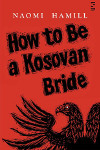
Naomi Hamill – How To Be A Kosovan Bride
Posted 11th August 2017
Category: Reviews Genres: 2010s, Political, Social
Comments Off on Naomi Hamill – How To Be A Kosovan Bride
Tradition, modernity, politics, and folklore.
Publisher: Salt
Pages: 212
Type: Fiction
Age: Adult
ISBN: 978-1-784-63095-9
First Published: 15th August 2017
Date Reviewed: 11th August 2017
Rating: 4.5/5
A young woman begins the traditional process of leaving her family’s home for that of her inlaws; she may stay with her new family or she may return home. Her life plays out against a backdrop of a country at war, and the beginnings of a new nation.
How To Be A Kosovan Bride looks at the cultural traditions surrounding life in post-war Kosovo, bringing in stories of refugees and a few folklore-esque tales, too. Told by someone who goes to the country each year, it offers a particular perspective.
There are two threads in this book. In the first, Hamill balances tradition in all its trappings of dignity and honour, with the very modern. There’s a peppering of humour here and there but by and large this is a look at the clash between tradition and modernity, of being a traditional bride and a modern university student with all the cultural and, in the context of university, political, elements behind it.
To do all this, the author takes the wedding day as her starting point, a bride both excited and reluctant – unsure if this is the right thing to do – and then splits her story in two from wedding night onwards. The bride becomes plural, two people, as Hamill looks at two possible lives, one girl ‘passing’ her virginity test and the other ‘failing’ it (though she is in fact a virgin); one girl becomes the traditional Kosovan wife, the other, having been ‘returned’ on day one by her in-laws, deciding to pursue a university degree. For the most part this results in two narratives that are very, very different, and Hamill’s ‘Kosovan Wife’, as the character is called, does not find much happiness, so the narrative leans towards modernity, but there does come a point where both girls have a ‘grass is greener’ moment and wonder whether another life would’ve been a better choice.
Through the Kosovan Wife, Hamill is able to look further into culture, but it’s during the Returned Girl’s sections that the narrative comes into its own, where the author looks at the way the university entrance exam must be passed with flying colours in all subjects and how schools get around this issue where it concerns pupils having particular skills in particular subjects. The book as a whole is full of politics and it packs an almighty punch for its relatively small number of pages and white space. The second thread of the book, vignettes, stories, of the war – people fleeing, children killed, men walked to their death, liberation by people that aren’t all good – are absolutely harrowing; Hamill is completely blunt and in the acknowledgements of the book she thanks various Kosovan acquaintances for their stories that she used as a jumping point for her fiction, underlining the reality behind it all.
Finally there are a couple of faux-folktales dotted about, one spanning several chapters, adding a bit of magical realism to the book, rounding out the text so that it has information about history and the arts as well as the political element. This is where Hamill’s love for the country is shown best, her writing here being fictional but aligning to folklore well.
Of the writing, that second person, it’s difficult to say… if you hate the method, you may grit your teeth at this book, but because the author has made a point of often tamping it down, you may find it easy enough to get on with. There are only a handful of chapters that directly specify a ‘you’ – admittedly it’s not obvious who this ‘you’ is, whether the reader or a character and if the latter which – and the style matches the various stories told. It adds to the sense of oral history, folklore, and stories of war.
How To Be A Kosovan Bride is a good look at a country in conflict and the people on the wrong side of it, as well as a country still coming into its own. It is hard-hitting and very political but the humour and shortness of it balances this out. You’ll likely want to research the facts alongside your reading, especially if your knowledge is limited, as the book has a sense of a basic knowledge base behind it. It’s very much worth doing so.
I received this book for review.
Related Books
None yet
Speaking to Naomi Hamill about How To Be A Kosovan Bride (spoilers included)
Tune in as Charlie Place and Naomi Hamill discuss post-war Kosovo, using a narrative method that divides opinion, and researching Albanian folklore.
If you’re unable to use the media player above, this page has various other options for listening.


