





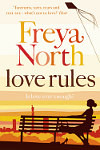
Jennifer Donnelly – Revolution
Posted 4th August 2017
Category: Reviews Genres: 2010s, Angst, Historical, Political, Psychological
Comments Off on Jennifer Donnelly – Revolution

‘Let them eat cake’ did not happen here.
Publisher: Bloomsbury
Pages: 470
Type: Fiction
Age: Young Adult
ISBN: 978-1-408-80152-9
First Published: 12th October 2010
Date Reviewed: 30th April 2017
Rating: 2.5/5
Andi’s little brother, Truman, died unexpectedly a couple of years ago, and Andi is struggling to come to terms with it; it happened under her watch. Failing school and with a poor outlook on university, her father tells her she must join him on a work trip to Paris. She doesn’t want to go but Paris was the home of a historical musician she loves and her father’s friends are converting an old museum into a house; the building is full of artefacts from another time, including the diary of a girl living in 1700s Paris.
Revolution is a semi dual plot line book that looks at the horrors of the French Revolution starting from before the time of the fall of Bastille; it connects a young travelling servant’s life with a contemporary person in a not dissimilar position, one grieving her brother, the other trying to look out for a young prince. The book has a lot of promise – history in tandem with the present; the possibility of time travel that is somewhat realised – but is unfortunately plagued by very lazy writing.
Andi does not read as real. Her status in society – high – is not explored enough for you to believe it. The way she speaks does not correspond to her age. Donnelly has inserted a lot of strange non-words that heighten this – ‘parslied carrots’ – and employs the likes of the unnecessary ‘shake my head no’. Were it contained to Andi’s narrative, the laziness would not be so bad, but the 1700s Alexandrine speaks the same way, anachronisms running riot, the two girls sounding one and the same – in a literal way rather than symbolically. You could say Andi is translating it, but it still doesn’t ring true.
The information on the Revolution is the redeeming factor – this book has it in spades. The musician of Andi’s thesis may not be real (in our world) but everything surrounding him and his time is. The underground tunnels. The morbid death parties. The author’s research seeps through the pages.
In regards to the sort of time travel, it’s worth knowing that Andi is always under the influence of pills – she overdoses often – and whilst this doesn’t excuse her awful behaviour, it’s enough to wonder if she would have been such an uncaring person before. (Neither character is likeable.) The time travel concerns Andi, solely. Alexandrine’s part in the novel is limited to her diary. The diary is a bit far-fetched, with Andi reading it everywhere, including the artefacts section of a library, and not being asked about it. Her restringing of a guitar from two centuries ago using modern strings without research… thankfully this is fiction!
If you want information about the underground mausoleums in Paris, it’s worth dipping in and out of the pages, but otherwise it’s one to pass by.
Related Books
None yet
Zoë Duncan – The Shifting Pools
Posted 14th July 2017
Category: Reviews Genres: 2010s, Magical Realism, Psychological, Spiritual
Comments Off on Zoë Duncan – The Shifting Pools
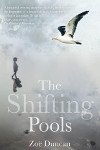
What you see will be.
Publisher: Lightning Books (Eye Books)
Pages: 346
Type: Fiction
Age: Adult
ISBN: 978-1-785-63036-1
First Published: 6th July 2017
Date Reviewed: 14th July 2017
Rating: 4.5/5
Eve’s family lived in a country that was torn by war; in childhood Eve lost them all and suffered further trauma. She moved to England where her well-meaning aunt never stopped trying to cover up any news of the war and never referred to the family. Now in her adult years, Eve is yet to confront her memories and her grief continues as strongly as ever. Her dreams are nightmares and she’s not living anywhere near her potential, but her imagination believes it’s time to heal.
The Shifting Pools is an incredibly moving novel about grief and learning to live despite it. Using many different styles of storytelling, referencing, and ideas, Duncan has created something very different and very special.
This is a slow-moving book. The pace echoes the way utter loss, grief, can take over a life, and Duncan never moves the narrative away from it. Every detail is examined, every thought spoken, in the way it naturally occurs in life, Duncan doing away with the very notion that being repetitive in fiction is bad – she shows well how it is important to delve into grief and give it the time it needs.
One of the first things of note is Duncan’s writing – it’s wonderful. It keeps the pacing constant, it stays steady during tense changes, and it brings something very beautiful to the work. It’s not difficult to fly through this book, despite the subject, and the writing and Duncan’s overall handling of the situation is why. And there is a lot of wisdom here that anyone who has lost someone or been in an awful situation will be able to relate to.
The style of the text as a whole is intriguing. Sections about Eve’s childhood are narrated in the third person. The first person is used for everything else: the ‘present’ as Eve lives through her days and details her thoughts; the vignettes of dreams dotted throughout the book, that explore Eve’s mental state in various imagined situations; the sections in war-torn Enanti, the fantasy world that may or may not be real. And then there are several well-known and not so well-known poems, generally a single verse of each, spread throughout, included in the text as vignettes in their own right. It’s almost of collage, a multi-media project, full of different ideas and voices, and works very well. The term ‘fractured narrative’ comes to mind.
The Shifting Pools uses nature, drawing comparisons between it and the themes of the story, and using its beauty as a way to help Eve. Of note is the character’s name, which, after you have spotted potential influences of other texts and concepts (including Narnia and The NeverEnding Story) does bring forth the question of Eve’s faith. Is there a comparison to be drawn between Eve and the Eden of the Bible? Of Heaven? Quite possibly.
Eve is always at war with herself; as much is said in one of the sections. Her dreams concern various war or battle or prison situations. Of the war that tore apart her family, little is said. Duncan never tells you which war – if any, in reality – she refers to, though there are glimpses of a couple of possibilities; it’s more the basic idea of war that is important.
Reading this book is something of a honour, and a surreal experience. It feels fantastical from the very first page and the amount of research, knowledge, and detail Duncan has included is excellent. She unapologetically runs straight past the border between what we are told is the ‘right’ amount of time and energy to spend grieving to show that the idea of a ‘right’ time never works. This said you can see the thought that’s gone in to getting it right in terms of the reading experience, empathy, and not repeating what has been said unless to view it differently – something that wouldn’t work in many cases but does here.
The only thing that may work against the book is the amount of time spent on the journey in Enanti. It depends on your enjoyment of the fantasy world being included alongside the real world, how much you’re invested in that genre, and how much you personally feels it all relates.
The Shifting Pools is a fantastic reading experience, full of care, love, and, ultimately, hope.
I received this book for review.
Related Books
Speaking to Zoë Duncan about The Shifting Pools (spoilers included)
Charlie and Zoë Duncan discuss coping with and healing from war trauma in reality and fiction, the use and power of dreams, employing various styles and formats, and how fascinating reader interpretations can be.
If you’re unable to use the media player above, this page has various other options for listening.
Rory Gleeson – Rockadoon Shore
Posted 12th July 2017
Category: Reviews Genres: 2010s, Angst, Commentary, Psychological
Comments Off on Rory Gleeson – Rockadoon Shore

If we took a holiday… it would be so nice.
Publisher: John Murray (Hachette)
Pages: 291
Type: Fiction
Age: Adult
ISBN: 978-1-473-63407-7
First Published: 12th January 2017
Date Reviewed: 12th July 2017
Rating: 3/5
A group of friends go away to a house in a remote part of Ireland for a weekend break. There have been tensions for a while but despite Cath’s best wishes, confining them all to a small space and adding in drink and drugs just makes things worse. The friends start to split off, fights begin, and from where local resident, Malachy sits with his view of the house, it looks like things will get awry rather soon.
Rockadoon Shore is a fairly short, focussed book, that looks at the sudden breakdown of a friendship group composed of very differing people. Told in third person through the various characters’ viewpoints, it’s a look at an average situation with more thought than tends to happen in reality.
There are six friends and one outsider (or, in the context of location, insider), and Gleeson casts the spotlight on each of them in turn, always continuing the narrative of the whole rather than reiterating it from different perceptions, but he does pause sometimes to look back when decisions in the group have had a lasting effect on any particular person. Whilst this style makes the book move slowly – though with its three-day focus confined to a house it was always going to be like this – it’s one of the defining aspects and when the plot – what there is, as the story is character-driven – drifts, it can be the reason to keep reading.
Part of this style’s reason for being is the characterisation. Whilst obviously devices and slight stereotypes – in many ways this book is like an episode of a soap opera – Gleeson’s characters have been developed to a fair extent. For the author, meanings are most important, personalities a little less so. This creates an interesting situation, particularly in the case of the women, where you have characters being written in a way that echoes the stereotype of men writing about women and then other times that echoes women writing about women. Due to Gleeson’s general idea to study the breakdown of friendship, this style, the switching of gender gazes, if you will, seems intentional. It allows for more reality, for ultimately broken stereotypes, to show that people aren’t all one way or another. It’s more obvious with the female characters – at least from this reviewer’s standpoint – but it does happen with the men, too.
The writing itself is okay; difficult is the decision to use dashes instead of quotation marks. It could well be, indeed, it seems to be sometimes, that the confusion as to who is talking at any one time is deliberate because it often doesn’t matter who’s saying what, but that does not necessarily put paid to reader frustration. There are grammatical and tense errors but they may well be intended.
The character of Malachy is a bit redundant. He goes through some realisations but as he does not really affect the group of friends beyond a plot device, you can skip his chapters without issue. His personal drama at the end is difficult to care about.
Of that plot device, the ending, which is more a metaphor for fissure than anything else, it must be repeated that there’s not much plot. As much as the book does an excellent job of reflecting current life, there’s little to take away with you. Rockadoon Shore isn’t a bad book or a good book, it just is.
This book was one of several available at a showcase I attended.
Related Books
None yet.
Marie-Sabine Roger – Get Well Soon
Posted 30th June 2017
Category: Reviews Genres: 2010s, Comedy, Spiritual, Translation
Comments Off on Marie-Sabine Roger – Get Well Soon

Doc, Grumpy, and perhaps one day, Happy.
Publisher: Pushkin Press
Pages: 213
Type: Fiction
Age: Adult
ISBN: 978-1-782-27216-8
First Published: March 2012; 29th June 2017 in English
Date Reviewed: 27th June 2017
Rating: 4/5
Original language: French
Original title: Bon Rétablissemnent (Good Recovery)
Translated by: Frank Wynne
Jean-Pierre is in hospital; dragged out of the Seine, no one as yet knows what happened, least of all Jean-Pierre himself, but whatever it was, his health has been set back and he needs to recuperate. Being in hospital isn’t great – the food’s very bland, it’s noisy, and no one ever closes the door to his room, but more to the point there’s an irritating 14-year-old girl, seemingly over-fed, who thinks she’s entitled to his laptop. There’s the young man who saved him with whom Jean-Pierre is having trouble communicating; thank god – even if you don’t believe in him – for the policeman who has taken a liking to him and visits all the time, even if that’s strange. At some point they’re going to have to find out what happened and hopefully Jean-Pierre will be allowed to get out of bed and get away from it all.
Get Well Soon is a fairly fun, short, novel. Completely character-driven, it’s a book that combines thought with the idea of a quick an easy read, a fairly literary book that will interest those who might not have time at present to invest into literary fiction.
This is a book about a slight mental and emotional journey. Jean-Pierre is a grumpy old sod – a description that suits his own word choices – grumpy enough you’d think he was older than he is, and Roger’s aim is to fully acknowledge this and allow it to continue whilst slowly introducing the character’s better qualities and a gentle change of heart. Her characterisation means you start out disliking him intensely before liking him a bit more and then becoming content with feeling somewhere in between.
There is a lot to like about the author’s way with words in regards to characterisation. Building a character slowly, with full attention paid to how the reader experiences it all seems to be, if this book and last year’s translation of the excellent Soft In The Head is anything to go by, Roger’s focus. However in the case of Jean-Pierre Fabre here, it’s perhaps too slow, to the effect that you feel something has been missed; there was potentially more of a change going on in Roger’s imagination of the character than has been marked down on the page. This is where ‘no plot’ and ‘slight journey’ comes in – this is a book full of gentle humour and heart but whilst reading Jean-Pierre’s musings on his life is fun, there isn’t much to them.
But let’s look at the humour – it graces most every page. Roger can be brusque, and never shies from presenting a person steeped in their own social and age-related context. Jean-Pierre meets enough of a stereotype for Roger to explain the basics quickly and then move on to the details. The cheeky jokes. The descriptions. The thinking behind Jean-Pierre’s actions, and the thinking done for thoughts’ sake. The process of a sort of everyday prejudice that starts to untangle itself as Jean-Pierre sees how things aren’t as they appear, or that for all that something may sound unpleasant, perhaps uncouth, there are reasons to be considered. It is the dissection of social constructs together with the humour, that make this book. It’s very much one small person’s considerations that won’t change him on a general level, but it’s a good read.
The translation is good – albeit that Wynne is aided by the French names and the references to French locations, Wynne’s choices ensure you never forget this is a French book. As such you won’t forget it’s a translation but that’s no matter as Wynne has let Rogers’ words shine through.
There is a bit to think about and much to enjoy; Get Well Soon is a quiet book, a nice example of Rogers’ writing ability. You likely won’t remember the character but you will remember the author’s technique.
I received this book for review.
Related Books

Joanna Hickson – The Agincourt Bride
Posted 23rd June 2017
Category: Reviews Genres: 2010s, Angst, Domestic, Historical, Political
2 Comments
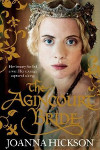
Metaphorical swings and roundabouts.
Publisher: Harper (HarperCollins)
Pages: 406
Type: Fiction
Age: Adult
ISBN: 978-0-007-44697-1
First Published: 3rd January 2013
Date Reviewed: 20th June 2017
Rating: 3.5/5
Mette entered Princess Catherine of Valois’s household when she miscarried her own baby and took the job of wet nurse. Now, many years later, she looks back at her time with Catherine as she became the princess’s friend and confident through years of childhood neglect, the back and forth of negotiations with the English King Henry V for Catherine’s hand, and the surrounding issues of civil war.
The Agincourt Bride is the first in a duo of books about Catherine de Valois. Focused on the princess who, during this retelling, becomes Queen of England, the book sports a lot more politics than the cover might have you believe.
Hickson combines the overall atmosphere of historical romance, but not romance itself, with the social and political discussions and wars of the day. Catherine’s marriage to England’s Henry V was something that started to come into being since her early double digit years, a part of the agreements that were decided between the ‘guardians’ of the French crown – the Queen and the Duke of Burgundy, who effectively took over proceedings due to the King’s failing mental health – and the English monarchy. What this amounts to is a lot of good political detail of events that relate in some way to Catherine. Due to the female point of view there is no opportunity for Hickson to detail the war in the first person – in particular, of course, Agincourt – but she brings in messengers to relay what happened. The author balances it well, towing the line neatly between cluing you in and including too much research, effectively providing you with a fair run down of the battle and how it went down.
To look at the narrative, it could be said that a book told from Catherine’s point of view would have been better. As a narrator, Mette has her moments of goodness but she is a bit of a bumbler and overly enthusiastic. Catherine is rendered somewhat distant to the reader so you have to be okay with this idea (you get to read several letters written by the princess, dotted about the narrative, that aid your comprehension of her thoughts, but it’s not a narrative in itself). However Catherine has been well-written and presented. She stands out boldly and Hickson is always careful, rightly having her overshadow Mette.
But if Catherine had been the narrator you would have missed a lot of the content that Hickson wanted to explore. The most obvious element is that of a report, a chronicle, that by Mette’s presenting the story you get to hear a lot more about Catherine, albeit from afar, than you would otherwise. (Mette does end up in a lot of convenient places, Catherine promoting her and taking her everywhere with her, which helps the author tell the story, however there are sections that are missed when Mette cannot accompany the princess.) The presentation from someone older is good, particularly in the case of Hickson’s exploration of the potential child abuse Catherine and her siblings suffered from their mother and the Duke of Burgundy. The current thought is that there was no abuse but in years gone by it has been a prominent suggestion that the children were neglected. Hickson uses this idea in her book, effectively covering two bases at once – the fact that abuse was treated very differently in older times and thus there is a need to explore it, and the way our mindset has changed over time; the author looks at attitudes both then and now, subtly including – for of course it is never stated by our medieval narrator – what appeals to us today in terms of discussion, study, and general discourse of morality. Mette’s narration, beginning just before her introduction to newborn Catherine, allows for a mature assessment of the possibility of abuse, and if history so far is anything to go by, we know that thoughts do chop and change so Hickson’s research may well be of use in this way later on.
There is sexual abuse in this book that many readers may find difficult on both a literary and historical level. Its inclusion asks that you stray from the usual narrative of royalty in the period and it would be difficult to point to specific value in terms of the story.
This is a book well set in its time. It takes a while to get somewhere in terms of plot because it is hampered by historical indecision, the person at the heart of the story bound by limitations and others’ decisions. It is a book that shows how little power women had in the 1400s, how much they would take when they could to good effect, but how it could be for little or nought. Hickson has made Catherine strong in spirit and her personality is winsome, so whilst you know there’s only so far she will be able to carry the story herself before someone with power comes in and decides to change her fate because they didn’t win a battle and she’s the prize they’re dangling, you’ll find some happy moments wherein she’s able to carefully manipulate a situation through all she’s learned.
Very much about Agincourt in terms of the plot’s time scale, The Agincourt Bride is a book that sets the stage for the next but is a story in its own right, shining light on the woman who in time would be at the heart of the beginnings of the Tudor dynasty. And whilst Mette is not the strongest character she does provides a good, solid story of politics and historical possibilities, Hickson’s use of research blending beautifully with the overall story.
Related Books


