




A J Waines – Lost In The Lake
Posted 30th October 2017
Category: Reviews Genres: 2010s, Angst, Crime, Domestic, Psychological, Thriller
5 Comments

The words of Rockwell are apt here: “I always feel like somebody’s watching me”.
Publisher: (self-published)
Pages: 388
Type: Fiction
Age: Adult
ISBN: 978-1-543-16398-8
First Published: 7th September 2017
Date Reviewed: 30th October 2017
Rating: 4.5/5
Psychotherapist Sam Willerby is going to be careful about patients in future – she’s had trouble before and doesn’t want that again, but when Rosie is assigned to her care, she is lenient. Rosie was travelling home with her fellow quartet members when there was an accident – following trouble with the vehicle, it ended up in a lake, and Rosie was the sole survivor, her viola the only instrument recovered. She wants to remember what happened by she’s also taken a shine to Sam, believing they can be good friends. There’s a lot to remember, and also a lot to realise.
Lost In The Lake is a psychological thriller with a distinct difference – whilst it is a page turner, the general trend to get the pages turning faster is supplemented here by some fabulously relevant and literarily satisfying detail. An item of work by someone with a background in psychotherapy, it offers a lot to enjoy and rely on, along with some teaching moments.
The detail in this book is most apparent where it comes to character development – instead of the usual idea of a bad person – who you may or may not know from the start – and the resulting race to see what’s happened, Waines gives a definite nod to the structure but then goes into the villain’s mind. In a style akin to Georges Simenon but, it could well be argued, done better, the author shows you Rosie’s background long before she turns to look at the progression towards the finale, taking the reader back to the character’s childhood to show the effect extreme neglect and the loss of parents and constant changes in foster care have affected Rosie’s emotional well-being and stability. It’s a person-first story, a look at the humanity of a character before any literary thriller relish comes into play, a style of writing that you means you not only see exactly (very much) how it gets to the point it does, but also that you can relate – at least on some level – to the character.
Bolstering the effect further are the individual voices. This book is told by Samantha and Rosie, chapter by chapter, and both have distinct voices. You will never be confused as to whose chapter you’re reading and there is no feeling that the author is talking.
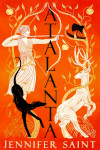
The story itself is involved. Full of music, trickery, and a fair dosing of red herrings (it’s apparent from the cover that Rosie is involved in something but whether the crime/accident or whether her villain status is separate takes a while to become known). There’s also Sam’s story; this is both the second story of a series and a standalone, and Waines has spent time on Sam’s background so that the times she does things that will move the plot along are relevant to her rather than mere devices.
As for the writing as an element it is very good and rather literary at times. The editing is solid, with the descriptions not moving towards filler except perhaps if you’ve read the first book (therefore the repetition is understandable) and as said previously, this is a text of showing. The telling that is included is the natural result of a story told in first person narration and particularly in Rosie’s case the words serve to highlight to the reader what Rosie cannot see or understand.
Lost In The Lake is a very good book. By the end you have a full working knowledge of the characters, the plot, and also a good example of a thriller as its own product. The climax is well done and the extent the characters go to make sense. Highly recommended.
I read this book in preparation for my event.
Related Books

Nicholas Royle – Ornithology
Posted 9th October 2017
Category: Reviews Genres: 2010s, Paranormal, Science Fiction, Short Story Collections, Social, Thriller
Comments Off on Nicholas Royle – Ornithology

Anthologies for birds, now in 140 characters or less.
Publisher: Cōnfingō Publishing
Pages: 177
Type: Fiction
Age: Adult
ISBN: 978-0-995-59660-3
First Published: 2nd June 2017
Date Reviewed: 8th October 2017
Rating: 4.5/5
A man obsesses over a woman he meets on Twitter whilst his neighbours seem to follow each other around. A man puts up shelving with his girlfriend as a man in a second block of flats across from him puts up shelving with the same girlfriend. A person who admires the ever-rarely seen birds about his house gets sick and finds an unknown entity inside him.
Ornithology is a collection of short stories on variations of the concept of birds and what they are. Individuality, identity, the modern world and phrasing, and the difference and likeness between birds and humans are all considered in what you will come to find a strange, weirdly horrific collection.
The collection bares a resemblance to Max Porter’s recent Grief Is The Thing With Feathers, in fact for those of you who’ve read that book referring to it is a fairly good way to describe Ornithology. That eerieness of Porter’s book and its is-it-really-happening factor is here, too, in Royle’s collection. It’s a weird mix of respect for wildlife and the destruction of it, in many ways presenting an extreme version of the mix of protection and moves towards extinction we see today, with its often literal gobbling up of animals and transposing of what birds do to their prey onto the human condition. Different levels of strangeness appear throughout with the stories arranged in such a way that you start with the hint of magical realism and end up in the realms of science fiction and literal horror.
Some stories barely approach the main subject, using it more as a lean-to, whilst others are heavily invested. The first story, Unfollow, is a particular highlight and its placement sets the tone for the rest of the book; it’s a story in which social media and our appropriation of an onomatopoeic word are at the forefront of a tale that looks at a person’s worry that they are stalking someone online against a backdrop of people physically stalking each other. The Obscure Bird, a few stories in, looks at our relationship with each other and with birds, in a literal, all-consuming, way.
When it comes to the horror stories – in particular – some are better than others. There’s a reason for this – the book is a collection spanning years of work. The unfortunate fact is that these works on a theme inevitably include plots that are similar, resulting in a lessening of impact as you go along; on their own, each story is very good, with the usual slight differences in literary enjoyment you’d expect. It’s best to read this book slowly; it favours a dip in, dip out approach.
Overall, this is a top notch collection that keeps you thinking and provides a lot of literary pleasure. If consumed more slowly than a rogue human eating birds, it’s a strange beast, but there’s much beauty in it.
I received this book for review.
Related Books

Chitra Ramaswamy – Expecting
Posted 4th October 2017
Category: Reviews Genres: 2010s, Books About Books, Commentary, LGBT, Memoir, Social
Comments Off on Chitra Ramaswamy – Expecting

Bun in the oven and all those typical phrases.
Publisher: Saraband
Pages: 181
Type: Non-Fiction
Age: Adult
ISBN: 978-1-910-19221-4
First Published: 1st April 2017
Date Reviewed: 29th September 2017
Rating: 4.5/5
When Ramaswamy and her partner felt the time had come to have a baby, they got married (a necessity for same-sex couple looking to conceive) and started the process. The author chronicles those following nine months, detailing the day-to-day, the ways things about pregnancy and childbirth are often not known until a woman is already on the road, and the social factors, all with an eye to the story as a literary experience.
If you’ll pardon the pun, this book is not what you may be expecting from a book about pregnancy. This is a book that has true appeal for a great many people. Ramaswamy has written a book that manages to explore a specific subject in the kind of detail an interested party would expect but with enough – more than enough – of things on the periphery to intrigue others.
Very much a literary memoir, the appeal of Expecting is evident from the first moment. Ramaswamy fills the pages with quotes and other references to pregnancy, from Victorian views to Sylvia Plath’s poetry, to Virginia Woolf, Frida Kahlo’s work, and even Leo Tolstoy’s reverence of childbearing. It’s one of those memoirs that’s an absolute delight to read for its academic elements, a real book about books.
This is where Ramaswamy’s journalistic background comes in – the book is just beautiful. Full of imagery and lovely writing, it’s like reading a mid-20th century classic, and due to Ramaswamy’s various holidays in Scotland (where she lives – this isn’t a book full of exotic locations, and indeed there’s only a couple of trips abroad for work) it’s also somewhat of a nature book. At times it could give Amy Liptrot’s recent The Outrun a run for its money. And because of Ramaswamy’s literally burgeoning pregnancy, there’s often a wonderful juxtaposition of busy-ness and calm.
In addition to this, the author looks the two sides of the same coin, life and death, straight in the eye:
On foot, I had to walk up a vertiginous hill to get there, which meant arriving with my heart kicking at my breast, making me feel as appallingly flushed with life as you could be when entering a place where people go to die. I feared walking in there, hearing the doors shoosh closed behind me, sealing normal life out. Yet once I was in it was not such a fearful place. Entering a hospice was like being let in on a secret. There was a certain amount of privilege involved in being permitted early entry to a club to which, eventually, we would all belong. It had the power to level and soothe, like the calm one enjoys walking through a graveyard, reading strangers’ headstones and feeling a secondary sadness that is not so different from an appreciation of life.
There is only one area in which Expecting isn’t quite as good. One is the way that the detailing and explanation, so great when the author’s dealing with place, falls a bit flat when it’s to do with pregnancy details that are very much common knowledge, enough that they don’t need to be addressed.
Apart from this, there is a lot Ramaswamy notes that may seem obvious, a ‘why didn’t you know that before?’ situation, that can be odd to read – indeed why didn’t she know? – but in fact just goes to show how much society keeps from women, a topic the author addresses on a number of occasions. (These details are different to the common knowledge facts I discussed in the previous paragraph.) The lengthy bleed that occurs after birth that she doesn’t find out about until well into her time; the discomfort, exhaustion, and pain. Things that everyone should be told as a matter of course long before they come to decide whether or not they want children. In many ways this book is as much a social questioning as it is a memoir.
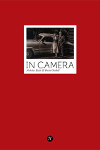
It doesn’t take long to read Expecting, certainly compared to a pregnancy it’s over in a blink, and it’s incredibly well worth it. The cover may align with something light-hearted, and the book can be, but it’s also so much more.
I received this book for review. It has been shortlisted for the Polari Prize. The winner will be announced on 13th October.
Related Books
None yet
Terri Fleming – Perception
Posted 25th September 2017
Category: Reviews Genres: 2010s, Books About Books, Domestic, Historical, Romance, Social, Spiritual
2 Comments
Redux.
Publisher: Orion Books (Hachette)
Pages: [to come]
Type: Fiction
Age: Adult
ISBN: 978-1-409-17062-4
First Published: 13th July 2017
Date Reviewed: 25th September 2017
Rating: 4.5/5
With Jane, Lizzie, and Lydia married and away from the family home, only Mary and Kitty remain. When Mr Montague arrives in town – single, wealthy, – Mrs Bennet sees possibilities ahead. Mary is inclined to believe marriage is not for her, but the man proves bookish, has a large library, and may have taken a shine to her.
This is a superb book, a fine follow up to a famous book by someone else.
Fleming has chosen to stick with Austen’s way with words; the language is Victorian and the effort to get it right practically leaps off the page – but it’s never overwhelming: Fleming blends in. Are there occasion moments of modernity? Yes, but more often than not it’s a discrepancy with grammar, wherein one could say that perhaps, maybe, Austen or her contemporaries might have said whatever it is. It would be impossible to say that this book has not been gone through with a fine tooth comb and that those few errors are not the equivalent of the odd typo found nowadays. (Indeed there are far fewer errors here than there in new books sets in our present era.)
The overall literary atmosphere is also Victorian, with Fleming keeping to the same relative lack of action as Austen. In terms of physical movement, nothing much happens – it’s all in the character development, which is rather good. It’s also an easy read, a book that makes you want to keep reading and isn’t at all difficult to resume reading when you need to take a break. It can be read in short bursts to no ill effect.
As said before, the character development is good. Fleming’s got them just right – they match Austen’s well yet Fleming manages to bring a bit of our present day feeling into it without distracting from the original context. Where, for example, some now say that Mr Bennet did not treat Mrs Bennet well (I’m personally of the opinion that they are a bad match and Mr Bennet is dealing with a lifetime of unnecessary drama), Fleming slides this idea in finely, looking at the question without detracting at all from the surface dressing.
There are a few characters that the book could have done without, namely the two shopkeepers whose role doesn’t have any true impact and who could have been edited out without issue. Thankfully their chapters are very short and there are only a handful of them. (They are also two of the purely fictional people so that combined with their lack of impact renders them completely irrelevant.) The other new characters work well and the original characters have been handled carefully, Fleming putting her own spin on proceedings and detracting from the original context as little as possible.
This is a book for book lovers. In addition to the major factors of the book, the story revolves around libraries, with Mary’s bookish nature allowed full reign. Whereas Jane and Lizzie’s stories are full of sweeping romance, Mary’s is more quiet (though no less compelling). It could be said it wraps up a bit too neatly but the same could very well be said of Mansfield Park.
Kitty’s romance is a lot less important in context, and isn’t as developed – at least in terms of time – as Mary’s, but given the relative shadow over her from Lydia’s presence, it’s not so out of place, so to speak. That Mary is provided more time, with all things considered, does make sense.
Perception is fantastic. It looks to conquer any language and structure issues head on, and creates a story that whilst factually unnecessary, does provide a lot of value, enough that you can say that its worth goes far beyond the simple idea of continuing a story very much loved. It’s also an excellent read just for the effort put into it, Fleming’s time spent researching and getting it all right being a delight to witness for itself.
Related Books

Speaking to Terri Fleming about Perception (spoilers included)
Charlie and Terri Fleming discuss looking at the further lives of Mary and Kitty Bennet, working with Austen’s original stories and prose, Mr and Mrs Bennet’s relationship, and organising bookshelves.
If you’re unable to use the media player above, this page has various other options for listening.
Lesley Glaister – The Squeeze
Posted 20th September 2017
Category: Reviews Genres: 2010s, Angst, Crime, Domestic, Thriller
Comments Off on Lesley Glaister – The Squeeze

Tempted by the fruit of another has nothing on this.
Publisher: Salt
Pages: 286
Type: Fiction
Age: Adult
ISBN: 978-1-784-63116-1
First Published: 15th August 2017
Date Reviewed: 18th September 2017
Rating: 3.5/5
Norwegian Mats sees something changing in his marriage to his beloved Nina, and true to his thoughts, she wants to split up. He gets a job in Edinburgh, moves overseas. Meanwhile, Romania Marta, a girl from a poorer family, is lured into a hotel meeting with a man a gut tells her has bad intentions. She pushes past her worries; she is trafficked to Edinburgh to work in a brothel. Mats’ life is unstable, his new wife depressed and relying on alcohol, and Marta is trying to find a way to contact home.
The Squeeze is a fairly fast-moving thriller that looks at trafficking in 90s Scotland – girls from Romania in this case. It uses both regular chapters and a diary format to tell a tale full of narrators (but never too many).
This isn’t a particularly long book – it teeters on the 300 pages mark – but it manages to get through three periods of time without any rush. More an exploration than any edge-of-your-seat action (though due to the subject matter you will be wanting to find out what’s happening), Glaister takes the story beyond transport and prostitution to the home life of the regular person. And this is really what makes the book what it is – the lack of rush and the incorporation of the everyday of 90s Scottish living brings an added horror to what’s going on as well as a nod towards the fact that this goes on where others would not think it. Glaister uses accents to good effect, using a stereotypical Scottish dialogue that makes you think things are okay, normal, before pulling the rug from underneath you.
In this book, the trafficked girls – mostly girl, singular – are main characters. The book looks at both happy and bad times, with Glaister structuring it all carefully, considerately, but still with enough of the hopes of the reader in mind to, well, keep you reading. There’s detail in the book but not too much, again the three periods of time, the progression of it but all you need to know, is done well. There’s also a good mix of plot and character development, enough that it’d be difficult to say which is more significant. Glaister likes both.
The ending perhaps ties the book up a little neatly – it’s personal preference here all the way; does it really matter how it ends when what Glaister had to say has been completed already and achieved with aplomb? The only area in which the book does fall somewhat is in the editing – besides the somewhat broken English of Romanian Marta, which fits her, there are missing words and typos. These don’t make it difficult to understand, but are noticeable.
The Squeeze is good – well, as much as it can be given the subject matter. Glaister has produced a book that deals with a current subject of news but kept it well away from being a report or an opinion. Difficult sometimes but never so much that you feel the need to put it down.
I received this book for review.
Related Books
None yet


