




Thomas Hardy – Far From The Madding Crowd
Posted 27th June 2016
Category: Reviews Genres: 1870s, Domestic, Drama, Social, Spiritual
2 Comments
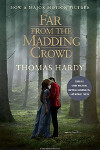
Take your independence and use it wisely.
Publisher: Various (I read the Penguin Classics movie tie-in edition)
Pages: N/A
Type: Fiction
Age: Adult
ISBN: N/A
First Published: 1874
Date Reviewed: 10th May 2016
Rating: 4/5
When Gabriel Oak falls for his new neighbour, the pretty, vain, Bathsheba Everdene, he wonders if he might stand a chance. But what he doesn’t know is that Bathsheba is also incredibly strong-willed and independent – she’s not up for marrying. One Valentine’s Day, however, she gets ahead of herself and sends a proposal to Farmer Boldwood, whom she’s not met – she’s incredulous the man hasn’t paid her any attention. Boldwood takes it seriously and pleads his case. There will be a third, too, a soldier. With three men revolving around her choices, Bathsheba’s in a precarious position.
Far From The Madding Crowd is a lengthy book for its amount of plot, that is generally average but sports a stunning latter section. It’s both a product of its time and advanced for it, lending much to discuss. In Bathsheba, Hardy has created a very independent Victorian woman. Whilst she’s hardly the only one we have from the period, the way Hardy goes about presenting her is fairly different; Hardy admires her. And he’s fair to her character, showing where she makes poor choices that hamper her and bring upset to others whilst not suggesting that it’s bad she has the ability to make such a choice.
Bathsheba goes where she wants, when she wants, and in the manner she chooses. Hardy sets up his unconventional character early on – one day, once Bathsheba knows she can no longer be seen from the house, she lays back on the horse she had been riding in the manly fashion, and continues her journey. This, in fact, she does for two reasons – the first so Hardy can show the reader her personality and the second so that Gabriel can spy her personality as his knowledge of her will be required later on.
Bathsheba’s selfishness is frivolous rather than malicious. She just doesn’t think far enough ahead, choosing to do things in the moment. This is best shown in the aforementioned Valentine – her servant says Boldwood was the only man who didn’t look at her, Bathsheba, and Bathsheba is so used to being looked at and admired, that she sends a proposal. Boldwood takes it to extreme levels, and Hardy shows how she utterly failed to think about how Boldwood would feel having received such a proposition.
So Hardy looks at gender and suggests there shouldn’t be such a divide. He has Bathsheba receiving proposals as could be expected of a woman of beauty and money in the period, and he has his male characters making stereotypical comments, but that’s the feeling of it – that he’s doing that for his plot and to maybe appease his readers. There are lessons his characters must learn; it’s a slow progression that starts from the first chapter. It’s in this way that the book still has so much relevance – think before you act, don’t dismiss out-of-hand things you think are silly.
When Bathsheba does choose to marry she throws herself into it, suddenly reversing all her talk of wanting to marry without having a husband, and acting on impulse and instant attraction. She never did have a level head, but the reader can smell problems a mile away, it’s just a question of how bad things will get. Of course Bathsheba would say they won’t be bad, don’t say such a thing, but if love is blind and everyone else can see the problems in their friend’s ‘perfect’ boyfriend, similar is true here in fiction.
The problem with Far From The Madding Crowd is unfortunately down to its era – there’s a lot of filler content. The plot is deathly slow for over half the book, there’s a lot of irrelevant conversation held over alcohol by farmhands who talk in accents that are hard to decipher (it’s a lot like Wuthering Heights in this way), and Hardy absolutely adores description. He adores it so much he spends pages upon pages discussing the night sky, spends a whole chapter on the history of a gargoyle he’s created; he loves to impart advice he places under the guise of narration, but all this does is pull you away from the story at hand. (Though the advice is interesting in itself.)
But if you can get past the sluggishness, the last third is top-notch. The pace is swift, the plotting superb, the action never lets up, and whilst everything that happens here at once wouldn’t happen in real life, it’s a treat to read. It is all rather sudden but by this point it’s something you’ll be happy with, it’s like Hardy’s woken up and remembered he wanted to surprise and shock you. He does. Whilst the themes of the book may be the reason it’s taught in schools, it’s surely this latter section of the whole that’s the reason it’s remained popular.
Far From The Madding Crowd is one bigger part average, one smaller part exceptional. It’s a 2:1 ratio that is worth taking a chance on because the conclusion does succeed in making up for all the drudgery, but it’s definitely best to do your homework before going in so you know what to expect and to have another book on the go so you can take a break when the irrelevant farm talk gets too much.
Related Books
None yet
Frédéric Dard – Bird In A Cage
Posted 24th June 2016
Category: Reviews Genres: 1960s, Crime, Domestic, Thriller, Translation
5 Comments
Making a U-turn.
Publisher: Pushkin Press
Pages: 117
Type: Fiction
Age: Adult
ISBN: 978-1-782-27199-4
First Published: 1961; 2nd June 2016 in English
Date Reviewed: 3rd June 2016
Rating: 4/5
Original language: French
Original title: Le Monte-charge (The Elevator)
Translated by: David Bellos
Albert has just returned home. His mother has died and after staying away for several years he’s returned without his girlfriend, who has also died. Coming to terms with the changes, he decides to visit the expensive restaurant he’d always wished he could visit as a child. There at a table nearby are a young girl and her mother. The mother is more than happy for him to chat to her daughter and seems interested in him, but there’s something about the woman and he just can’t put his finger on it.
Bird In A Cage is a slick novella that looks at a probable murder from the point of view of a potential conspirator. It’s a book that gets straight to the point and has no room for deviations in its storyline.
How reliable is Albert? That is a question and a half – from the start you get the feeling he can’t be trusted, but is that because of your knowledge of this genre or is it down to the character himself? For that matter how reliable is anyone here? Dard deals with few characters, a grand total of four specific ones, in fact, so there’s lots of room for suspicion. He holds your attention. Indeed due to the shortness of the tale, its pithy structure and overall atmosphere, you’re likely to finish this book within a couple of hours. Perhaps it was created this way, perhaps not, but Dard’s conciseness and detailing means you won’t feel the need to put the book down and that’s really the best way to read it.
A smidgen of mystery drips from the text – is what Albert’s seeing true? Depending on what aspect of the book is taking your fancy at any given moment you may well gain a suspicion as to what’s happening but if you do it will be only a half-formed idea. If you have spotted the clue you may well feel the age of the book more than a reader who hasn’t. This is to say the book is slightly outdated due to its atmosphere and the obvious now-historical nature of it, but it’s just so different and succinct that the age has only a minor impact. Unlike the work of Georges Simenon, who Dard has been compared to (and they knew each other), Bird In A Cage is written in such a way that it’ll likely entertain a wider age range.
The ending is deliciously ambiguous; there’s some wrapping up of the story but it’s only that which directly affects Albert – the rest is left unfinished in a literal way (it hasn’t happened yet). In saying this I’m reflecting on the way the story is told as a whole – whilst the plot is important, it’s Albert’s role in it all that is key, and the ending is one that, if you hadn’t already been doing a lot of thinking, will make you want to interact with the text. It brings a whole different flavour to the book, mixing two opposing tastes in one dish to create something that sounds unworkable but is really a triumph.
Enough with the food analogies. Bird In A Cage is a very solid, good book.
I received this book for review from the publisher.
Related Books
None yet
Should Translated Fiction Be Considered A Genre?
Posted 22nd June 2016
Category: Chit-Chat Genres: N/A
4 Comments

I must credit New Statesman for this post. The link goes to an interesting article which examines many ideas, albeit from a firm view point.
Do you categorise translated fiction in some way? I don’t, except in the case of my goals, which isn’t really categorising: one of my goals is to read more translated fiction so I do note numbers without thinking how much each book is akin in genre to another. In this way I do sort of bunch them all together but with good reason – in my specific case, any genre will do – it’s that ‘translated by’ byline I’m looking for.
But away from this, translated fiction sports a difference you don’t see in fiction you’re reading in its original language. Other than the obvious ones (it’s a different beast, it can require – does require – a different mindset) you’re kind of reading the work of two writers: the author and the translator. In effect you’re reading someone’s plot and characters in someone else’s words, someone else’s language. Not quite fully, not like the work of David Eddings that in recent years has been shown to be as much the output of his wife, Leigh. And not quite like the work of Ilona Andrews where it’s a fully fledged team. As much as the original author has written the words, someone else has adapted it for another language. Interpreted it. It’s a bit like reading a primary source and a secondary source at the same time because a translator’s interpretation could be said to be akin to commentary. It’s a collaboration after the fact.
Do some people see translated fiction as different because the books are full of the translators’ (choices of) words? I think it would be fair to claim so. This is in a similar vein, though not verging towards intolerance, as people who won’t watch foreign films with subtitles. (Perhaps it’s more in line with people who might not want to read foreign fiction full stop.) But it’s vastly more… palatable… a decision than the film one. (I’m not too tolerant of the film situation because I’ve met too many people who match their stance on media with a refusal to learn about other cultures.)
I’d like to highlight the following quotation from the article:
“Where there is space and a strong local market for translated fiction, it makes sense to at least have a table which encourages a Ferrante reader, say, to try Knausgaard. That’s not to say that people with a predisposition to one translated author will necessarily enjoy another just by virtue of their both being translated, but that customers who are keen to experience new voices from around the world appreciate some direction in making new discoveries.”
This strikes me as a good blend of business sense – can we sell more books in this way? – and passion for reading – whilst these books we want to promote and sell may be in different genres, they may well appeal to people who want translated fiction simply due to the nationality or ‘continental nationality’ of the author, so let’s help them. And I think we all appreciate direction, and are often led by other people’s unremarked-upon marketing decisions.
It’s true that translated fiction unites its readers and because readers of it wish, often, to read more, and to gain knowledge of other places, cultures, even languages (that may sound odd given the translation factor but I trust you know what I mean – metaphors and ways of talking and so on) categorising does make some sense. You’re interested in learning about other countries than Britain, liked that particular book? You may like this one.
I think contention around categorising translated fiction, lumping it together, is more about the fact categorising is already a sticky subject – ‘women’s fiction’ anyone? It’s a difficult one. Are we squashing diverse countries together?
The writer of the article has this to say in response to the above quote:
But why not include international authors who write in English in the same section – authors from Nigeria and India, New Zealand and Canada? Giving translated fiction its own section – and a separate Man Booker prize – suggests that these books are fundamentally different to English-language novels.
This statement has merit to it but a Nigerian writer, for example, writing in English, is limited to and by that language. They can and do of course use Hausa and Arabic words – I’m thinking of Elnathan John here – but for the book to work it has to adhere to English language conventions and as such to western conventions, because it won’t work as well otherwise. No matter if the readership was composed entirely of Nigerians and thus all were able to understand all the Nigerian references, the very fact of the use of English would limit the storytelling somewhat. It’s a different experience to translated fiction; in the case of my example you’re hearing directly from the writer but for whatever reason the text is in your own language (possibly because it’s the writer’s first language, too!) That’s sometimes the reason for foreign words in English language books – that you have to use them because there’s no English counterpart. Though translations still have issues with counterparts, translators can at least work with sentences rather than specific words which may make it easier to show, in the translated language, what the author means. (Not that authors writing in English don’t use foreign sentences of course, but too many of those and you cause your readers a lot of frustration, so it doesn’t happen often.)
Another quote the writer includes:
“I think that by not integrating translated fiction into the general fiction shelves and display tables [sic],” Reyes says, “some readers see it as ‘not for them’ – a category apart from normal fiction.”
That’s Heather Reyes of Oxygen Books, to provide a full reference.
This, the case for a full integration with which the writer of the article agrees, harks back to what I said about films. If it’s different, if there’s not a deliberate effort to make it blend in (if the film isn’t dubbed) then many people won’t give it a second look. Of course this begs the question should we be making it so easy, should we be doing something that will mollify people to try it? That question will receive subjective answers but we can compare the situation to the one wherein we separate translated fiction – by putting it on its own table, we are trying to usher readers to buy (more of) it, and that’s in part a business decision. Why should full integration be any different?
I personally think the answer lies somewhere in the middle – a table set near the ‘regular’ fiction shelves, a table that isn’t always there, books that aren’t solely confined to it. I have to say I’ve only seen Elena Ferrante on general fiction display tables, but she’s hot news at the moment – she’s on display tables because many people are going into stores specifically for her books and so the stores want to make it easy for fans to find her whilst her place on a table means the fans won’t necessarily walk in and out without browsing. And I think it’s fair to say that this is what happens, and it happens also with new and/or popular books in general – table whilst ‘in’, shelves once others take the top spots in the charts. I found One Night, Markovitch on the shelf and Penguin’s publications of George Simenon’s Maigret series from last year are also on the shelves. Do they get noticed, and not just by me or you who happen to be attuned to them? I reckon so. Pushkin Press have done well by Gundar-Goshen – two excellent covers and much promotion. Penguin’s been publishing so much Simenon that you can’t not notice the line of thin white books in the S section (and this is leaving aside his fame).
Translated fiction isn’t a genre as such but a distinct effort to lead people to it on occasion can only be beneficial.
What do you think about all this? Do you read translated fiction? And no matter whether you do or don’t, how do you/would you categorise it?
Marie Sizun – Her Father’s Daughter
Posted 20th June 2016
Category: Reviews Genres: 2000s, Commentary, Domestic, Drama, Historical, Translation
2 Comments
Don’t tell children only half the secret.
Publisher: Peirene Press
Pages: 144
Type: Fiction
Age: Adult
ISBN: 978-1-908-67028-1
First Published: 2005; 13th June 2016 in English
Date Reviewed: 9th June 2016
Rating: 5/5
Original language: French
Original title: Le Père de la Petite (The Father Of The Little)
Translated by: Adriana Hunter
Her Father’s Daughter is a superb book about something that doesn’t often get thought of when we talk about war – the effect of a soldier’s homecoming on his very young children. It’s also a study in how war messes with the emotions of those back home, and in this case the damning effects that can have.
Sizun writes in the third person from the perspective of the child. France, the girl at hand whose show-of-patriotism name is rarely used, is at once spoiled, kind, and almost precocious. The author brilliantly shows how, for example, a child may be annoying but not at fault – we all know this, that children do not understand subtleties especially when adults don’t answer their questions comprehensively, but it’s how Sizun goes about her detailing, putting the point out there in an ironically comprehensive way.
The book studies the change when France’s father returns, after which she’s no longer the only person in her mother’s life and no longer possesses her.
‘When your poor little daddy comes home’… Off hand. Just like that. […] But right there, in what her mother said, in those words, something loomed before her, something quite new. Something that intruded into the intimate, familiar world of the kitchen. Something the child perceives as a threat. When. Come home.
This is where Sizun addresses the breach: to the mother, everything will right itself and life will be good again but to France a stranger is set to arrive, a man whose role she has no concept of. She doesn’t know a father is like a mother and the photograph of him in the apartment has no meaning for her. She’s resentful, sees disruption ahead in the life she likes. Her mother has spoiled her to the point of madness, letting her draw on the wall, sing loudly inside, even letting her pick her (the mother’s) outfits. We can assume the mother does this out of sadness and, on some level, guilt.
What is a father? The notion of fatherhood is beyond the child… Fathers are found in fairy tales, and they’re always slightly unreal or not very kind.
In Sizun’s child-sized detailing we can read between the lines – we can tell what this big ‘secret’ of the mother’s is, where the ‘baby’ has gone. Sizun shows how important it is to tell a child the why instead of just telling them it was a dream.
When the father comes home the parents don’t perform a proper introduction, instead they push a kiss on a child from a stranger. The father is strict – he doesn’t like the drawing and singing – and it’s a while before France sees his fatherly side, Sizun demonstrating what happens when there are different parenting styles with the addition of having to adapt to life after living in a prisoner of war camp. The father does not represent all fathers of his situation – the author also shows a man who has come home in good spirits, a neighbour with a daughter France’s age. And some of the changes France must make are due to the time period – seen but not heard.
As her father starts to treat her with kindness she turns against her mother. Does the mother use poor discipline as a weapon, as a way of having control in spite of her own mother’s words? Is it down to the guilt she feels over her illicit situation? The mother is an ambiguity; Sizun leaves her open for your interpretation.
Her Father’s Daughter is downright splendid. It tells an unfamiliar tale in a particularly affecting way and succeeds at making you question a child’s actions in a child’s context because you’re never out of her head. Whilst translated (Adriana Hunter is on top form) the word choice is everything, the length of the sentences key. This is a World War II book you don’t want to miss; and it’s in the top tier of Peirene Press’s acquisitions.
I received this book for review from the publisher.
Related Books

Ben Fergusson – The Spring Of Kasper Meier
Posted 17th June 2016
Category: Reviews Genres: 2010s, Historical, LGBT, Political, Social, Thriller
1 Comment
Blow a kiss, fire a gun.
Publisher: Abacus (Little, Brown)
Pages: 386
Type: Fiction
Age: Adult
ISBN: 978-0-349-13976-0
First Published: 15th April 2014 in translation; 17th June 2015
Date Reviewed: 15th March 2016
Rating: 3/5
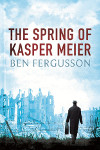
In the year following the end of WWII, the rubble of ruined buildings sprawls across the streets of Berlin. Kasper, a black market trader, is not acquainted with any rubble women until one day he is stopped by one who wants him to find a pilot. She won’t say why but to Kasper it’s clear there’s some sort of underground factor to it.
The Spring Of Kasper Meier is a thriller that looks at a certain aspect of the aftermath of war. It’s categorised under the thriller genre, but doesn’t quite match it.
This is a novel wherein the vast majority of the book doesn’t do anything to recommend itself but the last 50 pages are excellent. It’s a case of the reader having no real idea as to what’s happening, and that’s not good here. There’s no suspense until those last pages start and it just feels like a lost chance. Nine out of ten times you don’t have a clue what’s happening or why you’re reading about a person and even if you manage to figure some of it out the raison d’etre will likely still evade you. It’s the lack of any clues that is the problem.
The writing doesn’t help. There’s a decided lack of commas which means clauses run together so you have to work out what the sentence is saying. Of facial expressions there are too many in each piece of dialogue – speaking then smiling then speaking then surprised then speaking and laughing, that sort of thing. All tell, no show.
The history’s good. That’s the one plus side of the telling – you get a good picture of the period. One of the themes is sexuality, in this case being gay in 40s Europe. It’s dealt with well – there’s commentary when needed but otherwise Fergusson just gets on with it. As the majority of the characters and certainly the main characters are German, there is more time spent on Kasper’s romantic history than, for example, the plight of the Jews. Women also get a look in, though mostly it’s in the form of Kasper’s friendship with Eva.
Like other recent writers of the occupation of Germany by the allied forces, Fergusson doesn’t shy from showing the realities of German life and the way that not all those in the allied forces were good. He shows the horror of it, reminding us that regular people faired the same way everywhere.
The Spring Of Kasper Meier, then, is a book of good history, but otherwise isn’t so great. If you’re able to figure out – or guess correctly – what’s happening early on, you may enjoy it more, but most will want to keep it on the to-be-read pile for a while longer.
I received this book at the Young Writer of the Year award blogger event.
Related Books
None yet


