





Holly Black – The Darkest Part Of The Forest
Posted 8th July 2016
Category: Reviews Genres: 2010s, Fantasy, LGBT
2 Comments

Down in the wood where nobody… everybody goes…
Publisher: Indigo (Hachette)
Pages: 324
Type: Fiction
Age: Young Adult
ISBN: 978-1-780-62174-6
First Published: 13th January 2015
Date Reviewed: 5th April 2016
Rating: 3/5
Hazel and her brother, Ben, have spent their childhoods visiting the glass casket in the forest that holds the sleeping boy with the horns – everyone has: he’s been there for generations. The teenagers love him with a passion, even whilst knowing he could be as dark as the rest of the faeries residing in Fairfold. One day the casket is found broken, the boy gone, and Hazel thinks she had something to do with it.
The Darkest Part Of The Forest is a young adult fantasy gathering together various bits and pieces from western folklore.
Unlike many books of its age range and genre, the book is set neither in our real world or faerie-land, instead straddling both. All the humans who live in Fairfold know about the fey and respect them – in order to remain at peace – and whilst there are some newcomers who don’t believe (how this can be so I’m not sure) there are plenty of tourists. Tourists who are found dead in ditches because they didn’t know the rules. It’s an interesting set-up and whilst the world-building isn’t too great it’s good enough.
Black favours the same approach to equality in faerie contexts as Malinda Lo did in 2012’s Ash. Her commentary on LGBT relationships stops on the first note that Ben likes boys. In this book, aided perhaps by faerie, love is love and needs no questioning.
It must be said the writing isn’t very good. In fact it’s quite substandard but for the most part that doesn’t matter and Black does ensure the characters sound different.
It’s the plot that matters most, and the only problem with that is that it’s a vague one. Black favours teasing out the story but goes a bit too far, neglecting to provide information when necessary for the reader to appreciate her point. I’m personally still not sure what the ending was about, who exactly Hazel was, and I haven’t a clue about the history she mentions in regards to changeling Jack. And it’s not that it’s an ambiguous ending, it’s that information just isn’t included.
This said, The Darkest Part Of The Forest has enough going for it for me to recommend you try it if it intrigues you. It’s a quick read and a good original idea, it’s just lacking in execution. A retelling of the concept of the faerie tale itself, a mash-up of ideas, and certainly not a bad way to spend an evening, there’s just nothing new in it and others have done it a lot better.
Related Books


Suzanne O’Sullivan – It’s All In Your Head
Posted 6th July 2016
Category: Reviews Genres: 2010s, Psychological, Science
1 Comment

Well, not quite.
Publisher: Vintage (Random House)
Pages: 315
Type: Non-Fiction
Age: Adult
ISBN: 978-0-099-59785-8
First Published: 4th June 2015
Date Reviewed: 27th April 2016
Rating: 4/5
O’Sullivan is a doctor of Neurology and her particular interest is in Psychosomatic Illness. Here she reccounts stories of patients, talks about the history of somatic illness – hysteria, neurasthenia – in a bid to bring more light onto a subject she feels isn’t taken seriously enough.
It’s All In Your Head is an unfortunately titled work that nevertheless pulls itself away from its cover to be something rather important and informative.
First things first – I’m no doctor. I can’t vouch for O’Sullivan’s research or anything like that, but I will say she deals with illness and disease objectively in most cases. Her book is well-written – it’s not dry and the pages turn swiftly; there’s a sense she wanted to bring an element of the style of fiction (not fiction itself, of course) to make the book more readable. It works.
O’Sullivan is on a mission to get Psychosomatic Illness taken more seriously and for the most part she does this with flying colours. Yes, there are many stories that are not concluded – presumably this is because she doesn’t always see patients a second time – but she does follow through when she can. The only thing is that many chapters supposedly based on one patient – chapters are named for the patient at hand – drift off to others.
This is very much a medical history book as much as one on modern day care. O’Sullivan gives a substantial amount of time, split up over the chapters – which means it never becomes too heavy – to detailing the progression of medical findings and beliefs. She details Hippocrates’ thoughts, those of Galen, and spends time on Charcot and Freud, who both went to lengths to work out what was going on. She speaks of the social thinking that weighed on prognoses, for example the ‘hysteria’ largely considered a female problem that was down to the female reproductive system and the way the uterus would move around the body (yes, they really thought that happened – where the organ could go without people having a moving deformity at times is anyone’s guess). This information may not really achieve anything as such, but it brings a bit of variety to an otherwise understandably repetitive work. (This said, O’Sullivan does literally repeat herself on occasion, and you’ll be wondering if you’re experiencing déjà vu or just don’t have the knowledge to note the specifics.)
O’Sullivan is objective and honest in regards to herself. She speaks openly of her youthful giggles when someone who said they couldn’t see showed signs that they could. She speaks of times she made the wrong decisions. And she goes very boldly into controversial territory, speaking out about CFS which she considers to be caused by psychological issues. This section may well put readers off, and she is very strong in her view with less source work than she otherwise uses. She knows her opinion is unpopular. And O’Sullivan’s conclusion is very firm – disabilities caused by Psychosomatic Illness should be on a par, culturally and socially, with physical disabilities caused organically (a ‘regular’ cause if you will – Cerebral Palsy, MS, paralysis due to an accident).
It’s All In Your Head talks about an important issue in medicine that needs more research. It details how someone can have a physical reaction to emotional trauma and that as such the trauma should be addressed rather than the patient laughed out of the room, but it does go a bit too far on occasion.
I received this book at the Wellcome Book Prize blogger’s brunch.
Related Books
None yet
First Half Of 2016 Film Round-Up
Posted 4th July 2016
Category: Film Genres: N/A
3 Comments
Not much going on here. I started well; I saw a new film on New Year’s Day and visited the cinema a couple more times that month but my watching petered out as spring started. Family events ensured I watch a few more films than I might have otherwise and I tried another of those ‘watch one every evening’ goals I first attempted a few years ago; at the end of the day I don’t think I’ll ever get over the ironic feeling I have that a couple of hours spent on a film isn’t worth much even though I can spend several hours on an average book and deem it very worth it. I guess film bloggers feel this in reverse!
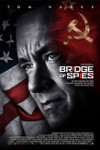


Bridge of Spies (USA, 2015) – I didn’t catch as much of the humour as did those I saw it with but it wasn’t bad.
Cheerful Weather For The Wedding (UK, 2012) – Strictly okay. Sorely lacking in the humour that made the book so good and the poignant ending wasn’t well done.
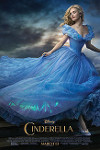
Cinderella (UK, 2015) – Apart from the way the actors all seem cut out of another piece of film (I suspect too much green screen) this is an excellent production. Very, very funny, in an adult humour way, and in this case the sections that are overly romanticised and cute are clearly to placate the kids who want the princess fairytale. The step-family weren’t as awful as I’d been led to believe – they’re more bog-standard Cinderella – but the focus on that aspect of the story is given more time.
The Danish Girl (Multiple countries, 2015) – The actors were good and worked well together, the music was great, cinematography… I’m just a bit confused as to why they chose to adapt a fictionalisation rather than the true story.
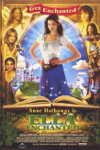
Ella Enchanted (USA, 2004) – Very silly, perhaps too silly, but entertaining enough.
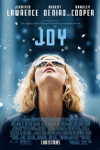


Joy (USA, 2015) – A good story but film was the wrong medium for it. Wait for the book (not that it’s on its way).
Man Of The Year (USA, 2006) – Eternally relevant.
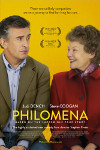
Philomena (UK, 2013)– Hard hitting and whilst not quite true to life, very good.
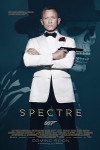
Spectre (UK, 2015) – Not bad at all. Liked the characterisation of the Bond Girl.
Star Wars: The Force Awakens (USA, 2015) – As a Star Wars film? Not so much. As a film in itself? Awesome. I am loving Rey so far though I could do without Darth Vader’s Anger-Management-Course-Required grandson. Bit too samey.
Goal for the next six months? Honestly, I think saying I’d like to have watched two films is a good idea. I have read a fair number of books – they’re making up for the slack.
Which films have you seen recently and would you recommend them?
June 2016 Reading Round-Up
Posted 1st July 2016
Category: Round-Ups Genres: N/A
4 Comments
Why is it that it can feel the year is going by very fast until you reflect on what you’ve done in that time? Weird, isn’t it? Here are the books I read in June:
All books are works of fiction.
The Books

Abubakar Adam Ibrahim: Season Of Crimson Blossoms – When Reza breaks in to Binta’s house the woman finds a desire for him under her terror and when he returns in peace they begin an affair. A very good book about a relationship between a young gang leader and an elder of the community that looks at society as well as the self.
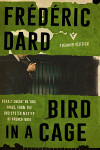
Frédéric Dard: Bird In A Cage – Upon returning home, Albert goes to the restaurant he was too poor to visit as a child and becomes acquainted with a woman who has an aura of mystery. Difficult to sum up without giving it all away, this is a short, filler-less thriller and rather good.
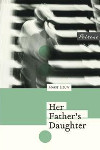
Marie Sizun: Her Father’s Daughter – France has never known her father, a prisoner of war, and believes that his homecoming will destroy the bond she has with her mother. Excellent novella from Peirene Press.

Pamela Hartshorne: House Of Shadows – Kate wakes up in hospital with amnesia and the memories she undercovers have nothing to do with her present situation except in the way those around her seem to hate her. Good premise poorly executed.

Shan Sa: Empress – A fictionalisation of the life of Empress Wu Ze Tian of the 600s, detailing her journey from commoner and low-ranking concubine to leader of China. This was a re-read for me and I enjoyed it just enough but wouldn’t particularly recommend it. (It was interesting to note the difference in my enjoyment from teen years to now, however.)

Tahmima Anam: The Bones Of Grace – Zubaida meets Elijah at the cinema and his arrival in her life brings upheaval to already-laid plans to return home and marry her childhood friend once her palaeontological studies are over. I’d say this is a book you’ll either love or strongly dislike – I’m in the love it camp (my review will be objective).
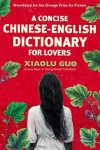
Xiaolu Guo: A Concise Chinese-English Dictionary For Lovers – Zhuang Xiao Qiu, who goes by ‘Z’ because westerners cannot pronounce her name, has travelled to England to learn English to better her prospects back home; she meets a man she comes to love but their relationship is ruled by both a cultural divide and a personality mis-match. I found this a lot better than Guo’s later I Am China; there’s a lot more literary thinking behind it and less editing problems, though as far as a recommendation goes I must point out you have to be happy with the idea of reading a book written entirely in broken English (it’s one of the concepts).
This wasn’t the most literarily pleasurable months I’ve had – that made-up term again – but the diversity went a long way towards smoothing that out. There were three books I loved: the Ibrahim, the Sizun, and the Anam, all for very different reasons and thus it’d be difficult for me to choose between them as far as favourites go (Ibrahim’s method; Sizun’s concept and point of view; Anam’s sheer uniqueness) but I can’t say the others weren’t fun either. Guo’s book was a very easy read and I appreciated the way she brought development and reality to a character you never hear from directly through the use of another’s broken English. Hartshorne may have given the game away within moments but I still enjoyed the ride. Dard is a master of succinctness. And Sa, whilst I can now see the flaws, has had a big impact on my history lover self since I first read her.
Quotation Report
None this time.
When I’ve read a good number of books in the first six months of a year, I often hope to match it in the latter six. Here’s hoping we all meet our reading goals!
How many books do you hope to read by the end of the year?
Discovering Alice Dunbar-Nelson
Posted 29th June 2016
Category: Chit-Chat Genres: N/A
1 Comment

Last month, Anne Boyd Rioux wrote a post about a forgotten writer. Alice Dunbar-Nelson is also known as Alice Moore and sometimes in a fashion that covers all bases, Alice Ruth Moore Dunbar-Nelson. As you know, I’m not one to pass up a literary learning opportunity, so I read the post and went straight to Project Gutenberg to download the cited text. I read it that evening.
Dunbar-Nelson was an African American writer. Like her peer, Kate Chopin, she wrote books on subjects that people found difficult to deal with. Her colour and background made her even more controversial. (Need I say that if you’ve ever wished Chopin wrote more, let me introduce you to Dunbar-Nelson.)
The author favoured female agency, independence, and the right to work, the right to remain childfree. She spoke out about racial problems. Out of her work, the pieces published were those which submitted more to the views of the day – but they succeeded in progressing nonetheless. She wrote articles for papers and helped organise suffrage events. She campaigned against lynching and was a successful speaker. Her diary is available as well as a few novels.
An interesting fact, or not interesting if you consider the time, is that she married. Three times. She was first courted by a fellow writer, poet Paul Laurence Dunbar. He died of Tuberculosis, but Dunbar-Nelson had separated from him four years previously; he’d abused her. She went on to marry twice more, first a physician and then poet and civil rights activist, Robert J Nelson. Some sources say she took female lovers, too.
As I said, I read the work cited by Rioux. It wasn’t the best choice (at least I believe that will prove to be the case) – there’s a vagueness to Violets And Other Tales that I suspect is down to a dampening down of subjects but also due to the writer’s age at the time. There’s a certain pretentiousness to the non-fictional pieces that speaks of immaturity.
The work sports both an introduction by Dunbar-Nelson, in which she intimates a fair lack of ability – likely to appease society? – and a preface by a Sylvanie F Williams who Laurie helped me discover was a fellow member of the Phyllis Wheatley Club, a group of women, most, if not all, coloured. A list here infers various interests such as medicine, literature, and philanthropy. (The linked piece also states that the group included three men – “it is redeemed from the flatness and general unprofitableness of a gathering in petticoats by three real, live, flesh and blood, healthy men…”) Back on topic, Williams’ preface is rather ingratiating which is both understandable (young, new, writer, forgive her!) and sadly a product of the time, having to conform (a woman has written, forgive her!)
Violets And Other Tales is a collection of short fiction, poetry, and review-esque non-fiction. It’s very short and as I said, a bit vague and lacklustre, but you can see the potential in it, enough that it makes you wonder about Dunbar-Nelson’s later work and also what might have been had she been born later in time. Given that I came to the work with expectations, it may come as no surprise that I favoured pieces in which the author’s themes were more obvious.
There are a few pages titled ‘Why Should Well-Salaried Women Marry?’ Dunbar-Nelson states that a woman who works and is not married is able to spend her free time as she wants – she has neither husband nor children to look after. The author makes the case, through what she says as narrative, that a woman is quite capable of doing things by herself, that a woman knows about money:
Her mind is constantly being broadened by contact with the world in its working clothes; in her leisure moments by the better thoughts of dead and living men which she meets in her applications, by her studies of nature, or it may be other communities than her own.
To paraphrase, why should a woman give up her liberty in exchange for serfdom, all too often galling and unendurable?
It’s interesting to think of Dunbar-Nelson marrying when she had these thoughts but aside from it being the usual thing in those days, to marry, and aside from the fact books and real life are often two different things, we do have this:
The attraction of mind to mind, the ability of one to compliment the lights and shadows in the other, the capacity of either to fulfil the duties of wife or husband – these do not enter into contract. This is why we have divorce courts.
Another piece I liked was The Beeman, a short story about a beekeeper who is approached by a fairy, offering to transform him into his true self. Having discovered he was once a baby – I love that! – the fairy keeps her end of the bargain. Some years later she comes across a man who is a beekeeper and it’s that same man she turned into a baby, all grown up. It’s a nice message – whilst something may not be high status, that doesn’t mean it isn’t important. We can force change but if our heart is not in it, it won’t work for long.
It’s a good work, but her others are likely better – my guess is that her diaries would be most compelling. And I’ll be continuing my foray; I’m glad to have found someone to staunch my sadness over our relative lack of Chopin.
Had you heard of Dunbar-Nelson?


