





Susanna Kearsley – Mariana
Posted 10th October 2016
Category: Reviews Genres: 1990s, Angst, Historical, Paranormal, Romance, Spiritual
7 Comments

Making amends for the past.
Publisher: Allison & Busby
Pages: 387
Type: Fiction
Age: Adult
ISBN: 978-0-749-00706-5
First Published: 1994
Date Reviewed: 17th April 2016
Rating: 4.5/5
Julia moves into a little house in a lovely village that she had always admired. Very soon she’s experiencing very realistic daydreams wherein she’s herself but not quite, a historical person rather like her. It happens everywhere – the big old house, her own house, and outside. It’s worrying – one day she’s spotted pottering around oblivious to the road traffic – but also too mysterious not to follow. Someone many many years in the past experienced much sadness and Julia feels the need to work it out. And whilst her brother may have his reservations – her safety is at stake, after all – it seems others in the village might have played a role back then, too, including the rather handsome lord of the manor.
Mariana adheres to that particularly special set of mixed genres so many love: it’s a historical time-slip romance. And it’s an excellent one.
The story goes a bit further than your usual haunting or time-slip shadows idea, presenting you with a character who is both the modern day time ‘slipee’ and the ghost; Julia is ‘Julia’ during her waking and non-daydream hours and ‘Mariana’ in the opposite. It’s an excellent concept that plays right into the idea of reincarnation, karma, and unfinished business, and it’s not just Julia in the mix – there’s a suitor or two and a friend or three there, as well.
It really is very special and as it was written in the 90s there are no phones or computers to divert attention. It harkens back to days of yore when people spent more time outside – for many readers it’ll be as much a nostalgic trip as a historical time-slip, and it’s topped off by Julia’s career as a book illustrator; she’s all about drawing.
If you like nature and villages, this one’s for you. Rather than the totally stereotypical accent-full northern Cotswold village, or the Cornish seaside, Kearsley opts for Exbury in Wiltshire which is less romantic than some but makes sure you don’t get too carried away with the present. With this book you want to stay in the past until Aunt Freda says it’s time to move on.
The writing is fair. There are a few errors, understandable considering the author’s nationality, but nothing to stop you reading. Indeed it may surprise you that it’s Kearsley’s first book – there are niggles and perhaps hints that she’s following a well trodden path but it’s a very competent piece of work. It’s hard to put down even when you know where it’s headed. The ending may leave the question of ‘what about so and so…?’ unanswered but it’s not frustrating or ambiguous.
And when it’s predictable? It doesn’t matter – this book is all about the journey, the ride. As one of the characters says, Julia is on a journey and it will come to an end – we begin at the start and finish where she leaves off. There’s no superfluity here and only minimal, planned, convenience.
Mariana is a historical dream, a romantic’s wish, a reader’s demands satisfied. It is quite something.
Related Books


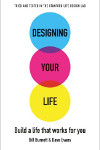
Bill Burnett And Dave Evans – Designing Your Life
Posted 7th October 2016
Category: Reviews Genres: 2010s, Business, Philosophy, Spiritual
Comments Off on Bill Burnett And Dave Evans – Designing Your Life
Getting the most out of it.
Publisher: Chatto & Windus (Random House)
Pages: 254
Type: Non-Fiction
Age: Adult
ISBN: 978-1-784-74024-5
First Published: 15th September 2016
Date Reviewed: 2nd October 2016
Rating: 4/5
Bill Burnett and Dave Evans created a course for students at Stanford University to help them ready their futures. Drawing from the methods designers use to create and prototype, the authors constructed a course with a difference, one that went against the grain to be of particular lifelong value. After much success, they’ve decided to turn the course into a book in order to help a greater number of people.
Designing Your Life is the kind of book that sports lots of common sense of the sort we tend to forget. It sports a lot of things that lead to ‘ah ha!’ moments. And it’s the literary version of those times when someone says ‘now bear with me…’ and you think ‘oh god, here it goes’ and then after a while of talking that you still think suspect, ends with a lot of very good ideas and value.
To be sure it reads as very American but the suggestions and topics in focus should, this reviewer believes (as a Brit), be relevant to most people. Burnett and Evans – who address themselves in the third person, which makes you wonder who was writing when and becomes something to really appreciate because of the complete collaborative atmosphere it projects – write in simple, easy to understand terms, giving full credit to other ideas which they detail for you in case you haven’t come across them previously. The authors seem to favour the idea of ‘done rather than perfect’ – the writing is plain but it does the job and the book’s complete lack of any filler content (student stories are detailed in order to provide context and examples) just goes to further the overall feeling that the authors know what they are doing. This is to say the book has been designed as much as the lives have been designed.
It turns out that the part of the brain that is working to help us make our best choices is in the basal ganglia. It’s part of the ancient base brain, and as such does not have connections to our verbal centers, so it does not communicate in words. It communicates in feelings and via connections to the intestines – those good old gut feelings. The memories that inform this choice-guiding function in our brains Goleman refers to as the “wisdom of the emotions”; by this he means the collected experiences of what has and hasn’t worked for us in life, and what we draw upon in evaluating a decision. Our own wisdom is then made available to us emotionally (as feelings) and intestinally (as a bodily, gut response). Therefore, in order to make a good decision, we need access to our feelings and gut reactions to the alternatives.
It’s a book to read quickly – we are talking lives after all and one of the authors’ thoughts, so often running in the background, is that we spend a lot of time thinking about and considering the present, agonising over the past and our choices, time that can be put to better use working on propelling ourselves towards our futures. Among the topics and concepts are jobs (don’t waste time on applications that get put into a keyword database, rather try and set up interviews with people who are doing what you want to do – do not think of these as interviews), ‘failure immunity’ (accepting that failure happens but not letting it get to you; categorising failures so you can dismiss minor one-offs and focus only on strengthening your weaknesses), and a ‘life dashboard’ that may seem a bit gimmicky but has a great idea behind it, that of working out your health/work/play/love balance and adjusting accordingly. The chapters on getting a job are particularly good and, like all the other topics included, sport both things you’ll inevitably already know and lots of things you kind of know but not in the way the authors are talking about them.
On that note, a key concept of the book is ‘reframing’ – dotted throughout are sentences that we’ve been taught to believe, accompanied by Burnett and Evans’ suggestions for different angles to view them through. The authors ask: when you try to solve a problem, are you solving the right one?
An example: dysfunctional thought – ‘I should know where I’m going’; reframed – ‘I can’t know where I’m going until I know where I am now’.
The only caveat with this book is that it’s not going to help everyone. This is something the authors address when they say that sometimes you might have to take the job to pay the bills or feed the family and do that until you’re in a place where you’ve space to look at your life in the way this book explains, but it’s not quite as simple as that. You’ll notice that by and large the stories in this book are of people who are relatively privileged in life when compared to others and have had the opportunity to learn skills that they can go back to and think about. Whilst the book may indeed work for a broader section of society than that looked at, it does come from a certain situation and place in life, and the angle the subjects are viewed from may suggest to some readers that this isn’t a book for them. It also isn’t a cure all; while the ideas in general are great, some are likely not to work, for example the idea of having a life design team to support what you’re trying to do – such a thing, as outlined in the book, would take a lot of time and while that suggested 3-6 people are spending time working on your future with you, they’re using time they could be working on themselves. You would need a number of extremely supportive and dedicated people in order to make such a thing work unless, perhaps, you happen to still be in education where everyone is doing the same thing. The firm suggestion that everyone involved get a copy of the book is a little too obvious in its hopes.
Designing Your Life is a very good book with some excellent ideas that do work – there are examples in day-to-day life aplenty, never mind in this book. The reframing idea is important because it gets you to think outside of the box and outside of the normal social thinking that whilst well-intended (or sometimes not!) can indeed hamper a person’s progress. But it’s best to keep yourself objective when reading it, and some may find it better placed as a guide rather than a project.
I received this book for review from FMCM Associates.
Related Books
None yet
On Re-Reading And Different Editions
Posted 5th October 2016
Category: Chit-Chat Genres: N/A
5 Comments
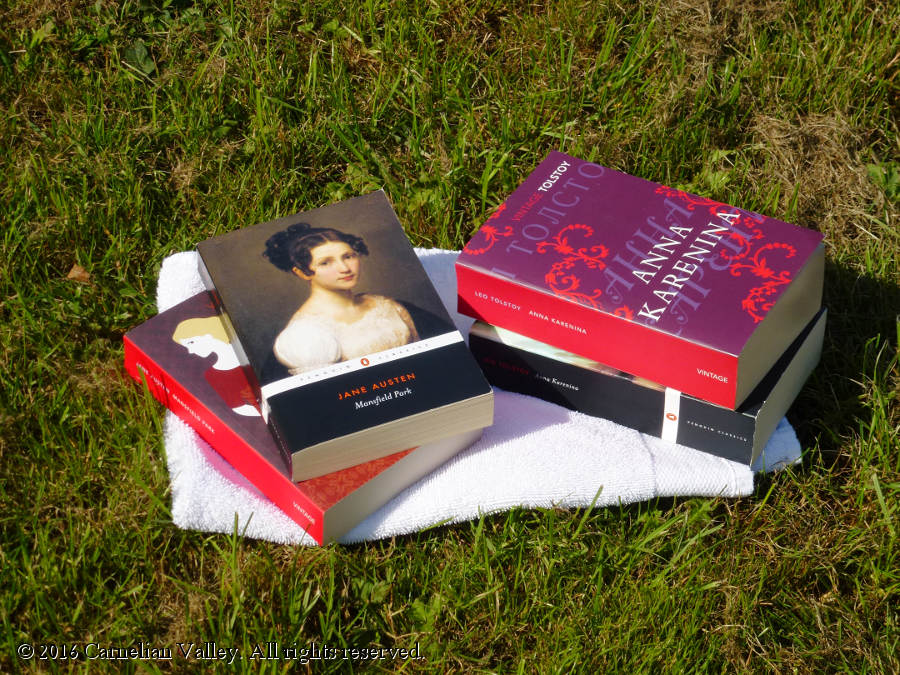
A quick spin-off, last week I said the following:
Another thing I’ve been thinking about is associated with this – the way colour is part and parcel of your reading experience can mean that if you read the book again using another edition, whilst the story is obviously the same you are having a new experience of it, physically. Your current age may be a factor, but I reckon if you read a book twice over, once then a second time immediately following the first, with two different editions, those two times would seem different. The second may even seem wrong.
I wonder how much influence this truly has. Partly because there are the obvious influences of the publishing decisions to take into account, the way publishers are looking at new-first-time readers compared to what we’re doing when we re-read. It makes sense that each new cover, hardback to paperback change, for example, is going to be honed on creating intrigue and so changing covers allow for experimentation and the hope for a second audience ‘wave’ (Forgive me – Rick Yancey’s book may still be in my head).
Sometimes you can point to already popular books keeping the same cover, but it’s not always the case. Marketing choices are there to influence and so it wouldn’t be surprising if your feelings changed with a new edition; your experience has changed. In a way it could be said you’re reading a completely different book; it can certainly feel like it, especially if it’s been a while between readings. Will you notice new things? Will you see aspects in a new light due to a different colour choice? We know covers factor into reading decisions but they can influence reading itself.
I’m thinking here of my first, complete, read of Pride And Prejudice, where I used a relative’s 1970s Penguin edition that I didn’t open much because it was in almost pristine condition. Later dips into the book have happened with my own copy, the one I used in my review. Through time and the myriad uses of my own copy, I now associate Austen’s book with generous margins, good line spacing, and a good-sized serif font, but only when I’m thinking of times I’ve included the novel on my blog. When I think of the story I remember the big portrait on the cover of my relative’s copy and the way I worked my way through narrow line spacing at a speed I’d likely find difficult today, just five years on.
Do you find this? Do you associate a book with a particular version and would you/do you find it odd or hard to read the book again using a different edition?
September 2016 Reading Round-Up
Posted 3rd October 2016
Category: Round-Ups Genres: N/A
5 Comments
Given what I said last week, it will come as no surprise that I haven’t read much this month! By the middle of September I had an immediate must-be-read-very-soon pile of ten books, mostly review copies, and had abandoned 3 books that had already been languishing on the ‘current’ list. I’ll pick them back up in due course; one of them is Helen Oyeyemi’s What Is Not Yours Is Not Yours which I was rather enjoying, it’s just that I couldn’t pay it the attention it requires. In regards to the list of ten I’m currently at 3 down, 1 on the go, the 1 being Dan Richards’ The Beechwood Airship Interviews, which needs finishing if we’re to have a more varied conversation. It’s just the sort of book you want when you’ve a deadline – funny and very unique. I’ve still a fair amount to do in regards to promotion so I’m happy several of the ten books are pretty short.
The Books
Non-Fiction
Bill Burnett and Dave Evans: Designing Your Life – A handbook for improving your career prospects and life in general based on the writers’ successful Stanford University course. Rather good.
Fiction
Helen Slavin: Crooked Daylight – After the death of their grandmother, three sisters put her cottage up for rent and strange things start to occur. A paranormal-magical realism tale; okay in itself, very promising as a start to a trilogy.
Jemma Wayne: Chains Of Sand – An Iraqi Jew hopes to leave Israeli whilst a British Jew yearns to live in Israel. A good premise.

Linda Stift: The Empress And The Cake – A young woman is asked to share half a cake with a lady wearing 1800s fashion; though she wishes not to, she accepts. Super.
My favourite this month was The Empress And The Cake, a bizarre, fab, book that’s just something else entirely. I also enjoyed Designing Your Life more than I’d imagined I would – no low expectations by any means but as I will be saying in my review, it’s the bookish equivalent of that situation where someone says ‘bear with me…’ and you wish you were somewhere else before they get to their point and you discover it was all worth it.
Quotation Report
None this time.
In theory, considering my introduction to this post, I will have a lot of books on October’s list.
What did you read in September?
Linda Stift – The Empress And The Cake
Posted 30th September 2016
Category: Reviews Genres: 2000s, Historical, Psychological, Thriller, Translation
Comments Off on Linda Stift – The Empress And The Cake
There’s no way out. There’s every way out.
Publisher: Peirene Press
Pages: 172
Type: Fiction
Age: Adult
ISBN: 978-1-908-67030-4
First Published: 2007; 30th September 2016 in English
Date Reviewed: 20th September 2016
Rating: 5/5
Original language: German
Original title: Stierhunger (Bulimia)
Translated by: Jamie Bulloch
A young woman is approached by an older woman, asked if she’d share a cake because the cake is too large for one person. The older woman’s clothes are very old fashioned, from the 1800s, and her companion is similarly dressed. Though she avoids rich foods, the young woman agrees to take half the cake; after the purchase the older woman suggests sharing first her own half. The young woman finds she cannot say ‘no’, and whilst she believes it was her choice, it sets a precedent for the future.
The Empress And The Cake is an Austrian novella about three women of different generations who are connected. It’s got a bizarre, strange, atmosphere, a lot of history, looks at mental and physical health, and sports a brilliant uniqueness.
There are four major characters in this book, three in the present and one in the past. The present-day characters are our unnamed narrator, Frau Hohenembs, and the latter’s friend/servant, Ida. The fourth is the Empress Elisabeth of Austria, of the mid to late 1800s. Elisabeth is included via descriptions written by a friend – we view these scenes as reflections – and her presence in the novella is to show the basic ideas behind Stift’s drawing of Frau Hohenembs and Ida and thus the connection she has created between the factual Empress and the fictional characters.
This reviewer would recommend doing a bit of research into the personality and life of the Empress prior to starting the book. The book’s meaning won’t be lost without it but some knowledge of her will really enhance your reading experience and allow you to figure out what might happen, which when you consider the fact the Empress is likely well-known in Austria and this is an Austrian book, just makes sense. Elisabeth’s story is quite fascinating; she was reluctantly married to an Emperor who adored her and spent her time away from the court she disliked, often travelling incognito. Her mother-in-law practically removed her from her children’s lives and she was assassinated by a man who wanted to assassinate a royal and hadn’t been able to get close to his first choice, nor his second.
Part of the connection between the characters and something that is a major theme is an obsession with slimness, which in the unnamed heroine’s case is a disorder, bulimia. The book gets into very graphic detail at times so that Stift can show the way bulimia affects a person. It is a very frank portrayal, Stift’s character telling herself, or us, how this will be her last vomiting session, how she’s going to stop weighing herself so much – she’ll weigh herself several times a day instead of a dozen, for example (a difference the reader sees as inconsequential) – how she’ll start eating more again, only for her to revert almost instantly. The heroine is bound by her disorder but does not see it – she views herself as in control of it. And her increased contact with Frau Hohenembs furthers her it. (What’s interesting here is that the way the passage of time is shown in the book, the rough slowness that can be attributed to Stift’s detailing and repetition of the regular makes it seem as though more time passes between decisions than it truly does.)
Similarly she views herself as in control of her visitations to Frau Hohenembs’ apartment, and in control of the choice to go out, which happens often, with said lady and her servant; the truth is different. Not quite so different is her lack of control of her eating disorder, but a big part of the psycho-thriller aspect of the novella is the dwindling nature of personal agency. This is where the plot thread of cocaine comes in; the drug is not referenced directly for some time and we do not know whether the heroine and Ida take the drug, but there’s a vagueness, an ambiguity, in the story, that lets you imagine what is most likely. What, for example, was in that cake? Stift does not say either way – just sugar, or something more addictive? – that’s up to you to decide. (Does sugar itself perhaps reflect the addiction?)
Empress Elisabeth wanted to be very slim, and favoured being stitched into her clothes. Whilst the present-day fictional part of the story does not go this far, the factual forms a sort of backbone. Frau Hohenembs’s obsession with Elisabeth (does she think she is her or want to emulate her?) never wavers, and as such the heroine falls into line behind her. This thread is not resolved neatly, but then it doesn’t need to be. It’s the connection that Stift wants to show rather than any reason d’etre.
On the gruesome front it should be noted there are visits to a ‘specimen’ museum. These, as well as the vomiting scenes, if the reader finds them difficult, can be skipped because the importance in them lies in the sentiment rather than the scenes themselves – so long as you’ve the cause in mind, flicking past shouldn’t be a problem.
In regards to the translation, it reads well. Jamie Bulloch seems to have opted for a balance between literal word meaning and flow; there are some German words you may want to look up but the rough meaning is there in the text.
It’s hard to say exactly why The Empress And The Cake is so good. It has something to do with the complexity, the number of ideas in it, and the amount of thought that’s gone into it, but enough to say it’s excellent. It’s bizarre, random, and totally unique, and it makes you think, so much.
I received this book for review from the publisher.
Related Books
None yet


