





Rick Yancey – The 5th Wave
Posted 16th September 2016
Category: Reviews Genres: 2010s, Commentary, Science Fiction
2 Comments

Not the happy Mexican one.
Publisher: Penguin
Pages: 461
Type: Fiction
Age: Young Adult
ISBN: 978-0-141-34583-3
First Published: 7th May 2013
Date Reviewed: 7th July 2016
Rating: 3/5
The alien ‘waves’ arrived with only ten days warning. For those ten days, a vast mother ship hovered in the sky; humanity went about life as normal, wondering if the aliens would make contact and either becoming excited or remaining indifferent to the idea. Like the other kids, sixteen-year-old Cassie continues going to school and it’s during a lesson that the lights go out, mobile phones go dead, and a plane falls from the sky. Suddenly excitement about alien contact goes silent, as silent as the waves of death the aliens begin to spread.
The 5th Wave is a Young Adult science fiction book that is an easy and often well-paced read but unfortunately suffers due to its formulaic nature and writing.
The story begins well and with much promise – this will not be your usual alien-invasion story, says Yancey, and Cassie quickly quashes her misgivings over using a gun. She will shoot if she has to. It’s all rather exciting. Get past the first section, however, and the true concept reveals itself: The 5th Wave may not be your ‘usual’ alien story (or at least not too usual) but it is your usual dystopian. After that first section wherein Cassie was a character you were fully looking forward to spending a vast number of pages with, two things happen.
First thing: Cassie’s personality changes. She meets a boy and suddenly it’s no longer a question of guns and survival and aliens outside the door (the humans have considered the possibility of infiltration) but looking nice, washing her hair… you get the idea. That Cassie falls in love in a desperate situation is understandable, but that she suddenly pushes the apocalypse to the side isn’t exactly realistic. She’s just survived tsunamis and a plague that wiped out billions, people are dead and every second counts in saving someone only she can save, but let’s have a cuddle first.
Second thing: the narrative switches to other characters. This isn’t a problem in itself, even if it does mean the book leans ever more into that formulaic territory, it’s that Yancey doesn’t tell you he’s switching and the lack of names mean it always takes a bit of time to work out who you’re reading about. The first new point of view matches Cassie’s in that the situation is one you naturally think is hers – Cassie was hurt so turning the page to read about someone being given first aid sounds like a continuation of the narrative. (I myself thought the referrals to this person as ‘he’ amounted to some sort of alien female-led society, which would’ve been rather awesome.)
Following on from this narrative change is the way Yancey goes about answering questions. He doesn’t really need to say anything, the book is entirely predictable once you’ve figured out what his plan is, but as it trickles out you see the influences – The Hunger Games, a certain vampire series, and notable bits and pieces from other books that it would spoil the ‘reveal’ to list, blended together (there’s even some sort of inner goddess spin-off going on). If you’ve read any of those books or seen the film adaptations, you won’t find anything new in this book.
Are the aliens exciting? Not really. They’re said to be very advanced but they’re conveniently limited by our technology at times. They make choices that allow Yancey to keep the story going. And there will be no epic battle with them later on in the series because of the way Yancey has constructed their civilisation.
There is one very good thing about this book and that is the atmosphere, or slight commentary, Yancey includes of political historical situations. Many other reviewers have noted the Colonial era, the British invasion of America and subsequent trampling of the Natives; I myself found a study of the Holocaust. Suffice to say there is something subtle at work where Yancey is looking at invasion, human against human, and showing how awful it is by pitting the whole of humanity together against another species. There’s no real conclusion to it here and indeed it seems more the general assumption of readers that there is this subtext (rather than an obvious sign from Yancey) but as many have seen it it’s something to bear in mind and, whatever it really is, it lifts the book above its narrative, at times giving it an air of literary fiction. It’s just that it’s not enough to keep the book above the narrative in the long run.
The 5th Wave is worth reading if you want something easy and if you’ve read other dystopian Young Adult trilogies and want more of the same (it is fun in that way – the pages fly by), but if you’re after a good alien invasion story you’ll be disappointed.
Related Books
None yet
Jemma Wayne – Chains Of Sand
Posted 12th September 2016
Category: Reviews Genres: 2010s, Commentary, Political, Social, Theological
5 Comments
Current, constant, conflict.
Publisher: Legend Press
Pages: 315
Type: Fiction
Age: Adult
ISBN: 978-1-785-07972-6
First Published: 1st June 2016
Date Reviewed: 12th September 2016
Rating: 3.5/5
Udi wants to move to England, to join his cousins. Life in Israel does not offer him what he wants. His girlfriend and family may want him to stay but he hopes for more than menial jobs. In England, British Jew, Daniel, wants to move to Israel, seeing it as his destiny and the place he just ought to be. His friendship with Safia will never progress to a relationship because she is Muslim and he feels it would be wrong, and when he meets Orli in Tel Aviv he feels a draw greater than the one he feels towards Safia, and greater than the one he felt towards his old long-term girlfriend. Amidst these stories is that of Kaseem and Dara, a relationship that secretly crosses the border.
Chains Of Sand is a novel set during the here and now of the Arab-Israeli conflict. Taking on the narratives of Jews, Wayne has written a book that has the potential to divide before it brings everything back together for a short time at the end; in looking at the conflict, Wayne writes from a specific viewpoint first and foremost. She details the day-to-day of fighting, of security and the way such security has become par for the course by both necessity and anxiety. She shows the conflict between modernity and tradition, how in theory one might want to dispense with tradition but in reality it’s ingrained within them, sometimes in ways they don’t realise until they do dispense with it. She shows how holding steadfast can result in familial conflict and how not holding steadfast can result in familial conflict. And she shows obvious cultural differences, violence, lazy contentment-filled days, and everything in between. Reading from afar it’s a big reminder of everything that isn’t covered in the news, of the regular life going on behind the conflict, but also the irregularities that are ever apparent and the intolerance – whilst working from one side of the equation she shows the various intolerances as well as liberal views.
So this book is a look at the conflict right where it is happening, as well as a look from afar. It includes direct knowledge, lived knowledge, and rose-tinted glasses. But something is lacking in the overall presentation and it isn’t until much later that it becomes apparent that what’s lacking is emotion (other than thoughts of love, which themselves aren’t always convincing, the context more often lust). There is a divide between reader and character that is down to the way the story has been written and presented; as the end pages draw near this lack disappears and in its place is the emotion that the rest of the book needed, that helps you relate, that gives you a reason to read, that gets rid of the dryness. This is not to say that every thought any character has should be laced with emotion but a subject of this magnitude and current relevance… you gain knowledge of viewpoints and of the working of the war but the characters’ thoughts, when dealing with it, don’t really ask you to think or engage; it can be a struggle to work out what you are supposed to be taking from it as a reader. Is there a message? It seems so, but trying to work out what exactly that is (until the end, which is a bit late and a bit too much, playing catch-up) and even trying to just look at the book as a study is difficult without that authorial invitation to involve yourself in the text.
Some of this is due to the writing. The writing is okay but there are some odd choices of words, odd phrases that jolt you out of the narrative, and a strange way of translating tone and inference that doesn’t match the situation. (As an example, there are various lines of dialogue that end with “…, no?” which when dealing with Israeli characters seems a way to translate how Hebrew compares to English ways of speaking but it’s then used by British Jews when speaking their fluent first language of English.) It’s not a bad style by any means but the lack of flow often means sentences need a couple of re-reads to understand.
Something included that really works is Udi’s background – Udi is an Iraqi Jew whose family moved to Israeli. His presence in the story enables Wayne to study something that doesn’t get much of a look in – racism within – and open up the narrative far beyond stereotypes. There is a section, for example, where Udi and his friends go to a nightclub, but Udi is denied entry because the doorman will not believe he is Jewish rather than an Arab Muslim. This, whilst a different subject, helps set up the short narrative of a cross-cultural relationship wherein Wayne really delves into the variety of opinions in the region, the liberal sides of the equation, whilst harking back to a type of narrative that is tried and true and thus has a firm basis for the reader to start from. This said, some other uses of tried-and-true come across as devices and detract from the reading experience.
The timeline is confusing – with three narratives, two periods of time, and oft-usage of the present tense, the general confusion of who is speaking and when continues throughout. Most especially because within those sections once you’ve figured out the who and where and when, which becomes easier, you’ve then got to constantly adjust between paragraph and multi-paragraph sections within chapters and these aren’t labelled or set apart from the rest. It means that you could be reading something important but you won’t know because the context is not there and as you don’t really want to be reading a lot of text over and over you miss some of it.
Chains Of Sand has a good idea behind it – one thinks, it is difficult to be definite – but it is confusing. It informs, it’s bold in what it does, and it’s fairly balanced in its overall focus, if not in its characters, but you do need to be prepared to do a lot of legwork.
I received this book for review from Midas PR.
Related Books
None yet
Sara Taylor – The Lauras
Posted 5th September 2016
Category: Reviews Genres: 2010s, Commentary, Domestic, LGBT, Social, Spiritual
2 Comments

A common name. An uncommon story.
Publisher: William Heinemann (Random House)
Pages: 298
Type: Fiction
Age: Adult
ISBN: 978-1-785-15077-7
First Published: 4th August 2016
Date Reviewed: 22nd August 2016
Rating: 5/5
When Ma wakes Alex and says they’re leaving, it’s a surprise; Ma and Dad often argue but life goes on. Not this time – Ma has a plan, a long journey to various states, to find various Lauras, and Alex is to join her. School’s about to finish for the summer anyway and Alex is glad – it’s starting to become difficult. (If you read my review of Taylor’s last book you may remember I found summarising that difficult, too.)
The Lauras is Taylor’s second book and it features the same general excellence and talent for seeing right into things and commenting on them, as The Shore.
The Lauras centres around the road trip, the journey that holds everything together. It’s that symbolic use of a journey and the progression of time, growing into one’s self, learning how to be comfortable in your skin. Taylor’s wonderful prose, full of her own dialect, flows slowly, letting you enjoy the story and grounding you in the setting. It’s the sort of book that, if you’re not from America, sounds like it’s set in a whole other world – blisteringly hot days, southern states. Taylor says what needs to be said and nothing more. Things aren’t hidden but they aren’t overly apparent either; they simmer in the background. It’s quite like Thelma And Louise – various bits of plot scattered throughout conversation.
There’s a lack of pronouns in this book but you don’t really notice it at first. Alex is a unisex name therefore it’s really down to your experience as to which sex you imagine Alex to be. Know more men called Alex and maybe the character will be to you a teenage boy. Know more women and the reverse may happen. The use of a unisex name is intentional; throughout the book you get snippets of description – clothes, objects, things relating to the character – that question your visual of Alex.
Genderlessness – Alex is happily androgynous. As one great section towards the end shows – a scene in which a gay friend gets Alex to play dress-up – gender can be an either/or situation, a neither situation, or both at once. The great thing about this subject here – well, one of them as I’m not sure a review could deal with all of them – is that this is an excellent book for discussion. Taylor’s decision is to not tell you one way or the other about Alex. (Will you find out anyway? The point Taylor makes is that there doesn’t need to be any pigeon-holing.) You wonder and that is okay. In writing Alex, Taylor is looking at our social need to label. It’s one of the biggest, core things in society, in regards to our forming relations and emphasising with people and Taylor shows that this is understandable, as it’s been this way for a long time, whilst showing how little gender matters. And, crucially, why it doesn’t matter.
Most of this exploration happens in the subtext. Taylor is all about getting you to think for yourself and without telling you to do so, though by the end of the book the subject’s been covered in a direct manner – the author waits until you’ve had time to process your thoughts by yourself. It’s a fairly short section focused on bullying and as with everything else it’s to the point. It’s a sensitive exploration and highly accessible.
Taylor uses Alex’s coming of age in her detailing of the mother’s story, contrasting, comparing them. It’s interesting how vivid a picture of the mother you get, and Taylor’s inclination for the reader’s imagination to hold sway is active here. Your image of Ma, whatever it is, is correct.
Ma’s story unravels away from Alex’s, during it, but the two narratives get their time. And – you knew I’d get to it eventually – Ma is where the title of the book comes in. There have been various people called Laura in her life and this extract says everything you need to know:
She’d been quiet for a while before answering, so I wasn’t sure if she was inventing a cover story, if I’d been right in guessing she’d rechristened them all to make the remembering easier, or if she was trying to determine herself why it was that so many of the women who had had a lasting impact on her were named Laura.
“First of all,” she said, “they’re not all Laura. You’re conveniently forgetting everyone else. My girlfriend who ran off with the preacher wasn’t named Laura. Second, when we got to Florida you were complaining that every kid in school was named Jason or Brittany – it just so happens that when I was born everyone was naming their daughter ‘Laura’. And third -” she paused for a drag on her cigarette – “well. When you’re eight or nine, say, and you make your first best friend, they’re the greatest person in the world and you know that you’ll be friends forever. But one day one of you moves away and they leave a vacancy. And then you meet someone with the same name, and because you’re eight part of you thinks not exactly that they’re the same person, but they were made from the same block of clay, maybe. And you try to get the new Laura to fit into the hole the old Laura left. And when you get older it doesn’t matter that you know things don’t work like that, because your ears will be primed and your heart will beat faster at the sound of that name. It will stand out to you and make something inside you go soft, and since it stands out you’ll pay more attention to them, and if you pay more attention more often than not you wind up being friends with them, until you look back when you’re forty years old and realize that you have a long string of Lauras behind you who were all important, and it isn’t just coincidence but the eight-year-old you trying to fill in the hole that the first Laura made.”
There’s no concrete ending, the perfect road trip never ends and you wouldn’t want to remember a regional destination. But it’s not an ambiguous ending either – things not answered aren’t necessary to know.
The Lauras is a superb book that is likely to stay with you long past the border, long after you’ve left the cheap apartment in nowhere-land. You won’t need much, just a bookmark because you won’t want to lose your place and you’re likely devour this book despite wanting to go slowly to soak it all up.
Related Books
Ashley Stokes (ed.) – The End
Posted 31st August 2016
Category: Reviews Genres: 2010s, Drama, Paranormal, Science Fiction, Short Story Collections
2 Comments
They didn’t all live happily ever after.
Publisher: Unthank Books
Pages: 228
Type: Fiction
Age: Adult
ISBN: 978-1-910-06127-5
First Published: 1st September 2016
Date Reviewed: 24th August 2016
Rating: 4/5
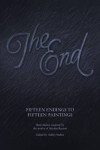
The End is a collection of short stories inspired by scratch-work paintings. Nicholas Ruston created the paintings in the style of old film ‘end’ cards – all black and white – and the writers went off and wrote what they would. The titles of the stories have become the titles of the paintings. It’s an intriguing concept that promises variety – there’s the simple link between them of the paintings but beyond that they are very different meaning there is wide appeal.
To my mind the absolute stand-outs in this book are the stories that have taken endings literally – they’ve written the literal end of what could well have been a longer story. Suffice to say there’s a lot of extra thinking you can do after finishing them, whole novels to imagine. The Slyest Of Foxes by Angela Readman details the end of a gunman’s visit, a woman who sees what’s going on in her neighbour’s house, choosing to go round with a bowl of soap that continues a hint of razor. Harbour Lights by AJ Ashworth details the aftermath of a relationship, a very sombre note. Ashley Stokes’ own, Decompression Chamber, looks at the non-ending of the world. Crow by Aiden O’Reilly, a political-sounding ending.
But perhaps the winner is All The TVs In Town by Dan Powell. It focuses on the very end of whatever apocalyptic situation (or is it The Truman Show?) it’s talking about. Various genres within a whole, the mainstay is science fiction/dystopia with a liberal spritz of literary fiction.
The paintings themselves are rendered small but the composition and overall creation is such that that’s all that’s needed. It is indeed true to form – the aspect ration fitting cinema, the frames sporting an almost Hitchcockesque atmosphere. There’s a deliciousness in the blend of old and new – a car in one of them, for example, is mid-twentieth century, but then there’s a psychedelic design in another, with other paintings being decidedly more modern – old base, new ideas. One suspects that for the paintings… it’s hardly the perfect analogy, mass-produced as they were, but consider those foil and copper art packs your parents bought you when you were a child – the finished works were quite something.
So in this book there’s a lot to enjoy, and that there’s a base theme but no other means it’s a lovely break if you like short stories but have had enough of all the connections. The introduction to the book, which includes the background to the pictures and the commissions, is a short story in itself. The book could have done with another proof-read but overall this is a great choice for an evening’s read or perhaps even better if spread over the course of a few days.
Dark in many definitions of the word, The End offers a special experience and an introduction to a plethora of authors you may not have heard of.
I received this book for review from the editor.
Related Books

Pamela Hartshorne – House Of Shadows
Posted 26th August 2016
Category: Reviews Genres: 2010s, Commentary, Drama, Fantasy, Historical, Mystery, Psychological, Romance
3 Comments

Cast your mind back 400 years…
Publisher: Pan Macmillan
Pages: 466
Type: Fiction
Age: Adult
ISBN: 978-1-447-24958-0
First Published: 3rd December 2015
Date Reviewed: 22nd June 2016
Rating: 3.5/5
Kate wakes up in hospital. She’s had a fall but can’t remember anything about it or even who she is. Everyone calls her ‘Kate’ but it doesn’t feel right… she finds ‘Isabel’ more fitting. She can work an Ipad and recognise things in the hospital but is surprised by people’s clothing and the absence of Tudor items. Her relatives don’t seem too nice and there’s that malicious voice she heard when semi-conscious that said she should have died…
House Of Shadows is a modern day/Elizabethan time-slip in which a woman recovers from amnesia with the wrong memories, memories that nonetheless match up somewhat to her present situation. Author Julie Cohen, quoted on the back cover, called it a cross between Vertigo and Rebecca and whilst I can’t comment on the first reference, there are definite parallels with the latter.
Hartshorne has created a fair premise and the book succeeds in whisking you into that delicious time-slip experience. Kate has memories rather than dreams or travels so it’s not quite as ‘involved’ as some, but Hartshorne includes the memories as scenes so that the effect is the same as any other. The history is luscious, the romance well set up and believable, and it’s got that same big old house thing going on as Susanna Kearsley’s Mariana, only here the house isn’t a neutral element, instead it’s almost a character in its own right.
Hartshorne plays with the idea of ghosts, pitting the concept of spirits against possession but taking a less definitive route to most – Kate’s son can see there’s something not quite ‘Mummy’ about the woman presented as his mother, as can Kate’s devoted dog – but still it’s not quite your usual idea of possession; there’s just something unique about it that’s as difficult to put a finger on as the reader as it is difficult for Kate to put her finger on her memories. But it’s a lovely aspect.
One of the themes in the book is the treatment of people and the concept of privilege. Much like E Lockhart in We Were Liars, Hartshorne studies the way class divisions still rule in society, particularly in the upper echelons. Angie, Kate’s friend, helps out in every way she can, running errands for the family and helping out with the estate’s visitor system, without any real acknowledgement. She doesn’t have a defined role and isn’t considered important because she’s a commoner (she’s also of Polish decent), and Hartshorne spends various moments throughout the novel looking at the difference between the family needing her insomuch as there would be some chaos were she to leave, versus the family’s view of her which is completely coloured by her class status. Then there is the general hatred of anything other than complete heterosexuality and a major hatred for disability, interestingly also shared by said disliked Angie. The lord of the manor cannot be disabled and he can’t be gay. The lord cannot be a lady and the lord must uphold all the traditions that have never and must never be deviated from. (Whilst race isn’t commented on, one assumes the family keeps a draw full of smelling salts in case they happen to encounter any non-white tourists.)
There are a few problems with this book and one of them (two, it could be said) is major: Hartshorne gives away the mystery in the first couple of pages. First you understand that there’s hatred around Kate and then a few pages after that the major twist shines brightly and as the twists in both the modern storyline and Elizabethan storyline are exactly the same – you realise that straight away, too – you don’t have much in the way of a reveal to look forward to. It’s not clear whether Hartshorne meant for this to happen – it could easily be said that it’s a case of the author wanting to provide intrigue, a hint, and happening to go too far. Instead of hints you get answers.
This means that your interest in the book changes from wanting to know what’s happened to wanting to witness the journey Kate takes to get there, but, and likely mostly due to that fact of the answer being provided so early on, this does not work. Hartshorne’s use of amnesia is a good idea in theory and it means that you start to look forward to Kate uncovering what you, unfortunately, already know, but as the book goes on the amnesia becomes more of a plot device.
The amnesia becomes a device and then it turns into something akin to a deus ex machina move – by a quarter of the way through you know not just the major twists but have figured out everything that isn’t solely minor, but the amnesia remains a device. The answers are staring Kate and Isabel in the face, the answer is glaringly obvious, and you have to ask yourself could anyone be so, so stupid?
These plot and character problems are joined by poor proof reading and weird writing choices – made up verbs and words ending with -ly when there are perfectly useful words already in existence (‘studiedly’, for instance). Plot points and information are repeated in a way that’s either down to a disbelief in reader memory or a major editing error (it’s not to do with Kate’s memory). The book could’ve done with a heavier editing hand and a few more drafts.
You may well enjoy House Of Shadows if your interest in reading it is to experience a time-slip or to look at social division but if you want anything beyond that, you’re going to want to read something else. It’s fun enough as a story, and easy to go back to – it’s quite like the situation I found with Amy Snow, wherein it may not be great when looked at as a whole but it’s a very fun experience nonetheless.
Related Books


